Story: Honu Up a Tree

November 2, 2025


Isaiah 1:10-18
Luke 19:1-10

When was the last time you saw a honu up a tree?

Never?

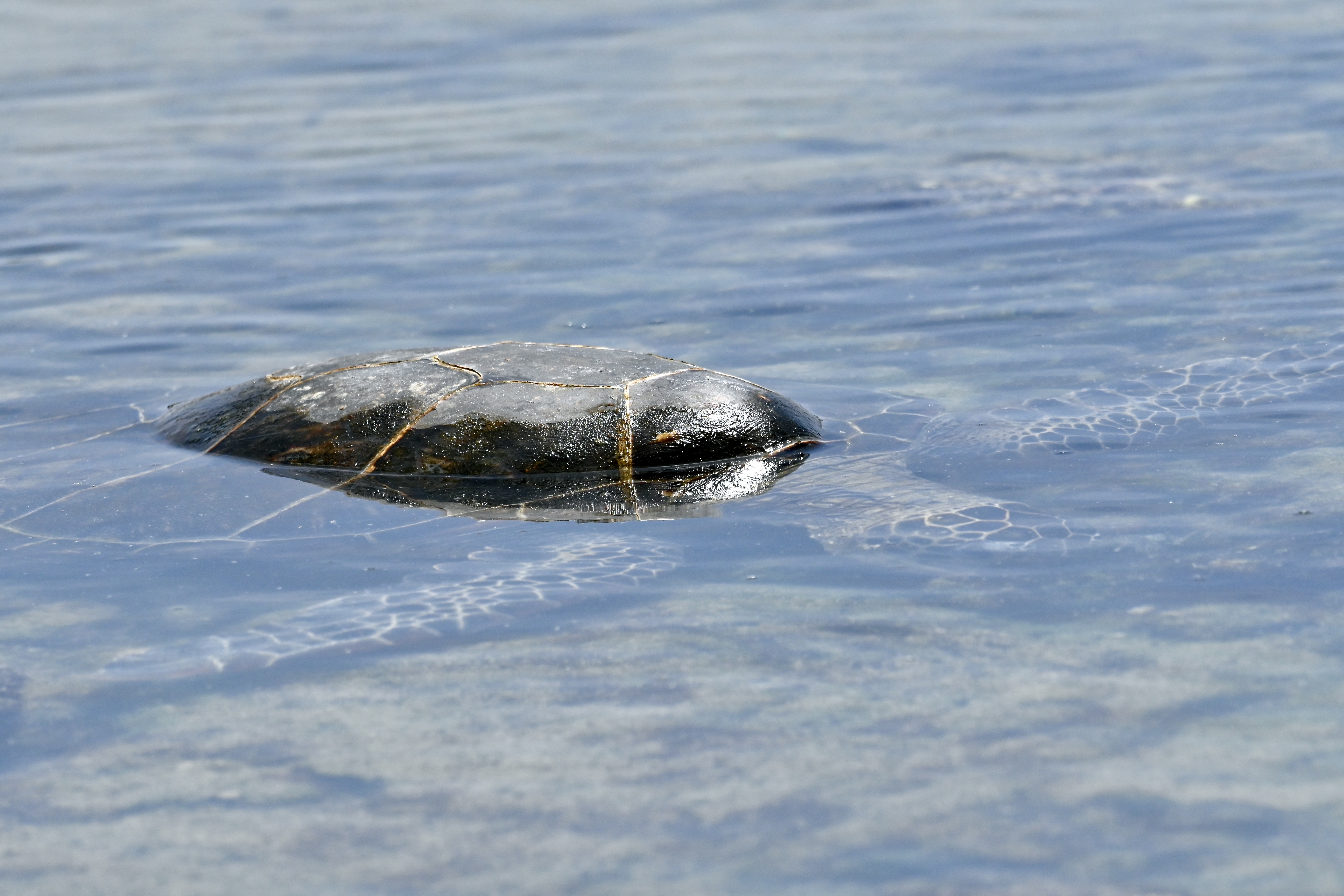
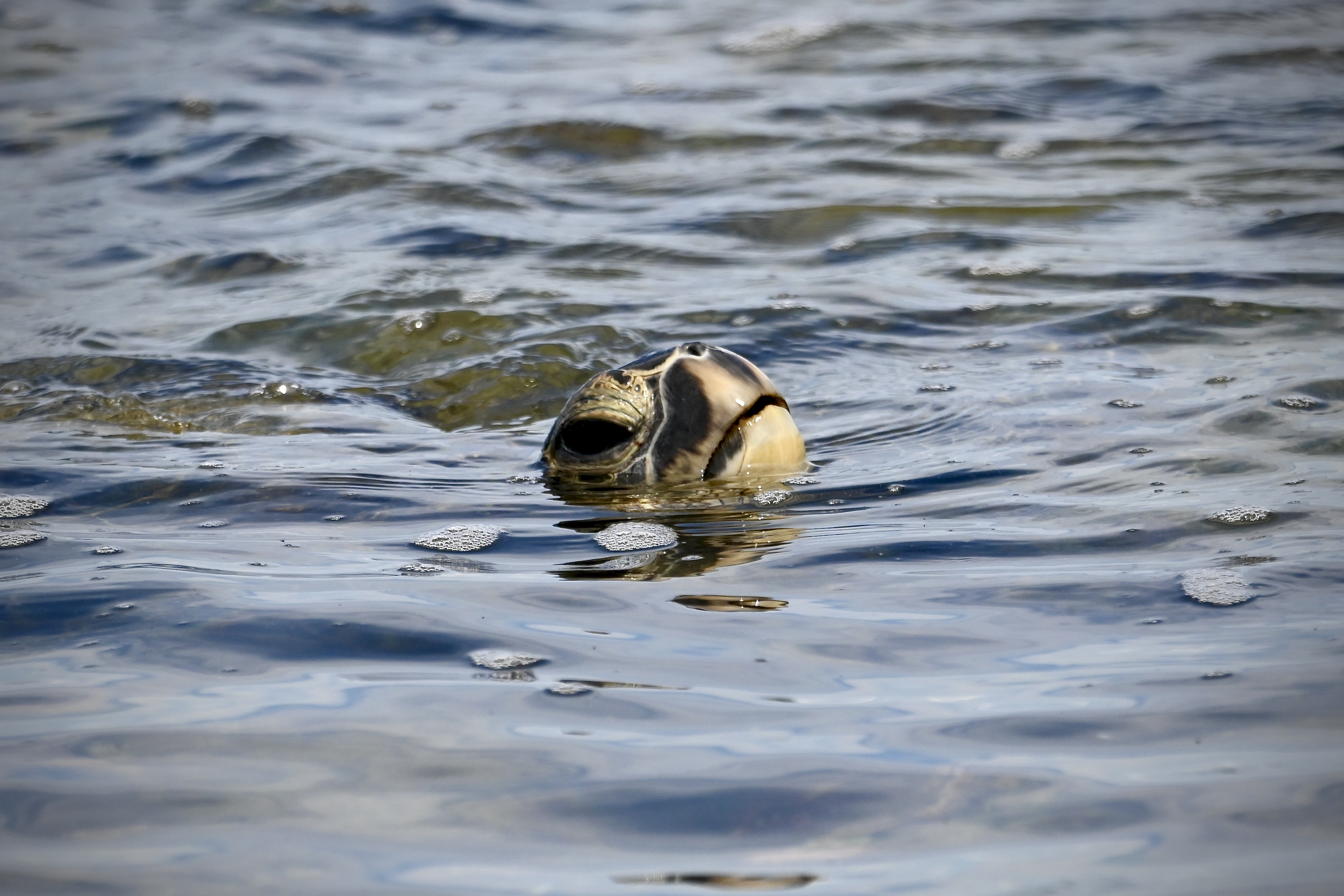
Well, I never have either. It’s not a natural place for a honu to be. A honu really prefers to be in water, like the honu in this picture.

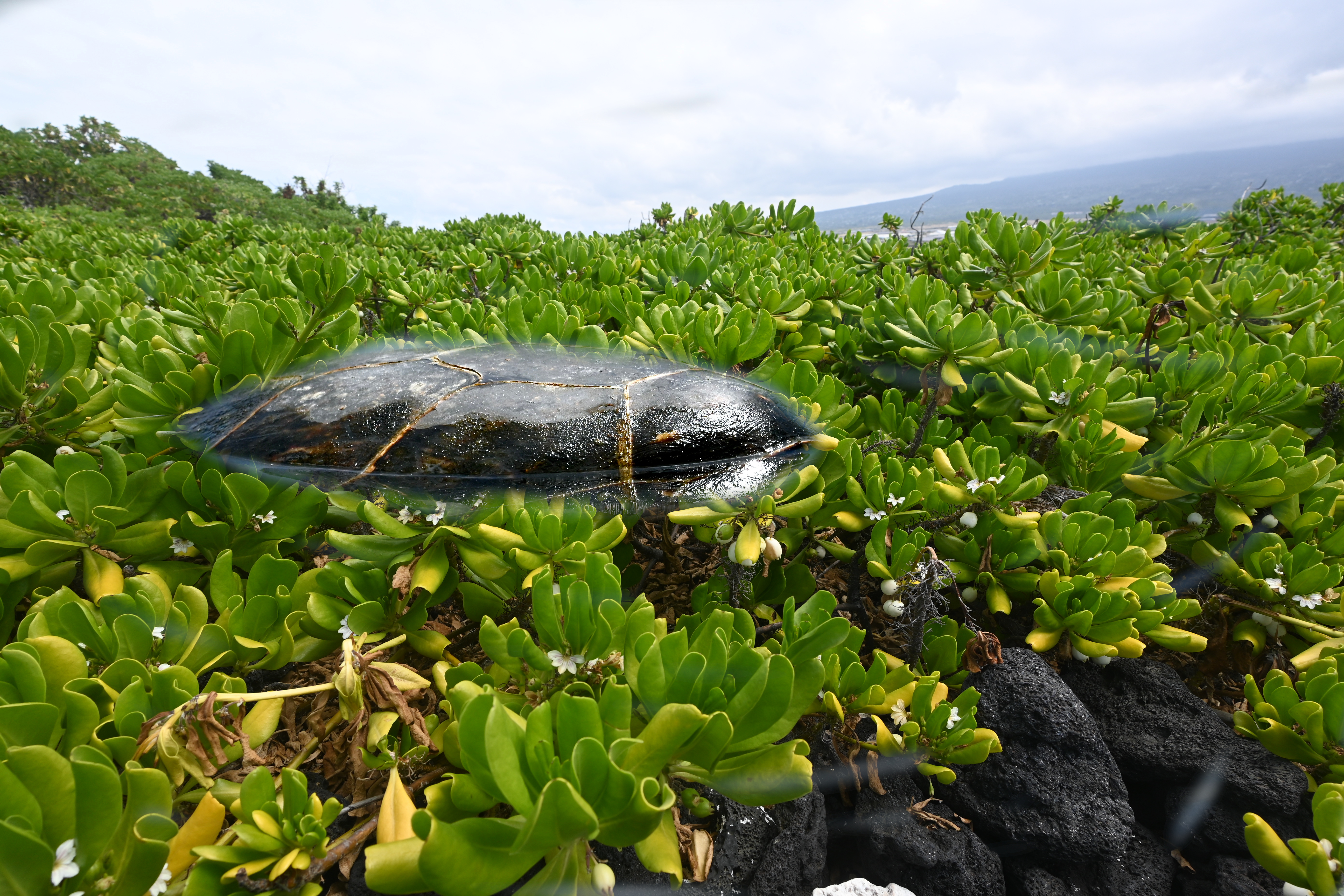
Unfortunately, one day a honu found herself in a tree.

As I mentioned, I’ve never actually seen, let alone photographed, a honu up a tree. I’m afraid that photo is the result of a certain amount of non-artificial intelligence that produced that unconvincing image.

It was a storm, of course. Ordinarily honu in a storm find a safe place to ride it out, which is frequently offshore. I don’t know precisely what happened with this honu, and I’m not sure she ever did, either. One minute she was being tossed about in the water, and the next minute she was flailing around in a tree, not getting anywhere, and getting sprayed by the waves and the rain.

All in all, not where she wanted to be.

When things got brighter, the birds came out and found the honu in the tree, and they knew she wasn’t supposed to be there.

“Can you swim out?” asked an ala’e ke’oke’o, who was a swimming bird, even though the honu had better flippers on her limbs than the ala’e ke’oke’o had on his.

“I’ve tried all night,” said the honu. “My flippers can’t move these leaves the way they move water.”

“Besides,” she added, “I’m a pretty high off the ground here, and those rocks look hard. I think I might hurt myself if I fell from here.”

The birds looked things over and thought about it. Winged creatures don’t think about falling very much.

“I know,” said some of them. “Let’s pull some of the leaves and twigs out of the way so she’ll slip down slowly.”

“Right!” said some others. “And we’ll go get some other leaves and grass and mud and sand and we’ll cushion the rocks below her.”

That’s what they did. Some pulled up grass for padding, some moved branches of naupaka aside (OK. She was in a naupaka bush, not a tree, but it looked like a tree to her). The pile of padding grew and her distance from it slowly shrank. They worked slowly but steadily, cautiously but creatively, until with a creaking sound the last naupaka branches bent and lowered her to the top of the padded mound.

The birds cheered as the honu hauled herself off with her flippers and made her way down the beach to the water.

At water’s edge she turned and said, “Mahalo nui loa, friends. I hope you get help like this if you’re ever up a tree!”

One of the birds, a kolea, shrugged and said, “Most of us will be quite fine up a tree. But if you can help me out like this if I’m ever stuck in the water, I’ll be just as grateful as you are now.”

Then she waved and swam off into the deep. I don’t know if she ever did have to help a bird stuck in the water, but I know she would have, and she’s ready to if there’s ever a need.

by Eric Anderson

Watch the Recorded Story

I write these stories ahead of time, but I tell them from memory and improvisation. What you have just read is not identical to the way I told it.

Photos of a honu and of naupaka by Eric Anderson, as is the not-very-convincing blending of the two.
Angels

“Then [Elijah] lay down under the broom tree and fell asleep. Suddenly an angel touched him and said to him, ‘Get up and eat.'” – 1 Kings 19:5

Be the angel, O God,
when I am weary and frightened,
when the burdens oppress me,
and I despair of my life.

Bring me food.
Bring me water.
Let me rest.

When another is weary
and frightened, O God,
when the burdens weigh down
the hope of new life,

May I bring food.
May I bring water.
May I bring rest.

May I be your angel.

A poem/prayer based on 1 Kings 19:1-15a, the Revised Common Lectionary First Reading for Year C, Proper 7 (12).

The image is Elijah in the Wilderness by Frederic, Lord Leighton (1877-1878) – uQG9WGfbc10kDw at Google Cultural Institute maximum zoom level, Public Domain, https://commons.wikimedia.org/w/index.php?curid=21878932.

Story: The Molting ‘Apapane

May 25, 2025

Acts 16:9-15
John 14:23-29

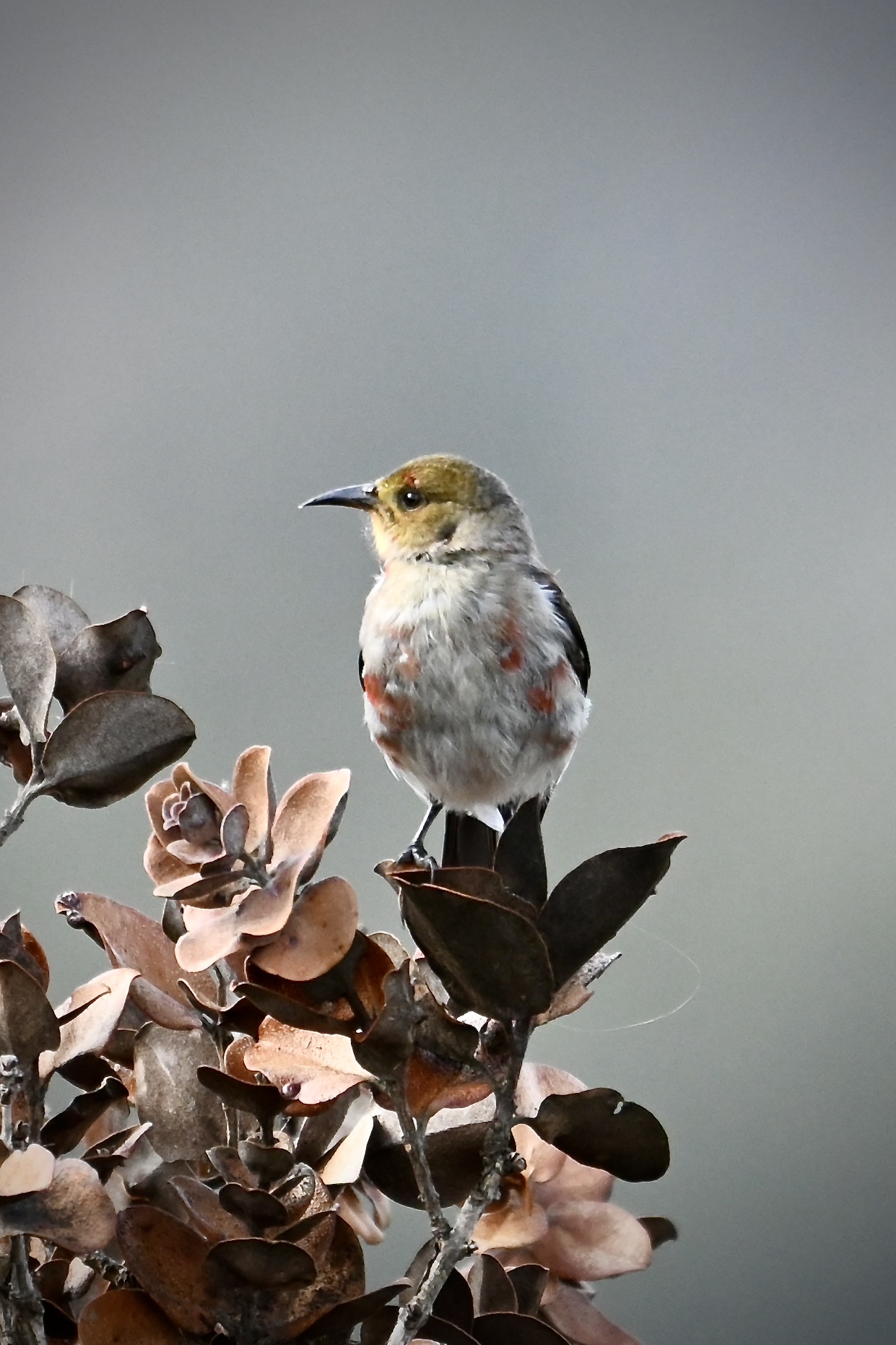
He wasn’t the oldest among his siblings, cousins, and friends from nearby nests, but he was one of the first to molt from his young feathering to his adult colors. He’d had gray feathers on the chest and brown on his head and back, with black on his wings and tail. They all did. It made their games of hide-and-seek pretty difficult, because those colors melded into the shadows on the tree branches pretty well.

As I say, though, he was the first among them to start losing some of those brown and gray feathers, and start to gain the red feathers from head to tail. Frankly, it wasn’t going well. Loose feathers itched, and so did the new feathers as they grew in. They also didn’t fall out evenly. He found himself with a grayish belly blotched with the new red feathers.

“You look ridiculous,” said one of the young ‘apapane who played hide-and-seek with him, and, well, he felt ridiculous.

“Can’t you hide that?” asked another of the ‘apapane. He was a cousin, but he could be mean, even to a cousin. Our young ‘apapane couldn’t think of how.

“Go clean that up,” ordered one of the bossier young ‘apapane. She was one of those who thought she knew best for everybody else. But he still didn’t know how to take care of it, so he kept his perch and tried not to cry.

“Knock it off,” said the smallest of the young ‘apapane. All her feathers were still brown and gray, and she looked like she’d just been groomed by the finest feather-settlers of the forest. Everybody assumed that she was talking to the young bird with the splotchy red.

“Yeah, knock it off,” said the one who’d started this by calling him ridiculous in the first place.

“No, you knock it off,” said the smallest ‘apapane. “And you. And you. And all of you.”

She shook her wings and continued, “First of all, what can he do about it? You all know that our feathers will change from what we’re wearing to what our parents wear. Did you think that happened overnight? Didn’t you realize that it’s going to take time and that there are rough spots along the way?”

As it happened, none of them had thought about it.

“What are you going to do,” she demanded, “when this happens to you in a week or two? Are you going to make everybody going through this fly away, or are you going to help them when it itches and tell them it will be all right? What would you want for yourself?”

She asked that last question straight at the bird who’d ordered the molting ‘apapane to go clean that up. She didn’t say anything until it became clear that she had to answer.

“I’d want help,” she said.

“How about the rest of you?” demanded the smallest ‘apapane. They all admitted they’d want help.

“And that’s what you’ll get,” she said. “We’ll start with our friend here.”

“So how are you?” she asked. “Does it itch today?”

That’s how that generation of ‘apapane made it through their molt.

by Eric Anderson

Watch the Recorded Story

I write these stories in advance, but I tell them from memory and improvisation. What you have just read will not match the way I told it.

Photo of a juvenile ‘apapane in molt (at least that’s what I think it is) by Eric Anderson.

Story: The Easy Way to Fly

November 17, 2024

Hebrews 10:11-25
Mark 13:1-8

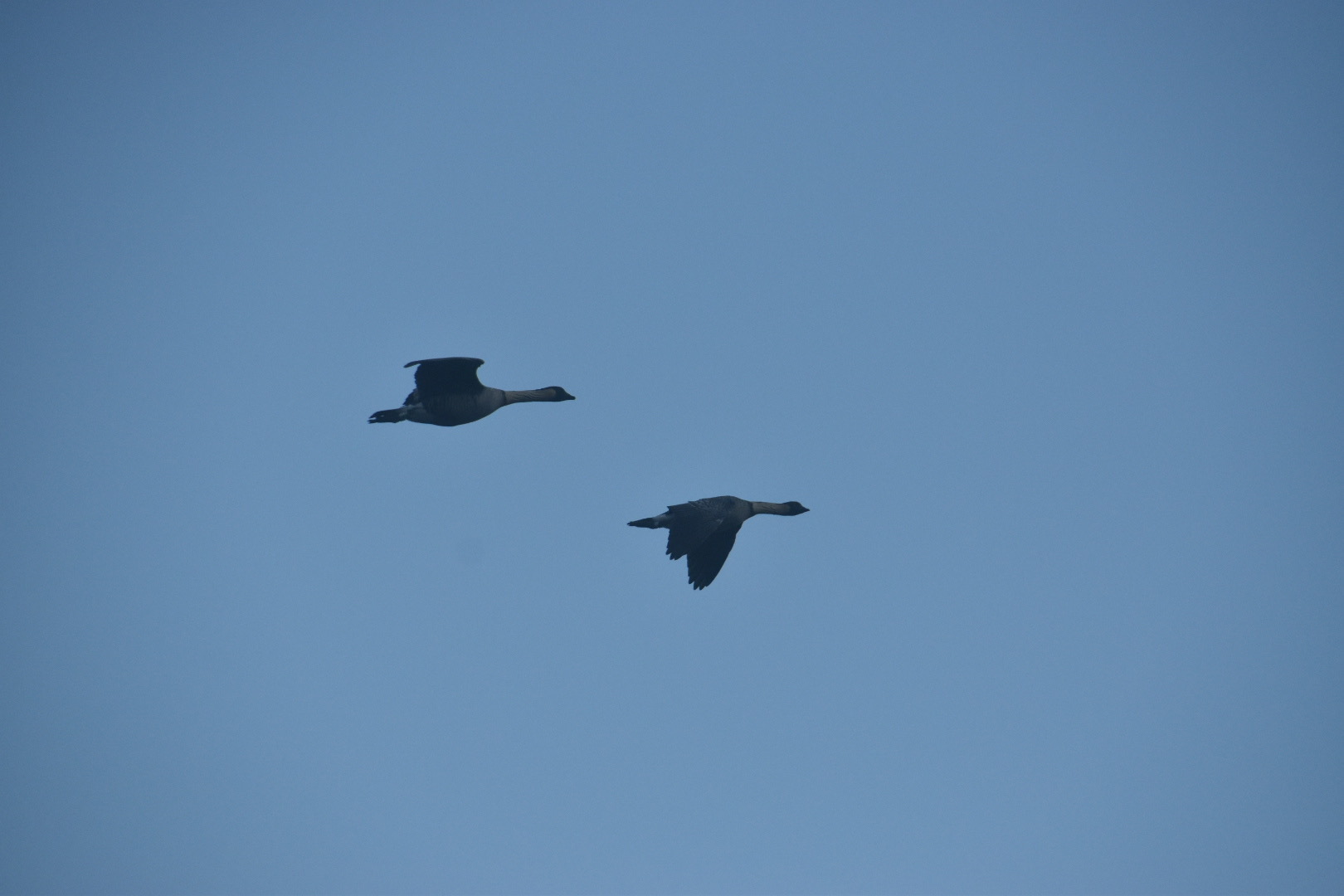
I’m afraid it’s true that there are not many nene. They are easily outnumbered by the ‘apapane, and more than easily outnumbered by people. You may wonder why, if there aren’t that many of them, you hardly ever see them one at a time. I mean, wouldn’t you expect that a nene would go its own way from time to time, just to find some ‘ohelo berries of their very own?

One nene thought that independence sounded like the way to go.

He’d been to nene school, so he thought he knew it all. He knew how to find food. He knew how to fly. He’d done the drills at formation flying without getting excited about it. He was going to be the nene who made his own way, without relying on (and, you know, sharing with) the other nene.

So off he went to find his own spaces.

There’s a lot more of Hawai’i Island than there are nene, so it wasn’t difficult. If he spotted a little flock of nene in the air or on the ground, he’d just go somewhere else that they weren’t. That was lots of places, and plenty of those places had food, and water, and places to rest and relax. All in all, he thought he was having a pretty good nene life.

One day as he was in the air looking for another place to relax and eat, he heard the calls of some nene behind him. Glancing back, there was a little “V” shape of five geese flying in formation. They called out a friendly greeting, to which he replied – he liked being alone, but he wasn’t going to be rude about it.

What surprised him, however, was that the little “V” of nene was catching up with him. In fact, they passed him in the air, still calling out their “Hello!” He thought he was a pretty good flier, but they sped on by and he couldn’t keep up. It didn’t take long before they’d disappeared into the clouds.

How had they flown past him so fast?

Sometimes when you don’t know something and you don’t have Google, the best thing you can do is ask someone who should know. So he sought out his nene school teacher. When he found her, she was just finishing up a formation flying class. He waited, mostly patiently, until she was done, and told her about being passed by those other nene.

“Am I just so slow?” he asked her.

“No,” she said. “You’re not slow. You’re alone. Flying together – in that ‘V’ formation – allows us to fly more easily. The wings of the birds in front create good flying air for the birds behind. It makes a difference. We can put more strength into it. We fly better together.”

“You mean,” he said, “that if I always fly alone, I’ll always fly harder and slower?”

“That’s exactly what I mean,” she told him. “Together is the easy way to fly.”

Never let it be said that nene won’t learn. He found his own place in a little flock, and there in its “V” he flew easier and faster than he could remember doing before. Together is the easy way to fly.

by Eric Anderson

Watch the Recorded Story

I write these stories ahead of time, but I tell them from memory plus inspiration. The story you just read will not match the recorded telling of it.

Photo by Eric Anderson

Help to Get Home

June 19, 2022

1 Kings 19:1-15
Luke 8:26-39

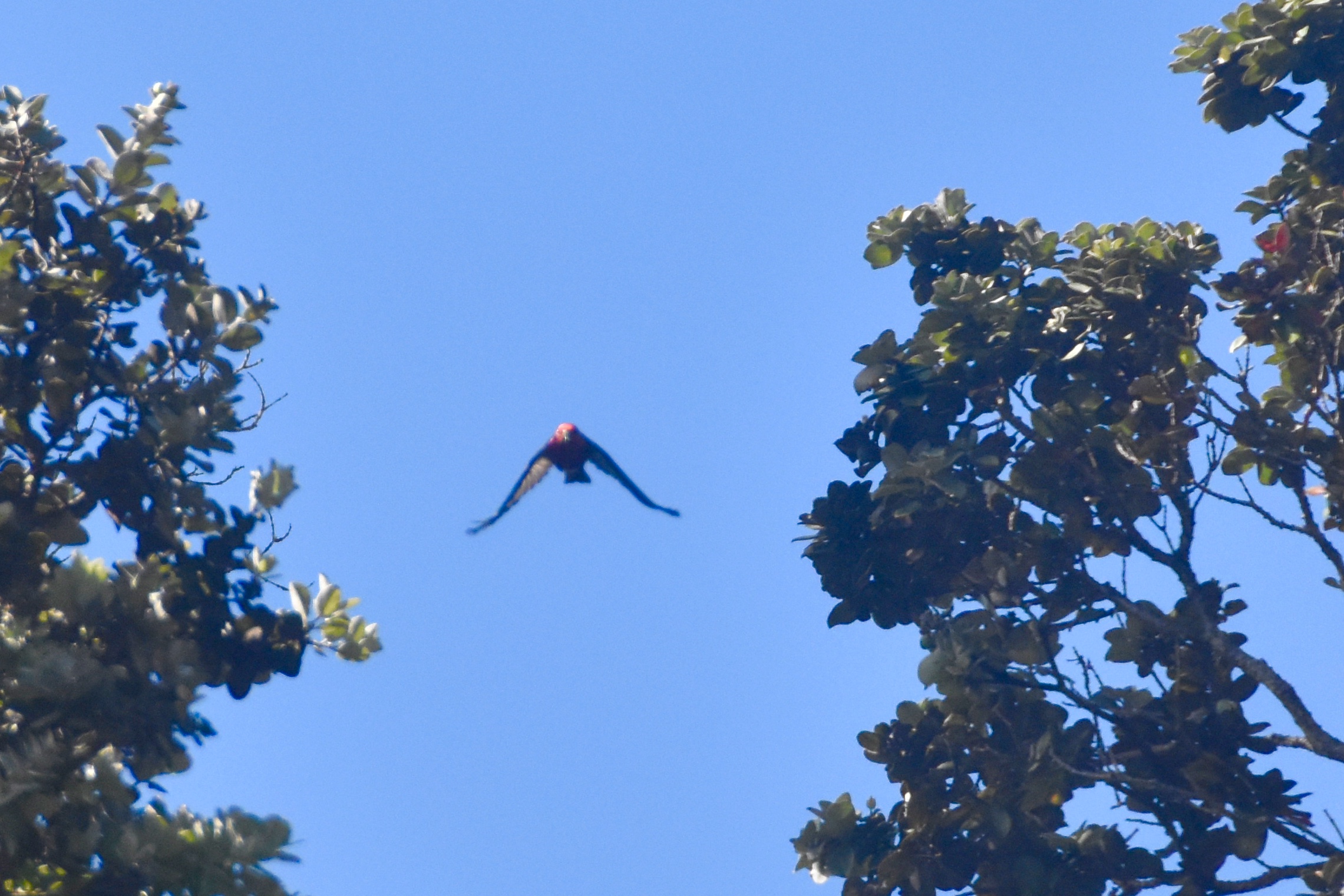
The ‘apapane was lonely, lost, and scared. He’d been flying just above the treetops when the big wind blew up. In a moment its strength had snatched him away from the tree branches he wanted to cling to and shelter in. It carried him along above the slopes of Mauna Loa and off toward Kona-side. It was too much to fly into the wind. It was too much to fly across it; he’d simply have been tumbled. All he could do was stay in the air and ride it until it calmed enough that he could land somewhere and take shelter.

That took far longer than he’d hoped. Off to his left he could see the ocean from time to time. The land beneath him fell away, and he let himself descend with it, which eventually put him behind one of the ridges of Mauna Loa. The wind’s strength faded, and he was able to find a perch in an ohi’a tree. There he clung and gasped for breath and was just grateful to be safe again.

He knew he was a long way from home, however. His own flock was far behind. None of the land shapes looked familiar – or if they looked familiar but he knew they weren’t home. When the storm calmed, he knew he’d have a long flight home.

After a while, he heard the roar of the wind overhead subside. He took off once more to test it, and it was safe to start the journey back. But he was still scared, he was pretty much lost, and he was all alone. What else could he do but start his flight?

He stayed close to the trees – he didn’t want to be blown back again if the wind returned – and tried to avoid the i’iwi and the ‘amakihi and the ‘akepa he saw. He flew around the little flocks of ‘apapane as well. He wasn’t sure he’d be welcome. But that meant that he was also flying around the places where ohi’a was in blossom. That, after all, was where the local birds were. Avoiding them meant he was also avoiding the places to find food and to rest safely.

Tired and hungry, he thought he spotted an ohi’a tree with no birds in it. It had a few blossoms on it, not many, and not enough to make a meal of nectar, but he hoped he’d find bugs to eat to fill himself up. He landed near a cluster of blooms and had dipped his beak for nectar when he heard and ‘apapane voice say, “Who are you? What are you doing here?”

He turned his head to see an older female ‘apapane, a tutu for certain, he thought, so he answered respectfully, “I’m sorry, auntie. The wind blew me away from my home and my flock, and I’m on my way back. I’ll just go now.”

He opened his wings to take off again, but the tutu ‘apapane stopped him. “Wait, now. You’re in no shape to fly. Eat something.”

He gratefully dipped his beak in the ohi’a blooms again, and hopped about chasing bugs and spiders. “Rest,” said his new friend, and he let his eyes close. When they opened again she said, “Come with me,” and they flew to another ohi’a tree, this one dripping with blossoms and nectar. She told the other ‘apapane in the tree that he was a visiting friend, and he had an excellent meal and took another rest.

When he woke, the other birds had flown to other trees, but the tutu ‘apapane was still there. “How do you feel?” she asked.

“Like I can fly home,” he said.

“Have a safe flight and happy landings,” she said, which is the most ancient of ‘apapane prayers.

Off he went, and he did find his way safely home, because he’d been given food, and rest, and kindness by someone who was loving and wise.

by Eric Anderson

Watch the Recorded Story

The recording is of this story told live without notes. It’s not the same as the prepared text.

Photo by Eric Anderson.

The Wind is Against Us

We left you there upon the mountain, Lord.
The safest place for you – or well, for us –
well insulated from the crowd’s demands
for things that we, in truth, cannot provide.

If you are there upon the mountain, Lord,
then you will not repeat those awkward words,
“You give them something now to eat.” With just
five loaves of bread at hand (as well you knew).

If we had known about that pair of fish,
well, that would surely make the difference
in our well-meaning cluelessness. “Bring them
to me,” was all you said, and all were fed.

So you are there upon the mountain, Lord,
and when we have once more resumed our breath,
when we are not so weary carrying
those baskets full, we will be there for you.

But now that you are on the mountain, Lord,
we find that we cannot return to you
with quite the ease we promised. Now a wind
opposes our return to land and you.

We’d rather be upon the mountain, Lord,
instead of struggling with our oars and sail
to make some headway into this head wind.
How can we find your presence once again?

But now the wind blows from the mountain, Lord,
and with it moves a terrifying shape,
a figure of the dead and of our deaths,
to take us from your side for now and ever.

“Take heart!” we hear. “Do not now be afraid!”
Oh, these, we know, are words of angels, heard
by those they summon to great deeds, the likes
of which are not within our feeble skills.

And, “It is I!” you cry, O Lord, a word
of doubtful reassurance. Who is that
who walks upon the gale-tossed sea? A ghost
we comprehend; a Savior, not as much.

But when you were upon the mountain, Lord,
we strove to come to you despite the wind
and now see you come to us, and how
can we do other but to meet you here?

So call us from the mountain, Lord, and call
us from the heaving sea, and may we take
our faltering steps upon the waves and reach –
and find – and grasp – your outstretched loving hand.

A poem/prayer based on Matthew 14:22-33, the Revised Common Lectionary First Reading for Year A, Proper 14 (19).

Panel from a Christopher Whall window in Chipping Warden, Northamptonshire. Church (St Peter and St Paul). Photo by jmc4 Church Explorerhttps://www.flickr.com/photos/52219527@N00/5384683573/, CC BY 2.0, https://commons.wikimedia.org/w/index.php?curid=18275704.