The word may come on the phone or in print, or over the ether. The news I’ve been fearing too long, and a loss beyond my bearing. Come sit… with me… Until… the word comes… And wait with me in the silence.
I’ve been longing to know the answer: Maybe yes. Maybe no. My heart is beating so swiftly, and my veins are leaping and pounding. Come sit… with me… Until… the word comes… And wait with me in the silence.
This is the night of shadows and I know what will be. Until then I will weep my prayer for deliverance I won’t receive. Come sit… with me… Until… the soldiers come… Just wait with me in the silence.
Come sit… with me… Until… the dawn comes… Wait with me in the silence.
I had set a goal to write a new song for this Holy Week. I was pleased to have this song to play today.
These seven poems and the song are based on Scriptures associated with “the Seven Last Words of Jesus” – strangely, there are eight lessons. The video includes reading of the Biblical texts, reading of the poems, and performance of the song, “As We Bring Him Down.” The poetry and the video were prepared for Good Friday in 2022; I am reposting them for Good Friday 2023.
You strode those streets to teach, to worship and to heal. You strode those streets to cast the moneychangers from the Temple courts.
And now, with failing strength, you stumble up the street, too weak to bear the instrument of death. Where once you rode in festival parade they follow you to mourn for what has been and what will be.
I’m sure that Pilate knew just what he said. This is what happens to the ones who claim they have no emperor but Caesar. King of the Jews? Claim the title if you like, but know that title brings you only here, to die upon a cross, not reign upon a throne. So Jesus, claiming spiritual rule, will offer up his spirit to the Roman callousness and fear.
How strange a criminal, whose deeds “deserved” a death of torture, understood the reign of God much better than the priests, much better than the Roman Governor, much better than the monarch, better even than the ones who followed Jesus. “Jesus, remember me when you come into your kingdom.” For Jesus, entry to that realm was not through gates of stone, but gates of death. Beyond those gates our eyes see only shadow, but to his, and to this criminal, the shadows have been thrown by brilliant light.
Your friends look on, O Jesus. See? Your mother Miriam: she weeps with Miriam and Miriam. She will not urge you to a wedding feast, not now, or prompt you to transform the vinegar of death into a vintage rich with life. Instead, as scarlet stains your hands and feet, you transform stranger into son, and woman into mother. Here amidst the panoply of power and of hate, you fill the purifying jars of love.
Who could not bear to watch from heaven? Was it the sun, ashamed to the Savior die? Was it the moon, unable to divert its gaze? Was it the angels who had praised Messiah’s birth? Or was it simply that the clouds must gather, too, and witness bear, and mourn, and weep?
Forsaken the Anointed One. It seems so strange that Son of God, Messiah should cry out in abandonment – or… Does it?
Do we not hear the question echo down the years, the centuries, and on, “I was your God, and you my people, and you turned away.” We worship a forsaken God.
I could not blame you, Christ, if you let “It is finished” be your final word. You only came to do us good, and we? We desecrated you, we desecrated the tree on which we watched you die.
I could not blame you, Christ, if you decided that we had rejected your salvation – for we did – and now could live in suffering – as we do. And you, who stood for truth, nearly let us live the lie, but you could not let “It is finished” be the end.
The calloused feet that trod the miles. The mobile lips the formed the smiles. The fingers that bathed his friends’ toes Are still – are unmoving – Are released from the world and its woes.
[Chorus]
Hold him gently as we bring him down. Throw aside the bitter thorn crown. Lay him in the cloth we could find. The world has been cruel to the kind.
The sparkling eyes that held yours in peace. The worker’s hands that feared no disease. The ears that heard more than we knew Are still – are unmoving – Are now just memory for a few.
[Chorus]
The open arms we have crossed on the chest Where the loving heart beats not in his breast. Draw the fabric across the dear face So still – so unmoving Oh to see it again. Oh to find such a place.
Mary took a pound of costly perfume made of pure nard, anointed Jesus’ feet, and wiped them with her hair. The house was filled with the fragrance of the perfume. – John 12:3
To the cheers of the crowd, ride along. Turn the tables and scatter the coins. As sweet perfume comforts your feet, Comfort the woman who comforts you.
[Chorus]
Six days, six days in the city. Six days to ready your heart. Six days: does anyone understand That you must play this part?
In the Temple courts, proclaim truth. Turn the arguments back on the skeptics. Raise your sad eyes to the pillars of stone That you know will come down, and come down too soon.
[Chorus]
Send them out to make plans for the meal. Wash their feet, whatever they say. Pray alone as sweat streams from your brow, Knowing thorns will be your crown.
[Revised Chorus]
Six days, six days to the palace. Six days, six days to the cross. Six days, six days to the tomb… Six days for all to be lost.
Six days to wind up the journey. Six days of betrayal and strife. Six days to lay down your power…
Three days… Three days… Three days to take back your life. Three days… Three days… Three days to raise up your life.
I imagine you have some idea of the story of the first Palm Sunday, probably because we just read the story. It’s been a year since the last one, though, so let me remind you of the basics. On Jesus’ last visit to Jerusalem, he sent two of his disciples to borrow a donkey for him to ride. As the donkey walked up into the city with Jesus on its back, people waved tree branches – palms, for the most part, I guess – and put their cloaks on the road to soften the donkey’s feet, and shouted a welcome to Jesus that also begged him to save them. It was a big, noisy, spectacle.
One thing the gospels leave out, however, is what the disciples said to Jesus when he told them to get a donkey, and what they said to each other as they were going to get it.
Here’s what I imagine they said to each other.
“Well, we lost that argument.”
“Have you ever won an argument with Jesus?”
“Well, no. But I was hoping this was the first time.”
“I was rooting for you. I mean, you were absolutely right. We should get Jesus a horse.”
“He said no.”
“I know he said no. But can’t you imagine Jesus riding into Jerusalem on a horse? It would be so cool.”
“Everybody would cheer. And then they’d follow him. He’d look just like a Messiah on a horse.”
“Yeah. And look! There’s a horse!”
Now I imagine the two of them standing there, looking at the horse.
“What a great horse.”
“Very noble.”
“And… Jesus said no.”
“He did. We lost that argument.”
“Here’s the donkey he told us to find.”
The two of them looked at it.
“The horse was better.”
“The horse was a lot more impressive.”
“The horse was royal.”
“He’ll look like just anybody on a donkey.”
“They might cheer anyway.”
“Let’s hope.”
“Why do you suppose he insisted on a donkey?”
“I don’t know. I mean, you’re a king on a horse. On a donkey, you’re just anybody.”
“A humble anybody.”
“Really humble.”
I’m not sure all that many people value humility these days. There weren’t a lot of people who valued it two thousand years ago. I think it’s worth pointing out, though, that one person who chose to be humble was… Jesus.
by Eric Anderson
Watch the Recorded Story
When I tell the story, it’s from memory – I can’t quite resist improvising in the telling!
The image is L’ânon de Bethphagé (The Foal of Bethpage) by James Tissot – Online Collection of Brooklyn Museum; Photo: Brooklyn Museum, 2008, 00.159.191_PS2.jpg, Public Domain, https://commons.wikimedia.org/w/index.php?curid=10957484.
“When he entered Jerusalem, the whole city was in turmoil, asking, ‘Who is this?'” – Matthew 21:10
The whispers whip round the jam-packed streets – Whispers? Well, no. The roar of the crowd means a whisper is shouted, and may not be heard by the hearer intended.
“Who is this?” they wonder, and some have their answers: “He’s a healer,” say some, “with remarkable power. So many return from him joyfully home!” The sick cry “Hosanna! O save us!” today.
“Who is this?” they wonder, and some say, “A teacher, a rabbi, a preacher with wonderful tales. He’ll challenge you, certainly, if you are careless. If you take time to listen, he’ll make you wise.”
“Who is this?” they wonder, and some say, “A monarch, Messiah, Anointed One: he’ll free us from Rome.” When they cry, “Hosanna!” it echoes with anger and yearning for freedom from Empire’s yoke.
“Who is this?” they wonder, and some say, “A rebel, a bringer of trouble, a sinner, a punk. Just watch: all these people will raise swords tomorrow, and on Tuesday the Romans will slaughter us all.”
“Who is this?” they wonder, and some have their answers. “Who is this?” they ask and the rider is silent. “Who is this?” they ask, little realizing the word being spoken in silence on a donkey’s foal.
“Who is this?” they wonder, as the beast ambles on. The Anointed One, yes, but the Humble One as well, who would rule as a healer, and guide as a teacher, but will save as One utterly faithful to God.
A poem/prayer based on Matthew 21:1-11, the Revised Common Lectionary First Reading for Year A, Sixth Sunday in Lent, Liturgy of the Palms.
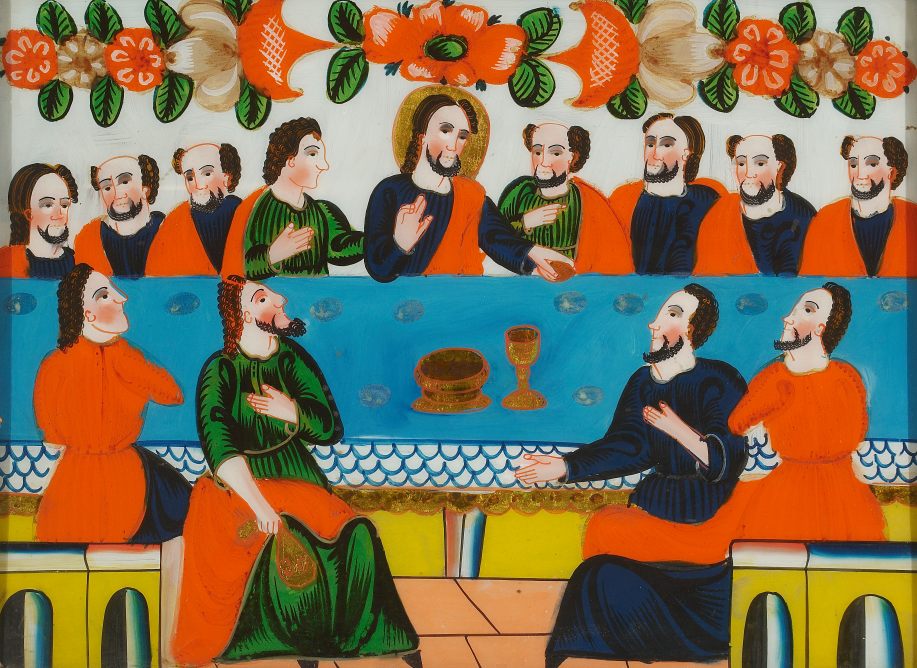
After saying this Jesus was troubled in spirit, and declared, “Very truly, I tell you, one of you will betray me.” The disciples looked at one another, uncertain of whom he was speaking. One of his disciples–the one whom Jesus loved–was reclining next to him; Simon Peter therefore motioned to him to ask Jesus of whom he was speaking. So while reclining next to Jesus, he asked him, “Lord, who is it?” Jesus answered, “It is the one to whom I give this piece of bread when I have dipped it in the dish.” So when he had dipped the piece of bread, he gave it to Judas son of Simon Iscariot. After he received the piece of bread, Satan entered into him. Jesus said to him, “Do quickly what you are going to do.” – John 13:21-27
For centuries your followers have sought to make the choice of Judas make some sense. Was he just greedy? Was he bereft of soul? Did he have some agenda you would not accept?
Despite the Gospel writers’ efforts, Judas’ treachery remains a mystery.
The greater mystery is how you shared that bread – the bread we break in honor of your death – how did you share that piece of bread and know, and know that he contrived your death?
Who is it, Lord? your closest friend inquired. You knew. You knew the name as well as you discerned the anguish that approached, that would be on its way, when you extended bread.
Were I to know such things, could I extend a piece of bread as to a trusted confidante, and breathe, “Do quickly what you do.” The answer is a clear and easy, “No.”
Yet you released the bread into betrayer’s hand, and put your life into his hand. He took his hand into the night to take your life.
Despite the Gospel writers’ efforts, Jesus’ love and bravery remain a mystery.
A poem/prayer based on John 13:21-32, the Revised Common Lectionary Gospel Reading for Year B, Wednesday of Holy Week.
“…But we proclaim Christ crucified, a stumbling block to Jews and foolishness to Gentiles, but to those who are the called, both Jews and Greeks, Christ the power of God and the wisdom of God. For God’s foolishness is wiser than human wisdom, and God’s weakness is stronger than human strength.” – 1 Corinthians 1:23-25
We are practiced and proficient at crucifying you, O Christ.
Before your squalls e’er cracked the stable’s musty silence, you suffered in your people’s suffering.
How many shall we name? The Calvaries of Scripture? Brickworks in Egypt. Assyrian spears. Mendacious monarchs. False prophets.
The flames of Solomon’s temple. The ceaselessly repeated prophets’ bark: “The widows and the orphans have been left to die.”
We are practiced and proficient at crucifying you, O Christ.
The hands that drove the nails into your flesh did so adeptly, trained by other flinching, bleeding flesh, and other hopeless moans.
Other hands were just as deft to rob the poor and call it right, to crush the power of women and to burn the Second Temple, too.
For followers of Christ the faith might mean exclusion from their home, bereavement from their trade, and yes, it might mean crucifixion.
We are practiced and proficient at crucifying you, O Christ.
I’ve been accustomed to using nails of race and gender privilege, to seeing nails of emptied magazines and nails of gender definition.
I’ve mourned and not prevented nails of poverty and war and greed from fixing you – your people – to the crosses that adorn this world.
But never had I thought to see that foolishness and folly would conspire to claim the crown of wisdom and to crucify a host in just a year.
We are practiced and proficient at crucifying you, O Christ.
No wonder that you wept.
A poem/prayer based on 1 Corinthians 1:18-31, the Revised Common Lectionary Gospel Reading for Year B, Tuesday of Holy Week.
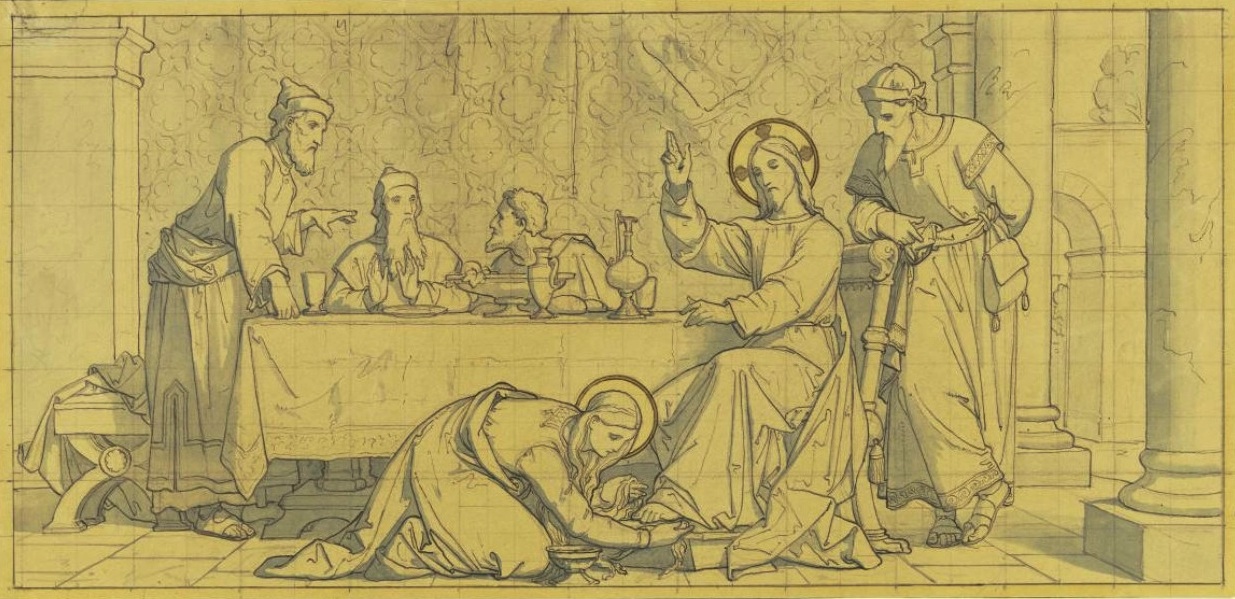
Mary took a pound of costly perfume made of pure nard, anointed Jesus’ feet, and wiped them with her hair. The house was filled with the fragrance of the perfume. – John 12:3
Oh, Jesus, must you say such shocking things? She had, indeed, done such a precious thing for you, so tender and so intimate, so grateful for the love you bore for her and Martha. For after all, you brought their brother back.
And now, with scent of spikenard rising in the house, you spike the words of Judas, keeper of the purse, by speaking of the day you would be laid to rest, a tragedy that perfume could not sweeten, not with rivers poured upon your lifeless corpse.
Oh, pause now, Jesus, for you shock us once again, for must we ever have the poor with us? Could not the rivers of the scent we’ve not poured out transform this world into a paradise on earth? Perhaps they could – but bottled they remain.
Except for this one jar unstopped above your feet, the oil dripping from your soles into the earthen floor, still warm from your still-pumping heart, now rising to enchant your breath, their breath, our breath, sweet-scented dust inhaled to death and life.
A poem/prayer based on John 12:1-11, the Revised Common Lectionary Gospel Reading for Year B, Monday of Holy Week.


 ordainedgeek