Story: Grand

September 14, 2025

1 Timothy 1:12-17
Luke 15:1-10

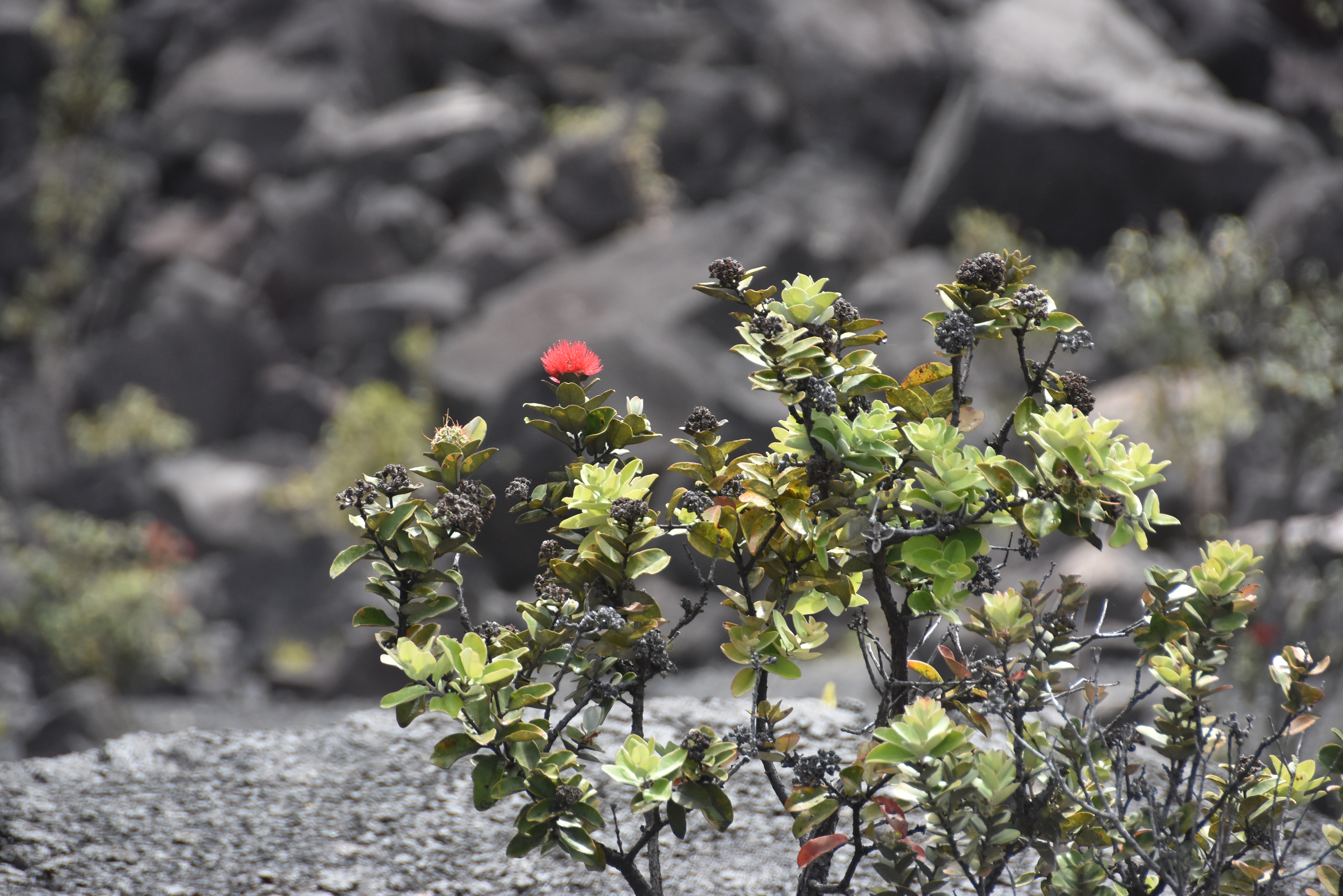
There was a tree, an ohi’a tree, that stood on the cliffside above Kilauea Iki. The tree had stood there long years. He was tall. He was grand. And he was proud.

He looked down upon the mostly flat black rock of Kilauea Iki and sniffed. There were ohi’a trees down there, too, but they were small and bushy. The tallest rose no more than eight or nine feet, less than a tenth of this tree’s one hundred foot crown.

“You’re so small,” he said to the little ohi’a trees below. “What difference can you make?”

Next to him stood another tree, just as tall, just as grand, but not so proud and rather wiser. “Don’t you remember?” she asked him. “This was no more than a pond of lava years ago. These trees had to catch every drop of rain. They had to make their own soil. Someday this crater will be filled with trees, and it will be because these trees got it started.”

“Well, all right,” huffed the other tree. “But what about these little bugs that crawl all over me? They’re even smaller. And they nibble at me. And they itch. They can’t be of any use.”

His neighbor looked him over and said, “These are the same creatures that attract the birds to you. Between the birds and the bugs, they carry the pollen around that means there will be ohi’a seeds.”

“Seeds,” huffed the proud tree. “What good are they? They’re even tinier than the bugs!”

“Seeds,” said the wise tree, “mean that there will be a future for our forest up here on the cliffsides as well as in the rocky bottoms of the craters. Seeds mean new trees where there hadn’t been any before.”

“Seeds,” she said softly, “mean that when we are measuring our height on the forest floor, there will be other trees rising over us.”

The proud tree huffed again. “There could never be a tree as grand as me,” he said, and he ruffled his branches in the breeze.

“Seeds,” said the wise tree, as she watched a little cloud of them dance in the wind from the proud tree, “Seeds mean that there will be a forest even grander than either of us.”

by Eric Anderson

Watch the Recorded Story

I write these stories ahead of time, but I tell them from memory (and a little bit of inspiration). What you have just read does not precisely match what you’ll see.

Photo of an ohi’a in the Kilauea Iki crater by Eric Anderson.
Story: The ‘Alawi Who Was Noticed

August 31, 2025

Proverbs 25:6-7
Luke 14:1, 7-14

Up on the mountain slopes, there are a lot of very colorful birds. The i’iwi and the ‘apapane are the brightest in color, with those glistening red feathers and the contrasting black of their wings. They’re not alone, though. The ‘amakihi makes a pretty brave sight in yellow, and the ‘akiapola’au is brighter still. Add in the colors of the flowers on the trees and on the bushes, and the forest is a pretty colorful place.

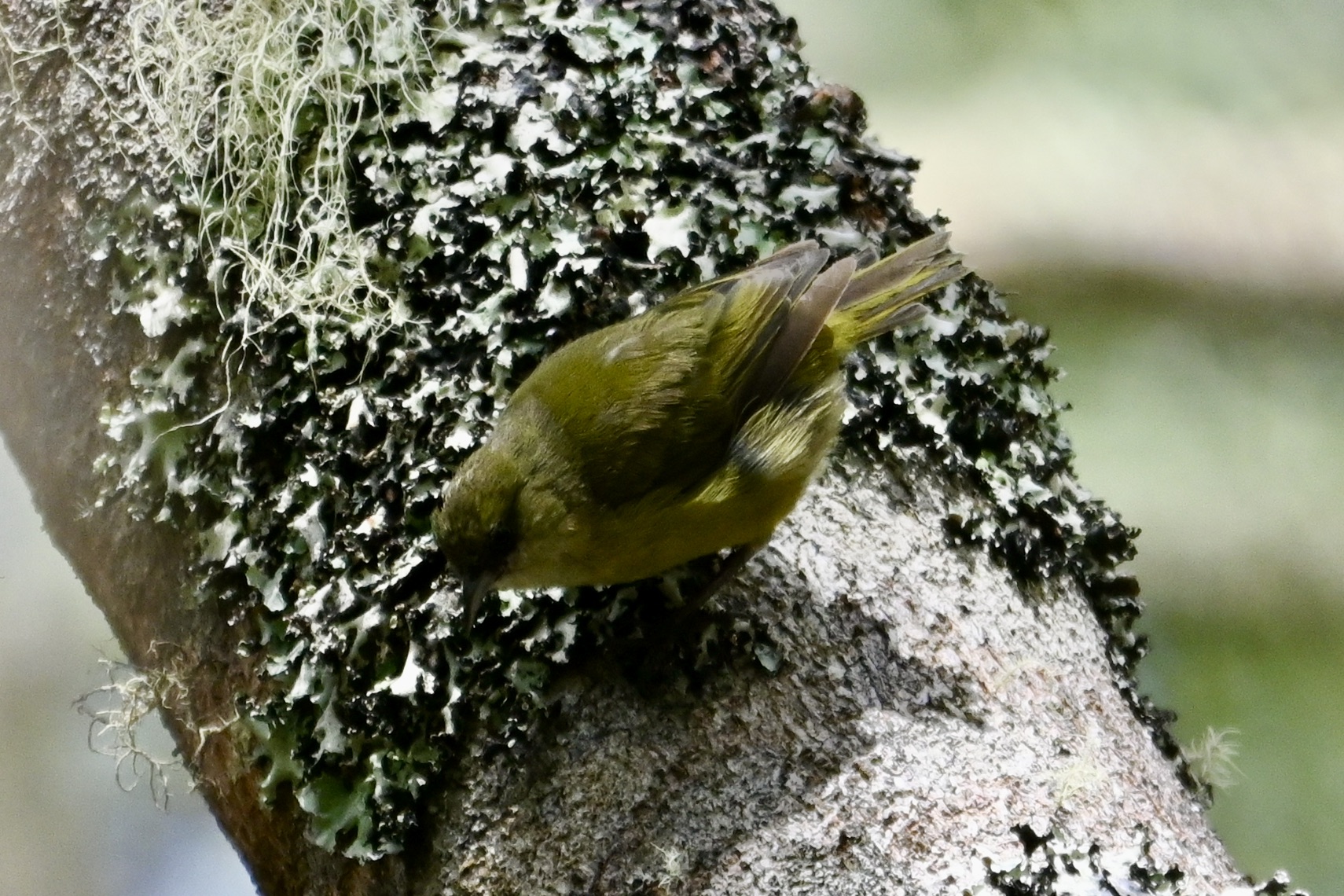
And then there’s the ‘alawi. The ‘alawi isn’t brightly colored. It’s grayish green with some yellow tint on the belly. It’s not even a strong singer. It has a pretty plain kind of call. It’s so understated, in fact, that people went many years before making the connection between the old Hawaiian word “’alawi” and a bird westerners called the “Hawai’i Creeper.”

Mostly, this hasn’t bothered the ‘alawi at all, since they don’t pay much attention to what people think of them. But one of them did start to feel bad. In the midst of a forest full of bright red ‘apapane, orange ‘akepa, and yellow ‘akiapola’au, who would notice a little green ‘alawi?

“It’s a pity I’m so drab,” he told himself one day. “I’m going to change that.”

I have to admit that his approach had some promise. He was going to start wearing jewelry – that is, he was going to tuck a flower behind his ear, as we see so often from human women in Hawai’i. He was so clever that he came up with the idea himself – he really didn’t pay much attention to people.

There was, however, a problem. Oh, he could grasp flowers with his feet quite well. But when you want to tuck a flower behind your ear, it really helps to have, well, ears.

An ‘apapane watched him do this and asked, “Why? I mean, why?”

“I want to be noticeable,” he said with some embarrassment. “I don’t want to be drab.”

“I’m noticing,” said the ‘apapane, “and I guess you aren’t drab. But you do look silly. Is that how you want to be noticed?”

This might have gone on for a while, but it turned out to be another of those dry times in the forest, and it got harder and harder to find things to eat. For the ‘alawi that’s mostly bugs. Everyone in the forest was feeling the pinch in their bellies.

Our friend the ‘alawi, however, got lucky one day. He found a stand of trees that were better watered, and the flowers on them had attracted a good crowd of insects. He flew over to feed, but stopped. He didn’t want anyone else to be hungry while he ate his fill. So he started to call the ‘alawi’s plan song. That didn’t seem to attract anyone, so he found an ‘akiapola’au and brought him to those trees. The ‘akiapola’au whistled, and some other birds and some other birds and some other birds made their way over, sang their songs, and settled in to eat.

Hopping along a tree branch, the ‘alawi met the ‘apapane he’d seen a few days before.

“You found a way to be noticed, youngster,” said the ‘apapane.

“I did?” said the ‘alawi.

“You did,” said the ‘apapane. “We’ve all noticed you, and not for wearing a flower. We’ve all noticed you for being the considerate and compassionate bird you are. Well done. And thank you.”

by Eric Anderson

Watch the Recorded Story

I write these stories in advance, but I tell them without notes, so between memory and improvisation the story as I told it is different from the story as I wrote it.

Photo of an ‘alawi by Eric Anderson.

I’m Waiting

“[Jesus said,] ‘But when you are invited, go and sit down at the lowest place, so that when your host comes, he may say to you, “Friend, move up higher”; then you will be honored in the presence of all who sit at the table with you.'” – Luke 14:10

Is it fair to tell you I’m waiting, Jesus?
Yes, waiting for you to return in power.
Yes, waiting for resurrection’s dawn.
Yes, waiting for the Day of the Lord.

But I’m also waiting for your advice to work.

For truly, and sadly, I’m just as proud
as ever I was. When others are honored,
a part of me waits to hear my name called
though I know that it’s not about me.

But Jesus, you know, it’s still about me.

I’ve no cause to complain. I’m aware
that the praise I’ve received is more
than I’m due. I know it, and know I should head
for the end of the room, and take my place there,

But Jesus, you know I don’t like to be there.

I like the limelight, the spotlight, the office.
I like the small pond where my frog looks big.
I like it, and sure I’ve received it quite often.
I’ve heeded the summons of, “Friend, move up higher.”

But Jesus, I don’t always think I should be.

I can’t say I’ve bidden the poor to my table.
I can’t say I’ve done all the work I could do.
I can’t say I’ve lifted the spirits beside me.
I can’t say I’ve always been guided by you.

So Jesus, I’ll wait, and I’ll pray that you call.

A poem/prayer based on Luke 14:1, 7-14, the Revised Common Lectionary Gospel Reading for Year C, Proper 17 (22).

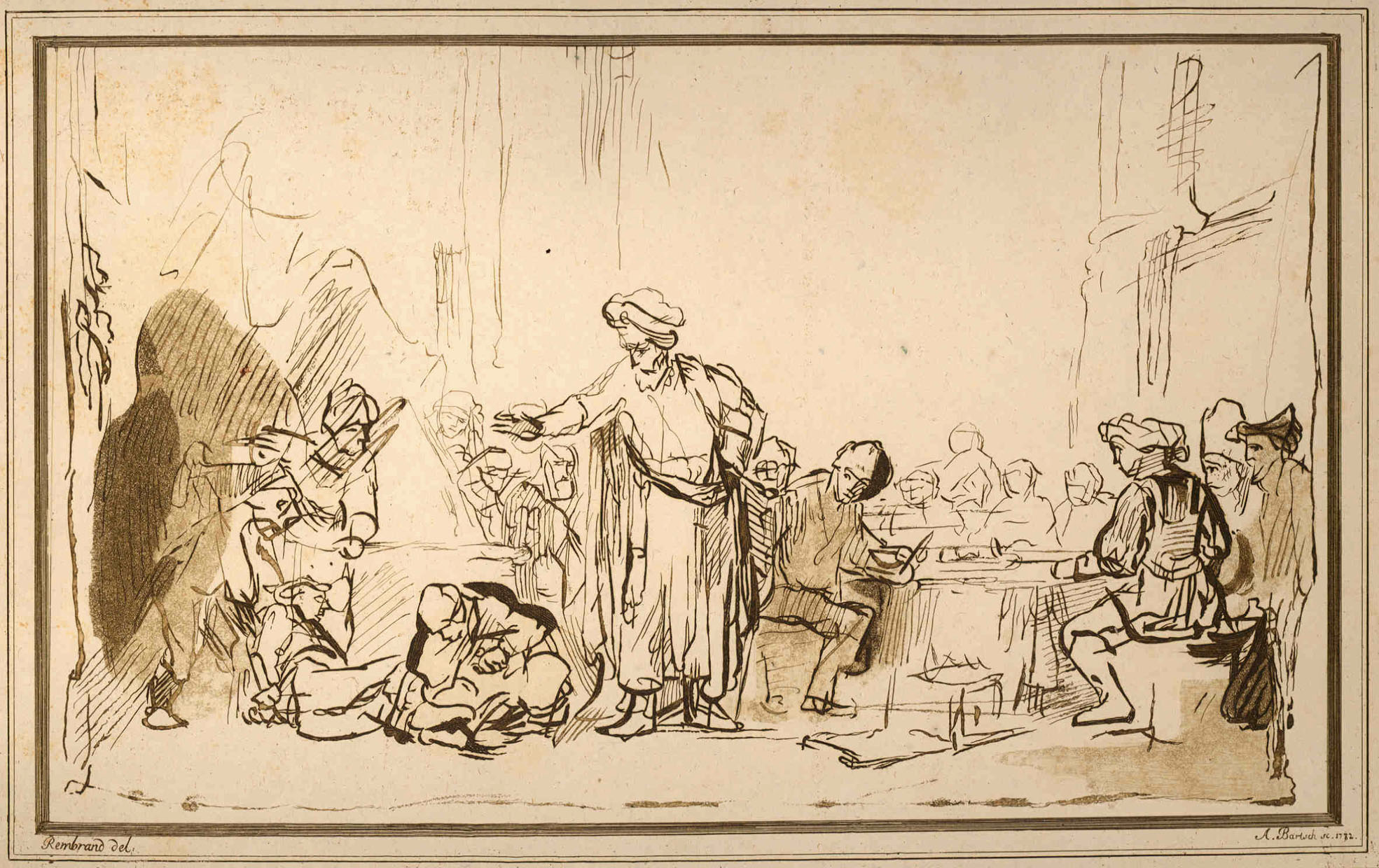
The illustration is The Parable of the Humble Wedding Guest (1782) by Bartsch, Adam Von (1757-1821), based on an unfinished drawing by Rembrandt van Rijn – http://hdl.handle.net/1887.1/item:1629982, CC BY 4.0, https://commons.wikimedia.org/w/index.php?curid=99478604.

Of all the temptations to which I’m subject, pride is the greatest.

Fighting the Storm

July 7, 2024

2 Corinthians 12:2-10
Mark 6:1-13

I like honu (green sea turtles). How about you? It’s just so comforting to me watching those sea turtles raise their flippers to the surface to breathe and look around, and then taking them down to snack on the seaweed, then turning themselves about like the most agile of dancers, then hauling themselves out on the shore to get a good solid nap in the sun.

I like honu.

It’s hard to believe that one could be a bully, but I’m afraid this story is about a honu who did become a bully. He’d shove smaller turtles out of his way as he grazed on seaweed. He knocked shells with honu who were in the spot he wanted to sunbathe in. Actually, he’d knock shells with a honu just to get it to move, then he’d nap somewhere else. He slapped other turtles with his flippers, he nipped them with his mouth, he’d slide over them when they surfaced to breathe, he… well.

He was a bully.

I’m sorry to say that, mostly, it worked for him. He didn’t have a lot of friends, and I guess part of the reason he was mean was that he didn’t have a lot of friends. But he ate a lot, and he got comfortable spots on the beach, and other honu didn’t pick on him, no they didn’t. So, as I say, it mostly worked for him.

Until, one day, he decided to bully the ocean.

The winds were strong and the surf was high that day. Rain lashed down from overhead so that even a honu found it difficult to tell where the sea top ended and the air began. Spray flew in sheets. Wavetops tossed careless fish into the air.

And this honu decided to go nap on the beach. I don’t think he expected to find sunshine there, but when somebody expects to get things his way all the time, who knows?

The problem was that the waves at the surface tossed him about, and when he dove down, the currents underwater dragged him back to sea. He was trying to get to one specific part of the beach, but the wind carried him along past where he wanted to go, and when he tried to swim back against it, he couldn’t – at least not from where he was. He lashed his flippers at the water both at the surface and deeper down, and in neither place could he make much headway.

Eventually he let the underwater current carry him back out to sea, where he surfaced and howled in rage – which is very rare for a honu – at the winds and the surf.

An older honu drifted by and said, “What’s the matter, youngling?”

He wasn’t that young, but she was a lot older (and bigger), so he didn’t quite yell back when he said, “The stupid wind and waves won’t get me where I want to go!”

“Watch the youngling there,” said the older honu, and he did. A younger, smaller turtle, one that he’d bullied any number of times, had positioned himself in a place where the combination of wind, waves, and current would carry him toward the beach. He made just the smallest of adjustments with his flippers as the water bore him along. Just at the beach, he dipped down to slow himself in the current going back and to avoid being thrown onto the shore from the top of a wave. Then he slid onto the shore, and slowly moved up on his now-active flippers.

“You can’t bully the sea, youngling,” said the older honu. “You shouldn’t bully anything, but especially not the ocean, which won’t notice you at all.”

It took him a long time to learn that lesson deeply, I’m afraid, and he spent a number of storms tossing about in the surf. Eventually, though, he learned that sometimes you don’t fight, you follow. And when he did, he fought less with other honu, and a bully learned to do better.

by Eric Anderson

Watch the Recorded Story

Due to a technical error, the story was not recorded this week.

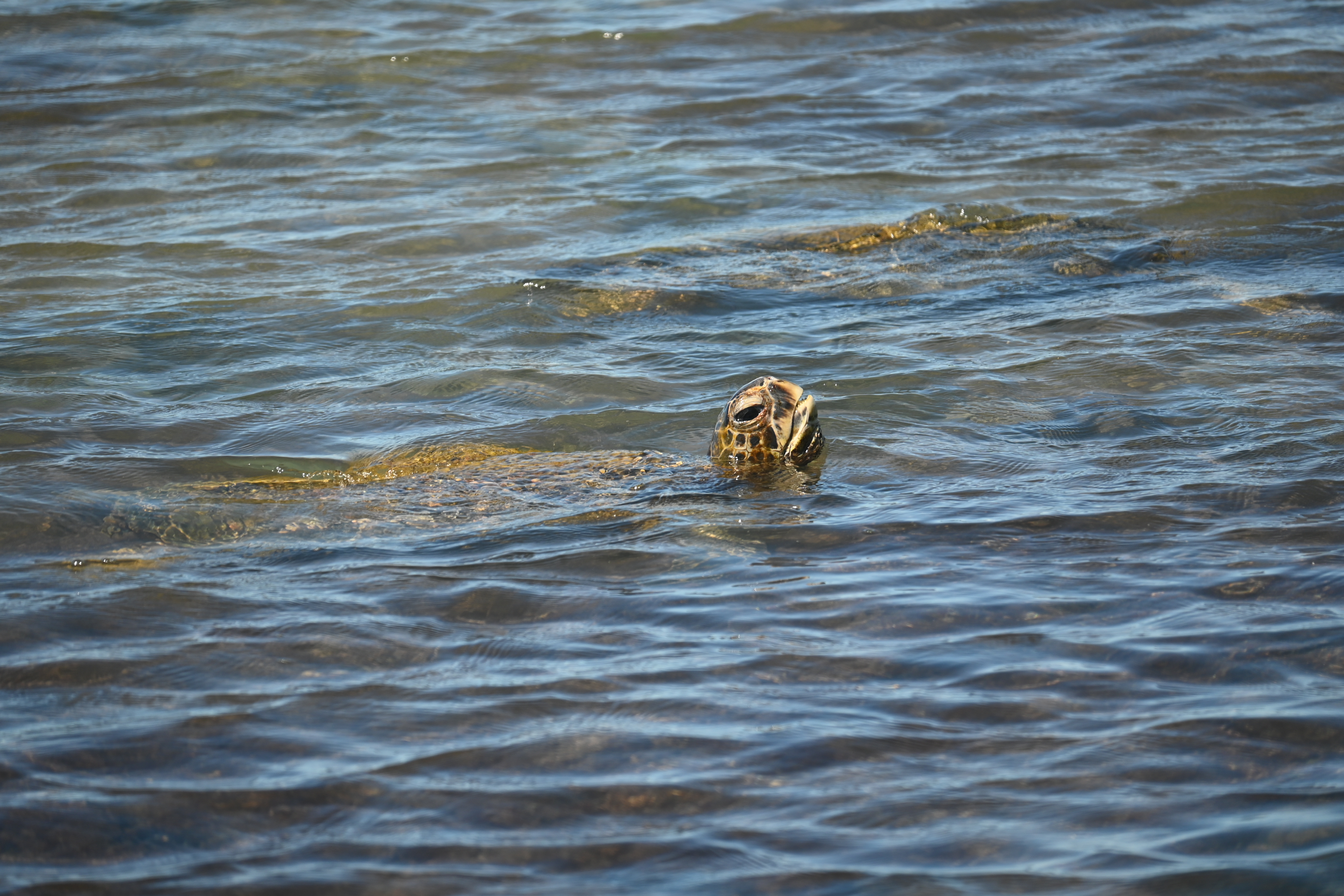
Photo of a honu (who showed no signs of being a bully) by Eric Anderson.

Story: Not Doing So Fine

June 30, 2024

Lamentations 3:22-33
Mark 5:21-43

He was the oldest pueo in the nest. He was the best. He did things right.

At least, that was his opinion.

It wasn’t his younger sister’s opinion, but that frequently happens with younger brothers or sisters. They tend to think an older (or a younger, come to think of it) sibling can’t do anything right. Oldest children, however, or oldest fledglings in this case, tend to think, “I’m right. I’ve got this. Depend on me.”

And before you ask, yes, I was the oldest child in my family.

To his sorrow, it turned out his mother didn’t think he did everything right, either. She wasn’t like his sister, who didn’t think he did anything at all right. No, Mother was far more specific. She didn’t like the way he flew, or hunted for food, or caught it. “You’re beating your wings too fast,” she’d tell him. “You’re not paying enough attention while you’re circling,” she told him. And, of course, “You’re coming down too fast.”

The problem was that everything she told him happened to be correct. He was an overeager flier, and he tired himself out. In that fatigue haze, he didn’t look carefully for mice on the ground, and he’d miss them. So far his dives to catch prey hadn’t been complete disasters, but they weren’t getting better, either.

“I’m doing fine,” he hooted at his mother.

“No, you’re not,” she hooted back.

Exasperated, he flew off alone, without his mother or his sister, to avoid her steady barrage of corrections.

That worked. Well, it stopped the criticisms. At least the ones he could hear with his ears. His mother had succeeded, however, in creating some mother memory in his head, and he could still hear her telling him to fly slower, look more carefully, and for pity’s sake, control your dives.

But he didn’t change any of that. Which is why, after missing several swoops and getting hungrier and hungrier, he made a desperate dive for a mouse and crashed right into a bush. He crawled out, leaving behind several feathers in the process, and found his little sister waiting for him.

“Are you OK?” she asked, and she meant it.

“Mostly,” he said, feeling rather bruised.

“You need to talk to Mom,” she said. “Actually, you need to listen to Mom.”

He knew he did, but he also knew how much he’d annoyed her. “I don’t think she’d help me after all I’ve put her through,” he said.

His sister shook her head. “She absolutely will,” she fussed at him. “Go ask Mom for help. Say you’re sorry. But ask her for help. She will.”

They flew back together, and he did say he was sorry, and he did ask for help, and he finally started following her instructions, and he finally started to learn.

His sister couldn’t resist telling him, “I told you so,” but he was grateful to both of them anyway.

by Eric Anderson

Watch the Recorded Story

I write these stories in advance, then tell them from memory. I improvise a lot.

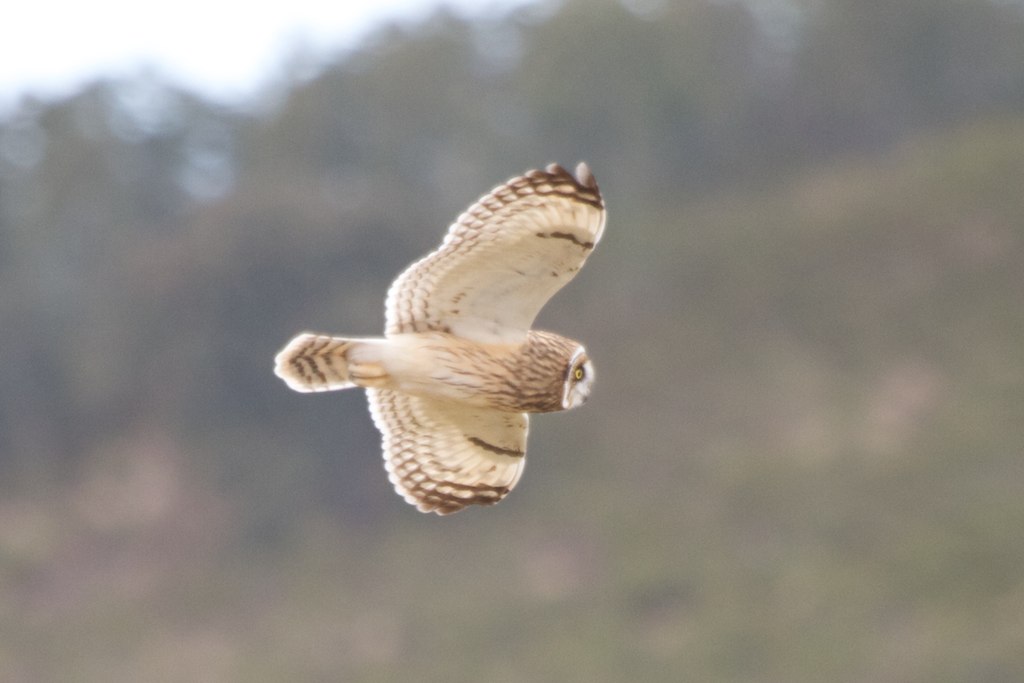
Photo by Bettina Arrigoni, via HarmonyonPlanetEarth – Pueo (Hawaiian Owl)|Saddle Rd | 2013-12-17at17-45-012Uploaded by snowmanradio, CC BY 2.0, https://commons.wikimedia.org/w/index.php?curid=30241884

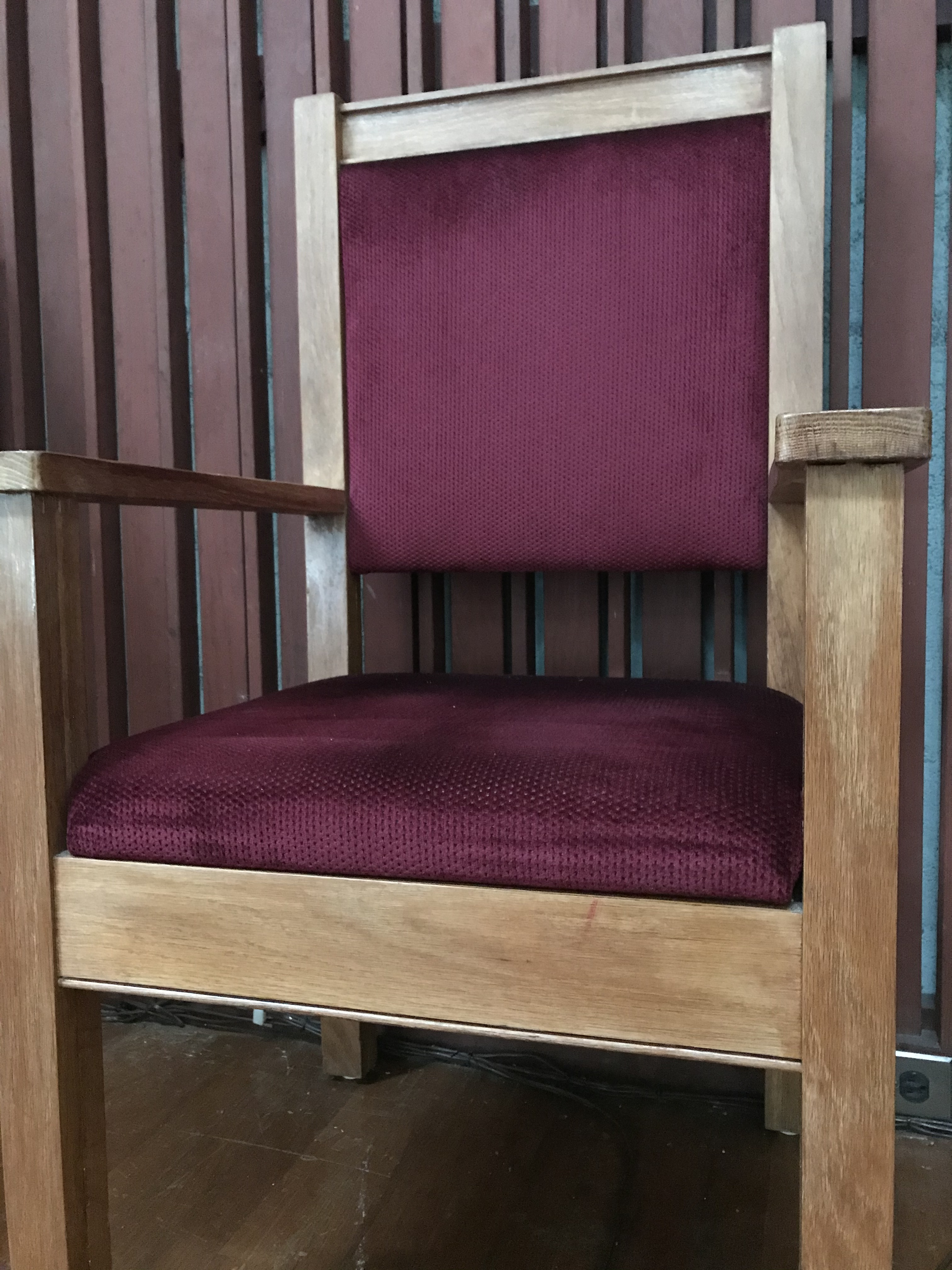
Moses’ Seat

To be quite truthful, Jesus:
I cannot really claim to know
just what you meant by “Moses’ seat,”
and what you meant to say about
authority, interpretation of the law,
or representing God. For certain
we have called a host of people “Lord,”
or “Teacher,” “my Professor,” “Mom,” or “Dad.”

Whatever may be true about the Truth
Divine, how cloudy and obscured it is
when heard from human tongues or hands!
Just like a cosmic game of “Telephone”
in which the loss of clarity means life for some
and death for many more. But Jesus, we
have heard your words through intermediaries,
assembled generations after you had taught.

From you to eager followers who did not, I know,
take notes, from them to others who, perhaps,
would write a word or two, to others yet
who finally recorded what they heard on reeds,
on parchment, vellum, paper, with a press,
and on to me today reminding me once more
that greatness is the act of service,
and hubris is just asking to be tumbled into dust.

Once more my memory returns to a great soul,
who truly in her life embodied what you said
was great, whose smile was the mirror of her soul,
who sparked new life in all who saw her,
who heard her words, who knew with her such joy.
I’m sure she was a human, not a plaster saint,
because her passing pains me still, and woe, ye world,
that misappraises pride for what what is truly great.