Story: Grand

September 14, 2025

1 Timothy 1:12-17
Luke 15:1-10

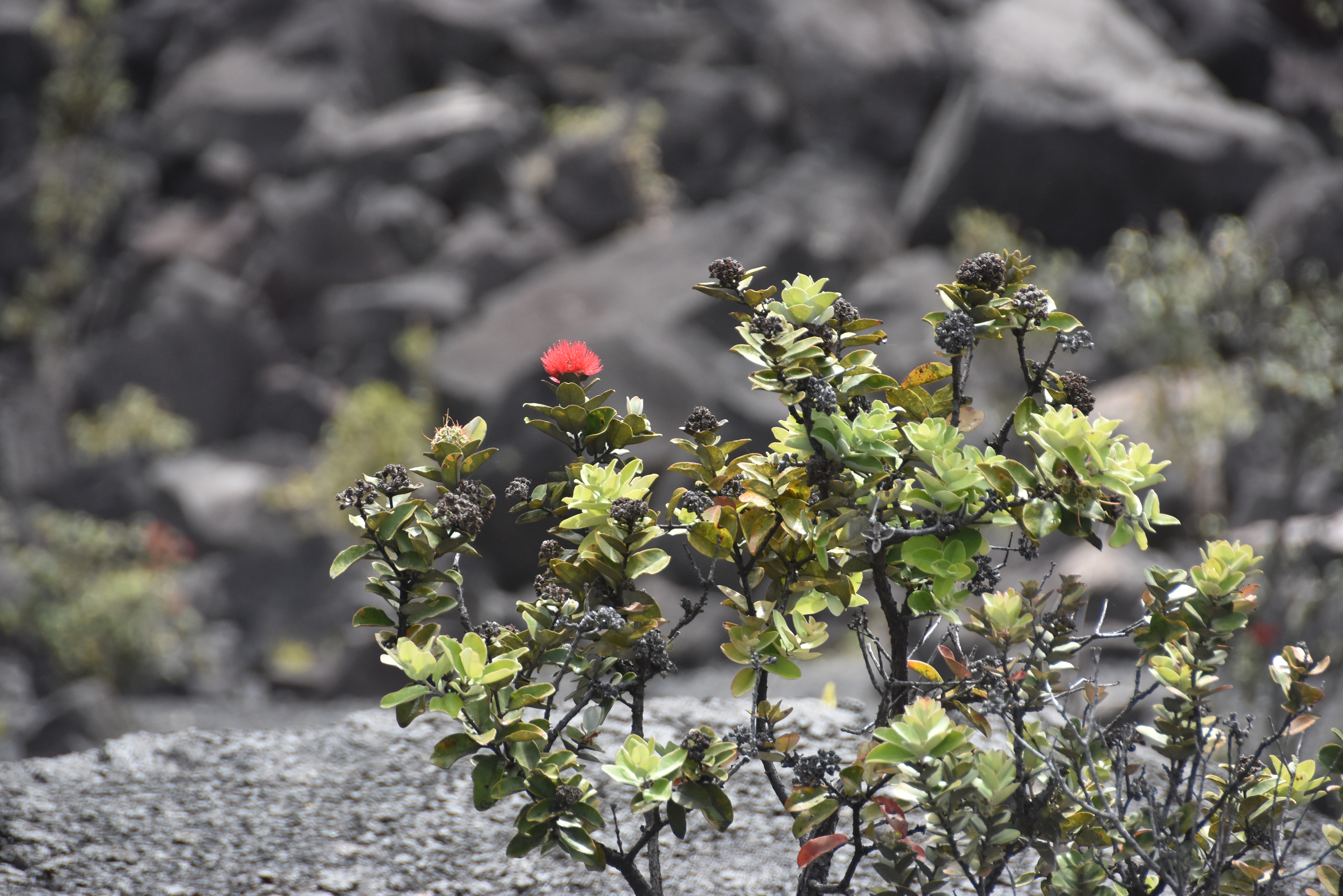
There was a tree, an ohi’a tree, that stood on the cliffside above Kilauea Iki. The tree had stood there long years. He was tall. He was grand. And he was proud.

He looked down upon the mostly flat black rock of Kilauea Iki and sniffed. There were ohi’a trees down there, too, but they were small and bushy. The tallest rose no more than eight or nine feet, less than a tenth of this tree’s one hundred foot crown.

“You’re so small,” he said to the little ohi’a trees below. “What difference can you make?”

Next to him stood another tree, just as tall, just as grand, but not so proud and rather wiser. “Don’t you remember?” she asked him. “This was no more than a pond of lava years ago. These trees had to catch every drop of rain. They had to make their own soil. Someday this crater will be filled with trees, and it will be because these trees got it started.”

“Well, all right,” huffed the other tree. “But what about these little bugs that crawl all over me? They’re even smaller. And they nibble at me. And they itch. They can’t be of any use.”

His neighbor looked him over and said, “These are the same creatures that attract the birds to you. Between the birds and the bugs, they carry the pollen around that means there will be ohi’a seeds.”

“Seeds,” huffed the proud tree. “What good are they? They’re even tinier than the bugs!”

“Seeds,” said the wise tree, “mean that there will be a future for our forest up here on the cliffsides as well as in the rocky bottoms of the craters. Seeds mean new trees where there hadn’t been any before.”

“Seeds,” she said softly, “mean that when we are measuring our height on the forest floor, there will be other trees rising over us.”

The proud tree huffed again. “There could never be a tree as grand as me,” he said, and he ruffled his branches in the breeze.

“Seeds,” said the wise tree, as she watched a little cloud of them dance in the wind from the proud tree, “Seeds mean that there will be a forest even grander than either of us.”

by Eric Anderson

Watch the Recorded Story

I write these stories ahead of time, but I tell them from memory (and a little bit of inspiration). What you have just read does not precisely match what you’ll see.

Photo of an ohi’a in the Kilauea Iki crater by Eric Anderson.

I’m Waiting

“[Jesus said,] ‘But when you are invited, go and sit down at the lowest place, so that when your host comes, he may say to you, “Friend, move up higher”; then you will be honored in the presence of all who sit at the table with you.'” – Luke 14:10

Is it fair to tell you I’m waiting, Jesus?
Yes, waiting for you to return in power.
Yes, waiting for resurrection’s dawn.
Yes, waiting for the Day of the Lord.

But I’m also waiting for your advice to work.

For truly, and sadly, I’m just as proud
as ever I was. When others are honored,
a part of me waits to hear my name called
though I know that it’s not about me.

But Jesus, you know, it’s still about me.

I’ve no cause to complain. I’m aware
that the praise I’ve received is more
than I’m due. I know it, and know I should head
for the end of the room, and take my place there,

But Jesus, you know I don’t like to be there.

I like the limelight, the spotlight, the office.
I like the small pond where my frog looks big.
I like it, and sure I’ve received it quite often.
I’ve heeded the summons of, “Friend, move up higher.”

But Jesus, I don’t always think I should be.

I can’t say I’ve bidden the poor to my table.
I can’t say I’ve done all the work I could do.
I can’t say I’ve lifted the spirits beside me.
I can’t say I’ve always been guided by you.

So Jesus, I’ll wait, and I’ll pray that you call.

A poem/prayer based on Luke 14:1, 7-14, the Revised Common Lectionary Gospel Reading for Year C, Proper 17 (22).

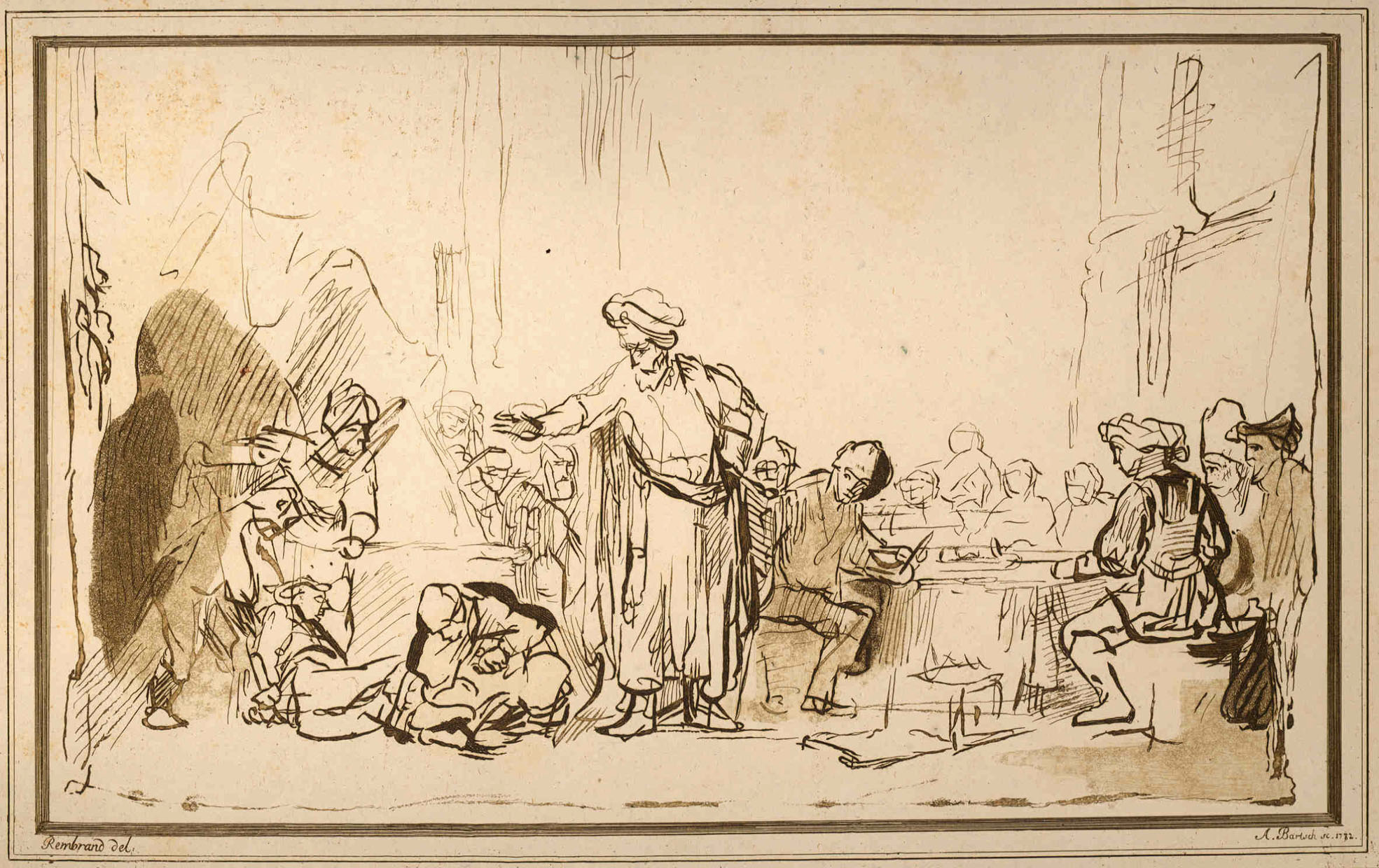
The illustration is The Parable of the Humble Wedding Guest (1782) by Bartsch, Adam Von (1757-1821), based on an unfinished drawing by Rembrandt van Rijn – http://hdl.handle.net/1887.1/item:1629982, CC BY 4.0, https://commons.wikimedia.org/w/index.php?curid=99478604.

Of all the temptations to which I’m subject, pride is the greatest.

Story: The Soaring Hero

July 6, 2025

Galatians 6:1-16
Luke 10:1-11, 16-20

If you go up to the summit of Kilauea, look around for some white birds with long white tails flying about. I mean, they might be there when you’re there, and they might not, but take a look. If they seem to be gliding about on the warm air that rises above the volcano, you’ve seen a koa’e kea, the white-tailed tropicbird.

Koa’e kea fish far out to sea, so they’re not flying about the volcano summit looking for food. They do like to nest on the pali, the cliffsides, around Kaluapele. And, unusually for this bird that’s found all around the world, they like to soar.

It’s not just at the Kilauea summit. I’ve seen koa’e kea soaring above the water pool below Wailua Falls on Kauai. Those birds certainly looked like they were having fun.

Something Kilauea has that Kauai doesn’t is hot lava. For these last few months, Kilauea has sent these amazing plumes of lava high into the air, and it’s been flowing out on the crater floor and raising it higher. It’s been impressive. So what have the koa’e kea been doing when there’s been hot rock of about 2,000 degrees flying in the air?

Well, they’ve been flying right next to it, riding the hot air rising over the pooling lava, and getting far closer to the lava fountains than I would ever go.

One young koa’e kea was particularly fond of soaring over the lava, and every time the jets spouted into the air, there he’d be. He liked to toy with getting closer and closer to the plumes. He was sensible enough to keep from getting burned, and he stayed away from the rain of hot rock and ash, but he got close enough to make all the other birds of his generation go, “Wow!”

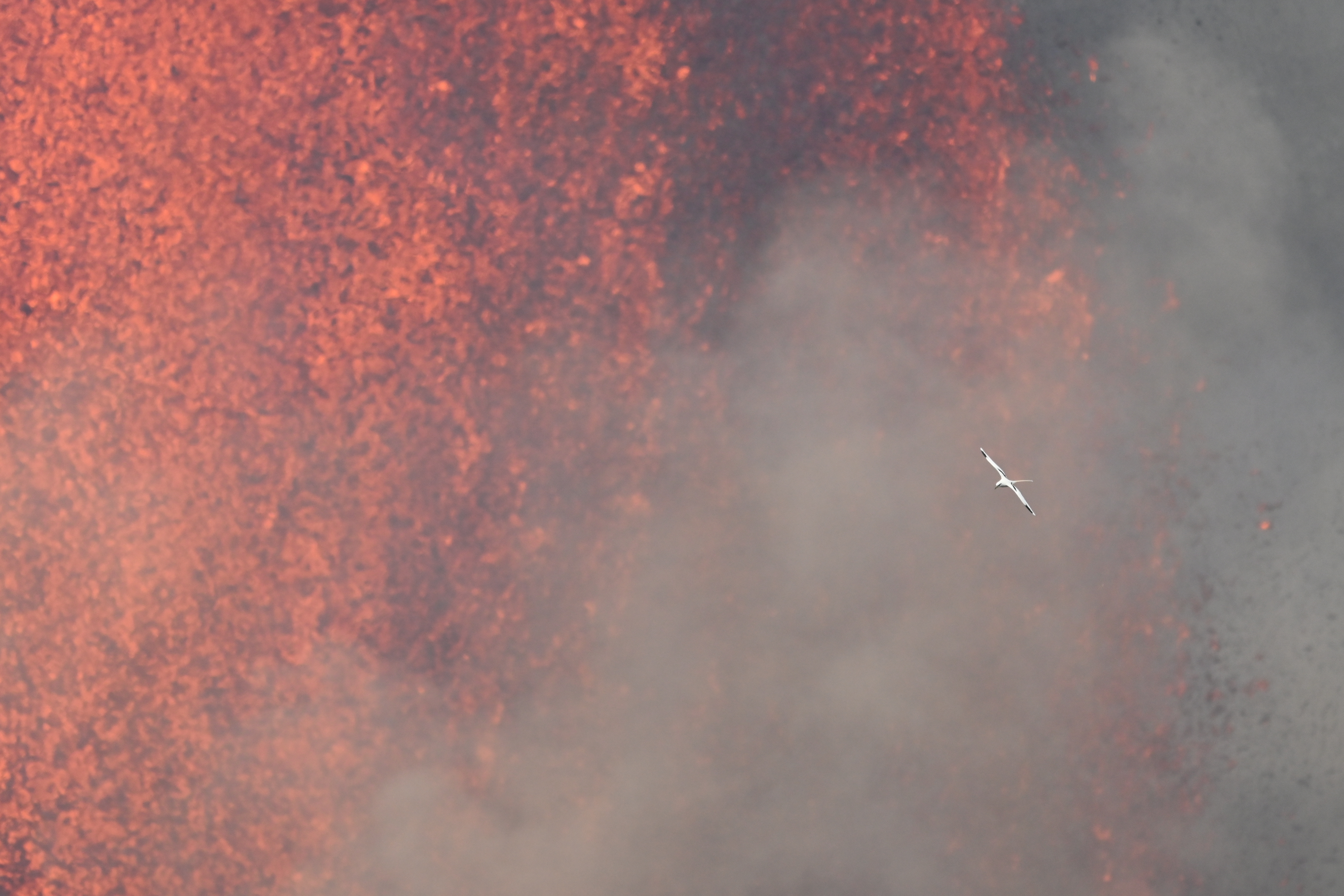
A photo of a lava fountain with a white bird flying between it and the viewer.

“Wow! You got so close!”

“Wow! You must be brave!”

“Wow! You must be a hero!”

I’m afraid it went to his head. He started to strut when walking, which is a difficult thing for a koa’e kea to do. It’s built for flying, not walking. More than that, though, he started to look down his beak at his friends who wouldn’t fly as close to the lava as he would. “You’re not so brave, are you?” he’d ask. “When are you going to be a hero?” he taunted. He left a lot of bad feeling behind.

Even his flying showed how arrogant he was, and it wasn’t pretty. It just said, “I’m better than you.”

His father joined him as he soared one day. “You’re flying well, son,” he said, “but maybe you could turn down the attitude. It doesn’t suit you.”

“It certainly does,” said the son. “I’m the brave one. I’m the best. The rest can just deal with it.”

“You’re certainly brave,” said his father, “but do you know what ‘koa’ in our name means?”

“No,” said the younger koa’e kea, who spoke bird, but not Hawaiian.

“It means ‘hero,’” said his father. “We’re all heroes. And if you’re a little braver than most, realize that someone else is certainly as brave as you. Be glad that you can fly in the rising air, and take joy in all the wonder of it all. Others of our kind don’t get that chance, and plenty of other birds can’t do what we do at all.

“Be glad, son, but leave the pride behind. It doesn’t add to your happiness. It just hurts the ones who love you.”

by Eric Anderson

Watch the Recorded Story

I write these stories in advance, but I tell them from memory and interaction, so the way I told it is different from the way I wrote it.

Photos of koa’e kea and lava fountains by Eric Anderson.

Exultant

“[Jesus said,] ‘Nevertheless, do not rejoice at this, that the spirits submit to you, but rejoice that your names are written in heaven.'” – Luke 10:20

Jesus – May I call you Jesus?
“Mister of Nazareth” doesn’t glide from the tongue.
Jesus – yes, Jesus – can I offer some help?
Your marketing skills are frankly first century.

You’ve got seventy people who are all on a high!
What things they accomplished!
What heights they’ve attained!
They may not have seen the fall of a devil,

But then, who has?

Now, Jesus – yes, Jesus – let’s get to brass tacks.
They’re open. They’re glowing. They’re all fired up.
That’s the time when the iron is hot. So strike!
Whatever it is that you’re selling, they’ll buy.

But Jesus – oh, Jesus, may I call you Jesus? –
why throw cold water on bright red-hot steel?
They’d follow you anywhere, until that sad moment
you quenched their enthusiasm at the power they’d found.

C’mon, Jesus, why?

So try it again. This is a disaster,
but you can recover. I know that you can.
Praise them for their power. I tell you, they’ll love it.
And then, O and then, what they’ll buy! What they’ll buy!

Oh, yes. What they’ll buy.

A poem/prayer based on Luke 10:1-11, 16-20, the Revised Common Lectionary Gospel Reading for Year C, Proper 9 (14).

The image is “Christ Came into Galilee” by Phillip Vere. From “An illustrated commentary on the Gospel of Mark” by Phillip Medhurst, between 1791 and 1795. FAL, https://commons.wikimedia.org/w/index.php?curid=34448342. This isn’t an illustration of the return of the Seventy, but I really like the way Jesus’ extended hands seem to be pushing down on the emotional level.

Sign Me Up

The image is "The Calling of the Apostles St. James and St. John." It shows two kneeling figures at right with a Jesus figure with halo standing at left holding his hand above their heads.

James and John, the sons of Zebedee, came forward to him and said to him, ‘Teacher, we want you to do for us whatever we ask of you.’ And he said to them, ‘What is it you want me to do for you?’ And they said to him, ‘Appoint us to sit, one at your right hand and one at your left, in your glory.'” – Mark 10:35-37

While you’re at it, Jesus, sign me up for that.
For while I think I have one of the sittingest jobs there is,
(I sit in chairs and cars and at so many meals),
I’d really like to sit nearby to you and bask in glory.

Ahhhhhh…

Yes, I can follow you and what you do
to find my place in glory, banquet marvelous,
and if the places to your right and left
are occupied already, I understand.

Ahhhhh…

So though I share the indignation of
your other followers, I share as well
their thought that it should not be them,
but me, to sit at your right hand. Of course.

Ahhhh…

I’ve chosen to forget as James and John
did then, so long ago, that you’d been laying out
the likely forecast, which was stormy to be sure,
a blow to carry you up on a cross.

Ahhh…

I’ve chosen to ignore again your call
to servanthood and service. Humility,
not arrogance, displays your Way. I’d be
more comfortable, frankly, with my pride.

Ahh…

Instead, I sit dismayed. You’ve asked for all,
for more than I prepared, for more
than I have understood. It’s not enough,
but in this moment, it is all I have to give.

Ah.

A poem/prayer based on Mark 10:35-45, the Revised Common Lectionary Gospel Reading for Year B, Proper 24 (29).

The image is “The Calling of the Apostles St. James and St. John,” print, Friedrich August Pflugfelder, after Johann Friedrich Overbeck (MET, 2004.451) (August W. Schulgen/ Josef Spithöver) – This file was donated to Wikimedia Commons as part of a project by the Metropolitan Museum of Art. See the Image and Data Resources Open Access Policy, CC0, https://commons.wikimedia.org/w/index.php?curid=60859225. Sadly, most artists’ renderings I could find of this interchange between Jesus, James, and John, favor Matthew’s version of the story, in which their mother made the request on their behalf.

Story: Big Cloud

November 5, 2023

Joshua 3:7-17
Matthew 23:1-12

It was a Big Cloud, with a capital B and a capital C. There have been bigger clouds in the history of the world, but this one rivaled the clouds of hurricanes and typhoons. It swept across the Pacific Ocean with a kind of ponderous majesty, with the trade winds gently carrying it along. Other smaller clouds would try to go north or south to get out of its way. If they succeeded, they breathed a sigh of relief. If they failed, well, they became part of the Big Cloud.

It rained on the ocean as it sailed along, but warm sunlight ahead of it raised plenty of water vapor to replace what substance it lost and, in fact, to make the Big Cloud even Bigger. With a capital B.

In the distance it saw Hawai’i Island.

Some clouds accompanying it – after all, what cloud wouldn’t want to ride the Pacific Ocean trade winds? – warned the Big Cloud. “You see those mountains?” they said. “You want to turn aside for those mountains. Bad things happen to clouds that try to go through those mountains.”

The Big Cloud said nothing. It was the Big Cloud, after all, with a capital B and a capital C. What had a Big Cloud to fear from mountains?

“No, really,” they told it. “You’ll rain out on the slopes. You won’t make it through the saddle.”

The Big Cloud coughed, and it sounded like thunder.

“Make a turn to the south or the north,” they urged. “You can do it. Plenty of storms have done so before.”

The Big Cloud was not pleased, and its displeasure flashed in lightning bolts along its forward edges, like a giant electric frown.

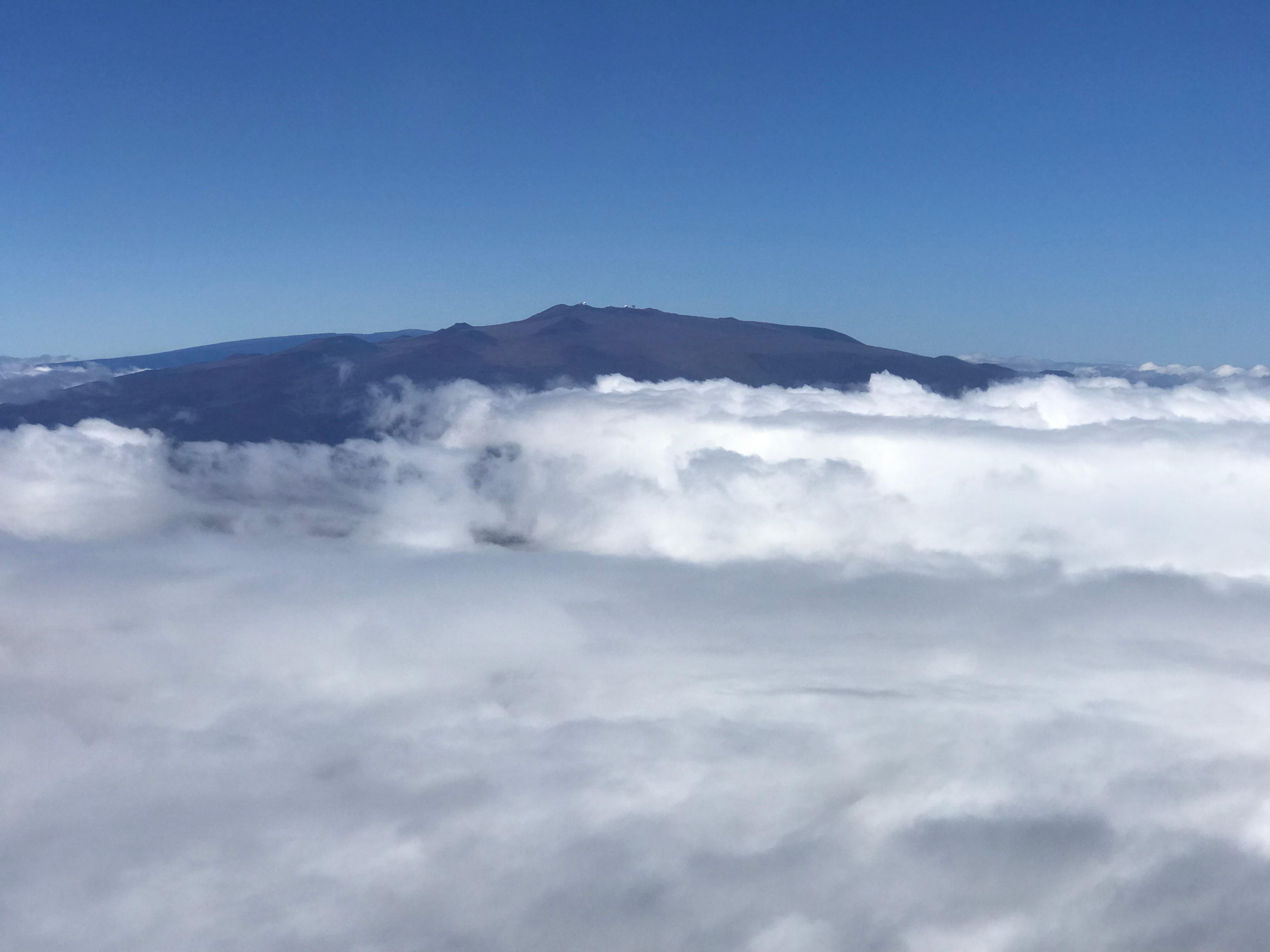
“I will go my way,” it said. “I am the Big Cloud, and I go where I choose. I fear no mountains.” And the Big Cloud set its course right between Mauna Kea and Mauna Loa – and actually over both of them, because the Big Cloud was so big it didn’t fit between them.

Rain fell here in Hilo, of course, and way up the Hamakua Coast to Honoka’a and Waipio Valley. Rain fell in Puna, drenching Pahoa and Nanavale and all the way down in Opihikao.

As the Big Cloud rained on the island, it stretched toward the saddle between Mauna Loa and Mauna Kea, with rain thundering down the rising slopes. “I will go my way,” it thundered.

But the other smaller clouds had been right. The rising slopes coaxed more and more rain from the Big Cloud, and didn’t lift moisture from the ocean to replace it. The Big Cloud became a big Cloud with only a capital C, and then a big cloud with no capitals at all. Then it was a medium cloud, and a small cloud, and by the time it got to Kona, it wasn’t a cloud at all.

The other clouds watched with sadness that the Big Cloud’s pride had prevented it from taking their advice.

“The Big Cloud was too proud,” said one.

“It certainly was,” said another. “Now it’s been rained away. Pride goes as the rain falls.”

If you ever hear a human being say something like, “Pride goes before a fall,” well, that’s true enough for people, but among the clouds they say, “Pride goes as the rain falls.”

by Eric Anderson

Watch the Recorded Story

I write these stories and then tell them from memory – well, memory and improvisation. As a result, the story as written differs from the story as told.

Photo by Eric Anderson

Story: The Best

October 1, 2023

Philippians 2:1-13
Matthew 21:23-32

She was the best. Everybody knew it. When young koa’e kea began learning to fly, they aspired to fly like her. She was the best.

Koa’e kea move awkwardly on land, and so did she, but the grace with which she’d take off had everyone gasping with amazement. One moment she was stationary on the ground, the next moment she was in the air, moving as if she’d never been anywhere else. When fishing, she would dive straight down, and only stray to the side to intercept the moving fish in the water below. Her take-offs from the water were as seemingly miraculous as her take-offs from land. One moment bobbing in the waves, the next moment climbing to the skies.

When young koa’e kea tried to race her, they rapidly fell behind. When they tried to turn more sharply than she, they either skittered away or fluttered helplessly down until they’d caught themselves and controlled their flight again. She landed so gently that her legs barely flexed. From time to time she’d gently roll through the air. Those who imitated her went through day after day of struggle, turning this way and that and descending rapidly, until they finally mastered those subtle movements of the feathers. Then they’d roll, but never with the same grace and power.

When she wanted to relax, she’d catch the rising air above Halema’uma’u Crater, soaring in rising circles with barely a wingbeat, higher than any of the other koa’e kea dared to go, a spot of white against the blue sky.

She was the best.

One young koa’e kea was determined to be her successor – in fact, to fly even better than she did. He studied every move she made. He exercised his wings. He spent hours facing into the trade winds and seeing what happened when he moved this feather like this, or that feather like that. He was going to be the best.

There was one difference, though. He announced it.

“I will be the best!” he said at some point during just about any conversation. He knew he wasn’t the best, not yet, but every koa’e kea on the mountainside knew what he aspired to be.

As for the best flyer among them? She said nothing, did nothing, but flew her best over the ocean, and over the pali, and over the mountain. When someone asked her help or advice she gave it (she was a willing teacher), but there was never a word from her about who the best flyer among the koa’e kea was.

There were plenty of words from the younger one. “I’ll be the best!” he said. “I’ll be the best very soon!” And indeed, that seemed like it might be true. He was taking turns almost as sharply as she. His take-offs were almost as magical. When he soared, he rose nearly as high.

So his grandmother took him aside one day. “Grandson,” she said, “I am very proud of you. You are the best flyer of your generation, and you may become the best flyer of us all. I’m so proud of all your hard work.”

“I’ll be the best,” he said.

“But one thing, grandson,” she said, “will prevent you from being the best if you keep doing it.”

“What’s that?” he asked. “Is it the way I hold my tail on takeoff? I’ve been working on that.”

“No,” she said. “It’s the way you keep talking about becoming the best.”

He was confused. “If I’m the best, or nearly the best, shouldn’t I say so?”

“Does the best flyer among the koa’e kea need to say it?” his grandmother asked.

As he thought about it, he realized that she never said a word about it. Even when she was doing something showy – like those rolls through the air – she never did it in a way that upset the other birds. She relaxed through those rolls, and in those rising circles, so that nobody ever thought her skill was a taunt or an insult to them. It was just an expression of her joy in flight.

“No, I don’t think she does,” he replied.

“You’re more than a good enough flyer,” said his grandmother, “that you don’t need to say a thing about it, either.”

It took a while to break the habit – bad habits are hard to break, aren’t they? – but on the day that his soaring circle reached higher than hers, he said nothing about it. She did – she congratulated him on his skill – and the two of them were the wonder of the koa’e kea of Hawai’i Island, rising, turning, diving, and soaring so beautifully that everyone else watched in wonder and in awe.

by Eric Anderson

Watch the Recorded Story

I write these stories first, and tell them from memory – which means things change. Today that includes the addition of sound effects.

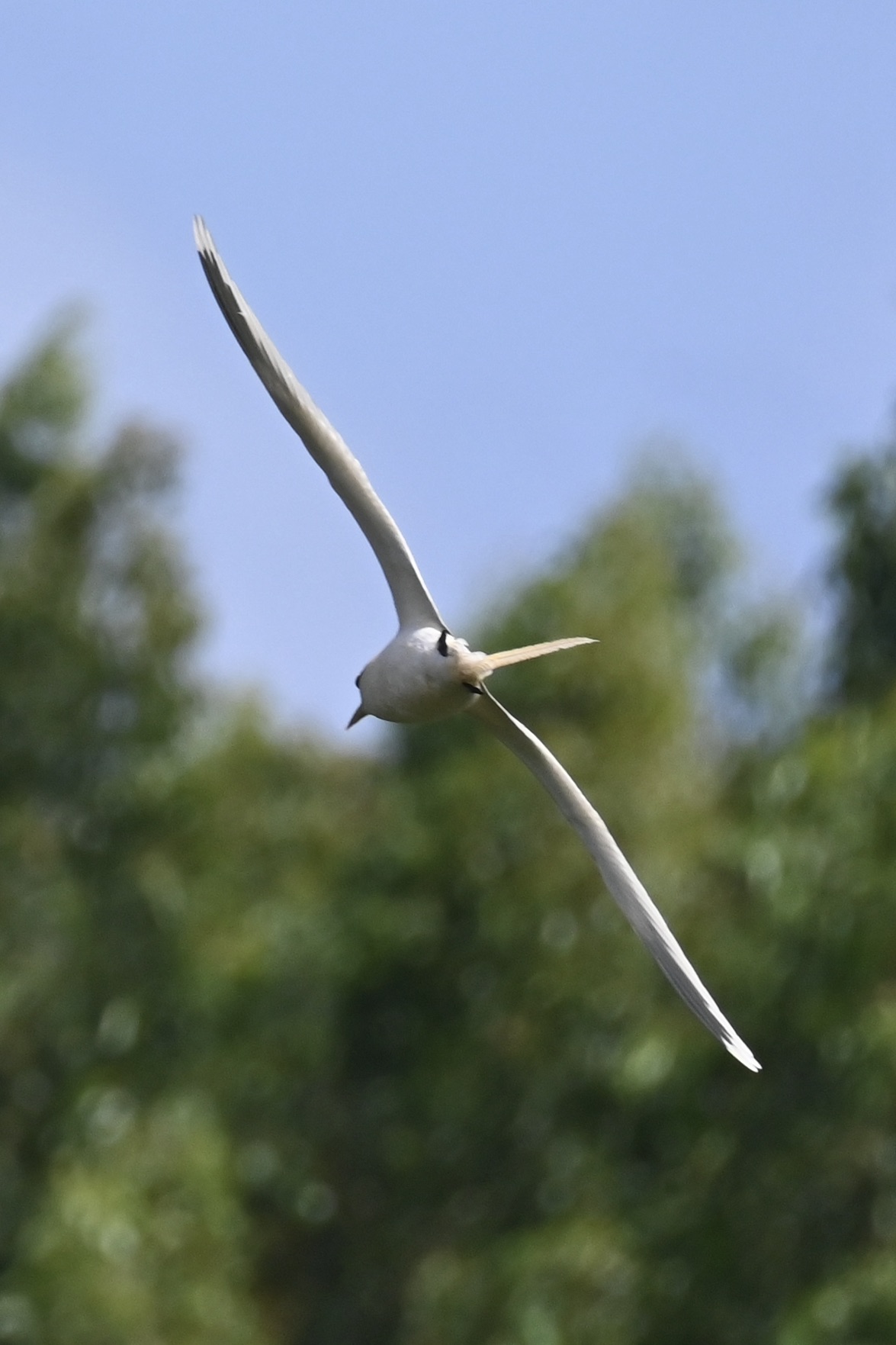
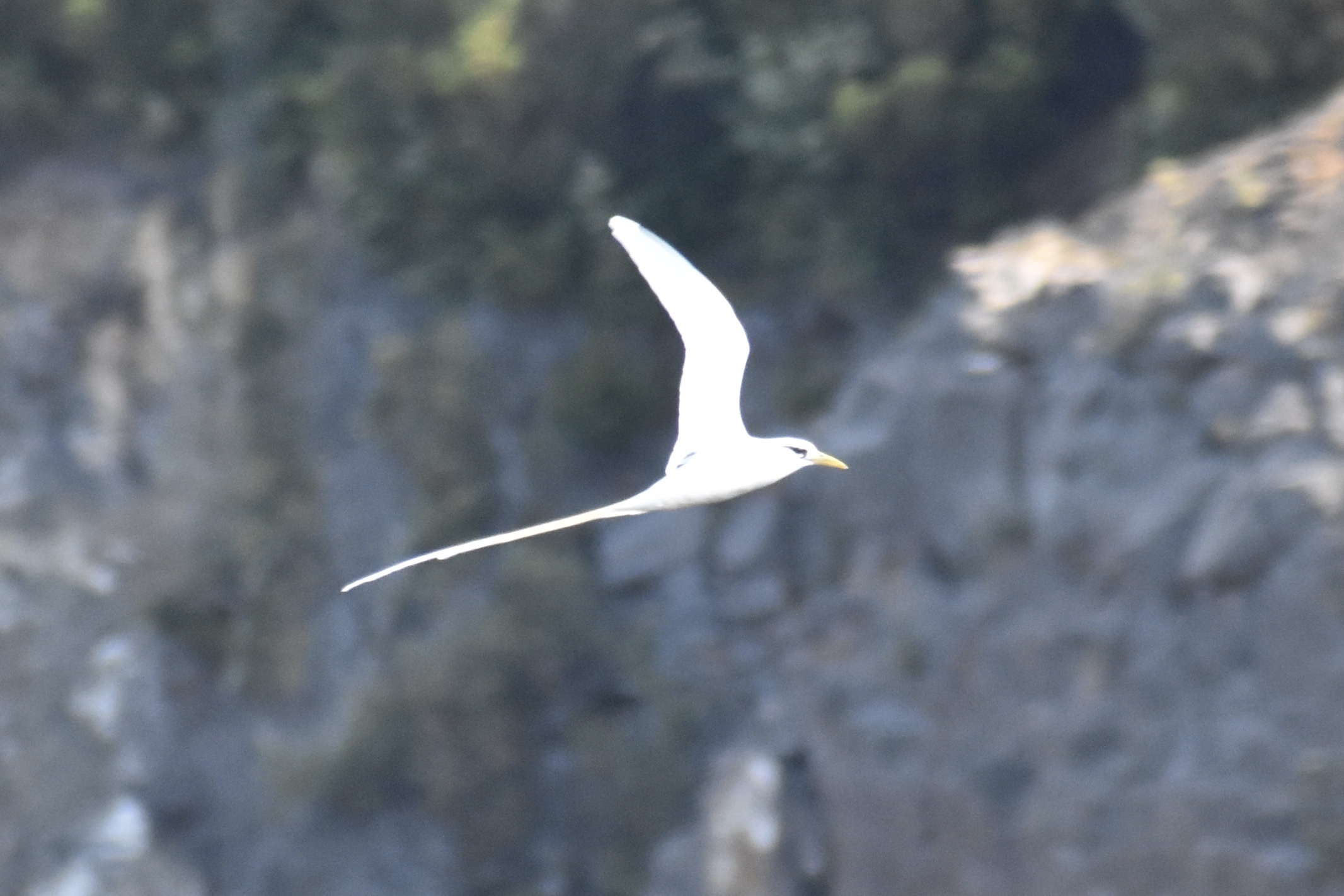
Photo of a koa’e kea (white-tailed tropicbird) by Eric Anderson.

Moses’ Seat

To be quite truthful, Jesus:
I cannot really claim to know
just what you meant by “Moses’ seat,”
and what you meant to say about
authority, interpretation of the law,
or representing God. For certain
we have called a host of people “Lord,”
or “Teacher,” “my Professor,” “Mom,” or “Dad.”

Whatever may be true about the Truth
Divine, how cloudy and obscured it is
when heard from human tongues or hands!
Just like a cosmic game of “Telephone”
in which the loss of clarity means life for some
and death for many more. But Jesus, we
have heard your words through intermediaries,
assembled generations after you had taught.

From you to eager followers who did not, I know,
take notes, from them to others who, perhaps,
would write a word or two, to others yet
who finally recorded what they heard on reeds,
on parchment, vellum, paper, with a press,
and on to me today reminding me once more
that greatness is the act of service,
and hubris is just asking to be tumbled into dust.

Once more my memory returns to a great soul,
who truly in her life embodied what you said
was great, whose smile was the mirror of her soul,
who sparked new life in all who saw her,
who heard her words, who knew with her such joy.
I’m sure she was a human, not a plaster saint,
because her passing pains me still, and woe, ye world,
that misappraises pride for what what is truly great.

Ignorant Clay

The vessel he was making of clay was spoiled in the potter’s hand, and he reworked it into another vessel, as seemed good to him. – Jeremiah 18:4

Formerly he was useless to you, but now he is indeed useful both to you and to me. – Philemon 1:11

I can make no excuse for Paul, O God.
He knew the story of the Exodus,
he knew that you are LORD of people free,
and still he sent a man to be a slave.

Rework me, LORD, into a useful cup.

He knew, but still he did not know, O God,
he did not draw the straight and simple line
from Egypt and Mount Sinai to the life
of Christ, in whom are no more slave or free.

Rework me, LORD, into a useful cup.

He knew, but still he did not know, O God.
And I? What do I know yet do not know?
What insights will seem obvious to those
in times to come so shrouded still from me?

Rework me, LORD, into a useful cup.

So obvious to me, these lacks in Paul.
So obvious to them, the people who
will judge my ignorance. So obvious
that we should give ourselves to be reshaped.

Rework me, LORD, into a useful cup.

A poem/prayer based on Jeremiah 18:1-11, the Revised Common Lectionary alternate first reading, and on Philemon 1:1-21, the RCL second reading for Year C, Proper 18.

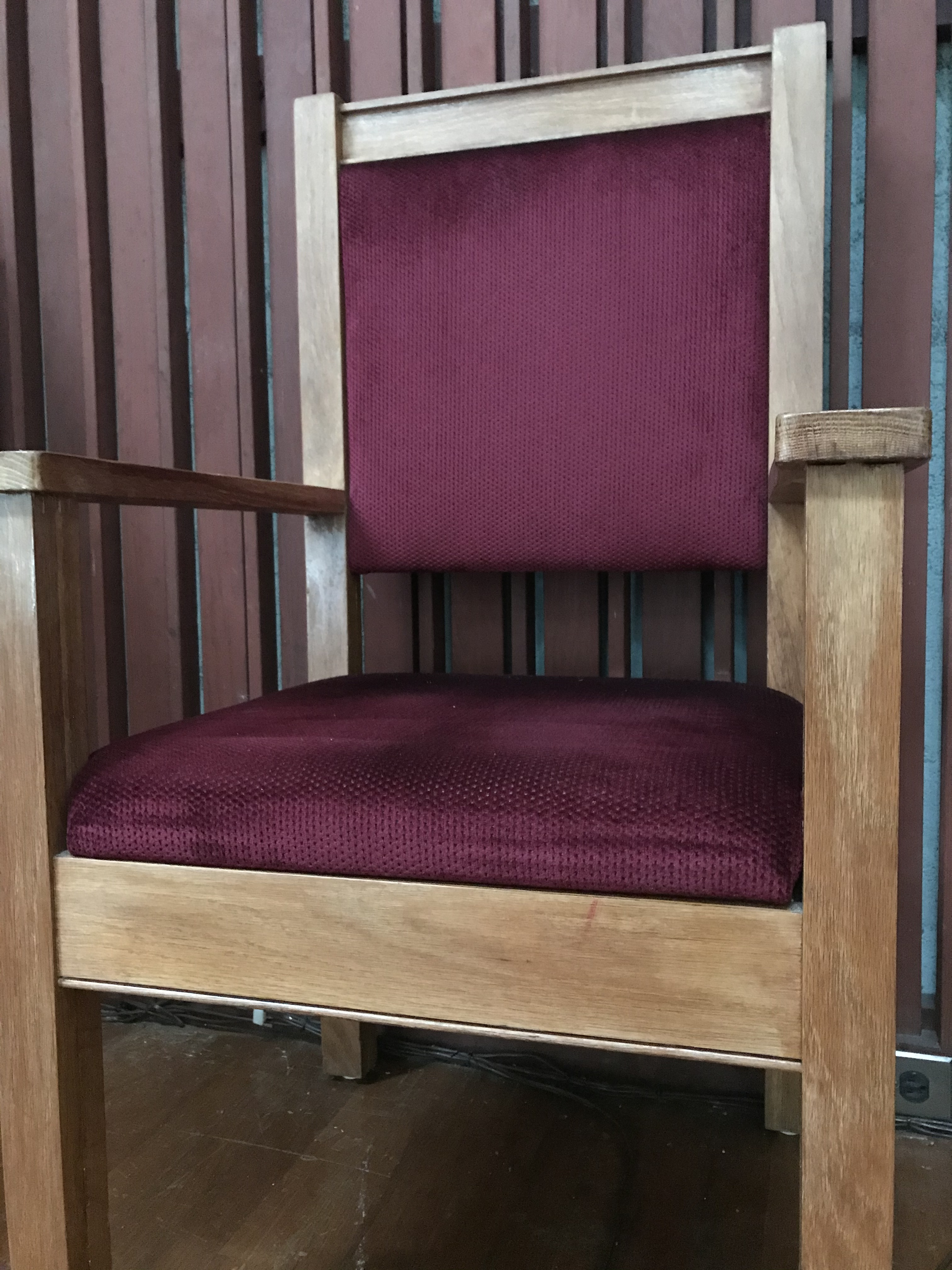
Photo by Eric Anderson.

Tumbled

The Conversion of Saint Paul by Caravaggio

Strike me down, Jesus.
Strike me from my certainty.
Strike me from my patriarchy.
Strike me from my privilege.

Strike me down.

Strike me down, Jesus.
Strike me from my violence.
Strike me from my power.
Strike me from my rectitude.

Strike me down.

In the dust of the road,
With my eyes full of tears,
With my pride in its ashes:
Demand justice of me.

Strike me down.

A poem/prayer based on Acts 9:1-20, the Revised Common Lectionary first reading for Year C, Third Sunday of Easter.

The image is Conversione de San Paulo by Caravaggio,
Church of Santa Maria del Popolo, Rome. Photo by Alvesgaspar – Own work, CC BY-SA 4.0,
https://commons.wikimedia.org/w/index.php?curid=44143233.