Story: What Are You Looking For?

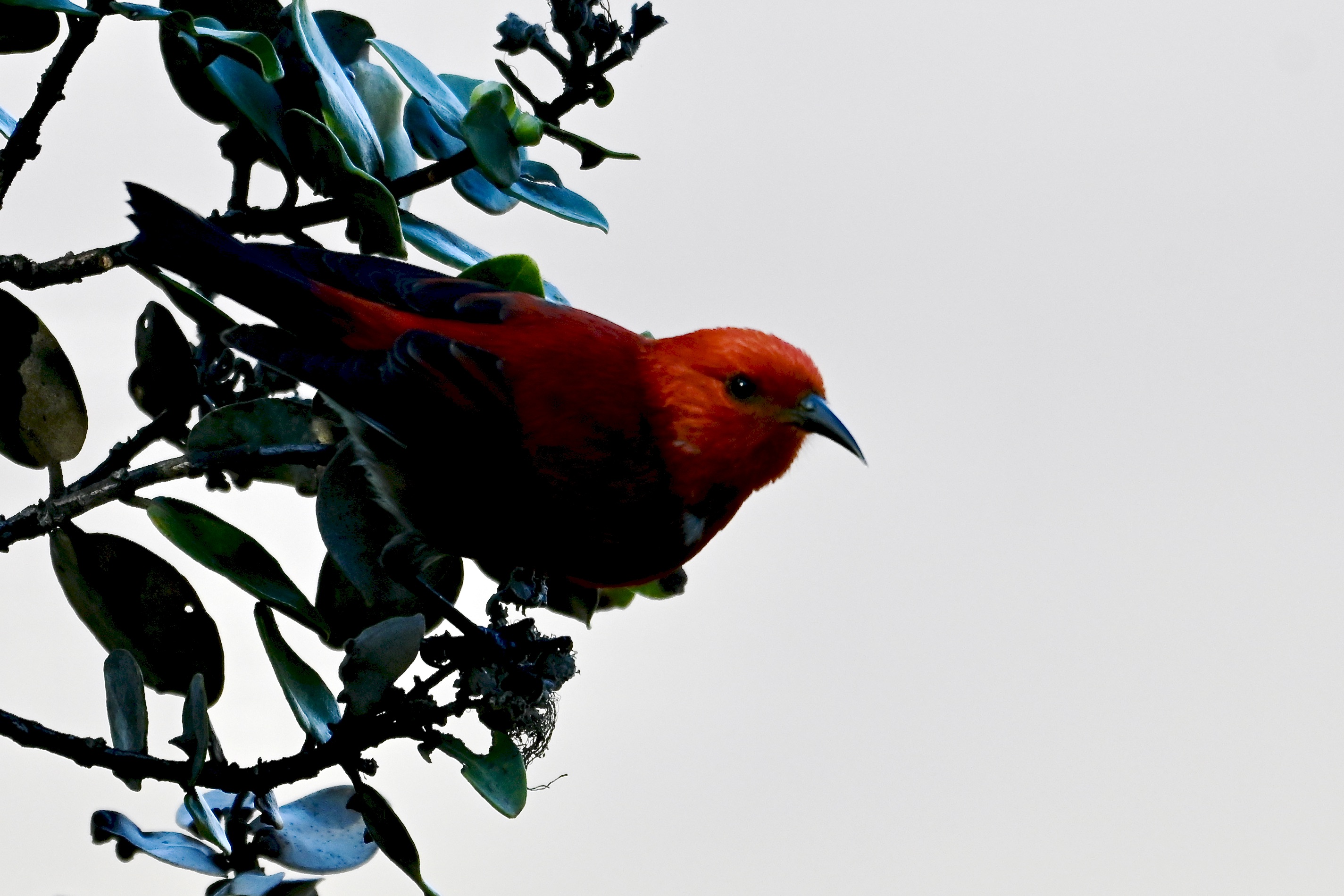
A sharp-beaked red bird with its head more brightly lit perched in a tree with smallish dark green leaves.

January 18, 2026

Isaiah 49:1-7
John 1:29-42

At this time of the year, you might forgive an ‘apapane for looking a little flustered. Or just for looking around. And flying around. A lot. This time of the year can be complicated.

For one thing, it’s time to get pairs together. When two birds have decided they’ll be parents with one another, they’ve got to find a spot for a nest. Then they’ve got to build the nest. Then there are eggs to lay and brood over, and then there will be chicks to feed and fledglings to teach fly, and during all of that, they still need to watch out for cats and hunker down in the storms and, of course, find themselves enough to eat.

One ‘apapane, one who had become something of a tutu to the younger birds, noticed another ‘apapane looking a little frantic.

“What are you looking for?” she asked.

“I can’t remember,” said the other ‘apapane.

“Have you eaten?” said the first one.

“I don’t think so,” said the frantic one.

“Go eat something,” she told him. “There’s some ohi’a in blossom over there, and there will be plenty of bugs there, too. I’m sure you’ll remember better after that.”

Another frantic ‘apapane landed nearby.

“What are you looking for?” asked the tutu.

“I can’t find my husband,” she said.

“Did you find a place for a nest?” asked the tutu.

“We found two, and they’re not in the same tree,” said the younger bird.

“Perch half way between the two, and watch for him,” said the tutu. “I’m sure he’s looking for you, too.”

About a minute after the younger bird flew off, a male ‘apapane flew up.

“What are you looking for?” said the tutu.

“I can’t find my wife!” he said.

“Did you pick two likely nest sites?” asked the tutu. When he said yes, she sent him off to find his wife between those two trees. “You’ll find her,” she said. “She’s looking for you.”

She did this all day, in between sipping nectar and snacking on bugs. She sent some birds after nest materials and some after food and more than you’d expect to find their missing spouses.

“How do you do it?” asked another ‘apapane who’d been watching it all.

“It’s simple,” she said. “I ask them what they’re looking for. Once I know that – actually, once they know that – I can probably help them, or send them to somebody who can help them.

“It’s really hard to find anything when you don’t know what you’re looking for.”

by Eric Anderson

Watch the Recorded Story

I write these stories in advance, but I tell them from memory plus inspiration. The story you just read does not precisely match the way I told it.

Photo of an ‘apapane by Eric Anderson.
Story: The Wisdom of Flight

January 4, 2026

Jeremiah 31:7-14
John 1:1-18

“What is wisdom?” wondered the ‘amakihi as he flew through the sky.

“What is wisdom?” wondered the ‘amakihi as he sipped on ohi’a nectar.

“What is wisdom?” wondered the ‘amakihi as he settled down to sleep at night.

“What is wisdom?” wondered the ‘amakihi as he woke in the morning.

“What is wisdom?” is, in fact, an extremely good question whether you’re an ‘amakihi or a human being. Wisdom, after all, tends to prevent a lot of foolishness. Foolishness, on the other hand, tends to happen in the absence of wisdom.

“What is wisdom?” wandered the ‘amakihi over the course of the day.

One of the features of wisdom is that when someone who is wise doesn’t know or doesn’t understand something, they do things to learn more about it. They look around at things. They measure and they think about what they’ve measured. If they’re human, they might read something, or a lot of somethings. They ask others to see what they know.

Whether you’re a human or an ‘amakihi, a good one to ask would be tutu.

“Tutu,” asked the ‘amakihi, “what is wisdom?”

Tutu was pleased. It was a wise question – if you don’t know something, wisdom says, “Ask.” He’d made a wise choice about who to ask – grandparents often know things. And he was asking about something important, wisdom itself.

She replied with a question of her own: “What is knowledge, grandson?”

“Knowledge?” he asked. “I hadn’t thought much about that… it seemed kind of obvious. If I know something that’s true, that’s been demonstrated to me, that’s knowledge. If I think I know something that isn’t true, or if I simply don’t know something, that’s not knowledge. Is that right?”

“That’s right,” said Tutu. “Now let me ask something else.”

“Are you going to answer my question?” asked her grandson, who was starting to worry that if he answered all her questions she wouldn’t get around to answering his.

“I am,” she said. “Now here’s my question: Can you fly with your wings closed?”

He opened his beak to reply, then stopped. It doesn’t make much sense, but he realized that sometimes while flying, he would close his wings. Not for long. Not all the time, obviously. But for a few moments in many flights, he would be flying with his wings closed.

“Yes,” he said carefully. “For a moment or two.”

“How do you know whether to close your wings in flight?”

“It’s complicated,” he said. “How high up am I? How much do I need to rest my wings for a moment? Will I need to make a quick turn or slow down to land? There isn’t a simple answer.”

“That’s right, there isn’t,” she told him. “Knowing that you can fold your wings in flight is knowledge. You know it’s something you can do. Choosing the right moment to do it – or the right moment not to do it – that’s wisdom.

“Wisdom is when you consider what you don’t know for certain, what might happen, or what might not happen if you do something, and then make a good choice. Wisdom looks at what you know, and asks whether you should.

“That, grandson, is wisdom.”

by Eric Anderson

Watch the Recorded Story

I write these stories in advance, but I tell them from memory and inspiration on Sunday mornings. What you have just read does not precisely match how I told it.

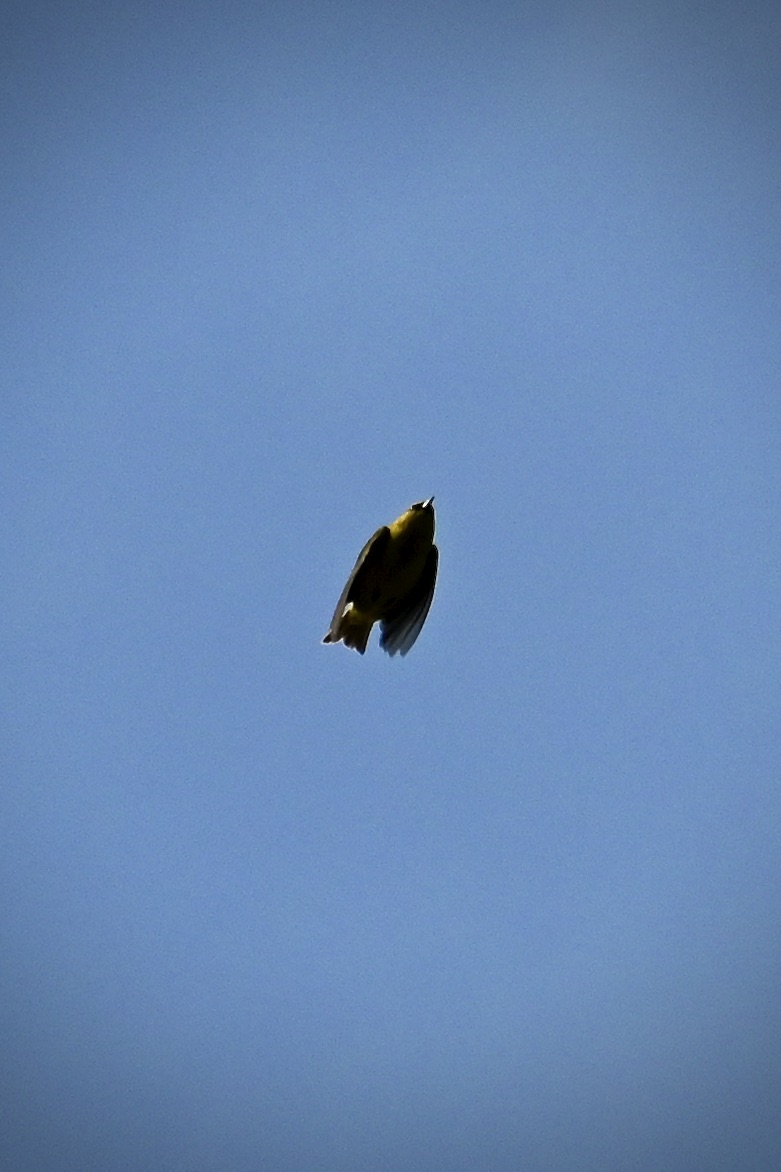
Photo of an ‘amakihi in flight by Eric Anderson.