“And he began to speak and taught them, saying: ‘Blessed are the poor in spirit, for theirs is the kingdom of heaven.'” – Matthew 5:2-3
By God, you’ve got it so wrong, Jesus. Do you really not know? That’s not how it works.
The poor in spirit won’t receive the kingdom of heaven. The poor in spirit are poor by their own negligence. They could be rich, you know, if they made the right choice, invested in the things that bring them gain, ignored the claims of other obligations, engaged in fraud, then they’d be rich…
In spirit. Right. Of course. In spirit.
The ones who mourn, will they be comforted? There’s a whole industry to comfort them. They’ll pay for it, of course, because who wants to write insurance for a mental health distress? If they were rich, they’d comfort themselves…
In spirit. Right. Of course. In spirit.
The meek? Don’t make me laugh. The earth belongs to those who take and seize and hold it firm. The meek are those who follow orders barked by armed and masked anonymous authorities. The meek are not entitled to the earth…
In spirit. Right. Of course. In spirit.
Now how can you assert that anyone is hungering for righteousness? We have the law (that serves me well) and isn’t that enough? And if we bend it some to punish those we’ve in advance condemned, we will not satisfy this thirst of sentimental saps…
In spirit. Right. Of course. In spirit.
I see the people who cry, “Mercy!” stand between the human vultures and their prey, and hear them ask the victims if they are OK, and tell the wolves, “That’s fine, dude. I’m not mad at you,” and they receive the mercy I expect…
In spirit. Right. Of course. In spirit.
As for the pure in heart, they can be pure as pure they wish to be. But if they live where I don’t want them to, and if they live on land I want, well. They’ll just have to move. If they resist, they will see God for sure…
In spirit. Right. Of course. In spirit.
Now if I claim to be a peacemaker and threaten nations with invasion after blowing boats to kingdom come and killing their survivors, you’ll give to me the prize of Child of God? That’s right…
In spirit. Right. Of course. In spirit.
Once more I tell you, Jesus, not one soul is persecuted for their righteousness. They suffer for their crimes, the crimes that I decide, the story that I tell, and I alone. Not heaven theirs, but hell, and hell on earth…
In spirit. Right. Of course. In spirit.
And tell me, Jesus, who you think has been oppressed or injured for their loyalty to you? We pepper spray the ministers who resist us, not for their faith in you. Do you maintain that they are marching in the streets on your behalf?
In spirit. Right. Of course. In spirit.
By God, you’ve got it so wrong, Jesus. Do you really not know? That’s not how it works.
And Jesus wept.
A poem/prayer based on Matthew 5:1-12, the Revised Common Lectionary Gospel Reading for Year A, Fourth Sunday after the Epiphany.
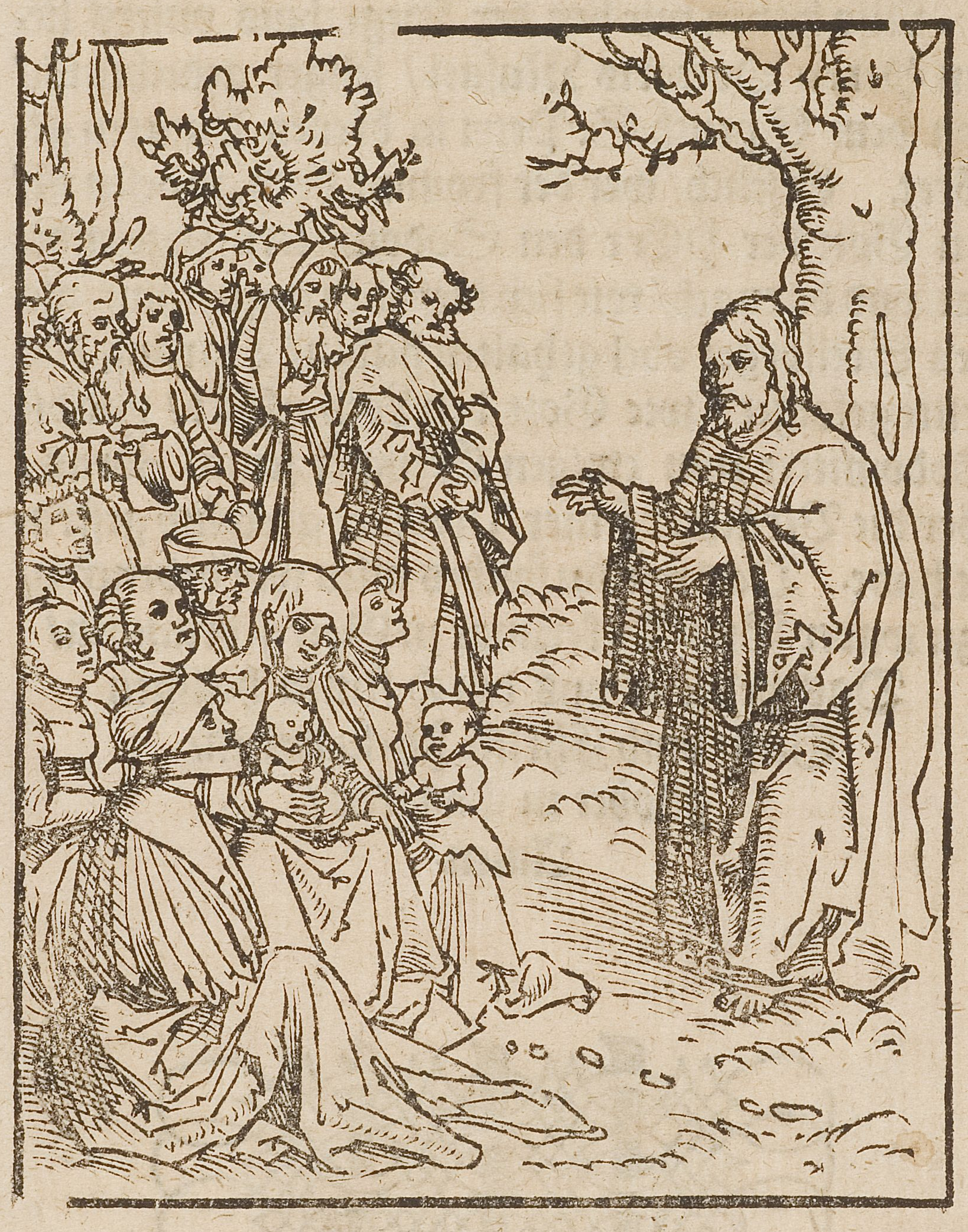
The image is “The Sermon on the Mount,” woodcut by Lucas Cranach the Elder, from his Passion Christ und Antichrist, Herzog Anton Ulrich-Museum, Braunschweig (1582) – Digitised image, Rheinisches Bildarchiv, Köln, Public Domain, https://commons.wikimedia.org/w/index.php?curid=50665418.
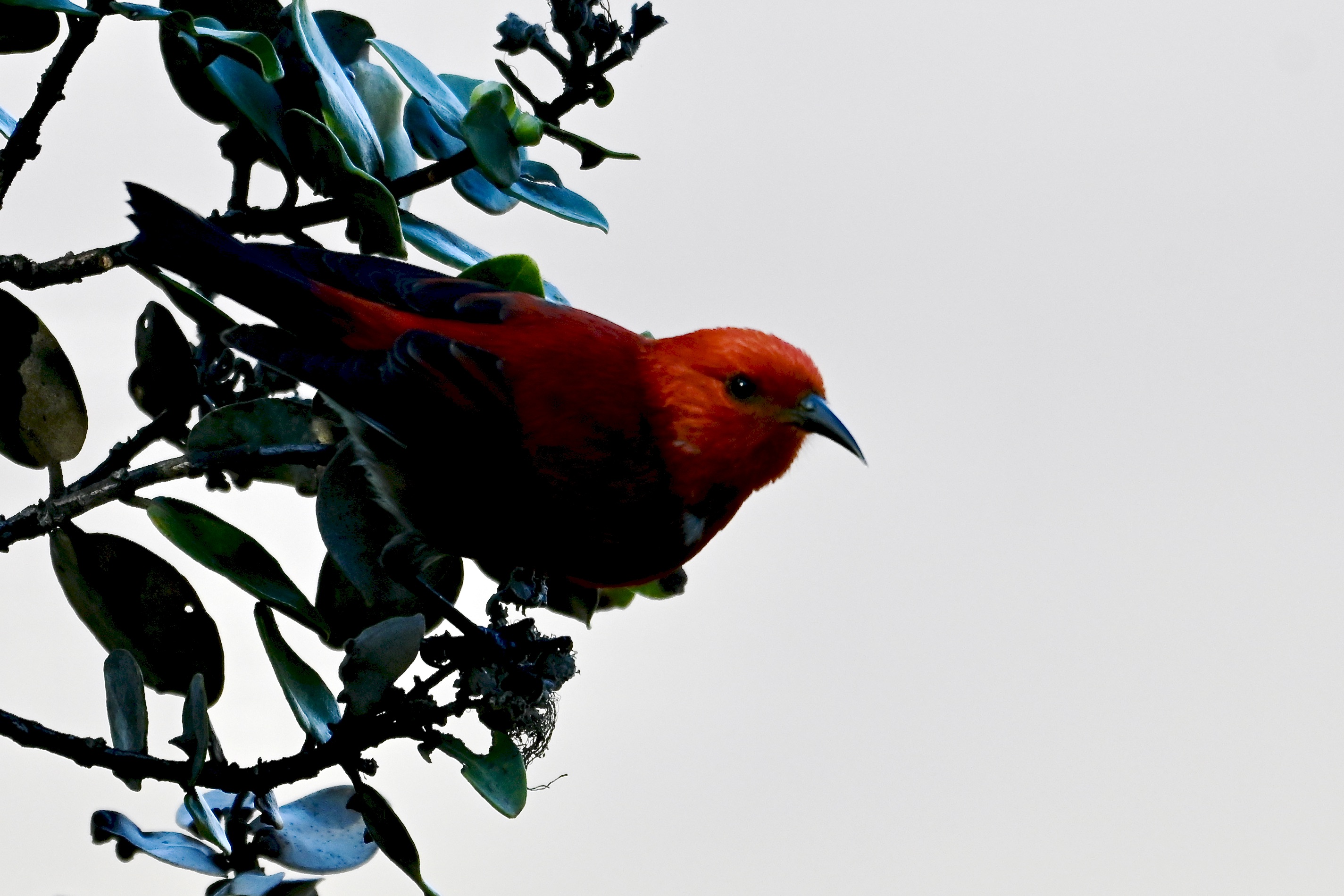
At this time of the year, you might forgive an ‘apapane for looking a little flustered. Or just for looking around. And flying around. A lot. This time of the year can be complicated.
For one thing, it’s time to get pairs together. When two birds have decided they’ll be parents with one another, they’ve got to find a spot for a nest. Then they’ve got to build the nest. Then there are eggs to lay and brood over, and then there will be chicks to feed and fledglings to teach fly, and during all of that, they still need to watch out for cats and hunker down in the storms and, of course, find themselves enough to eat.
One ‘apapane, one who had become something of a tutu to the younger birds, noticed another ‘apapane looking a little frantic.
“What are you looking for?” she asked.
“I can’t remember,” said the other ‘apapane.
“Have you eaten?” said the first one.
“I don’t think so,” said the frantic one.
“Go eat something,” she told him. “There’s some ohi’a in blossom over there, and there will be plenty of bugs there, too. I’m sure you’ll remember better after that.”
Another frantic ‘apapane landed nearby.
“What are you looking for?” asked the tutu.
“I can’t find my husband,” she said.
“Did you find a place for a nest?” asked the tutu.
“We found two, and they’re not in the same tree,” said the younger bird.
“Perch half way between the two, and watch for him,” said the tutu. “I’m sure he’s looking for you, too.”
About a minute after the younger bird flew off, a male ‘apapane flew up.
“What are you looking for?” said the tutu.
“I can’t find my wife!” he said.
“Did you pick two likely nest sites?” asked the tutu. When he said yes, she sent him off to find his wife between those two trees. “You’ll find her,” she said. “She’s looking for you.”
She did this all day, in between sipping nectar and snacking on bugs. She sent some birds after nest materials and some after food and more than you’d expect to find their missing spouses.
“How do you do it?” asked another ‘apapane who’d been watching it all.
“It’s simple,” she said. “I ask them what they’re looking for. Once I know that – actually, once they know that – I can probably help them, or send them to somebody who can help them.
“It’s really hard to find anything when you don’t know what you’re looking for.”
by Eric Anderson
Watch the Recorded Story
I write these stories in advance, but I tell them from memory plus inspiration. The story you just read does not precisely match the way I told it.
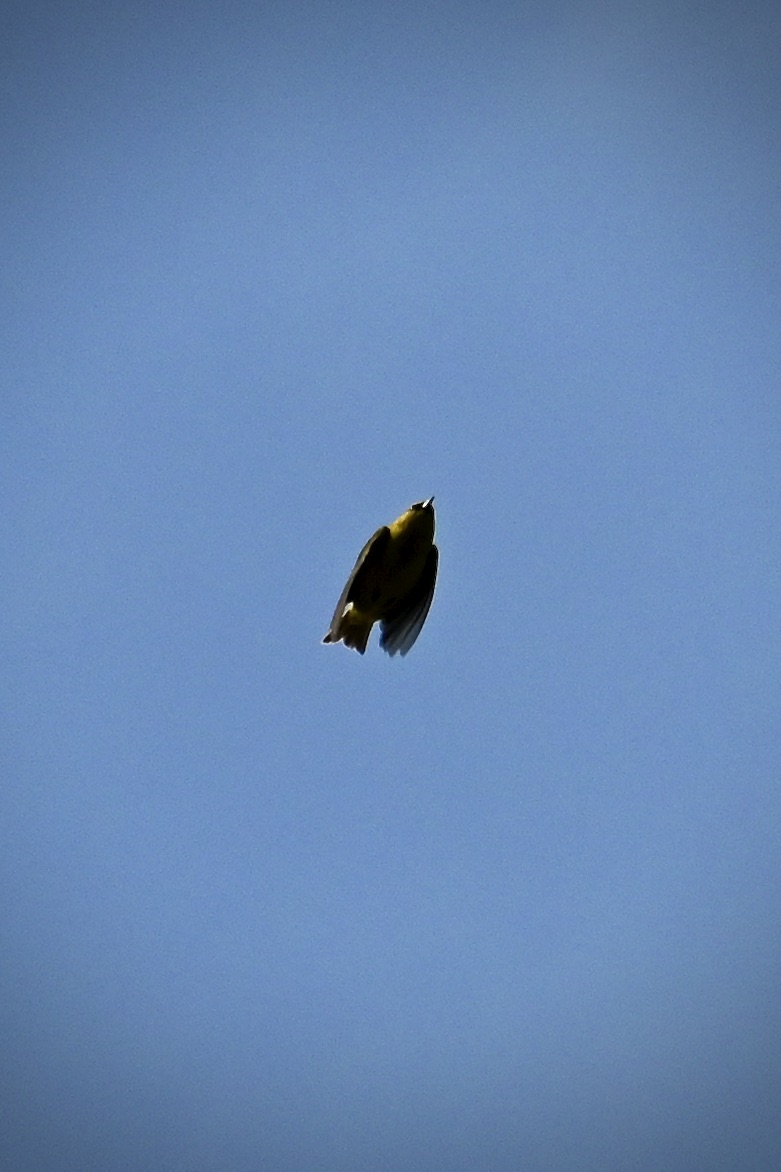
“What is wisdom?” wondered the ‘amakihi as he flew through the sky.
“What is wisdom?” wondered the ‘amakihi as he sipped on ohi’a nectar.
“What is wisdom?” wondered the ‘amakihi as he settled down to sleep at night.
“What is wisdom?” wondered the ‘amakihi as he woke in the morning.
“What is wisdom?” is, in fact, an extremely good question whether you’re an ‘amakihi or a human being. Wisdom, after all, tends to prevent a lot of foolishness. Foolishness, on the other hand, tends to happen in the absence of wisdom.
“What is wisdom?” wandered the ‘amakihi over the course of the day.
One of the features of wisdom is that when someone who is wise doesn’t know or doesn’t understand something, they do things to learn more about it. They look around at things. They measure and they think about what they’ve measured. If they’re human, they might read something, or a lot of somethings. They ask others to see what they know.
Whether you’re a human or an ‘amakihi, a good one to ask would be tutu.
“Tutu,” asked the ‘amakihi, “what is wisdom?”
Tutu was pleased. It was a wise question – if you don’t know something, wisdom says, “Ask.” He’d made a wise choice about who to ask – grandparents often know things. And he was asking about something important, wisdom itself.
She replied with a question of her own: “What is knowledge, grandson?”
“Knowledge?” he asked. “I hadn’t thought much about that… it seemed kind of obvious. If I know something that’s true, that’s been demonstrated to me, that’s knowledge. If I think I know something that isn’t true, or if I simply don’t know something, that’s not knowledge. Is that right?”
“That’s right,” said Tutu. “Now let me ask something else.”
“Are you going to answer my question?” asked her grandson, who was starting to worry that if he answered all her questions she wouldn’t get around to answering his.
“I am,” she said. “Now here’s my question: Can you fly with your wings closed?”
He opened his beak to reply, then stopped. It doesn’t make much sense, but he realized that sometimes while flying, he would close his wings. Not for long. Not all the time, obviously. But for a few moments in many flights, he would be flying with his wings closed.
“Yes,” he said carefully. “For a moment or two.”
“How do you know whether to close your wings in flight?”
“It’s complicated,” he said. “How high up am I? How much do I need to rest my wings for a moment? Will I need to make a quick turn or slow down to land? There isn’t a simple answer.”
“That’s right, there isn’t,” she told him. “Knowing that you can fold your wings in flight is knowledge. You know it’s something you can do. Choosing the right moment to do it – or the right moment not to do it – that’s wisdom.
“Wisdom is when you consider what you don’t know for certain, what might happen, or what might not happen if you do something, and then make a good choice. Wisdom looks at what you know, and asks whether you should.
“That, grandson, is wisdom.”
by Eric Anderson
Watch the Recorded Story
I write these stories in advance, but I tell them from memory and inspiration on Sunday mornings. What you have just read does not precisely match how I told it.
Shepherd 1: A tender of sheep Shepherd 2: A tender of sheep and one goat Sheep: A wooly creature Goat: A non-wooly creature Lead Angel: A messenger to shepherds Angels: A backup chorus of messengers Mary: A young woman Joseph: A young man Magi 1: A scholar dressed a lot like a king Magi 2: Another scholar dressed a lot like a king
SCENE 1: A hillside
[SHEPHERD 1, SHEPHERD 2, GOAT, and SHEEP enter]
Shepherd 1: I can’t believe you brought a goat.
Shepherd 2: Why not bring a goat? Goats are cool. They don’t get lost as often as sheep. And they give milk. That’s useful.
Shepherd 1: OK, all that is true. But you only brought one goat. Shouldn’t you have brought a herd of goats?
Shepherd 2: Of course I’ve heard of goats.
Shepherd 1: Ha, ha. I’m not sure that joke is going to be funny even if two thousand years go by.
Shepherd 2: I thought it was funny. And I’m sure the goat heard. Did you think it was funny?
Goat: Bah!
Sheep: Bah!
Shepherd 1: Why did you bring just one goat?
Shepherd 2: I’m picky.
Shepherd 1: So brought just one goat because…
Shepherd 2: It’s the best goat.
Shepherd 1: Just how do you choose the best goat?
Shepherd 2: The best goat has great hair, great hooves, great ears, and most of all, great horns.
Shepherd 1: And this one is the best goat, is it?
Goat: Bah!
Sheep: Bah!
Shepherd 2: You hear them? They agree.
Shepherd 1: That sounded like “Bah” to me.
[The LEAD ANGEL and the ANGELS enter]
Shepherds: Aaaggghhhh!
Sheep: Bah!
Goat: Bah!
Lead Angel: Do not be afraid!
Shepherd 1: Why not? I’m terrified!
Shepherd 2: Me, too! I planned on the best goat, not the Lead Angel.
Angels: Us, too!
Shepherd 2: Plus the other angels. Sorry.
Lead Angel: I bring you good news!
Shepherd 1: We’re getting good grass this season?
Shepherd 2: The price of goat’s milk is going up?
Shepherd 1: My family is going to learn to spin and weave wool?
Shepherd 2: This really is the best goat ever?
Sheep: Bah!
Goat: Bah!
Angels: Hush and you’ll learn something!
Lead Angel: Think bigger, shepherds.
Angels: Much bigger!
Shepherd 2: I need a bigger goat?
Goat: Bah!
Lead Angel: No. Down the hill in the City of David…
Shepherd 1: The what?
Lead Angel: Bethlehem. It’s where King David came from.
Angels: Now stop interrupting!
Lead Angel: Down in the City of David a child has been born to save all people. He is the Messiah, the Lord.
Shepherd 1: Wow.
Lead Angel: Go to the city and look for a newborn who is wrapped in swaddling cloths and lying in a manger.
Shepherd 2: Excuse me. I don’t mean to interrupt, but… what are swaddling cloths?
Lead Angel: You don’t have children, do you?
Shepherd 2: No. I have the best goat, though.
Goat: Bah!
Sheep: Bah!
Lead Angel: Swaddling cloths are light blankets you wrap around a baby to keep him warm.
Shepherd 2: Oh. OK. Good. And… One other thing?
Lead Angel: Really? All right. What else do you want to know?
Shepherd 2: A manger? Like, a feeding trough? We should be looking for the Messiah in a stable?
Lead Angel: Where else would you look?
Shepherd 1: Don’t argue with the angel.
Goat: Bah!
Sheep: Bah!
Shepherd 2: Right. We’ll look in the stables.
Shepherd 1: Thanks for the good news!
Angels: Hallelujah! Glory to God!
[ANGELS and LEAD ANGEL exit]
Shepherd 2: What do we do now?
Shepherd 1: You might want to argue with angels, but not me. We’re going to Bethlehem.
Goat: Bah!
Shepherd 1: Don’t forget your goat.
[SHEPHERD 1, SHEPHERD 2, GOAT, and SHEEP exit]
SCENE 2: A Stable
[MARY and JOSEPH enter with baby]
Mary: Did I just have a baby in a stable?
[JOSEPH looks at the bundle Mary is carrying]
Joseph: That’s a baby you’ve got. I’d say yes. Yes, you just had a baby in a stable.
Mary: No wonder I’m so tired. Can you hold him for a bit?
Joseph: Sure. Wait. There’s a manger here. It’s got straw in it. That should be soft for a baby, right?
Mary: Put him in it and see if he cries.
[JOSEPH puts the baby in the manger. No crying]
Joseph: No crying.
Mary: Not from him, maybe. I’m about ready to cry. What a night!
Joseph: It’s all right, Mary. It’ll all be quiet from here.
[SHEPHERD 1, SHEPHERD 2, GOAT, and SHEEP enter]
Shepherd 1: Hi. Sorry to bother you, but is there a baby here in a manger?
Shepherd 2: This is our sixth stable tonight and boy are my feet tired.
[GOAT looks in the manger]
Goat: Bah!
Sheep: Bah!
Shepherd 2: Would you look at that?
Shepherd 1: It’s a baby in a manger!
Shepherd 2: And my goat found it. He really is the best, you know.
Joseph: Excuse me, but who are you?
Mary: And why are you looking for a baby in a manger? Why would you even think to look for a baby in a manger?
Shepherd 1: Oh, we didn’t think of it.
Goat: Bah!
Sheep: Bah!
Shepherd 2: We don’t think very much, really.
Shepherd 1: Some angels came and told us to look for a baby in a manger.
Shepherd 2: It was pretty scary, actually.
Shepherd 1: It was scarier after you started arguing with the angels. Who does that?
Goat: Bah!
Sheep: Bah!
Shepherd 2: I don’t do it often.
Joseph: Slow down. You say angels told you to come here?
Shepherd 1: They told us to look here.
Shepherd 2: And six stables later, here you are!
Mary: Why? Why did the angels tell you to look for a baby in a stable?
Shepherd 2: Oh. Didn’t we mention that?
Goat: Bah!
Sheep: Bah!
Shepherd 1: I guess we didn’t. You see, the angel told us that this baby is…
Goat: Bah!
Shepherd 2: The Messiah!
[Everyone looks at the baby]
Shepherd 1: So… that’s what a Messiah looks like?
Mary: When he’s just been born.
Shepherd 2: Oh. So you knew already?
Mary: Let’s just say I’ve had my own conversation with an angel.
Shepherd 1: I’m sure she didn’t argue the way you did.
Mary: I just asked questions.
[LEAD ANGEL and other ANGELS enter]
Lead Angel: You didn’t argue at all.
Mary: It was weird, though.
Lead Angel: Of course it was unusual. You don’t think we send Messiah every day, do you?
Goat: Bah!
Sheep: Bah!
Lead Angel: Well said.
Angels: Hallelujah!
Shepherd 2: Of course it’s well said. He’s the best goat.
[MAGI 1 and MAGI 2 enter. MAGI 1 is really tired.]
Magi 1: Greetings, favored one! The Lord is with you.
Lead Angel: Hey, that’s my line!
Mary: Yes, I’ve heard that one before.
Magi 2: I’m sorry. You’ll have to forgive him. He’s been carrying the heavy stuff.
Joseph: If you don’t mind, who are you, and why are you barging into our baby’s bedroom – er, stable – at this hour?
Magi 1: Barging? We haven’t got a barge. Not a sign of a boat at all. No, we’ve had camels.
Magi 2: Our other friend is parking the camels.
Magi 1: Why didn’t he bring them in here? It’s a stable, after all.
Magi 2: Because of the newborn baby? Really. Put the gold down. It’s not helping you think.
[The MAGI put their bundles down]
Shepherd 1: Did he say, “Gold”?
Shepherd 2: I think he said “Gold”.
Mary: Gold?
Joseph: Gold?
Goat: Bah!
Sheep: Bah!
Lead Angel: Yes, he said gold.
Mary: Why are you carrying gold?
Magi 1: I’m not carrying it any more. I put it down.
Magi 2: What my exhausted friend means is that we’re here to celebrate the birth of the newborn Messiah. That’s him, isn’t it? In… Why is he in a feeding trough?
Joseph: There wasn’t any room in the inn.
Magi 1: I guess the inn was an “out.”
Magi 2: That’s not going to be funny if you wait for two thousand years.
Goat: Bah!
Sheep: Bah!
Magi 1: Is that a goat criticizing my sense of humor?
Shepherd 2: Yes, sir, but rest assured, he’s the best goat. The best goat ever.
Magi 1: Oh. Well, that’s different. The best goat ever.
Joseph: Could we go back to why you’re here?
Magi 2: We’re here to welcome the newborn king, and to make sure he’s greeted with proper respect.
Magi 1: And presents.
Magi 2: Right. Presents for a king.
Mary: Kings get presents?
Goat: Bah!
Sheep: Bah!
Magi 1: Oh, yes. Kings definitely get presents. And given that this one is sleeping in a manger, it seems like a good thing.
Joseph: He’s got a point.
Lead Angel: Oh, while we’re talking about it, you’ll probably want to sell the presents and go to Egypt for a while. And, wise men? Don’t go back to tell Herod where this baby is. OK?
Goat: Bah!
Sheep: Bah!
Angels: Amen!
Magi 2: Well. All right. We’ll go home another way.
Lead Angel: Good plan.
Mary: Could you tell me one more time why you’re all here in this stable with my baby in the middle of the night?
Shepherd 2: Well, you see, we’ve got the best goat…
Shepherd 1: I can’t believe you brought up the goat.
Shepherd 2: No, really. We’ve got the best goat. But when I listen to the wise men here, and when I listen to the angels…
Lead Angel: When you’re not interrupting the angels…
Shepherd 2: I realize that while I might have the best goat, here in this manger you’ve got, I mean, we’ve got, I mean, the whole world has got:
The young people of Church of the Holy Cross UCC in Hilo, Hawai’i, performed “The GOAT” on December 21, 2025.
Author’s Note
I began writing Christmas pageants a few years ago when I realized that we could violate copyright if we streamed a commercially available script via live stream. It says something about me that I was more willing to write a script than I was to dig through the marketing of pageants to find one that included a streaming license.
It also means that I can adapt the script to the available actors. I once wrote a script with no Joseph because we simply didn’t have a youngster willing to do the role. In this case, the children were very impressed with a story featuring a goat that our Associate Conference Minister, the Rev. Jonathan Roach, told them some months ago. One of them announced that he wanted to be a goat in the pageant, and therefore the pageant needed to include a goat.
As is the way of some creatures, the goat took over.
One of the things I like about this pageant is the way everyone notices all the things that simply don’t make sense, such as a newborn monarch born in a stable rather than a palace. It emphasizes the truth that God does what God does, not what we expect God to do. A Messiah was born in a stable. What more might be waiting in God’s imagination?
“When John heard in prison what the Messiah was doing, he sent word by his disciples and said to him, ‘Are you the one who is to come, or are we to wait for another?'” – Matthew 11:2-3
John, there you are, imprisoned by a king whom you had castigated for a sexual misdeed and took it badly. Beyond the stony walls, you hear, another speaks your word: “Repent!”
“The realm of God is near!”
You know this one. You baptized him despite your protests that he should have baptized you. The water has flowed on beneath the bridge, incarcerating you and prompting him to speak:
“The realm of God is near!”
I’m with you, John, if not behind those iron bars, I’m with you in the need to know: “Are you the One?”… and I believe he is the One, and preach that faith as truth! There is no faith without anxiety, for me as well as you.
“The realm of God is near!”
You said, “I’ve got to know,” and John, I hope you knew to hear about the healing and the good news for the poor. It’s what I hang my hope on, and my faith, and why I trust in God’s eternal love.
“The realm of God is near!”
You know, I hope, wherever you may be today your faith and hope and trust moved in the world alive and powerful and merciful. And I will trust, like you, that our Anointed One still lives.
“The realm of God is near!”
A poem/prayer based on Matthew 11:2-11, the Revised Common Lectionary Gospel Reading for Year A, Third Sunday of Advent.
The image is The Imprisonment of John the Baptist, one of the mosaics in the Baptistery of Saint John, Florence, Italy, unknown artist (early 1300s). Photo by Sailko – Own work, CC BY 3.0, https://commons.wikimedia.org/w/index.php?curid=41892074.
An ‘apapane wanted to know what the best way to be a flock is.
There are plenty of examples if you journey around the island. He found an i’iwi, who said, “Keep it small, less than ten. And chase everybody else away. Speaking of which, ‘apapane, it’s time you got out of here!”
He checked with a myna, who said, “Oh, just get a few birds together.” “Yeah,” said a second myna, “but make sure they don’t argue.” “What do you mean by that?” demanded a third myna. “Don’t you get cross with me!” said the first, and the ‘apapane flew away as the mynas argued about… nothing.
The ‘akiapola’au, the ‘akepa, and the ‘amakihi said that it’s useful to join a flock because then some of the predators, like cats and such, get intimidated. “A good flock is one that keeps us safe,” they told him.
That sounded pretty good.
He looked in on the ‘akekeke, who said, “Just stay together!” He asked the kolea, who prefer to keep some distance from one another. He thought about asking some fish, but they weren’t coming to the surface to talk to any hovering birds.
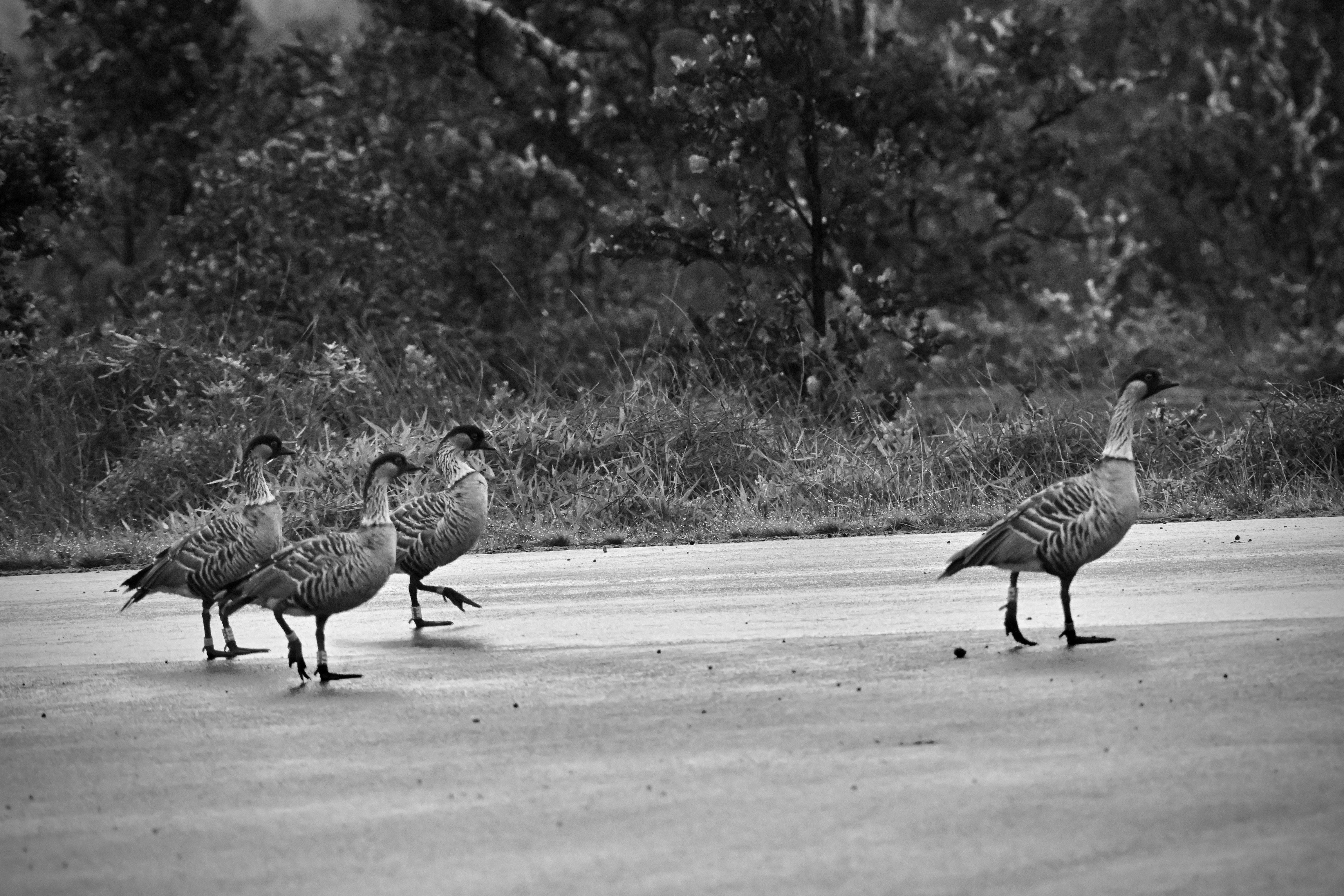
It was the nene, however, who gave him the most to think about.
When he found a nene to talk to, they were gathered around one of their number who’d hurt her wing. The little group was hungry and rather footsore as they trooped along, looking for ‘ohelo berries (or pretty much anything they could eat).
“Why aren’t you flying?” he asked one of them.
“Because she can’t fly for a while,” said the one in front.
“Can’t you leave her while you go eat?” he said.
The nene looked at him as if he’d lost his mind.
“A good flock is one where nobody gets left behind,” the nene said.
The ‘apapane returned to his part of the forest, and gathered his friends and family and any other birds he could. Together they could find food and shelter. Together they could scare off some of the dangers. But most of all, he told them:
“A good flock is one where nobody gets left behind.”
by Eric Anderson
Watch the Recorded Story
I write these stories ahead of time, but I tell them from memory plus inspiration. As a result, the recording of how I told it does not match how I wrote it.
A shoot shall come out from the stump of Jesse, and a branch shall grow out of his roots. The spirit of the Lord shall rest on him, the spirit of wisdom and understanding, the spirit of counsel and might, the spirit of knowledge and the fear of the Lord.
Isaiah 11:1-2
I hate to break it to you, Isaiah. But then, perhaps you know already. You saw it, after all, in Hezekiah, who trusted in the word of God and watched the army of Assyria retreat from Jerusalem’s walls, but then succumbed to royal pride and showed his wealth to greedy eyes.
These shoots of Jesse had their moments, true, the worst had flashes of your wisdom. But they let the widows cry for justice, let the orphans cry for food, while they enriched the wealthy, fed the full. The best of them, like Hezekiah, fell afoul of hubris like their ancestors before.
And then, Isaiah, came a child anointed by the Holy Spirit, who embraced your words, declared they’d been fulfilled, and best of all with mercy, stories, grace, and healing brought them to fulfillment. You would have cheered to see this shoot of Jesse blossom and bear fruit.
You would have cheered to see the fishermen, the shepherds and the farmers, even tax collectors, daughters of Jerusalem, embark on journeys up and down the land to seek his healing and his word.
They cheered to see the lepers cleansed. They told his stories to their neighbors with excitement and enthusiasm. They affirmed a humble man from Galilee as Christ.
They could not save him, though, Isaiah, from the fear and might of powerful men. They seized him and they beat him.
They called him rebel, and they nailed him to a tree, and jeered to see him suffer there and die.
Isaiah, human folly is enough to break your heart.
A poem/prayer based on Isaiah 11:1-10, the Revised Common Lectionary First Reading for Year A, Second Sunday of Advent.
Caterpillars don’t have the easiest life. They don’t get around very much – but then, when you move mostly to find another leaf to eat, you don’t need to move very far. There are things about that, while you’re eating leaves, would be very happy to eat you, and that makes for more than a few anxious moments. A lot of the birds I happily tell stories about would happily eat a caterpillar, and that makes them rather sad.
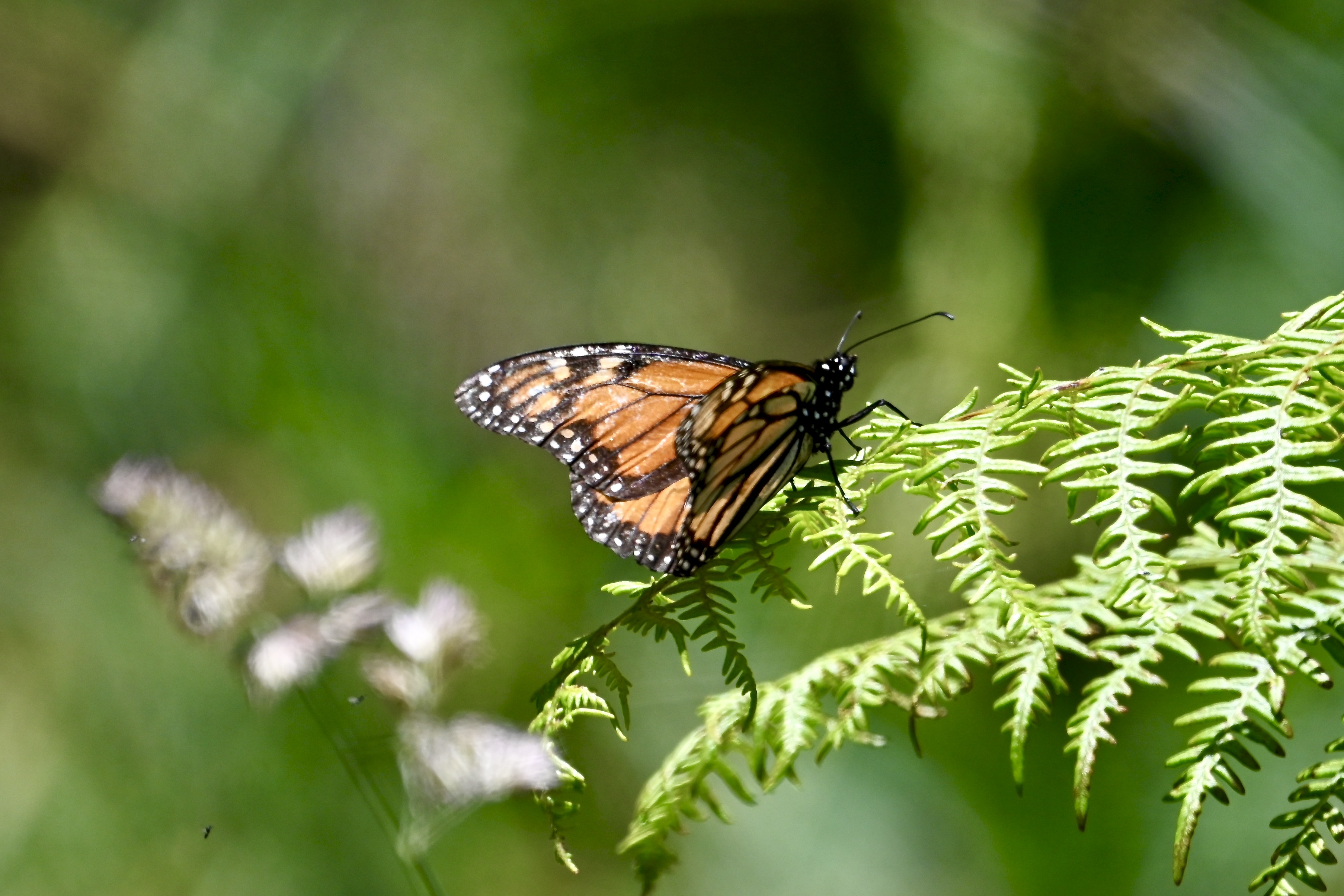
Caterpillars are among the most hopeful creatures on Earth, however. Each one of them hopes to go from an animal that crawls slowly across the branches to one that flies through the skies. They hope to go from someone that you hope will be overlooked (and so not eaten) to one that glows brightly in the sunlight. They hope that the beauty they feel on the inside will be mirrored on the outside.
What’s amazing is that that’s what happens.
Two caterpillars were sharing their hopes on a branch one day between bites of leaf. I’m going to leave out the biting and chewing, because it actually took more time than the conversation. Caterpillars are serious about eating.
“I’m really looking forward to being a butterfly,” said the first.
“Me, too,” said the second.
“I can’t wait to fly,” said the first.
“Me, too,” said the second.
“I’d like to see more of the world than this flower patch,” said the first.
“It’s a good patch,” said the second.
“I’m not saying it isn’t,” said the first.
“You’re right, though,” said the second. “It would be nice to visit another one.”
“All we’ve got to do,” said the first caterpillar, “is wait.”
“Just wait?” asked the second.
“Just wait,” said the first.
“That doesn’t’ sound right,” said the second. “I think we’ve got to build a chrysalis, and stay in it, and then come out as butterflies.”
“Don’t be silly,” said the first. “You hope for it, and then it happens.”
“I don’t think so,” said the second. “I think you hope for it, and then you do something about it. And then it can happen.”
I don’t know what happened to the first caterpillar. I hope it made a chrysalis and became a butterfly, because the second caterpillar was quite right. Caterpillars become butterflies in the chrysalis. They’ve got to make things happen to make other things happen.
Dream of better days. Hope for them, and believe they can come to be. But don’t forget to do the work for them. Hope is good, but hope and effort are better.
by Eric Anderson
Watch the Recorded Story
I write these stories ahead of time, but I tell them on Sunday from memory plus inspiration. The story you just read will not be identical to the story as I told it.
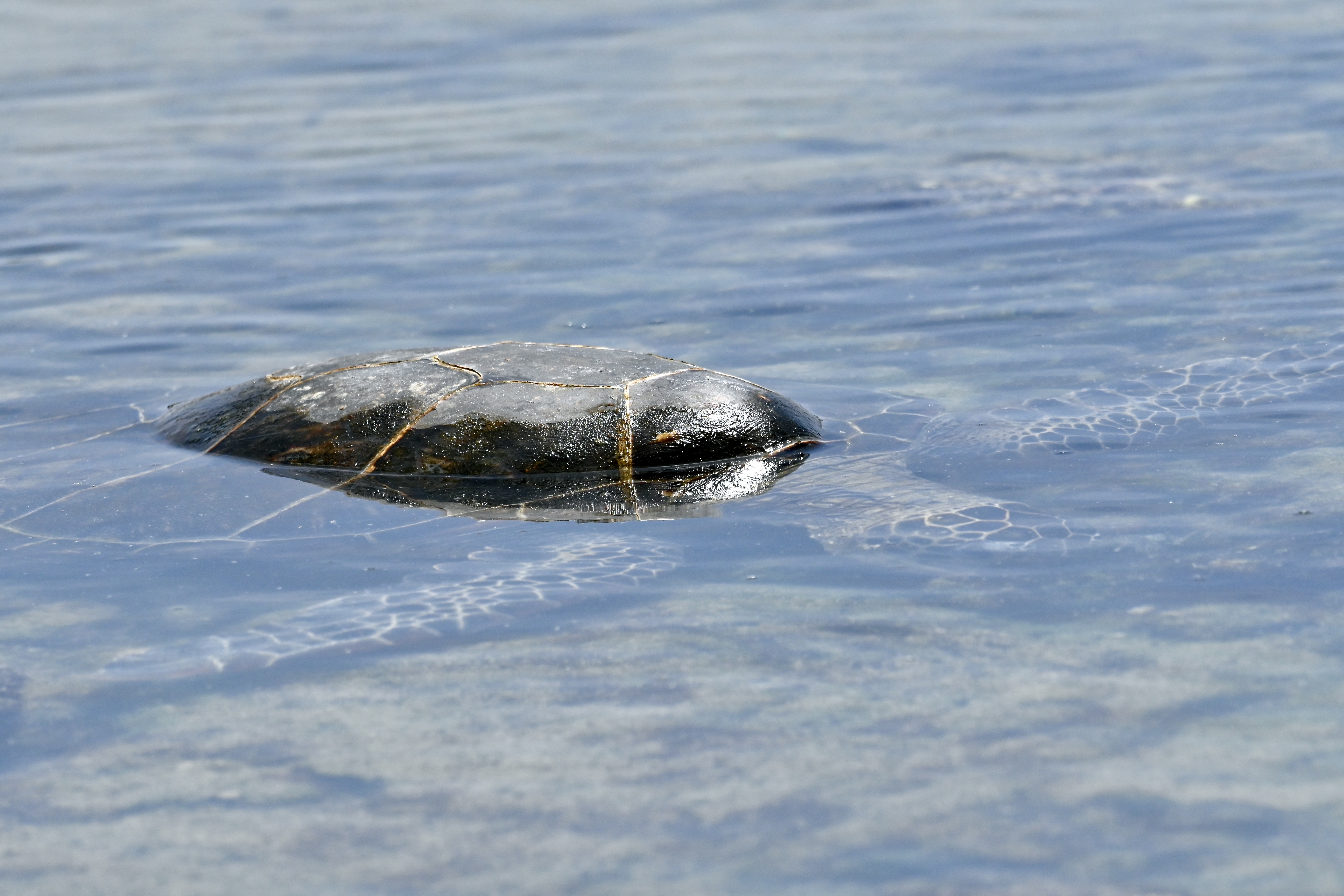
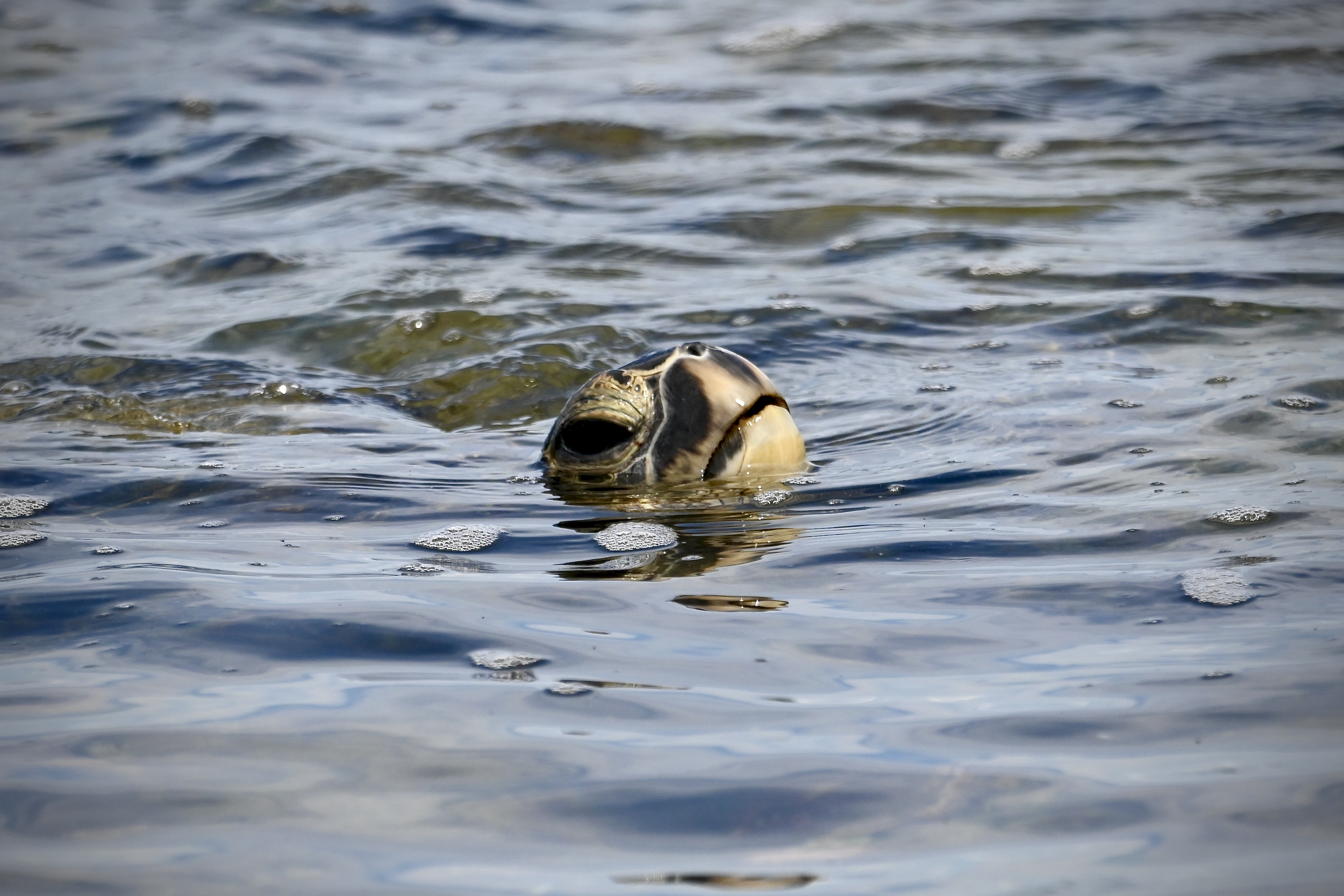
Well, I never have either. It’s not a natural place for a honu to be. A honu really prefers to be in water, like the honu in this picture.
Unfortunately, one day a honu found herself in a tree.
As I mentioned, I’ve never actually seen, let alone photographed, a honu up a tree. I’m afraid that photo is the result of a certain amount of non-artificial intelligence that produced that unconvincing image.
It was a storm, of course. Ordinarily honu in a storm find a safe place to ride it out, which is frequently offshore. I don’t know precisely what happened with this honu, and I’m not sure she ever did, either. One minute she was being tossed about in the water, and the next minute she was flailing around in a tree, not getting anywhere, and getting sprayed by the waves and the rain.
All in all, not where she wanted to be.
When things got brighter, the birds came out and found the honu in the tree, and they knew she wasn’t supposed to be there.
“Can you swim out?” asked an ala’e ke’oke’o, who was a swimming bird, even though the honu had better flippers on her limbs than the ala’e ke’oke’o had on his.
“I’ve tried all night,” said the honu. “My flippers can’t move these leaves the way they move water.”
“Besides,” she added, “I’m a pretty high off the ground here, and those rocks look hard. I think I might hurt myself if I fell from here.”
The birds looked things over and thought about it. Winged creatures don’t think about falling very much.
“I know,” said some of them. “Let’s pull some of the leaves and twigs out of the way so she’ll slip down slowly.”
“Right!” said some others. “And we’ll go get some other leaves and grass and mud and sand and we’ll cushion the rocks below her.”
That’s what they did. Some pulled up grass for padding, some moved branches of naupaka aside (OK. She was in a naupaka bush, not a tree, but it looked like a tree to her). The pile of padding grew and her distance from it slowly shrank. They worked slowly but steadily, cautiously but creatively, until with a creaking sound the last naupaka branches bent and lowered her to the top of the padded mound.
The birds cheered as the honu hauled herself off with her flippers and made her way down the beach to the water.
At water’s edge she turned and said, “Mahalo nui loa, friends. I hope you get help like this if you’re ever up a tree!”
One of the birds, a kolea, shrugged and said, “Most of us will be quite fine up a tree. But if you can help me out like this if I’m ever stuck in the water, I’ll be just as grateful as you are now.”
Then she waved and swam off into the deep. I don’t know if she ever did have to help a bird stuck in the water, but I know she would have, and she’s ready to if there’s ever a need.
by Eric Anderson
Watch the Recorded Story
I write these stories ahead of time, but I tell them from memory and improvisation. What you have just read is not identical to the way I told it.
Photos of a honu and of naupaka by Eric Anderson, as is the not-very-convincing blending of the two.
People, in general, don’t do well if they eat a lot of food quickly. It’s a good way to feel sick. Sometimes, somebody who eats a lot of food really quickly will get sick.
Ick.
The young ‘akekeke had learned something similar from his parents as they led him and his sister and brothers around the Alaskan tundra near where they’d hatched. There they found the bugs and worms that filled their bellies and kept them growing. Both mother and father, however, warned them against eating too much, and after one of his brothers ignored their advice and got a nasty stomachache the rest of the chicks decided their parents knew something after all.
As the summer wore on, it became time for the trip to Hawai’i. The four chicks became fledglings, learned to fly, and watched as more and more of the ‘akekeke began flying toward the coast. Their mother joined in with lots of the other mothers, leaving them with their father to finish flight school with him.
Even more birds departed before their father gathered them along with some other youngsters into a little flock and said, “It’s time to get ready.” They flew to the shoreline where they found a number of other groups of ‘akekeke probing through the shallows for small fish and shrimp.
“It will be time soon,” said their father, “to make the long flight to Hawai’i. You’ll need all the energy you can get for this. So eat. Eat all you can. Eat more than you think you can.”
“But wait,” said his son. “You’ve been telling us for weeks not to eat too much. In fact, when our brother tried it anyway, he got sick. Are you telling us that was wrong?”
“It was wrong then,” said father, “but now we’re doing something very different. We’re making a long flight and there’s nowhere to stop and eat until we get there. This is the time to plan. This is the time to prepare. This is the time to get ready.”
The young ‘akekeke wasn’t convinced. He wasn’t convinced that eating a lot was a good idea, even though his sister and two brothers had plunged right into an outcrop of mussels. He also wasn’t sure that taking such a long flight was a good idea, even if so many of the adults had already gone. His father looked at him with sympathy and with love.
“There’s some time, youngster,” he said. “Take time. Consider. I don’t think you’ll enjoy staying here for the winter – it gets cold, you see. But think it over. I hope you’ll join us.”
The young ‘akekeke thought about it. He thought about being cold, which he couldn’t really imagine. He thought about eating more than he ever thought possible, which he couldn’t really imagine, either, but he could see that his father, sister, and brothers didn’t seem to have any troubles as they ate their way along the shoreline. He thought about Hawai’i, which he also had trouble imagining, since he’d never been there before. Mostly he thought about being the only ‘akekeke in Alaska when everybody else had gone.
A little while later he was industriously feeding himself alongside his father.
“I’ve thought it over,” he said, “and I’ll stick with you.”
by Eric Anderson
Watch the Recorded Story
I write these stories ahead of time, but I tell them without notes, so the text I prepared does not match the way I told it in worship.
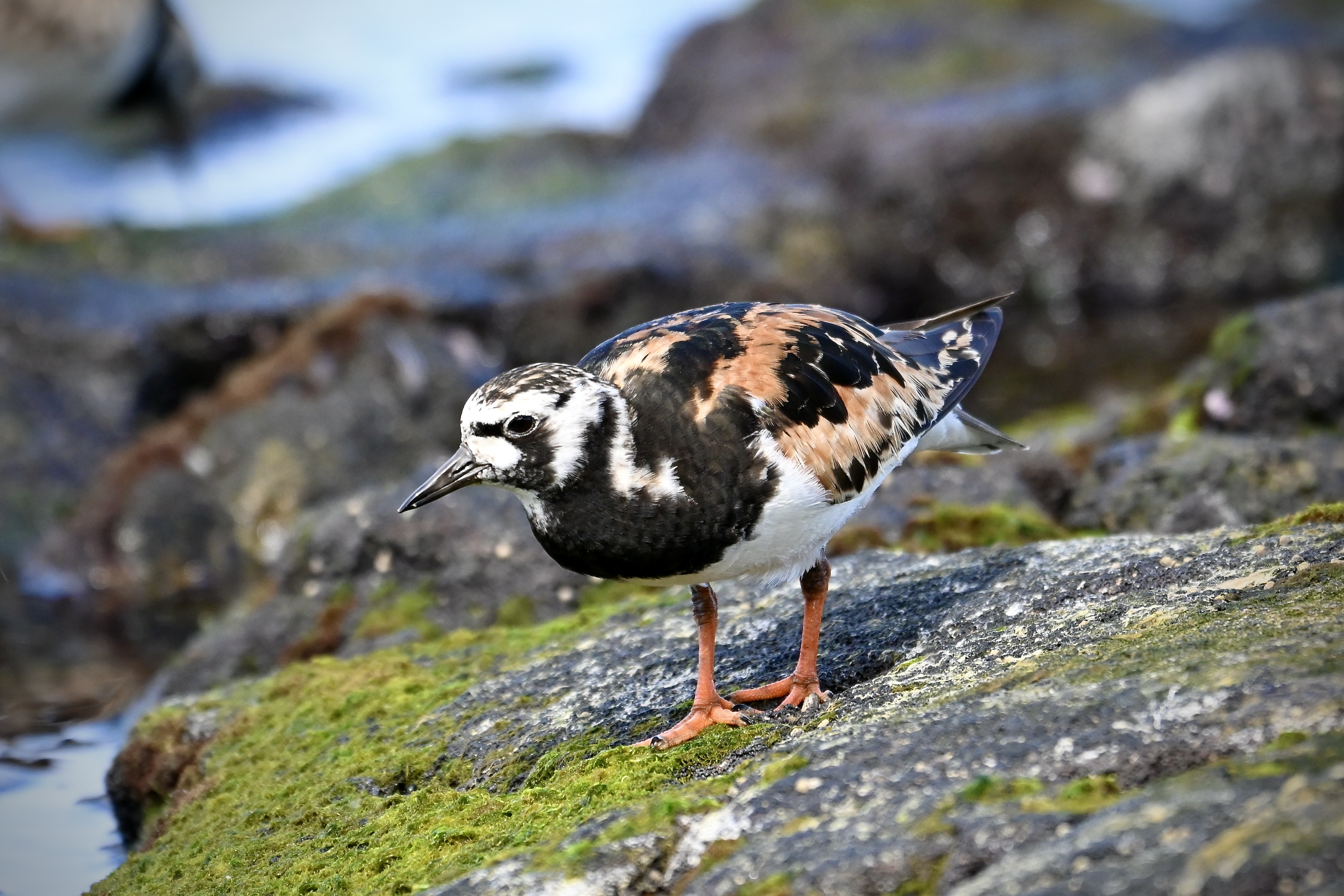
Photo of an ‘akekeke (ruddy turnstone) on Hawai’i Island by Eric Anderson.




 ordainedgeek