“One of the scribes came near and heard them disputing with one another, and seeing that he answered them well he asked him, ‘Which commandment is the first of all?’ Jesus answered, ‘The first is, “Hear, O Israel: the Lord our God, the Lord is one; you shall love the Lord your God with all your heart and with all your soul and with all your mind and with all your strength.” The second is this, “You shall love your neighbor as yourself.” There is no other commandment greater than these.'” – Mark 12:28-31
The scribe approved your words, or so says Mark, and silenced all the snare-deploying crowd. Yet he might ask (and yes, in Luke he did) “Who is my neighbor to receive my love?”
Then you, Redeemer, might have said (though you did not, or so says Luke), “Look to the Book of Ruth, to what is written there: ‘I will not leave you. Do not press me.
“‘Where you journey, I will go. And where you stop, there I will take my rest. Your people shall be mine, and more: Your God shall be my God.'”
A poem/prayer based on Mark 12:28-34, the Revised Common Lectionary Gospel Reading, and Ruth 1:1-18, the First Reading, for Year B, Proper 26 (31).
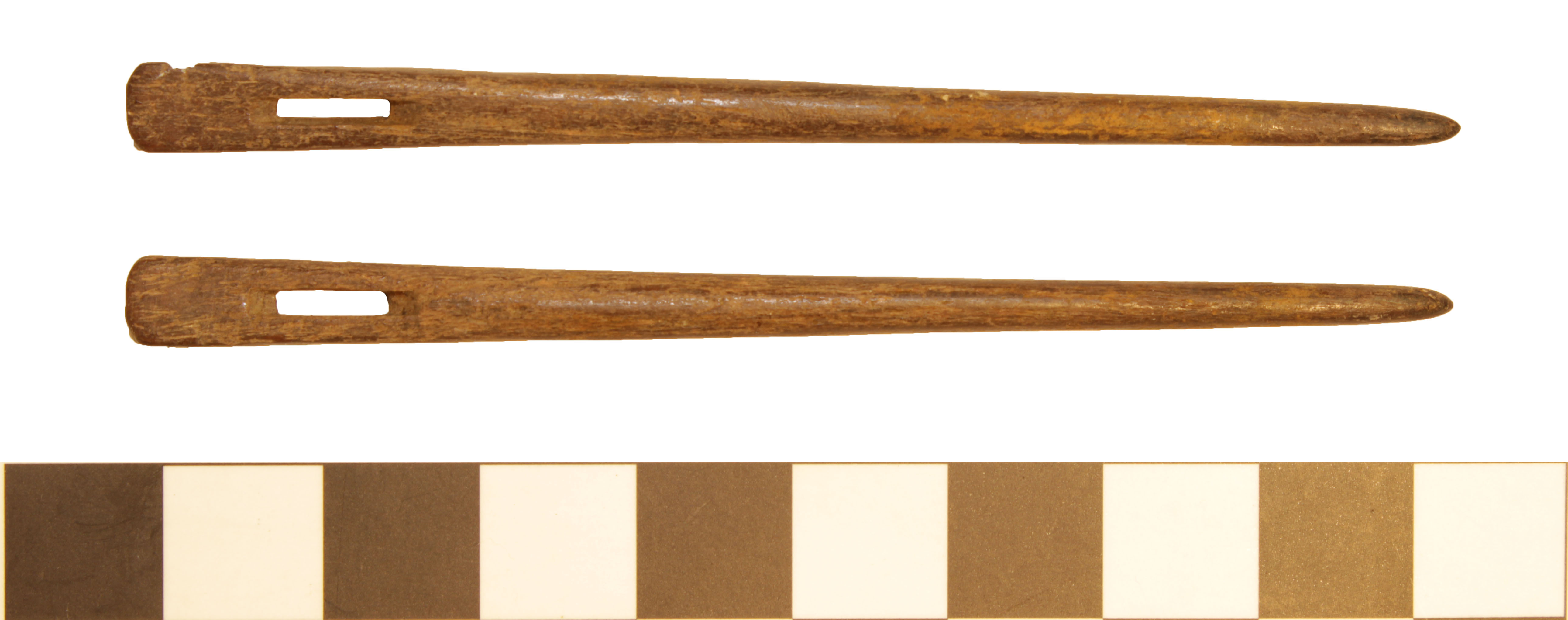
“But Jesus said to them again, ‘Children, how hard it is to enter the kingdom of God! It is easier for a camel to go through the eye of a needle than for someone who is rich to enter the kingdom of God.'” – Mark 10:24b-25
A camel, which is a beast with sense, will cast a jaundiced eye upon a needle’s eye if told that they’re to pass on through. At most, a knobby hoof may paw the ground.
Yet I engage in exercise of needle-passing almost every day, and have for one score years, and ten, and six, endeavoring to tell a story so it lifts a heart or redirects a mind.
A task for fools, I say, as those I teach nod sagely in agreement with my words, then go to do the opposite of what I’d said, and what they’d then approved,
Because, you know, though there’s a better way, the one we know is still the one we’ll do. We thank you for the wisdom of your words and hope the world one day works as you say.
If only it were only “they,” the ones to whom I speak! For it is also “Me,” the one I seek to govern by your guidance, Christ, the “I” who also cannot seem to follow you.
I would despair, save that some seeds I never thought would bloom have grown, have blossomed, borne sweet fruit as marginalized people claim their place and power where they once had none.
So take my challenge, camel. I will make my painful way through this so-tiny eye, and once we’re through, what visions might we see, what glory celebrate, in God’s sweet possibility.
A poem/prayer based on Mark 10:17-31, the Revised Common Lectionary Gospel Reading for Year B, Proper 23 (28).
“As he went ashore, he saw a great crowd, and he had compassion for them, because they were like sheep without a shepherd, and he began to teach them many things.” – Mark 6:34
Bring your compassion, Jesus, for our shepherds howl like wolves. They lay the rod of law with harshness on the poor and spare the ones in power.
Teach us, Jesus.
Bring your compassion, Jesus, for our shepherds carelessly use words that others hear, and hearing ponder. Pondering, they set themselves to violence.
Teach us, Jesus.
Bring your compassion, Jesus, for the shepherds cannot find the way that leads between our Scyllas and Charybdises, and lost, we founder in moral morass.
Teach us, Jesus.
Bring your compassion, Jesus, and teach us many things, like how the shepherd cares first for the sheep, whereas the predator consumes them.
Teach us, Jesus.
We are sheep without a shepherd. Teach us many things. And may we, by God’s grace, learn.
A poem/prayer based on Mark 6:30-34, 53-56, the Revised Common Lectionary Gospel Reading for Year B, Proper 11 (16).
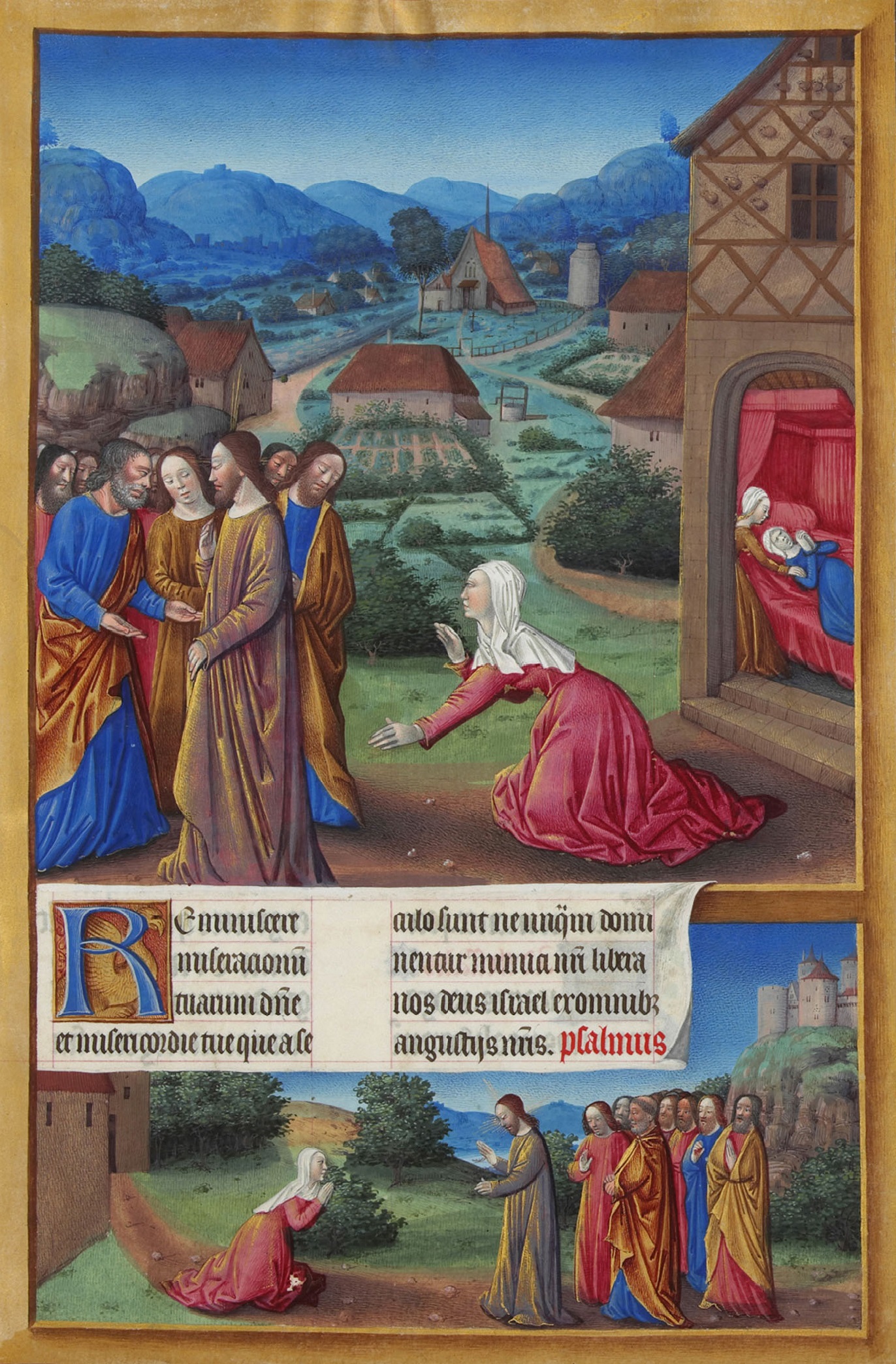
A poem/prayer based on Mark 5:21-43, the Revised Common Lectionary Gospel Reading for Year B, Proper 8 (13).
The image is of the healing of the woman with the hemorrhage from theTrès Riches Heures du duc de Berry. Artwork by the Limbourg brothers (between 1411 and 1416) – Photo. R.M.N. / R.-G. Ojéda, Public Domain, https://commons.wikimedia.org/w/index.php?curid=17443172.Somewhat unusually for images of this text, Jairus’ daughter is visible at right in the upper image.
Jesus bar-Yosef House with a hole in the roof Capernaum, Galilee
Dear sir:
In light of recent events which have damaged your public image, we offer our services as public relations consultants. We believe that we can increase your name recognition and your positive reputation.
To give you some idea of the value of our services, we would like to comment on two recent encounters that resulted in unnecessary conflict with significant public figures. You can evaluate our suggestions here and realize the benefits you would realize from a permanent business relationship with us.
We realize that your followers – or students; one of the things we’d like to clarify is their role in representing you and your ideas – were hungry while you were out walking with them that day. It is regrettable that they had not prepared for a trip. While we are not event planners, we recommend that you get some additional support to see that you are properly supplied.
The public relations concerns arose when they began to pluck grain on the sabbath. Everyone knows that the followers of a religious leader will be properly scrupulous about following the sabbath regulations. Indeed, a higher degree of respect for those practices is simply expected by the populace. In the moment, it would have gone much better if you had said, “Not now, friends. We don’t have far to go. There will be something to eat soon.”
You were walking just a short distance, weren’t you? We’re confident you were.
Alternatively, as noted above, you could have redirected them to use their pre-prepared foods. Best of all, you might have carried some yourself, and distributed those to your hungry followers. Imagine the positive responses to your generosity!
Then there was the man with the hand. We acknowledge that you actually broke no sabbath regulation at all. You didn’t anoint his hand with oil, which is permitted by most authorities. You didn’t even touch it.
Our concern is with your interaction with the other religious leaders in the room. Granted, they didn’t say anything to you. You might have interpreted that as consent, rather than challenging them for hardness of heart. You might also have said, “Let us see what miracles God will do on the sabbath,” which would have been very pious and quite successful.
Best of all, you could have said to the man, “Come see me tomorrow and we will see what God will do. Today we will rest, and God will rest.”
Frankly, Jesus, he’d been living with that hand for some time. One more day would not have been a burden.
These two events, and a couple of others, have generated some opposition to you and to your message. We firmly believe that you can move past them to a better, more productive relationship with the public at large and with your peers among the religious leadership. We think that some circumspection in some areas, and more emphasis of some elements of your teaching, will really resonate with the population. In short, we believe you have potential and hope to represent you.
The proposal in full is attached.
A poem/prayer based on Mark 2:23-3:6, the Revised Common Lectionary Gospel Reading for Year B, Proper 4 (9).
The image is Christ Heals the Man with a Paralyzed Hand, a mosaic in the Cathedral of Monreale, Sicily, Italy (late 12th – mid-13th cent.). Photo by Sibeaster – Own work, Public Domain, https://commons.wikimedia.org/w/index.php?curid=4515630.
We pray for the mothers of the world: for the ones who have borne children, for the ones who have adopted children, for the ones who have, by the sharing of love and care, mothered someone or some ones around them. We thank you for the gift of love which mothers may share. We praise you for the care so many children receive from diligent and compassionate mothers. We ask your Holy Spirit to be present when motherhood stumbles and love fades, when children suffer neglect or abuse, or when a much-loved and much-loving mother is taken from them by the sad realities of the world.
We pray for the mothers who do not know where they will find the resources needed by their children. We pray for the mothers who do not know where they will find the resources needed for themselves. We pray for the mothers who, for whatever reasons, have yearned for and never had children. We pray for the mothers who struggle to live in war zones, or abusive homes, or with illness, or with children who do not return their love. We pray for mothers with gratitude and with urgency, when so many things can go wrong.
May we, as so many mother strive to do, live up to the high standards of your call. May we search diligently for truth and courageously bear witness to it. May we be held in your Holy Spirit when we need strength and renewal. May we be guided by your Holy Spirit when the time to work is at hand.
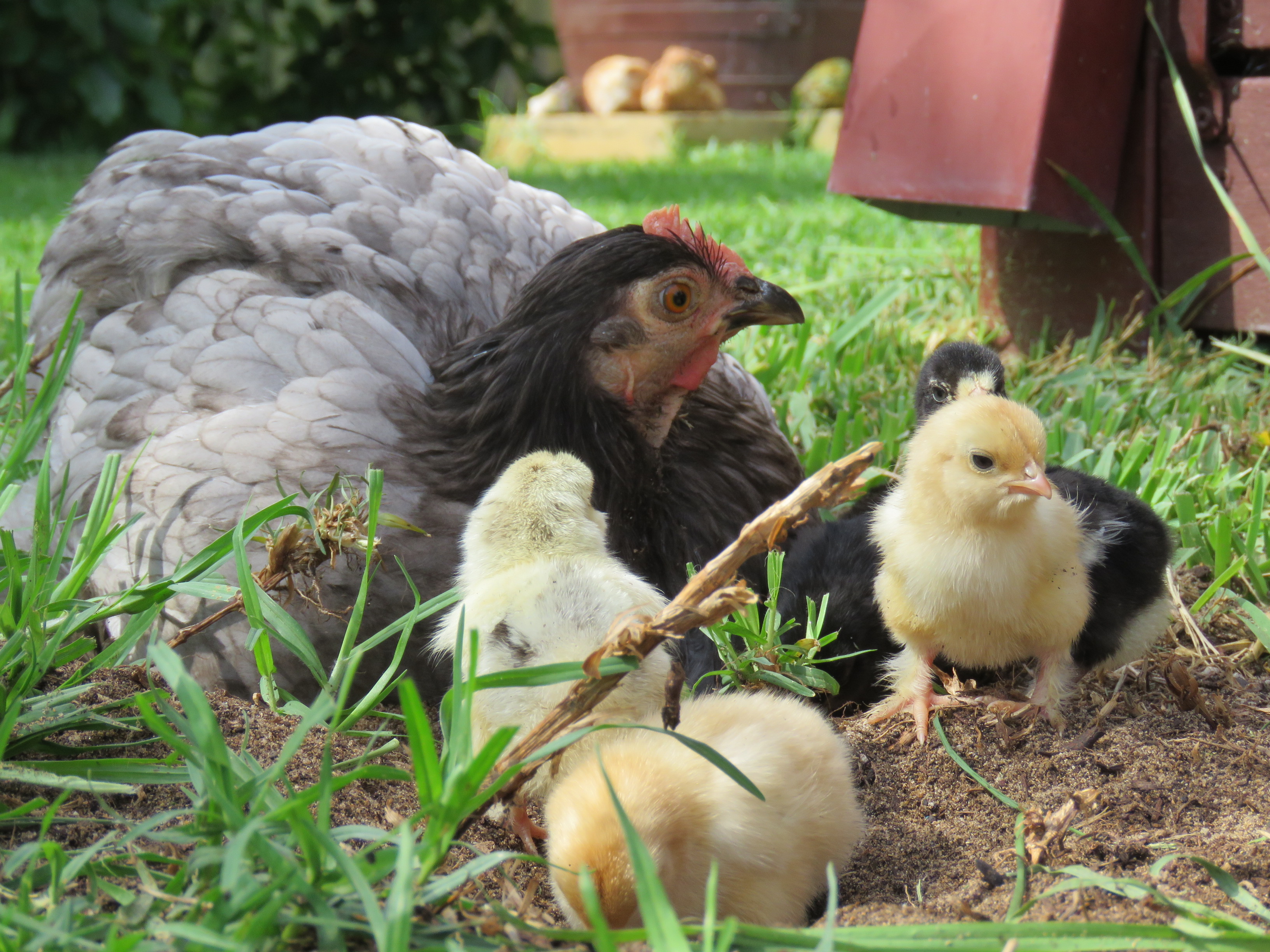
Jesus said he would gather the people as a mother hen gathers her chicks. Gather us, O God, and all those nations of the world, beneath the comfort of your wings.
There is no fear in love, but perfect love casts out fear; for fear has to do with punishment, and whoever fears has not reached perfection in love. – 1 John 4:18
Fear is not just about punishment, John. Fear is also about being hurt. Fear is about taking a risk. Fear is about the unknown.
I fear punishment, of course. The pain is not just the harsh words, hard tones, spoken to me. I punish myself as well.
I fear as well the hurt that is not punishment, but comes from accident or malice done around me.
I fear to take a risk, of course, because, deserved or not, if risk turns into failure, I will feel the pain.
And I fear the unknown because who knows (I don’t) what dangers lurk for me, what hurts I’ll face and feel?
So John, I know that God is love, rejoice that God loves without fear. I live in love and fear. I fear I am not God.
A poem/prayer based on 1 John 4:7-21, the Revised Common Lectionary Second Reading for Year B, Fifth Sunday of Easter.
As in (some) years past, I wrote a new song for Easter to play and perform for the post-Easter Sunday episode of What I’m Thinking, my weekly video program at holycrosshilo.com. It’s a song that refers both to the events of the first Easter and of the Sunday that followed.
Am I thinking this week after Easter Sunday? Well, no, not yet. But I am singing “Tell Me to Turn Around.”
Here’s a transcript:
In the week after Easter Sunday I’m afraid I find it difficult to think about much of anything. That’s sad, because the Gospel lesson for this coming Sunday is the story of Thomas and his doubts (John 20:19-31). Poor Thomas gets less of my thinking than he deserves.
As a result, What I’m Thinking this week is What I’m Singing. This is something I have done a few times at Easter over the years, and so I’m pleased to bring you this song: “Tell Me to Turn Around.”
Where have you brought him? How can I see him? I want to know why these ugly things happen. But for now, just tell me. Tell me to turn around.
[Chorus]
Turn around, look behind, where I haven’t looked before. Turn around, clear my eyes. The life is glowing, and I am crowing That the world has changed since I turned around.
[Verses]
You told me already we’ve lost him completely. I want to know why these ugly things happen. Mary, what more can you tell me today? Tell me to turn around.
You told me, and told me, but what good are your stories? I want to know why these ugly things happen. Why are you lying about his wounds, brothers? And you tell me to turn around.
In the gospel stories about Easter, there’s a common theme. It’s unbelief. People heard – from angels, initially – that Jesus had risen from the dead, and… they didn’t believe them. Later people heard from other people that Jesus had risen from the dead, and they didn’t believe the people. I guess that makes sense. If you don’t believe angels, how likely are you to believe people?
Once there was an ‘apapane who didn’t believe in love.
If that seems hard to believe, well, it was hard to believe. He had been raised with two sisters by attentive parents who fed them well, kept them warm in the rain, and taught them all to sing. They flew with him, they brought him to good trees to find bugs and nectar, and they kept him company when the nights got long and lonely.
But he didn’t believe in love.
You might be thinking that his sisters teased him all the time and that’s why he didn’t believe in love. It’s true. They teased him. But not much, really. More to the point, the teasing didn’t bother him. He teased them back and they all would laugh at the silly things they’d say.
Still, he didn’t believe in love.
“You’re just taking care of me because it keeps the family going,” he told his parents, who really didn’t know what to say about that.
“You’re just good to me because you expect I’ll be good to you,” he told his sisters, and he was good to them, but as he said, it was because he expected them to be good to him.
I suppose it might have been because nearly the entire time since he’d cracked the shell that the skies had been gray, the winds had been cold, and the rain had plummeted down.
I sometimes find it hard to believe in love after too many days of cold, grey, windy rain.
He and his sisters had put in a hard day of nectar- and bug-seeking. There might have been ohi’a flowers in blossom, but they were hard to see in the grey light. The bugs were hiding from the rain, not even troubling to go find nectar to eat. The three siblings huddled for the night on a branch, cold, wet, and hungry.
He was grateful for their warmth but he still didn’t believe in love.
When morning came, he blinked his eyes to an unfamiliar light. The clouds had cleared overnight, and the wind gently rustled the leaves. He and his sisters, all three, stared at the golden light of the sun rising over the trees. As it got higher, the ohi’a blossoms opened in scarlet and gold glory. As it got higher, its warmth dried their feathers.
“Wow,” said the sisters. “What a difference that makes.”
“More than you know,” said their brother. “It’s like a completely different world.”
“Is this a world where you can believe in love?” asked one sister.
He thought about it for a while.
“You know, I think it might be,” he said.
They helped one another get their drying feathers into shape – that’s kind of an ‘apapane hug – and flew off into the sunrise over the glorious bloom of ohi’a.
As they flew, they sang together. You know what they sang?
“I think I believe in love.”
by Eric Anderson
Watch the Recorded Story
I write these stories ahead of time, then tell them from memory – memory plus whatever I feel like saying in the moment.




 ordainedgeek

