Story: Decisions, Decisions

November 23, 2025

Jeremiah 23:1-6
Luke 23:33-43

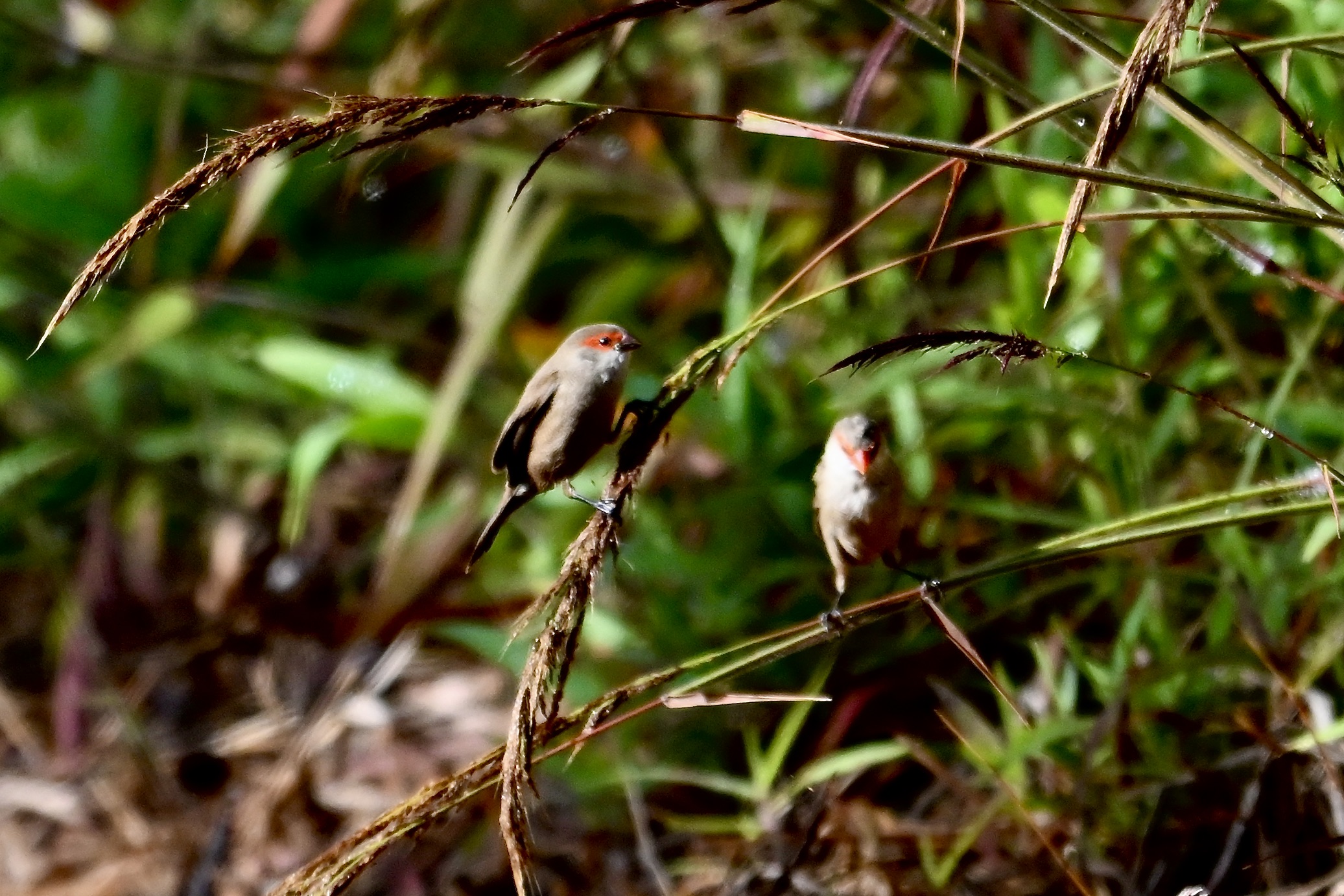
The common waxbills may be the smallest birds in Hawai’i – meaning how big the adults get. Newly hatched chicks even of very large birds can be smaller. But if you see a very small bird with a rosy beak, it’s likely to be a common waxbill.

They like to eat the small seeds of grasses and herbs, and they tend to move about in flocks of anywhere from a pair up to thirty or forty birds. With a flock, of course, comes the problem of decision. If I’m the only one who needs to make a choice, well, I can make the choice. I decide whether to go this way or that way. When there’s somebody else, though, now we have to work out our direction, our left or right, our up or down.

Waxbills have the same problem. When they’ve eaten the seeds in this plot of grass, how do they decide where to go next?

A waxbill decided one day, after a certain amount of chirped argument, that somebody had to take charge. Somebody had to make the decision. Somebody had to rule.

“We’re going this way,” he called, and took off. Most of the other waxbills took off with him, but not all, so he circled back and screeched at them until they, too, joined the rest of the flock and flew with him. Some of them were relieved not to have to argue any more. Others were irritated that they had ideas that nobody listened to. And there were a few that didn’t want to go in this direction at all.

One of the nice things about being a bird that eats grass seed is that, pretty much any direction you go is likely to have grass in it. They flew. They found. They ate. But not everybody in the flock was happy.

The next day, the waxbill in charge decided to take charge again, but this time some of the waxbills wouldn’t go at all. He chirped at them. He screeched at them. He even flew at them as if he was going to hit them with his wings. But they wouldn’t go.

Eventually the flock settled back to the ground again, and one of them said, “I don’t mind following you, but we need to take trouble to agree which way we’re going to go.”

“No, we don’t,” said their self-appointed leader. “I know what I’m doing. I’m in charge.”

“We all have ideas about where to find seeds,” said the waxbill speaking for the others. “Some might be more right. Some might be more wrong. And that includes you. If we all share, we’ve got a better chance that the ones who are more right will be heard, and that we, as a group, will find more seeds.”

“You’re a fine leader,” he went on, “but you’re not the only one with good ideas. We’ll follow – but we’ll also contribute. If you don’t want to listen, well, somebody else will have to lead.”

It took longer that way. It did. But this little flock of little birds did better than they ever had before at finding good clumps of grasses in seed, and they did it with birds who felt better about their leadership and their fellow fliers in the flock than they ever had before.

It can be a challenge to make decisions. It might be that the most important decision you can make is how you make a decision for yourself and with others.

by Eric Anderson

Watch the Recorded Story

I write these stories in full ahead of time, but I tell them from memory (plus improvisation). As a result, what you read and what you hear will be different.

Photo of common waxbills by Eric Anderson.
Paragon

The God of Israel has spoken;
the Rock of Israel has said to me:
“One who rules over people justly,
ruling in the fear of God,
is like the light of morning,
like the sun rising on a cloudless morning,
gleaming from the rain on the grassy land.”
Is not my house like this with God?

– 2 Samuel 23:3-5

My eyes no longer see as far as they once did.
My hands are creaky, laid upon the strings.
My knees and elbows crack, and truth to tell,
I’d rather spend the day in memory than rule.

The time will surely shortly come when I
shall make my bed in Sheol rather than
within this palace of my grandeur. No more
shall Abijag console me with her warmth.

But then, no longer must I listen to
the not-so-welcome words of Nathan. There
are benefits to dying. Such as making peace
with shame and guilt (if not with those I slew).

And so:

Was not my reign a paragon of right?
(Ignore the tales of rape and sons’
rebellion, though another looms e’en now.)
Did I not shine as dew reflects the morn?

Who now will contradict my words? They’ll hold
them close and celebrate how wise I was
when, near the end, I sang the truth
that earthly power, even mine, is judged by God.

How will they know that as I played
my fingers caught upon the strings, my voice
was husky with the tears that streamed, because
I knew the truth and then composed the lie.

A poem/prayer based on 2 Samuel 23:1-7, the Revised Common Lectionary First Reading for Year B, Reign of Christ.

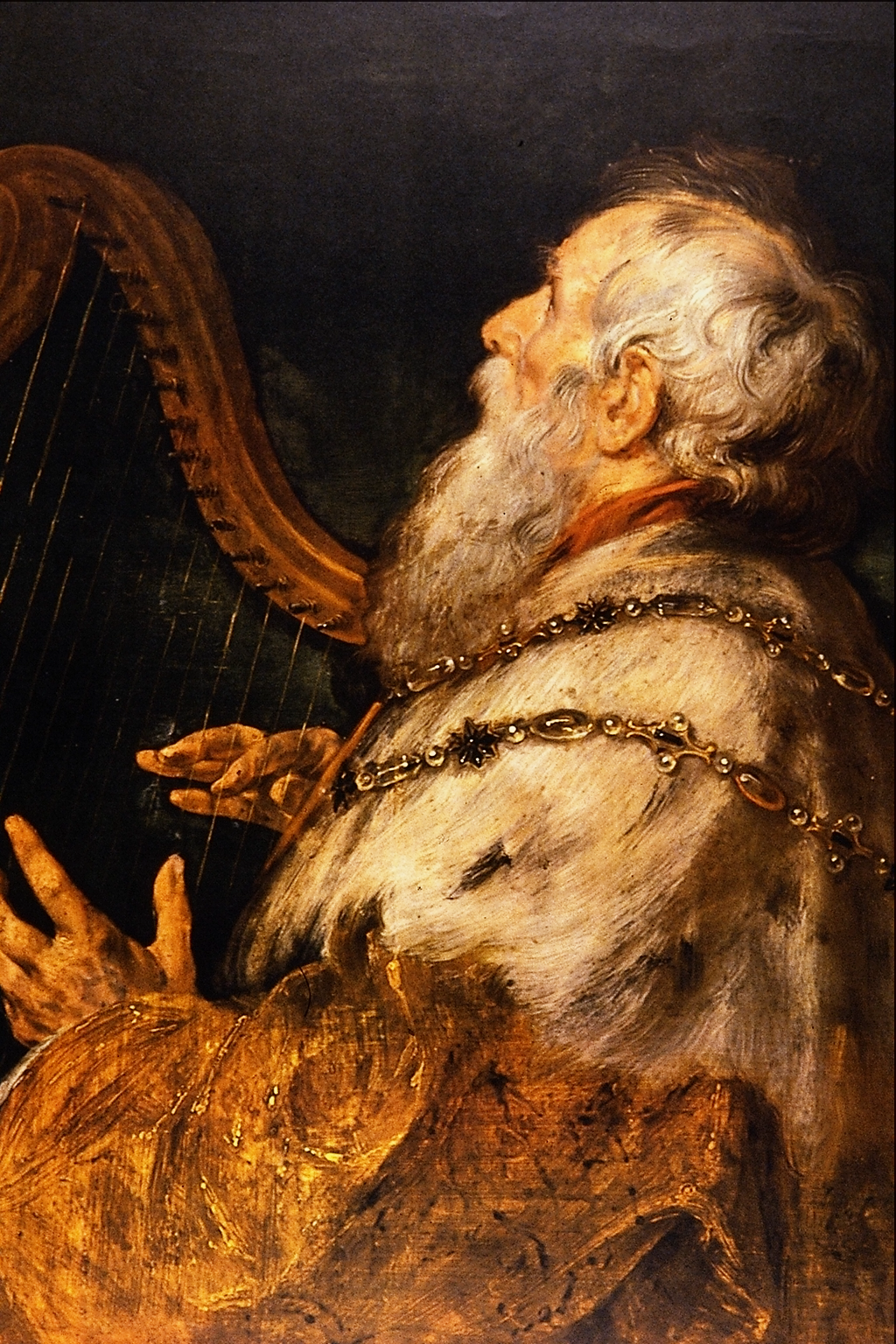
The image is King David by Peter Paul Rubens (by 1640) – Corel Professional Photos CD-ROM, Public Domain, https://commons.wikimedia.org/w/index.php?curid=10324682.

Story: The One in Charge

October 20, 2024

Isaiah 53:4-12
Mark 10:35-45

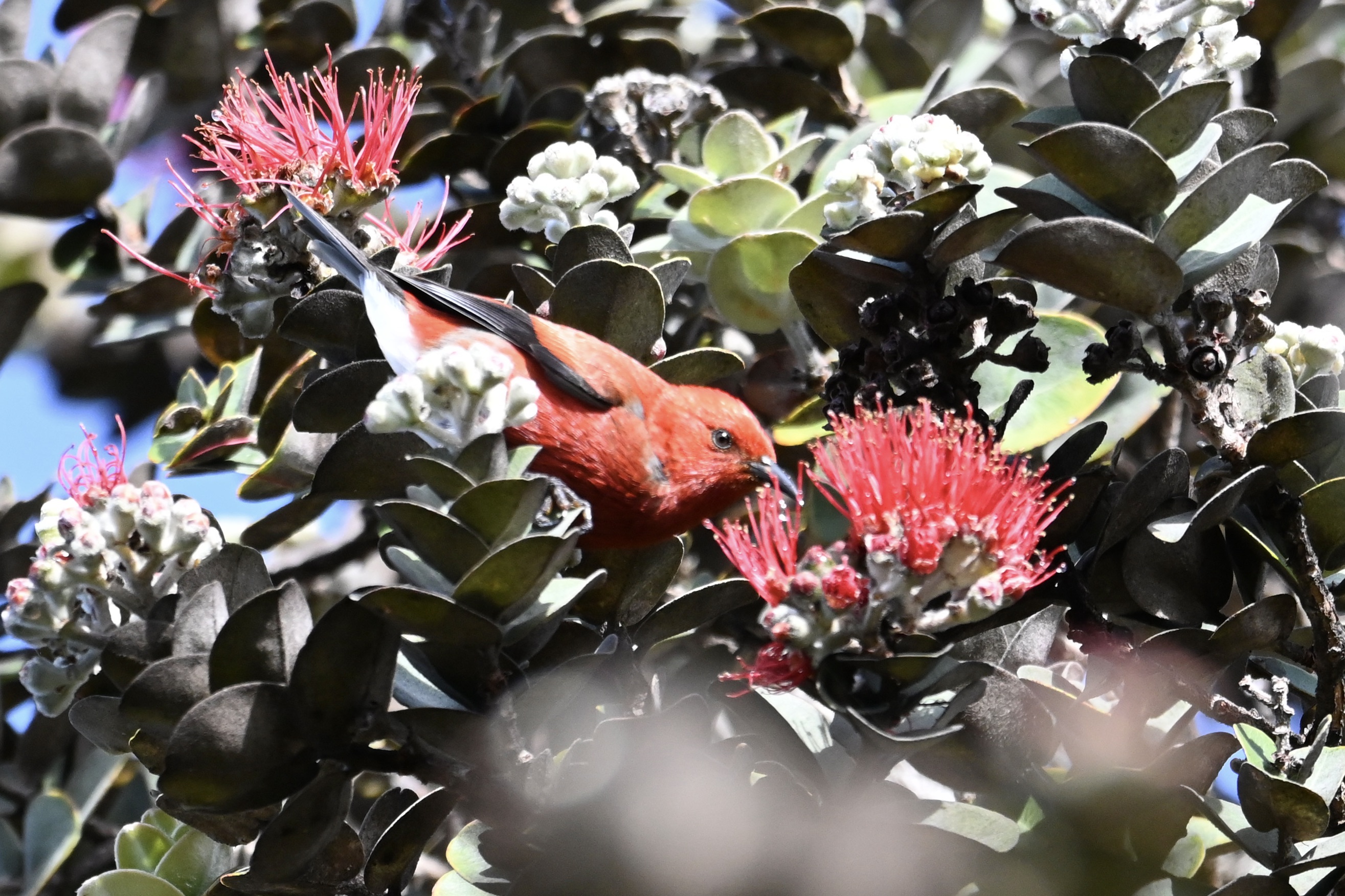
When the birds of the ohi’a forest start to flock together – which tends to happen when the chicks have learned to fly and left the nest – some of those flocks rotate leadership among the birds: an ‘apapane this week, an ‘akepa this week, and who knows? Perhaps an ‘alawi the next.

There came a week when one of the ‘amakihi was chosen to lead, and he was going to lead, by all that was feathered, he was. He had done a lot of watching and a lot of listening to the other leaders, and he knew he’d do a good job. He wouldn’t bully, and he wouldn’t brag, and he would get help from other birds to be sub-leaders, and above all else, he would keep an eye out for food, for shelter, and for danger.

He was, after all, the one in charge.

Things seemed to go just that way for the first couple of days. The other birds followed where he led, they sang cheerfully as they foraged for bugs and nectar, and they avoided both the nuisance of a cranky i’iwi and the dangers of two cats and an ‘io. On the third day, however, something seemed to be going… differently. The birds still followed where he led, but… it almost seemed like some of them were slightly ahead of where he was going. He thought they might just be faster fliers, but as the day went on he noticed that some of them seemed to open their wings just slightly before he did.

What puzzled him about all this was that, as he thought about it, it seemed… perfectly normal. The other flock leaders had also been just slightly behind two or three birds. Which seemed… perfectly normal and perfectly odd.

When the next day came, the same thing was happening, and he kept a close eye on things. Another ‘io came by over the course of the morning, so that a sudden alarm whistle sent everyone deep into the branches. A little while later, the same voice trilled that it was safe again, and the flock took wing for another ohi’a tree – one that he, the leader, hadn’t chosen. He probably would have tried that direction (because the ‘io went the other way), but he hadn’t chosen it. What was going on?

In early afternoon, it happened again. Two or three birds took off just before he did, and later on two or three more took off just before he did, but they were different birds. Still, he spotted what was the same: those birds had been close to another bird, an ‘amakihi, just before they flew.

So he landed right next to that bird when they got to a new tree and found… she was his mother.

“Are you… What are you doing, mother?” he asked. “Are you trying to take over as leader?”

“Not at all,” she said. “I’m following you, just like everyone else.”

“Then how come birds take off ahead of me from around you?”

“Well,” she mused. “I might be mentioning that you’re looking at a tree in a particular direction. They seem to think that’s a reason to go that way. You and I both have been paying attention to what’s safe and what’s in blossom.”

“Isn’t that leading?” he asked.

“It might be,” she said, “if leading is paying attention to what’s good for all the birds of the flock. Which you’re doing. But it’s something that all of us can do along with you. When your leadership time is over, you can do it, too.”

He was a good leader, they all agreed. They were surprised to find, however, that he was an even better follower when another bird’s turn came to lead. He did the best he could to see that all the birds were fed, warm, and safe – and so did his mother.

by Eric Anderson

Watch the Recorded Story

I write these stories ahead of time, but I tell them in worship from memory. Memory plus a fair amount of improvisation.

Photo of an ‘amakihi in flight by Eric Anderson.

Story: Follow the Leaders

September 29, 2024

Numbers 11:4-6, 10-16, 24-29
Mark 9:38-50

It’s a funny thing about people. Sometimes people choose leaders without getting them ready for leadership first. You’ve probably seen it in school sometimes. The teacher asks someone to lead the class in a song or a reading, but it turns out they hadn’t learned it yet.

That can be pretty embarrassing.

As it happens, it’s not just humans who do such things, although it turns out that for a lot of those creatures, a school is also the place to do them. A school of ta’ape, or “Bluestripe Snapper,” selected a relatively young fish to be the leader of their school one season. He was pretty big, he seemed pretty smart, and as far as anyone could tell without asking, he seemed to know what he was doing.

He… didn’t know what he was doing.

The first hour was a disaster. He tried calling out from the front of the school, “Everybody turn right!” And everybody turned right. Everybody who heard him. That wasn’t all that many of them. It was a big school, and his loudest voice didn’t carry all the way to the back, or even to the middle. Fish swam off in all sorts of different directions. It was quite a muddle.

Fortunately, he was a smart ta’ape, and one thing about being smart is knowing when you need to learn something. Clearly there were things he needed to learn about leading the school, and he needed to learn them quickly. So when the school was feeding quietly on some beds of algae, he sought out some of the ta’ape kupuna and said, “I need some help. How do I get the school to follow?

The kupuna were gracious. One or two of them did think he might have learned this before, but they kept quiet about it. They told him the secret.

“You need to choose fish to lead with you.”

“The school is too big for one fish to lead,” they said. “As you’ve found, it can’t be done by one fish. So you appoint other leaders, and space them throughout the school. The ones closest to you listen for what you’re doing, and the ones farther away listen for what they’re doing. When you turn, they turn, and the other leaders turn, and the school turns.”

The leader was relieved. He didn’t have to do this alone. He would have help. He promptly asked as many of the kupuna as were willing (some of them thought it was time for some new fish to learn) to become the other leaders, and he found a few more fish and taught them what. They needed to know.

The next time he directed the school toward clearer water they turned in a flash. He laughed for joy, and so did the other leaders, and so did the whole school full of fish, because he’d led them all in joy.

by Eric Anderson

Watch the Recorded Story

I write these stories ahead of time, but I tell them from memory. And sometimes I don’t remember the names of the fish.

Photo of a ta’ape school by Tchami – Bluestripe Snapper, CC BY-SA 2.0, https://commons.wikimedia.org/w/index.php?curid=34504430

Not Enough Cooks

“[Moses said,] ‘I am not able to carry all this people alone, for they are too heavy for me.’ So the LORD said to Moses, ‘Gather for me seventy of the elders of Israel…'”

They wept for food, the wandering people did.
Their palates had grown weary of the miracle,
which sounds ungrateful. I suppose it is.
But who does not grow weary of life’s wonders?

Then Moses was displeased, and not with weeping
people, but with God, whom he accused of treating him
so badly. “Why do you lay the burden of these people
upon me?” For Moses, too, had wearied of the wonder.

And God – the singular, the Trinity not yet
imagined, whose powers had rained flies
and hail and pestilence and death upon
the wailing people of the Pharaoh – said,

“You shall not lead alone. You never have.
Did you forget? We’ve been a team, we have,
with you and me and Miriam and Aaron.
The team will grow by seventy today.

“They say too many cooks will spoil broth.
Sometimes, you know, that’s true, if they
neglect to speak and listen to each other. Now
my Spirit shall be given to these elders.

“They shall prophesy, including those
who missed the memo in the camp.
And you, my harried, whiny Moses, shall
at last be glad for helpers on the road.

“As for these weeping people, now:
Let them eat quail.”

A poem/prayer based on Numbers 11:4-6, 10-16, 24-29, the Revised Common Lectionary Alternative First Reading for Year B, Proper 21 (26).

The image is Moses elects the Council of Seventy Elders by Jacob de Wit (1737) – AQGtI5P6nkpYyw at Google Cultural Institute maximum zoom level, Public Domain, https://commons.wikimedia.org/w/index.php?curid=21988106.

Story: ‘Apapane Leadership

July 21, 2024

Jeremiah 23:1-6
Mark 6:30-34, 53-56

After the eggs have hatched and the chicks have learned to fly, many of the birds of the ohi’a and koa forest will come together in mixed flocks of ‘apapane, ‘amakihi, ‘akepa, and ‘alawi. They stay together to find ohi’a and mamane trees in blossom, which would also have attracted some tasty bugs.

It was the custom of one flock on the slopes of Mauna Loa to select a leader each week to keep the flock together and organize a watch for dangerous or suspicious creatures like cats, ‘io, pueo, and, well, people. The leader would look around for trees bright with flowers and guide the hungry birds toward them, while making sure nobody got left behind. It wasn’t the easiest thing for a bird to do, but most of them handled it pretty well.

One ‘apapane had been eagerly awaiting his turn to be flock leader. He was no longer that young, having seen a few summers and winters. He was something of a silent critic of the weekly leaders, silently scoring them on his own checklist. That one didn’t spot the mamane tree in blossom as fast as he had. This other one had been slow to get the birds moving. And this other one hadn’t properly spotted the watcher birds for ‘io. They’d spotted the hawk in plenty of time anyway, but it hadn’t been right.

At last came the week when the birds in the flock chose him as their leader for the next week. He was proud. He was excited. He was also… going to do something fairly complicated for the first time, and he was absolutely convinced that he knew exactly what should happen.

The result, the next morning, was a lot of birds screeching at one another, with their purported leader screaming the most and the loudest. He screeched at the ones who were supposed to be watching when they perched on a branch other than the one he’d selected. He screeched when they were ready to head to a new set of trees, and screeched when one or two birds headed off in the wrong direction. He screeched when a bird remained behind, and nearly pecked his tail as he flew right behind him to get him to the rest of the flock. He screeched when it was time to nap. He screeched when it was time to settle down to sleep.

When he turned about, one of the older birds, an ‘apapane kupuna, was perched behind him. He opened his beak to screech at her, but shut it quickly. He knew better than to screech at her.

“What have you been doing?” she said, “and don’t screech at me.”

“I’ve been leading,” he said, “like I’m supposed to.”

“You haven’t been leading like you’re supposed to,” she said rather severely. “You’ve been driving like you’re not supposed to. You’ve had birds who know perfectly well what to do confused and upset. Some of them went hungry today. While you were chasing that one bird there were two others that set off in the wrong direction and I had to go get them.”

“They should have listened to me!” he said.

“How could they,” she asked, “when you didn’t give them a clear direction?”

He was silent for a moment.

“You’ll try it again tomorrow,” said the kupuna ‘apapane, “and tomorrow you’ll plan, and you’ll chirp softly, and you’ll listen to the birds who know what they’re doing, and you’ll keep an eye on things and let other birds know when there’s a problem that they can help you with.”

“Be wise,” she said, “and attentive, and assuring. That will keep the flock with you, and fed, and comforted, and safe.”

Oh, it took some work, I tell you. But she was nearby the next day whenever he opened his beak to screech, and only one or two screeches got out. The day after he didn’t screech at all. By the time his week as leader was over, they followed him gratefully and gladly. Because he learned from his mistakes, and he learned how to lead.

by Eric Anderson

Watch the Recorded Story

I write these stories in full and in advance, but I tell them from memory and from improvisation. What you hear in the recording is not what you read above it.

Photo of an ‘apapane by Eric Anderson.

Teach Us, Jesus

“As he went ashore, he saw a great crowd, and he had compassion for them, because they were like sheep without a shepherd, and he began to teach them many things.” – Mark 6:34

Bring your compassion, Jesus,
for our shepherds howl like wolves.
They lay the rod of law with harshness
on the poor and spare the ones in power.

Teach us, Jesus.

Bring your compassion, Jesus,
for our shepherds carelessly use words
that others hear, and hearing ponder.
Pondering, they set themselves to violence.

Teach us, Jesus.

Bring your compassion, Jesus,
for the shepherds cannot find the way
that leads between our Scyllas and Charybdises,
and lost, we founder in moral morass.

Teach us, Jesus.

Bring your compassion, Jesus,
and teach us many things,
like how the shepherd cares first for the sheep,
whereas the predator consumes them.

Teach us, Jesus.

We are sheep without a shepherd.
Teach us many things.
And may we, by God’s grace,
learn.

A poem/prayer based on Mark 6:30-34, 53-56, the Revised Common Lectionary Gospel Reading for Year B, Proper 11 (16).

The image is Christ Preaching Amongst a Crowd of People, pen and ink. Artist unknown. Found at WellcomeImages. https://wellcomeimages.org/indexplus/obf_images/a0/a1/69c69bd8f2f91424aa360aeb47d6.jpg
Gallery: https://wellcomeimages.org/indexplus/image/V0049499.html
Wellcome Collection gallery (2018-03-28): https://wellcomecollection.org/works/ycntxjvs
CC-BY-4.0, CC BY 4.0, https://commons.wikimedia.org/w/index.php?curid=36668704.

To the SBC

Mary Magdalene went and announced to the disciples, “I have seen the Lord…” – John 20:18

Christ’s first messenger to those
he called as messengers was Mary.
Mary Magdalene. His friend.
She traveled with him on his road.

“Apostle to apostles,”
she’s been called, though they,
it must be said, did not believe.
But she was right and they were wrong.

So, those who now decide
to set aside the witness of
their sisters, you would mute
the Magdalene

As if you’d set your course
into a desert wasteland,
and there deprive yourselves
of water.

A poem written in response to votes at the Southern Baptist Convention’s annual meeting on June 14, 2023, to ban women from pastoral roles and remove churches led by women from the denomination’s rolls.

The image is Mary Magdalene, a Profoundism work by Koorosh Orooj – http://profoundism.com/free_licenses.html, http://profoundism.com/free_licenses_mary_magdalene.html, CC BY-SA 4.0, https://commons.wikimedia.org/w/index.php?curid=108033456.