Story: Imitation

May 11, 2025

Acts 9:36-43
John 10:22-30

How is a young bird, or a young turtle, or a young person supposed to figure out how to be an adult bird, or an adult turtle, or an adult human being? People, at least, get some instructions from their elders. We get taught how to get dressed, and what things are good to eat (or at least good for you to eat; opinions differ on whether things that are good for you are tasty enough to eat), and especially important things like, “Don’t touch the boiling tea kettle on the hot stove!”

Birds probably don’t get quite that much teaching. Certainly they don’t get the years of it that we do as we’re growing up.

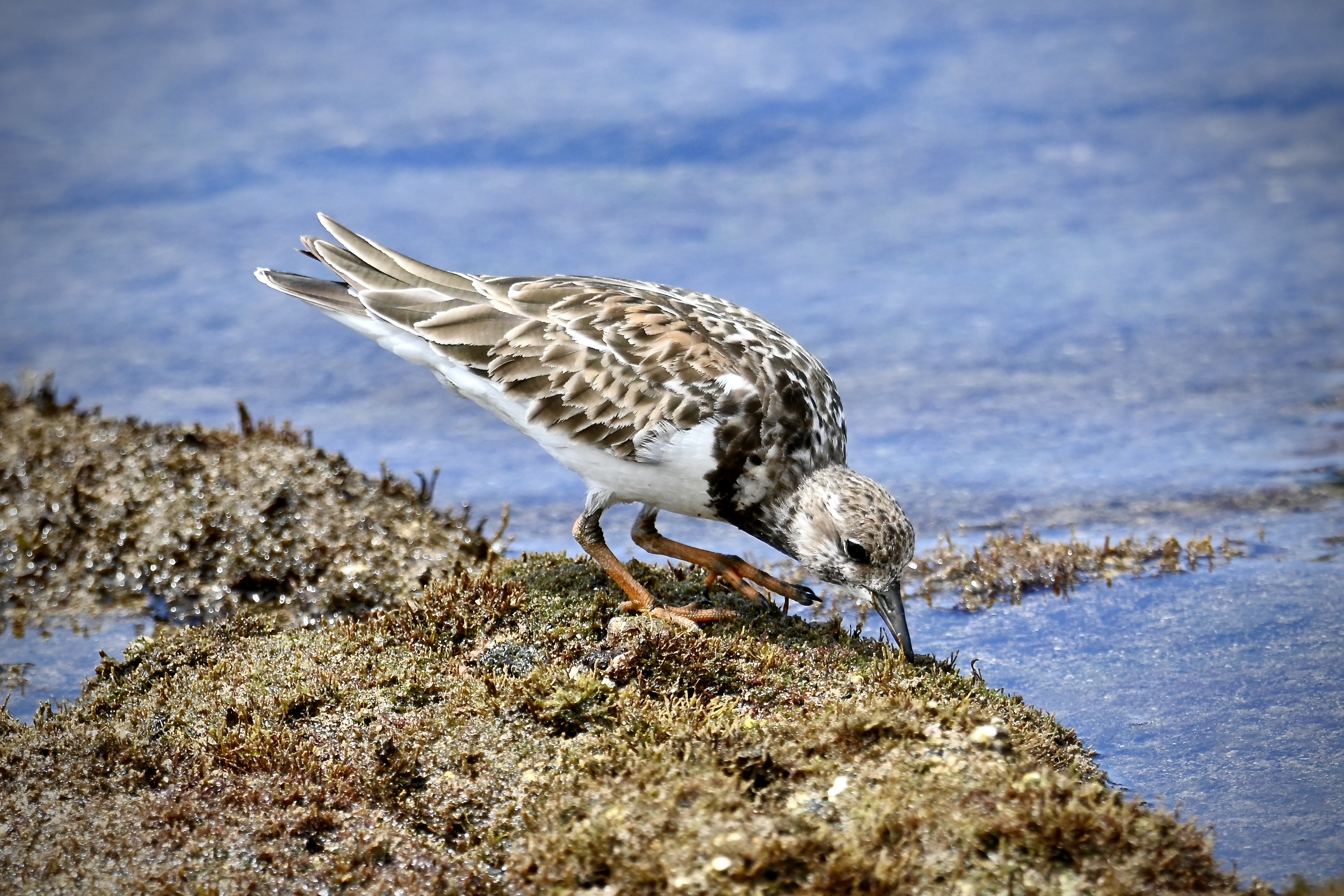
A young ‘akekeke was learning how to be an ‘akakeke. He’d already made one trip from Alaska to Hawai’i, just as the kolea do, and he’d been sleeping and eating and flying about ever since. But he was confused.

You see, there were creatures who did very different things than ‘akekeke did, and he wondered if their ways might be better.

Mind you, there were plenty of creatures who did very similar things. Kolea and hunakai and ‘akekeke all hunted through the grasses and tidepools and rocks for insects, snails, and so on. If he imitated them, things went pretty well. He tried to imitate the ae’o, but he didn’t have long pink legs to hold his body out of the water of the fishpond and he ended up gasping and spluttering as he flapped his miserable way to shore.

The least successful of all was when he tried to imitate a honu. He flopped into the water in a calm spot and lingered below the surface. Then he tried to eat some seaweed on the underwater rocks. He choked on the water, of course, and once more hauled his bedraggled self onto the beach.

He looked about and saw his mother.

She asked, “What are you up to, son?”

“I’m learning,” he said. “I’m learning to be an ‘akekeke.”

She looked around at the other ‘akakeke on the shore, none of whom were trying to feed like a honu. “How?”

“By imitating what I see,” he said.

“Are you learning anything?” she asked.

“I’m learning that some things don’t work,” he said, and coughed up a little more water.

“I’m not saying you can’t learn anything from a honu,” said his mother, “but for basic things like eating and flying, I don’t think there’s much they can teach you. I don’t think you can eat the way they do, and they certainly can’t fly the way you do.”

“I suppose not,” said the ‘akekeke, who was a little sad about not learning anything with his imitations that day.

“You have taught me something today, something I can imitate,” he said.

“What’s that, son?” asked his mother.

“You’ve taught me to be kind.”

Whether we wear feathers, shells, or rubbah slippahs on our running feet, let’s all imitate those who are kind.

by Eric Anderson

Watch the Recorded Story

I write these stories ahead of time, but I tell them from memory (plus improvisation) during worship. What you have just read is not necessarily how I told it.

Photo of an ‘akekeke (ruddy turnstone) by Eric Anderson. Not far away, grazing in a shallow pool, there was a honu (green sea turtle).
Running

Running beach Don GrahamI don’t know how she reached the age of seven years old without learning to run, but she hadn’t.

I guess she hadn’t seen the point. There weren’t any reasons that she couldn’t run — she’d never even been told “No running in the house!” by her parents (probably because she didn’t) — she just didn’t run. She could walk, slowly or quickly, as the moment required, but she didn’t run.

Now came the day that she wanted to. So she set out to learn.

Running isn’t like walking (you heard it here first, folks!). In walking, there’s always one foot on the ground. When you’re running, there are times when you sail through the air.

She’d watched her friends and family, and even slowed down movies, so she knew this. So she started with hopping.

First she hopped back and forth with both feet together. Then she tried hopping on one foot. Then she hopped from one foot to the other: back and forth, back and forth, back and forth.

She tried making longer hops forward.

Then she tried making one one-legged hop forward, followed by another, followed by another.

She fell down on hop number four.

That might have been discouraging, but she only sat up and congratulated herself for picking a soft field to practice in.

She tried different approaches. Sometimes she hopped a little more sideways (kind of like a crab) and sometimes she tried crossing her feet back and forth in front of her (she gave up that one pretty quickly). When her feet got tangled up, she’d try the same thing again, and if it tripped her the second or third time, she tried something else.

She kept at it, remembering to experiment through the process, and keep her mind on the goal.

By the end of the day, she was running around the field with a grin as wide as the sea. She wasn’t fast, it was true, but she was authentically running, and she knew she’d get faster with each new day.

Her friends, it must be said, were very impressed, both with the running, and with the smile. Together, they charged off into each new day.

Photo by Don Graham. Used by permission under Creative Commons license.

A Proper Dinner

Adélie_Penguin_regurgitates_krill_for_its_chick_(5917753158)Usually, I try to tell stories about creatures that live here on these islands (or in the seas around them), but not today. This story is about birds who live far away, on the shores of Antarctica, where it is distinctly colder than it is here.
It’s about penguins.

You’ve heard of penguins, I’m sure. They swim rather than fly, and they’re always well dressed. What other creature wears a tuxedo twenty-four hours a day?

Well, this penguin was a young one, and he knew what a “Proper Dinner” consisted of.

He knew that a Proper Dinner was important. After all, he was always dressed for it.

So. Here’s how a Proper Dinner goes. Mom or Dad appears at the nest after hunting for fish out in the water. And you, as the young one, you stand straight up and tall. You throw your head back and open your mouth, and Mom or Dad sticks their beak in your mouth and…

How do I put this?

Well, let’s just say that food that was in their stomach goes into yours.

If that sounds gross to you, it does to me, too. Which makes us people, not penguins.

In any case, that was a Proper Dinner for this young penguin, and after all, he was always dressed for it.

One day, though, when Mom appeared, she was carrying an actual fish in her beak. And when Sister put back her head and opened her mouth, mother put the fish in.

Sister swallowed it right down with every sign that she enjoyed it, but Brother knew that it wasn’t a Proper Dinner.

Sure enough, Dad appeared shortly afterward, and like Mom, he had a fish in his beak. Brother looked at it, and it wasn’t a Proper Dinner.

So he didn’t stand up straight. And he didn’t put his head back. And he didn’t open his mouth.

If he could have, he would have folded his wings across his chest, but he couldn’t, because penguin wings don’t do that.

Sister got the fish. And Brother had to wait until Dad went away, caught some more fish, and returned to feed Brother what he’d already eaten, so that he’d have a Proper Dinner.

This went on for two days, which is an endless amount of time when you’re a young penguin. Mom and Dad brought fish, and Brother wouldn’t eat them, and he’d wait, hungry, until they returned with a Proper Dinner.

Finally, Mom and Dad had had enough. They wouldn’t do this any more.

Has that ever happened to you? That Mom and Dad wouldn’t do something for you any more?

You, too, eh?

So they stood there and eyed him with the fish dangling from their beaks. And he stared back with a gaze that slowly fell away in the face of their united disapproval. He slowly raised his beak, and opened his mouth. A little. Then a little more. Until Mom tucked the fish onto his tongue.

He swallowed.

To his utter astonishment, he liked it.

“Well,” he decided. “I guess there’s more than one way to have a Proper Dinner.”

“And after all, I’m dressed for it, whatever comes.”

Photo credit: By Liam Quinn from Canada – Adélie Penguin regurgitates krill for its chick, CC BY-SA 2.0, https://commons.wikimedia.org/w/index.php?curid=24444946

Moi Questions

Sixfinger_threadfin_school

A school of moi.

Today I’m going to tell you a fish story.

I mean, literally. I’m going to tell you a story about a fish.

This fish was a moi, which are well known here in Hawai’i for being a fish that only the ali’i, the royalty, the most powerful people in the islands could eat in the ancient days. That’s not how the moi think of themselves, though. Who really think of themselves in terms of who is going to eat them?

There was one young moi who was always asking questions. I mean, always. He’d ask one question, and get an answer, and then he’d ask another.

“What’s that bright light up above the surface of the water?”

“Why are the corals different colors?”

“What’s that coming toward us, with all the holes? Should I avoid it?”

(Well, yes. It was a fishing net.)

“What’s that shiny thing on the end of the grass-like thing? Should I eat it?”

(It’s probably best not to eat the fishhook.)

Probably the most common question, though, was one he asked over and over and over:

“Is that good to eat?”

“Is that good to eat?”

“Is that good to eat?”

Let’s face it, that’s an important question when you’re a moi.

With all his questions came something else: He got to know the answers. Other moi started to ask him questions, because they thought he’d probably asked it already and knew the answer. Much of the time, he did.

When he didn’t, you know he’d turn around and ask that question of some other fish.

He always had moi and moi questions.

A decided groan greeted that last remark.

Moi swim in great schools, and if you’ve ever seen a school of fish, you realize that when the school turns, then a new leader emerges. The one who had been at the front is now at the side, and someone at the side is the new leader of the school.

All the other moi learned to feel very good about having this curious moi as their leader. When he was in front, they didn’t swim into fishing nets. When he was in front, he didn’t have them chase after fishhooks.

So his questions made him a valued leader among the moi.

That’s true of you, too. If you ask questions, if you seek after what you don’t know, if you keep learning, well, like our curious moi, you can be a success in school.

More groans.

Seriously. It will help you in school. But it will also help you make a better life. Ask questions, even when your parents, or your teachers, or even I start to look like you’ve asked a lot of them. It’s OK.

Because you’ll be learning, and thriving, and growing.