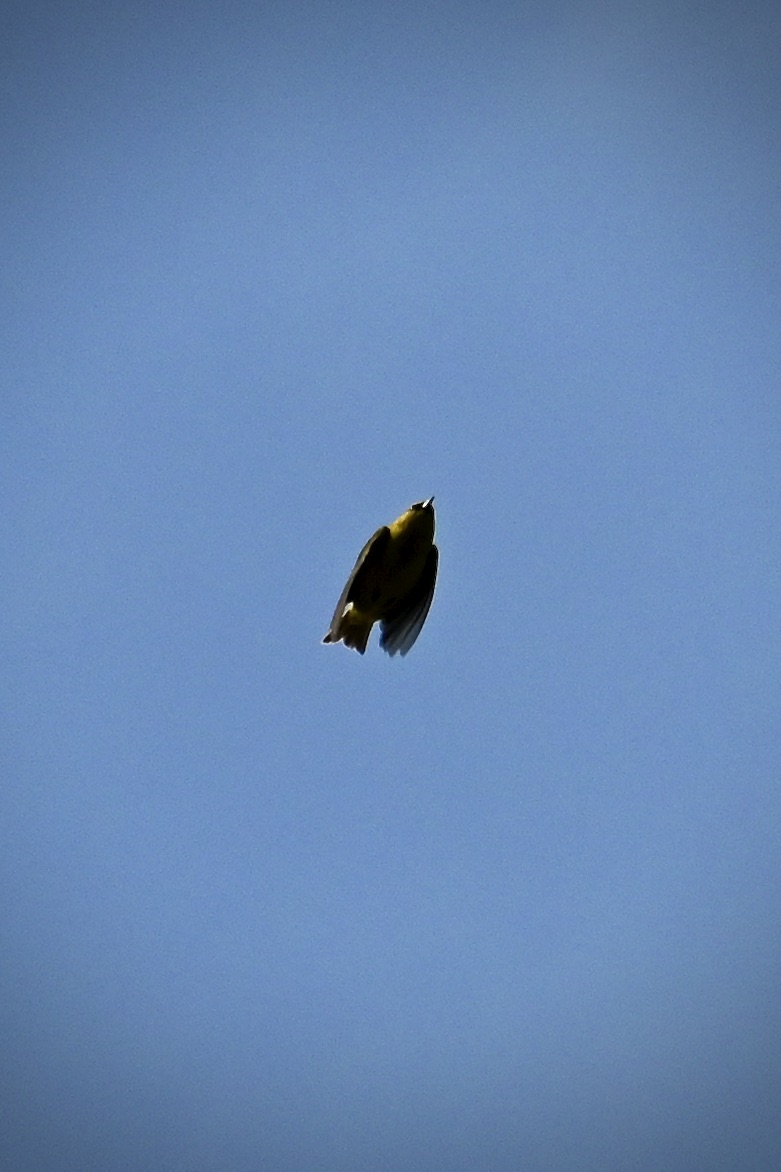
“What is wisdom?” wondered the ‘amakihi as he flew through the sky.
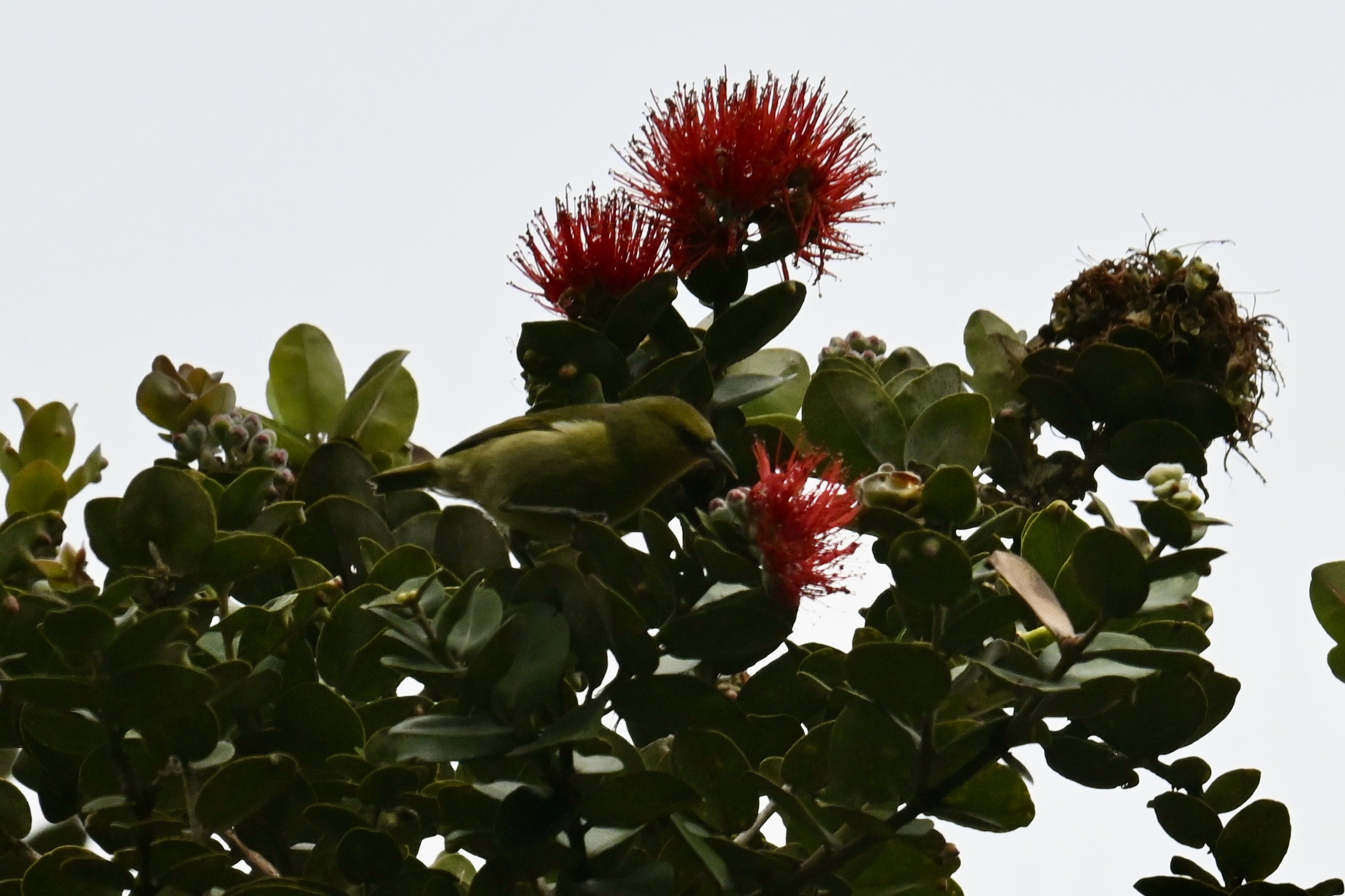
“What is wisdom?” wondered the ‘amakihi as he sipped on ohi’a nectar.
“What is wisdom?” wondered the ‘amakihi as he settled down to sleep at night.
“What is wisdom?” wondered the ‘amakihi as he woke in the morning.
“What is wisdom?” is, in fact, an extremely good question whether you’re an ‘amakihi or a human being. Wisdom, after all, tends to prevent a lot of foolishness. Foolishness, on the other hand, tends to happen in the absence of wisdom.
“What is wisdom?” wandered the ‘amakihi over the course of the day.
One of the features of wisdom is that when someone who is wise doesn’t know or doesn’t understand something, they do things to learn more about it. They look around at things. They measure and they think about what they’ve measured. If they’re human, they might read something, or a lot of somethings. They ask others to see what they know.
Whether you’re a human or an ‘amakihi, a good one to ask would be tutu.
“Tutu,” asked the ‘amakihi, “what is wisdom?”
Tutu was pleased. It was a wise question – if you don’t know something, wisdom says, “Ask.” He’d made a wise choice about who to ask – grandparents often know things. And he was asking about something important, wisdom itself.
She replied with a question of her own: “What is knowledge, grandson?”
“Knowledge?” he asked. “I hadn’t thought much about that… it seemed kind of obvious. If I know something that’s true, that’s been demonstrated to me, that’s knowledge. If I think I know something that isn’t true, or if I simply don’t know something, that’s not knowledge. Is that right?”
“That’s right,” said Tutu. “Now let me ask something else.”
“Are you going to answer my question?” asked her grandson, who was starting to worry that if he answered all her questions she wouldn’t get around to answering his.
“I am,” she said. “Now here’s my question: Can you fly with your wings closed?”
He opened his beak to reply, then stopped. It doesn’t make much sense, but he realized that sometimes while flying, he would close his wings. Not for long. Not all the time, obviously. But for a few moments in many flights, he would be flying with his wings closed.
“Yes,” he said carefully. “For a moment or two.”
“How do you know whether to close your wings in flight?”
“It’s complicated,” he said. “How high up am I? How much do I need to rest my wings for a moment? Will I need to make a quick turn or slow down to land? There isn’t a simple answer.”
“That’s right, there isn’t,” she told him. “Knowing that you can fold your wings in flight is knowledge. You know it’s something you can do. Choosing the right moment to do it – or the right moment not to do it – that’s wisdom.
“Wisdom is when you consider what you don’t know for certain, what might happen, or what might not happen if you do something, and then make a good choice. Wisdom looks at what you know, and asks whether you should.
“That, grandson, is wisdom.”
by Eric Anderson
Watch the Recorded Story
I write these stories in advance, but I tell them from memory and inspiration on Sunday mornings. What you have just read does not precisely match how I told it.
How is a young bird, or a young turtle, or a young person supposed to figure out how to be an adult bird, or an adult turtle, or an adult human being? People, at least, get some instructions from their elders. We get taught how to get dressed, and what things are good to eat (or at least good for you to eat; opinions differ on whether things that are good for you are tasty enough to eat), and especially important things like, “Don’t touch the boiling tea kettle on the hot stove!”
Birds probably don’t get quite that much teaching. Certainly they don’t get the years of it that we do as we’re growing up.
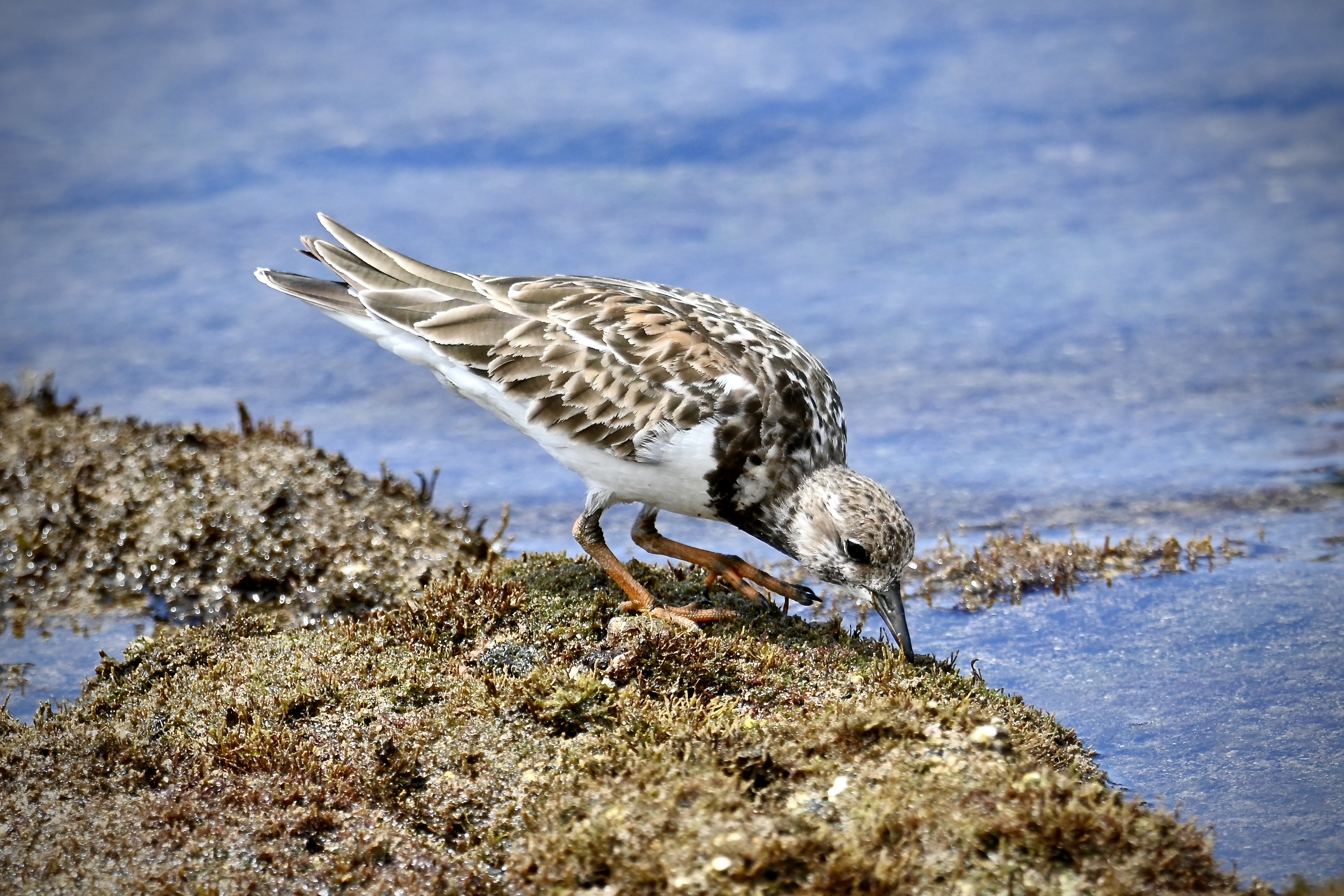
A young ‘akekeke was learning how to be an ‘akakeke. He’d already made one trip from Alaska to Hawai’i, just as the kolea do, and he’d been sleeping and eating and flying about ever since. But he was confused.
You see, there were creatures who did very different things than ‘akekeke did, and he wondered if their ways might be better.
Mind you, there were plenty of creatures who did very similar things. Kolea and hunakai and ‘akekeke all hunted through the grasses and tidepools and rocks for insects, snails, and so on. If he imitated them, things went pretty well. He tried to imitate the ae’o, but he didn’t have long pink legs to hold his body out of the water of the fishpond and he ended up gasping and spluttering as he flapped his miserable way to shore.
The least successful of all was when he tried to imitate a honu. He flopped into the water in a calm spot and lingered below the surface. Then he tried to eat some seaweed on the underwater rocks. He choked on the water, of course, and once more hauled his bedraggled self onto the beach.
He looked about and saw his mother.
She asked, “What are you up to, son?”
“I’m learning,” he said. “I’m learning to be an ‘akekeke.”
She looked around at the other ‘akakeke on the shore, none of whom were trying to feed like a honu. “How?”
“By imitating what I see,” he said.
“Are you learning anything?” she asked.
“I’m learning that some things don’t work,” he said, and coughed up a little more water.
“I’m not saying you can’t learn anything from a honu,” said his mother, “but for basic things like eating and flying, I don’t think there’s much they can teach you. I don’t think you can eat the way they do, and they certainly can’t fly the way you do.”
“I suppose not,” said the ‘akekeke, who was a little sad about not learning anything with his imitations that day.
“You have taught me something today, something I can imitate,” he said.
“What’s that, son?” asked his mother.
“You’ve taught me to be kind.”
Whether we wear feathers, shells, or rubbah slippahs on our running feet, let’s all imitate those who are kind.
by Eric Anderson
Watch the Recorded Story
I write these stories ahead of time, but I tell them from memory (plus improvisation) during worship. What you have just read is not necessarily how I told it.
Photo of an ‘akekeke (ruddy turnstone) by Eric Anderson.Not far away, grazing in a shallow pool, there was a honu (green sea turtle).
January 15, 2025 (for a meeting of the Hawai’i Conference Committee on Ministry)
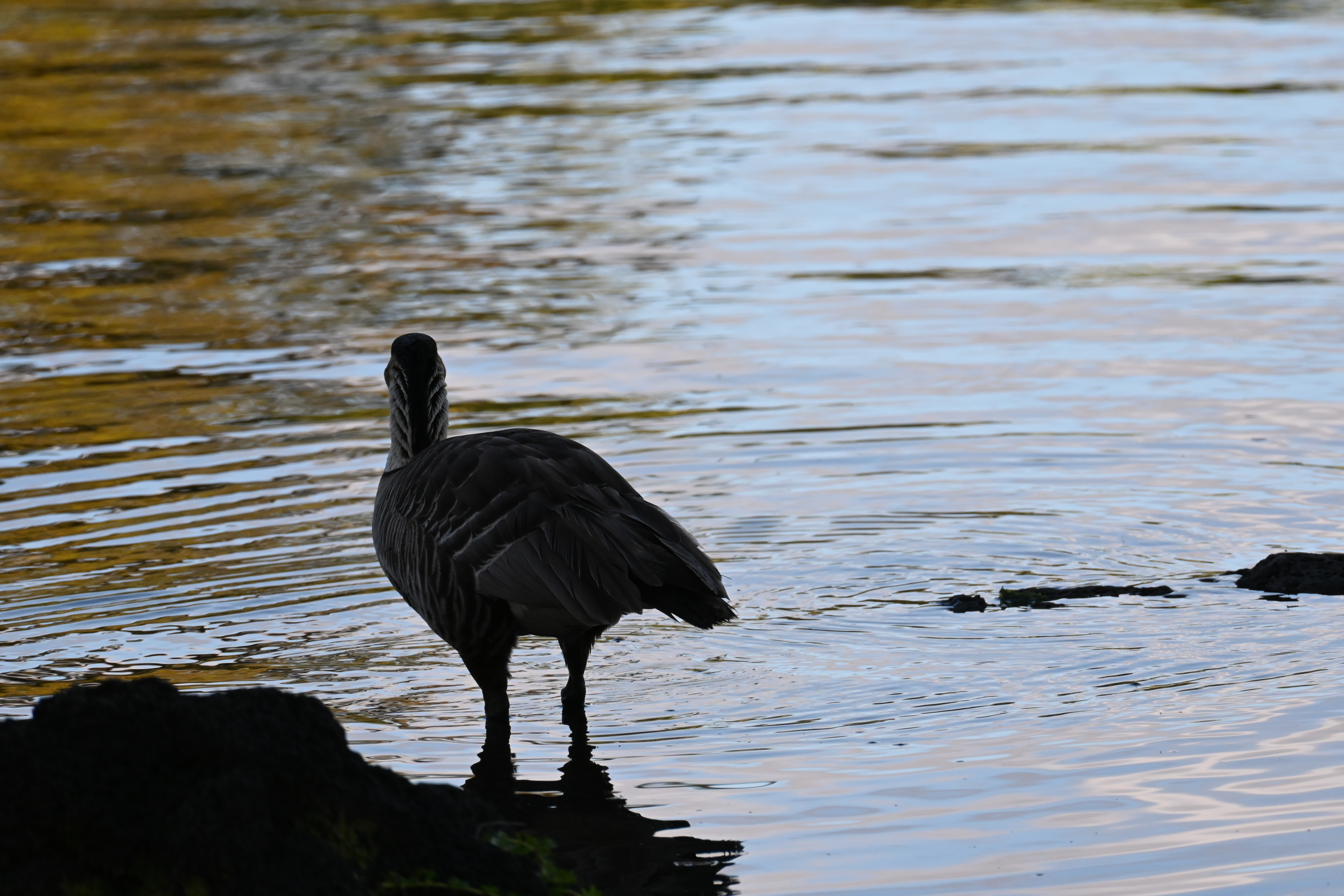
Nene School was in session. There was a new teacher that year, but he was getting help from a more experienced nene. She had been his teacher some years before. And because he was new, he had a relatively small class. Just three students.
Two of them were siblings, a brother and sister. The third was immediately interested in Food Identification part of the curriculum – Nene School basically consists of Flight and Food. The new teacher thought he’d be a good student, but mostly he was hungry. Time after time the teacher would have to rush over as the student reached out for yet another inedible item.
It kept him hopping.
He hoped that the brother and sister would be good flight students, since they’d already learned to fly together. His hopes were dashed, however, the first time they took off for basic formation flying. Honks of “You’re took close!” and “Get away from me!” resounded over the rocks and forest. He could barely be heard over them to try to coach them into position. Eventually there was a collision, and the two bruised siblings settled down to the ground to continue their recriminations.
The teacher could feel his teacher’s eyes on the back of his head, watching him as his class turned into a full-fledged disaster – that’s a disaster with feathers on. Or fluttering down from the sky because they didn’t stay on.
This went on for a week, and things didn’t get better. The hungry young nene never seemed to listen or retain what he’d been told. The siblings fought on the ground, climbing, cruising, descending, and on the ground again. The watching teacher said nothing. The young teacher got desperate.
As the class ended with more flying feathers, more angry honking, and a certain amount of vomit from an ill-considered berry, he burst out in fury: “You are the worst nene I’ve ever met! You’ll never learn! I’m sorry you were ever hatched!”
Shocked, the students flew away.
He turned to find his teacher standing right behind him. He couldn’t read the look in her eyes. “What?” he challenged.
“I’m disappointed,” she said.
“I’m disappointed in them, too,” he growled.
“I’m disappointed in you,” she said.
“What?”
“Haven’t you noticed that the siblings have been carefully listening to every word you’ve said about finding food? Haven’t you noticed that they never ask you twice about it? That they’ve learned so much in just a week?”
He hadn’t noticed.
“Haven’t you noticed that the third one sticks right by you in flight? He was awkward the first day, but he’s been right off your wingtip ever since. Haven’t you noticed?”
He hadn’t noticed.
“When they come back tomorrow, what are you going to say?” she asked, and then left him to consider.
The next morning, the three students stood anxiously before their teacher. They almost hadn’t come back. The older nene had persuaded them to come.
“I’m very sorry for what I said yesterday,” he said. “I had no business saying any of that. You’re here to learn, and I haven’t been teaching you very well.”
“Youngster,” he said to the hungry student, “I want you to keep an eye on the brother and sister here. They’ve done really well at learning what’s good to eat and what’s not. You can trust what they do.”
“And you two,” he said to the siblings, “can learn a lot from this youngster here. He’s been keeping good formation on me since the second day. Watch him. He’ll show you what to do.”
I won’t tell you that things went absolutely smoothly after that – there were still ruffled feathers and feelings, and the hungry student only gradually gave up whatever looked good at the time – but I will say that the students learned. All the students. One of whom was the teacher.
by Eric Anderson
I wrote this story as the opening devotional for a meeting of the Hawai’i Conference UCC Committee on Ministry Chairs.
The ‘elepaio has the reputation for being the most curious bird of the forest, but once there was an ‘apapane who was as curious as nearly any ‘elepaio. He had questions about everything. Why were his feathers brown when he was younger, and why did they turn red? Why did some trees have blossoms and others didn’t? Why did the days grow shorter and longer again?
He found answers to some of his questions, and he didn’t find answers to others of his questions. He never gave up asking them, though, and he never gave up trying to find out.
One morning, while enjoying a late morning snack of bugs, it suddenly occurred to him: Why do bugs taste sweet?
I’m not sure that bugs would taste sweet to you or to me, but the bugs he was eating that day definitely tasted sweet to him. He hadn’t thought about it before, but why should a bug taste sweet? Shouldn’t they be salty, or tangy, or something like that? Why sweet?
He asked around to see if anyone else knew, but nobody did. They hadn’t thought about it, and they weren’t all that interested. “If they taste good, that’s all that matters,” said one of his friends, and didn’t help any further. So the ‘apapane decided to watch and see what sweet bugs ate.
What they ate, he discovered, was a lot of things that he also ate. Those bugs ate fruit. They ate ohi’a nectar. They even ate other bugs who were eating sweet fruit and nectar. The sweetness of what they ate was being carried along to make them at least somewhat sweet.
“That’s amazing!” he said to himself. “But now the question is: Why is fruit sweet? Why is nectar sweet?”
Again, he went to friends and family to ask, and again they didn’t know. “It tastes good; that’s all that matters,” said the same friend. So he began to watch the trees, to see what they did to produce sweet fruit and flowers.
I’m afraid that being an ‘apapane rather than a human being meant that he never did learn the answer to that. He could see that the trees spread their leaves to the sun, but he couldn’t see the way that the green of the leaves combined water from the roots with energy of the sun to make the sweetness that made the tree grow. He couldn’t see that sweet sap being concentrated in the flowers to make nectar, and later in the fruits to feed the seeds of later trees. People have microscopes and chemistry equipment and lots of years asking and answering these questions. He didn’t.
He had to admit that he wouldn’t answer the question of sweet nectar, at least until he learned something new. For him, sweet nectar would remain a sweet mystery.
It never stopped him from enjoying it, though.
by Eric Anderson
Watch the Recorded Story
I write these stories in advance, but I tell them from memory and improvisation. There will be differences between the story I’ve written and the story I told.
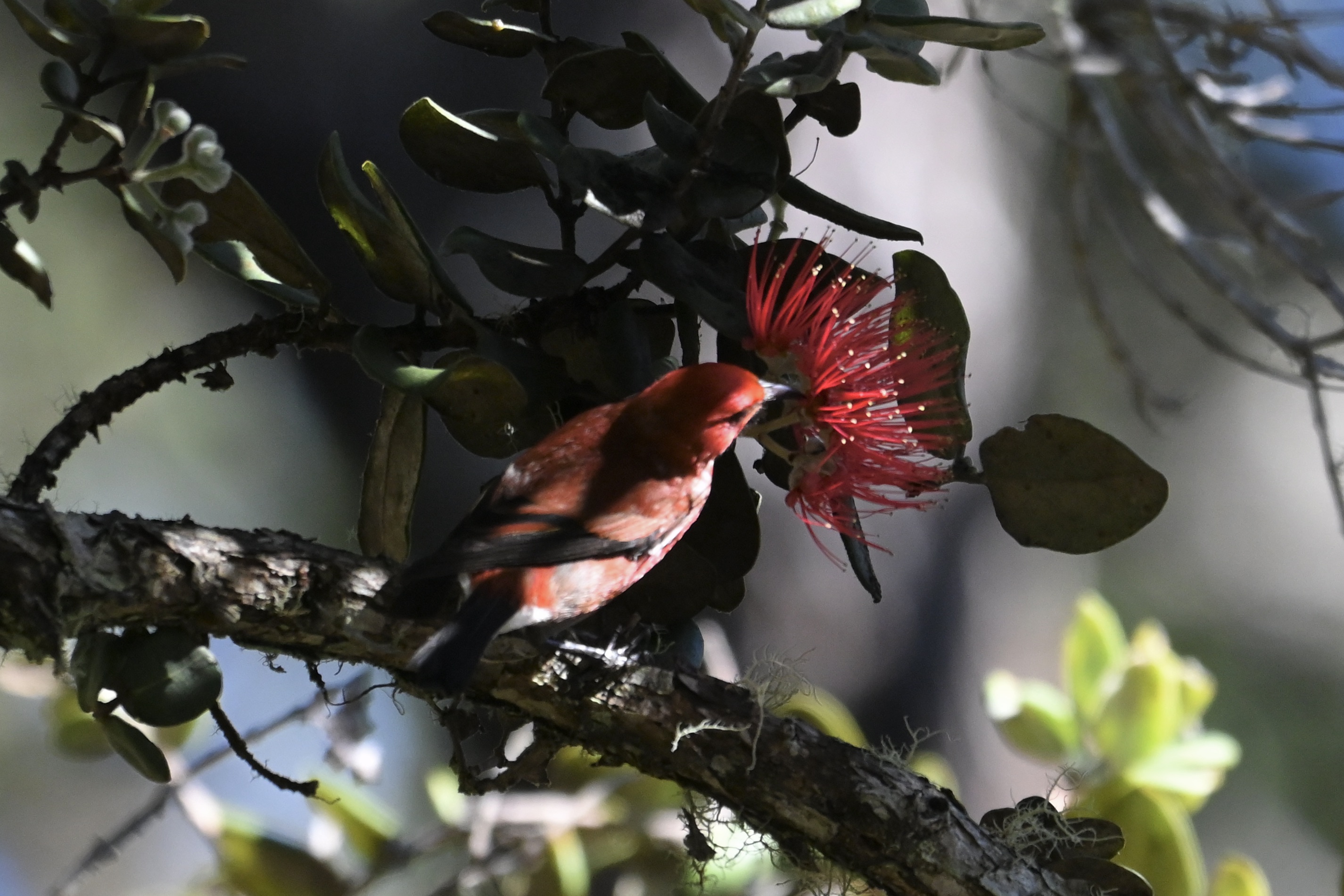
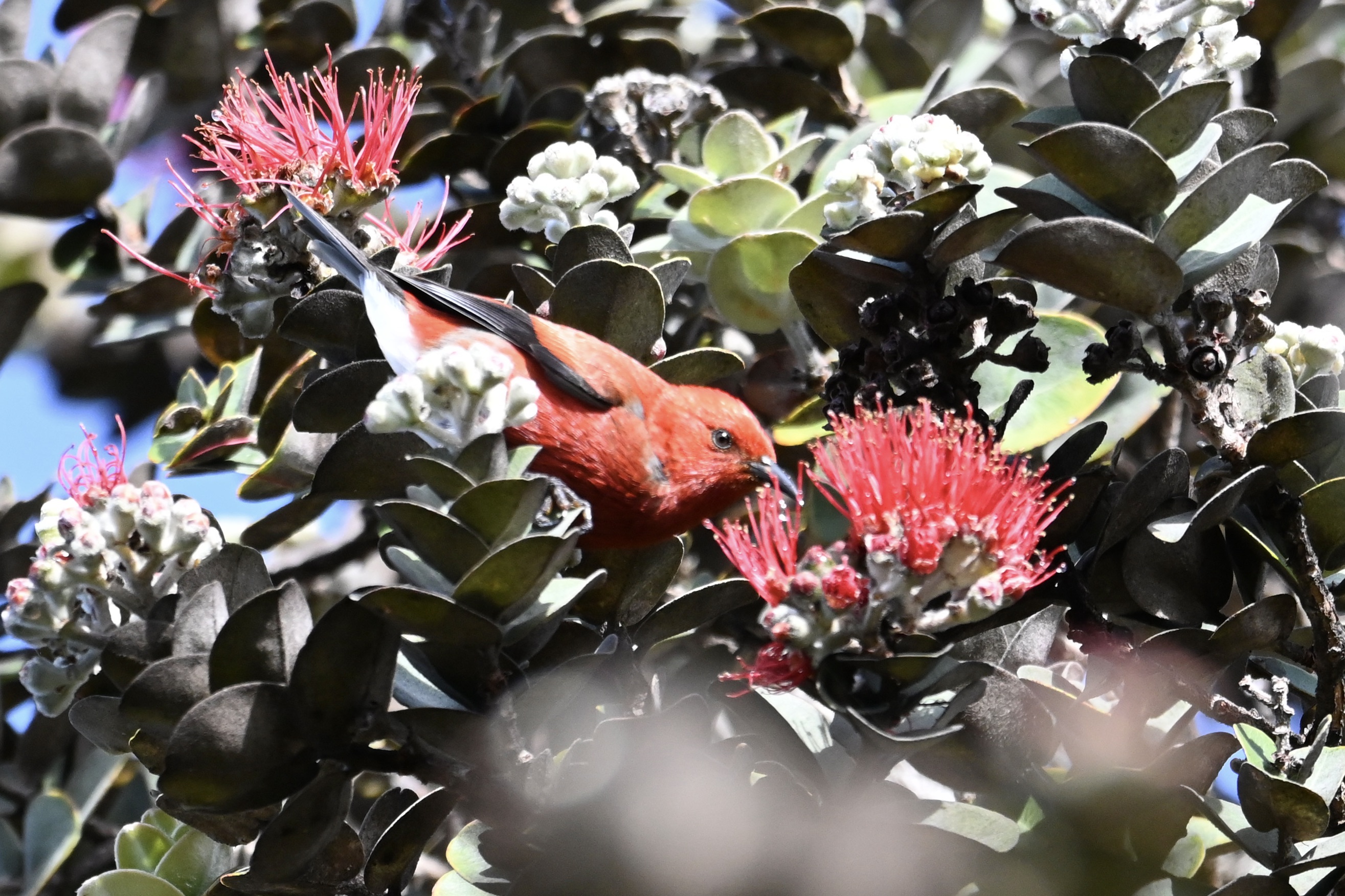
Photo of an ‘apapane feeding from an ohi’a blossom by Eric Anderson.
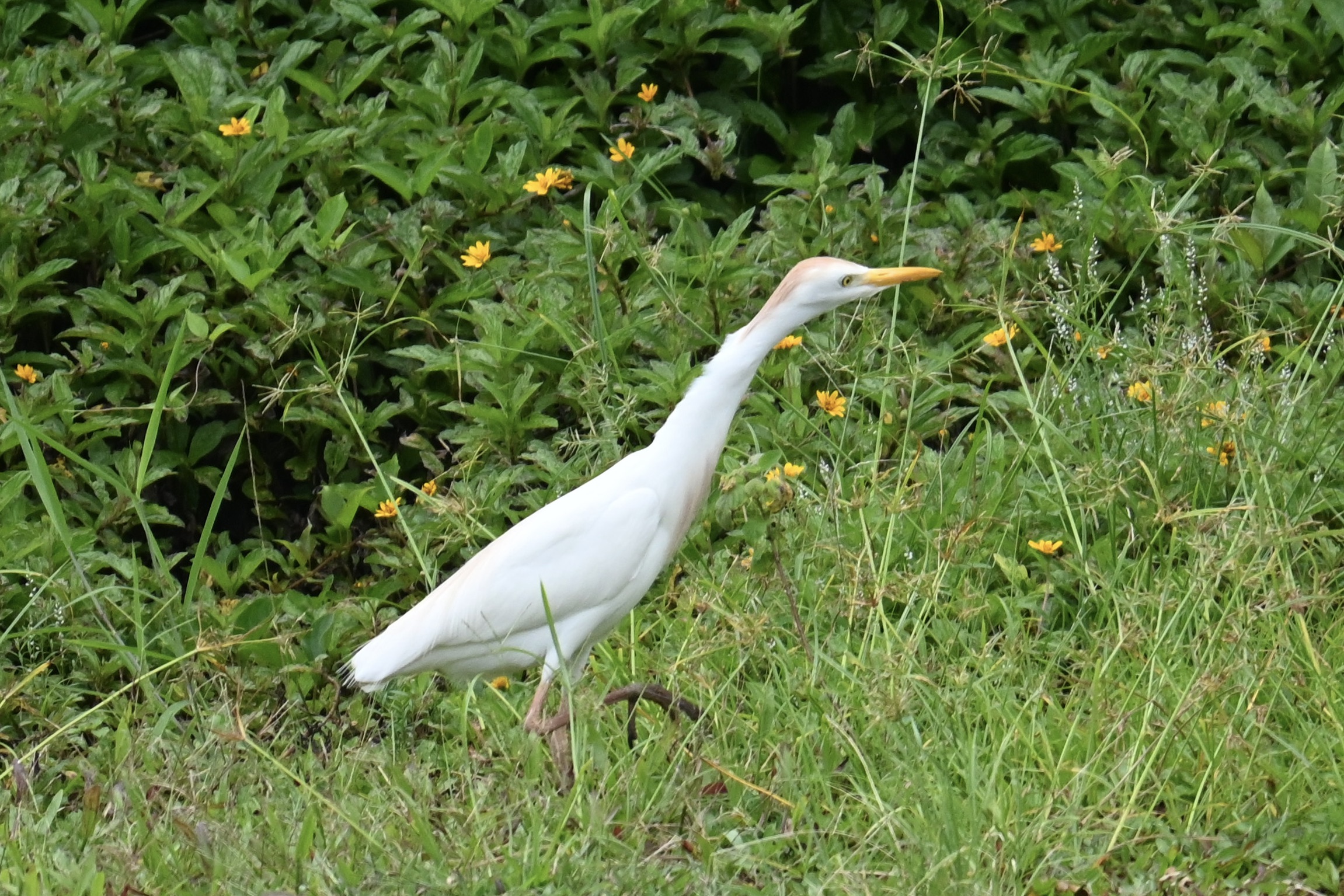
The cattle egret is a relatively quiet bird. Most of the time it goes about its business of hunting insects and such without talking about it. When a cattle egret has something to say, it will say it. But if it doesn’t have something to say, it doesn’t say anything.
Unlike a lot of people you’ve met, I’m sure.
There was another bird who really wanted a cattle egret to say something. I don’t know why a saffron finch decided that he wanted wisdom from a cattle egret, but he did. Maybe it was their relative sizes (rather small to quite impressively tall). Not that size reliably indicates wisdom. Maybe it was the bright white feathers, but color doesn’t tell you much about wisdom, either. Maybe it was the silence.
Not saying anything until you have something to say could be a good sign of wisdom.
At any rate, it’s wiser than saying something when you don’t have anything to say.
The saffron finch landed on the ground near a cattle egret and the two of them fed side-by-side without speaking for a while. The cattle egret ate bugs. The saffron finch ate one or two spiders and a good amount of seeds. Neither of them chose to speak with their mouths full.
When he was feeling pretty satisfied, the saffron finch asked, “What’s the most important thing?”
The cattle egret looked around to see if there were any other birds the finch might have been talking to. She didn’t see any, but she also didn’t think that this was a question a complete stranger was likely to ask her, so she didn’t say anything.
“No, really,” said the saffron finch. “What the most important thing?”
The cattle egret looked carefully at the saffron finch. He was clearly asking her, though she didn’t know why. She took a couple more mouthfuls of insects to give her time to consider the question. Then she cleared her throat and said:
“Love.”
She looked around and didn’t see any more bugs, so she nodded to the saffron finch and took off to find another spot with more bugs. When she got there, she was surprised to find the saffron finch landing beside her.
“Could you say that again?” he asked.
“Love,” she said, and went on eating.
“Really?” he asked.
“Love,” she repeated for the third time.
“I’m not sure I know how to love,” he said sadly.
The cattle egret paused her hunting for a moment and looked carefully at the saffron finch.
“Ask,” she said.
“Really?” he said.
“Ask,” she said.
I’m still not sure I’d go first to a cattle egret for wisdom – which is mostly my problem for not understanding what a cattle egret might say – but I have to agree with this cattle egret. What’s the most important thing? Love.
And if you’re not sure how to love: Ask.
by Eric Anderson
Watch the Recorded Story
I write these stories in advance, but I tell them from a combination of memory and improvisation, so it won’t sound exactly like you’ve just read.
After the eggs have hatched and the chicks have learned to fly, many of the birds of the ohi’a and koa forest will come together in mixed flocks of ‘apapane, ‘amakihi, ‘akepa, and ‘alawi. They stay together to find ohi’a and mamane trees in blossom, which would also have attracted some tasty bugs.
It was the custom of one flock on the slopes of Mauna Loa to select a leader each week to keep the flock together and organize a watch for dangerous or suspicious creatures like cats, ‘io, pueo, and, well, people. The leader would look around for trees bright with flowers and guide the hungry birds toward them, while making sure nobody got left behind. It wasn’t the easiest thing for a bird to do, but most of them handled it pretty well.
One ‘apapane had been eagerly awaiting his turn to be flock leader. He was no longer that young, having seen a few summers and winters. He was something of a silent critic of the weekly leaders, silently scoring them on his own checklist. That one didn’t spot the mamane tree in blossom as fast as he had. This other one had been slow to get the birds moving. And this other one hadn’t properly spotted the watcher birds for ‘io. They’d spotted the hawk in plenty of time anyway, but it hadn’t been right.
At last came the week when the birds in the flock chose him as their leader for the next week. He was proud. He was excited. He was also… going to do something fairly complicated for the first time, and he was absolutely convinced that he knew exactly what should happen.
The result, the next morning, was a lot of birds screeching at one another, with their purported leader screaming the most and the loudest. He screeched at the ones who were supposed to be watching when they perched on a branch other than the one he’d selected. He screeched when they were ready to head to a new set of trees, and screeched when one or two birds headed off in the wrong direction. He screeched when a bird remained behind, and nearly pecked his tail as he flew right behind him to get him to the rest of the flock. He screeched when it was time to nap. He screeched when it was time to settle down to sleep.
When he turned about, one of the older birds, an ‘apapane kupuna, was perched behind him. He opened his beak to screech at her, but shut it quickly. He knew better than to screech at her.
“What have you been doing?” she said, “and don’t screech at me.”
“I’ve been leading,” he said, “like I’m supposed to.”
“You haven’t been leading like you’re supposed to,” she said rather severely. “You’ve been driving like you’re not supposed to. You’ve had birds who know perfectly well what to do confused and upset. Some of them went hungry today. While you were chasing that one bird there were two others that set off in the wrong direction and I had to go get them.”
“They should have listened to me!” he said.
“How could they,” she asked, “when you didn’t give them a clear direction?”
He was silent for a moment.
“You’ll try it again tomorrow,” said the kupuna ‘apapane, “and tomorrow you’ll plan, and you’ll chirp softly, and you’ll listen to the birds who know what they’re doing, and you’ll keep an eye on things and let other birds know when there’s a problem that they can help you with.”
“Be wise,” she said, “and attentive, and assuring. That will keep the flock with you, and fed, and comforted, and safe.”
Oh, it took some work, I tell you. But she was nearby the next day whenever he opened his beak to screech, and only one or two screeches got out. The day after he didn’t screech at all. By the time his week as leader was over, they followed him gratefully and gladly. Because he learned from his mistakes, and he learned how to lead.
by Eric Anderson
Watch the Recorded Story
I write these stories in full and in advance, but I tell them from memory and from improvisation. What you hear in the recording is not what you read above it.
“As he went ashore, he saw a great crowd, and he had compassion for them, because they were like sheep without a shepherd, and he began to teach them many things.” – Mark 6:34
Bring your compassion, Jesus, for our shepherds howl like wolves. They lay the rod of law with harshness on the poor and spare the ones in power.
Teach us, Jesus.
Bring your compassion, Jesus, for our shepherds carelessly use words that others hear, and hearing ponder. Pondering, they set themselves to violence.
Teach us, Jesus.
Bring your compassion, Jesus, for the shepherds cannot find the way that leads between our Scyllas and Charybdises, and lost, we founder in moral morass.
Teach us, Jesus.
Bring your compassion, Jesus, and teach us many things, like how the shepherd cares first for the sheep, whereas the predator consumes them.
Teach us, Jesus.
We are sheep without a shepherd. Teach us many things. And may we, by God’s grace, learn.
A poem/prayer based on Mark 6:30-34, 53-56, the Revised Common Lectionary Gospel Reading for Year B, Proper 11 (16).
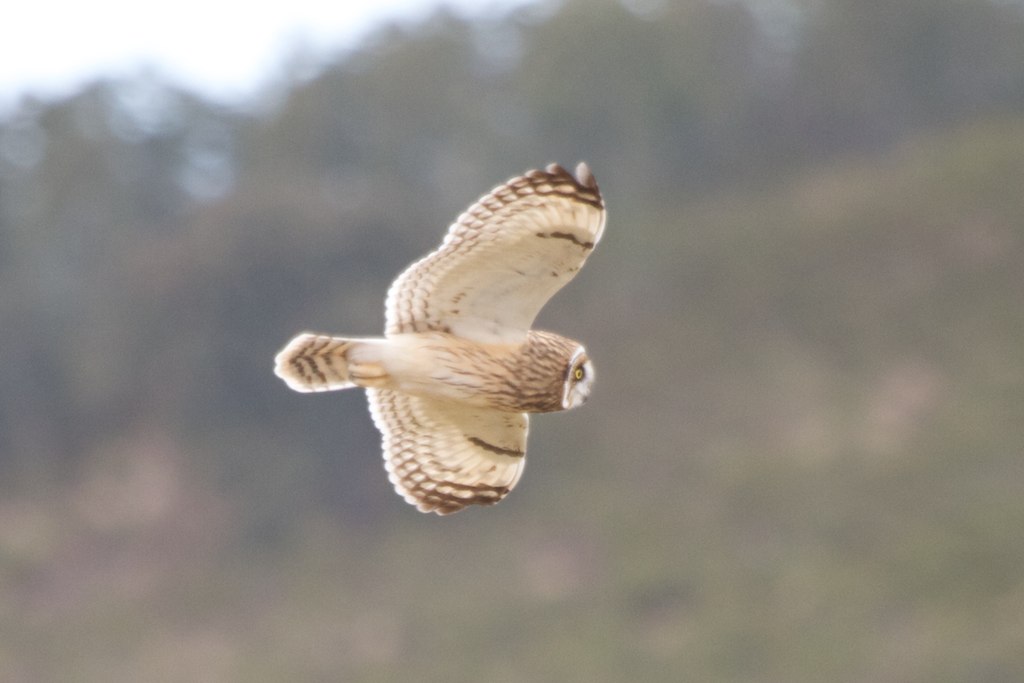
He was the oldest pueo in the nest. He was the best. He did things right.
At least, that was his opinion.
It wasn’t his younger sister’s opinion, but that frequently happens with younger brothers or sisters. They tend to think an older (or a younger, come to think of it) sibling can’t do anything right. Oldest children, however, or oldest fledglings in this case, tend to think, “I’m right. I’ve got this. Depend on me.”
And before you ask, yes, I was the oldest child in my family.
To his sorrow, it turned out his mother didn’t think he did everything right, either. She wasn’t like his sister, who didn’t think he did anything at all right. No, Mother was far more specific. She didn’t like the way he flew, or hunted for food, or caught it. “You’re beating your wings too fast,” she’d tell him. “You’re not paying enough attention while you’re circling,” she told him. And, of course, “You’re coming down too fast.”
The problem was that everything she told him happened to be correct. He was an overeager flier, and he tired himself out. In that fatigue haze, he didn’t look carefully for mice on the ground, and he’d miss them. So far his dives to catch prey hadn’t been complete disasters, but they weren’t getting better, either.
“I’m doing fine,” he hooted at his mother.
“No, you’re not,” she hooted back.
Exasperated, he flew off alone, without his mother or his sister, to avoid her steady barrage of corrections.
That worked. Well, it stopped the criticisms. At least the ones he could hear with his ears. His mother had succeeded, however, in creating some mother memory in his head, and he could still hear her telling him to fly slower, look more carefully, and for pity’s sake, control your dives.
But he didn’t change any of that. Which is why, after missing several swoops and getting hungrier and hungrier, he made a desperate dive for a mouse and crashed right into a bush. He crawled out, leaving behind several feathers in the process, and found his little sister waiting for him.
“Are you OK?” she asked, and she meant it.
“Mostly,” he said, feeling rather bruised.
“You need to talk to Mom,” she said. “Actually, you need to listen to Mom.”
He knew he did, but he also knew how much he’d annoyed her. “I don’t think she’d help me after all I’ve put her through,” he said.
His sister shook her head. “She absolutely will,” she fussed at him. “Go ask Mom for help. Say you’re sorry. But ask her for help. She will.”
They flew back together, and he did say he was sorry, and he did ask for help, and he finally started following her instructions, and he finally started to learn.
His sister couldn’t resist telling him, “I told you so,” but he was grateful to both of them anyway.
by Eric Anderson
Watch the Recorded Story
I write these stories in advance, then tell them from memory. I improvise a lot.
The ‘amakihi was, everyone had to admit, an adult. Even her mother had to admit it. She was young, sure, but she had her adult feathering, she had lots of hours of flight time, and she knew the difference between a tasty bug and a yucky bug.
(Which I don’t, by the way. I’m inclined to think they’re all yucky bugs.)
Her mother, however, continued to give her good advice. She pointed out the tasty bugs. She pointed out the blooming ohi’a blossoms. She pointed out the ripe fruit. She even said, “Oh, look, it’s nighttime,” as the sun set beyond Mauna Loa.
“Mother is so boring,” said our adult ‘amakihi of a daughter.
“Why do you tell me these things all the time?” she asked one day, and her mother replied, “Because a day will come when I’m not around when you have a question. I want to make sure I’m always with you in your memories for such a time.”
“But it’s so boring,” said the daughter, but she said it to herself because she didn’t want her mother to hear.
One day, exasperated by another recital of the bugs that weren’t good to eat, she took off and flew fast and far. She didn’t pay a lot of attention to where she was going. When she got hungry, she’d stop for a nectar snack or a bug break. Then off she flew again.
When nighttime came, she realized that she had no idea where she was.
What should she do? she wondered. And as if her mother was there, but she wasn’t, she heard in her memory the words, “Look, it’s nighttime. Find a branch with greens around it and settle down to sleep.”
So she did. In the morning her mother’s voice in her memory guided her to tasty bugs and ripe fruit. But now she had to remember the more difficult thing: how to find her way home.
“Look at the slopes,” said her mother in her memory. “We don’t live on Mauna Loa, so don’t fly that way. But fly up the slopes of Kilauea until you find the crater at the top.”
She followed the rising slopes but didn’t turn up Mauna Loa. After some time, she saw some familiar trees. After a little longer, she saw the great crater at the summit. She made her way around it until she found the stand of trees where her nest had been.
And… found her mother.
Her mother fussed at her for a while about being away overnight, but her daughter said, “Please, let me say this,” and mother fell silent.
“Thank you,” said her daughter, “for being with me in my memory to get me home.”
I’m afraid that from time to time afterward, she did get exasperated with her mother and think she was boring, but… she never fussed or protested, because of how important it was to have her mother in her memory to help her find her way home.
by Eric Anderson
Watch the Recorded Story
I write these stories ahead of time, but I tell them from memory. And sometimes, as today, things happen that have to be acknowledged – like a mother clear saying to her son, “I told you so.”


 ordainedgeek
