In My Imagination

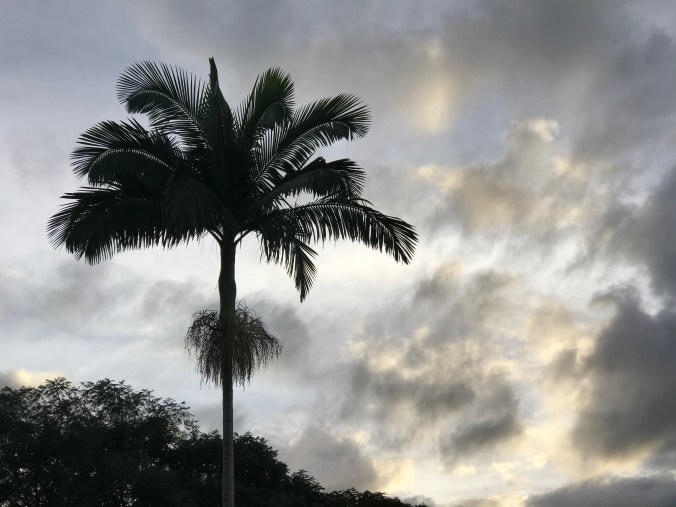
IMG_4582In my imagination…

Without a foot, I take each step
with care, deliberation,
sensitive to balance,
cautious of my pain.

Without a hand, I feel my pulse
within my elbow, feel the zephyr
lift the hairs upon my arm,
feel the power of each embrace.

Without an eye, I turn my head
to see the full horizon, move about
to see each side in fullness,
to see attentively.

In my imagination…

In reality, O Lord, I know
I’d be as careless of your wonders
deprived of eye, or hand, or foot,
as I am careless with them.

Help me become, O Lord,
as my imagination.

A poem/prayer based on Mark 9:38-50, the Revised Common Lectionary reading for Year B, Proper 21.

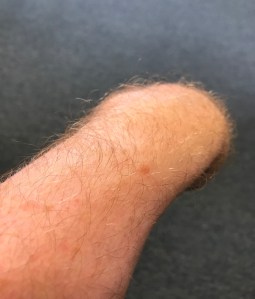
Forced perspective photo by Eric Anderson, who does have a left hand.

Holy Mountain

IMG_0857

“I lift my eyes unto the hills
from whence comes my help…”
Did Isaiah read those words
when he looked upon Mount Zion
envisioning a peace so great
it changed the natural world?

Did the ragged stones still linger
from the decades-old destruction
of Solomon’s Temple, David’s city?
Or had the walls begun to rise?
Did they crown the mountain’s peak,
bathed with Ezra’s tears?

Did the lions prowl
the fallen stones of yesteryear,
was Zion’s limestone face
turned to the azure sky?
Did grasses wave, or cedar planks
rise from the sacred mount?

For both these worlds exist
in company within the prophet’s words:
the temple shaped by nature,
and the temple raised by people.
Which was, I wonder now, the vision,
and which the visioner’s reality?

A poem/prayer based on Isaiah 65:17-25, the Season of Creation Hebrew Bible reading for Year B, Mountain Sunday. The opening quote is from Psalm 121.

Photo (of Mauna Kea, not Mount Zion) by Eric Anderson.

Decide

IMG_4477

Oh, it’s an easy choice, O God.

“Because of this the earth shall mourn,
and the heavens above grow black…”

Now that’s what I call an
unattractive option, and since
the alternative before me is:
“The heavens are telling
the glory of God…”
I’ll take Your glory
any day.

Unless, of course, I need
to get from here to there,
in which case I’ll just depart, a bit,
from careful handling of Creation,
gentle dwelling on the Earth.
No, I will swaddle myself in bucket seats
and give my not-so-weary feet a rest
to make that not-so-difficult,
not-so-necessary,
oh-so-arbitrary journey.

And so I will add carbon’s sable
to the sky.

Yes, it’s an easy choice, O God.
Give my Your glory!
Unless it’s inconvenient…

For me.

A poem/prayer based on Jeremiah 4:23-28 and Psalm 19:1-6, the Season of Creation Hebrew Bible and Psalm readings for Year B, Sky Sunday. 

Photo by Eric Anderson.

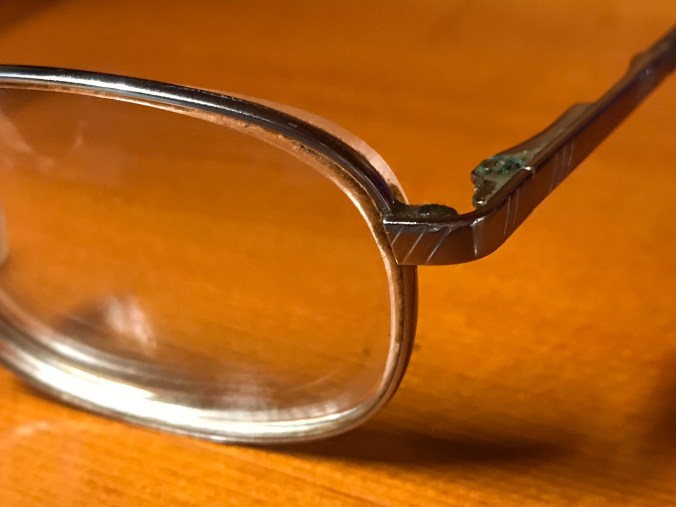
Do You Wear Glasses, Too?

IMG_4537

I am just ecstatic to
be shaped in form divine of You.
Just answer me one question, do:
Do You wear glasses, too?

I’m great with male and female, yes,
community that founds God-ness,
yet my eyes fail a driver’s test:
Do You wear glasses, too?

Imago Dei, that’s for me,
to bulwark pride at royal tea,
and laugh when threatened by the sea:
(but) Do You wear glasses, too?

I’ve seen Your figure’s flowing locks,
seen You nursing, playing with blocks,
seen You carved from ancient rocks:
Do You wear glasses, too?

I’m just an image, oh that’s true,
not a duplicate of You,
so my mistakes will all break through,
(but) Do You wear glasses, too?

The question, really, (and You knew),
is not about Your sight or view
but whether I am part of You

with sight bedimmed
or limbs belabored,
mind bewildered
or heart beset,
with irregularities
too many to name:

Do You wear glasses, too?

A poem/prayer based on Genesis 1:26-28, the Season of Creation Hebrew Bible reading for Year B, Humanity Sunday. For more consideration of what it means to consider disability in divinity, read “Lessons from a Deviation” by Rebekah Anderson.

Photo by Eric Anderson.

Is It? Is It, Really?

DSC_0566

“And God saw that the light was good…”
“And God saw that it was good.”

Is it? Is it really?

There are plenty of religious systems, Holy One,
who look out at the world and see a mess.
I mean, a mess: cacophony of sight and scent
and sound (and fury) and taste and touch.
The lingering odor of fading floods, the itchy
pull of drying mud along my hairy arms,
the dreary sight of muddy water, marked
by echoes of a terrifying roar.

Then there’s those annoying birds, who
sing in an unrelenting cackle, or the coqui frogs
whose endless searching for their mates confounds
the quest for rest. My hearts leaps from its place
to hear the canine growl. And God, just don’t, please don’t
let me get started on the bugs. And creeping things
that bite and sting and munch on grain
and ferry our disease (just as a start).

And need I mention hurricanes, and searing stone,
and deathly droughts, and flowing floods,
and howling winds, and mounting waves,
and driving snow, and shaking earth?
This, all this, you see as good?
And oh, for just a moment, would that I
could contemplate with your embracing eye:
to see Creation’s web connected.

For just a moment, to embrace the flood
that nourishes the ground, welcome the fire
that clears for new-sprung grasses, taste
the cleansing of organic rot, hear the crackling heat
as new stone finds its shape, to see
the lonely tree that stands above the flood,
drinks its spreading waters and declares:
“I, too, see and know that it is good.”

Perhaps then I would know that it is good.

A poem/prayer based on Genesis 1:1-25, the Season of Creation Hebrew Bible reading for Year B, Planet Earth Sunday.

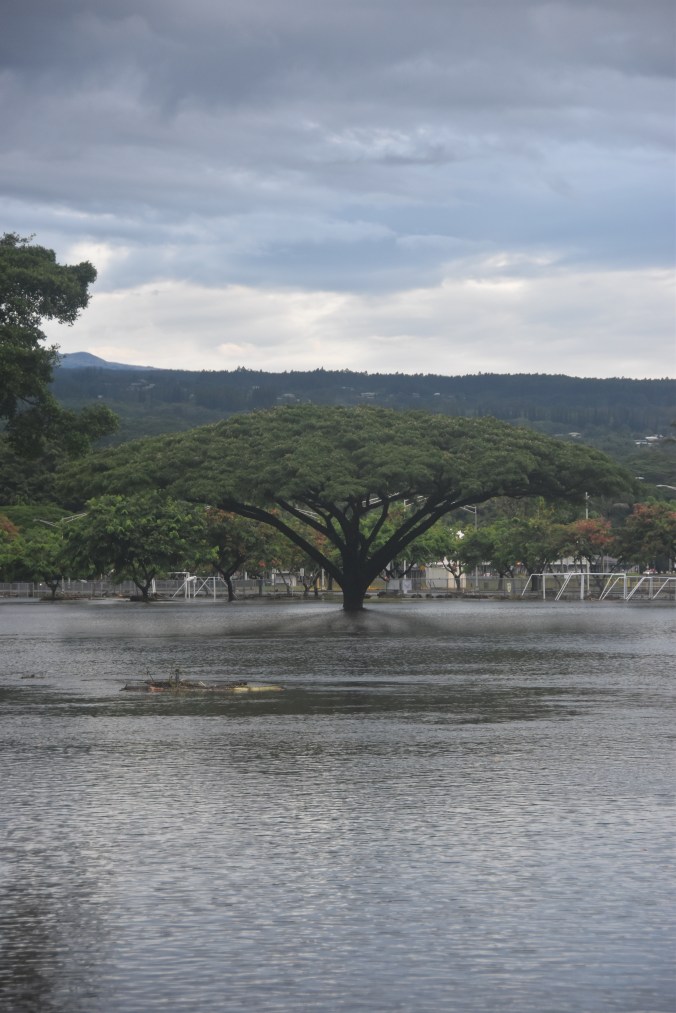
The photo is of a monkey pod tree standing above the inundated Hilo bay front parks on Saturday, August 25, 2018, flooded by four feet of rain from Hurricane Lane. Photo by Eric Anderson.
Difficult Diet

Eucharistic_bread

“This teaching is difficult;
who can accept it?”
Difficult indeed.
Whether it be calculus,
biology, the language
that I didn’t speak before,
the nuances of history,
the cadences of poetry:
What learning isn’t difficult?

Well, yes, I confess,
to eat your flesh and drink your blood is…
Creepy. It’s just creepy, Jesus.
So I don’t blame those followers
who found another road than yours
those centuries ago.
Or those who look today to find
a road more traveled, better paved,
maintained to modern tastes.

To tell you truly, Jesus, though,
it’s not demands (or sacramental symbols)
of our deepest faith which drive
your children from your Body.
It’s the judgement. It’s the carping.
It’s the Generation-Then which makes
the Generation-Now feel small.
So how do we, your fallible followers,
share your words of life?

A poem/prayer based on John 6:56-69, the Revised Common Lectionary Gospel reading for Year B, Proper 16.

The photo is of a painting of in the catacomb of San Callisto, believed to be of “eucharistic bread.” I found the body postures to be… well, in the same spirit as this poem. The photo is by David Macchi – Romapedia, Public Domain, https://commons.wikimedia.org/w/index.php?curid=566679

Imitatio Dei

B_Sabbatini_Kräizwee6

“Therefore be imitators of God,
as beloved children, and live in love,
as Christ loved us…”

In these days, Jesus? Really?

As press and presidents declaim,
“You speak untruth!”
As anger/outrage/ire dominate
our “civil” civic discourse.
As we enshrine successful thieves,
incarcerating petty ones,
and pay as little as we may
to those who work the hardest.
As we elect those who speak evil,
can we be shocked when they speak evil
over and over and over,
can we be shocked when they do evil
over and over and over,
can we be shocked when “little” evils
become our harsh new “normal?”

When bitterness and wrath and anger,
wrangling, slander, all the breadth of malice
take the center role,
how can we honestly believe, O Christ,
in imitatio dei?

Would you imprison children?
Would you reject the refugee?
Would you enrich the rich?
Would you empower the white?
Would you disenfranchise the woman?
Would you bring death to the guilty?
Would you bring death to the innocent?

“…And live in love, as Christ loved us,
and gave himself up for us…”

Imitatio dei?
I feel more like an imitation…

A poem/prayer based on Ephesians 4:25-5:2, the Revised Common Lectionary Epistle reading for Year B, Proper 14.

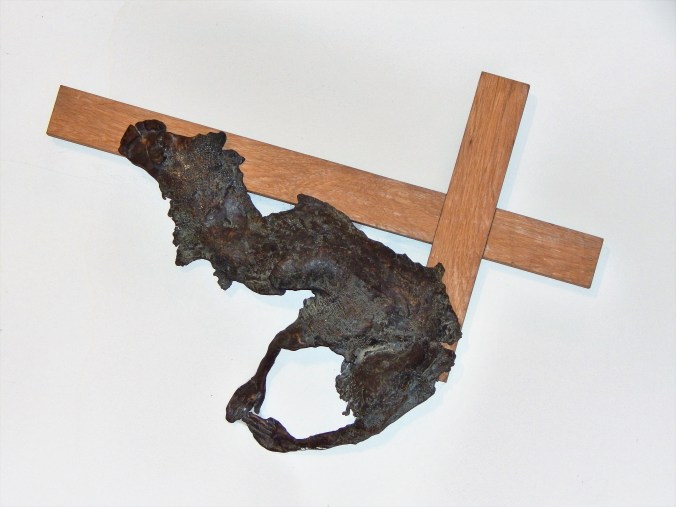
The image is of “Jesus falls” from the Stations of the Cross in Église Saints-Pierre-et-Paul (Bertrange) by Bettina Scholl-Sabbatini. Photo by Sultan Edijingo – Own work, CC BY-SA 4.0, https://commons.wikimedia.org/w/index.php?curid=49262753

If I Could Only Touch

Byzantine_Mozaic_Italy6c-1

If I could only touch… Not grasp.
If I could only touch…

Would my loved ones be healed?

If I could only touch… Not hold.
If I could only touch…

Would my nation release the children it imprisons?

If I could only touch… Not seize.
If I could only touch…

Would my nation welcome refugees?

If I could only touch… Not clutch.
If I could only touch…

Would my heart swell with courage?
And power?
And grace?

If I could only touch?

A prayer based on Mark 5:21-43, the Gospel Lesson for Year B, Proper 8.

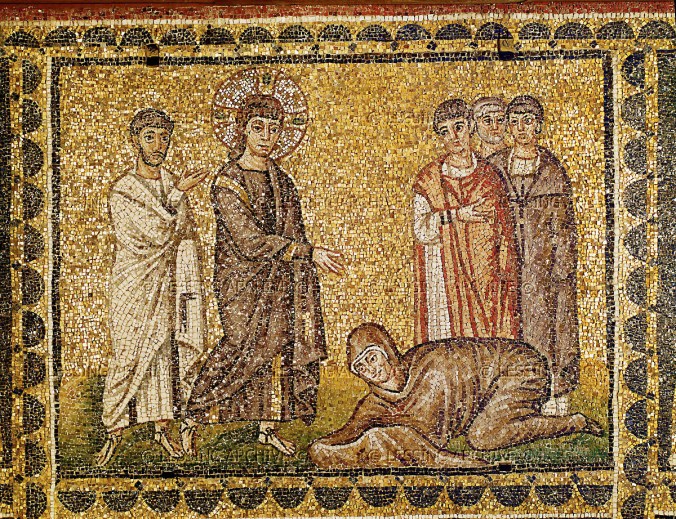
The image is of the woman touching Jesus’ hem, a sixth century mosaic found in the Church of Sant’ Apollinare Nuovo in Ravenna, Italy.

Yearning

IMG_4274All right. Let me hear it. Go ahead.
Because I’m one of Your Top Disciples, right?

I don’t need some mysterious story about
seeds growing, I-know-not-how,
beneath the soil. I’ve got it.
Faith takes time. Life happens while
you’re doing other things. Well,
while I’m doing other things.
You’re still doing, I’m sure.

But go on. Let me hear it. Go ahead.
Because I’m one of Your Top Disciples, right?

I don’t need some mysterious story about
how my devotion starts as just a seed,
a tiny seed by any estimation,
seed growing, I know-not-how,
beneath the soil. I’ve got it.
Faith can grow beyond anticipation.
Beyond mine, at any rate. Beyond
Yours? Well, perhaps even that.

So go on. Let me hear it. Go ahead.
Because I’m one of Your Top Disciples, right?


Or perhaps…

I yearn to feel the growth, to sense
the roots down-reaching, shoots
up-stretching, leaves unfolding.
I yearn to feel the growth, and so
I yearn for You to feed and water me.

A prayer based on Mark 4:26-34, the Gospel Lesson for Year B, Proper 6.

Leader or Follower

Claude_Lorrain_SamuelI’ve been a leader and
I’ve been a follower, O God.

On the whole, being a leader
is better

Since as a follower I have
to follow the directions
of these leaders who
don’t understand that, frankly,

I Am Right.

On the whole, being a leader
is better

Except for those times
when those I lead lack vision
to perceive this fundamental
Truth, that, frankly,

I Am Right.

You see the problem, Lord?
The thing in common?

Oh. You do. It’s…

Me.

A prayer based on 1 Samuel 8:4-20, 11:14-15, the Hebrew Bible Lesson for the Revised Common Lectionary Year B, Proper 5.

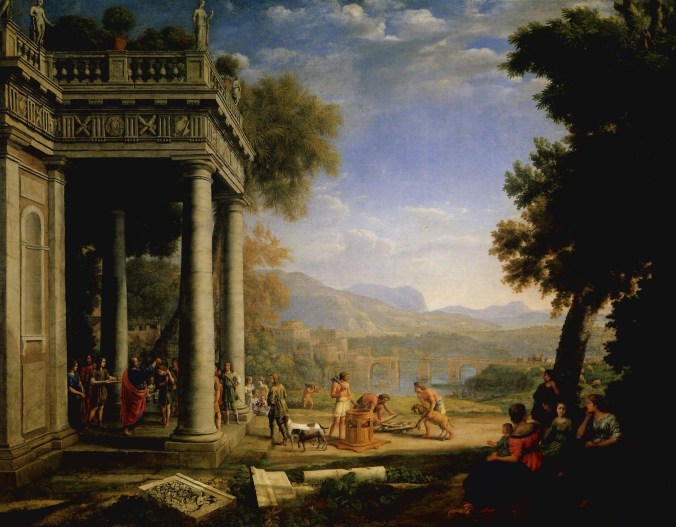
The image is “David Anointed King by the Prophet Samuel” by Claude Lorrain.