Story: Why Do You Fly So Far?

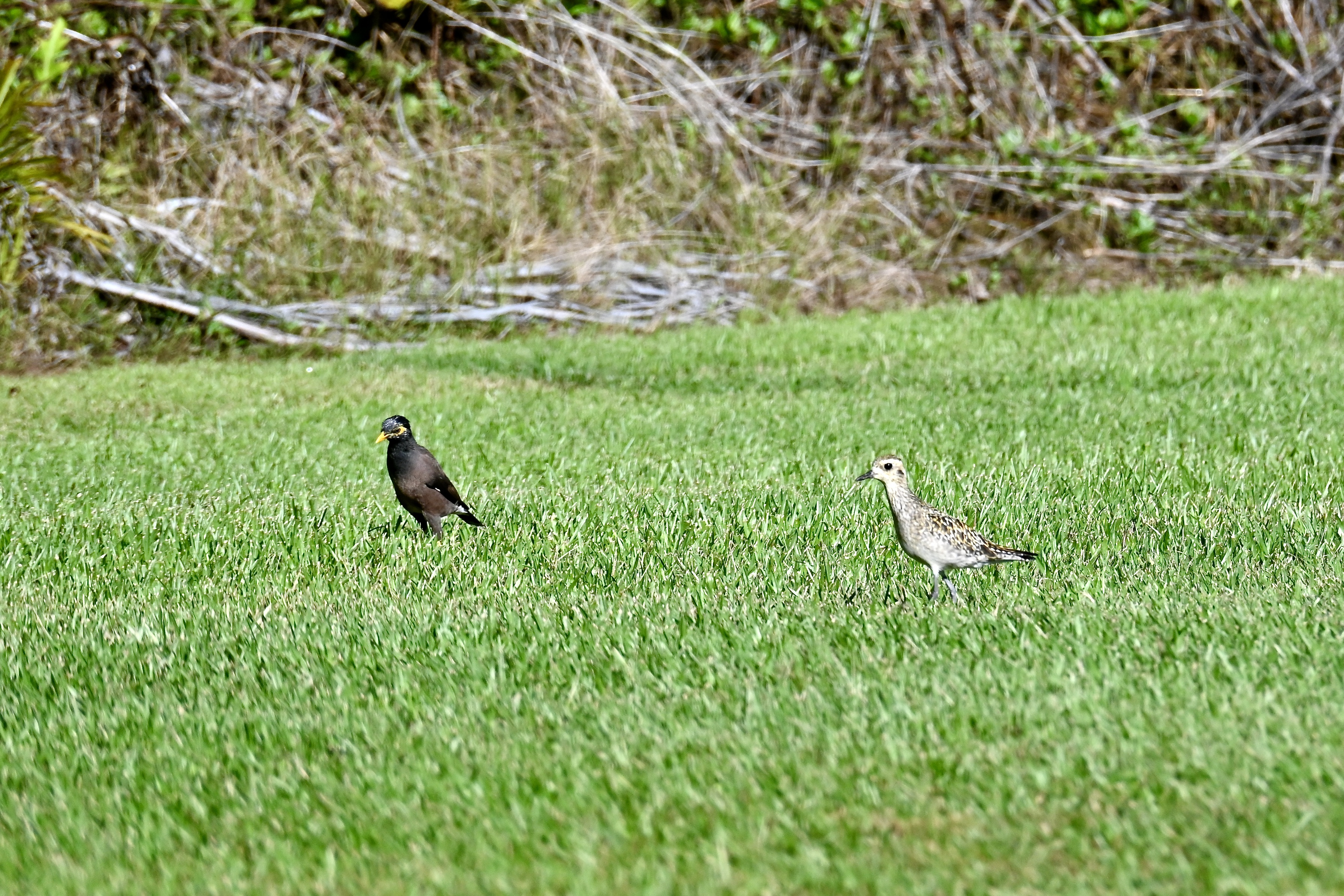
A myna (a dark colored bird with yellow feathers around the eye) and a kolea (Pacific Golden-plover, a light brown bird with darker brown spots) in a grassy field.

December 14, 2025

Luke 1:46-55
Matthew 11:2-11

The kolea is a pretty mellow bird. They’re not terribly skittish, though some will keep a sensible distance from people. We are a lot bigger than a kolea and probably look kind of scary to them.

The myna, on the other hand, is not a mellow bird. They sing a fair amount, but they also screech and argue. They’re pretty sociable with one another, and one moment everybody is happy and content, and the next moment everybody is hollering at one another.

Which makes them a lot like some people, now that I think of it.

Mynas fly, of course, but you could call them homebodies. They don’t tend to go very far. Kolea, on the other hand, fly long distances from where they nest in Alaska to where they spend the winter here in Hawai’i. If you’ve ever flown on an airplane to the North American continent, you know that’s a long flight. Well, kolea fly it with their own wings and they don’t go as fast, so it takes longer.

The mynas find it all rather puzzling and strange.

A myna was picking worms and seeds alongside a kolea one day. The two of them were quiet most of the time, because by chance most of the myna’s other friends had had a big argument and flown off to continue it somewhere else. So it was just the two of them.

“I’ve always wanted to know,” said the myna to the kolea. “Why do you fly so far?”

The kolea thought about it. “I’m not sure anyone has asked me that before,” he said.

“Well, I’m asking,” said the myna.

“I do like the change,” said the kolea, “and I know that it gets awfully cold in Alaska during the winter.”

“Then why not stay here?” asked the myna.

“There are different things there,” said the kolea, “and it just feels right to raise chicks there.”

“Then why fly all the way here?” asked the myna. “What do you come here to see?’

The kolea was quiet for so long that the myna was about to ask the question again, but then the kolea spoke:

“I come to see different trees, trees that blossom red and purple and gold. I come to see soaring mountains crowned with snow when there’s green all around the island. I come to see waterfalls that make rainbows. I come to see mountains with fire and beaches with black sand.

“I come to see birds that also live in Alaska, like ‘akekeke, and birds that don’t live in Alaska, like ‘apapane and nene and saffron finches.

“I don’t think I’d appreciated, though, that I also come to see mynas, and to be asked questions I was never asked. The next time I fly to Hawai’i, I’ll be coming to see you.”

“I’m glad,” said the myna. “Next time you fly from Alaska, I’ll be very glad to see you.”

by Eric Anderson

Watch the Recorded Story

I write these stories in advance, but I tell them from memory (and inspiration). The story you have just read is not identical to the story as I told it.

Photo of a myna (on left) and a kolea (on right) by Eric Anderson.
Story: Caterpillar’s Hope

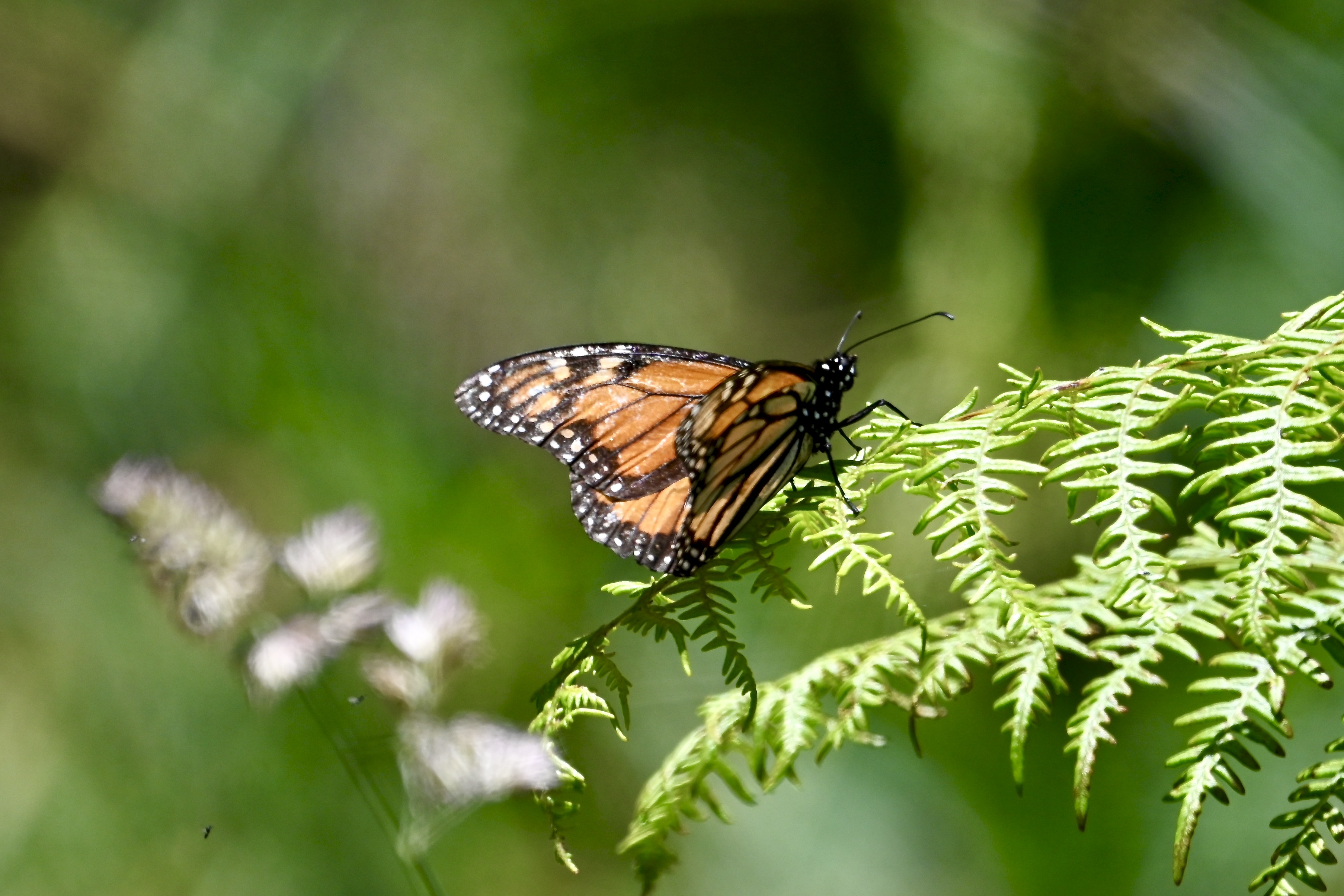
An orange and black butterfly resting on a fern leaf.

November 30, 2025

Isaiah 2:1-5
Romans 13:11-14

Caterpillars don’t have the easiest life. They don’t get around very much – but then, when you move mostly to find another leaf to eat, you don’t need to move very far. There are things about that, while you’re eating leaves, would be very happy to eat you, and that makes for more than a few anxious moments. A lot of the birds I happily tell stories about would happily eat a caterpillar, and that makes them rather sad.

Caterpillars are among the most hopeful creatures on Earth, however. Each one of them hopes to go from an animal that crawls slowly across the branches to one that flies through the skies. They hope to go from someone that you hope will be overlooked (and so not eaten) to one that glows brightly in the sunlight. They hope that the beauty they feel on the inside will be mirrored on the outside.

What’s amazing is that that’s what happens.

Two caterpillars were sharing their hopes on a branch one day between bites of leaf. I’m going to leave out the biting and chewing, because it actually took more time than the conversation. Caterpillars are serious about eating.

“I’m really looking forward to being a butterfly,” said the first.

“Me, too,” said the second.

“I can’t wait to fly,” said the first.

“Me, too,” said the second.

“I’d like to see more of the world than this flower patch,” said the first.

“It’s a good patch,” said the second.

“I’m not saying it isn’t,” said the first.

“You’re right, though,” said the second. “It would be nice to visit another one.”

“All we’ve got to do,” said the first caterpillar, “is wait.”

“Just wait?” asked the second.

“Just wait,” said the first.

“That doesn’t’ sound right,” said the second. “I think we’ve got to build a chrysalis, and stay in it, and then come out as butterflies.”

“Don’t be silly,” said the first. “You hope for it, and then it happens.”

“I don’t think so,” said the second. “I think you hope for it, and then you do something about it. And then it can happen.”

I don’t know what happened to the first caterpillar. I hope it made a chrysalis and became a butterfly, because the second caterpillar was quite right. Caterpillars become butterflies in the chrysalis. They’ve got to make things happen to make other things happen.

Dream of better days. Hope for them, and believe they can come to be. But don’t forget to do the work for them. Hope is good, but hope and effort are better.

by Eric Anderson

Watch the Recorded Story

I write these stories ahead of time, but I tell them on Sunday from memory plus inspiration. The story you just read will not be identical to the story as I told it.

Photo of a monarch butterfly by Eric Anderson.

Story: Remember

October 26, 2025

Ephesians 1:11-23
Luke 6:20-31

I remember a good number of things. I also forget a good number of things. Some of them I’m happy to forget, especially if they made me unhappy at the time. Some of them I wish I could remember, especially if they involve the question of where did I put down my keys?

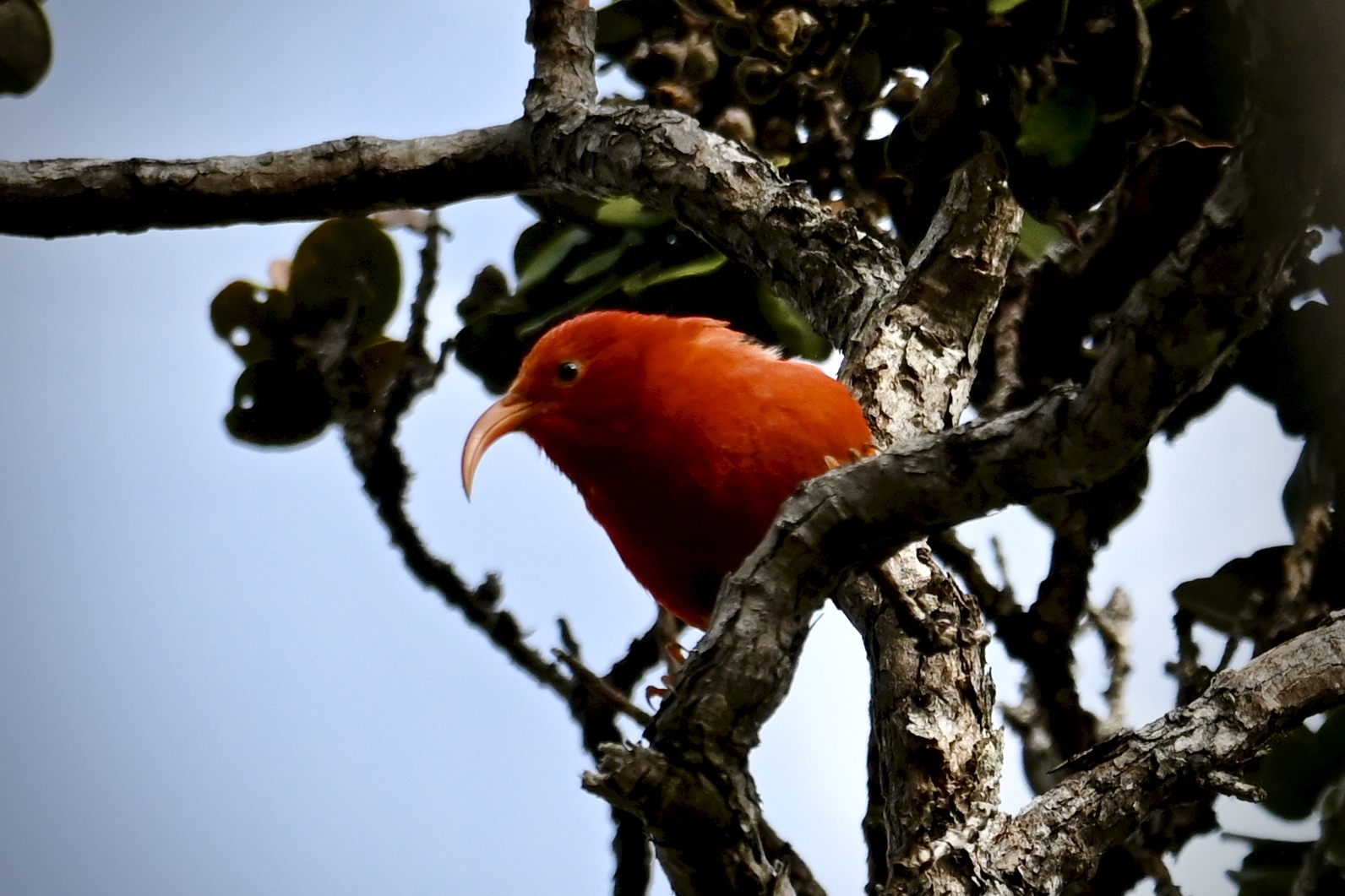
The i’iwi wasn’t much worried about the things he’d remember. He was worried about the things others would remember about him.

A lot of i’iwi get remembered by other birds as being, well, kind of aggressive. Bossy. Selfish. They drive other birds away from the places that they’re eating. Other kinds of birds do that, too, but when an i’iwi gets aggressive, ‘apapane and ‘amakihi will tend to give in and fly away.

“But is that,” he asked himself, “how I want to be remembered?”

He knew plenty of i’iwi that loved to chase other birds away. They claimed that they ate better when they did, but he also knew i’iwi that tended to ignore other birds, even slept in the same trees overnight. They seemed to eat just as well, he thought.

“How do I,” he asked himself, “want to be remembered?”

He had a friend who was one of the most effective bullies around. Where some of the aggressive i’iwi would chase an ‘apapane for a couple of feet, he’d chase them for a twice or three times as far. Sometimes he’d chase a bird so far that he’d find another bird in the place where he’d started, and he’d chase that one, too. If that seems like extra work to you, it does to me, too. Still, he was flashy (but then, all i’iwi are pretty flashy) and he was popular (as long as he wasn’t chasing you).

“But is that,” he asked himself, “how I want to be remembered?”

Then he remembered his grandmother.

She didn’t take any nonsense from other birds, no she didn’t. No ‘apapane had ever driven her away from a cluster of ohi’a blossoms. But she’d never chased an ‘apapane, either, or an ‘amakihi, or a young i’iwi. In fact, she’d let other birds know when she’d found a good spot, whatever the color of their feathers.

His grandmother loved him. He knew that, because she used to hop aside so he could get to the best flowers.

He loved his grandmother.

He went to find her, and said, “I want to be remembered like you, grandmother.”

“That’s good,” she said. “Let’s go see if we can find something good to eat, and then we’ll let everybody else know.”

That’s how both of them would be remembered.

by Eric Anderson

Watch the Recorded Story

I write these stories in advance, but I tell them from memory (plus improvisation) during Sunday worship. The story you have just read will not precisely match the story as I told it.

Photo of an i’iwi (being reflective?) by Eric Anderson.

Story: Sun, Rain, and Trees

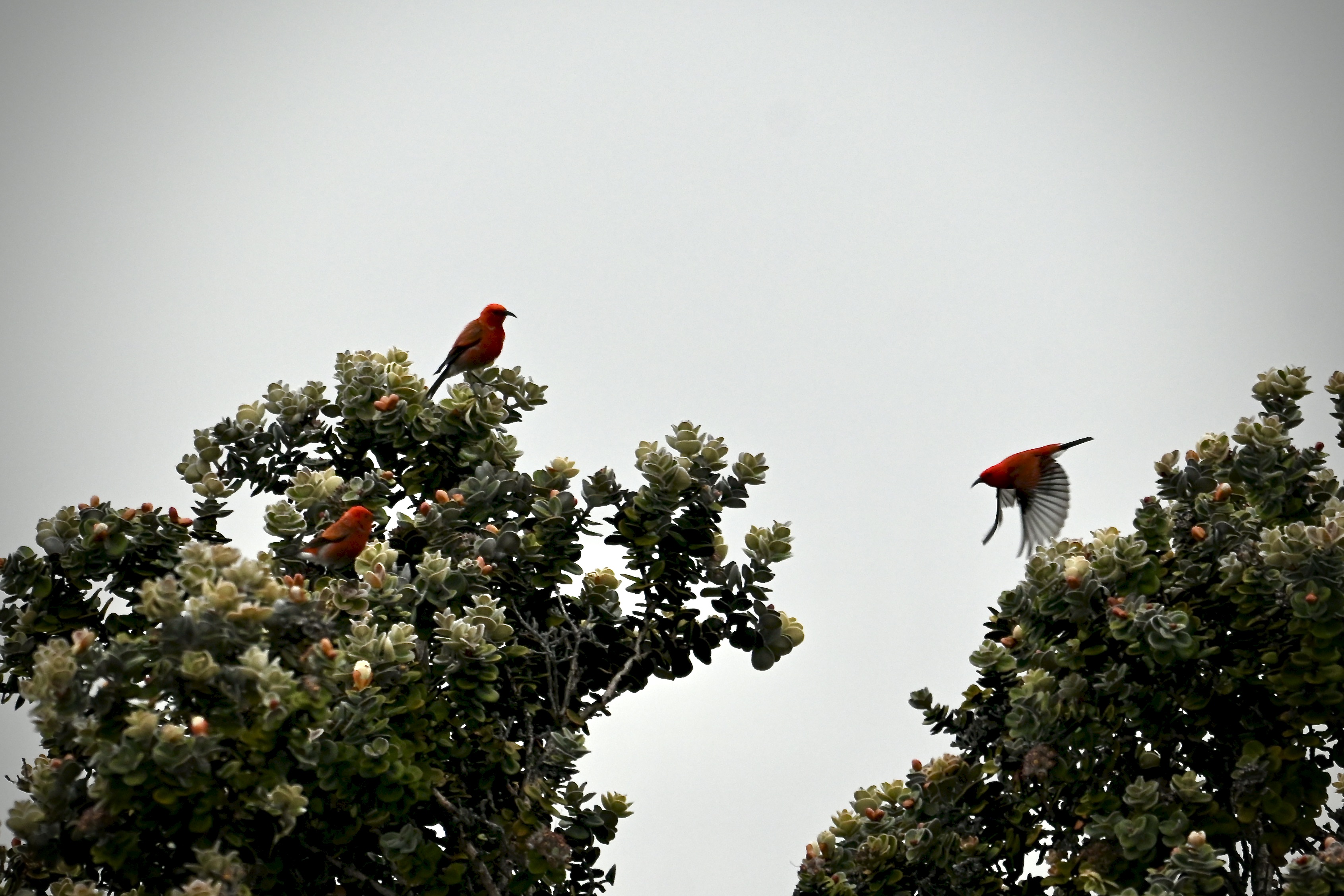
Three red birds with black wings, two perched in a tree top, with the third flying toward the other two from the right.

July 27, 2025

Hosea 1:2-10
Luke 11:1-13

You know how it is with brothers and sisters and siblings of all kinds. Some days everybody gets along, and the next day nobody gets along. It’s squabbling from dawn to sunset, and on the following day everybody is happy again.

In one ‘apapane family, that wasn’t what happened.

Mind you, they were pretty good to one another in the nest. They were cheerful most of the time when they were learning to fly and when they were getting their adult red-and-black feathers. Each of them felt very grown up as they paraded their bright colors through the ohi’a trees.

For a reason nobody ever discovered, that’s when things fell apart. The two younger ones – and younger is a very narrow thing when you hatch in the same nest just minutes or an hour apart – couldn’t speak a kind chirp to one another. “You’re impossible!” said the brother, who was the middle one. “You’re more impossible!” said the youngest, who was one of the sisters. “There’s no such thing as more impossible!” said her slightly older brother, and it went downhill from there.

The oldest one, an older sister, listened to them with a mixture of laughter at her younger siblings and a fair amount of sadness that they couldn’t get along.

It got worse during nesting season. For some reason some of the supplies were in short supply. Twigs were in plenty, and grasses for lining, but a lot of the mosses were hard to find. The younger sister and her husband had a lot of trouble. Her older brother and his wife, on the other hand, did pretty well. It was chance, pretty much, but they actually had more mosses than they could use and his sister didn’t.

That’s when she flew over to her brother’s nest and clamored and called for help.

“No!” he called. “Go away!” But her nest really needed the materials, and she really couldn’t find them.

“Help! Help us!” she said, and she kept calling and pecking at the branch by the nest until, at last, he couldn’t do anything but give her some mosses and watch her fly away to her own nest.

Of course she came back. She still needed more. One beakfull wasn’t enough, as both of them knew. She had to go through the same thing again. And again. Until he relented – again – and she flew off with the mosses.

That’s when big sister appeared at her younger brother’s nest.

“Are you going to make her go through that again?” she asked.

“She’s annoying,” said her younger brother, which sort of was and sort of wasn’t an answer to the question.

“And you’re not?” said older sister, to which younger brother could only mumble in reply.

“Did you grow these mosses?” asked his sister. “Did you grow this tree? Do you make the sun to shine or the rain to fall? Do you make the sweet nectar in the flowers? Did you make it so that eggs could hatch and fledglings fly?”

Of course the answer to all those questions was no.

“Be like the sun. Be like the rain,” said his older sister. “Be like the tree and the flowers. Don’t make her peck and poke for what the world provides. It’s easier, too. You’ll both feel better.”

When the younger sister came back, her brother had mosses ready for her, and even helped her carry some back to her own nest. And when, in another season, it was the younger sister who found lots of nesting materials and older brother who didn’t, she shared without fuss or complaint.

They were like the sun, the rain, and the trees.

by Eric Anderson

Watch the Recorded Story

I write these stories in advance, but I tell them in worship from memory and improvisation. As a result, what I wrote doesn’t match how I told it.

Photo by Eric Anderson.

Story: Imitation

May 11, 2025

Acts 9:36-43
John 10:22-30

How is a young bird, or a young turtle, or a young person supposed to figure out how to be an adult bird, or an adult turtle, or an adult human being? People, at least, get some instructions from their elders. We get taught how to get dressed, and what things are good to eat (or at least good for you to eat; opinions differ on whether things that are good for you are tasty enough to eat), and especially important things like, “Don’t touch the boiling tea kettle on the hot stove!”

Birds probably don’t get quite that much teaching. Certainly they don’t get the years of it that we do as we’re growing up.

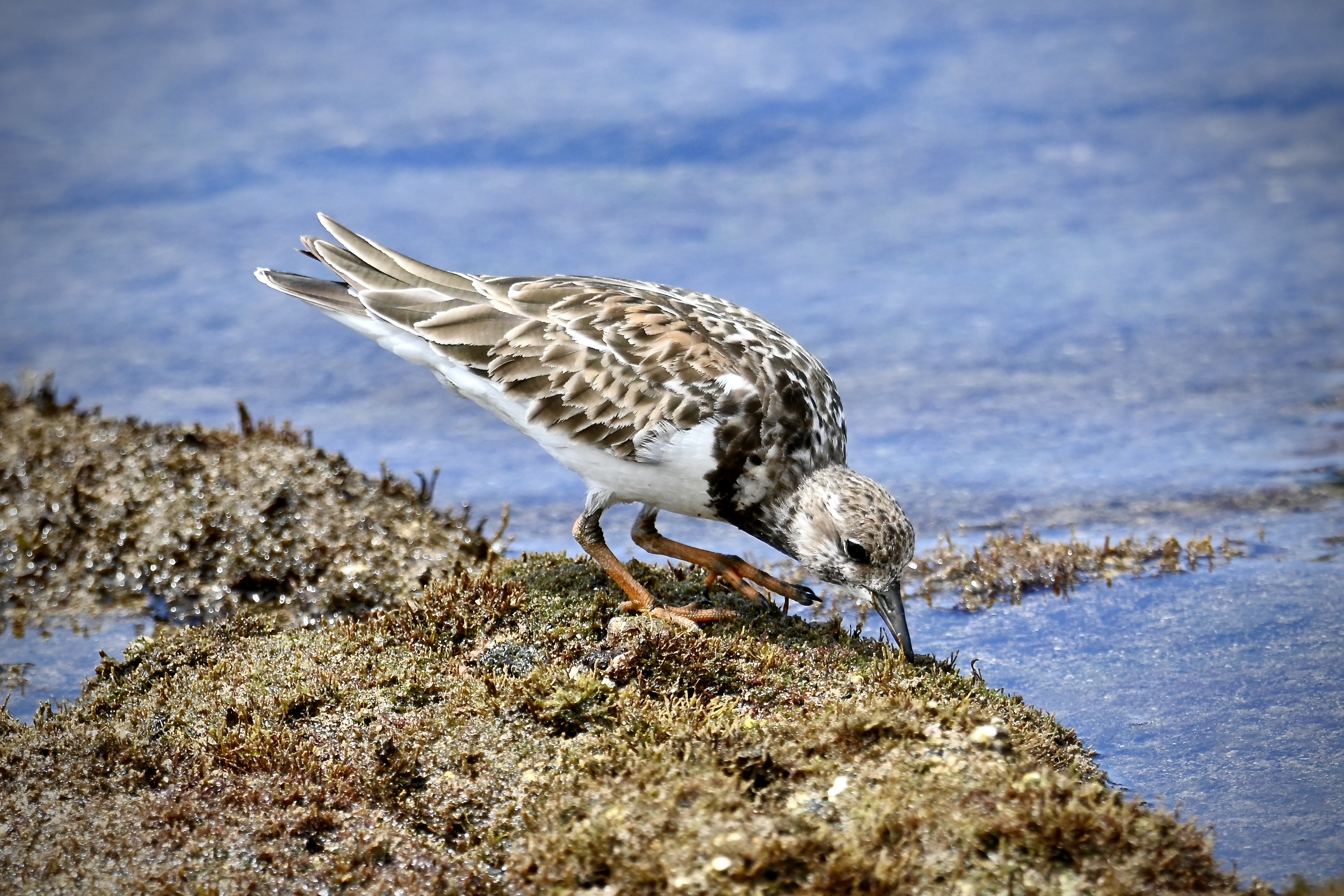
A young ‘akekeke was learning how to be an ‘akakeke. He’d already made one trip from Alaska to Hawai’i, just as the kolea do, and he’d been sleeping and eating and flying about ever since. But he was confused.

You see, there were creatures who did very different things than ‘akekeke did, and he wondered if their ways might be better.

Mind you, there were plenty of creatures who did very similar things. Kolea and hunakai and ‘akekeke all hunted through the grasses and tidepools and rocks for insects, snails, and so on. If he imitated them, things went pretty well. He tried to imitate the ae’o, but he didn’t have long pink legs to hold his body out of the water of the fishpond and he ended up gasping and spluttering as he flapped his miserable way to shore.

The least successful of all was when he tried to imitate a honu. He flopped into the water in a calm spot and lingered below the surface. Then he tried to eat some seaweed on the underwater rocks. He choked on the water, of course, and once more hauled his bedraggled self onto the beach.

He looked about and saw his mother.

She asked, “What are you up to, son?”

“I’m learning,” he said. “I’m learning to be an ‘akekeke.”

She looked around at the other ‘akakeke on the shore, none of whom were trying to feed like a honu. “How?”

“By imitating what I see,” he said.

“Are you learning anything?” she asked.

“I’m learning that some things don’t work,” he said, and coughed up a little more water.

“I’m not saying you can’t learn anything from a honu,” said his mother, “but for basic things like eating and flying, I don’t think there’s much they can teach you. I don’t think you can eat the way they do, and they certainly can’t fly the way you do.”

“I suppose not,” said the ‘akekeke, who was a little sad about not learning anything with his imitations that day.

“You have taught me something today, something I can imitate,” he said.

“What’s that, son?” asked his mother.

“You’ve taught me to be kind.”

Whether we wear feathers, shells, or rubbah slippahs on our running feet, let’s all imitate those who are kind.

by Eric Anderson

Watch the Recorded Story

I write these stories ahead of time, but I tell them from memory (plus improvisation) during worship. What you have just read is not necessarily how I told it.

Photo of an ‘akekeke (ruddy turnstone) by Eric Anderson. Not far away, grazing in a shallow pool, there was a honu (green sea turtle).

Story: Unbelief

March 31, 2024


Isaiah 25:6-9
John 20:1-18

In the gospel stories about Easter, there’s a common theme. It’s unbelief. People heard – from angels, initially – that Jesus had risen from the dead, and… they didn’t believe them. Later people heard from other people that Jesus had risen from the dead, and they didn’t believe the people. I guess that makes sense. If you don’t believe angels, how likely are you to believe people?

Once there was an ‘apapane who didn’t believe in love.

If that seems hard to believe, well, it was hard to believe. He had been raised with two sisters by attentive parents who fed them well, kept them warm in the rain, and taught them all to sing. They flew with him, they brought him to good trees to find bugs and nectar, and they kept him company when the nights got long and lonely.

But he didn’t believe in love.

You might be thinking that his sisters teased him all the time and that’s why he didn’t believe in love. It’s true. They teased him. But not much, really. More to the point, the teasing didn’t bother him. He teased them back and they all would laugh at the silly things they’d say.

Still, he didn’t believe in love.

“You’re just taking care of me because it keeps the family going,” he told his parents, who really didn’t know what to say about that.

“You’re just good to me because you expect I’ll be good to you,” he told his sisters, and he was good to them, but as he said, it was because he expected them to be good to him.

I suppose it might have been because nearly the entire time since he’d cracked the shell that the skies had been gray, the winds had been cold, and the rain had plummeted down.

I sometimes find it hard to believe in love after too many days of cold, grey, windy rain.

He and his sisters had put in a hard day of nectar- and bug-seeking. There might have been ohi’a flowers in blossom, but they were hard to see in the grey light. The bugs were hiding from the rain, not even troubling to go find nectar to eat. The three siblings huddled for the night on a branch, cold, wet, and hungry.

He was grateful for their warmth but he still didn’t believe in love.

When morning came, he blinked his eyes to an unfamiliar light. The clouds had cleared overnight, and the wind gently rustled the leaves. He and his sisters, all three, stared at the golden light of the sun rising over the trees. As it got higher, the ohi’a blossoms opened in scarlet and gold glory. As it got higher, its warmth dried their feathers.

“Wow,” said the sisters. “What a difference that makes.”

“More than you know,” said their brother. “It’s like a completely different world.”

“Is this a world where you can believe in love?” asked one sister.

He thought about it for a while.

“You know, I think it might be,” he said.

They helped one another get their drying feathers into shape – that’s kind of an ‘apapane hug – and flew off into the sunrise over the glorious bloom of ohi’a.

As they flew, they sang together. You know what they sang?

“I think I believe in love.”

by Eric Anderson

Watch the Recorded Story

I write these stories ahead of time, then tell them from memory – memory plus whatever I feel like saying in the moment.

Photo of an ‘apapane by Eric Anderson.