Story: The Salty Koa’e ‘Ula

February 8, 2026

Isaiah 58:1-12
Matthew 5:13-20

Salt is a funny thing. Your body, my body, pretty much every body of every person and every creature needs some salt. Without salt, we get sick. On the other hand, if we have too much salt, we also get sick. Not too much, not too little. That’s the way to do it.

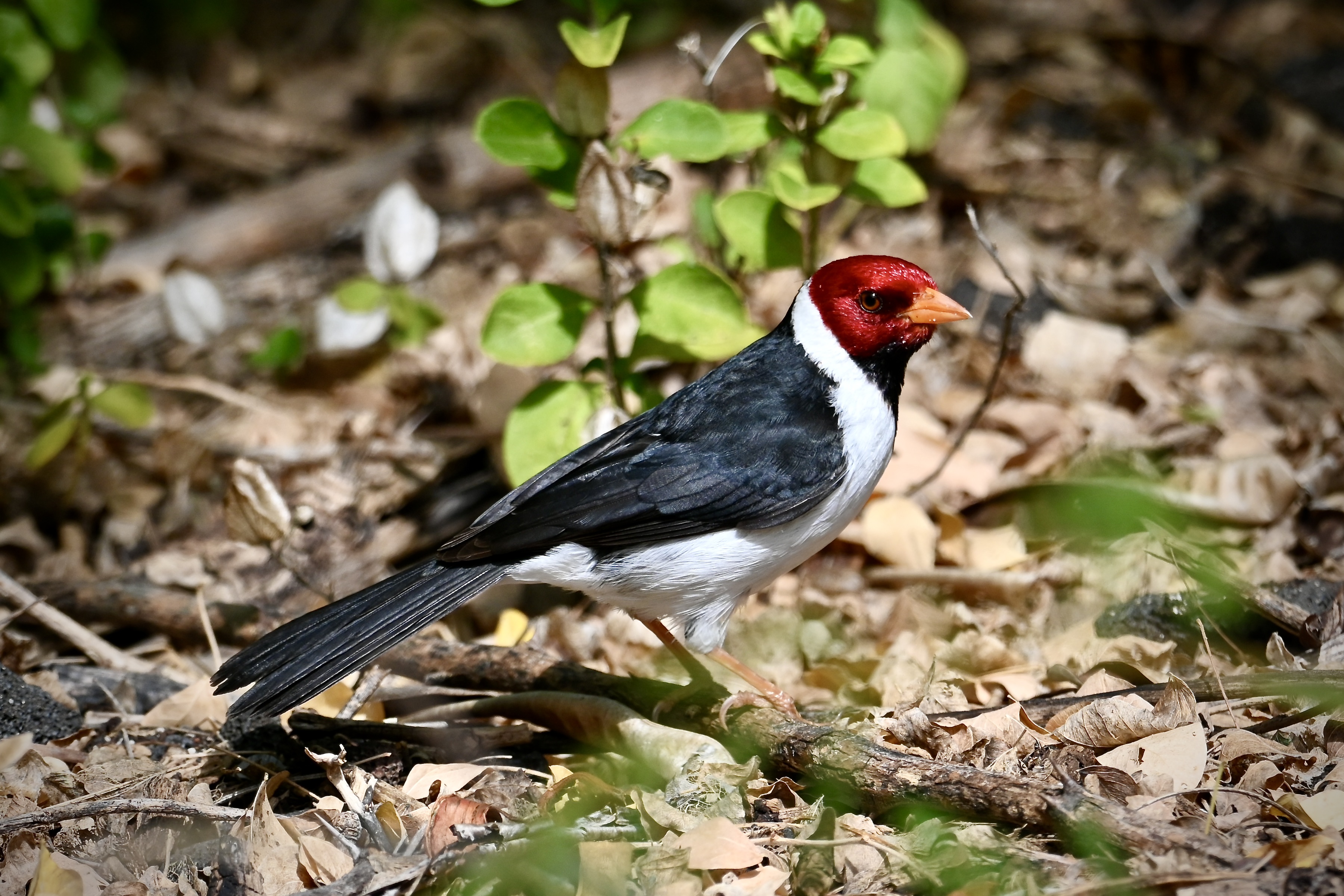
Most of the birds, including yellow-billed cardinals, manage to get the right amount of salt just by what they eat. Seeds have a little salt. So do berries. But every once in a while things don’t go the same way, and one yellow-billed cardinal found himself feeling hungry in a very odd way.

He was hungry for salt.

Personally, I’m rarely hungry for salt itself. I’m not likely to go find a salt shaker and sprinkle some on my tongue. I mean, yuck. Put salt on fried potatoes, though, or popcorn, or…

Well. Let’s just say I’ll eat those up.

Nobody was going to make popcorn or French fries for a yellow-billed cardinal, especially one who couldn’t cook. He hopped around the shore looking for salt, and although there was plenty of it in the ocean, he wasn’t about to drink salt water. He already knew from painful experience that he’d get sick from that.

To his amazement, as he looked, he saw white crystals glistening on the rocks, and even on some of the leaves of the bushes. He thought at first it might be salt left by ocean spray, but it was too far from the breaking waves. Regardless, he pecked a couple of those crystals, and felt much better, even if he did feel pretty thirsty from it.

He didn’t know where it came from, but from time to time when he got hungry for salt again, it was there.
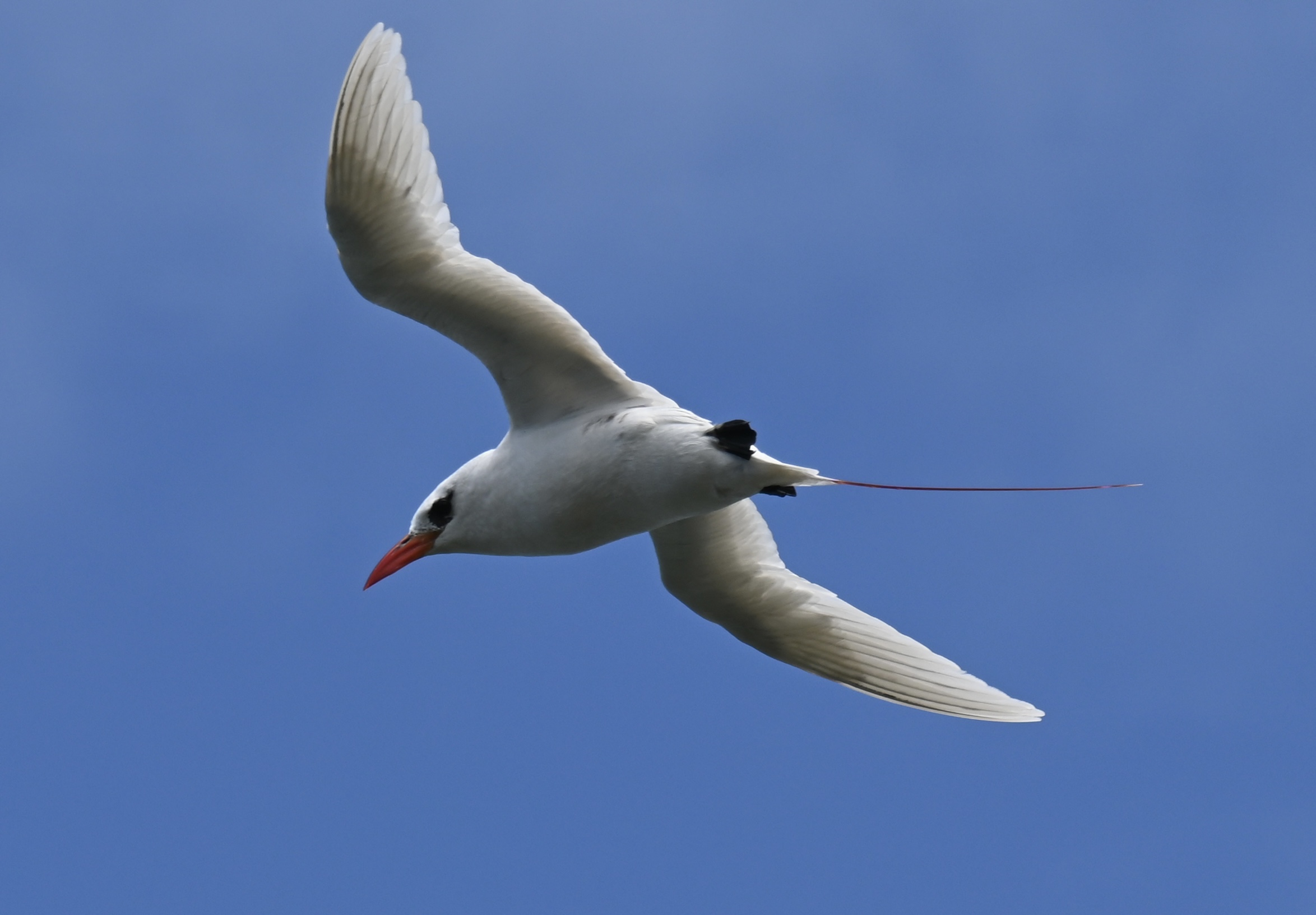
In the meantime, overhead flew the koa’e ‘ula, who spend much of their time far out to sea where there’s too much salt in the water and, for that matter, in the fish that they eat. One of them, in fact, had just had a good long drink of sea water with more salt in it than was good for her.

Unlike the yellow-billed cardinal on the shore below, she could take in more salt because her body could get rid of the excess. Something like tears, salt crystals formed along her beak and sprinkled down on the ground below, where a salt-hungry bird might pick them up.

Neither the koa’e ‘ula nor the yellow-billed cardinal knew anything about the other. Neither of them thought much about it, in fact, but one of them was doing something really important for the other, and didn’t know it.

The same is true of us. Jesus called us the salt of the earth, and he meant that we help other people live and thrive. Sometimes we know we’re doing it, but sometimes we don’t. Just like the koa’e ‘ula, we do ordinary things in our ordinary lives, and someone else lives better because of it.

May we always be the salt of the earth.

by Eric Anderson

Watch the Recorded Story

I write these stories ahead of time, but I tell them from a combination of memory and improvisation. As a result, the story as I wrote it does not match the story as I told it.

Photos of a yellow-billed cardinal and a koa’e ‘ula by Eric Anderson.

Flickering Light

You are the light of the world. A city built on a hill cannot be hid.

“[Jesus said,] ‘People do not light a lamp put it under the bushel basket; rather they put it on the lampstand, and it gives light to all in the house. In the same way, let your light shine before others, so that they may see your good works and give glory to your Father in heaven.'” Matthew 5:15-16

You sure do build on Scripture, Jesus. God
told Abraham that he and Sarah would
become a blessing to the nations of
the world, to all the families of Earth.

A pity that he promptly lied and said
his wife was not his wife, and gave her up
to Pharaoh for a concubine, which cursed
the land, afflicted every family.

Isaiah comforted survivors of
a great destruction after years had passed,
declaring that the people, soon renewed,
would shine a beacon to the aching world.

A pity that so many kept the ways
that frustrated the prophets years before,
preferring their own wealth and potency
and damming justice’ waters lest they flow.

Well, Jesus, to fulfill the broken Law
and bring to life the prophets’ promised call
will call for more than human frailty,
unseasoned salt, or lamp without a flame.

Can we fulfill what you came to fulfill?
Can we preserve and season all the Earth?
Can we be candles brilliant in the dark?
Can we be great in Heaven’s realm of life?

A poem/prayer based on Matthew 5:13-20, the Revised Common Lectionary Gospel Reading for Year A, Fifth Sunday after the Epiphany.

The image is “The Candle,” an etching by Jan Luyken illustrating Matthew 5:15 in the Bowyer Bible, Bolton, England (1795). Bowyer Bible photos contributed to Wikimedia Commons by Phillip Medhurst – Photo by Harry Kossuth, FAL, https://commons.wikimedia.org/w/index.php?curid=7550068.

Light in a Stable

“The true light, which enlightens everyone, was coming into the world.” – John 1:9

The true light may now be at hand,
but the light is lit by flickering flame
and smoky wick. I watch that light
with anxious eye, for fear it spread
its burning oil on the straw below.

The light unsteady served to hide
the dark green sticky contents of
that first cloth barrier, wrapped
inexpertly by unaccustomed fingers round
the infant’s flailing hips,

But did not muffle his fierce cries
of outrage testifying that the light
has lungs! Re-swaddled, he subsides,
and sleeps re-laid into the feeding trough,
while grateful stable denizens rest, too.

The midwife gone, the man and I
trade naps, and watch, and wait
for his next cry. Will he be hungry?
Dirty? Lonely? Or just angry that
the borrowed cloth moves roughly on his skin?

“The light shines in the darkness,” they will write,
and I suppose it does. It murmurs sleepily,
then coos a moment, then subsides.
The crude light wavers at the breeze,
and shadows waver on incarnate light asleep.

I am too weary to compose a poem;
I ache in every muscle, every bone.
I cannot help but think that this poor babe,
in manger laid, could shine so bright
this stable would be taken for a star.

For now, the light is dimmed,
and in its dimness I, at least, can see
that lovelight shines most clearly here,
in common human form, and in
the dark.

A poem/prayer based on John 1:1-18, the Revised Common Lectionary Gospel Reading for Year C, Second Sunday after Christmas Day.

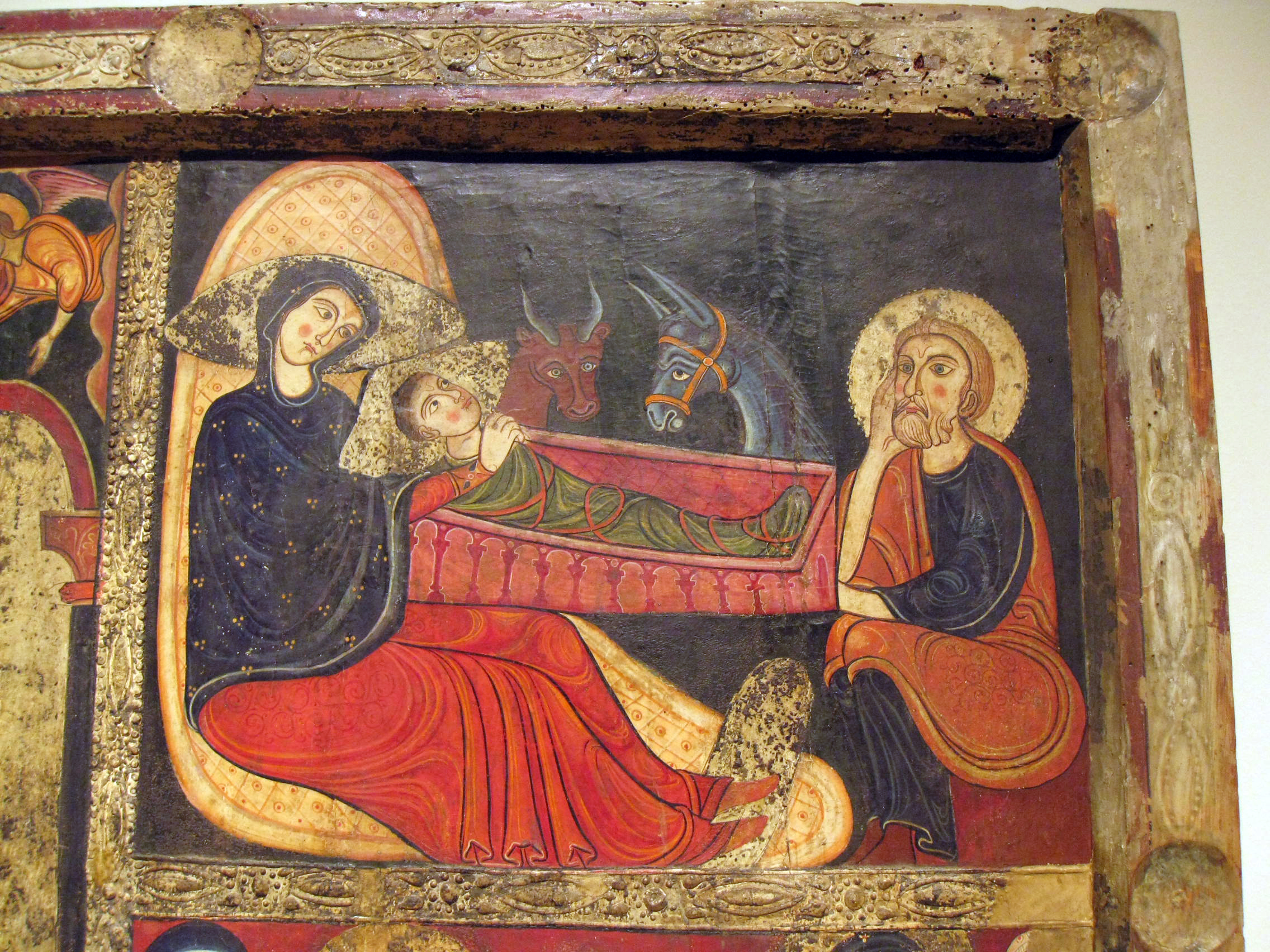
The image is The Nativity, a section of the 13th century altar frontal of St. Mary of Avia Church in Bergueda, Catalonia, Spain, by an unknown artist. The frontal itself is in the National Art Museum of Catalonia in Barcelona. Photo by Enfo – Own work, CC BY-SA 3.0, https://commons.wikimedia.org/w/index.php?curid=21384531.

Story: I Want More Light

January 8, 2023

Isaiah 60:1-6
Matthew 2:1-12

“More light,” grumbled the camel. “I want more light.”

Camels are not naturally night animals. If I lived in the desert I would be a night animal, but camels can tolerate the desert sun in ways that I can’t. They like the day, and their favorite way to spend the day is with eating.

After all the Christmas celebrating we’ve done, that might feel a little familiar.

This camel was grumpy because, first of all, he was a burdened beast. On his arched back he carried a saddle sometimes, and a load of goods on others. There was one set of bags he really dreaded. It was heavy and sometimes it clinked in a really annoying way. He preferred carrying one of these stargazers to that one.

“It’s as heavy as lead,” he’d say.

“I think it’s gold,” said another camel.

“It’s as heavy as lead,” he’d repeat, which is basically true, after all.

He didn’t complain quite as much about the other two loads, which were both lighter and smelled nice.

Second of all, the camel was grumpy because it had become a very long trip. Long trips aren’t unusual in the life of a camel, but that doesn’t mean they like them. This one didn’t like them.

“Will it never end?” he said.

“I think we’re almost there,” soothed another camel.

“Will it never end?” he’d repeat.

Third of all, the camel was grumpy because they were travelling at night. Camels aren’t night animals. This camel wasn’t a night animal. This camel was increasingly cross.

“More light,” he grumbled. “I want more light.”

“I think they’re following that star,” said another camel.

“Stupid stargazers,” said the camel. “I want more light.”

I think you can probably guess who those star-followers were, and where they went, and who they saw, and what gifts they gave that family. Here’s a hint: it wasn’t lead. It was gold.

When they left, the camel was in a much better mood. For one thing, it looked like they were taking a different, hopefully shorter route back. For another, the three loads were gone, so there wasn’t as much to carry. For another, they were finally back to sensible travel by day.

And finally, something had happened when that camel had, drawn by some unlikely curiosity, stuck his nose through a window and seen a baby receiving those things he’d carried across the miles. The gold and frankincense and myrrh didn’t seem like great playthings for an infant, but they seemed really important for a family that was obviously poor and seemed to be worried about trouble. And the child himself, well: the camel felt, just for an instant, like he had made a world of difference, and that he could do so again.

“More light,” he said as he took each step on the way home. “I think I’ve seen more light.”

by Eric Anderson

Watch the Recorded Story

In the recording, I’m telling the story from memory of the prepared text above. Between memory and improvisation, there’s a lot differences between them.

The image is Journey of the Magi by James Tissot – Minneapolis Institute of Arts, Public Domain, https://commons.wikimedia.org/w/index.php?curid=45592253. Regrettably, the artist set the painting in daylight.

Smoke-Choked Basket

Don’t look this way, Jesus, please.
If you’re looking for light, excuse me.

I’m only gasping underneath this
smoke-choked basket here because…

I’m not certain how much glow You’d get
even if you lift the basket.

A poem/prayer based on Matthew 5:13-20, the Revised Common Lectionary Gospel reading for Year A, Fifth Sunday after Epiphany.

The image is “Light Under a Basket,” a 1532 Bible illustration by the Italian Petrarca Master; Public Domain, https://commons.wikimedia.org/w/index.php?curid=4006971.