Story: Remember

October 26, 2025

Ephesians 1:11-23
Luke 6:20-31

I remember a good number of things. I also forget a good number of things. Some of them I’m happy to forget, especially if they made me unhappy at the time. Some of them I wish I could remember, especially if they involve the question of where did I put down my keys?

The i’iwi wasn’t much worried about the things he’d remember. He was worried about the things others would remember about him.

A lot of i’iwi get remembered by other birds as being, well, kind of aggressive. Bossy. Selfish. They drive other birds away from the places that they’re eating. Other kinds of birds do that, too, but when an i’iwi gets aggressive, ‘apapane and ‘amakihi will tend to give in and fly away.

“But is that,” he asked himself, “how I want to be remembered?”

He knew plenty of i’iwi that loved to chase other birds away. They claimed that they ate better when they did, but he also knew i’iwi that tended to ignore other birds, even slept in the same trees overnight. They seemed to eat just as well, he thought.

“How do I,” he asked himself, “want to be remembered?”

He had a friend who was one of the most effective bullies around. Where some of the aggressive i’iwi would chase an ‘apapane for a couple of feet, he’d chase them for a twice or three times as far. Sometimes he’d chase a bird so far that he’d find another bird in the place where he’d started, and he’d chase that one, too. If that seems like extra work to you, it does to me, too. Still, he was flashy (but then, all i’iwi are pretty flashy) and he was popular (as long as he wasn’t chasing you).

“But is that,” he asked himself, “how I want to be remembered?”

Then he remembered his grandmother.

She didn’t take any nonsense from other birds, no she didn’t. No ‘apapane had ever driven her away from a cluster of ohi’a blossoms. But she’d never chased an ‘apapane, either, or an ‘amakihi, or a young i’iwi. In fact, she’d let other birds know when she’d found a good spot, whatever the color of their feathers.

His grandmother loved him. He knew that, because she used to hop aside so he could get to the best flowers.

He loved his grandmother.

He went to find her, and said, “I want to be remembered like you, grandmother.”

“That’s good,” she said. “Let’s go see if we can find something good to eat, and then we’ll let everybody else know.”

That’s how both of them would be remembered.

by Eric Anderson

Watch the Recorded Story

I write these stories in advance, but I tell them from memory (plus improvisation) during Sunday worship. The story you have just read will not precisely match the story as I told it.

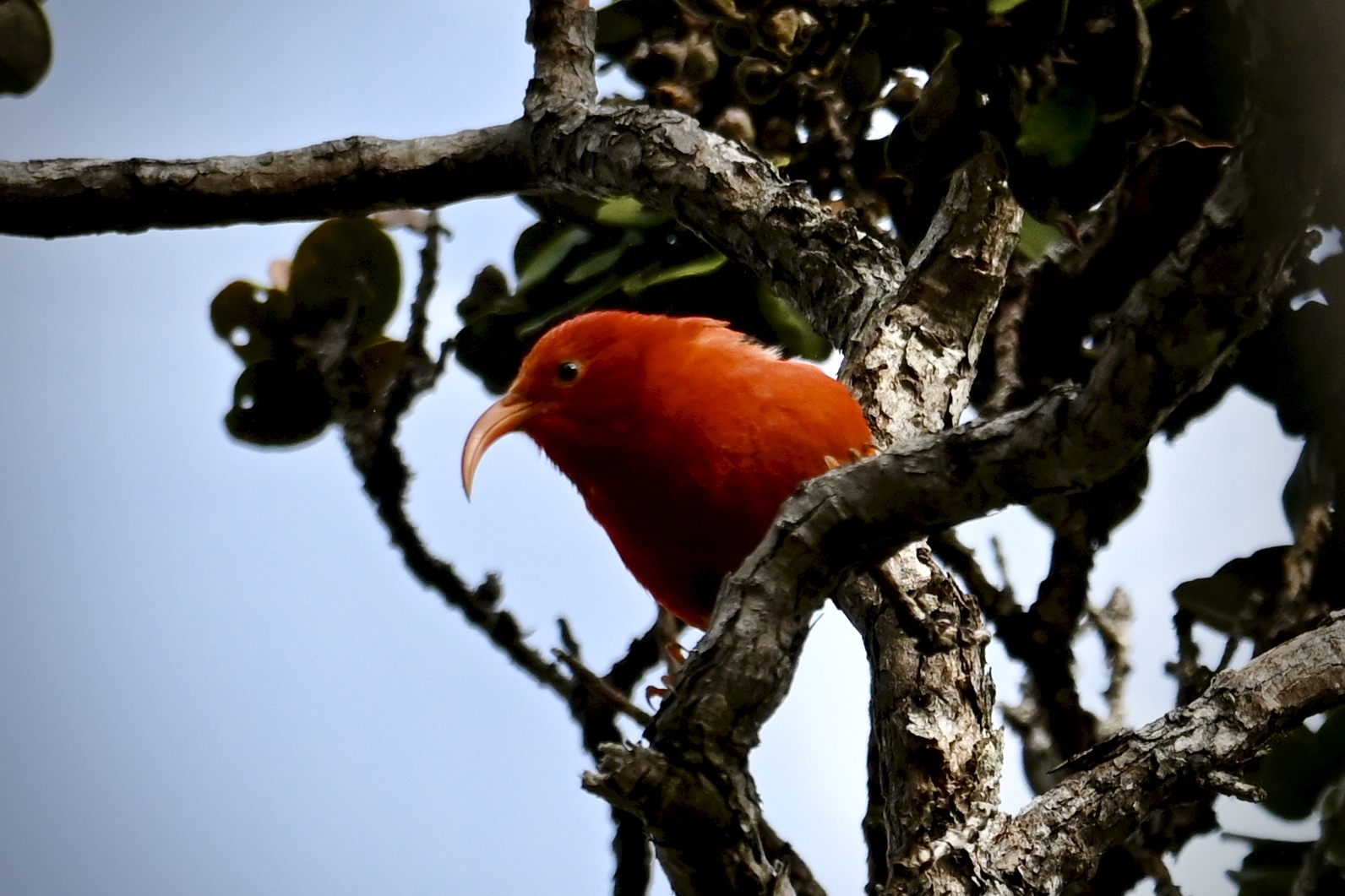
Photo of an i’iwi (being reflective?) by Eric Anderson.
Story: Mother Memory

June 23, 2024

1 Samuel 17:32-49
Mark 4:35-41

The ‘amakihi was, everyone had to admit, an adult. Even her mother had to admit it. She was young, sure, but she had her adult feathering, she had lots of hours of flight time, and she knew the difference between a tasty bug and a yucky bug.

(Which I don’t, by the way. I’m inclined to think they’re all yucky bugs.)

Her mother, however, continued to give her good advice. She pointed out the tasty bugs. She pointed out the blooming ohi’a blossoms. She pointed out the ripe fruit. She even said, “Oh, look, it’s nighttime,” as the sun set beyond Mauna Loa.

“Mother is so boring,” said our adult ‘amakihi of a daughter.

“Why do you tell me these things all the time?” she asked one day, and her mother replied, “Because a day will come when I’m not around when you have a question. I want to make sure I’m always with you in your memories for such a time.”

“But it’s so boring,” said the daughter, but she said it to herself because she didn’t want her mother to hear.

One day, exasperated by another recital of the bugs that weren’t good to eat, she took off and flew fast and far. She didn’t pay a lot of attention to where she was going. When she got hungry, she’d stop for a nectar snack or a bug break. Then off she flew again.

When nighttime came, she realized that she had no idea where she was.

What should she do? she wondered. And as if her mother was there, but she wasn’t, she heard in her memory the words, “Look, it’s nighttime. Find a branch with greens around it and settle down to sleep.”

So she did. In the morning her mother’s voice in her memory guided her to tasty bugs and ripe fruit. But now she had to remember the more difficult thing: how to find her way home.

“Look at the slopes,” said her mother in her memory. “We don’t live on Mauna Loa, so don’t fly that way. But fly up the slopes of Kilauea until you find the crater at the top.”

She followed the rising slopes but didn’t turn up Mauna Loa. After some time, she saw some familiar trees. After a little longer, she saw the great crater at the summit. She made her way around it until she found the stand of trees where her nest had been.

And… found her mother.

Her mother fussed at her for a while about being away overnight, but her daughter said, “Please, let me say this,” and mother fell silent.

“Thank you,” said her daughter, “for being with me in my memory to get me home.”

I’m afraid that from time to time afterward, she did get exasperated with her mother and think she was boring, but… she never fussed or protested, because of how important it was to have her mother in her memory to help her find her way home.

by Eric Anderson

Watch the Recorded Story

I write these stories ahead of time, but I tell them from memory. And sometimes, as today, things happen that have to be acknowledged – like a mother clear saying to her son, “I told you so.”

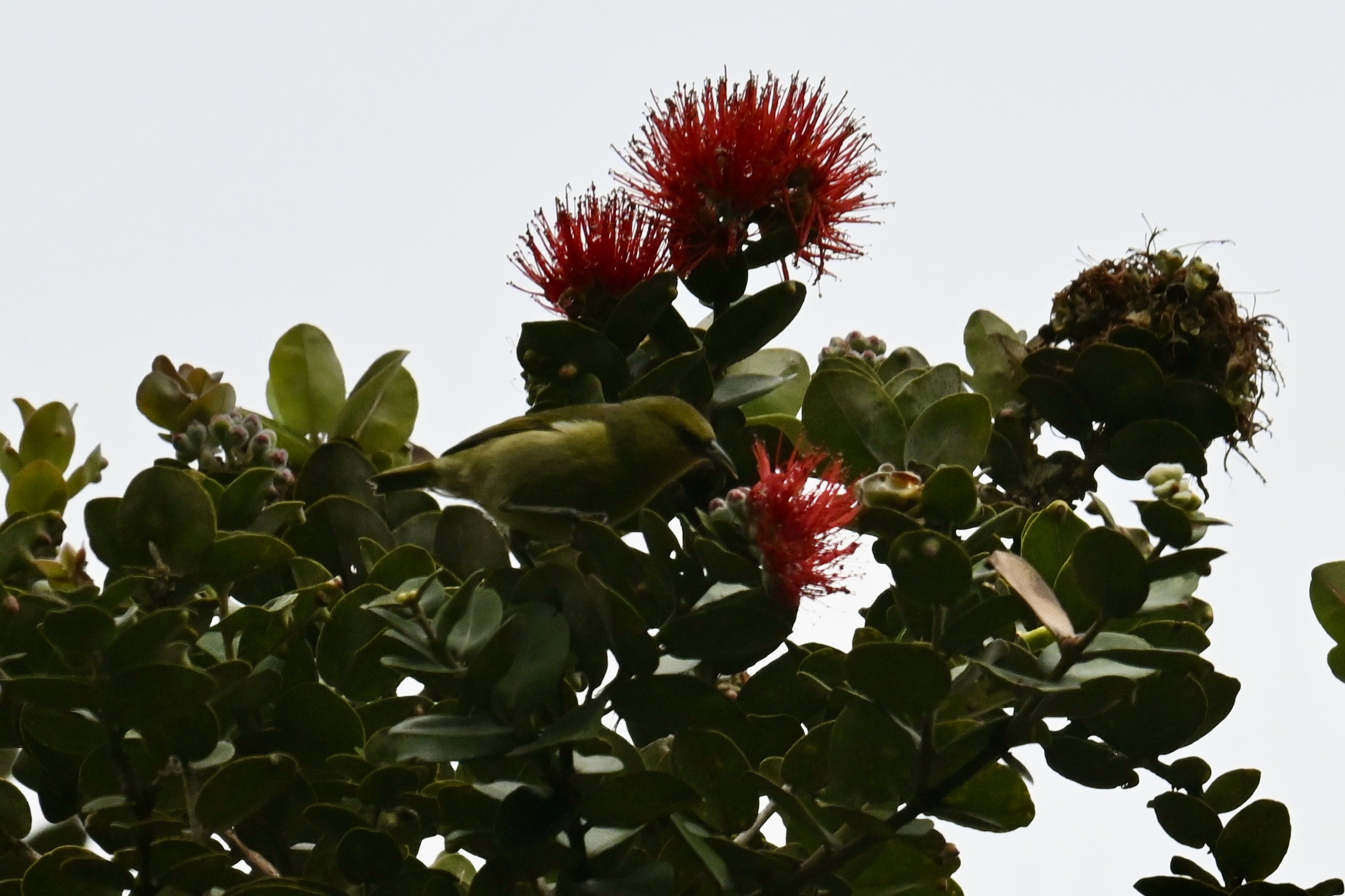
Photo of an ‘amakihi by Eric Anderson.

Story: Growing Memories

November 13, 2022

Isaiah 65:17-25
Luke 21:5-19

Last week’s story was about a kolea who came back from a summer in Alaska to find Pohoiki completely changed by lava. It was a hard thing to accept that this is how an island grows. He saw a landscape that had been green and growing transformed into one that was rocky and barren.

He might have taken more comfort if he’d talked with a tree – though I’m not sure whether even a kolea really knows how to listen to a tree.

The trees whisper on the wind. They let their soft voices swirl about on the breeze like a sigh. A lot of what they say is simply, “Do you remember?” and “Yes, we remember,” and the memories float through the forest.

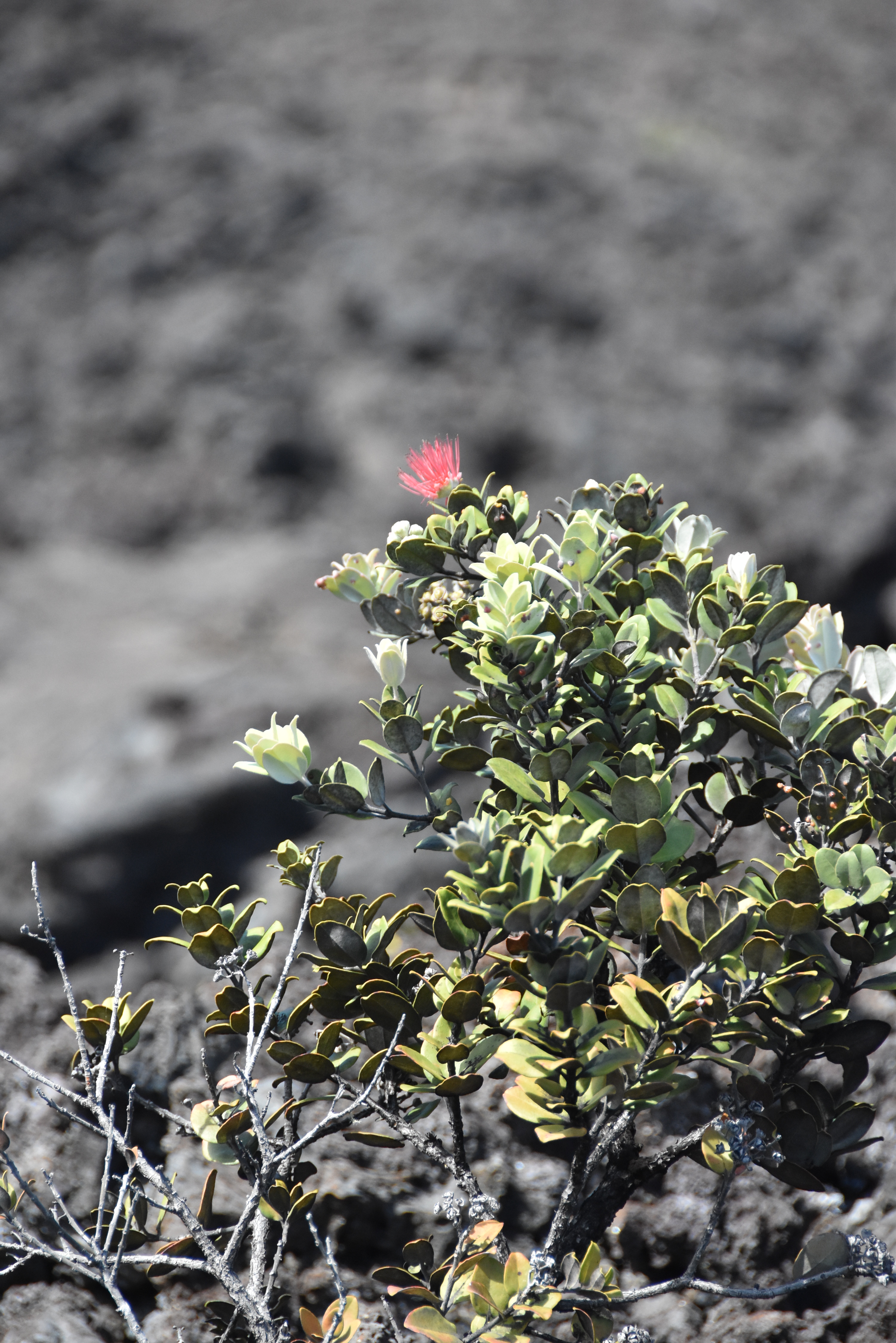
Higher up Kilauea, surrounding the crater we call Kilauea Iki, there are a lot of trees and they have been watching that crater for a long time. “Do you remember?” they sigh, and yes: they remember. They remember when it sloped down into a notch. Trees and bushes sprouted along the sides and the bottom. They remember when lava fountained over a thousand feet into the air and poured down into valley. They remember watching the lava pooling and the lava pool rising. They remember that when the lava stopped fountaining and flowing, the valley floor was four hundred feet higher than it had been. They remember watching parts of the flat surface crack and tilt as the liquid rock cooled to solid.

“Do you remember?” they sigh. Yes, they remember.

They remember when it was just black rock, steaming in the rain, baking in the sun.

They remember when ohi’a seeds fell upon that hot rock and did nothing. They remember watching seeds landing on the rock in a small crack and doing their level best to sprout and grow, but even the pushing of their roots could only find a couple grains of sand. They remember when the first ohi’a landed in a spot where cracking and rain had created enough – just enough – small bits that a root could take hold and begin collecting rainwater. They remember when the first of the little ohi’a plants – so small, those plants – they remember when the first of them had enough soil and water and sunshine and strength to form flowers and set its own seeds to scatter.

“Do you remember?” they sigh. Yes, they remember, and that includes the small trees, some no more than inches high, that you’ll find one here, one there, on the floor of Kilauea Iki.

The kolea, I’m afraid, didn’t think to ask the trees, and he was in the wrong place to ask them down at Pohoiki if he’d thought of it, and he may not have understood what they said to him if he’d asked.

But the trees along the steep sides of Kilauea Iki remember, and they sigh their memories just the same way they scatter their seeds: cast out upon the blowing wind.

“Do you remember?” they ask, and they answer, “Yes, we remember.”

On the flat black surface of the Kilauea Iki crater, roots crack the rock into soil, shoots stand ever higher above the stony surface, ohi’a blossoms flutter crimson in the wind, and they share their seeds and their memories upon the blowing wind.

by Eric Anderson

Watch the Recorded Story

The story above was told from memory of this prepared manuscript. In my opinion, I told it better than I wrote it this time.

Photo of an ohi’a blossom in the Kilauea Iki crater by Eric Anderson, 2016. The Kilauea Iki eruption took place in 1959.