Story: Honu Up a Tree

November 2, 2025


Isaiah 1:10-18
Luke 19:1-10

When was the last time you saw a honu up a tree?

Never?

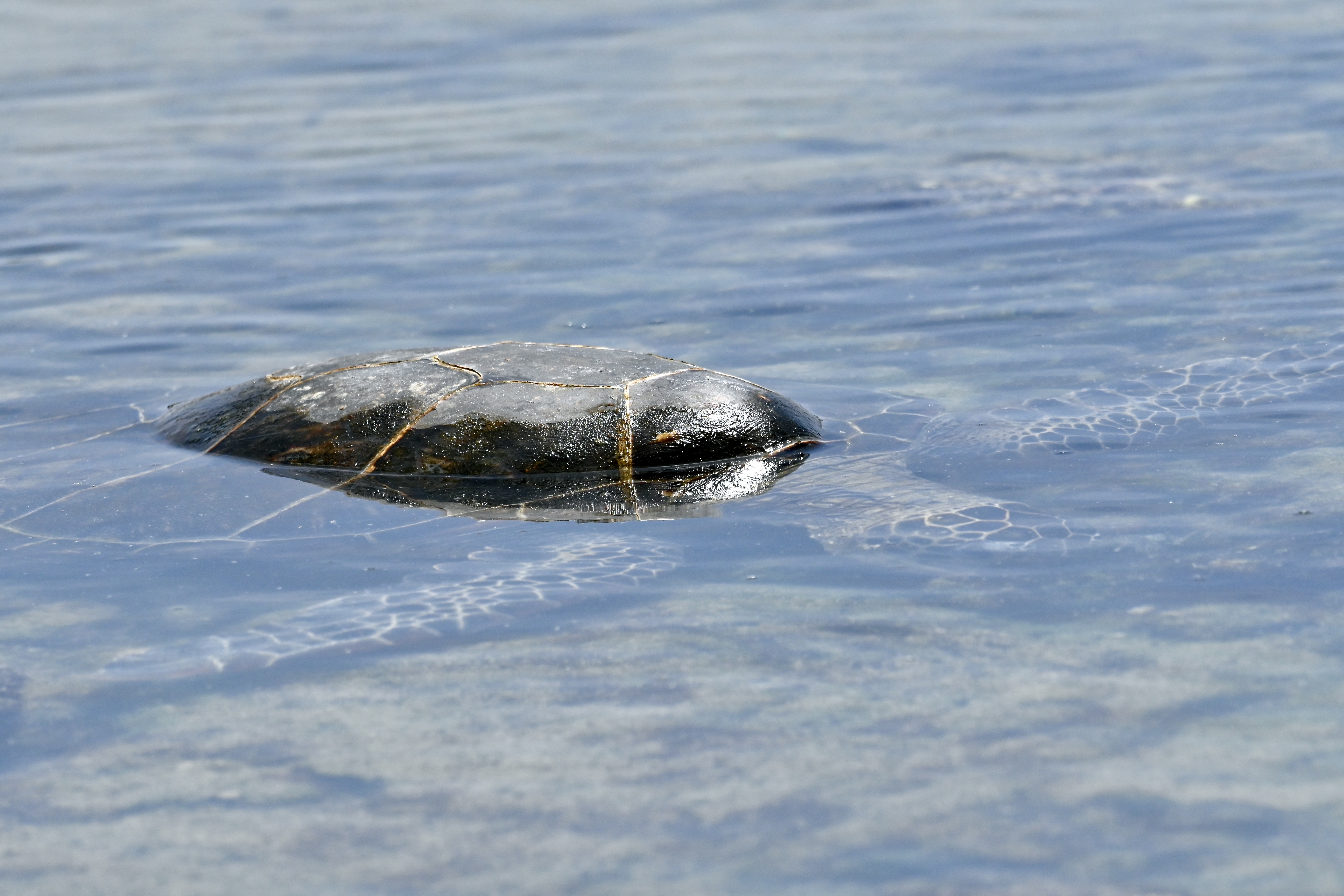
Well, I never have either. It’s not a natural place for a honu to be. A honu really prefers to be in water, like the honu in this picture.

Unfortunately, one day a honu found herself in a tree.

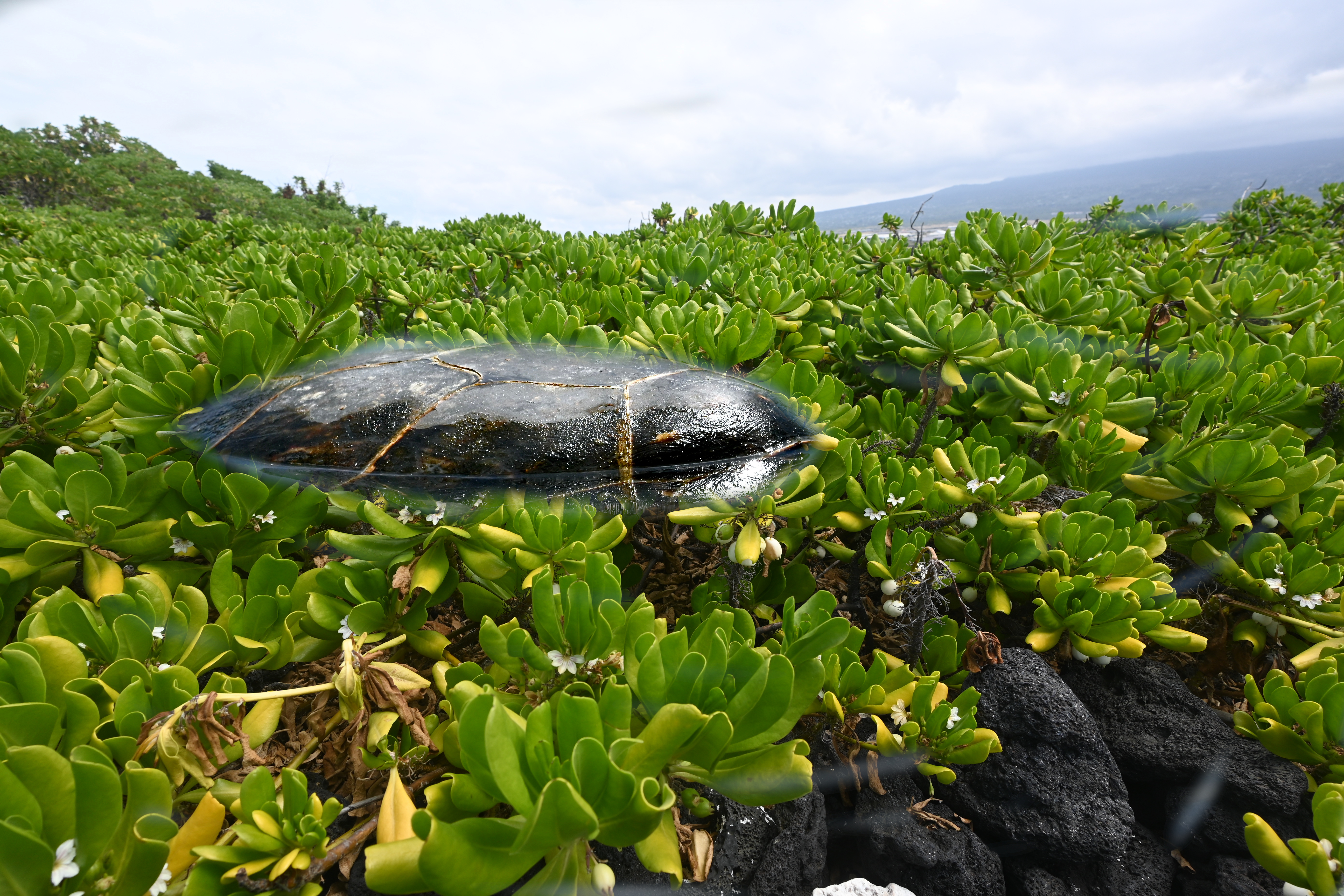
As I mentioned, I’ve never actually seen, let alone photographed, a honu up a tree. I’m afraid that photo is the result of a certain amount of non-artificial intelligence that produced that unconvincing image.

It was a storm, of course. Ordinarily honu in a storm find a safe place to ride it out, which is frequently offshore. I don’t know precisely what happened with this honu, and I’m not sure she ever did, either. One minute she was being tossed about in the water, and the next minute she was flailing around in a tree, not getting anywhere, and getting sprayed by the waves and the rain.

All in all, not where she wanted to be.

When things got brighter, the birds came out and found the honu in the tree, and they knew she wasn’t supposed to be there.

“Can you swim out?” asked an ala’e ke’oke’o, who was a swimming bird, even though the honu had better flippers on her limbs than the ala’e ke’oke’o had on his.

“I’ve tried all night,” said the honu. “My flippers can’t move these leaves the way they move water.”

“Besides,” she added, “I’m a pretty high off the ground here, and those rocks look hard. I think I might hurt myself if I fell from here.”

The birds looked things over and thought about it. Winged creatures don’t think about falling very much.

“I know,” said some of them. “Let’s pull some of the leaves and twigs out of the way so she’ll slip down slowly.”

“Right!” said some others. “And we’ll go get some other leaves and grass and mud and sand and we’ll cushion the rocks below her.”

That’s what they did. Some pulled up grass for padding, some moved branches of naupaka aside (OK. She was in a naupaka bush, not a tree, but it looked like a tree to her). The pile of padding grew and her distance from it slowly shrank. They worked slowly but steadily, cautiously but creatively, until with a creaking sound the last naupaka branches bent and lowered her to the top of the padded mound.

The birds cheered as the honu hauled herself off with her flippers and made her way down the beach to the water.

At water’s edge she turned and said, “Mahalo nui loa, friends. I hope you get help like this if you’re ever up a tree!”

One of the birds, a kolea, shrugged and said, “Most of us will be quite fine up a tree. But if you can help me out like this if I’m ever stuck in the water, I’ll be just as grateful as you are now.”

Then she waved and swam off into the deep. I don’t know if she ever did have to help a bird stuck in the water, but I know she would have, and she’s ready to if there’s ever a need.

by Eric Anderson

Watch the Recorded Story

I write these stories ahead of time, but I tell them from memory and improvisation. What you have just read is not identical to the way I told it.

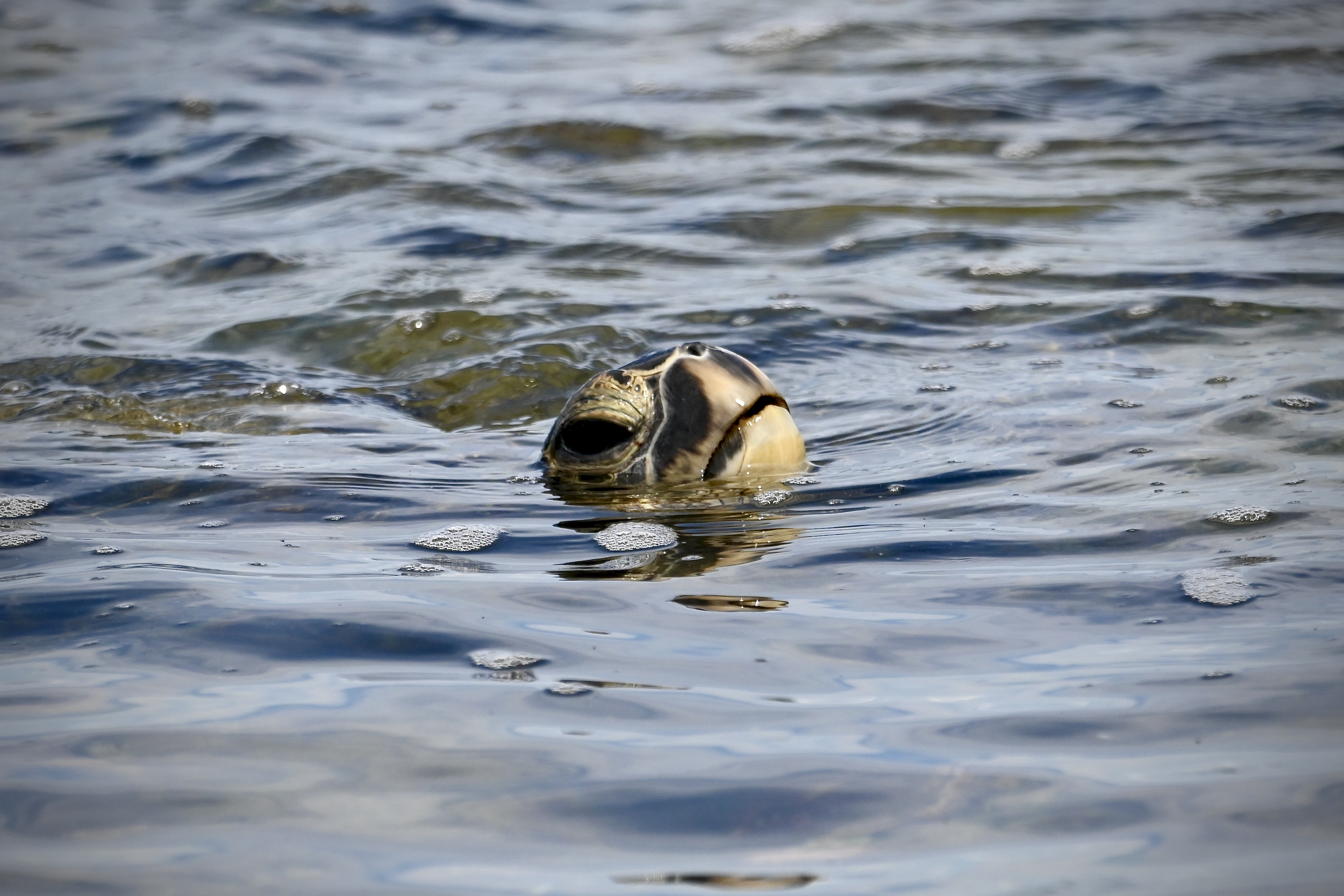
Photos of a honu and of naupaka by Eric Anderson, as is the not-very-convincing blending of the two.

I Got a… Denarius

When those hired about five o’clock came, each of them received [a denarius] the usual daily wage. – Matthew 20:9

“I got a rock.” – Charlie Brown in It’s the Great Pumpkin, Charlie Brown

Nobody hired us. You could say I didn’t try.
At least, I didn’t try the ones with work.
I promise you I tried the ones that didn’t,
at least the ones who said they didn’t.

Another day of working to find work;
another day of working without pay;
another day of wondering just how
the evening’s meal will come together.

“Why are you standing here so idle all the day?”
“I’ve chased the ones who will not hire
from this end of the marketplace to that.
So now, I stand, because there is no hope for work.”

Or is there?

Now that was just an hour ago. I worked
to pull the weeds and stake the vines,
but to be honest, darkness came too soon
to make much impact on this vineyard.

Darkness came too soon to make much impact
on the emptiness of my larder.
Darkness came too soon for work to be
rewarded with enough to keep our lives.

But look: there in my hand. The owner
of the vineyard has presented me
with a denarius, a coin whose worth
will keep us fed today, perhaps tomorrow.

I run back to the marketplace
for oil and flour, beans and dates.
My family will not believe
the owner’s generosity – I hardly do!

Behind me I hear quarrelling.
I pay no mind if others’ eyes are evil.
My family will eat tonight
because someone was good.

I usually imagine Jesus’ parable from the perspective of the all-day workers, the ones “who have borne the burden of the day and the scorching heat.” For this poem/prayer, I thought I’d choose another point of view.

A poem/prayer based on Matthew 20:1-16, the Revised Common Lectionary Gospel Reading for Year A, Proper 20 (25).

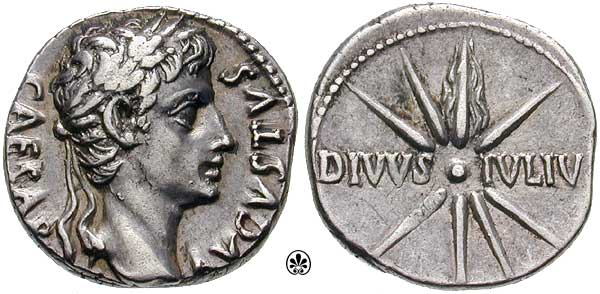
Photo of a denarius by Classical Numismatic Group, Inc. http://www.cngcoins.com, CC BY-SA 3.0, https://commons.wikimedia.org/w/index.php?curid=534248.

Sir, I See

Faster than a speeding teacher,
more focused than a paralytic healed,
more attentive than a crowd full of dinner:
Look! By the well! It’s a foreigner!
It’s a woman! It’s…
Me!

Could it be me, dear Jesus, so to grasp my thirst
so earnestly, so honestly,
to hold it up before you in its naked need?
Could it be me to have you take so seriously
all my urgent questions, still to leave me
speeding house to house, in all my
comic-fictive strength, inviting:

“Come and see! For I’ve been known
in strength and weakness, height and depth.
Come and see! For only you (and you and you)
and I together can determine once for all:
Could this One truly be the Christ?”

Could it be me?

A poem/prayer based on John 4:5-42, the Revised Common Lectionary Gospel Reading for Year A, Third Sunday in Lent.

Photo of a mosaic in Sant’Appolinare Nuovo in Ravenna, Italy, by © José Luiz Bernardes Ribeiro, CC BY-SA 4.0, https://commons.wikimedia.org/w/index.php?curid=52650776.