February 15, 2026
Exodus 24:12-18
Matthew 17:1-9
Last week it was saltiness. This week it’s sweetness. We’re making our way around the taste buds, I guess. I don’t actually have plans to visit sourness or bitterness, but who knows?
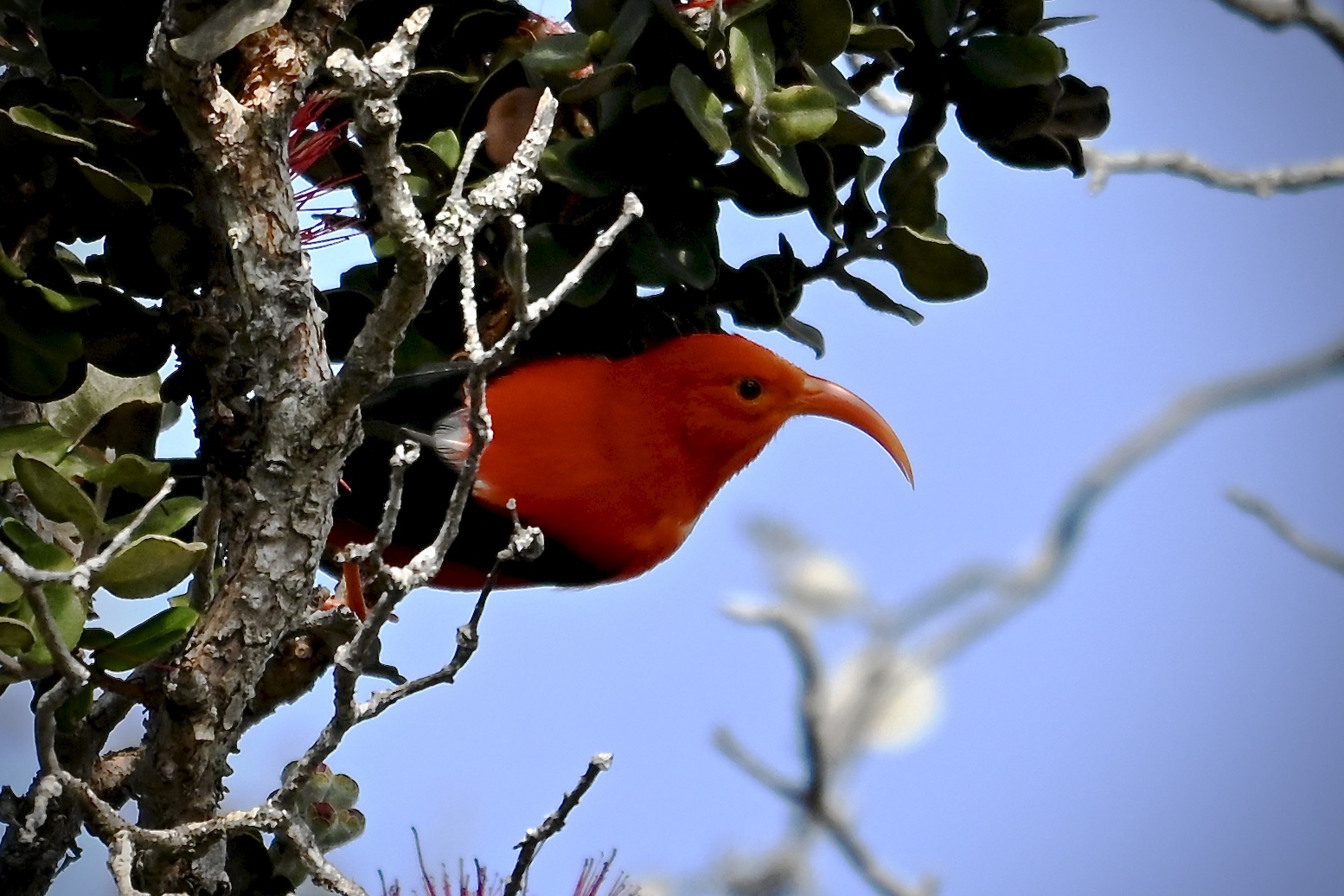
An i’iwi was having a hard time. They’re used to sipping nectar from ohi’a flowers and koa flowers and mamane flowers and lots of other flowers, and nectar is basically flower sugar. It’s pretty sweet. It does change, though, a little like the way that some oranges are sweeter than others. It’s got to do with the rainfall or lack of it, and the soil nourishment, and lots of other things that I don’t know about and the i’iwi doesn’t know about and the tree might know about but trees don’t talk about that sort of thing very much.
In any case, the i’iwi wasn’t finding much in the way of sweet nectar. Nectar, yes. Enough to keep her from getting hungry, yes. Sweetness that satisfied: not so much.
So she went looking for sweetness.
It’s not uncommon for the nectar-feeding birds of the mountains to fly about looking for nectar. She had a somewhat different agenda, though: sweeter nectar, and not just nectar. For whatever reasons, though, the nectars she sampled tasted much the same: a little dry, a little bland. She could eat it, but she really wanted something better. It was the difference between your grandmother’s chocolate chip cookie, and the cookie you ate the reminds you how much better grandmother’s chocolate chip cookies are.
She didn’t find it.
She was sitting grumpily on a branch complaining about this to her mother. I’iwi can be pretty good at being grumpy birds, and she was putting in the practice to get really good at it. Her mother, I must say, wasn’t a particularly grumpy bird and didn’t want to be.
“So you want to find sweetness?” she asked her daughter. “Where have you looked?”
Her daughter described her flights up the mountain, and down the mountain, and along the slopes of the mountain, and how the nectar just wasn’t what she wanted or hoped for.
“Those are the only places you checked?” said mother.
“Where else?” said the daughter. “I could fly farther but will that work out any better?”
“I don’t know,” said her mother, “especially because I think you can find sweetness much closer to home.”
“Where?” demanded her daughter. “Where is there sweetness here?”
“There’s the warmth of the sun on your feathers,” said her mother, “and the sound of the rain on the leaves. There’s the scent of mamane on the wind, the great blue of the clear sky, and the dramatic greys of the cloudy sky.”
“Those are ordinary things!” her daughter protested.
“Well, there’s also the way your father loves you, and your grandparents love you, and the way I love you,” mother said. “Is that ordinary?”
“It is,” said the daughter, “but it’s special, too.”
“Best of all,” said mother, “is the sweetness that’s inside you. It goes with you wherever you fly. You never have to worry that it will run out. Even when no one is around, even in the coldest, darkest night, even when none of the trees are in blossom, there is sweetness in your heart.”
“You helped put it there,” said her daughter.
“Sip that sweetness when you need to, daughter,” said her mother. “Sip it and be refreshed.”
by Eric Anderson
Watch the Recorded Story
I write these stories ahead of time, but I tell them from memory and improvisation. The story as you have read it is not identical to the way I told it.
Photo of an i’iwi by Eric Anderson.
 ordainedgeek