Exultant

“[Jesus said,] ‘Nevertheless, do not rejoice at this, that the spirits submit to you, but rejoice that your names are written in heaven.'” – Luke 10:20

Jesus – May I call you Jesus?
“Mister of Nazareth” doesn’t glide from the tongue.
Jesus – yes, Jesus – can I offer some help?
Your marketing skills are frankly first century.

You’ve got seventy people who are all on a high!
What things they accomplished!
What heights they’ve attained!
They may not have seen the fall of a devil,

But then, who has?

Now, Jesus – yes, Jesus – let’s get to brass tacks.
They’re open. They’re glowing. They’re all fired up.
That’s the time when the iron is hot. So strike!
Whatever it is that you’re selling, they’ll buy.

But Jesus – oh, Jesus, may I call you Jesus? –
why throw cold water on bright red-hot steel?
They’d follow you anywhere, until that sad moment
you quenched their enthusiasm at the power they’d found.

C’mon, Jesus, why?

So try it again. This is a disaster,
but you can recover. I know that you can.
Praise them for their power. I tell you, they’ll love it.
And then, O and then, what they’ll buy! What they’ll buy!

Oh, yes. What they’ll buy.

A poem/prayer based on Luke 10:1-11, 16-20, the Revised Common Lectionary Gospel Reading for Year C, Proper 9 (14).

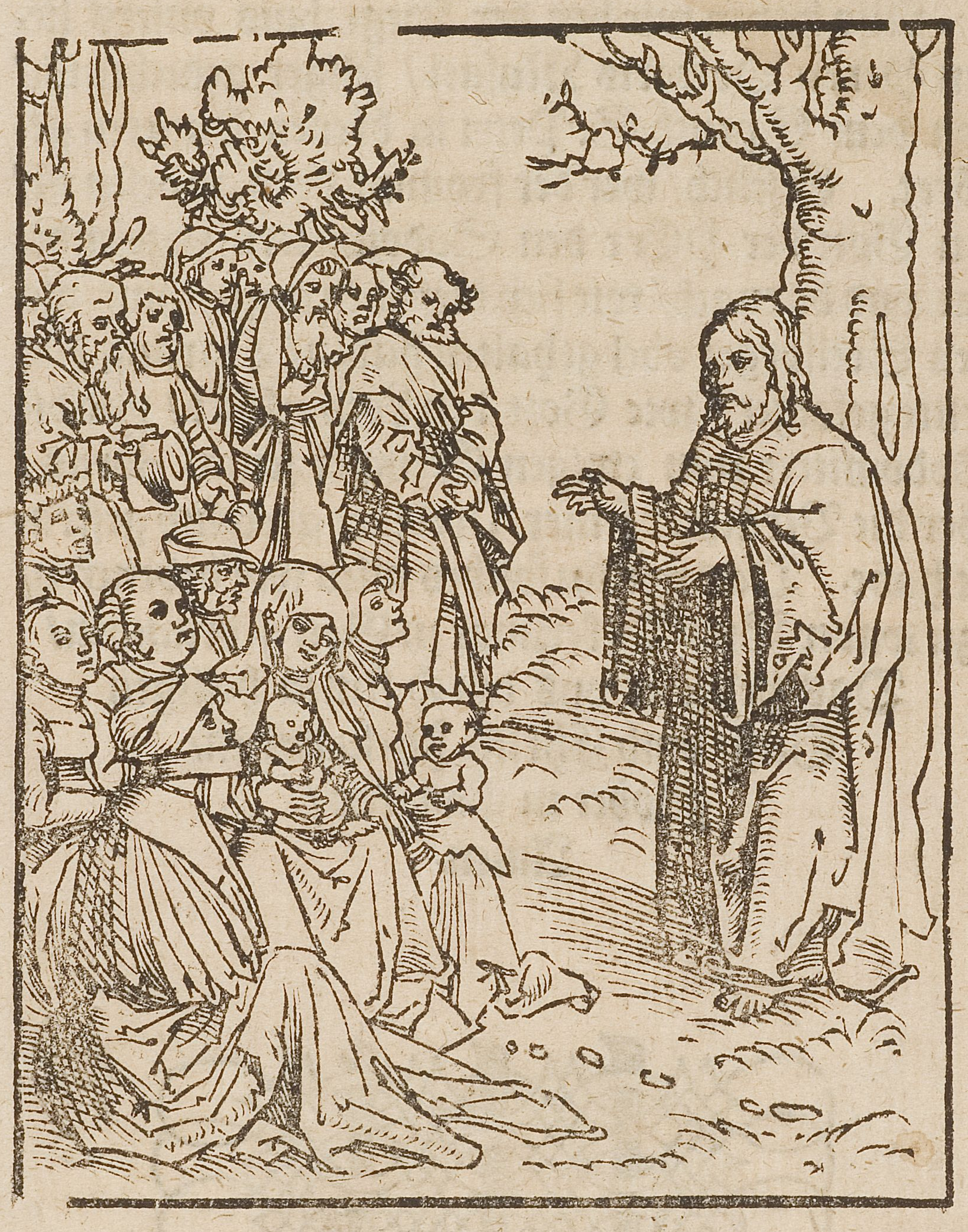
The image is “Christ Came into Galilee” by Phillip Vere. From “An illustrated commentary on the Gospel of Mark” by Phillip Medhurst, between 1791 and 1795. FAL, https://commons.wikimedia.org/w/index.php?curid=34448342. This isn’t an illustration of the return of the Seventy, but I really like the way Jesus’ extended hands seem to be pushing down on the emotional level.

The Year of the Lord’s Favor

“[Jesus read from the scroll of Isaiah:] ‘The Spirit of the Lord is upon me, because he has anointed me to bring good news to the poor. He has sent me to proclaim release to the captives and recovery of sight to the blind, to set free those who are oppressed, to proclaim the year of the Lord’s favor.'”

“Today this scripture has been fulfilled
in your hearing.” Your own words, Jesus,
amazing them with graceful speech.
Until they turned upon you.

Remind us once again of what is grace.
I’m told that grace is strength, is force.
I’m told that power is right, and might is good.
I’m told that what we want we take.

Where is the news that sounds good to the poor?
Where is the vision for the ones who will not see?
Where is the freedom for the ones who are oppressed?
Where are the prisoners released into the light?

You did not speak the words of grace alone.
You needled them, you did, O Christ, until they burst
in rage, and nearly did the work of Pilate three years
earlier, by casting you to break upon a rock.

O, can we learn the lesson that you tried to teach?
We claim your name but do not tread your ways.
We leave the poor uncomforted, we close our eyes
to the oppressed, and those we free are those who’ve flattered us.

May there be good news for the poor.
May there be vision which will pierce the shade.
May there be freedom for those who have been bound.
Bring quickly, Jesus, the favored year of the LORD.

A poem/prayer based on Luke 4:14-21, the Revised Common Lectionary Gospel Reading for Year C, Third Sunday of the Epiphany.

The image is “The Rejection of Jesus in Nazareth” (“Prophets are not without honour, except in their hometown”); 18th-century tile panel by António de Oliveira Bernardes in the Igreja da Misericórdia, in Évora, Portugal, Public Domain, https://commons.wikimedia.org/w/index.php?curid=97133284.

Story: Small Differences

January 19, 2025

1 Corinthians 12:1-11
John 2:1-11

The akiapla’au is a small bird. It has a unique beak, with a short lower beak, and a longer top beak that hooks down in front of the lower beak. It may look odd, but the lower beak can drill into tree bark after bugs and grubs, and the top beak hooks them to draw them out.

If that seems strange, just imagine that you had to chase the chocolate chips through a cookie, and you might think a double-purpose beak sounds pretty good.

An akiapola’au is a small bird. It isn’t any bigger than a saffron finch or a yellow-beaked cardinal. There aren’t very many of them, either, perhaps about 1,900 here on Hawai’i Island. There aren’t any anywhere else in the world.

I think they’re pretty wonderful and pretty special.

A youngish akiapola’au, however, wasn’t certain about this. I don’t know whether he knew that birds like him live only on this one island, but I’m certain he knew there weren’t a lot of them around. Think about how you know so many of the people of Hilo, and how many of them you call “auntie” or “uncle.” After a couple of years, he knew pretty much every akiapola’au there was, and he called a lot of them “auntie” or “uncle.”

“There aren’t very many of us, and we’re very small birds,” he said to himself one day. “How will we ever make a difference in the world?” He had dreams, he did. He wanted to make the world better. He wanted someone else to benefit because he lived. He wanted to love the world somehow.

“But how?” he asked himself. “I’m too small to move anything bigger than a caterpillar with this beak of mine. And if we gathered all of us together and flapped our wings as hard as we could, what could we akiapola’au do but make a light breeze that the trade winds would blow away?”

It made him sad.

“Auntie,” he asked one day, “how can I make a difference?”

“What makes you think you don’t?” she asked.

“I’m too small to move anything,” he said, “and there aren’t enough of us together to make anything different.” Sadly, he dug out another little worm, hooked it with his upper bill, and ate it.

“What did you just do?” asked his auntie.

“Nothing,” he said, startled. “Well. I ate a worm.”

“Look at that tree over there,” said his auntie. “What do you see?”

“I see a sick tree,” said the younger akiapola’au. “It’s had so many caterpillars and worms that it’s fading. It might be dying.”

“What about this tree?” asked auntie.

“This tree is doing better,” he said.

“Why?”

“It doesn’t have so many worms and bugs,” he said.

“Why?” she asked.

“Because… I’m not sure. Is it because we’ve been eating them?”

“It is. And not just us. Other birds do the same. Between us, we’re helping this tree stay healthy.”

“But that’s just one tree,” he protested.

“I feed from lots of trees, and you know you do, too,” said his auntie. “That’s still a difference.

“You and I are small in the world,” she told him, “but these trees have better, stronger lives because of us. We make a difference for them, and they make a difference for us. For that matter, they make a difference for all the creatures of this forest. Our small difference contributes to everyone’s lives. You make the world a little better every day.”

by Eric Anderson

Watch the Recorded Story

I write these stories ahead of time, but I tell them from memory supplemented by improvisation. The story you just read will not match the way I told it.

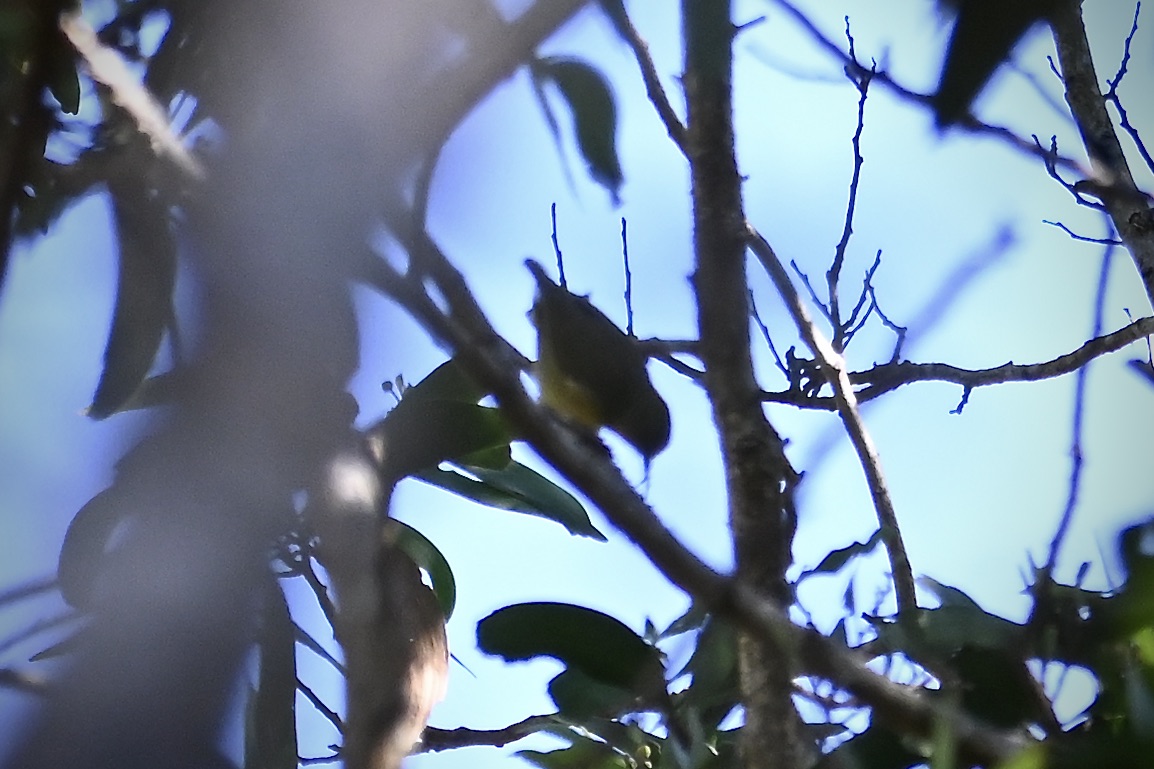
Photo of an akiapola’au (though it’s not a good one) by Eric Anderson.

The Argument

“Then they came to Capernaum, and when he was in the house he asked them, ‘What were you arguing about on the way?’ But they were silent, for on the way they had argued with one another who was the greatest.” – Mark 9:33-34

Sitting in your house, you catch my eye.
I see the smile play upon the corners of your lips.
“That argument you had along the way. Now tell me:
What were all those snarling words about?”

Now, I don’t want to tell. You see that, right?
Your eyes move on from mine to James, and John,
to Andrew, Philip, Matthew, Simon, James,
Bartholomew and Thaddeus, Thomas, Judas, too.

“So tell me!” you repeat and smile, still.
You know, I know, because my frozen face
declares it. So do all the faces of the twelve.
You shake your head at our embarrassed silence.

“Would you be great?” you ask me, and I need
not answer. Yes, I would! I’d be the warrior
at the side of Christ, to fight and even die
if need be. I would live in glory.

“If you’d be great,” you say, and lift
the ragged cuff of my left sleeve,
“you won’t be first, but last. You’ll be
the servant of the least of these.”

All right, you’ve said such things before,
and we had nodded, for your words were wise.
I somehow never thought that they’d apply to me.
I somehow never thought I’d die in poverty.

I may have held my tongue since your rebuke
of “Get behind me, Satan!” but I do not yet
accept your forecast of betrayal and a cross.
I’d overcome those evils, not embrace them.

I see again, however, you and I
have taken sides in opposition here.
My greatness is not yours. Your greatness is
not mine. I can’t think what to do.

Whatever happens, I will not abandon you.
I’ll wrestle with these things I do not want
to understand, and maybe one of us
will change their mind. In honesty?

I hope it’s you.

A poem/prayer based on Mark 9:30-37, the Revised Common Lectionary Second Reading for Year B, Proper 20 (25).

The image is The Tears of Saint Peter by El Greco (ca. 1590) – National Museum of Art, Architecture and Design (Norway), Public Domain, https://commons.wikimedia.org/w/index.php?curid=98036830.

Weakness Obstructed

“…but [God] said to me, ‘My grace is sufficient for you, for power is made perfect in weakness.'” – 2 Corinthians 12:9

In weakness God makes power.
In the stammering speech.
In the thinning skin.
In the cane-assisted stride.

In weakness God makes power.
In the eyes that do not see.
In the ears that do not hear.
In the legs that do not bear.

In weakness God makes power.
In the mind that cannot focus.
In the hand that cannot grasp.
In the appetite that cannot resist.

In weakness God makes power.
But those who are made
in the image of God
make obstacles; and why?

In weakness God makes power.
In the root that makes its soil.
In the child that makes its generation.
In the death that promises eternal life.

In weakness God makes power.

A poem/prayer based on 2 Corinthians 12:2-10, the Revised Common Lectionary Second Reading for Year B, Proper 9 (14).

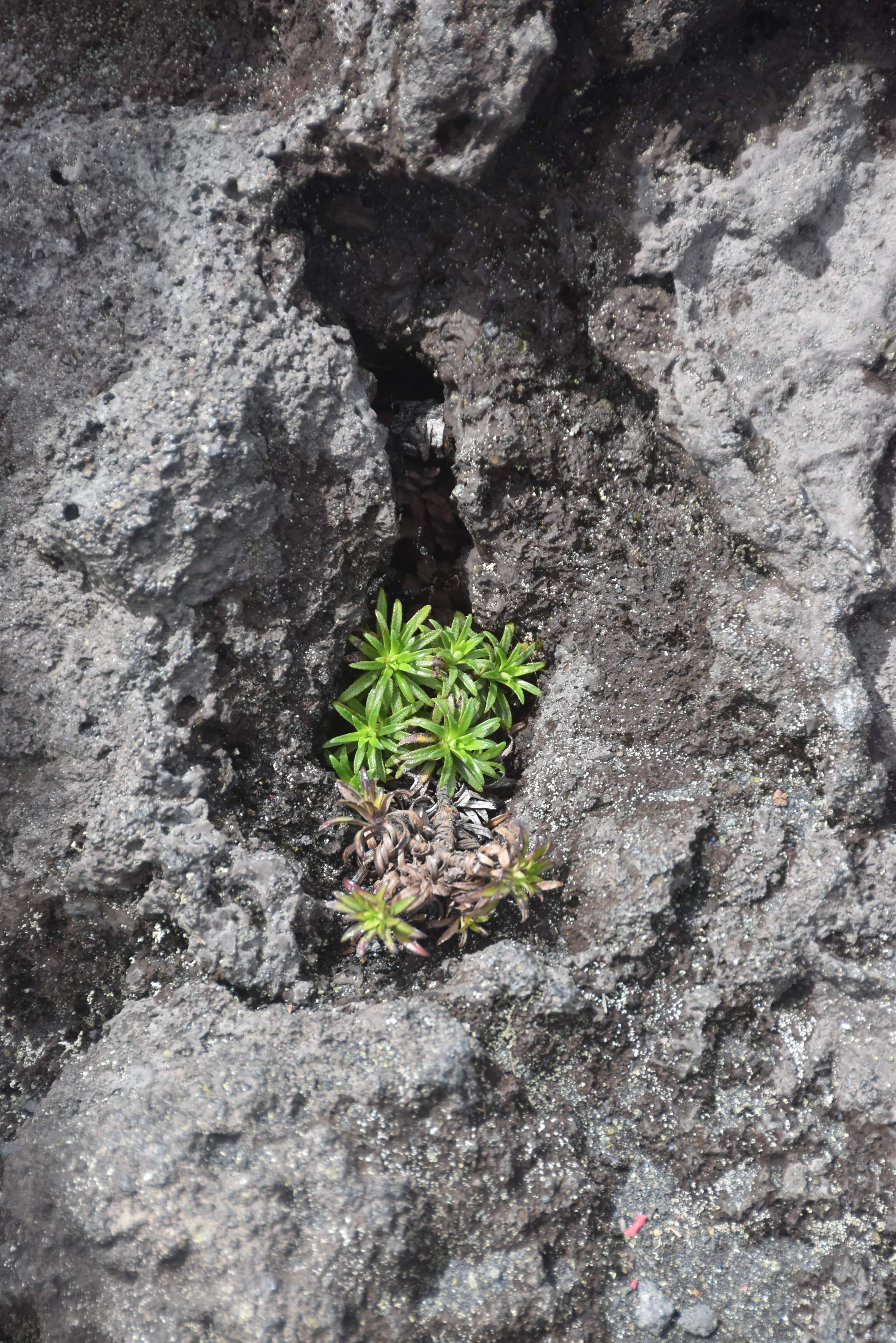
Photo by Eric Anderson

Hindering God

“[Peter said,] ‘If then God gave them the same gift that he gave us when we believed in the Lord Jesus Christ, who was I that I could hinder God?'” – Acts of the Apostles 11:17

Look at them, God. Look at them, Jesus.
Listen to their voices praising your names.
It does my heart good – well, mostly it does.
It’s also made my heart stop, you know?

For a time it all seemed so clear –
in retrospect, why should I have thought that? –
with the Holy Spirit giving me words
and gathering the people in.

We grew so fast! Not everyone
was ready for our size. Well, nobody
was ready for our size. Some thought
they’d hide their selfishness within the crowd.

Our sharing started to collapse. We tried
enlisting serving people then to serve.
Who knew that they, like we, would call
attention to themselves so fatally?

It seemed like such a good idea
to take this trip, to visit Lydda,
get the summons to relieve the grief
in Joppa over Tabitha.

But now… a nightmare in the house
of Simon. Scads of creatures I have pledged
I will not eat, and a voice declaring
these things clean three times, three times, three times.

I get it now. Whatever might be said
about a wider diet, it’s a wider church
that’s on the menu here in Caesarea,
with Latin tongues extolling God.

But… what a shambles this will be.
We’d barely started with our own,
and they have hardly come together yet.
We haven’t learned to truly love each other.

However deep Cornelius’ faith – I’m sure it’s deep –
how will he find acceptance in Jerusalem?
I find my heart is in my mouth right now
to share his table, eat the Gentile meal.

That’s bad enough, as I think most will come around.
This fellow Saul, the one who sees things differently,
I have a feeling he will be their advocate
as fiercely as he once denounced both them and us.

But…

These Greeks and Romans will reshape this church,
and sometimes that will be just fine, a shedding of
the weight imposed by ancient custom we
no longer need and should not bear.

If only he were just a simple tradesman, this Cornelius,
or worker of the soil, or fisher of the sea.
Instead he is an agent of the Empire,
oppressor’s instrument against us.

Yes, that will change this church, this Way.
The day will come, I’m sure, when some will see
us as oppressors, not oppressed, and ask
if this is what our Savior taught, and how we love?

What will we tell them in that day?
In welcoming the ones the Holy Spirit called,
we welcomed also all the power we had feared,
and holding it, rejoiced, as the Spirit drained away.

A poem/prayer based on Acts 11:1-18, the Revised Common Lectionary First Reading for Year C, Fifth Sunday of Easter.

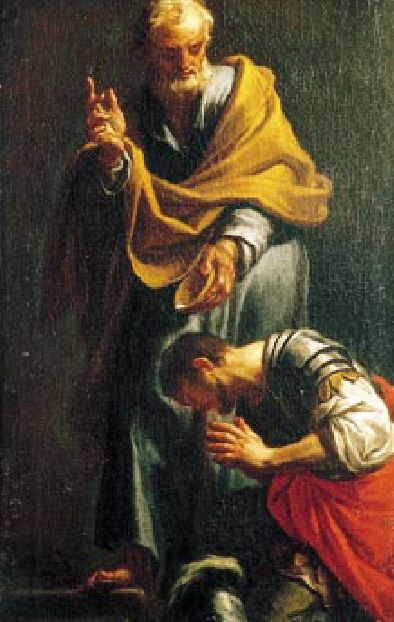
The image is Peter Baptizing the Centurion Cornelius (1709) by Francesco Trevisani – http://www.istrianet.org/istria/illustri/trevisani/works.htm, Public Domain, https://commons.wikimedia.org/w/index.php?curid=1804538.

Unholy Dominion

When I look at your heavens, the work of your fingers,
the moon and the stars that you have established;
what are human beings that you are mindful of them,
mortals that you care for them?

I look to Your face, O Righteous and Holy One.
It should be beaming bright as noonday sun,
and in its radiance my eyes should be dazzled.
Then why instead do Your hands obscure Your face?
Why does Your forehead tremble? Why do
Your shoulders shake? Why does a river run
from both Your eyes down to Your feet?

You have given them dominion over the works of your hands;
you have put all things under their feet…

Why do the heavens wail? Why does the lightning strike?
Why do Your eyes flash amidst Your tears,
rising suddenly above Your trembling hands?
Why do Your brows draw together
in holy wrath arising from Your sorrow?
You have made us, after all, a little less than You.
We stand in crowns of glory and of honor.

You stand. I fall. My face is to the ground.
Your glory is too wonderful for me, too great
Your anger, and too great Your grief.
Your foot descends to hover just above
my neck. “Is this,” You ask, “dominion you
would choose? It’s not? Then why,” You whisper,
“do you force it on My children?”

A poem/prayer based on Psalm 8, the Revised Common Lectionary Psalm Reading for Year A, Trinity Sunday.

Detail of a large gypsum relief showing the Assyrian king Tiglath-pileser III placing his foot on the neck of an enemy. From the North-West Palace, reused in South-West Palace at Nimrud, Iraq. ca. 728 BCE. The relief is now in the British Museum. Photo by Dr. Osama Shukir Muhammed Amin FRCP(Glasg) – Own work, CC BY-SA 4.0, https://commons.wikimedia.org/w/index.php?curid=90697184.

Go Tell that Fox

Salomé with the Head of John the Baptist by Caravaggio
Oil on canvas, 114 x 137 cm, 1606 – 1607

“Go tell that fox for me…”

Are you kidding, Jesus? I’m not telling Herod
anything. I know the risks. And if you don’t,
might you recall the head of John
the Baptist on a platter?

“…’Listen, I am casting out demons
and performing cures today
and tomorrow…”

That’s great for you, Messiah, but,
I’m no messiah (if you hadn’t noticed).
I stand by beds of illness impotent,
and listen to my breaking heart.

“‘…and on the third day finish my work.”

Ha! That’s a good one, Jesus. Yes, I know
the joke, that preachers only work one day
a week. Not even I believe I’ll finish –
or you’ll finish – in just three.

“‘…Yet today, tomorrow, and the next day
I must be on my way.'”

Oh, must you leave so soon? No longer to
encourage me to take on earthly powers,
summon them to righteousness,
decry their foul abuses?

Yes, there you go, into your self-proclaimed
three days of labor, leaving me…
leaving me… commissioned
to confront the Herod of today.

A poem/prayer based on Luke 13:31-35, the Revised Common Lectionary Gospel reading for Year C, Second Sunday in Lent.

The image is “Salome with the Head of John the Baptist” by Caravaggio, Public Domain, https://commons.wikimedia.org/w/index.php?curid=509510.