Story: High Tide

December 1, 2024

1 Thessalonians 3:9-13
Luke 21:25-36

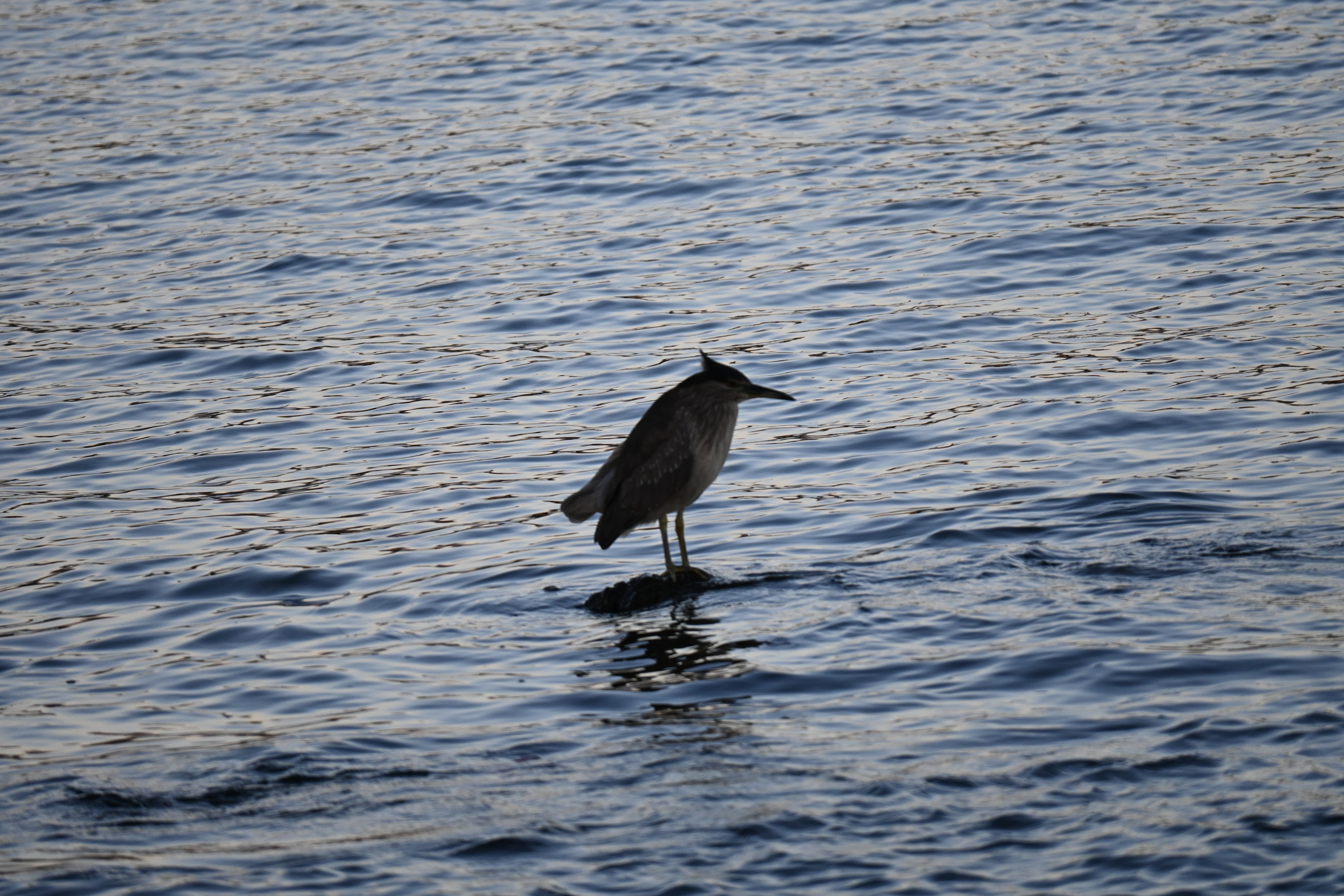
The auku’u, or black crowned night heron, likes to eat. If you look out along the shallows of Hilo Bay, or in the rivers of the valleys, you’ll find auku’u perched on rocks or grass or just standing in the water looking for fish. Although they’re called “night herons” in English, in Hawai’i auku’u fish during the day, and do pretty well at it.

One auku’u, however, developed a somewhat unusual habit. He didn’t like being wet, which is a sad thing for a bird living in Hilo, and he discovered that if he waited for high tide he could spend less time with his feet in the water, since the water, as it were, brought the fish to him.

The thing about a high tide is that it happens just about twice a day, roughly twelve and a half hours apart. That means that sometimes high tide will be in the middle of the day, but a couple weeks later it’s well into the evening. At some times there would be two high tides during daylight, but at other times one high tide would be in the middle of the night. That meant he’d go over a day between meals. And that would make him hungry.

He was moping on the shoreline one morning, waiting for the next high tide (coming in at noon) when a friend landed near him. Noticing that he looked unhappy, she asked him what was wrong.

“I’m hungry,” he said.

She looked at him. Auku’u have been known to say, “I’m hungry,” but they usually say it while they’re on their way to start fishing. An auku’u sitting near the water and saying, “I’m hungry,” was a new and different experience. She didn’t know what to say.

“I haven’t eaten since about this time yesterday,” he said.

“For heaven’s sake, why? Aren’t there any fish?”

Then he explained about fishing at high tide.

“Let me get this straight,” she said. “You’re going hungry for hours because you don’t want to get your feet wet?”

“Do you like wet feet?” he demanded.

“I like being hungry a lot less,” she replied.

He was silent because, he realized, he like being hungry less than he liked having wet feet.

“Sometimes things are perfect,” she said, “like when you get to fish at high tide. But most of the time, we have to muddle along with things as they are. At those times you do the best you can, and look forward to it getting better later on.

“Now come with me,” she told him. “Let’s go fishing. I’m hungry.”

The two of them flew over to the shore.

by Eric Anderson

Watch the Recorded Story

I write these stories ahead of time, but I tell them from memory (plus improvisation), so what you’ve just read does not match what I said.

Photo of an auku’u in Hilo Bay by Eric Anderson.

The Magic of Snow

Author’s Note: This reflection was originally published as a Facebook Note (the platform’s never-fully-and-no-longer-much-at-all-supported blogging utility) on January 9, 2011. I’m reposting some of those Notes here because they’re difficult to find in Facebook now, and in some cases impossible.

January 9, 2011

As I was shoveling my driveway this morning, my next door neighbor had a question for me. ‘You’re a man of the cloth,’ he said, ‘Do you believe God makes it snow?’

‘Well, not at any particular time,’ I said. ‘I mean, I think God set the laws of nature that make snow happen, but that it snowed today rather than…’ and I waved my hand vaguely.

He nodded. ‘I don’t think God makes it snow,’ he replied. ‘If he did, you wouldn’t be out there shoveling it now.’

I laughed, but I also thought to myself, ah, but if somebody I really disliked were shoveling this snow right now, I might be inclined to think God had brought it for this moment. That would feel to me like divine justice. Or at least as if God were responding to my concerns in the world.

As I shoveled and thought, I realized that what I was thinking about (and not shoveling) wasn’t divine justice, but magic. Not the public performances of illusion we enjoy, but the exercise of power through invocation of other forces.

The appeal of magic is that it is reliable (stay with me here). That is, if I do the spell correctly, I get a predictable result. In the history of human religious thinking, gods were frequently invoked in the performance of magic. I recall that many years ago, archaeologists found a storehouse of papyrus fragments in Egypt, many of which had clearly been sold in the marketplace as spells of protection, blessings, or even curses against someone else. As I remember, the God of Israel was among the deities invoked, and also, I think, Jesus…

But the God I know is not one who is ‘magical.’ The God I know isn’t so controllable, so predictable, that I can call down snow on the unjust. Those ancient spells are attempts to control and to direct divine powers. The God I know merely smiles at the very idea.

The God I know invites human beings into relationship, into friendship, into mentorship, into worship. The God I know sends rain (and snow) onto the just and the unjust, and invites both to accept the free gift of divine grace. The God I know listens, considers, and acts in the world: but I would never pretend to predict just what this God will do. Merely be thankful when I recognize those acts for the blessings they are.

And to appreciate, as well, the wonders of random, not-necessarily-specifically-directed, and ‘magical’ in a different sense, snow.

The photo was taken by Eric Anderson on January 12, 2011, in Portland, Connecticut, after another snowstorm.