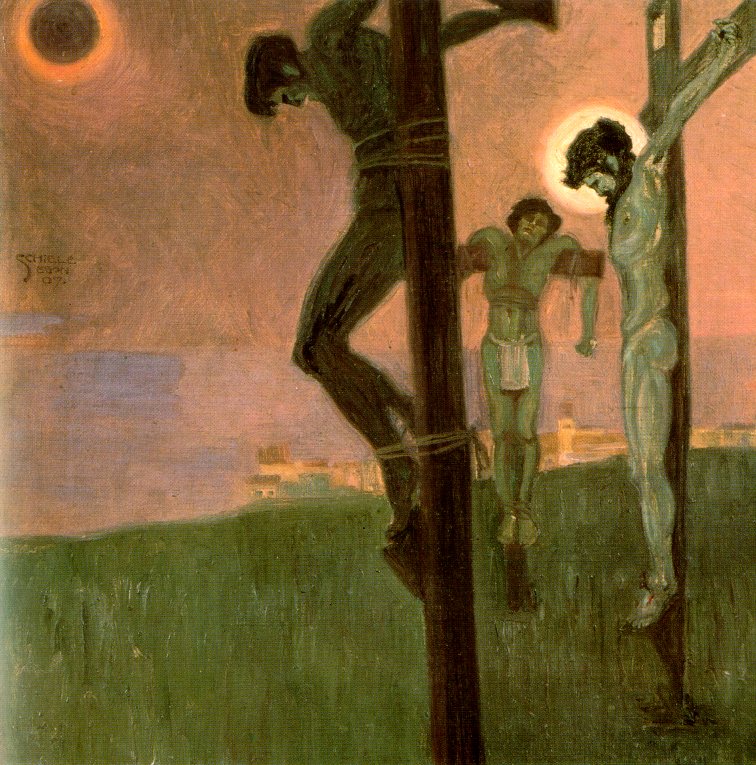
And the people stood by watching, but the leaders scoffed at him, saying, “He saved others; let him save himself if he is the Messiah of God, his chosen one!” – Luke 23:35
I sometimes ache for your pain, O Savior, tortured there upon the cross, and I, without the mocking, echo those cruel words of long ago, and urge you, “Save yourself!”
But when I do, you hold me close with misted eyes. My lips go silent, as I strain to hear your soft reply: “Instead, I will save you.”
A poem/prayer based on Luke 23:33-43, the Revised Common Lectionary Gospel Reading for Year C, Reign of Christ, Proper 29 (34).
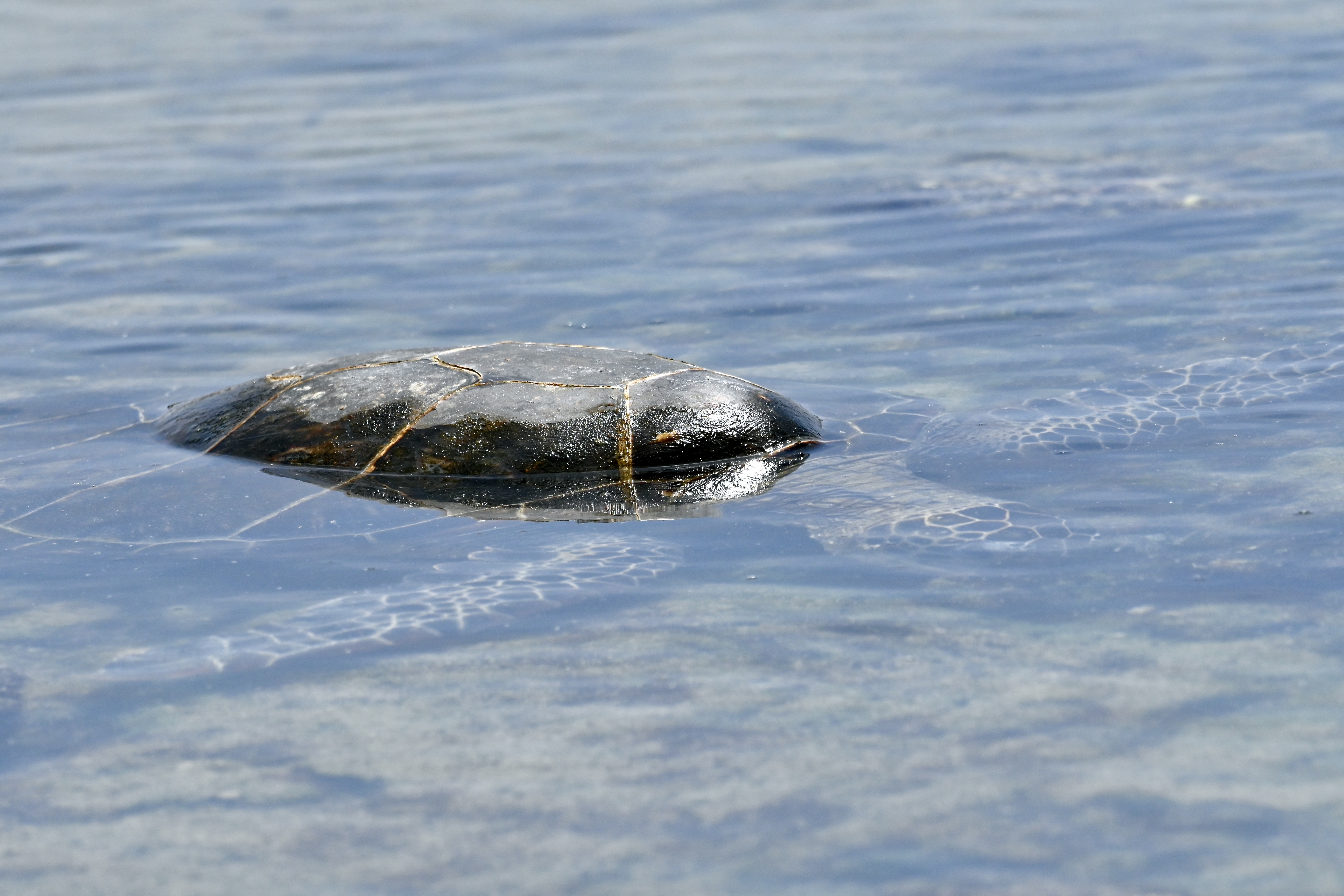
Well, I never have either. It’s not a natural place for a honu to be. A honu really prefers to be in water, like the honu in this picture.
Unfortunately, one day a honu found herself in a tree.
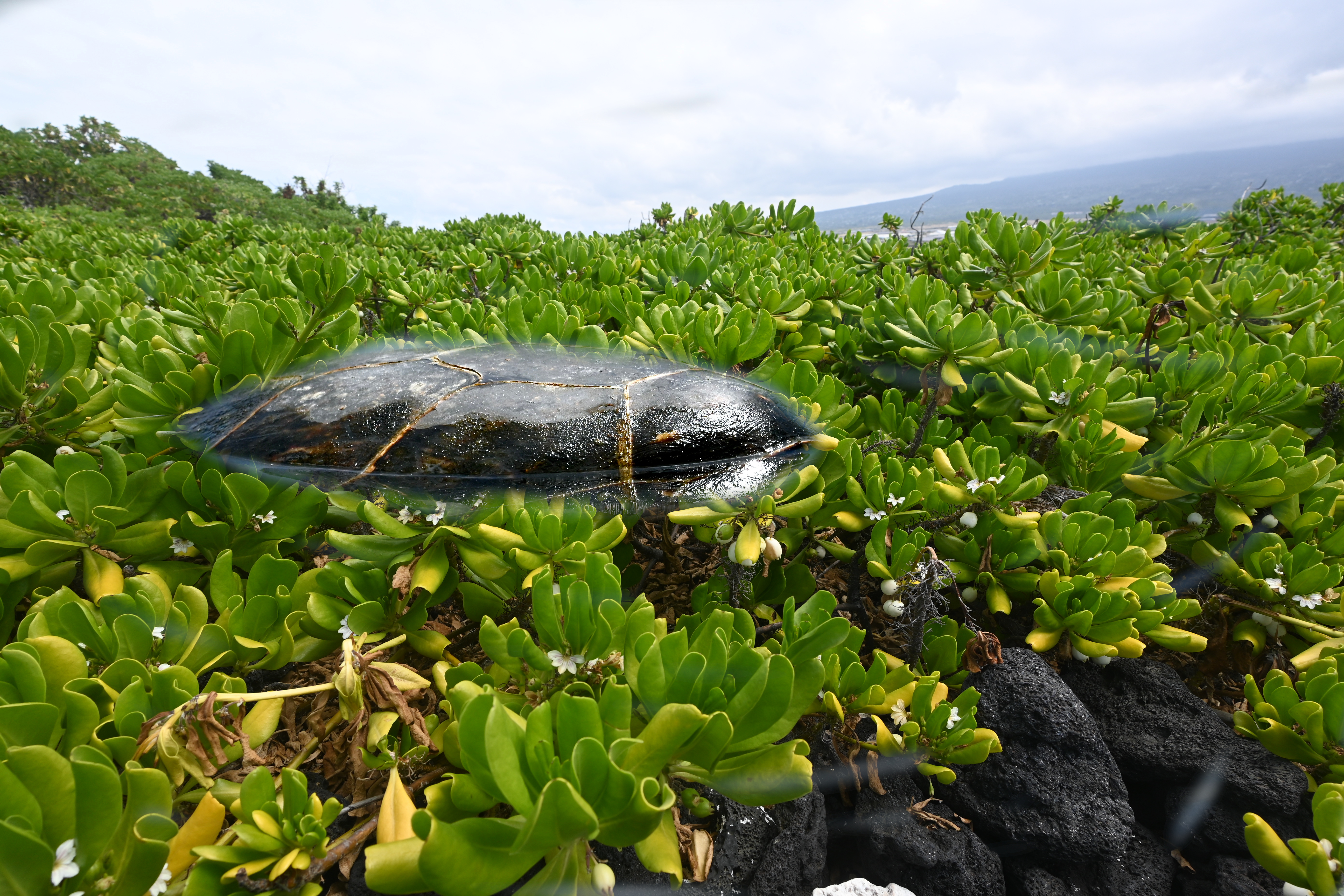
As I mentioned, I’ve never actually seen, let alone photographed, a honu up a tree. I’m afraid that photo is the result of a certain amount of non-artificial intelligence that produced that unconvincing image.
It was a storm, of course. Ordinarily honu in a storm find a safe place to ride it out, which is frequently offshore. I don’t know precisely what happened with this honu, and I’m not sure she ever did, either. One minute she was being tossed about in the water, and the next minute she was flailing around in a tree, not getting anywhere, and getting sprayed by the waves and the rain.
All in all, not where she wanted to be.
When things got brighter, the birds came out and found the honu in the tree, and they knew she wasn’t supposed to be there.
“Can you swim out?” asked an ala’e ke’oke’o, who was a swimming bird, even though the honu had better flippers on her limbs than the ala’e ke’oke’o had on his.
“I’ve tried all night,” said the honu. “My flippers can’t move these leaves the way they move water.”
“Besides,” she added, “I’m a pretty high off the ground here, and those rocks look hard. I think I might hurt myself if I fell from here.”
The birds looked things over and thought about it. Winged creatures don’t think about falling very much.
“I know,” said some of them. “Let’s pull some of the leaves and twigs out of the way so she’ll slip down slowly.”
“Right!” said some others. “And we’ll go get some other leaves and grass and mud and sand and we’ll cushion the rocks below her.”
That’s what they did. Some pulled up grass for padding, some moved branches of naupaka aside (OK. She was in a naupaka bush, not a tree, but it looked like a tree to her). The pile of padding grew and her distance from it slowly shrank. They worked slowly but steadily, cautiously but creatively, until with a creaking sound the last naupaka branches bent and lowered her to the top of the padded mound.
The birds cheered as the honu hauled herself off with her flippers and made her way down the beach to the water.
At water’s edge she turned and said, “Mahalo nui loa, friends. I hope you get help like this if you’re ever up a tree!”
One of the birds, a kolea, shrugged and said, “Most of us will be quite fine up a tree. But if you can help me out like this if I’m ever stuck in the water, I’ll be just as grateful as you are now.”
Then she waved and swam off into the deep. I don’t know if she ever did have to help a bird stuck in the water, but I know she would have, and she’s ready to if there’s ever a need.
by Eric Anderson
Watch the Recorded Story
I write these stories ahead of time, but I tell them from memory and improvisation. What you have just read is not identical to the way I told it.
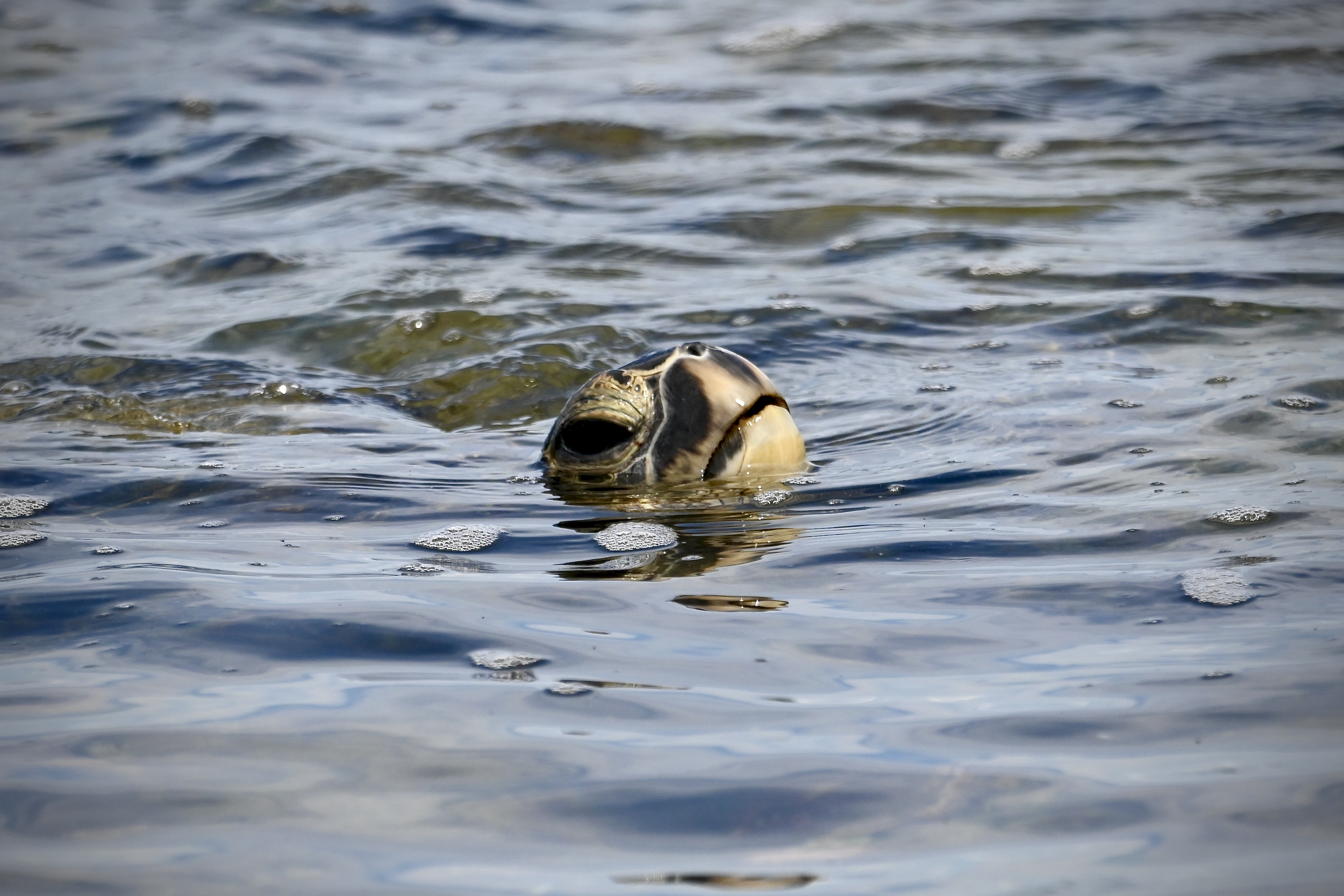
Photos of a honu and of naupaka by Eric Anderson, as is the not-very-convincing blending of the two.
“And Jesus said to her, ‘Woman, what concern is that to me and to you? My hour has not yet come.'” – John 2:4
Now if I take a bird’s eye view of the world, or if I try to see the Universe as from the eye of its Creator, I have to ask, What concern are we to You?
“What are humans that you are mindful of them, mortals that you care for them?”
Other folk of other faiths discerned their deities to be… not unconcerned, but distant, focused on their own affairs, but pleased by scent of sacrifice.
So when the hosts ran out of wine what person would not ask, “Are we concerned? We brought our contributions to the feast. What more can we do now?”
How many deities would ask, “What prayer is this? Do I make up your deficits, the failures in your plans? Take care of it yourselves, as you can do.”
As deity, as human being, what else could Jesus say but this: “This is not our concern. The things I have to do come later and much larger.”
A mother’s love is such a funny thing. One moment she protects her child from senseless obligation, then the next she thrusts them forward: “Go on, give.”
He said that they were not concerned, but his mother thrust him forth, and then he was concerned. They filled the jars. They served the wondrous wine.
Was he concerned? He was, for host’s embarrassment, but more for human souls who languish in uncertainty and fright, to lead them to a life beyond imagining.
“What are humans that you are mindful of them?” Still we cannot fully clarify the poet’s ancient cry, except to say, that Jesus is concerned, God is concerned, the Holy Spirit is concerned:
For us.
A poem/prayer based on John 2:1-11, the Revised Common Lectionary Gospel Reading for Year C, Second Sunday of the Epiphany.
“And this is the judgment, that the light has come into the world, and people loved darkness rather than light because their deeds were evil.” – John 3:19
Too close to power, Nicodemus, to be unaware of what a savage place the palace, or the council chamber, is.
The finest houses are adorned with “those retired” by the coups and calumnies of those who rule.
Sometimes they’ve stepped across the corpses slaughtered on the battlefields of Munda or the streets of Rome.
By sprays of blood or of dishonor, Caesar’s heirs and Herod’s threaten you, poor Nicodemus, and you know it well.
The light has come into the world by law and prophets’ words, and greed has shrouded it in murder, theft, and royal robes.
So nod, then, Nicodemus, as you ponder on the snake which, lifted up, no longer threatened life but gave it back again.
How strange to find the light at night as Moses’ people found their healing in the very form they feared. So, Nicodemus, nod.
The day approaches when you’ll gaze upon the lifeless form of light, and carry it into the dark, and light will shine once more.
A poem/prayer based on John 3:14-21, the Revised Common Lectionary Second Reading for Year B, Fourth Sunday in Lent.
“Put on the whole armor of God, so that you may be able to stand against the wiles of the devil.” – Ephesians 6:11
“Saul clothed David with his armor; he put a bronze helmet on his head and clothed him with a coat of mail. David strapped Saul’s sword over the armor, and he tried in vain to walk, for he was not used to them. Then David said to Saul, ‘I cannot walk with these; for I am not used to them.’ So David removed them.” – 1 Samuel 17:38-39
Truth? You want me to wear truth? That’s a heavy burden to carry on the belt. My hips are groaning just to think of carrying the truth. I cannot walk with these.
Righteousness? You want me to wear righteousness, to face the world with generosity presented as my face? I can’t imagine feeling any more vulnerable than that. I cannot walk with these.
Faith? You want me to bear faith? I tell that, as bucklers go, faith wears a little thin. The barbed and flaming arrows pierce it through even as I strain to lift it. No; I cannot walk with these.
Salvation? You want me to wear salvation? This one sounds good, I grant you, but it bows the head. I’d rather revel in my sovereignty than yours, which makes me bow. I cannot walk with these.
The hardest of all to wear are the shoes that make me ready to proclaim the gospel of peace. Where might they take me? Into what risks? And what protection do they offer? None.
No and no and no. I cannot walk with these.
And yet… I try.
A poem/prayer based on Ephesians 6:10-20, the Revised Common Lectionary Second Reading for Year B, Proper 16 (21).



 ordainedgeek