Story: Teacher’s Example

November 16, 2025

Isaiah 65:17-25
2 Thessalonians 3:6-13

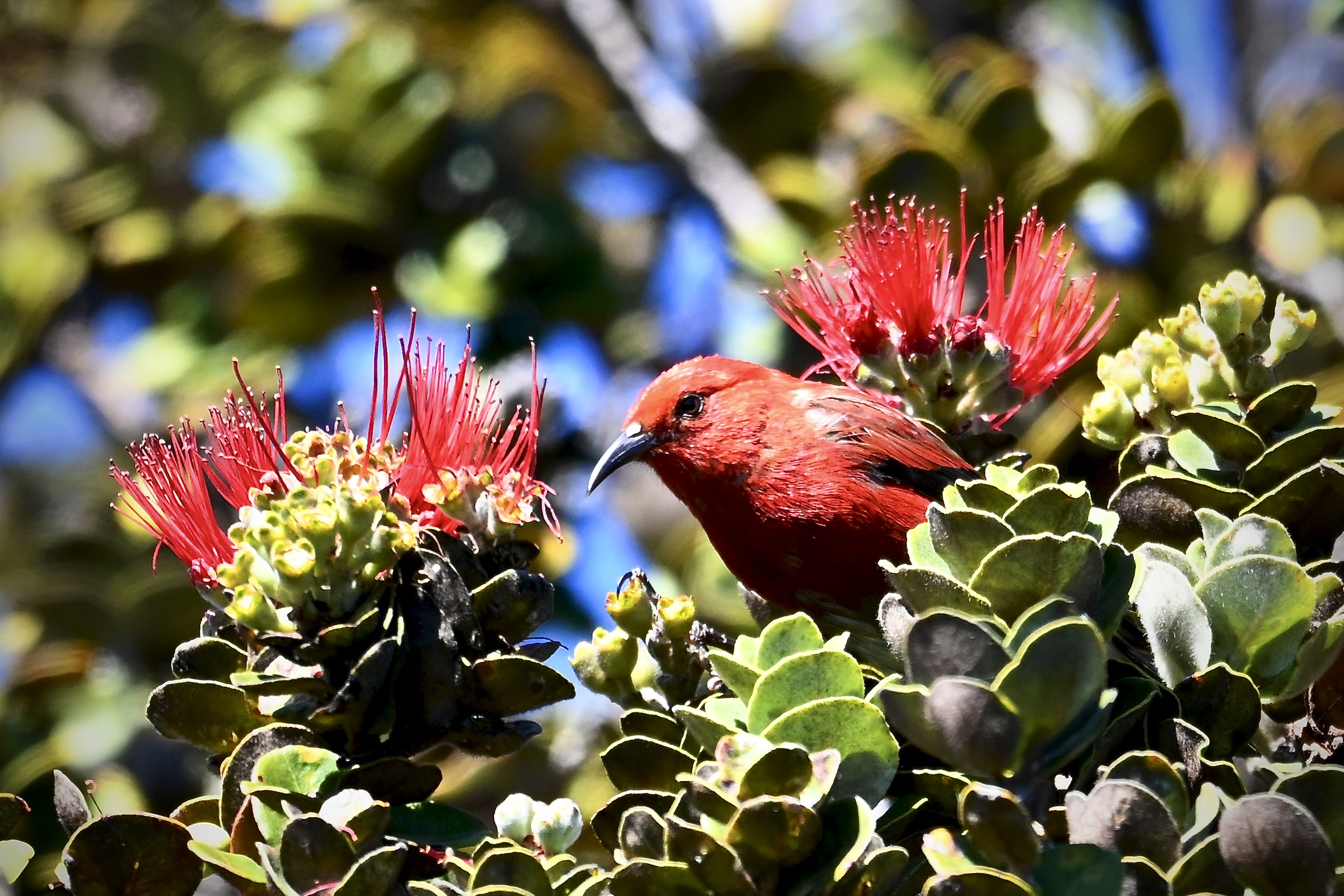
It’s been a while since I’ve talked about nene school, which hasn’t changed what’s gone on there a bit. Goslings have gone to school, they’ve learned about advanced eating and flying, and some of them have wondered about becoming nene teachers themselves.

There was a time when there were just two nene teachers. Both of them were solid at the job. They could coax a timid flyer into dramatic aerobatics. They could coach a fussy eater into finding a much wider diet – sort of a nene version of heavy pupus. They held their students’ attention. They taught their lessons. Best of all, the students learned.

That’s the mark of a good teacher, when the students learn.

One of the students noticed something else, too.

Both teachers taught that it was important for nene to care for the flock. If you see a storm coming, they said, warn your neighbors. If it looks like a mongoose might be close to a nest, drive them away. If you found a good clump of ‘ohelo berries, call your friends over. Take care of the flock. The other members of the flock will take care of you.

That was an important lesson, and they mentioned it every day.

One of the teachers, though, seemed a little confused about its application. When her students were learning about finding food, she was very helpful. “Look for these colors as you’re flying about,” she’d say. And when they found some, she gave them lots of praise. “Well done, my friends!” she’d say to the beaming young nene.

And then she’d eat the food they’d found.

The other teacher did things differently. He was helpful about finding food, too. “These are the colors to watch for,” he’d say. “Make sure to look side to side.” And like his colleague, he had good things to say to his students when they found that tasty clump of ‘ohelo. “That’s exactly right,” he’d tell them. “Well spotted.”

But then he said, pretty much every time, “Call the other students in. Is anybody hungry?”

As I said, one of the students notice this, and one day he asked his parents about it. “My teachers help me a lot,” he told them, “but when we find food, one of them eats it. I suppose that’s OK; she is the teacher, after all. But the other one invites us to share. Which one am I supposed to learn?”

His parents looked at one another, and then they looked back at him. “Which one makes you feel better?” they asked. “Which one makes you feel like you’re an important part of the flock? Which one seems to be strengthening the flock as a whole?”

“Well, that’s easy,” said their son. “It’s the one who invites us to eat.”

“So which example will you follow?”

He thought about it.

“I spotted some ‘ohelo a few minutes ago,” he told them. “Are either of you hungry?”

by Eric Anderson

Watch the Recorded Story

I write these stories in full ahead of time, but I tell them on Sunday morning from memory and inspiration. The recording does not match the prepared text.

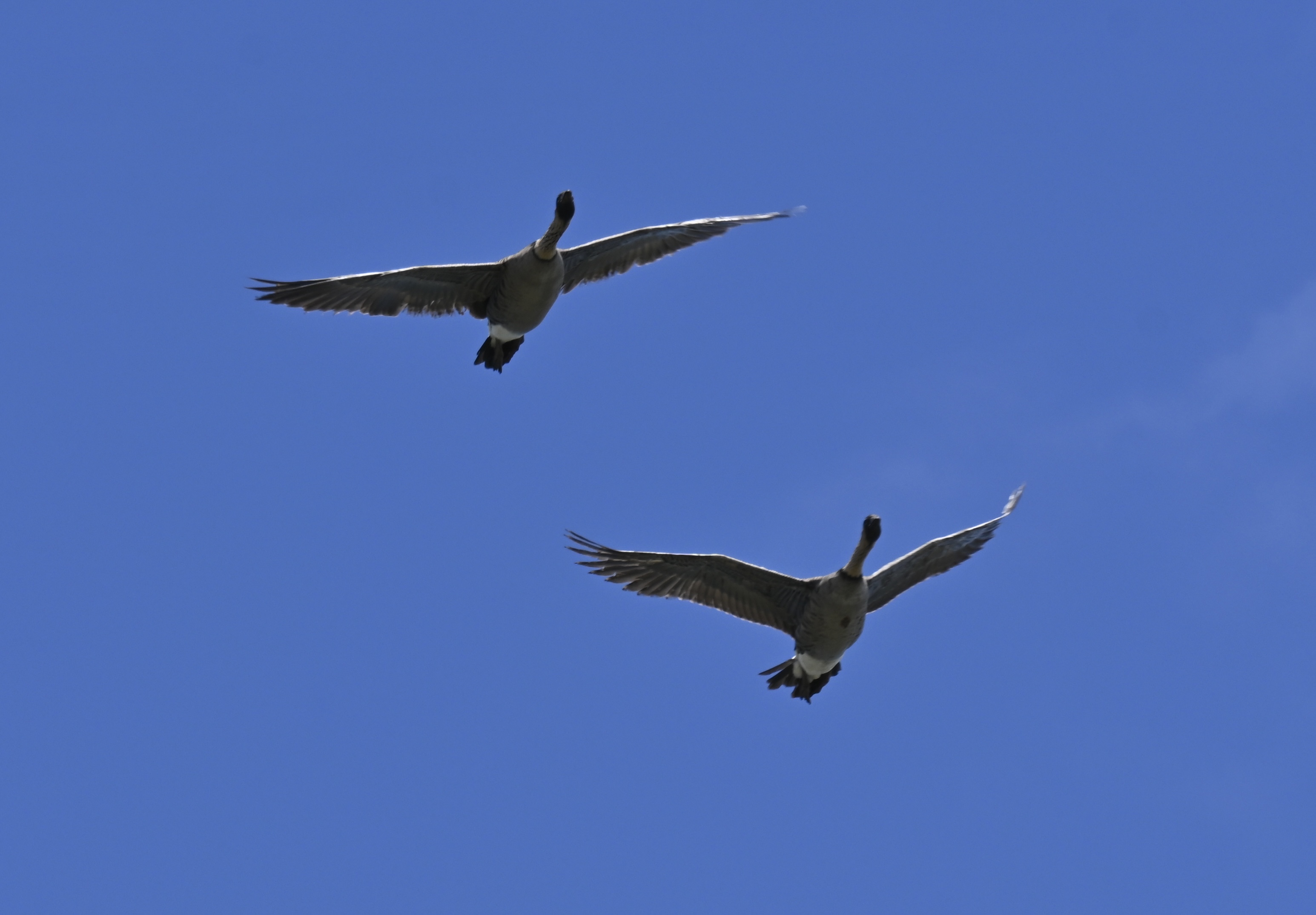
Photo of two nene in flight by Eric Anderson.

We Have the Right

“This was not because we do not have that right but in order to give you an example to imitate.” – 2 Thessalonians 3:9

We have the right to claim whatever we want.
We say.
We have the right to say offensive things
and sneer at those who hear.
We have the right to say to one, “Go here,”
and to another, “Go there,”
and they will go.
We enforce.
We have the right.

Are we any more than irresponsible,
mere busybodies,
tearing down the building of
a blessed community?

Is it not true that we who say,
“The one who does not work,
we’ll let that one not eat,”
do little for our neighbors?

Is it not true that we who say,
“The one who does not work,
we’ll let that one not eat,”
will underpay their workers?

Is it not true that Paul’s example,
sparing those he served from burdens,
that the greatest burden, ignorance of love,
might lift from them, is our greatest call to work?

Is it not true that we are Paul’s
“mere busybodies, not doing any work,”
not building up community.
How can we claim our right to eat?

A poem/prayer based on 2 Thessalonians 3:6-13, the Revised Common Lectionary Second Reading for Year C, Proper 28 (33).

The image is The Multiplication of the Bread and the Fish by Jacopo Tintoretto – http://catalogo.fondazionezeri.unibo.it/ricerca.v2.jsp?view=list&batch=100&sortby=LOCALIZZAZIONE&page=1&decorator=layout_resp&apply=true&percorso_ricerca=OA&locale=it, Public Domain, https://commons.wikimedia.org/w/index.php?curid=79669072.

Story: A Tree Falls

July 20, 2025

Amos 8:1-12
Luke 10:38-42

The oma’o’s heart was in the right place, mostly. The physical heart was, of course, in the right place in his chest and beating regularly. His emotional and spiritual heart was maybe a little bit off to the side, because while he was thinking a little bit about another living thing, it has to be said that he mostly was thinking about himself.

It was a thinnish koa tree that he chose to protect. Its leaves were pretty thick even if its trunk wasn’t the widest. He liked the flavor of its flowers. There were some other birds that did, too, and he began to chase them away whenever he saw them. “I’m preventing them from over-feeding,” he said to himself. “That way the flowers can bloom and the fruit will grow.”

There were also bugs and caterpillars on the trunk and branches of the tree. Some of those he ate, because an oma’o will eat just about anything. Most of them he ignored. Oma’o might eat anything, but when there’s fruit around, they’ll eat that.

But he also wouldn’t let other birds approach the tree to eat the bugs, either. He chased away ‘apapane and ‘amakihi, ‘alawi and ‘elepaio. He even chased away the hook-beaked ‘akiapola’au after he caught one digging into the tree bark with its short lower beak.

“Stop digging into this tree!” he shrieked. “You’re hurting it!”

“This caterpillar in the bark is hurting it,” said the ‘akiapola’au. “I’m getting it out.”

“Not while I’m around!” shouted the oma’o, and chased the other bird away.

As the days went on, the koa leaves started to turn funny colors and droop. When the oma’o landed on a branch, it didn’t spring back up the way it had. Twigs dried up and fell away. Leaves littered the ground around the base of the trunk.

“That tree is sick,” said an ‘elepaio to the oma’o. “It’s got too many bugs. Let us help!”

“No,” said the oma’o. “You’ll hurt it.”

“Look at all those caterpillar tracks below the bark,” said an ‘akiapola’au. “Let us dig them out. The tree will get better.”

“I’m not letting you anywhere near this tree,” said the oma’o.

Even he had to admit that things weren’t going well. He no longer ate flowers from the tree, because there weren’t any. He visited other trees for fruit. There were plenty of bugs to eat, but when he ate some, there were always more.

When a tree falls in the forest, it does make a noise. The birds hear it. And they cry about it.

The birds heard the oma’o’s tree fall. And they cried.

“Why are you crying?” the oma’o asked an ‘elepaio. “It was my tree, not yours.”

“I’m crying because that tree could have been a place to nest for decades,” said the ‘elepaio. “It would have sheltered my family in the rain,” said an ‘amakihi. “It would have fed my children and my grandchildren,” said an ‘akiapola’au.

Looking around, the oma’o realized that not only had he hurt the tree he’d called his own, he’d hurt all the birds around. Not only that, he’d hurt future generations.

When a tree falls in the forest, the sound of its fall echoes into the future.

by Eric Anderson

Watch the Recorded Story

I write these stories in advance, but I tell them from memory (plus improvisation), so it does not match the text you just read.

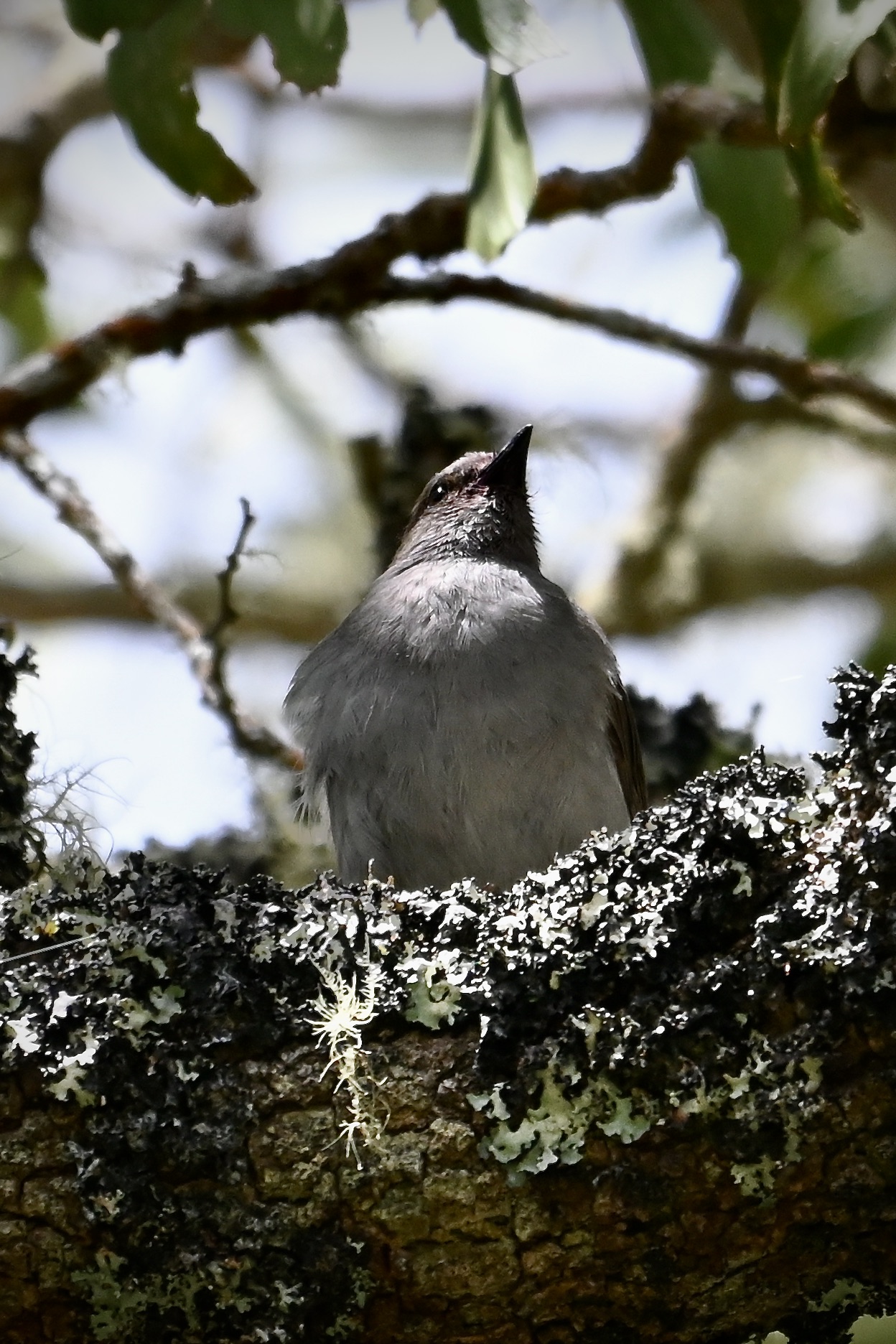
Photo of an oma’o by Eric Anderson.

Story: The ‘Amakihi Hoard

June 1, 2025

Acts 16:16-34
Revelation 22:12-14, 16-17, 20-21

He was young, which may explain why he tried something that an older bird would know didn’t work. He was also pretty anxious about things, which explains more. In the end, though, it was his tutu who saw the biggest reason, which was…

I’m getting ahead of myself. Perhaps I should start the story at the beginning.

The ‘amakihi was young. And, as I mentioned, he could get anxious about things. If it was sunny, he worried about whether rain would come again. If it was raining, he worried about whether it would ever stop. If he was surrounded by other birds, he worried about whether it would ever be quiet with all these birds singing. If he was by himself, he worried that he’d be lonely forever.

Mostly, though, he worried about being hungry.

As a young and growing bird, he’d driven his parents to distraction by his constant calls for food. Some birds, and people for that matter, eat when they’re hungry. He’d call for food when he was full, because he knew he’d be hungry again soon. That can be pretty unhealthy for people and for birds, but frankly his parents couldn’t keep up with his demands, so they fed him more or less the right amount of food.

When he left the nest, he kept it up. If he was hungry, he’d head for the nearest flower, snap up the bugs, and drink the nectar. If he was still hungry, it was time for the next flower and the next bug. And if he wasn’t hungry, he’d still move on to the next flower.

What kept him from getting sick from overeating is that he had to do enough flying between trees that he couldn’t quite eat more than was good for him. Not quite.

One day, though, he was watching some bugs instead of trying to eat them. They were bees in their hive, and they were gathering nectar and storing it away. Suddenly it struck him.

“I can gather flowers and store them away like the bees,” he said. “Then I’ll never have to worry about finding flowers, and I’ll never be hungry.”

Off he flew.

He started snipping blossoms from the trees: Ohi’a, Mamane, anything he could find. He tucked them into an abandoned nest he found, then flew out in search again. If there were other birds around, he’d chase them off first so he could get the flowers. He had gotten rather big with eating, so other birds tended to fly away. The forest filled with squawking, protesting birds as he flew about with flowers in his beak.

He’d made quite a few trips and the forest was in an uproar when he found his grandmother perched next to his store of flowers.

“Aloha, Tutu,” he told her.

“Aloha, grandson,” she said to him. “What are you doing?”

“Storing flowers,” he said, “so I’ll never be hungry.”

“Really?” she said. “Who gave you that idea?”

“The bees,” he said. “They store nectar and pollen and they’re never hungry.”

“Grandson,” said Tutu, “would you look carefully at your flowers?”

For the first time since he started collecting them, he looked. No longer connected to their branches, they’d wilted and faded. Their nectar had dried and disappeared. A few bugs were crawling on them, of course, but even the bugs preferred the liquid nectar of a living flower.

“Why did you do that?” she asked. “Did you really think it would work?”

“I thought that I needed food for myself,” said her grandson, “that the other birds couldn’t take away from me.”

“The forest is for everyone,” said Tutu, “for every one of us. We’re not bees, who have ways of storing things, and they share what they store with the entire hive. We are forest birds. We don’t hoard. We don’t keep things away from others, not from ‘amakihi, not from ‘apapane, not from i’iwi. We share.”

She looked at him closely. “What do we do, grandson?”

“We share, Tutu.”

“Good. Let’s go have lunch.”

They left the sorry hoard behind for the living flowers they shared with all the creatures of the forest.

by Eric Anderson

Watch the Recorded Story

I write these stories in full ahead of time, but I tell them from memory (and inspiration).

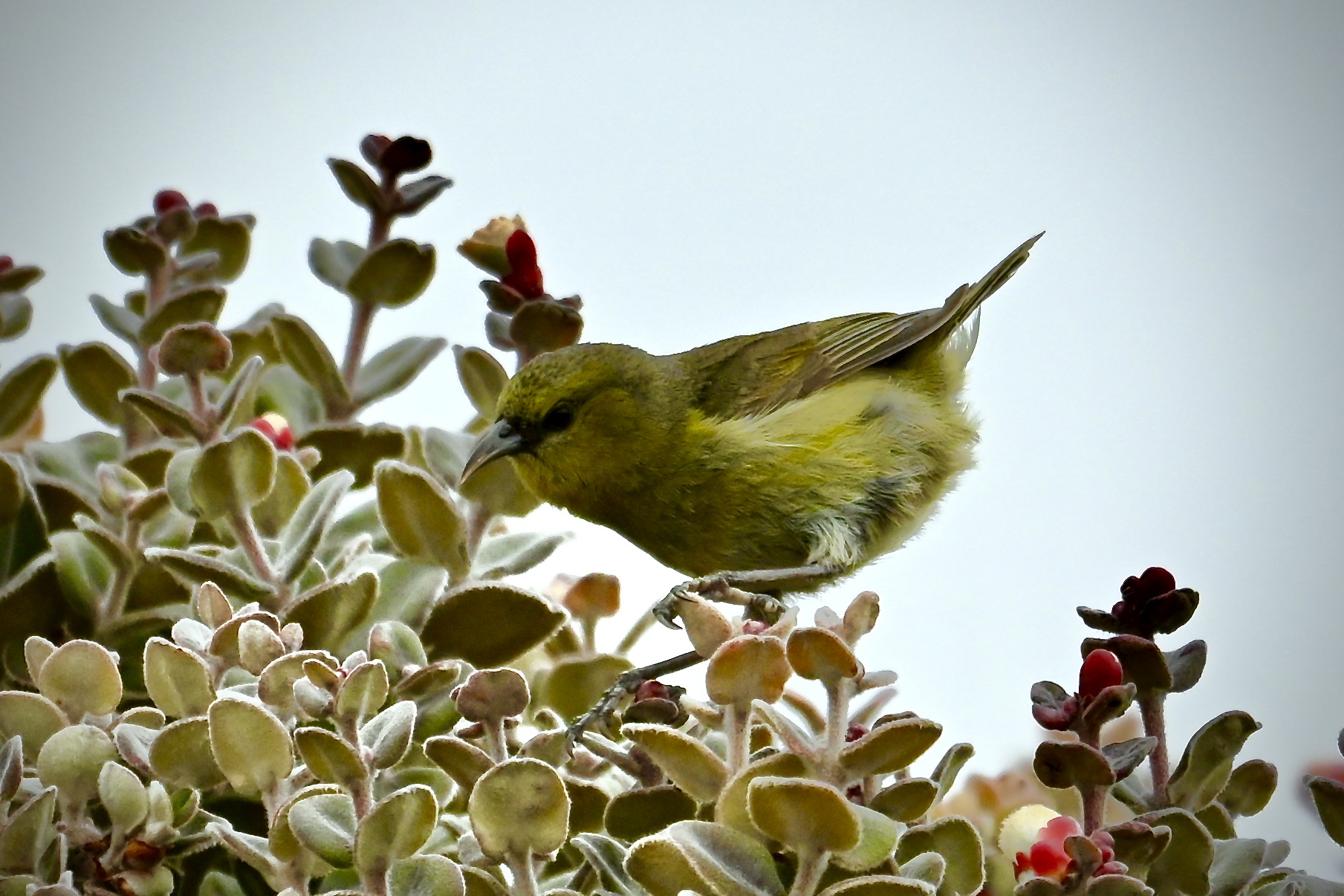
Photo of an ‘amakihi by Eric Anderson.

Help of the Helpless

Father of orphans and protector of widows is God in his holy habitation.
God gives the desolate a home to live in; he leads out the prisoners to prosperity, but the rebellious live in a parched land. – Psalm 68:5-6

I am grateful, O God, to know
the people for whom You labor,
the people for whom You care.

You care for the homeless.
You care for the resource-less.
You care for the refugee.

I am grateful, O God, to know
the people for whom You care.
Do You wonder why people do not?

A poem/prayer based on Psalm 68:1-10, 32-35, the Revised Common Lectionary Psalm Reading for Year A, seventh Sunday of Easter.

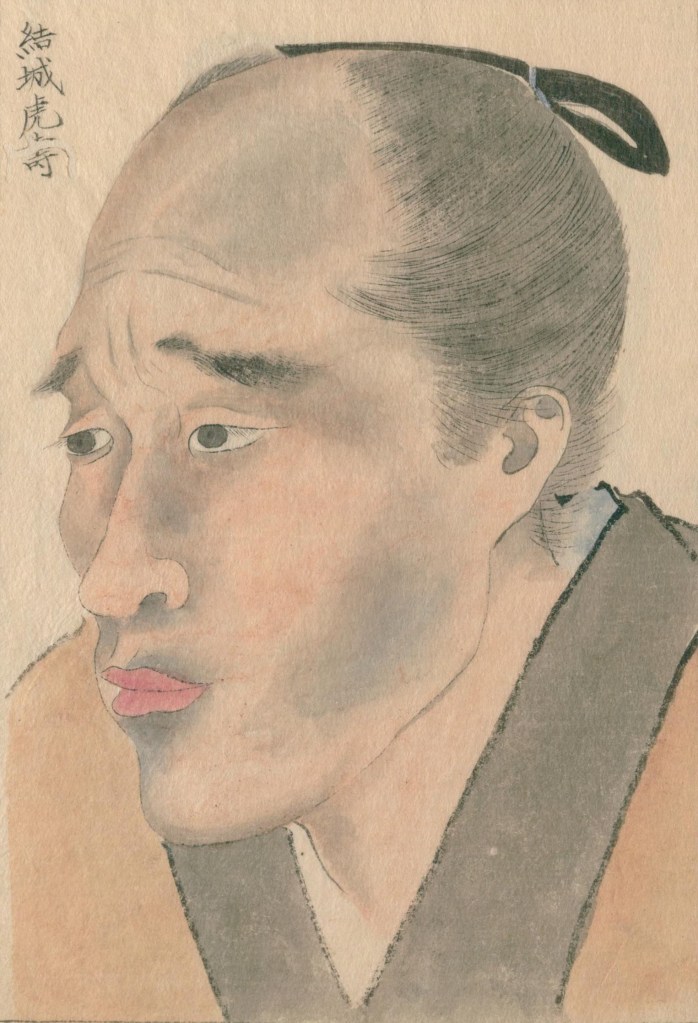
The image is a portrait of Tomomichi Yuuki, “Mizuhan portrait”, Public Domain, https://commons.wikimedia.org/w/index.php?curid=64228756.