Story: The Best Flock

December 7, 2025

Isaiah 11:1-10
Matthew 3:1-12

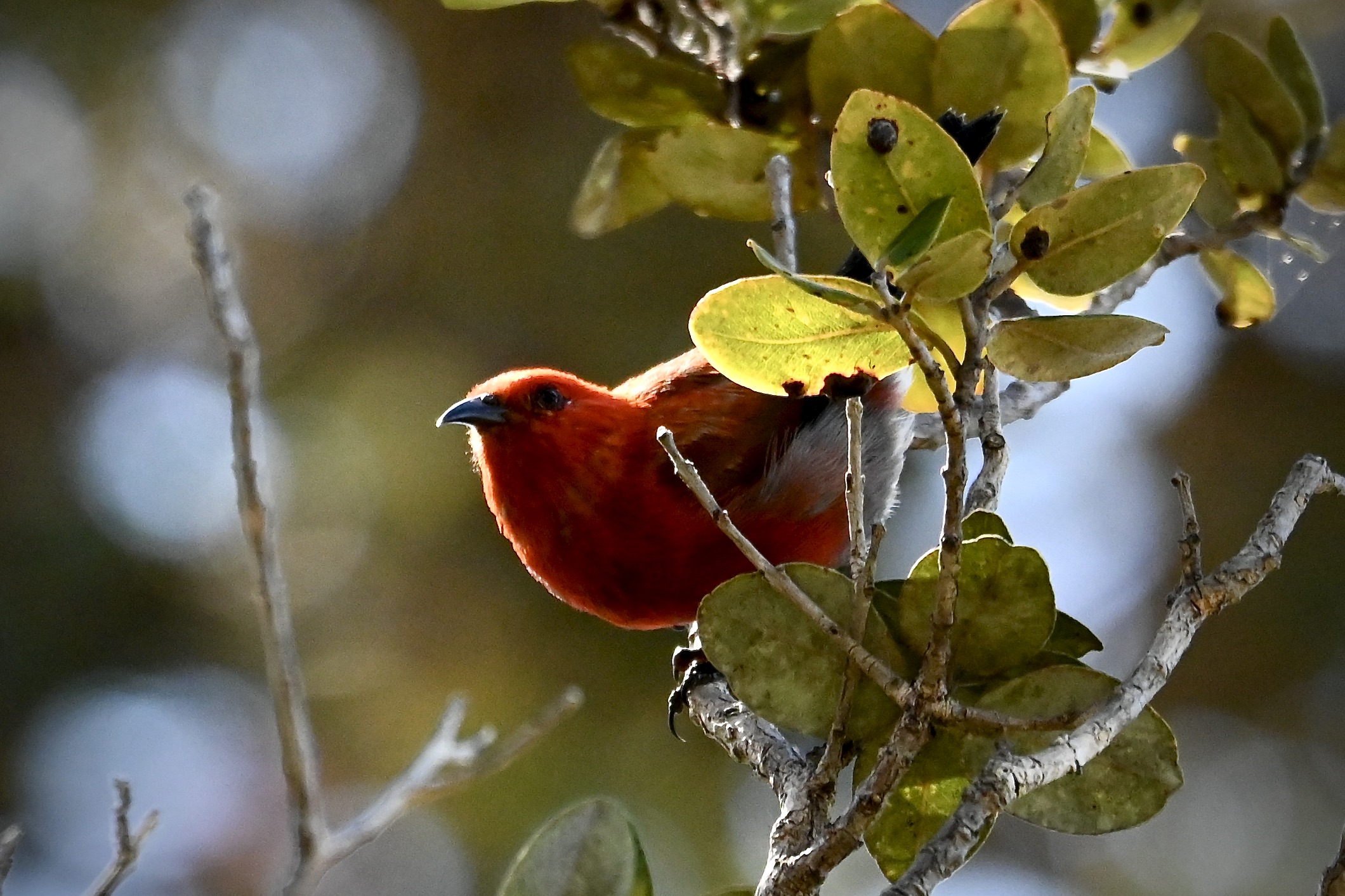
An ‘apapane wanted to know what the best way to be a flock is.

There are plenty of examples if you journey around the island. He found an i’iwi, who said, “Keep it small, less than ten. And chase everybody else away. Speaking of which, ‘apapane, it’s time you got out of here!”

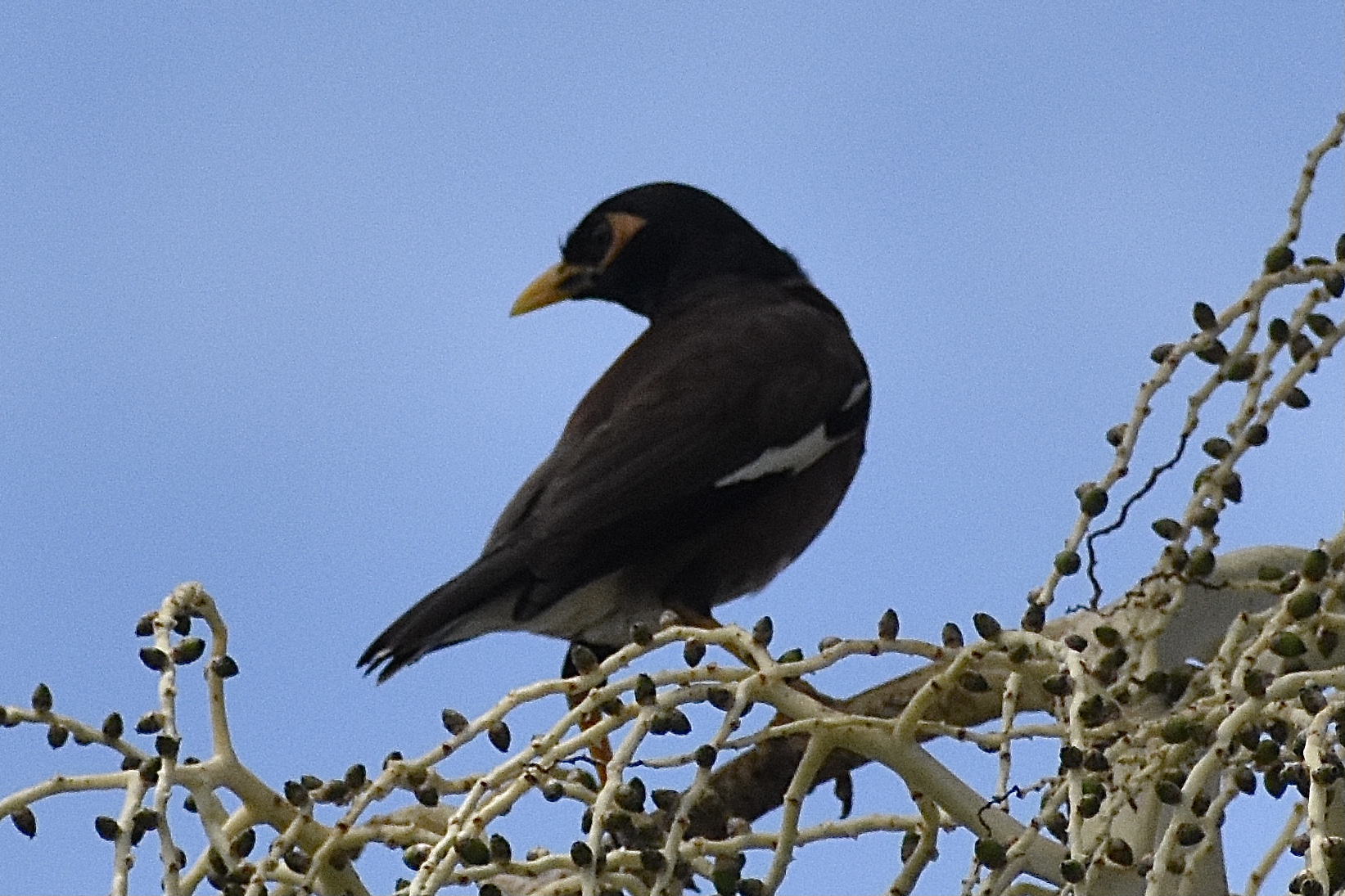
He checked with a myna, who said, “Oh, just get a few birds together.” “Yeah,” said a second myna, “but make sure they don’t argue.” “What do you mean by that?” demanded a third myna. “Don’t you get cross with me!” said the first, and the ‘apapane flew away as the mynas argued about… nothing.

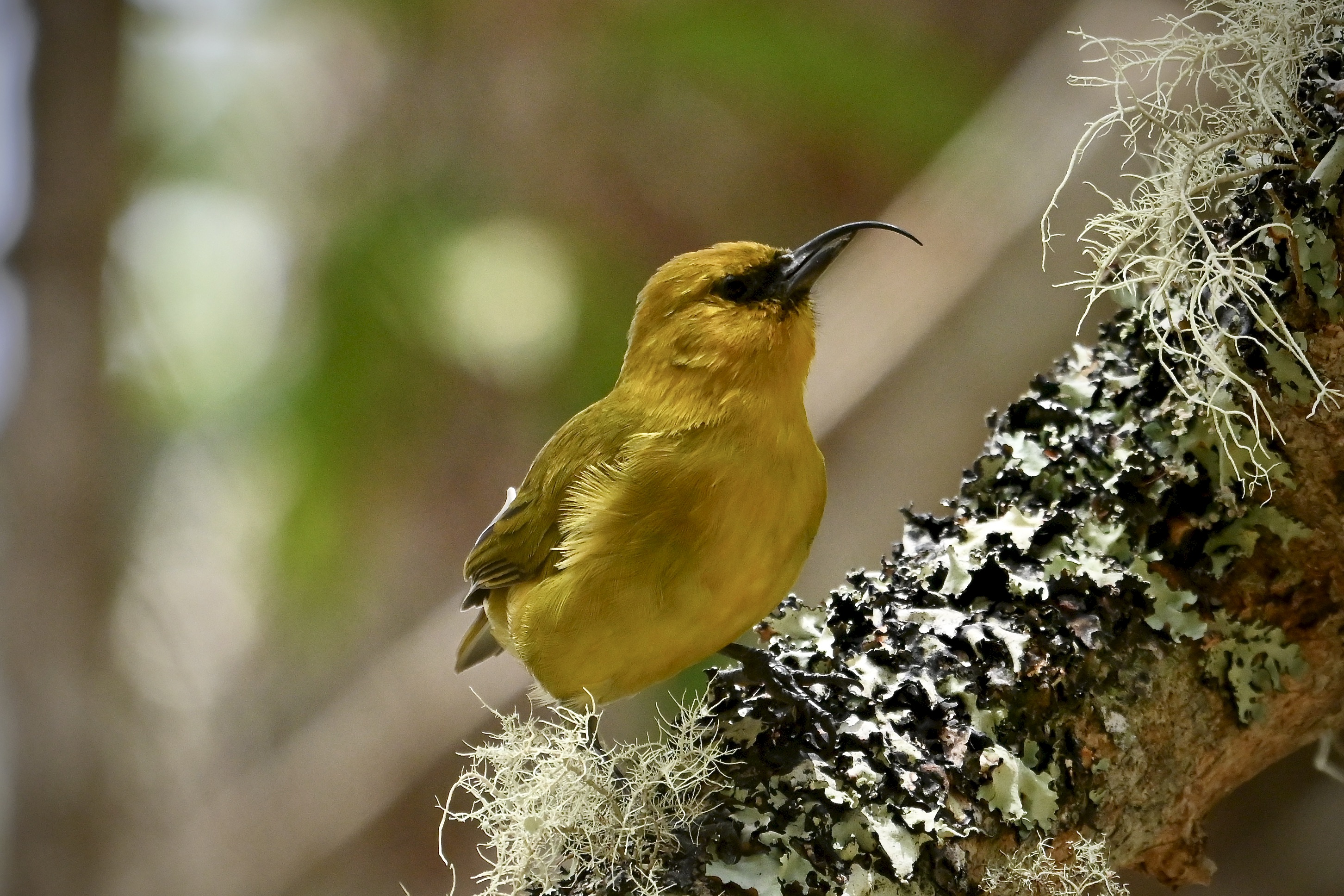
The ‘akiapola’au, the ‘akepa, and the ‘amakihi said that it’s useful to join a flock because then some of the predators, like cats and such, get intimidated. “A good flock is one that keeps us safe,” they told him.

That sounded pretty good.

He looked in on the ‘akekeke, who said, “Just stay together!” He asked the kolea, who prefer to keep some distance from one another. He thought about asking some fish, but they weren’t coming to the surface to talk to any hovering birds.

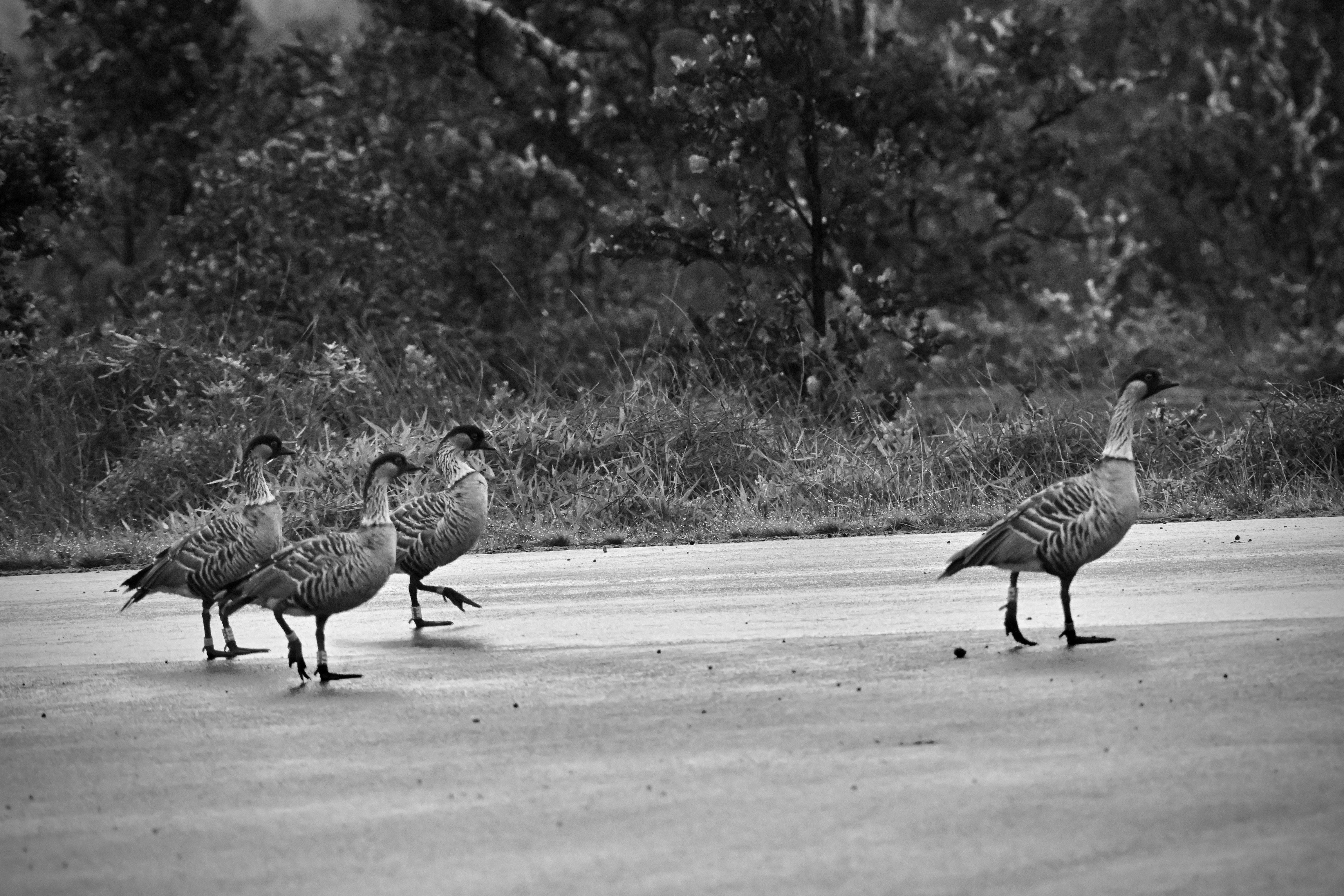
It was the nene, however, who gave him the most to think about.

When he found a nene to talk to, they were gathered around one of their number who’d hurt her wing. The little group was hungry and rather footsore as they trooped along, looking for ‘ohelo berries (or pretty much anything they could eat).

“Why aren’t you flying?” he asked one of them.

“Because she can’t fly for a while,” said the one in front.

“Can’t you leave her while you go eat?” he said.

The nene looked at him as if he’d lost his mind.

“A good flock is one where nobody gets left behind,” the nene said.

The ‘apapane returned to his part of the forest, and gathered his friends and family and any other birds he could. Together they could find food and shelter. Together they could scare off some of the dangers. But most of all, he told them:

“A good flock is one where nobody gets left behind.”

by Eric Anderson

Watch the Recorded Story

I write these stories ahead of time, but I tell them from memory plus inspiration. As a result, the recording of how I told it does not match how I wrote it.

Photo of four nene by Eric Anderson.
Story: Teacher’s Example

November 16, 2025

Isaiah 65:17-25
2 Thessalonians 3:6-13

It’s been a while since I’ve talked about nene school, which hasn’t changed what’s gone on there a bit. Goslings have gone to school, they’ve learned about advanced eating and flying, and some of them have wondered about becoming nene teachers themselves.

There was a time when there were just two nene teachers. Both of them were solid at the job. They could coax a timid flyer into dramatic aerobatics. They could coach a fussy eater into finding a much wider diet – sort of a nene version of heavy pupus. They held their students’ attention. They taught their lessons. Best of all, the students learned.

That’s the mark of a good teacher, when the students learn.

One of the students noticed something else, too.

Both teachers taught that it was important for nene to care for the flock. If you see a storm coming, they said, warn your neighbors. If it looks like a mongoose might be close to a nest, drive them away. If you found a good clump of ‘ohelo berries, call your friends over. Take care of the flock. The other members of the flock will take care of you.

That was an important lesson, and they mentioned it every day.

One of the teachers, though, seemed a little confused about its application. When her students were learning about finding food, she was very helpful. “Look for these colors as you’re flying about,” she’d say. And when they found some, she gave them lots of praise. “Well done, my friends!” she’d say to the beaming young nene.

And then she’d eat the food they’d found.

The other teacher did things differently. He was helpful about finding food, too. “These are the colors to watch for,” he’d say. “Make sure to look side to side.” And like his colleague, he had good things to say to his students when they found that tasty clump of ‘ohelo. “That’s exactly right,” he’d tell them. “Well spotted.”

But then he said, pretty much every time, “Call the other students in. Is anybody hungry?”

As I said, one of the students notice this, and one day he asked his parents about it. “My teachers help me a lot,” he told them, “but when we find food, one of them eats it. I suppose that’s OK; she is the teacher, after all. But the other one invites us to share. Which one am I supposed to learn?”

His parents looked at one another, and then they looked back at him. “Which one makes you feel better?” they asked. “Which one makes you feel like you’re an important part of the flock? Which one seems to be strengthening the flock as a whole?”

“Well, that’s easy,” said their son. “It’s the one who invites us to eat.”

“So which example will you follow?”

He thought about it.

“I spotted some ‘ohelo a few minutes ago,” he told them. “Are either of you hungry?”

by Eric Anderson

Watch the Recorded Story

I write these stories in full ahead of time, but I tell them on Sunday morning from memory and inspiration. The recording does not match the prepared text.

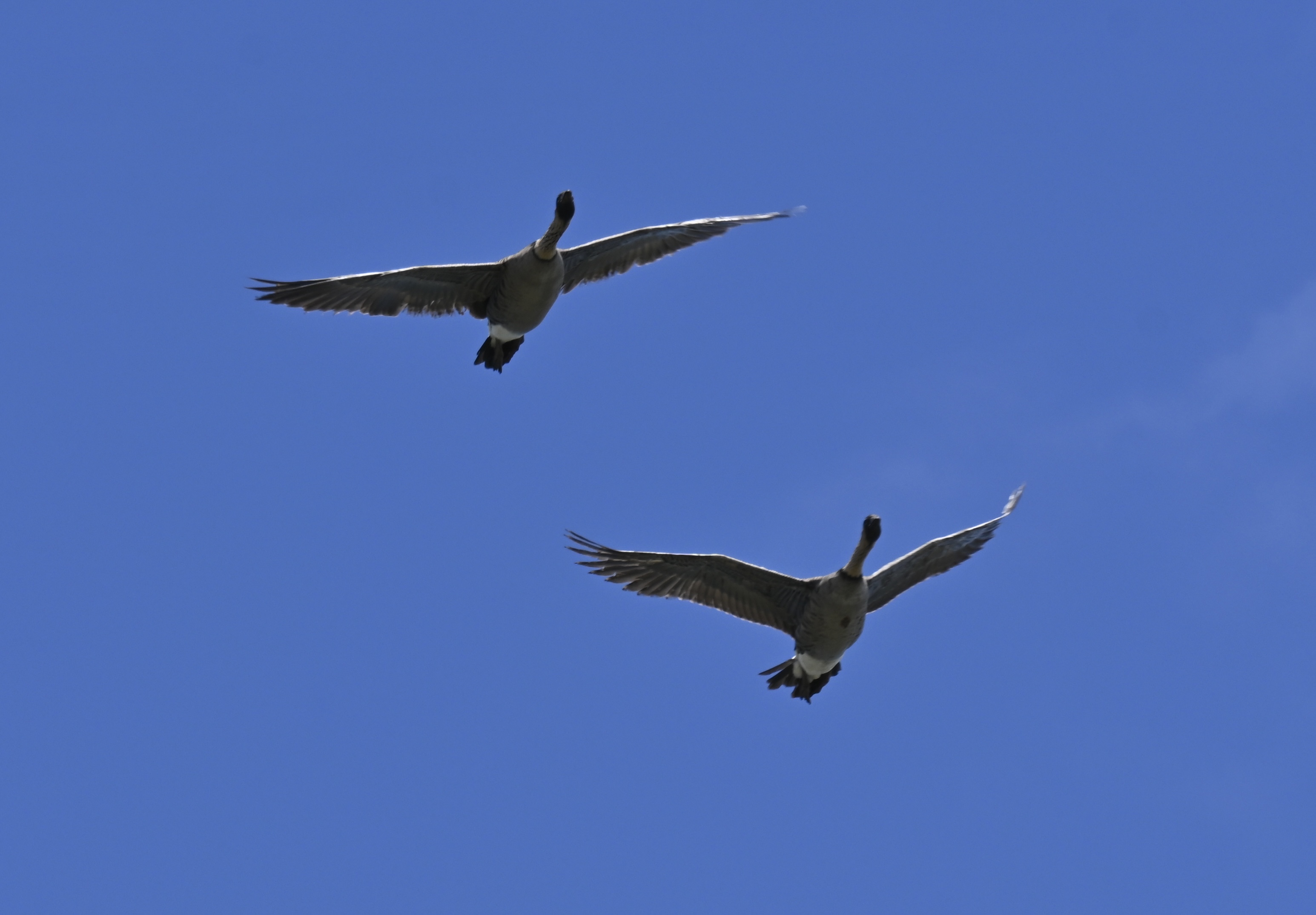
Photo of two nene in flight by Eric Anderson.

Story: Feeding the I’iwi

August 24, 2025

Isaiah 58:9-14
Luke 13:10-17

Up on the slopes of Mauna Loa, where the forest birds gather into little flocks during the summer, there was one little flock that had decided to get itself better organized. They figured out who was the best in the flock at finding food, and other birds that were good at spotting bad weather. They found places to shelter when it was hot in the middle of the day and places to start foraging when it was cool in the morning. Each bird got a buddy to make sure nobody got lost. Each bird got a buddy to make sure that when they were feeding, everybody found out about it. Each bird got a buddy to make sure that everybody got fed and sheltered and safe.

The birds agreed that it was a pretty good system.

“One more thing,” said one of the birds who had been a big part of the organizing. “No i’iwi.”

“What do you mean?” said an ‘amakihi. “They don’t like to fly in flocks anyway.”

“What I mean is,” said the first bird, “that if we see any i’iwi, we chase them away.”

That didn’t sound good to most of the other birds, who were far more accustomed to flying away from a chasing i’iwi than chasing one.

“I don’t think that’s going to work,” said an ‘akepa. The other birds chorused their agreement.

“Well, all right,” said the first bird, an ‘apapane. “but we won’t encourage them, either. Make sure when you call that there’s no i’iwi listening. We’ve organized to feed ourselves, not them.”

And so it was. There was one ‘apapane in the flock, though, who thought that sounded a little unfair. Sure, she’d been chased by i’iwi more than once and hadn’t enjoyed it, but she didn’t see any reason for even a grumpy bird to go hungry.

It turned out to be a tough season in their area of Mauna Loa. It was dry, and the trees weren’t blossoming much. There were a few spots around where a small grove would bloom all once, but they were hard to find. The finder birds were a real blessing. Without them the flock would have been much hungrier.

One day the scout birds had to work really hard. They looked this way and that without finding much. Finally one pair spotted a little group of trees with blossoms, and they called the flock. The other birds followed gratefully.

That’s when one of them spotted an i’iwi. “Remember!” he shouted out. “Don’t tell the i’iwi where we’re going!” Most of the flock, in fact, detoured so that the i’iwi wouldn’t notice them.

But not the one ‘apapane. She couldn’t bear the thought of another bird going hungry, even a grumpy i’iwi. She took a turn over the tree where the i’iwi was and called out a quick, “Follow me!” As she flew along the i’iwi followed, and when they arrived at the little stand of blossoming trees, the i’iwi settled into a tree as far away from the others as it could.

“Why did you do that?” asked her buddy bird. “You broke the rule. You brought an i’iwi!”

“Of course I did,” she said. “Have you been hungry? Did you enjoy it?”

“Yes, of course,” he said, “and no I didn’t.”

“So was he,” she told him, “and I’m sure he didn’t like it either.”

“But he’s an i’iwi!” he told her. “He’s a bully and a jerk.”

“And he’s hungry,” she said. “Everybody should get help when they’re hungry.”

From the adjacent tree, the i’iwi let out an unpleasant chirp, but that’s because i’iwi aren’t great singers. The two ‘apapane, however, knew that he’d said, “Thank you.” Nobody likes to be hungry, and everybody should get help when they are.

by Eric Anderson

Watch the Recorded Story

I write these stories in advance, but I tell them without notes. Between the vagaries of memory and the impulse to improvise (not to mention the contributions of the congregation), what I’ve written and the way I told it are not the same.

Photo of an ‘apapane by Eric Anderson.

Story: Truth and the ‘Akiapola’au

June 15, 2025

Proverbs 8:1-4, 22-31
John 16:12-15

Birds are pretty honest creatures. They sing when they’re happy, and they screech when they’re mad. They give alarm calls when they’re scared, and they make hungry noises when they’re hungry.

An ‘akiapola’au  used to follow ‘elepaio through the forest to find food. The funny thing is that ‘elepaio and ‘akiapola’au don’t eat the same things. ‘Elepaio like bugs and spiders, which I don’t, to be honest. ‘Akiapola’au will eat those, it’s true, but they prefer the worms, caterpillars, and bugs that burrow into the wood of koa trees. It’s been noticed that a tree full of bugs and spiders is probably also one that’s full of burrowing insects, too. The Hawaiian canoe makers knew that, and the ‘akiapola’au knows it, too.

The ’elepaio could be trusted to tell the truth.

This one ‘akiapola’au, however, came up with a new idea one day. You see, while he was following the ‘elepaio, other birds were following him. He worried that they’d eat all the food before he did. The fact that none of them ever left the trees hungry didn’t seem to make a difference. He had to protect his food.

He thought.

Not that it was his food before he ate it, but anyway.

So he developed the habit of tapping at tree branches that didn’t have bugs in them. ‘Akiapola’au do that to find where things have burrowed into a tree, but he started doing it, and then digging where he hadn’t found any. It attracted other birds. They’d come in to see.

And he’d fly off to some other tree where he’d try to find something he could actually eat.

The result was a fair number of frustrated birds, who’d look around where he’d been tapping and find fewer spiders and insects than they expected. They went to bed somewhat hungry.

He was pretty satisfied with his trick when his auntie turned up after a day of tapping on insect-free trees. “Nephew, why are you spending so much time hunting in trees without food?” she asked.

“Don’t tell anyone, but I’m drawing the other birds away from the good trees,” he said. “I don’t want to run out of food and be hungry.”

“So you’re lying to them?” she asked. “And before you say, ‘No,’ don’t think about lying to me.”

“I don’t think I’m lying to them,” he said.

“You’re acting as if there’s food where there isn’t. You don’t have to say a word. It’s still a lie. It’s a lie that’s bringing hunger to our forest when it isn’t necessary. There’s plenty to eat. Isn’t there?”

“I guess so,” he said.

“As for you, you’re spending so much time in trees without food: how hungry are you when you go to sleep?” she asked.

He realized that, in fact, he spent so much time in trees without caterpillars that he was hungry at the end of most days. His lie meant that he wasn’t eating enough.

“No lying, nephew,” said auntie. “It’s not worth it and it never was. Go find the trees with food in them, and share the word with the other birds around us. We’ll all be better for the truth.”

by Eric Anderson

Watch the Recorded Story

I write these stories in advance, but I tell them from memory and inspiration. On this particular day, I’d happened to speak to one of the young people the night before on a video call, where I told him that I’d be telling him a story the next day.

Photo of an ‘akiapola’au (adult male) by Eric Anderson.

Story: The Generous I’iwi

October 13, 2024

Job 23:1-9, 16-17
Mark 10:17-31

I’iwi are not known for their generosity. They tend to chase other i’iwi away if one comes too close, and they have an expansive notion of what “too close” means. They’re willing to put up with other birds, most of the time, but if there’s an ohi’a tree full of flowers to be sipped at, well. Then things can get exciting, and they’ll chase the ‘apapane and the ‘amakihi away.

One day an i’iwi was perched in a tree and saw a family of four humans come along. They stopped for a moment nearby and the big humans gave the little humans the last two cookies out of a little bag. The littlest human, a boy, took big bites. The next-littlest human, a slightly older and taller girl, nibbled at her cookie, enjoying its sweetness.

When the little boy had finished his cookie, the parents announced that it was time to keep walking, and their son burst into tears. He was tired. He didn’t like walking. Most of all, he was still hungry, because he hadn’t had enough cookie.

But there were no more cookies in the little bag.

Big sister – who wasn’t that much bigger, remember – looked at her cookie. More than half of it was left. Without a word she broke it in half and gave a piece to her little brother. He stopped crying – mostly, he snuffled some more – but the two of them finished their cookies together, and then the family moved on.

The i’iwi was impressed. Half a cookie had done so much good for the little boy, and also for the parents who wanted to comfort him but couldn’t. Half a cookie wasn’t a big thing, but it made a big difference.

The i’iwi decided that he’d make a difference, too. Not with cookie halves, which he wasn’t going to eat anyway, but with ohi’a flowers. He’d bring those to the hungry birds of the forest.

If he could figure out how.

An i’iwi’s long curved beak is pretty good for sipping nectar, but it’s not that good for snipping flowers from branches or carrying them. His first few experiments showed him that he damaged more flowers beyond use than he actually carried. He managed to get one blossom in his beak, however, and flew off to find a hungry bird to give it to.

After a few minutes, he found a section of the forest where the trees weren’t blossoming much, and then he found a sad-looking ‘apapane perched on a leafy, but flowerless, branch. He landed and carefully placed the flower on some leaves before he said, “Here. You look hungry. Take a good sip.”

The ‘apapane looked surprised and then puzzled, but said, “Thank you,” before dipping her beak into the flower. Sadly, there wasn’t much nectar to be found. Much of it had dried out when it was plucked from the tree and carried through the air.

“I’m sorry,” said the i’iwi. “I’ll go get you another one.”

“Wouldn’t it be easier,” asked the ‘apapane, “to show me the tree you found it on?”

“Why, yes,” said the i’iwi. “It would. Why didn’t I think of that?”

Cookies don’t grow on trees. Sometimes if you want to share, you have to divide them up. But sometimes if you want to share, you can bring your friend to the flower, not the flower to the friend. However you share, though, remember that small things can make a big difference, and that giving to someone goes a long way.

Watch the Recorded Story

I write these stories ahead of time, but I tell them from memory – memory plus improvisation – so what you hear will not match what you’ve read.

Photo by HarmonyonPlanetEarth – I'iwi|Pu'u o'o Trail | 2013-12-17 at 12-43-196 Uploaded by snowmanradio, CC BY 2.0, https://commons.wikimedia.org/w/index.php?curid=30241883.

Story: Will the Myna Ever Learn to Share?

April 30, 2023

Acts 2:42-47
John 10:1-10

Two humans were watching a small flock of mynas. The mynas were doing myna things, which was basically hopping around the grass looking for things to eat, finding the things to eat, and then eating them. By and large this went fine, but every once in a while one myna would hop closer to another myna, and sometimes the second myna would object, and then the first myna would object, and the result would be a lot of myna noise that was… objectionable.

The two humans shook their heads at this. One wondered, “Will the myna ever learn to share?”

They kept watching and somehow didn’t notice that when one myna objected to another myna, it wasn’t trying to steal food. It wasn’t trying to chase it away from food. It just wanted space. A little space. A little more space than you’re giving me, please. Thank you very much and would you kindly remember that for next time you…!

They squabbled about spacing. Not about feeding. Somehow the two people failed to notice that the mynas were sharing by making sure everybody had a spot to hunt for things to eat.

Eventually the humans got hungry. One had prepared a really nice lunch, with lettuce and pickles on the sandwich along with spreads and meats and cheeses. When one of the mynas managed to get a crumb later, she thought the bread was pretty special, too. With the sandwich the person had a big bottle of flavored ice tea. The mynas never learned how that tasted. The human finished every drop. Oh, and there were chips and a salad and there was chocolate for dessert. The mynas didn’t taste any of those, either.

The other human had a sandwich, but the space between the slices of bread was a lot thinner. No greenery poked out the sides. The myna consensus from trying the bread crumbs later was that it was pretty ordinary bread, rather lacking in flavor. This person drank water and had no other food than the sandwich. They finished sooner than the person with the bigger lunch, and didn’t taste any more of that than the mynas did.

Later on, the two people stopped watching the mynas for the day and got set to return home. The one with the nicer lunch got into a big, shiny car. The one with the small lunch got into a smaller car with dull paint and a few rust marks. When they drove off the small car left behind a cloud of oil-smelling smoke.

Two of the mynas looked at one another. One of them asked, “Do you think humans will ever learn to share?”

In fairness to the humans, one of them was sharing knowledge with the other – teacher to student. But still, doesn’t that question linger:

Will humans ever learn to share?

by Eric Anderson

Watch the Recorded Story

I tell the stories from my memory of the text I’ve written. Sometimes memory changes things. Sometimes creativity does. To be honest, it’s hard to tell one from the other.

Photo of a common myna by Eric Anderson.