Story: Grand

September 14, 2025

1 Timothy 1:12-17
Luke 15:1-10

There was a tree, an ohi’a tree, that stood on the cliffside above Kilauea Iki. The tree had stood there long years. He was tall. He was grand. And he was proud.

He looked down upon the mostly flat black rock of Kilauea Iki and sniffed. There were ohi’a trees down there, too, but they were small and bushy. The tallest rose no more than eight or nine feet, less than a tenth of this tree’s one hundred foot crown.

“You’re so small,” he said to the little ohi’a trees below. “What difference can you make?”

Next to him stood another tree, just as tall, just as grand, but not so proud and rather wiser. “Don’t you remember?” she asked him. “This was no more than a pond of lava years ago. These trees had to catch every drop of rain. They had to make their own soil. Someday this crater will be filled with trees, and it will be because these trees got it started.”

“Well, all right,” huffed the other tree. “But what about these little bugs that crawl all over me? They’re even smaller. And they nibble at me. And they itch. They can’t be of any use.”

His neighbor looked him over and said, “These are the same creatures that attract the birds to you. Between the birds and the bugs, they carry the pollen around that means there will be ohi’a seeds.”

“Seeds,” huffed the proud tree. “What good are they? They’re even tinier than the bugs!”

“Seeds,” said the wise tree, “mean that there will be a future for our forest up here on the cliffsides as well as in the rocky bottoms of the craters. Seeds mean new trees where there hadn’t been any before.”

“Seeds,” she said softly, “mean that when we are measuring our height on the forest floor, there will be other trees rising over us.”

The proud tree huffed again. “There could never be a tree as grand as me,” he said, and he ruffled his branches in the breeze.

“Seeds,” said the wise tree, as she watched a little cloud of them dance in the wind from the proud tree, “Seeds mean that there will be a forest even grander than either of us.”

by Eric Anderson

Watch the Recorded Story

I write these stories ahead of time, but I tell them from memory (and a little bit of inspiration). What you have just read does not precisely match what you’ll see.

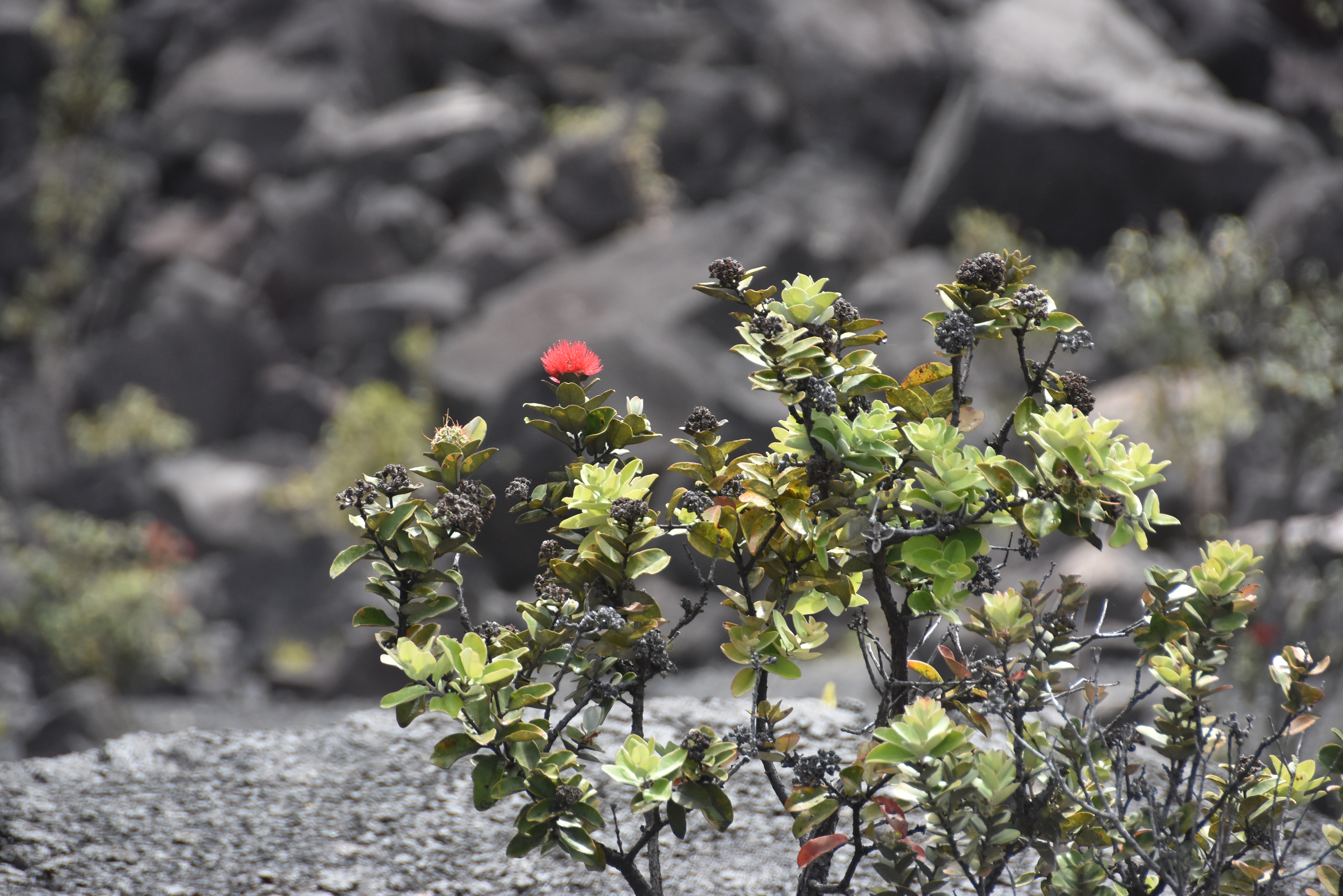
Photo of an ohi’a in the Kilauea Iki crater by Eric Anderson.

Story: A Tree Falls

July 20, 2025

Amos 8:1-12
Luke 10:38-42

The oma’o’s heart was in the right place, mostly. The physical heart was, of course, in the right place in his chest and beating regularly. His emotional and spiritual heart was maybe a little bit off to the side, because while he was thinking a little bit about another living thing, it has to be said that he mostly was thinking about himself.

It was a thinnish koa tree that he chose to protect. Its leaves were pretty thick even if its trunk wasn’t the widest. He liked the flavor of its flowers. There were some other birds that did, too, and he began to chase them away whenever he saw them. “I’m preventing them from over-feeding,” he said to himself. “That way the flowers can bloom and the fruit will grow.”

There were also bugs and caterpillars on the trunk and branches of the tree. Some of those he ate, because an oma’o will eat just about anything. Most of them he ignored. Oma’o might eat anything, but when there’s fruit around, they’ll eat that.

But he also wouldn’t let other birds approach the tree to eat the bugs, either. He chased away ‘apapane and ‘amakihi, ‘alawi and ‘elepaio. He even chased away the hook-beaked ‘akiapola’au after he caught one digging into the tree bark with its short lower beak.

“Stop digging into this tree!” he shrieked. “You’re hurting it!”

“This caterpillar in the bark is hurting it,” said the ‘akiapola’au. “I’m getting it out.”

“Not while I’m around!” shouted the oma’o, and chased the other bird away.

As the days went on, the koa leaves started to turn funny colors and droop. When the oma’o landed on a branch, it didn’t spring back up the way it had. Twigs dried up and fell away. Leaves littered the ground around the base of the trunk.

“That tree is sick,” said an ‘elepaio to the oma’o. “It’s got too many bugs. Let us help!”

“No,” said the oma’o. “You’ll hurt it.”

“Look at all those caterpillar tracks below the bark,” said an ‘akiapola’au. “Let us dig them out. The tree will get better.”

“I’m not letting you anywhere near this tree,” said the oma’o.

Even he had to admit that things weren’t going well. He no longer ate flowers from the tree, because there weren’t any. He visited other trees for fruit. There were plenty of bugs to eat, but when he ate some, there were always more.

When a tree falls in the forest, it does make a noise. The birds hear it. And they cry about it.

The birds heard the oma’o’s tree fall. And they cried.

“Why are you crying?” the oma’o asked an ‘elepaio. “It was my tree, not yours.”

“I’m crying because that tree could have been a place to nest for decades,” said the ‘elepaio. “It would have sheltered my family in the rain,” said an ‘amakihi. “It would have fed my children and my grandchildren,” said an ‘akiapola’au.

Looking around, the oma’o realized that not only had he hurt the tree he’d called his own, he’d hurt all the birds around. Not only that, he’d hurt future generations.

When a tree falls in the forest, the sound of its fall echoes into the future.

by Eric Anderson

Watch the Recorded Story

I write these stories in advance, but I tell them from memory (plus improvisation), so it does not match the text you just read.

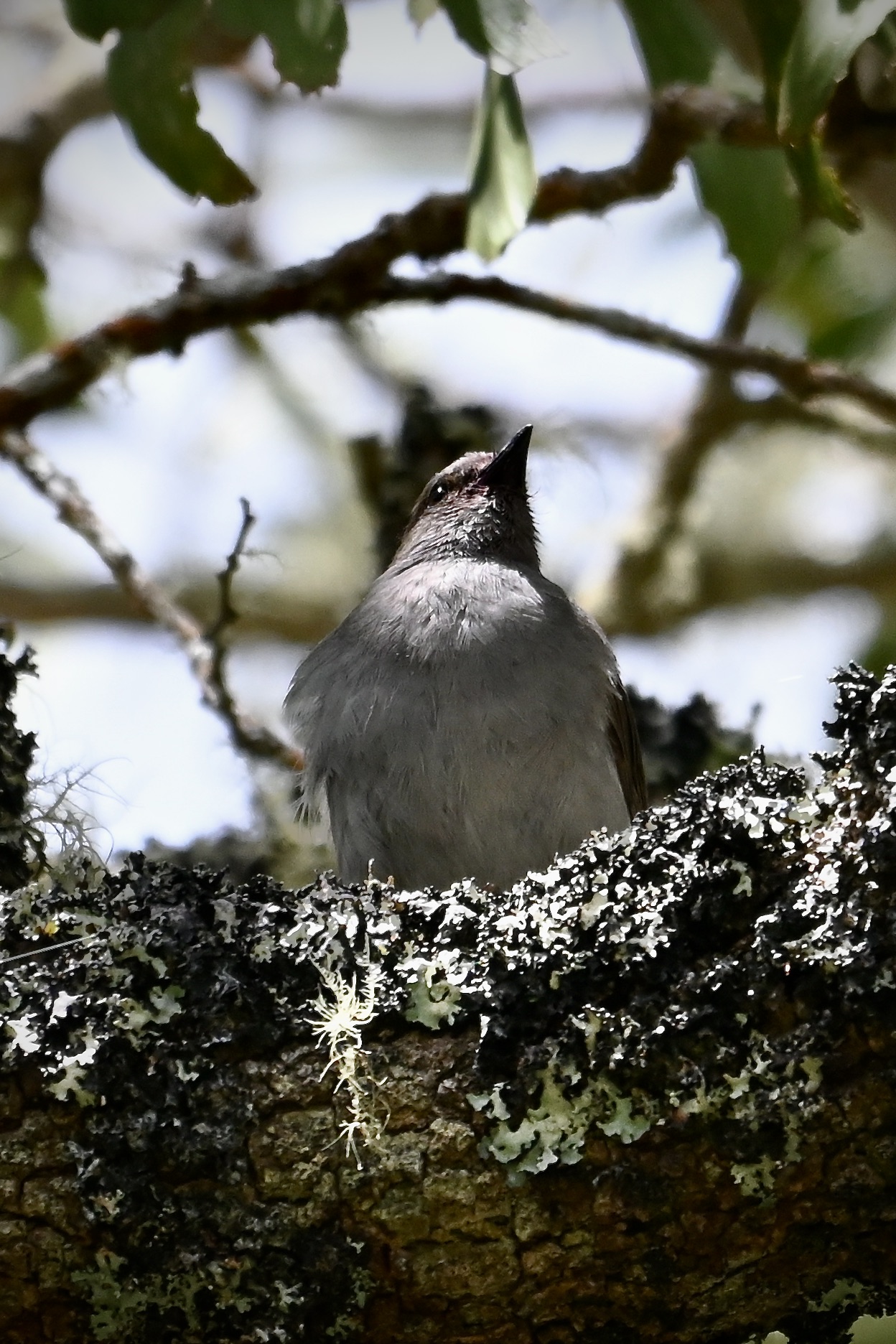
Photo of an oma’o by Eric Anderson.

Story: Can a Stilt Fly?

June 8, 2025

Romans 8:14-17
Acts 2:1-21

The ae’o shouldn’t have had any doubt about the question. But she felt awkward and ungainly, which isn’t unusual when you’ve done a lot of growing in a very short time. She was only about four weeks old, but that was time enough to learn a few things about the world.

For one thing, she’d learned that she had very long legs as compared to the size of her body. The ae’o, it’s said, has the second longest legs for the size of their body of any bird. That’s a lot of leg, or not a lot of body, depending on how you want to think of it. She’d also learned that those legs were very useful for walking around in the calm waters of a fishpond, and she learned that she could use her long beak to pull food out of the water. She’d learned that in English she was called a “black-necked stilt,” which seemed fair enough, because she had long stilt-like legs and the feathers on her neck were definitely turning black as they changed with her age.

But she’d also learned that other birds were very different. The ‘Alae Ke’oke’o were sort of similar in size, but they had much shorter legs. In fact, they swam across the top of the water. She’d seen kolea and akekeke pecking for bugs and such along the shorelines before they left for Alaska. All of those birds seemed a lot more compact than she did, with her smallish body and long neck and long long legs. She’d watch the kolea wheel about the sky.

And she grew to believe that she could not fly.

I don’t know how she missed the fact that her parents flew quite well. I don’t know how she failed to notice that she, herself, had been taking wing-aided hops for a week. I don’t know how she missed all that. But she did. “I’m not going to be able to fly,” she said sadly one day, thinking that nobody was there to hear her.

“Really?” said a voice. “Why not?”

When she looked over, she saw another bird’s face with a long beak looking at her. It was a cattle egret, one of the many who liked the area of her fishpond.

“Just look at me,” she said. “Look at these long legs. Look at this long neck. Look at these wings. They can’t possibly get me off the ground and into the sky.”

The cattle egret looked her over carefully and said, “I’ve got long legs.”

She took a good look and realized that he did. “And I’ve got a long neck,” he continued.

“So you do,” she said.

“And have you noticed?” he asked. “I can fly.” And to prove it, he took to the air and flew twice around the fishpond before he landed near her again.

“I can’t be sure, but I think you can fly,” he said. “Have you tried?”

She didn’t bother to say, “No,” because they both knew she hadn’t. She didn’t say anything at all, in fact, but she did spread her wings. She looked at him sharply to make sure he wasn’t teasing her, but there was no trace of laughter in his face.

She took off. She flew.

She took three turns around the fishpond – she’d meant to do the same two turns he had, but she miscalculated the landing and had to come back and try it again.

“I can fly!” she said.

“You can,” he said. “I’m glad you tried. And I’m glad you fly.”

by Eric Anderson

Watch the Recorded Story

I write these stories in advance, but I tell them from a combination of memory, improvisation, and of course in conversation with the young people I tell them to.

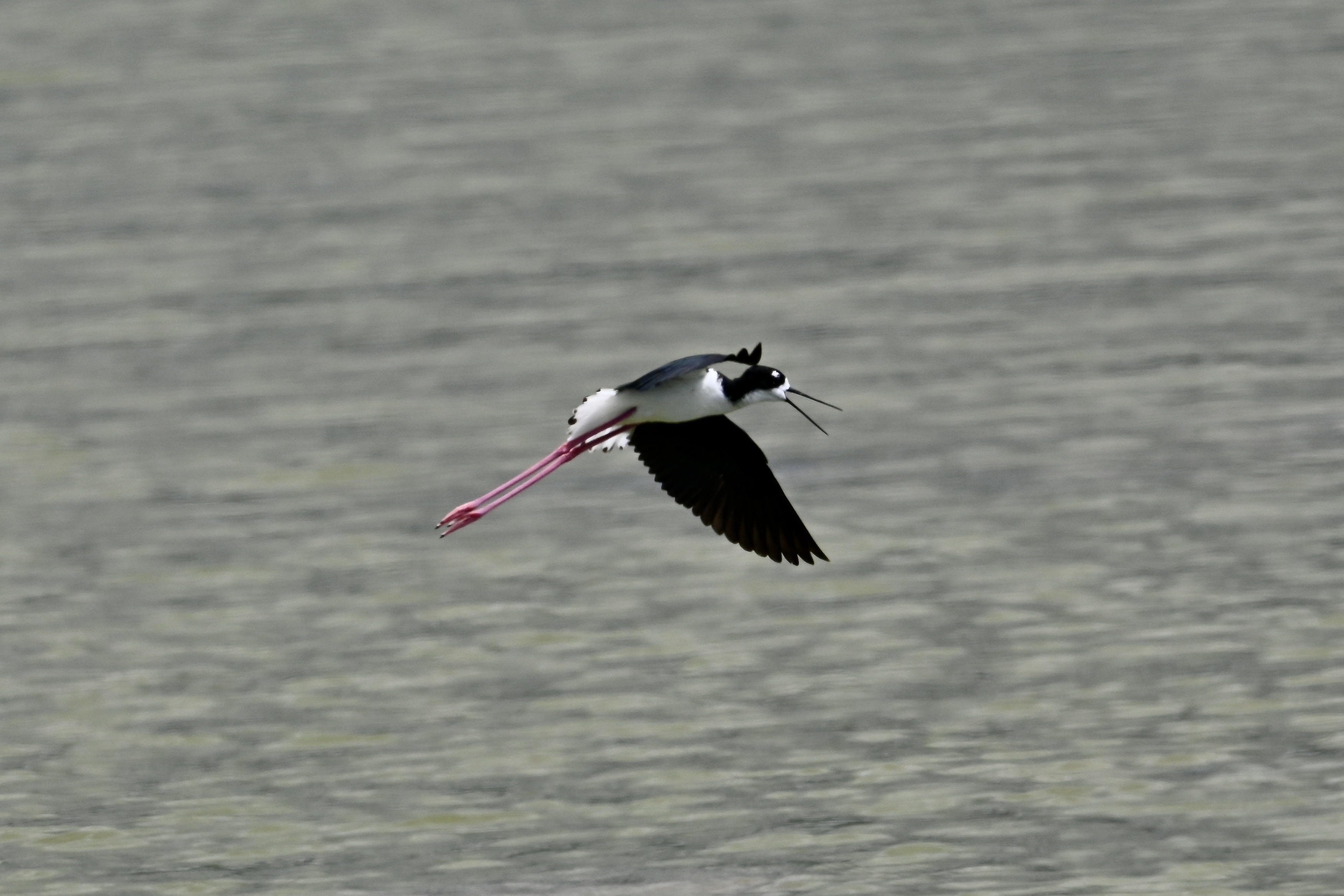
Photo of an Ae’o (Hawaiian Black-necked Stilt) in flight by Eric Anderson.

Story: Welcome

May 18, 2025

Acts 11:1-13
John 13:31-35

The young ‘amakihi was nervous. She had been busy growing up, which ‘amakihi do a lot quicker than human beings do, but there was a lot to pack into that time. There was eating, and learning what to eat. There was taking care of her feathers, which changed when she molted and the feather lengths changed. And of course there was flying.

Then she had to learn about eating again, because there were things she could get to with working wings that she couldn’t get to in a nest. She learned about new bugs, new fruits, and new flowers. She’d been too busy to be nervous.

She was nervous now, though, because her parents had announced that the family would join a flock for the summer. She wasn’t really used to other birds. She’d met an auntie or an uncle or two, and of course her tutu, but these would be strange ‘amakihi. Would they like her? Would they be mean to her?

It made her more nervous to realize that the flock wouldn’t include just ‘amakihi. It would include ‘akepa, ‘alawi, and scariest of all, ‘apapane. She knew there were a lot of ‘apapane around. She’d seen far more of them than she had ‘amakihi. She’d also seen them chase ‘amakihi through the forest, even her own father. “I got too close to their nest,” he’d explained, and that made sense because she’d seen him chase other birds away from her nest, but still. The ‘apapane made her nervous.

“It will be all right,” said her father. “It’s different when birds aren’t worried about nests and eggs.”

“It will be all right,” said her mother. “You’ll make it all right.”

The day came when she and her brother and her parents flew over to an ohi’a tree filled with other birds. There were other ‘amakihi, and she knew some of them because her tutu were there. There was ‘akepa and ‘alawi showing off their green and bright orange feathers. Mostly, though, there were ‘apapane. They hopped through the branches, singing their beautiful songs, and looking very sharp in their red and black feathers.

One of them, who was keeping rather quiet, hopped over to the branch where she was sitting, keeping very quiet and hoping nobody would notice her.

“Hi,” said the ‘apapane. “What kind of bird are you?”

“I’m an ‘amakihi,” she said. “And you’re an ‘apapane.”

“I am,” he said, and looking rather nervous, said, “I feel really dumb. I’ve never seen most of these birds before. Do you know any of them?”

“Well, I know my family,” she said, “and I’ve seen a couple of these other birds before,” – she didn’t mention that they’d been chasing her father away from their nest – “but most of these birds are as new to me as they are to you.”

“Oh, good,” said the ‘apapane. “I guess this is new to most of us youngsters?”

“I think it is,” said the ‘amakihi. “I’ve been worried that nobody would like me.”

“You’ve made me feel better,” said the ‘apapane. “I think most birds would like you for that.”

“And you’ve made me feel welcome,” said the ‘amakihi. “Thank you so much for that.”

Mother had known, after all. She had made it all right.

by Eric Anderson

Watch the Recorded Story

I write these stories ahead of time, but I tell them from a combination of memory and improvisation. As a result, what you’ve just read will not match what you hear.

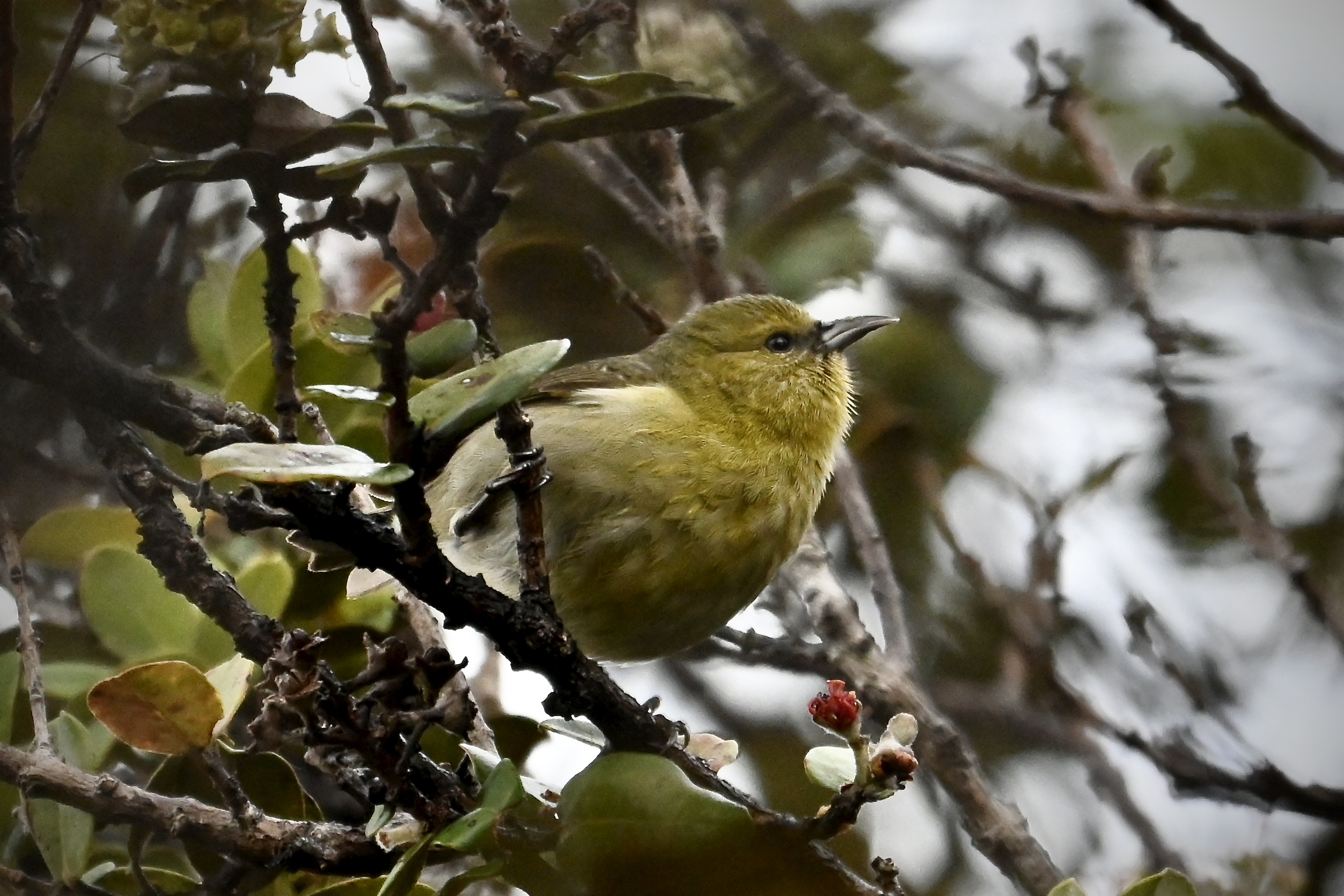
Photo of an ‘amakihi by Eric Anderson.