Story: The Wisdom of Flight

January 4, 2026

Jeremiah 31:7-14
John 1:1-18

“What is wisdom?” wondered the ‘amakihi as he flew through the sky.

“What is wisdom?” wondered the ‘amakihi as he sipped on ohi’a nectar.

“What is wisdom?” wondered the ‘amakihi as he settled down to sleep at night.

“What is wisdom?” wondered the ‘amakihi as he woke in the morning.

“What is wisdom?” is, in fact, an extremely good question whether you’re an ‘amakihi or a human being. Wisdom, after all, tends to prevent a lot of foolishness. Foolishness, on the other hand, tends to happen in the absence of wisdom.

“What is wisdom?” wandered the ‘amakihi over the course of the day.

One of the features of wisdom is that when someone who is wise doesn’t know or doesn’t understand something, they do things to learn more about it. They look around at things. They measure and they think about what they’ve measured. If they’re human, they might read something, or a lot of somethings. They ask others to see what they know.

Whether you’re a human or an ‘amakihi, a good one to ask would be tutu.

“Tutu,” asked the ‘amakihi, “what is wisdom?”

Tutu was pleased. It was a wise question – if you don’t know something, wisdom says, “Ask.” He’d made a wise choice about who to ask – grandparents often know things. And he was asking about something important, wisdom itself.

She replied with a question of her own: “What is knowledge, grandson?”

“Knowledge?” he asked. “I hadn’t thought much about that… it seemed kind of obvious. If I know something that’s true, that’s been demonstrated to me, that’s knowledge. If I think I know something that isn’t true, or if I simply don’t know something, that’s not knowledge. Is that right?”

“That’s right,” said Tutu. “Now let me ask something else.”

“Are you going to answer my question?” asked her grandson, who was starting to worry that if he answered all her questions she wouldn’t get around to answering his.

“I am,” she said. “Now here’s my question: Can you fly with your wings closed?”

He opened his beak to reply, then stopped. It doesn’t make much sense, but he realized that sometimes while flying, he would close his wings. Not for long. Not all the time, obviously. But for a few moments in many flights, he would be flying with his wings closed.

“Yes,” he said carefully. “For a moment or two.”

“How do you know whether to close your wings in flight?”

“It’s complicated,” he said. “How high up am I? How much do I need to rest my wings for a moment? Will I need to make a quick turn or slow down to land? There isn’t a simple answer.”

“That’s right, there isn’t,” she told him. “Knowing that you can fold your wings in flight is knowledge. You know it’s something you can do. Choosing the right moment to do it – or the right moment not to do it – that’s wisdom.

“Wisdom is when you consider what you don’t know for certain, what might happen, or what might not happen if you do something, and then make a good choice. Wisdom looks at what you know, and asks whether you should.

“That, grandson, is wisdom.”

by Eric Anderson

Watch the Recorded Story

I write these stories in advance, but I tell them from memory and inspiration on Sunday mornings. What you have just read does not precisely match how I told it.

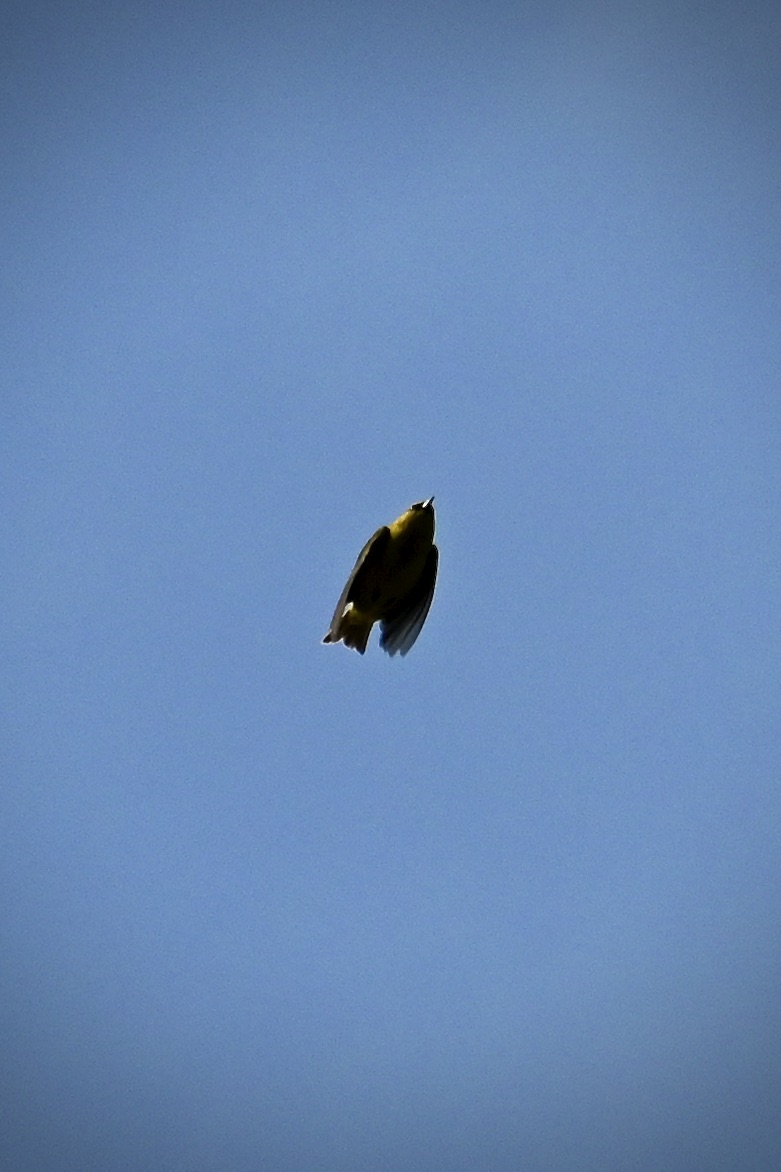
Photo of an ‘amakihi in flight by Eric Anderson.

Send Me


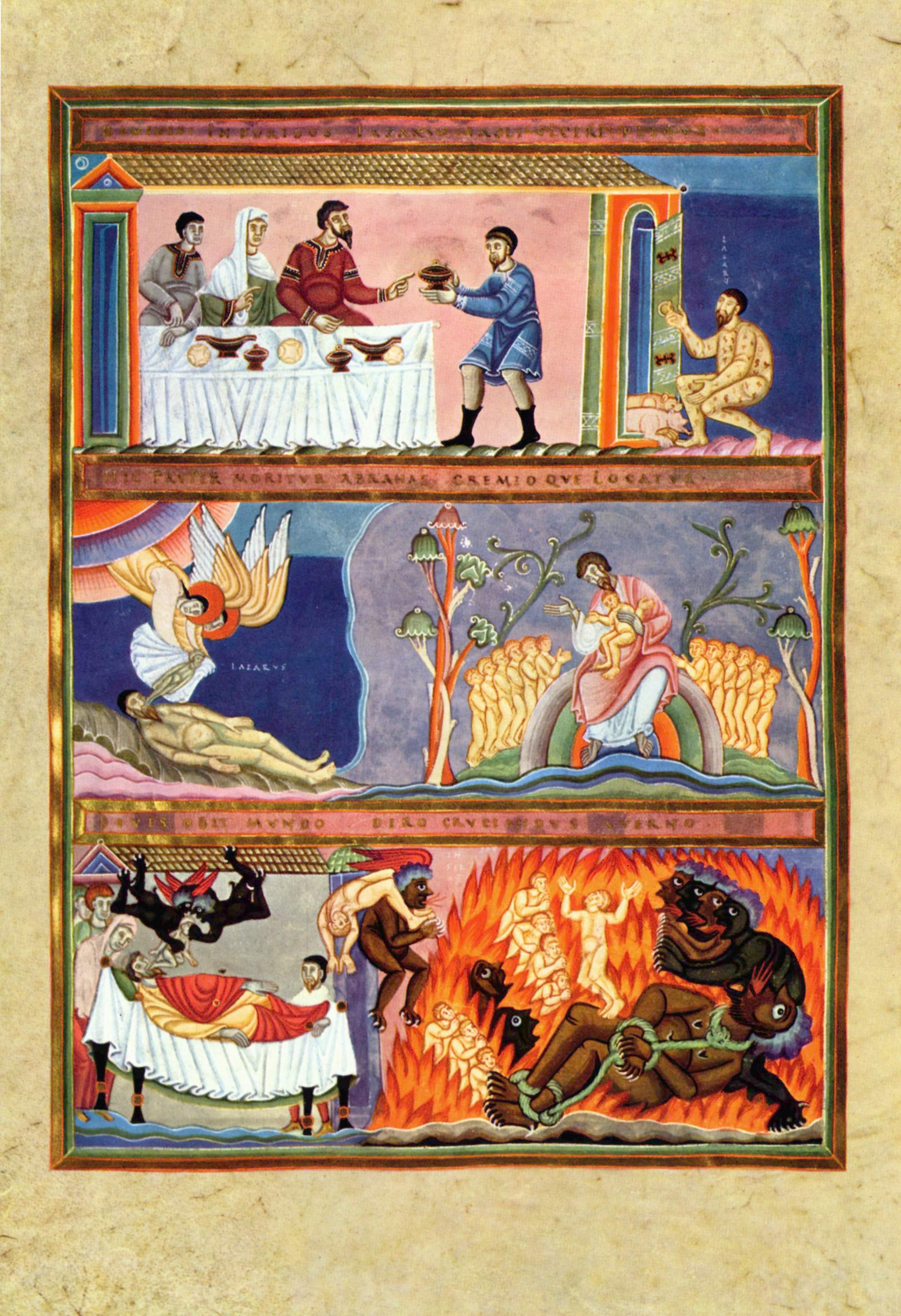
“[Jesus said,] [The rich man] said, ‘Then I beg you, father, to send him [Lazarus] to my father’s house–for I have five brothers–that he may warn them, so that they will not also come into this place of torment.'” – Luke 16:27-28

O Holy One,

When I should find myself (again)
in torment I have made myself,
may my compassion and
my wisdom be enough to call
a warning to the ones I love,
and to the ones I don’t,
with my own voice, and not rely
upon the voice of those I have oppressed.

A poem/prayer based on Luke 16:19-31, the Revised Common Lectionary Gospel Reading for Year C, Proper 21 (26).

The image is “The Parable of the Rich Man and the Beggar Lazarus,” an illustration in the Codex Aureus Epternacensis (Golden Gospels), by the Master of Codex Aureus Epternacensis – The Yorck Project (2002) 10.000 Meisterwerke der Malerei (DVD-ROM), distributed by DIRECTMEDIA Publishing GmbH. ISBN: 3936122202., Public Domain, https://commons.wikimedia.org/w/index.php?curid=155243.

Story: Important Things

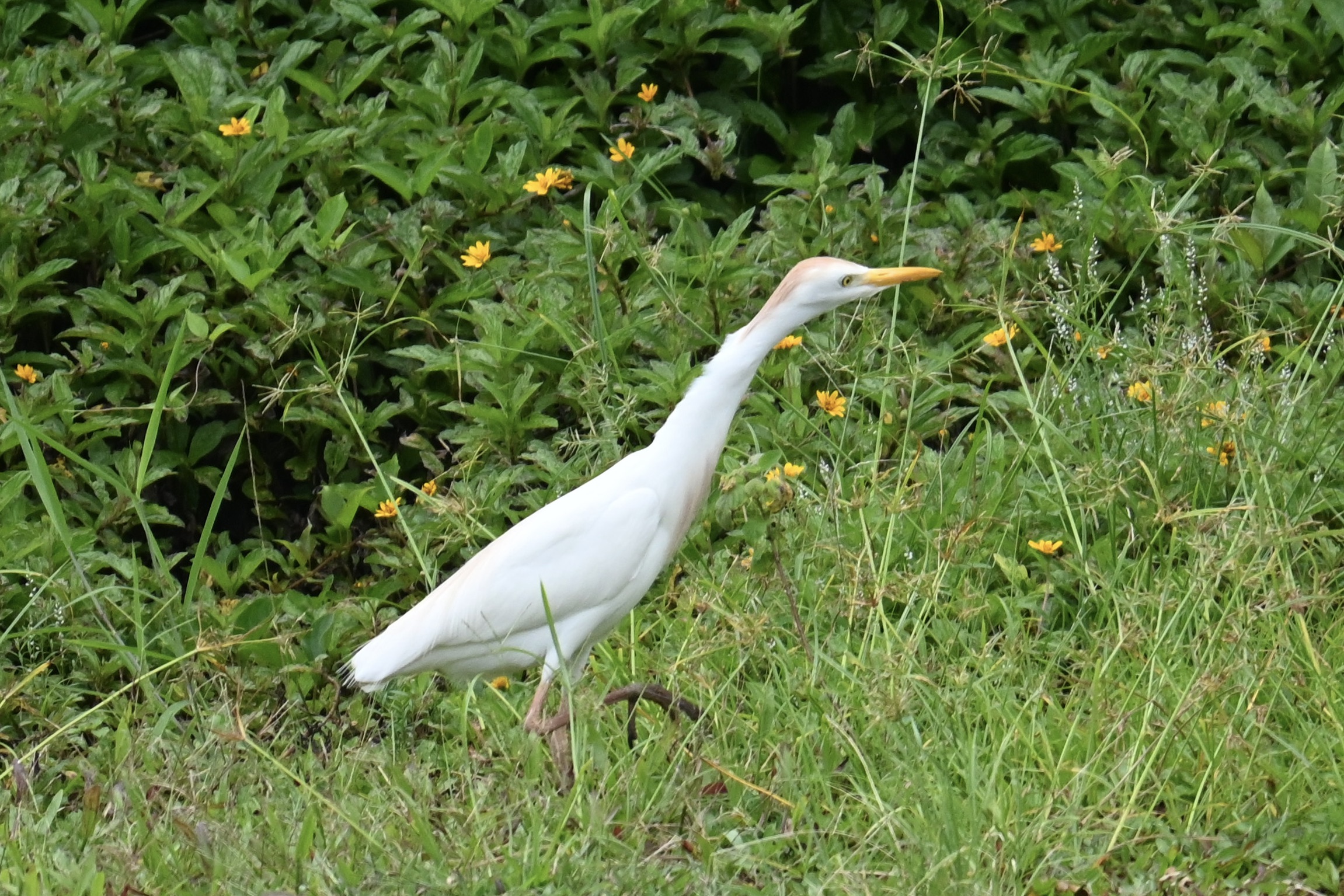
A cattle egret in tall grass.

December 8, 2024


Philippians 1:3-11

Luke 3:1-6

The cattle egret is a relatively quiet bird. Most of the time it goes about its business of hunting insects and such without talking about it. When a cattle egret has something to say, it will say it. But if it doesn’t have something to say, it doesn’t say anything.

Unlike a lot of people you’ve met, I’m sure.

There was another bird who really wanted a cattle egret to say something. I don’t know why a saffron finch decided that he wanted wisdom from a cattle egret, but he did. Maybe it was their relative sizes (rather small to quite impressively tall). Not that size reliably indicates wisdom. Maybe it was the bright white feathers, but color doesn’t tell you much about wisdom, either. Maybe it was the silence.

Not saying anything until you have something to say could be a good sign of wisdom.

At any rate, it’s wiser than saying something when you don’t have anything to say.

The saffron finch landed on the ground near a cattle egret and the two of them fed side-by-side without speaking for a while. The cattle egret ate bugs. The saffron finch ate one or two spiders and a good amount of seeds. Neither of them chose to speak with their mouths full.

When he was feeling pretty satisfied, the saffron finch asked, “What’s the most important thing?”

The cattle egret looked around to see if there were any other birds the finch might have been talking to. She didn’t see any, but she also didn’t think that this was a question a complete stranger was likely to ask her, so she didn’t say anything.

“No, really,” said the saffron finch. “What the most important thing?”

The cattle egret looked carefully at the saffron finch. He was clearly asking her, though she didn’t know why. She took a couple more mouthfuls of insects to give her time to consider the question. Then she cleared her throat and said:

“Love.”

She looked around and didn’t see any more bugs, so she nodded to the saffron finch and took off to find another spot with more bugs. When she got there, she was surprised to find the saffron finch landing beside her.

“Could you say that again?” he asked.

“Love,” she said, and went on eating.

“Really?” he asked.

“Love,” she repeated for the third time.

“I’m not sure I know how to love,” he said sadly.

The cattle egret paused her hunting for a moment and looked carefully at the saffron finch.

“Ask,” she said.

“Really?” he said.

“Ask,” she said.

I’m still not sure I’d go first to a cattle egret for wisdom – which is mostly my problem for not understanding what a cattle egret might say – but I have to agree with this cattle egret. What’s the most important thing? Love.

And if you’re not sure how to love: Ask.

by Eric Anderson

Watch the Recorded Story

I write these stories in advance, but I tell them from a combination of memory and improvisation, so it won’t sound exactly like you’ve just read.

Photo by Eric Anderson.

Living Wise

“Do not get drunk with wine, for that is debauchery, but be filled with the Spirit, as you sing psalms and hymns and spiritual songs to one another, singing and making melody to the Lord in your hearts.” – Ephesians 5:18-19

I know the psalm: “The fear of the LORD
is the beginning of wisdom.” How did you
not know that, Paul?

(Especially since you gave advice
to Timothy to drink not only water, but a little wine
to soothe the stomach.)

It cannot be denied, of course, that alcohol
debauches so much of our bodies, brain and
liver and good sense.

Yet I would think that you would have
more puritanical advice than this, to be
filled with the Spirit.

I guess old Martin Luther got it right
when he set his great lyric to the tune
of an old drinking song,

And told his critics that the Devil should
not get all the good tunes. Fill up, you say,
with Spirit, and rejoice.

Not fear, but celebration; not in gloom,
but in rejoicing; not in silent prayer,
but in the flood of song:

This is wisdom. This is living faithfully.
This is making deep connections
with God’s grace.

The fount of wisdom springs from reverence,
but gains its height from joy and thanks.
May we be wise.

A poem/prayer based on Ephesians 5:15-20, the Revised Common Lectionary Second Reading for Year B, Proper 15 (20).

Photo by Eric Anderson.

Story: Flying Time

'Apapane in flight

February 11, 2024

2 Kings 2:1-12
Mark 9:2-9

One of the themes that tends to pop up in my stories is something like, “When is it a good time to fly?” Sometimes the birds asking that question are chicks wondering whether they’re ready for their first flight. Sometimes it’s older but still young birds trying to figure out how far they can go. Sometimes it’s older birds trying to balance the needs of nest-building and chick-feeding. Sometimes it’s just a bird thinking, “What does the world look like over there?”

A little group of ‘apapane decided to discuss the question in some detail. They thought that they’d like to become wise birds, wise ‘apapane, wise creatures that would have some good reasons to choose to fly at some times, and not to fly at other times.

“When is a good time not to fly?” asked one of the little flock.

“When there’s an ‘io overhead,” said one.

“Or a pueo,” added another.

“Or the shadow of something big and you’re not sure what it is,” said a third.

“It’s not a good time to fly in a big wind,” put in one.

“I’m not crazy about flying when there’s lightning,” said another.

“What about if you’re lost?” asked one of the ‘apapane. “Is that a good time to fly?”

They thought about it. “If you just stay in place when you’re lost,” said one slowly, “you don’t see anything different than what you’re seeing. I think you have to fly at least a little bit so that you can see new things, which might be the old things you’re trying to find.”

“If it’s a high wind and the tree is breaking, that’s a good time to fly,” added an ‘apapane who had been thinking about this for a while.

“What is a good time to fly?” asked the first bird.

“When the tree is breaking,” said the bird who didn’t want anyone to forget that.

“When the tree you’re in is out of bugs and nectar,” said another.

“When your wings and feathers are ready, and not before,” said one of the younger ones whose first attempts at flapping his wings hadn’t gone well.

“When you want to sing with the birds in another tree,” said a particularly musical ‘apapane.

“When it’s naptime and everybody is singing in your tree,” said an ‘apapane who liked to rest after a meal.

They fell silent for a bit at this point. Suddenly the first bird, the one who’d been asking the questions, the one who really wanted to be a wise ‘apapane, laughed out loud.

“When you feel like it!” she sang, and soared up into the sky.

Flying is all about the practical things, and there are plenty of times when flying is a bad idea, when it’s dangerous. Human beings don’t fly, at least not without an airplane, but we have our own times to stretch our wings, as it were. Be careful and don’t take off when it’s dangerous, friends, but make sure to appreciate the joy when you do.

by Eric Anderson

Watch the Recorded Story

I write these stories ahead of time, but during worship I tell them from memory plus improvisation. So what you hear in the recording does not and will not match what you’ve just read.

Photo by Eric Anderson.

Chasing Hope

June 12, 2022

Proverbs 8:1-4, 22-31
Romans 5:1-5

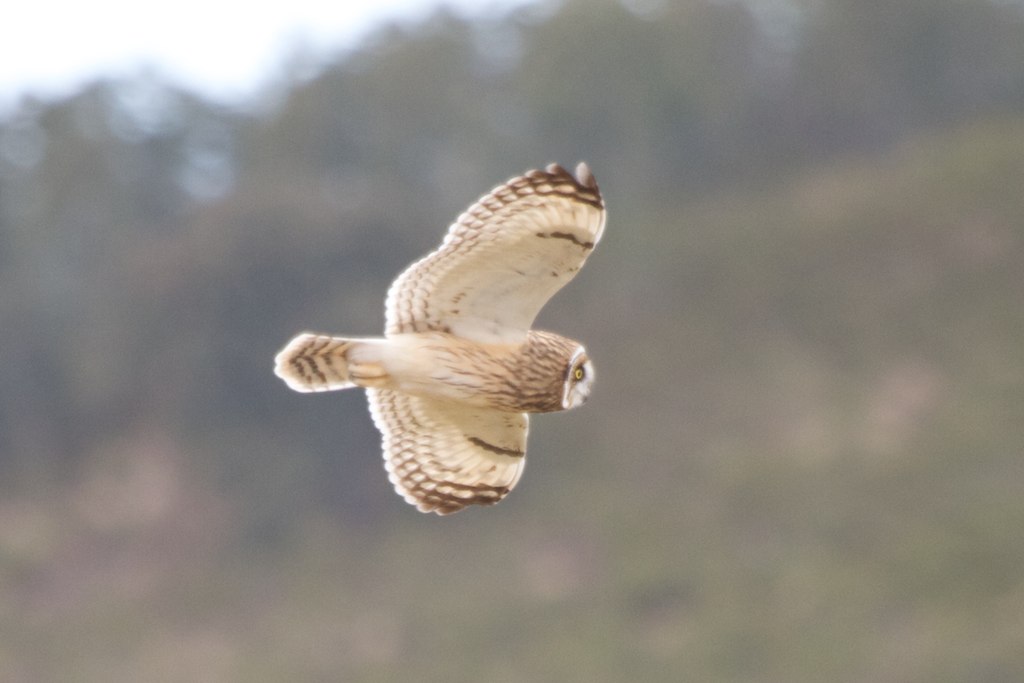
The young pueo had learned many things. He’d learned how to fly, and how to find his way home, and how to spot small creatures in the grasses. He was, in many ways, prepared to begin a life of his own.

But he didn’t know what hope was.

His mother talked about hope a lot. Or muttered about it a lot. “Do you think we’ll find mice out there today?” he’d ask, and she’d say, “Hope.” “Do you think it will be sunny and warm today?” he’d ask, and she’d say, “Hope.” “Do you think I’ll learn something new today?” he’d ask, and she’d say, “Hope.”

Sadly, one of the things that he hadn’t learned by the end of any day up to that point was what “Hope” meant.

So he went to ask grandmother, Tutu Pueo, his mother’s mother. He flew to the rock on which she’d perched and asked, “Tutu, what is hope?”

“Hasn’t your mother told you?” she asked, rather surprised.

“No,” he said. “She mutters ‘Hope,’ a lot, like when we set out to find dinner, or when I ask about what’s coming. But she never says what it is.”

Tutu laughed. “I’ll just have to teach you the way I taught her,” she said. “Come fly with me. Let’s chase Hope.”

Puzzled but willing, he followed grandmother into the sky. “You’ve got to chase Hope,” said Tutu over the rush of the air. “Yes, but what does Hope look like?” asked the grandson, but suddenly she shouted, “Look there! In the grasses!”

Down they pounced to where an unwary mouse had ventured out. They enjoyed their snack, but then he said, “That wasn’t Hope, was it? That was a mouse.”

“You’ve got to chase Hope,” said Tutu. “Come on.”

Once more they took to the air, but clouds were pouring through the gap between Mauna Loa and Mauna Kea. “Look! There’s Hope!” shouted Tutu and she poured on the speed, heading for the retreating sunshine. Before the rain began to fall they were circling again in the sun.

“That’s not Hope, is it?” said grandson. “Isn’t it just… sunshine?”

Tutu turned lazy circles. “You’ve got to chase Hope,” she called. “Have you learned anything?”

He thought about it. He thought about being hungry, and about chasing something to eat. He thought about wanting to be warm and dry, and chasing the gaps in the clouds. He thought about wanting to learn something, and…

“I’ve learned that you have to chase Hope,” he said. “It’s always somewhere out there ahead, isn’t it?”

Tutu nodded. “And when you catch it, it’s the thing you hoped for – and then Hope becomes the next thing you need or you want.”

When he went home, he found his mother waiting. “Did Tutu teach you anything?” she asked.

“She taught me to chase Hope,” he said. “Do you think I’ll learn something new tomorrow?”

She smiled a pueo smile and simply said, “Hope.”

by Eric Anderson

Watch the Recorded Story

The story as written does not match the story as told – I work from my memory of the text above, but not from the manuscript itself.

Photo of a pueo on Hawai’i Island by HarmonyonPlanetEarth – Pueo (Hawaiian Owl)|Saddle Rd | 2013-12-17 at 17-45-012 Uploaded by snowmanradio, CC BY 2.0, https://commons.wikimedia.org/w/index.php?curid=30241884.

Destroy the Wisdom of the Wise

Tuesday of Holy Week, March 30, 2021

“…But we proclaim Christ crucified, a stumbling block to Jews and foolishness to Gentiles, but to those who are the called, both Jews and Greeks, Christ the power of God and the wisdom of God. For God’s foolishness is wiser than human wisdom, and God’s weakness is stronger than human strength.” – 1 Corinthians 1:23-25

We are practiced and proficient
at crucifying you, O Christ.

Before your squalls e’er cracked
the stable’s musty silence,
you suffered in your people’s
suffering.

How many shall we name?
The Calvaries of Scripture?
Brickworks in Egypt. Assyrian spears.
Mendacious monarchs. False prophets.

The flames of Solomon’s temple.
The ceaselessly repeated prophets’ bark:
“The widows and the orphans
have been left to die.”

We are practiced and proficient
at crucifying you, O Christ.

The hands that drove the nails
into your flesh did so adeptly, trained
by other flinching, bleeding flesh,
and other hopeless moans.

Other hands were just as deft
to rob the poor and call it right,
to crush the power of women and
to burn the Second Temple, too.

For followers of Christ the faith
might mean exclusion from their home,
bereavement from their trade,
and yes, it might mean crucifixion.

We are practiced and proficient
at crucifying you, O Christ.

I’ve been accustomed to using nails
of race and gender privilege,
to seeing nails of emptied magazines
and nails of gender definition.

I’ve mourned and not prevented
nails of poverty and war and greed
from fixing you – your people – to
the crosses that adorn this world.

But never had I thought to see
that foolishness and folly would conspire
to claim the crown of wisdom and
to crucify a host in just a year.

We are practiced and proficient
at crucifying you, O Christ.

No wonder that you wept.

A poem/prayer based on 1 Corinthians 1:18-31, the Revised Common Lectionary Gospel Reading for Year B, Tuesday of Holy Week.

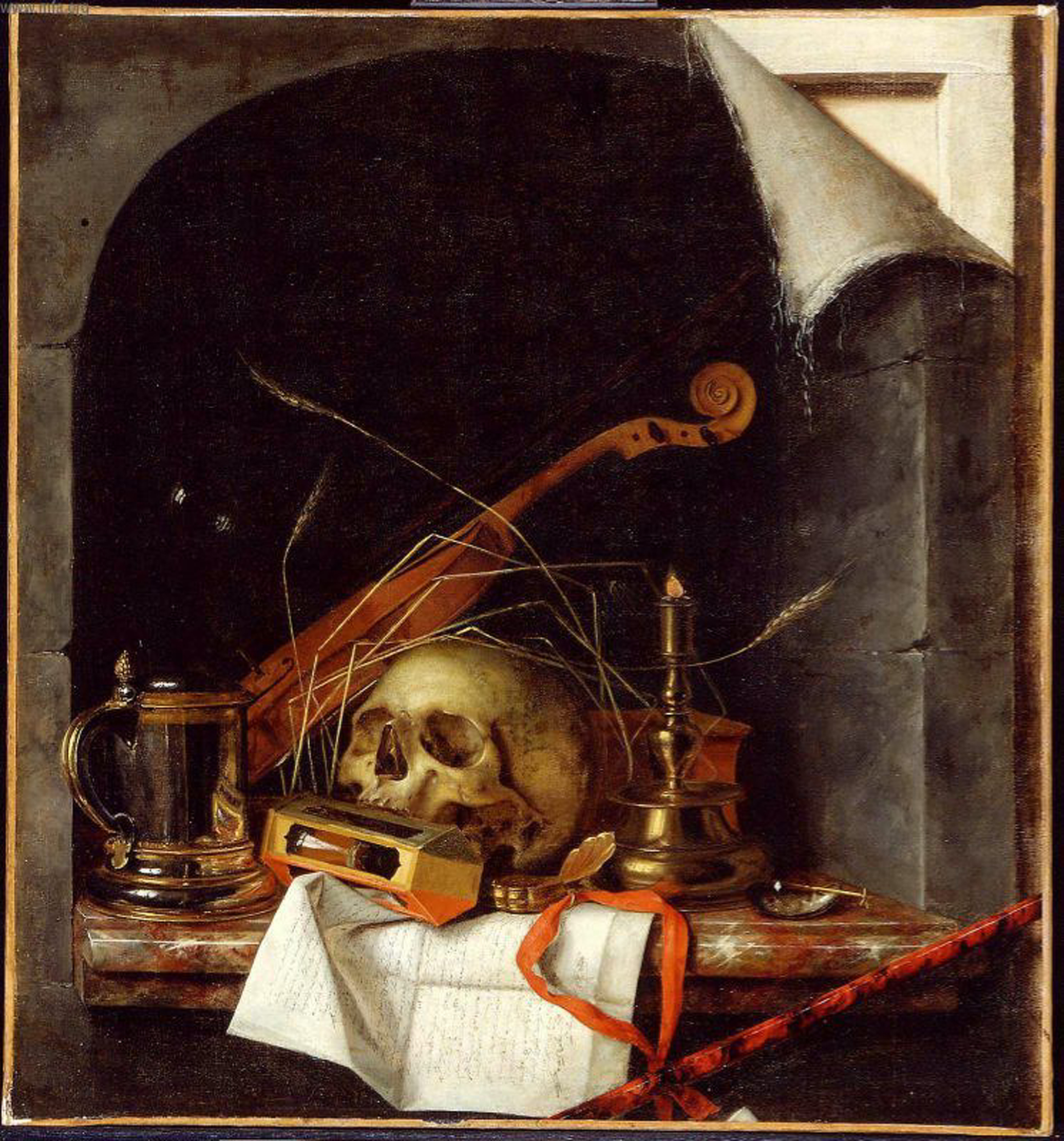
The image is Vanitas Still Life by Cornelis Norbertus Gijsbrechts (17th century) – http://www.Vanitasoceansbridge.com/oil-paintings/product/62477/vanitasstilllife, Public Domain, https://commons.wikimedia.org/w/index.php?curid=8052848.

Wisdom’s Call

“Gate of Wisdom” by sculptor Ju Ming, at the Chinese University of Hong Kong.

“From the heights I call; will you listen? No?
Beside the road I call; will you listen? No?

“By the crossroad I call; will you listen? No?
Beside the gate I call; will you listen? No?

“Then at the entrance to the portals I cry out:
‘Be wise! Learn! Love righteousness! Grow!’

“Will you listen?

“No?”

Though she should delight
in God’s inhabited world:

Wisdom weeps.

A poem/prayer based on Proverbs 8:1-4, 22-31, the Revised Common Lectionary first reading for Year C, Trinity Sunday.

Photo of “Gate of Wisdom” by Chong Fat – Own work, CC BY-SA 3.0, https://commons.wikimedia.org/w/index.php?curid=5193511.