Both Men and Women


“In the last days it will be, God declares, that I will pour out my Spirit upon all flesh, and your sons and your daughters shall prophesy, and your young men shall see visions, and your old men shall dream dreams.” – Acts 2:17, quoting Joel 2:28

Assembling for the feast of Shavuot, the Spirit roared.
No gentle breeze for us; a tempest howled there
among our trembling circle, through our trembling souls.
The flickering light upon our foreheads did
not shed illumination, no. I saw it as
a portent of our immolation.
Not since the angel told me not to fear
have I been so afraid.

My limbs have dragged my shivering frame
into the streets, which teem with goggling worshipers.
They fight their way upstream along the way
my son last trod beneath the burden of a cross.
How many know, how many care, that Jesus died
abandoned by his follower-friends, attended by
these women who, like me, recall dear Miriam,
who danced before the Law.

The raucous streets resound with Babel sound,
with accents I know well, and languages
I don’t. To my astonishment, one voice is mine,
another comes from Mary here, and Mary there,
and from a hundred other throats. We praise
our God, because when Jesus had been laid into
his tomb, the Holy One rejected our rejection, called
him back to life.

They scoff, of course, that we are drunk (how drunk,
they do not know, for I am filled with Spirit I have never known).
I draw my breath in deep. I plant my feet upon the unforgiving stones.
I start to lift my arm to summon all to hear my words,
and then I hear it: Simon’s voice, my son’s beloved Rock,
against all expectation quoting from the prophet Joel.
Who would have thought it? I rejoice, except: I wonder, when
will faithful people hear a woman’s voice again?

A poem/prayer based on Acts 2:1-21, the Revised Common Lectionary First Reading for Year C, Pentecost Sunday.

The image is The Virgin surrounded by twelve apostles or Pentecost, by Master of the Crucifix of Pesaro (ca. 1380). Photograph by Rama, Wikimedia Commons, Cc-by-sa-2.0-fr, CC BY-SA 2.0 fr, https://commons.wikimedia.org/w/index.php?curid=11148957.

Many artists included Mary among the Twelve in their depictions of Pentecost.

Full inclusion of God’s people does not stop at men and women.
To the SBC

Mary Magdalene went and announced to the disciples, “I have seen the Lord…” – John 20:18

Christ’s first messenger to those
he called as messengers was Mary.
Mary Magdalene. His friend.
She traveled with him on his road.

“Apostle to apostles,”
she’s been called, though they,
it must be said, did not believe.
But she was right and they were wrong.

So, those who now decide
to set aside the witness of
their sisters, you would mute
the Magdalene

As if you’d set your course
into a desert wasteland,
and there deprive yourselves
of water.

A poem written in response to votes at the Southern Baptist Convention’s annual meeting on June 14, 2023, to ban women from pastoral roles and remove churches led by women from the denomination’s rolls.

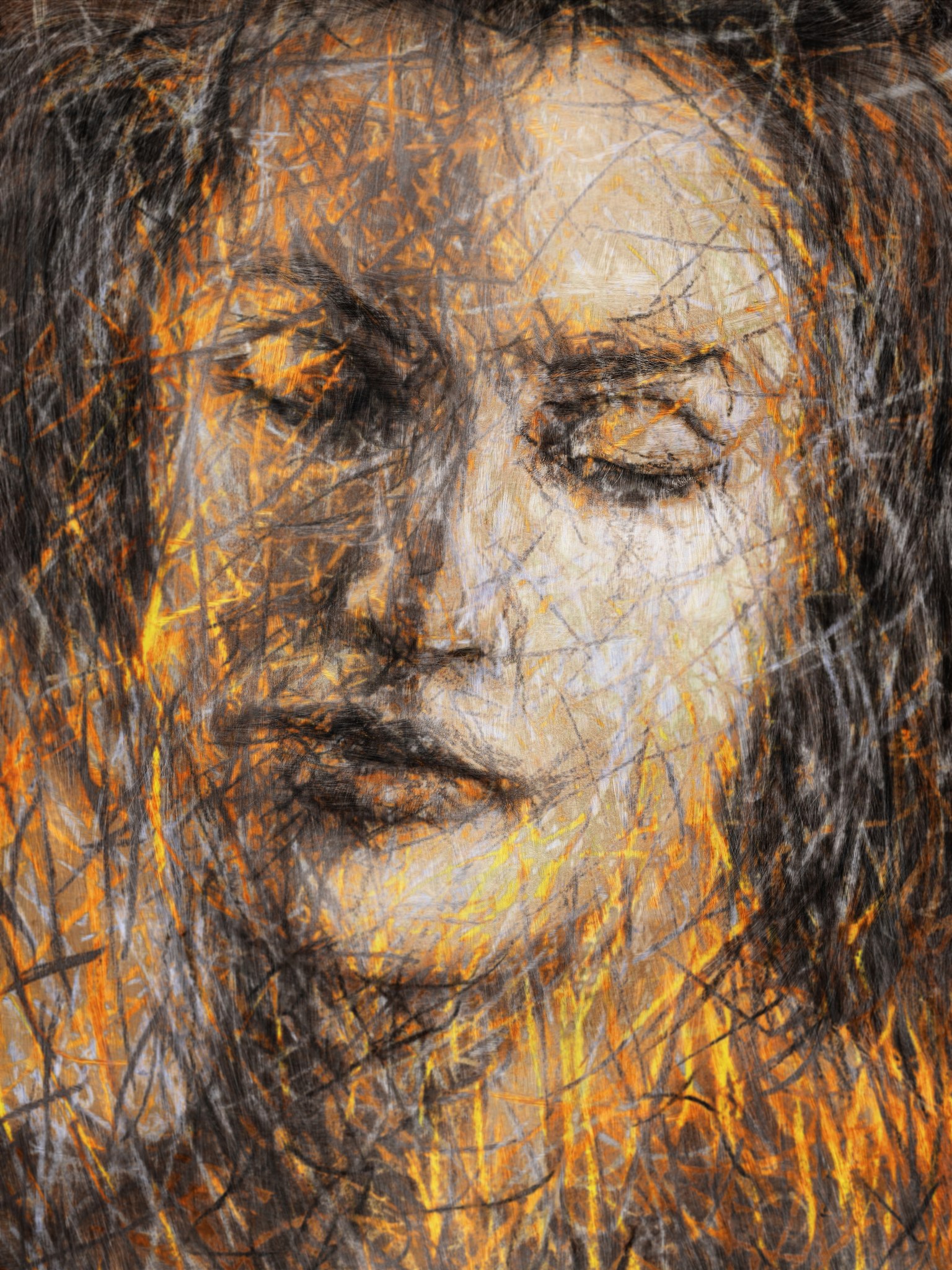
The image is Mary Magdalene, a Profoundism work by Koorosh Orooj – http://profoundism.com/free_licenses.html, http://profoundism.com/free_licenses_mary_magdalene.html, CC BY-SA 4.0, https://commons.wikimedia.org/w/index.php?curid=108033456.

I Have Seen

“So the other disciples told him, ‘We have seen the Lord.’ But he said to them, ‘Unless I see the mark of the nails in his hands and put my finger in the mark of the nails and my hand in his side, I will not believe.'” – John 20:25

I told you first, Peter. I told you first.
“I have seen the Lord,” I told you,
“after you had gone away from the grave.
He’s alive, I tell you, alive.
I have seen the Lord.”

I told you first, Peter, and you… well.
I’ve seen your eyes narrow before
when things don’t make sense, or you don’t
understand. Then you made a comforting noise, but:
I had seen the Lord.

Condescension from you isn’t new, Simon Peter.
You’re polite, but you’ll always rely
on the witness of your own two eyes –
or the witness of another guy – even though
I had seen the Lord.

Did you hear me that night when I laughed?
Oh, the sight of your faces was rich!
Where was your superior eye?
Though puzzled, your eyelids spread wide!
Now we had seen the Lord.

Is it mean of me to then delight
when Thomas repeated your cant:
“I’ll believe when I see it myself
and have touched what I know I can’t.”
Even though we had seen the Lord.

Will you learn, Simon Peter, from this?
Will you learn to trust more than yourself?
Will you learn to appreciate others?
Will you learn to believe when a woman tells you:
“I have seen the Lord.”

A poem/prayer based on John 20:19-31, the Revised Common Lectionary Gospel Reading for Year A, Second Sunday of Easter.

The image is Portrait of a Lady as Mary Magdalen by Bartolomeo Veneto (1520s) – lAF6gZfe-aeNCQ at Google Cultural Institute maximum zoom level, Public Domain, https://commons.wikimedia.org/w/index.php?curid=23590313.

I struggled a great deal to find an image of Mary Magdalene fit for this poem. There ought to be one depicting her declaration “I have seen the Lord!” to the male disciples, but I didn’t find one. She is frequently shown at the crucifixion and, of course, at the empty tomb. Most versions of “Noli me tangere” (Do not hold onto me) leave me cold. Mary has frequently been confused with other women in the Bible, partially because so many of them were named Mary (Miriam), and partially because of a strange tendency on the part of Christians to assume Jesus had few followers in his lifetime, so if two people look similar or have the same name, they must be the same. Pope Gregory I’s 591 Easter homily erroneously conflated Mary Magdalene, Mary of Bethany, and the unnamed “sinful woman” of Luke 7. As a result, European Christians came to assume Mary Magdalene had been a prostitute and the misnomer has lingered and grown. Paintings of the “Penitent Magdalene” are… well. They’re awful. Truly awful.

Veneto’s portrait comes from the “Magdalene as Myrrhbearer” genre. The woman’s side-eye glance comes close to expressing what I imagine Mary Magdalene’s irritation with Jesus’ male disciples. Now if someone would only paint her rolling her eyes, that would be better.