June 11, 2023
Hosea 5:15-6:6
Matthew 9:9-13, 18-26
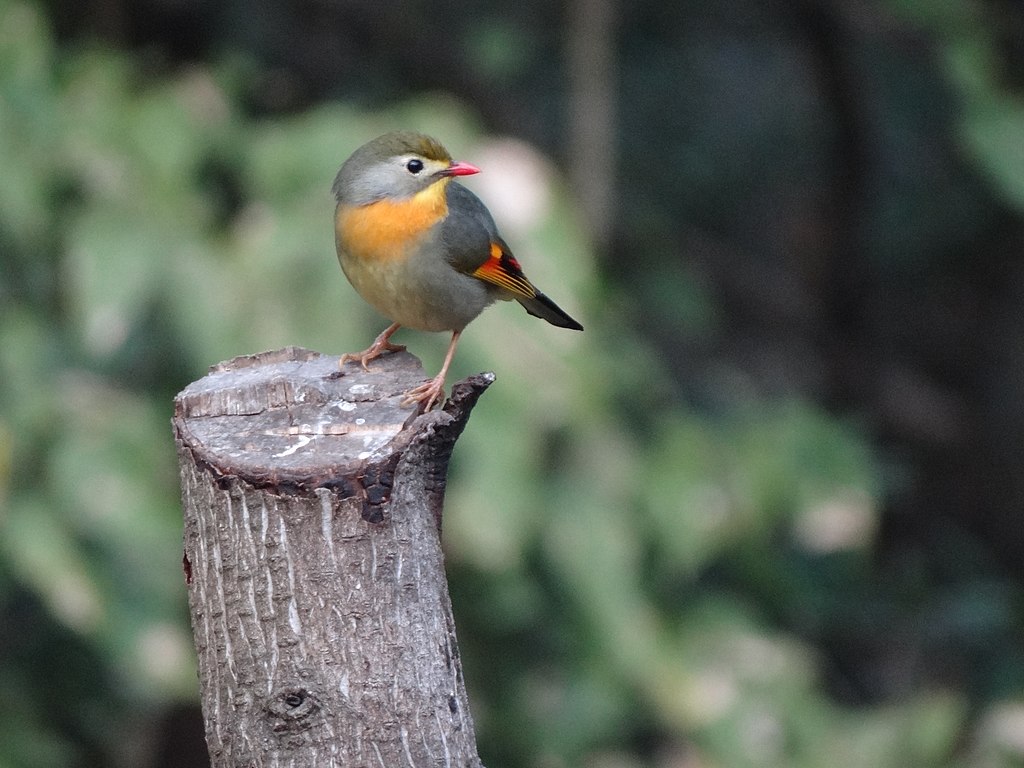
The red-billed leiothrix, like myna and the mejiro, is a bird that’s a relative newcomer to Hawai’i Island. They’ve been here for a little over a hundred years.
They can be pretty cheerful singers, on the whole, with a nice lilting chirp. They’re better known on Hawai’i Island for what they sound like when they’re alarmed, though. It’s a loud and harsh rapidly repeated sound that almost sounds like some sticks being rubbed together. If you’re walking about in the forests or the kipukas up the mountains, you’re likely to hear it, because they tend to make it when humans are about.
A grandfather was instructing his grandchildren in making the call (I can’t imitate it, I’m afraid). After he’d taught them how it was done, he turned to the times to make the sound.
“You make it when there’s an i’o about, or a pueo,” he said. “And don’t forget to make it when there’s a human around. We always want to let people know about those.”
The grandchicks wanted to know what a human was like, so after explaining that it was a big flightless bird with very peculiar wings, grandfather taught them to make the call again.
“Who should hear this sound?” one of the chicks asked her grandfather.
“What do you mean, who should hear this sound?” he asked.
“Well, I thought this would be just a leiothrix sound,” she said. “Mynas probably aren’t interested, are they? Other birds might not understand.
“And if some birds do understand,” she continued, “it might not be so good for us.”
“What do you mean?” asked grandfather quietly.
“If I see an i’o and make the sound,” she said, “then all the birds will hide. If I’m not as good or as quick at hiding as they are, the i’o might try for me, wouldn’t it? If some other birds are exposed, then we leiothrixes will be better off.”
Grandfather stayed quiet for a long time. Then he sighed.
“You’re right, of course,” he said. “If we don’t alert other birds to the i’o or the human, we’ll be safer when we see the danger first. But what if the ‘apapane sees the pueo first? Or the ‘akepa? Or the mejiro? What if they alert only their own kind, and not us? What happens then?”
Now the chicks were silent, until the one who’d asked the question said, “Nothing good.”
“Nothing good,” said grandfather. “We warn everybody so that everybody will warn us.”
“I see,” said the chick who’d asked, and her brothers and sisters nodded, too.
“How loud do we make the warning sound?” asked grandfather.
“As loud as we can!” said the chicks.
“Who should hear?” asked grandfather.
“Everyone!”
So when you’re walking the kipukas and the forests on the mauna, you’ll hear the leiothrixes, warning everyone that you’re near.
by Eric Anderson
Watch the Recorded Story
I tell these stories from my… not quite reliable memory of the text I’ve written. Differences are inevitable – and regular.
Photo of a red-billed leiothrix by Raman Kumar – Own work, CC BY-SA 4.0, https://commons.wikimedia.org/w/index.php?curid=53968581.
 ordainedgeek
in this story I want to see myself as the wise leiothrix grandparent, next the chick, but finally I must see myself as the human and know why all the natural world should warn against me.
Yes, indeed. To be explored in another story… though I have no idea when.
The time will be write … whoops! right.