August 25, 2024
Psalm 34:15-22
Ephesians 6:10-20
A newly hatched honu isn’t very big. Two or three inches long. They spend their time feeding on the seagrasses in which they hide in the shallows of our island.
A kupuna honu is a lot bigger, up to four feet long and weighing over 300 pounds.
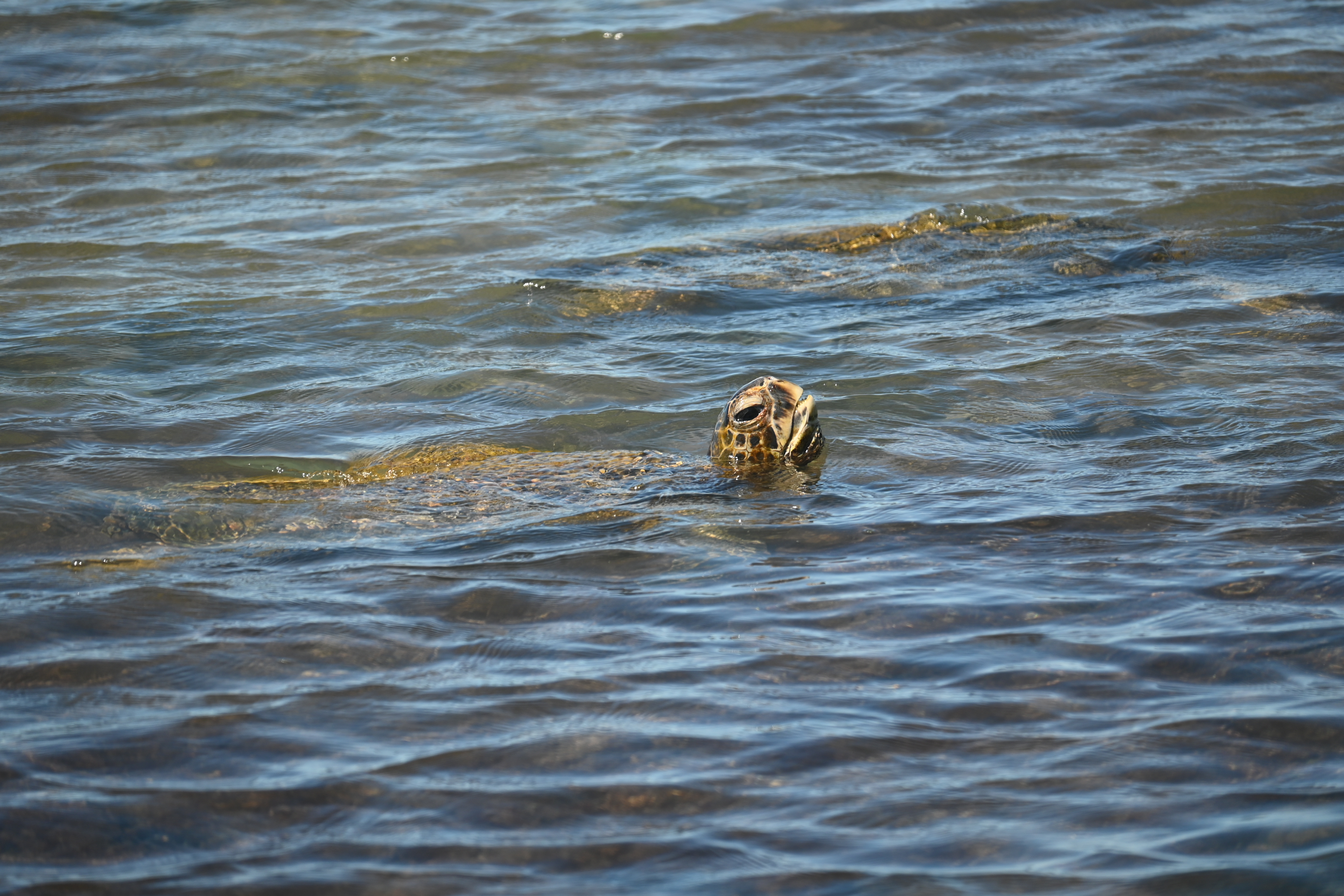
Our honu today was bigger than a hatchling and smaller than a kupuna. He was maybe a foot long, had well developed flippers and tail, and enjoyed both swimming in the ocean waters and in the shallows near the beach. And, like all honu, he liked sunning himself on the rocks or the sands.
But… he was worried about manō. Sharks. A good size tiger shark could be a real problem. He kept a wary eye out for manō as he swam along the reef, and he listened intently for the sound of water passing over their sleek fins. He had a good strong shell, he knew, but… well. Who could tell if that would be enough?
One day, though, he got an idea. He’d just seen a wave move some rocks up and down the beach. What if he could find some way to attach rocks to his shell? Corals and opihi and, for that matter, the sea grasses he liked to eat managed to stick to things. What might give him an extra shell?
I still don’t know what he found to do it, but he did find something sticky, and he covered his shell with it. Then he went to a beach loaded with loose stone, moving back and forth with the waves. As they went clattering down the beach, they stuck to his shell, and suddenly he was the best armored honu in history.
He rested on the beach for a while, delighted with his success. He napped in the sun. The rocks actually made him just a little warmer as the sun warmed them, which was really nice. When he woke up, he was hungry. So he started crawling down the beach into the surf.
He was surprised to find it really difficult to move along. The stones on his shell weighed him down, and his flippers strained to push him along. “It will be better when I get into the water,” he thought.
He was wrong.
As difficult as moving along the beach had been, swimming was worse. The stones dragged him right down to the sea floor, and he struggled to swim back up to breathe – honu aren’t fish, you know. They breathe air. Every time he caught a breath he’d be back under a moment later. Honu can hold their breath a lot longer than I can, but this was not good. Not good at all.
He struggled back to the beach until his tail was in the water and his head out of it, with waves lapping at his shell as he gasped.
“Too heavy?” asked a passing ‘ulili.
“Too right,” said the honu, who started scraping the stones off. The ‘ulili used his long beak to help pray them away.
“Thanks for your help,” said the honu, and the ‘ulili replied, “I’m happy to help, Rocky.”
Rocky the honu laughed, and he wore the name the rest of his long life, but he never wore any rocks again.
Armor has its price, you know. Sometimes its protection is too heavy for living. Sometimes we do best by relying on what we can carry.
by Eric Anderson
Watch the Recorded Story
I write these stories in advance, but I tell them on Sunday morning from (occasionally poor) memory and (occasionally creative) inspiration. What you’ve just read will not match what I said.
Photo of a honu by Eric Anderson.
 ordainedgeek
I truly love this. I have a month to preach at an Indonesian church in October and this may become one children’s sermon.
Was this a typo? It actually makes sense.
“Too right,” said the honu, who started scraping the stones off. The ‘ulili used his long beak to help pray them away.
Well, yes. It was a typo. Still, who am I to argue with serendipity?
If you’re looking for the Indonesian word for “honu,” the English name is “green sea turtle.”
penyu hijau. Now I also know that there are seven sea turtles in the world and six of them live in Indonesia