Whose Image?

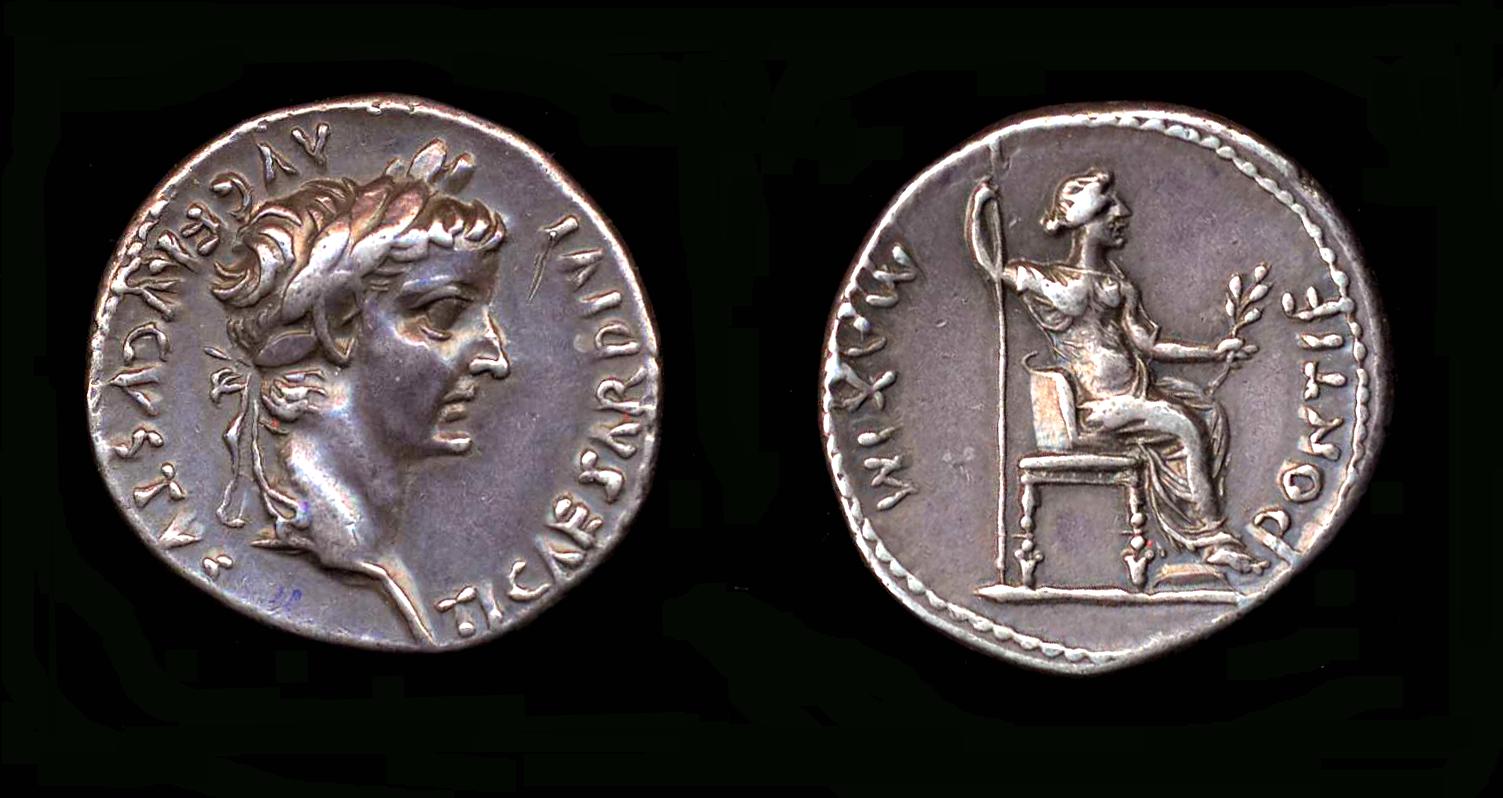
Then [Jesus] said to them, “Give therefore to the emperor the things that are the emperor’s, and to God the things that are God’s.” – Matthew 22:21

Nobody asked, “What things are God’s?”
for fear, perhaps, you’d speak the answer then:
“All things belong to God; all things, including you.”

Two millennia we’ve focused our attention
on the first, imperial, clause, debating what
the monarch, governor, or mayor should receive,

As if what they received did not belong to God,
both when the coins were in our hands and when
they’d dropped into official palms. They still belong to God.

As crimson cascades in its gruesome torrents
from the slain of Israel and Gaza, of Ukraine,
Myanmar, Maghreb, of Russia and Sudan,

Of Mexico and Ethiopia, and dozens, scores,
of nations bled by fewer deaths but still,
too many when the the only number should be, “none,”

What do you tell us now, in our imperial power?
Do you hold out the twenty dollar bill and say,
“Please, not like this. Oh, not like this”?

Or do you drop your head into your hands
and in a river of frustrated tears
weep for the desecrated images of God?

A poem/prayer based on Matthew 22:15-22, the Revised Common Lectionary Gospel Reading for Year A, Proper 24 (29).

Photo of a first century denarius of the Emperor Tiberius by Portable Antiquities Scheme from London, England – Tiberius, R6195, BMC 49. Uploaded by Victuallers, CC BY 2.0, https://commons.wikimedia.org/w/index.php?curid=10817585.

It Seemed So Easy

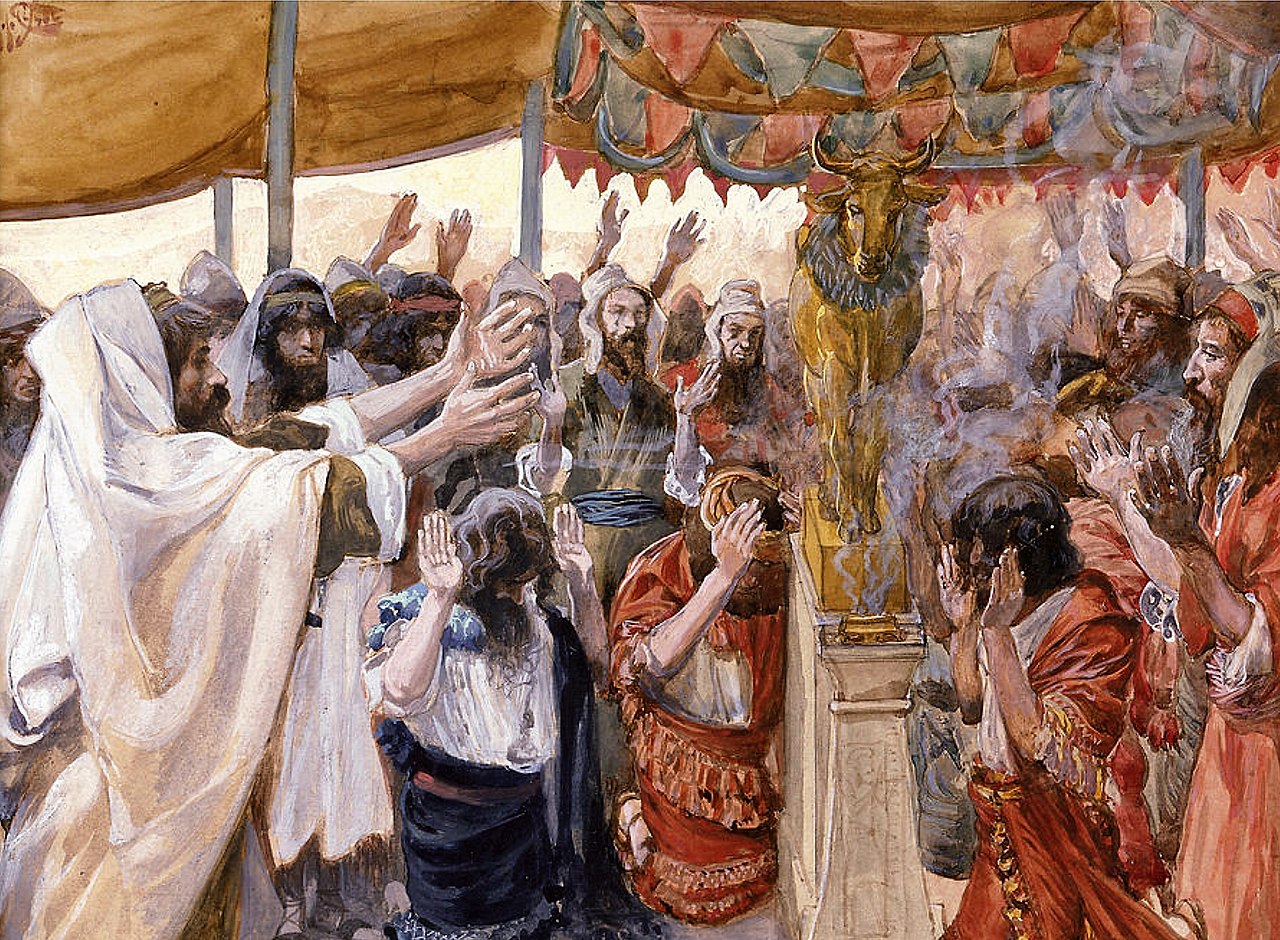
“[The people said,] ‘Come, make gods for us, who shall go before us; as for this Moses, the man who brought us up out of the land of Egypt, we do not know what has become of him.'” – Exodus 32:1

Those Ten Commandments seem so clear.
I hardly even needed to take notes
(though in all honesty my memory
is unreliable about the honor due to parents) to
live righteously with just a few missteps.
I certainly would never worship figurines.

Before I criticize those people in the desert wastes,
perhaps I’ll walk a mile in their shoes,
uncertain whether when the day is gone,
that water may be found, and whether on
the morrow manna will appear, to satisfy
the hungry travelers of Sinai.

The man whose staff wrought miracles
had vanished in the clouds that wrapped
the mountain’s height, in billowed fire
that no one could contemplate surviving.
In his absence who could speak to God?
Who could interpret God to them?

“Make for us gods,” they said, and so would I,
for with a leader vanished and the desert fierce
at hand, I’d seek – I’d want – to crystallize
my hopes, to incarnate my faith, to be
the comfort of my fears. A calf? Why not?
It symbolizes promise, strength, and growth.

You’ll find no statue of a calf among
the decorations on my wall or door.
You’ll find the cross – a symbol only, right? –
and yes, some artwork of my favorite stories, like
the walk with Jesus to Emmaus, and
the supper Jesus held with his close friends.

No, these for all their imagery, are not
my idols. I look for comfort rather more
in tasks completed, praises given me,
for though I blush at them, I trust in them
to keep me safe and soothe my soul
amidst the pains and sufferings of life.

They do not work. Oh, they will stimulate
a flush of pleasure in the moment, but
the feeling fades. I know if I rely
on human approbation, I will put my heart
in danger of starvation – I’ve been parched
when human love ran dry before.

It’s human, I suppose, to seek a way
to make the evanescent tangible,
to hold in hand or ear or brain or heart
a solid thing, a symbol sensible,
like praise or wealth or sex or dignity.
These are our ordinary golden calves.

Forgive us, Holy One, as we have failed to learn
how legion are the idols we will make,
how much they look like faithfulness they ape,
how little they will heal or comfort us.
Forgive us, God, and by your grace
dissolve our idols and restore our souls.

A poem/prayer based on Exodus 32:1-14, the Revised Common Lectionary First Reading for Year A, Proper 23 (28).

The image is The Golden Calf by James Jacques Joseph Tissot (French 1836-1902) – https://thejewishmuseum.org/collection/26377-the-golden-calf, Public Domain, https://commons.wikimedia.org/w/index.php?curid=7180440.

Ownership

“When the chief priests and the Pharisees heard his parables, they realized that he was speaking about them.” – Matthew 21:45

I’ve never owned land. I’ve never had a tenant.
I’ve been the tenant. I’ve been the replacement tenant.
I’ve felt the urge to seize control.
I’ve seen what happened to those who tried.

When Jesus told this story, God, did those
all-powerful people hear the landlord as themselves?
Did they nod with satisfaction as they gave the story’s end:
“He’ll put those wretches to a miserable death.”

I wonder what a shock it must have been to hear
that they were not the owner, but the tenants,
that they did not possess the power or
the ownership they thought they had.

O Heavenly Gardener, may I tend this vineyard
you have given me to cultivate with care,
and neither seek to seize it for my own,
or punish those who take it for themselves.

A poem/prayer based on Matthew 21:33-46, the Revised Common Lectionary Second Reading for Year A, Proper 22 (27).

The image is Le fils de la vigne (The Son of the Vineyard) by James Tissot – Online Collection of Brooklyn Museum; Photo: Brooklyn Museum, 2007, 00.159.139_PS2.jpg, Public Domain, https://commons.wikimedia.org/w/index.php?curid=10957416. Of all Tissot’s paintings of Jesus’ life, death, and teachings, I find this the most chilling.

Small Voice

“Do nothing from selfish ambition or conceit, but in humility regard others as better than yourselves.” – Philippians 2:3

So many years ago:

The certainty with which I judged.
The anger I received,
Hot words with friends
There in the driveway.

The bitterness I brought to bed
that, strange to say, provoked
a prayer. To my surprise, in answer
came a voice:

“You were wrong.
Go and apologize.”

Since that angry night,
I’ve known that pride goes not
before the fall: Pride is the fall.
At least, my fall.

The voice did not just speak
to judge or to correct, but leads
and has led me that night to this.
And, no, I’m never sure

This voice is God’s, and this voice mine,
but on that night, I knew and know.
If I am humble, it has been
the struggle of my life and soul.

So Paul rings true to me
to warn of pride (I laugh to think
how much he struggled with
his very warning),

And I take my comfort in
the humble form of Jesus, who,
though God in truth, eschewed the power:
and shared the love.

A poem/prayer based on Philippians 2:1-13, the Revised Common Lectionary Second Reading for Year A, Proper 21 (26).

Photo by Eric Anderson.

Author’s Note: This is a true story. I’ve struggled with pride ever since, of course. My arrogance is never far away. For the record, I followed the advice of the voice. I apologized.

Hard Work

“And he [the landowner] said to them, ‘You also go into the vineyard, and I will pay you whatever is right.’ So they went.” – Matthew 20:4

You’ve given me heavy lifting, Jesus.
How shall I understand this tale?

Do you applaud the naked use of power
that’s used by rich and haughty men
(and yes, I do mean men) to stratify
and separate the workers who might,
joined together, change the world?
Oh, that would pain me, Jesus.

Or should I see in this landowner’s
strange caprice the startling love
that cannot be provided less to one,
and more to one, for love unmeasured
cannot be decreased or increased?
This lifts my heart to hope.

Do I perceive a stern rebuke to those,
like me, who act as if they know your will
much better than the ones whose faith
is newly growing, newly shining?
It is a painful arrogance to think that you
have set me on a throne to rule.

Is this a welcome call to nations
who could never comprehend your word,
O Jesus, in that ancient Aramaic?
Those who, like me, are grateful for
the pen of Matthew to record your parable,
and translators to share this text?

Where shall I find my place, O Christ,
in this strange tale? Am I the powerful one?
I, long ago, put off my entry to the Church,
so have I come late in the day, or have
so many days passed now that I have worked
the morning, noon, and afternoon?

I guess I’ll have to let your Spirit move.
These things, and more, are… “obvious.”
And when I struggle with the obvious
your prompting steals on stealthy step
to prod my heart and soul. Impel me, Christ,
to find my place, from first to last, in you.

A poem/prayer based on Matthew 20:1-16, the Revised Common Lectionary Gospel Reading for Year A, Proper 20 (25).

The image is part of an illustration from the 11th century Codex Aureus Epternacensis, Public Domain, https://commons.wikimedia.org/w/index.php?curid=10315166. One of the things that fascinates me about this image (and two companion paintings of the beginning and end of the Matthew 20 story) is that the faces are so alike. I’m certain that’s an artistic choice, and I’m letting it work within me.

If You Do Not

“[Jesus said,] ‘So my heavenly Father will also do to every one of you, if you do not forgive your brother or sister from your heart.'” – Matthew 18:35

I’ve done it, Jesus. I have granted my release
to people who have hurt me. They confessed their fault,
they offered restitution. I said, “I forgive you,”
and I meant it. We reforged our peace.

I’ve done it, Jesus. I have bade farewell
to consequences that I might have asked.
Though truthfully, I’d never have received them
from these ones who never owned their harm.

I’ve done it, Jesus. I have asked for true
confession from the ones who’ve hurt me, though
they’ve offered only their excuse and not
acknowledged any harm.

And I wish that I could do it, Jesus.
I wish that I could set aside the hurt
that aches within, despite the glib assurance
that they hurt me, “for the best.”

What is forgiveness offered when I’m told
my hurt was for my good, my harm
a temporary thing, when it has lingered
on and on and on?

I’ve done it, Jesus. But
I do not think
I can
do this.

A poem/prayer based on Matthew 18:21-35, the Revised Common Lectionary Gospel Reading for Year A, Proper 19 (24).

The image is The Parable of the King and His Servants by Lawrence W. Ladd (ca. 1880) – http://americanart.si.edu/collections/search/artwork/?id=14161, Public Domain, https://commons.wikimedia.org/w/index.php?curid=60792927.

First We Eat

This is how you shall eat it: your loins girded, your sandals on your feet, and your staff in your hand; and you shall eat it hurriedly. It is the passover of the LORD. – Exodus 12:11

They tell us that the night for which we’ve longed
has come. The days of bondage reach their end.
The day is marked in blood and death, for which
I sorrow. Blood besmirches my door frame,
and spots the threshold where the lintel drips.
But first: we eat.

We did not have a massive flock to search.
Our neighbors had no flock at all. We sit
together at the table laid in haste.
A meal of meat is hardly everyday,
but we will eat tonight in deadly haste.
Yes, first: we eat.

Someday I’ll have the time for roasted lamb,
to savor and rejoice in sensory
delight. Tonight the flavor that I seek
is freedom’s sweetness dropping from the chin,
and so my staff rests by my sandaled feet.
But first: we eat.

A poem/prayer based on Exodus 12:1-14, the Revised Common Lectionary Gospel Reading for Year A, Proper 18 (23).

The image is “The Feast of the Passover” by Charles Foster – from Charles Foster: The Story of the Bible from Genesis to Revelation Hartford, Conn., 1873., Public Domain, https://commons.wikimedia.org/w/index.php?curid=59186517

What Shall I Say to Them?

“God said to Moses, ‘I AM WHO I AM.'” – Exodus 3:14

I don’t usually indulge in the histories
of the shepherds who keep us.
What matter to me or to ewe
as long as they lead us to grass?
As long as they guard us from wolves?
As long as they don’t get us lost?

But Moses, for all of his protests to God,
did not keep his silence from us.
How often we heard how he lived dual lives,
one family held by the other as slaves?
How often we heard he had ruled as a prince
and fled as a criminal here to our hills?

Though I’ve not known a sheep with two hearts,
poor Moses had two in his breast.
One beat to the rhythms of royalty.
One pulsed with the sorrow of slaves.
He wept when he called out his orders.
He knelt when he tended our hurts.

I’m not one to linger by fire – it burns –
but when Moses turned aside to the flaming bush,
I followed, and listened, and chewed on the grass.
The voice challenged Moses to merge his two hearts,
to step up and lead, not as prince, but as prophet,
to commit his one heart to deliver his people.

He sidestepped and soft-shoed, did Moses.
“Who am I?” he demanded, “to set people free?”
No sheep ever asked, “Who am I?” but of course,
no sheep ever lived with two hearts in its chest.
“You are the one I have chosen,” said God.
Just one, said God. One man with one heart.

“Well, then, who are you?” asked the twin hearts of Moses.
“Who shall I say has given this command?”
A soul who couldn’t be sure of himself
asked another for certainty. An echoing
silence greeted the question awaiting an answer.
“What is your name?”

“I AM WHO I AM.” the voice softly declared.
“I am who I am” is all I could say
if asked to account for my being, my name.
“I am who I am” reveals my one heart,
my undivided soul, my unified self.
“I am” is enough for a human, for God, for sheep.

Are you listening, Moses? Do you understand?
“I AM WHO I AM,” is the living Divine,
but is also the nature of all living things.
Let your hearts be united now, Moses,
and see. You are who you are.
You are made in the image of God.

When he put on his sandals, returned to the flock,
I followed, and knew I would see him no more.
His separate hearts were not healed, no not yet.
They were healing, however. “I AM” had begun.
He called us together this time without tears.
He led us on home. He led us to home.

A poem/prayer based on Exodus 3:1-15, the Revised Common Lectionary Gospel Reading for Year A, Proper 17 (22).

The image is Moses before the Burning Bush by Domenico Fetti (ca. 1615-1617) – Kunsthistorisches Museum Wien, Bilddatenbank., Public Domain, https://commons.wikimedia.org/w/index.php?curid=5224456.


Learn, Baby, Learn

But the midwives feared God; they did not do as the king of Egypt commanded them, but they let the boys live. – Exodus 1:17

Learn, baby, learn.

All you know of the harshness of living on Earth
are the infant’s discomforts, the hunger, the wetness,
the missing embrace, the blanket unwrapped.
There are forces unknown which will end your discomforts.
They would open your veins. They would have you breathe the Nile.

Learn, baby, learn.

There are some who bear swords and will use them on you.
There are some who will tell them to slaughter and kill.
There are some who will rotate their heads in their shame.
There are some who will watch and will nod in approval.
There are some who will believe that their silence is speech.

Learn, baby, learn.

Learn of the men who build power through fear.
Learn of the women they threaten with terror.
Learn of the ones who will not tread the path
of violent obedience, life-stealing loyalty.
Learn of the midwives and of your own kin.

Learn, baby, learn.

Your mother has given your life to the Nile –
a desperate step, a foolhardy plan –
the river’s rough reeds, woven in pitch,
are all to preserve you from Pharaoh’s desire,
to stop up your breath with the waves and the flood.

Learn, baby, learn.

A woman retrieves you from your fragile ark.
Though raised up in power, it’s pity that rules her.
Compassion and courage have saved you, small one:
Bithiah’s mercy, Miriam’s courage,
Jochebed’s thoroughness, Puah’s fear of God.

Learn, baby, learn.

Learn the mercy, the courage, the constant attention.
Learn the creative ways to harbor the innocents.
Learn the eyes that perceive the power of pity.
Learn the power of pitch against the waters that drown.
Learn, budding prophet, to be faithful to God.

Learn, baby, learn.

A poem/prayer based on Exodus 1:8-2:10, the Revised Common Lectionary Gospel Reading for Year A, Proper 16 (21).

The image is The Finding of Moses by Salvator Rosa (1660) – https://www.dia.org/art/collection/object/finding-moses-59779, Public Domain, https://commons.wikimedia.org/w/index.php?curid=79699569.

The two midwives are identified as Shiphrah and Puah in Exodus 1:15. Moses’ sister Miriam is first named in Exodus 15:20, where she is described as “the prophet Miriam.” Mother Jochebed’s name is revealed in Exodus 6:10. The “daughter of Pharaoh” is not named in Exodus. 1 Chronicles 4:17 calls her “Bit-yah,” or “daughter of the LORD,” and is the source of the name I’ve used here.

Bad Day

“Then the disciples approached and said to him, ‘Do you know that the Pharisees took offense when they heard what you said?'” – Matthew 15:12

I’m having a bad day, Jesus. I’d like to roundly curse
the next sad soul who crosses me – or simply falls
in front of me. I don’t much care if they have given me
offense or not. I’m just a sharing guy – sharing my bad day.

I see you know the feeling, Jesus. Did you care
you’d irritated anyone that day? They’d asked
about your followers and why they didn’t wash their hands
(I’d like to know myself). Was that so bad?

You counter-punched, and hard. You charged them with
a greed that left their parents sunk in poverty.
Okay, I’m sure that some had done precisely that,
but all? Oh, no. Though… they had not corrected it.

You called the crowds, and told them all their leadership
spoke excrement. No wonder they were angry, Lord!
You added extra measure, calling them “blind guides,”
when you knew well the blind can understand.

It’s good to step away from these things, Jesus, You had said
enough and more. You’d demonstrated all too well
the truth that what comes from the mouth defiles.
These leaders and your friends have heard it all.

I hear the cry for mercy, now. A desperate soul,
whose love has brought her to a foreigner
to bring her daughter to herself. And you –
you treated her far worse than you would treat a dog.

Now do you blush to hear the words again?
Now do you soften softly your hard heart?
Now do you praise the woman’s sharp perception
and persistence and bring healing to the child?

I’m having a bad day, Jesus. You would know
the worst of days, and take them better than you did
this day. Might you spare a moment then, I pray,
and soften stony heart inside of me?

A poem/prayer based on Matthew 15:10-28, the Revised Common Lectionary Gospel Reading for Year A, Proper 15 (20).

The image is Jesus and the Woman of Canaan by unknown artist (ca. 980 – 993) – Codex Egberti, Fol 35v, Public Domain, https://commons.wikimedia.org/w/index.php?curid=8096755.