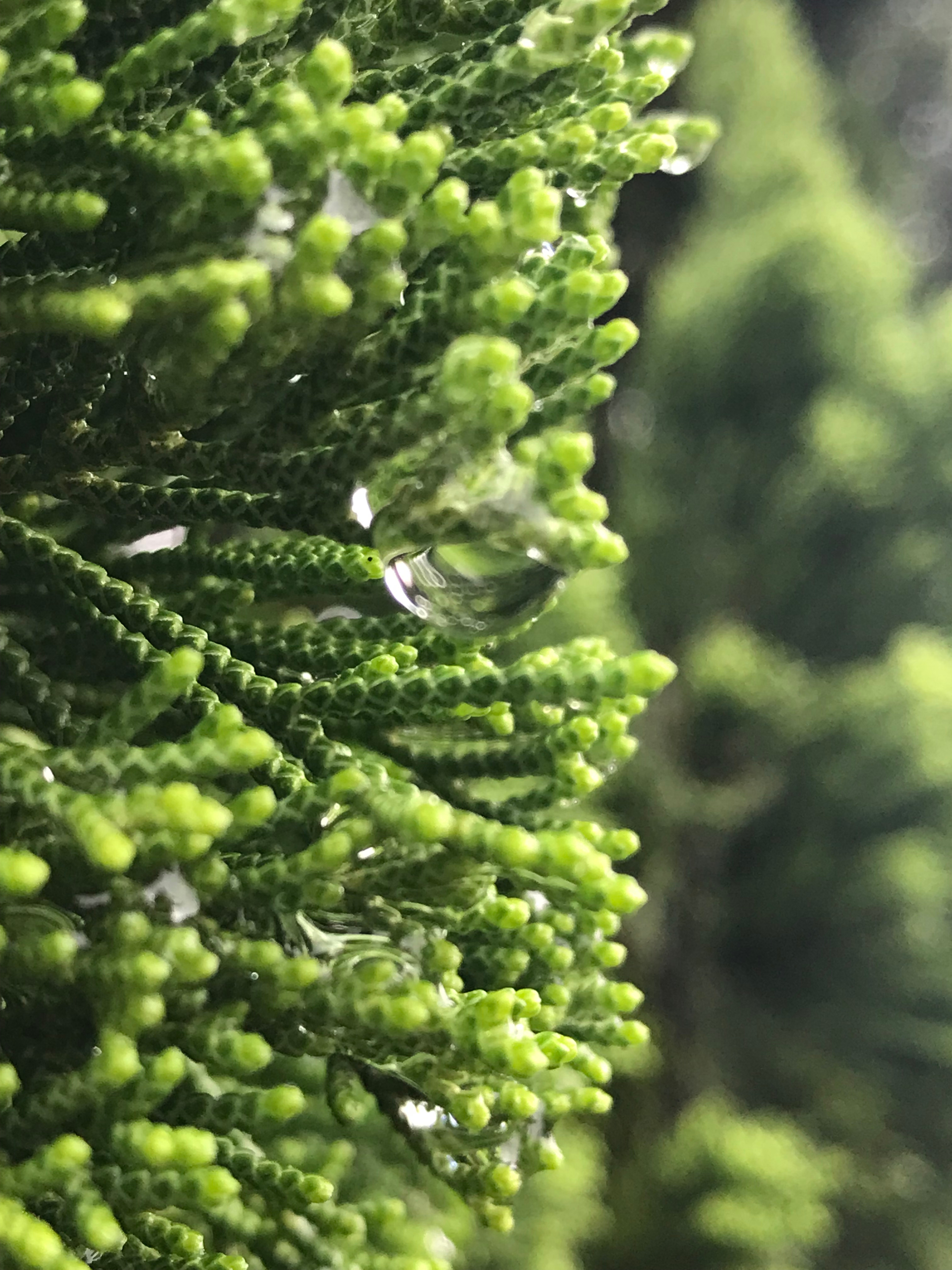
“If we put bits into the mouths of horses to make them obey us, we guide their whole bodies… And the tongue is a fire.” – James 4:3, 6a
My tongue has been trained, yes it has. It has been trained in true and righteous speech, through the best efforts of parents, teachers, friends. I am a credit to them when I speak well.
Well.
My tongue has been inflamed, yes it has. It has sputtered sparks and spat forth fire. When furious clamor has arisen from my foolish words, I am a credit only to myself.
Well.
What bit will serve to govern streams of fire? What governor will guide a flaming tongue? A pity that there is no quick solution, though silence, at the least, constrains the blazing word.
A poem/prayer based on James 3:1-12, the Revised Common Lectionary Second Reading for Year B, Proper 19 (24).
“Now the woman was a gentile, of Syrophoenician origin. She begged him to cast the demon out of her daughter. He said to her, ‘Let the children be fed first, for it is not fair to take the children’s food and throw it to the dogs.'” – Mark 7:26-27
I had no illusions, Jesus.
I almost didn’t spot you, though I looked. A neighbor mentioned casually that “a healer Jew from Galilee” was near as if it made no difference to me.
You know it did, Jesus.
I left my wailing daughter with a friend and searched the streets to find a face I did not know. Despite our sorrows, I know every face upon our streets.
I knew you from not knowing you, then, Jesus.
You’d made no effort to declare yourself so I could not believe you’d come to help the sick and demon-burdened in our village here, but help you would, if I could have my way.
I had to have my way, Jesus.
I found your stranger’s face. I bowed upon your feet. I begged you for your healing touch to soothe my child’s rage, assuage her fear, give to her peace.
I knew that you’d say, “No.”
You said it with a cruelty that nearly stopped my breath, though I had no illusions, none. I stammered out my need’s reply: “The dogs can eat the children’s crumbs.”
I was not after crumbs.
No, Jesus, I would have it all. Not all or nothing, I would have it all, because what use is partial banishment of demons burdening the human soul?
No crumbs, Jesus. All. And I mean all.
You gave it all to me, you know. You gave me all your cruelty (I hope you used it up). But then you gave me all the healing power of your anguished face.
My daughter got it all.
She’s never seen you, Jesus, as you know. You took your shattered heart, remade it new, to heal and heal again, and left behind a girl once more herself,
And your illusions cast aside.
A poem/prayer based on Mark 7:24-37, the Revised Common Lectionary Gospel Reading for Year B, Proper 18 (23).
“[Jesus said,] ‘…there is nothing outside a person that by going in can defile, but the things that come out are what defile.'” – Mark 7:15
The awkward hour – well, not quite an hour – takes place each morn as I step in the shower. While water cascades on my form and soap dislodges clinging dust, my memory tunes to regret.
I sigh into the foam.
I’ve plenty to regret, and hope that you have less. I recall failed relationships, the ways I’ve failed my family and friends. I wonder how I’ve grieved my God – and wonder, too, how I can claim to wonder…
My feet shift with discomfort.
The exercise might be worthwhile if it prompted me to understandings new, new ways to make amends, repair what had gone wrong, but mostly I just grieve.
I close my eyes against the shampoo’s sting.
Symbolically, I’m doing all I can to cleanse, but in my spirit: no. These demons have not been expelled. They live quite happily within my memories and recollected thoughts.
Knobs turned, the water does not fall.
Yes, Jesus, it is from within these things emerge, defiling once again my spirit, laying low my joy in you. I ask myself, “Why do this to yourself?” and know I am not reconciled to me.
I pray that I am reconciled to you.
A poem/prayer based on Mark 7:1-8, 14-15, 21-23, the Revised Common Lectionary Gospel Reading for Year B, Proper 17 (22).
“Finally, be strong in the Lord and in the strength of his power; put on the whole armor of God, so that you may be able to stand against the wiles of the devil…” – Ephesians 6:10-11
I’m grateful that the struggle is not with the powers of blood and flesh. Not if I’m to rely upon these items for protection of my vital spark.
What happens to the righteous? Why, they suffer, as do those who speak of peace. A shield of faith is powerless against an arrow, or a club, or fist.
Should I entrust my head to its salvation? The logic doesn’t work for me. I wish I thought an offense of the Spirit, of the Word, protected anyone, but… no.
And worst of all, to recommend I gird my waist with Truth, as if the truth has ever carried any weight when cut so easily by lies.
But then I see a brilliant coral called “The Armor of our God,” protected by no more than truth, feebly anchored to its rock.
These corals can be shattered by a careless underwater step, the floating residue of sun protection, by a current that directs its food away.
If coral, brilliant in its indigo, can live its fragile life beneath the sea, I might, perhaps, submit my life to living with this unprotective armor,
Rooted in the truth, acting righteously, striding ever toward the reign of peace, with faith displayed before me, head a-crowned with Christ’s salvific work,
Equipped to bring the Spirit’s Word to those who might, in turn, take on this truth, this righteousness, this peace, this saving faith, this summons from our God.
Author’s note: I have no idea what I was going to write about before I found this photo of an “Armor of God” Zoanthid coral.
A poem/prayer based on Ephesians 6:10-20, the Revised Common Lectionary Second Reading for Year B, Proper 16 (21).
“Do not get drunk with wine, for that is debauchery, but be filled with the Spirit, as you sing psalms and hymns and spiritual songs to one another, singing and making melody to the Lord in your hearts.” – Ephesians 5:18-19
I know the psalm: “The fear of the LORD is the beginning of wisdom.” How did you not know that, Paul?
(Especially since you gave advice to Timothy to drink not only water, but a little wine to soothe the stomach.)
It cannot be denied, of course, that alcohol debauches so much of our bodies, brain and liver and good sense.
Yet I would think that you would have more puritanical advice than this, to be filled with the Spirit.
I guess old Martin Luther got it right when he set his great lyric to the tune of an old drinking song,
And told his critics that the Devil should not get all the good tunes. Fill up, you say, with Spirit, and rejoice.
Not fear, but celebration; not in gloom, but in rejoicing; not in silent prayer, but in the flood of song:
This is wisdom. This is living faithfully. This is making deep connections with God’s grace.
The fount of wisdom springs from reverence, but gains its height from joy and thanks. May we be wise.
A poem/prayer based on Ephesians 5:15-20, the Revised Common Lectionary Second Reading for Year B, Proper 15 (20).
“It happened, late one afternoon when David rose from his couch and was walking about on the roof of the king’s house, that he saw from the roof a woman bathing; the woman was very beautiful.” – 2 Samuel 11:2.
It happened? Oh, yes, and Oh, no. It happened that you noticed. It happened that you looked closely. It happened that you inquired. It happened that you sent. It happened that you raped. It happened that you sent the victim home. It happened that she conceived by you. It happened that you tried to cover it up. It happened that her husband had more integrity than you. It happened that you sent him to the army. It happened that you ordered his death.
It happened, David, every step, because you chose, decided, acted, harmed, and hurt, and murdered.
A pity that you couldn’t have heard Jesus’ words, which were, it’s true, a thousand years away: “If your eye causes you to sin, tear it out.” We’d read about a mystery of how you lost your eye, not how you raped and killed with scarce a thought.
I hope Bathsheba’s presence smote your heart with guilt on each remaining day you lived.
A poem/prayer based on 2 Samuel 11:1-15, the Revised Common Lectionary Alternative First Reading for Year B, Proper 12 (17).
“As he went ashore, he saw a great crowd, and he had compassion for them, because they were like sheep without a shepherd, and he began to teach them many things.” – Mark 6:34
Bring your compassion, Jesus, for our shepherds howl like wolves. They lay the rod of law with harshness on the poor and spare the ones in power.
Teach us, Jesus.
Bring your compassion, Jesus, for our shepherds carelessly use words that others hear, and hearing ponder. Pondering, they set themselves to violence.
Teach us, Jesus.
Bring your compassion, Jesus, for the shepherds cannot find the way that leads between our Scyllas and Charybdises, and lost, we founder in moral morass.
Teach us, Jesus.
Bring your compassion, Jesus, and teach us many things, like how the shepherd cares first for the sheep, whereas the predator consumes them.
Teach us, Jesus.
We are sheep without a shepherd. Teach us many things. And may we, by God’s grace, learn.
A poem/prayer based on Mark 6:30-34, 53-56, the Revised Common Lectionary Gospel Reading for Year B, Proper 11 (16).
David danced before the LORD with all his might… – 2 Samuel 6:14
Kick your heels up, David, send the linen skirted ephod swinging. Wheel and circle, drum your feet in time with tambourines and cymbals.
Some will scorn you in your very house, and some will watch in silent disapproval. Some will wonder how you dance when death struck down a helping hand last time.
What else to do but dance? you cry. The presence of the LORD has blessed the places where the mercy seat has paused. So what to do but dance with joy as it comes home?
Whirling skirts and pounding feet. Flying fringe and soaring hair. Kick your heels up, David. Dance! And bring us blessing in our heart and home.
The image is Transfer of the Ark of the Covenant by David by Paul Troger (1733), a fresco in the Altenburg Abbey Church, Altenburg, Austria. Photo by Wolfgang Sauber (2018) – File:Altenburg_Stiftskirche_-_Fresko_David_und_die_Bundeslade.jpg, CC BY-SA 4.0, https://commons.wikimedia.org/w/index.php?curid=77865740.
A poem/prayer based on Mark 5:21-43, the Revised Common Lectionary Gospel Reading for Year B, Proper 8 (13).
The image is of the healing of the woman with the hemorrhage from theTrès Riches Heures du duc de Berry. Artwork by the Limbourg brothers (between 1411 and 1416) – Photo. R.M.N. / R.-G. Ojéda, Public Domain, https://commons.wikimedia.org/w/index.php?curid=17443172.Somewhat unusually for images of this text, Jairus’ daughter is visible at right in the upper image.