Story: Growing Memories

November 13, 2022

Isaiah 65:17-25
Luke 21:5-19

Last week’s story was about a kolea who came back from a summer in Alaska to find Pohoiki completely changed by lava. It was a hard thing to accept that this is how an island grows. He saw a landscape that had been green and growing transformed into one that was rocky and barren.

He might have taken more comfort if he’d talked with a tree – though I’m not sure whether even a kolea really knows how to listen to a tree.

The trees whisper on the wind. They let their soft voices swirl about on the breeze like a sigh. A lot of what they say is simply, “Do you remember?” and “Yes, we remember,” and the memories float through the forest.

Higher up Kilauea, surrounding the crater we call Kilauea Iki, there are a lot of trees and they have been watching that crater for a long time. “Do you remember?” they sigh, and yes: they remember. They remember when it sloped down into a notch. Trees and bushes sprouted along the sides and the bottom. They remember when lava fountained over a thousand feet into the air and poured down into valley. They remember watching the lava pooling and the lava pool rising. They remember that when the lava stopped fountaining and flowing, the valley floor was four hundred feet higher than it had been. They remember watching parts of the flat surface crack and tilt as the liquid rock cooled to solid.

“Do you remember?” they sigh. Yes, they remember.

They remember when it was just black rock, steaming in the rain, baking in the sun.

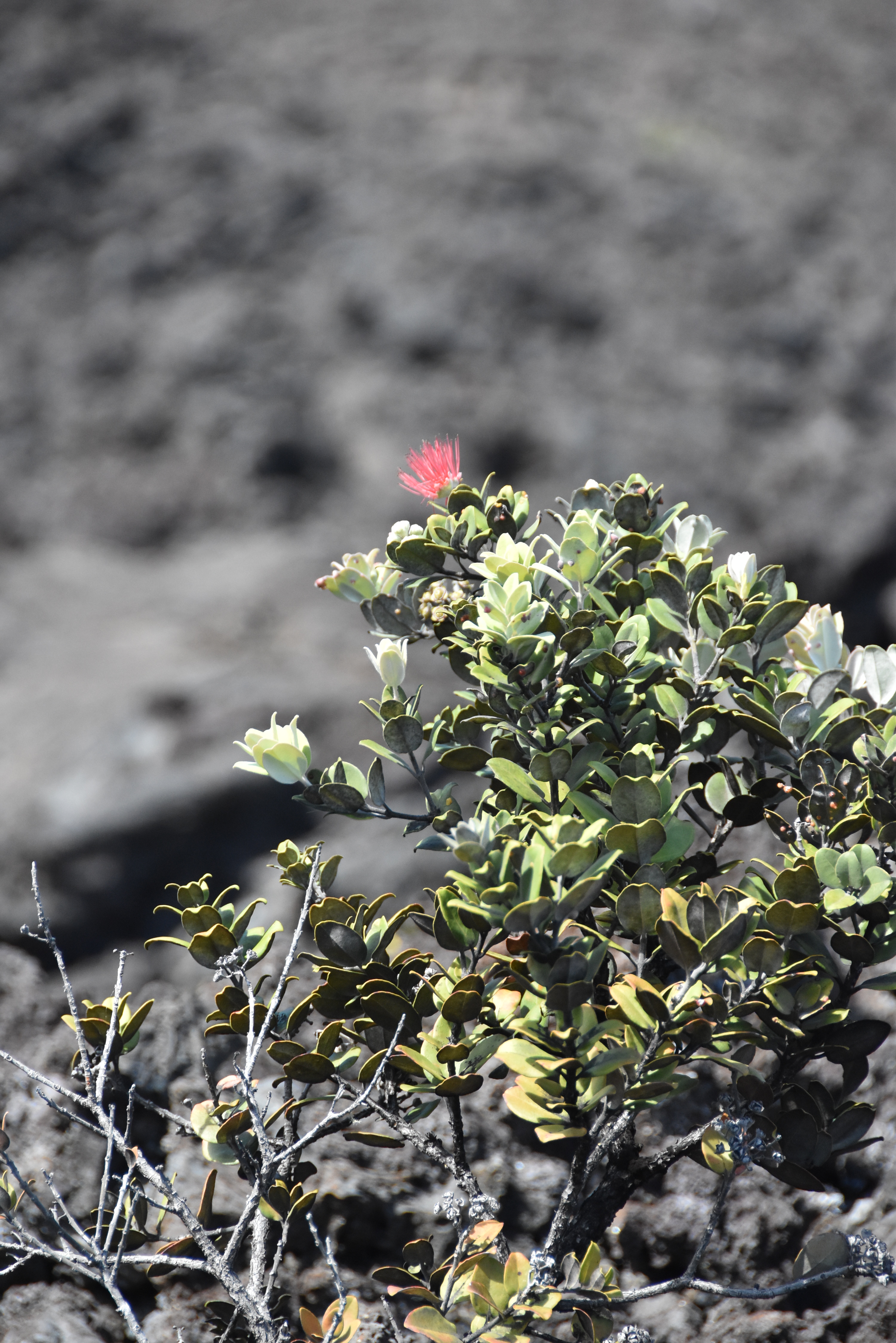
They remember when ohi’a seeds fell upon that hot rock and did nothing. They remember watching seeds landing on the rock in a small crack and doing their level best to sprout and grow, but even the pushing of their roots could only find a couple grains of sand. They remember when the first ohi’a landed in a spot where cracking and rain had created enough – just enough – small bits that a root could take hold and begin collecting rainwater. They remember when the first of the little ohi’a plants – so small, those plants – they remember when the first of them had enough soil and water and sunshine and strength to form flowers and set its own seeds to scatter.

“Do you remember?” they sigh. Yes, they remember, and that includes the small trees, some no more than inches high, that you’ll find one here, one there, on the floor of Kilauea Iki.

The kolea, I’m afraid, didn’t think to ask the trees, and he was in the wrong place to ask them down at Pohoiki if he’d thought of it, and he may not have understood what they said to him if he’d asked.

But the trees along the steep sides of Kilauea Iki remember, and they sigh their memories just the same way they scatter their seeds: cast out upon the blowing wind.

“Do you remember?” they ask, and they answer, “Yes, we remember.”

On the flat black surface of the Kilauea Iki crater, roots crack the rock into soil, shoots stand ever higher above the stony surface, ohi’a blossoms flutter crimson in the wind, and they share their seeds and their memories upon the blowing wind.

by Eric Anderson

Watch the Recorded Story

The story above was told from memory of this prepared manuscript. In my opinion, I told it better than I wrote it this time.

Photo of an ohi’a blossom in the Kilauea Iki crater by Eric Anderson, 2016. The Kilauea Iki eruption took place in 1959.

Story: Growing

November 6, 2022

Job 19:23-27a
Luke 20:27-38

This story took place a few years ago here on Hawai’i Island. I suppose it could have happened at various times here on Hawai’i Island – I would guess something similar has happened a good number of times here on Hawai’i Island.

A kolea flew back to Hawai’i after spending the summer in Alaska. This wasn’t the first time he’d done it. Like most kolea, he had a destination in mind. For four seasons he’d come to the same beachfront in Puna. For four seasons he’d had a good spot to hunt for crabs in tide pools and then for bugs and worms just inshore. There were people who came and went, but you may have noticed that people come and go in a lot of places and he came to ignore them. So when he spotted the mountains of this island he made his way toward Puna.

Toward Pohoiki.

When he reached it, he hardly recognized it. As I said, this was a few years ago, and in the time that he’d been in Alaska the 2018 eruption had sent lava flowing across lower Puna from Leilani to Kapoho. The edge of the flow stopped at Pohoiki. Mounds of a’a had turned his favorite section of the beach from a gentle slope to a seven or eight foot high wall at the water’s edge. It was still cooling underneath; he could feel the heat when he came near to try landing.

The lava flow had left some things just the same. There were still human parking lots and structures, there were trees. There were broad stretches of flat ground that he knew he could still find food in. But there was also a brand new stretch of beach made of black sand and rocks that clattered and hissed when the waves drew back to the sea.

He landed and watched the water for a while, where it crashed against the new rock and where it piled up more sand gradually on the beach.

“What happened?” he said to himself.

He may not have meant anyone else to hear, but a saffron finch replied. “Lava came,” she said.

“It’s not the same,” he said.

“No, not much,” she agreed. “It’s even changing each day. That black beach keeps getting bigger.”

“Everything’s dead and gone,” he moaned, “buried under that warm rock or getting covered with that black sand.”

The saffron finch looked at him, puzzled. “What are you talking about? There’s still grass. There’s still trees. There’s still bugs and worms to eat. Life goes on.”

“How can it, when it’s so different?”

The saffron finch thought. “Do you remember hatching?” she asked.

“Not really,” he said.

“Well, are you the same as you were then?”

“Definitely not,” he said. “I had to grow a lot and get these feathers before I could ever fly here.”

“So you grew,” said the saffron finch, “and in some ways you still grow.”

“Of course,” said the kolea.

“This island also grows,” said the saffron finch. “I don’t suppose it’s quite alive the way you and I are alive, but it grows. Where it grows, it creates space for plants to grow, and bugs to grow, and eventually for you and I to grow.”

“But it’s different and I liked the old way better,” said the kolea.

“You and I grow and others may not like it,” said the saffron finch, “but we grow in our own way. You might as well let this island grow in its own way, too.

“Because it will grow in its own way no matter what you say.”

by Eric Anderson

Watch the Recorded Story

The recorded story above was told live during worship from memory of this text. Between memory and improvisation, they are not identical.

Photo of lava rock and black beach sand at Pohoiki (2018) by Eric Anderson.

Story: Beyond the Horizon

October 30, 2022

2 Thessalonians 1:1-4, 11-12
Luke 19:1-10

I don’t know how they became friends, or even how they met one another. When kolea make their journey to Hawai’i Island, they tend to find some space for themselves fairly close to the coastline. They like to look for worms and bugs and such in the grassy lawns that human beings maintain. They’re ground birds, rarely found on roofs or trees.

In contrast, the ‘apapane likes to be in trees, and in trees that grow further up the mountain. As I say, I’m not sure how a kolea and an ‘apapane ever met, let alone how they became friends. But year after year this kolea would make his way back to the Kohala peninsula and, after a good rest and a meal, take a shorter flight up the slopes of Kohala looking for a flash of red in the forest. Then the two of them would talk story until they’d caught up with the last several months.

This year the kolea found the ‘apapane looking… dreamy. After sharing the stories about nests and eggs and chicks, the ‘apapane sat and looked out over the mountain slope down to the sea and beyond. “I envy you,” she said. “You know what’s beyond the horizon.”

The kolea had told that story many times, so he just nodded. “That’s true,” he said. “Out in that direction is a very big ocean, and then there’s Alaska.”

“Do you ever wonder what’s beyond the horizon in other directions?” asked the ‘apapane.

“Not much,” said the kolea. “Except for those two big flights each year, I don’t stray far from the places I’ll find grubs to eat.”

“Well,” said the ‘apapane, turning to the northwest, “what do you suppose is over there?”

The two of them looked at a pile of clouds with a bit of bluish black in the middle. “I don’t know,” he said.

“I wonder,” sighed the ‘apapane.

“Shall I find out?” said the kolea. “I can take a flight to see what’s in the clouds.”

The ‘apapane accepted the offer, and the kolea headed off to the northwest, and was quickly lost to sight. It took nearly four hours before he was back again. He grabbed a snack at the base of the ‘apapane’s tree before joining her on the branch again.

“So what’s over there?” asked the ‘apapane.

“Maui,” said the kolea.

“What’s Maui?” asked the ‘apapane.

“It’s another island, smaller than this one, with a wide valley and a great big mountain on it. That’s the bluish black outline you can see. It’s not nearly as far as Alaska.”

The two birds were quiet for a while, and then the ‘apapane said, “It must be nice to always know what’s over the horizon.”

“But I don’t always know what’s over the horizon,” said the kolea. “I also don’t know what the next day will bring. I hope it will have a tasty worm or two, just the way you hope it will have ohi’a blossoms.”

“We both move into something mysterious, then,” said the ‘apapane, “which we hope will be a little familiar.”

“We both fly into tomorrow,” said the kolea, “with hope.”

by Eric Anderson

Watch the Recorded Story

The story was told from memory of this manuscript in the video recording above. And, well, embellished.

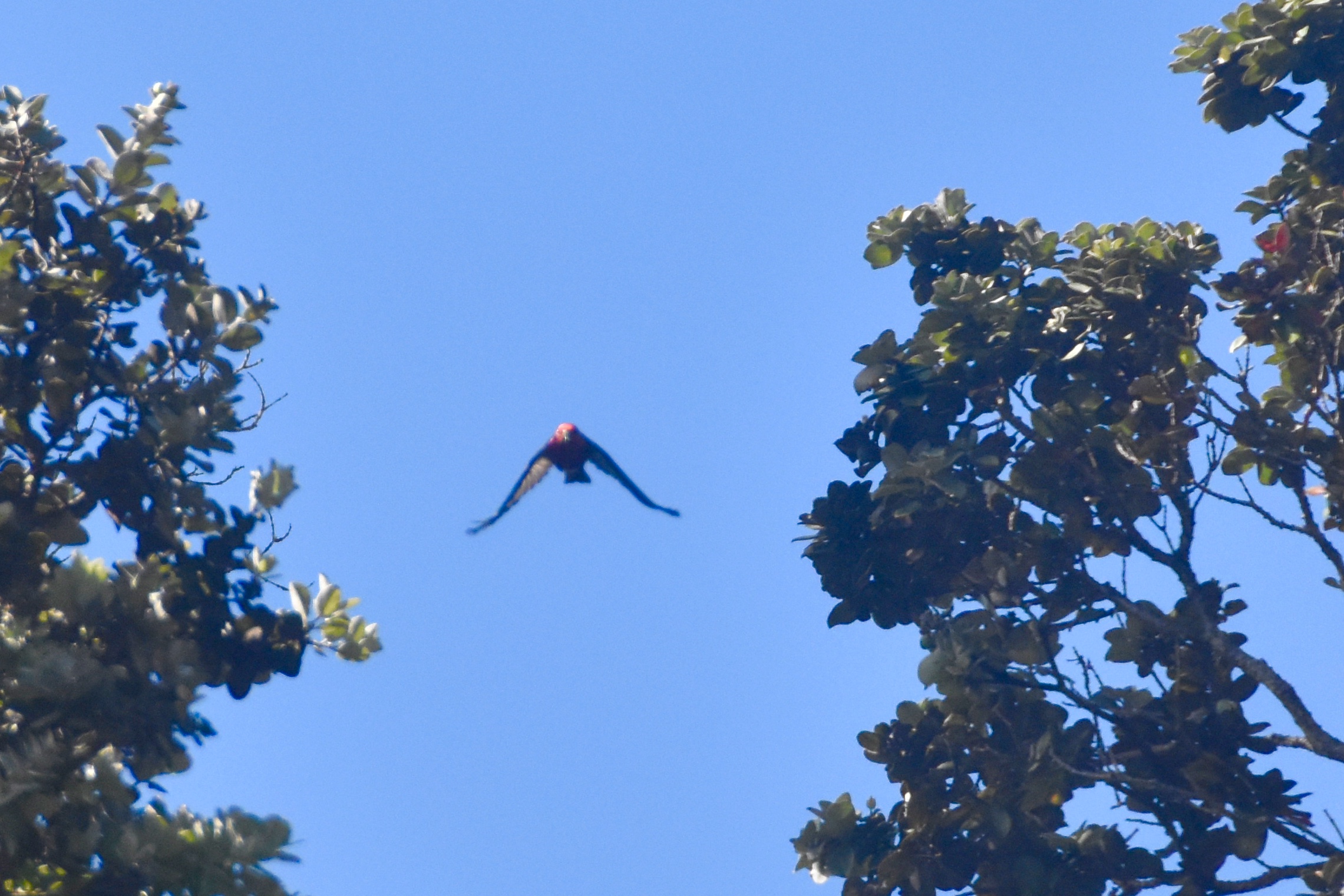
Photo of an ‘apapane in flight by Eric Anderson.

Story: Dive or Skim

October 23, 2022

Psalm 84:1-7
Luke 18:9-14

It’s a funny thing. The koa’e kea – the white-tailed tropicbird – and the noio – the black noddy – eat basically the same foods. They like small fish, they like squid. But they catch their food in very different ways. One koa’e kea had noticed this.

“That,” he said to another koa’e kea, “is disgusting.”

“What is?” she asked. The two were flying out to their fishing grounds from the ledges of Kilauea.

“Them,” said the first, “those noio. Watch them crowd together. Why can’t they hunt alone? There’s a horde of them fishing there. Then the noise. Every last one of them is screeching and calling. They’re flying low, and any bird should know that you can’t spot fish if you’re not high over the water. And most of all“ – he shuddered even as he was flying – “they don’t even know how to do a proper dive.”

“Really?” asked his friend. “What do they do?”

“Watch,” said the first, and they watched as noio after noio skimmed low over the water. The surface of the ocean rippled with the movement of the small fish beneath it. The noio dipped their beaks into the water, seized a fish without landing, and flew on as they swallowed.

“They don’t even pause on the surface to properly appreciate their meal,” he moaned.

“Aren’t there big fish down there, too?” asked his friend, who had noticed larger forms deeper in the water.

“Ahu,” said the koa’e kea, “skipjack tuna. They’re chasing the same fish as the noio. I don’t know why they’re not all crashing into one another, and why none of those noio have become lunch for an ahu.”

They watched the chaotic scene for a while, and then the second koa’e kea said, “You know, it seems to work.”

“What?” he said.

“With those ahu around, the small fish are closer to the surface,” she said, “and with so many birds in the air you wouldn’t want to pause on the surface. From all I can tell from here, none of them look like they’ll go hungry.”

“Do you want to fish like a noio?” he demanded.

“No, I’d rather dive from a good height,” she said, “and I’d rather not have a lot of other birds about because I’d crash into one when I’m diving. I’m not eager to run into an ahu under water, and one of my dives might get down to where they are. I can’t call the noio disgusting, though,” she continued. “They’re living, and thriving, and happy, and fed. That’s a pretty good life for a seabird, don’t you think?”

I don’t know for certain whether she’d convinced him, because he didn’t say anything more as they flew out to their own fishing grounds farther from shore. I’ll call her wise, though, to recognize that there’s more than one way to live a good life as a seabird, and to appreciate a seabird who does things differently.

by Eric Anderson

Watch the Recorded Story

The story is told from memory of this manuscript. That is enough to cause some differences. Today, there was another presentation before the story, and, well, you’ll just have to see it to believe it.

Photo of a noio in flight (though not actually skimming the surface) by Eric Anderson.

Story: The Pueo that Caught a Pig

October 16, 2022

Genesis 32:22-31
Luke 18:1-8

As you know, there are birds and animals that don’t eat meat, and there are birds and animals that eat entirely meat, and there are birds and animals that eat either one, depending on what they find. Most of the meat-eating animals have a similar strategy about what they eat. They tend to look for something to eat that is smaller than they are. If that sounds a little bit like bullying, well, I think that’s where bullying comes from. I wish we could think of other people as people, and not as “this is someone I can bully.”

There are a few creatures that do hunt for animals larger than they are. The pueo is not one of them. The pueo flies about over the grasslands and looks for smaller things: mice, small birds, more mice, more small birds… basically, lunch.

This is the story of the pueo that caught a pig.

He didn’t mean to. He was distracted in his flying that day. Everything was nice and clear and there wasn’t a lot of wind. He wasn’t hunting with his full attention; he was mostly daydreaming in the air. Still, when he saw some grass move out of the corner of his eye, he was on it in a flash. Movement in the grass meant a mouse or a small bird. Movement in the grass meant lunch.

In this case, however, what it meant was a napping pig whose ear had just flicked at a fly and moved the grass. The pueo only discovered his mistake when he’d grabbed the pig by the top of her head. All the dreaminess of soaring about the sky vanished in a flash, as the pig woke up, felt the pueo on her head, and dashed off in a panic.

The pueo didn’t know what to do, so he hung on.

The pig tossed her head and tried to use her front feet to knock the pueo off her head, but her legs were too short. She threw her head from side to side as she ran so that one moment the pueo was pulled left and the next pulled right.

The pueo hung on. Dust was flying from beneath the pig’s feet but so were feathers from the pueo’s body. The sensible thing to do might have been to fly away, but there were so many feathers in the air that he wasn’t sure he could control his flight, and if he once fell underneath the pig’s feet that wouldn’t be good at all. As for the pig, if she’d thought about it, she could have rolled over and forced the pueo to let go, but she was startled and frightened and panicked, so she didn’t think of it.

This went on for some time until the pig ran out of energy and stopped, trembling. The pueo’s feet were tense and cramped and he still didn’t dare let go.

“Who are you?” said the pig, “Why did you do this?”

“I thought you were a mouse,” said the pueo, knowing that this sounded silly as he said it.

“What do you want?” said the pig.

“I want to go home,” said the pueo. “And I’d like to go home without your footprints in my feathers.”

“I’d like to go home without your claw marks on my head,” said the pig, “but I’m not getting what I want.”

“I’m going home without a lot of feathers,” said the pueo. “I’m not even sure I can fly.”

“What if,” said the pig, “we both get what we want? I want you off my head, and you want to be off my head, don’t you?”

“That would be best,” agreed the pueo.

The pig walked over to a larger rock, one that rose above her head. The pueo, with some difficulty, unclenched his feet and stepped cautiously onto the rock, then hurried up to its top. The pig looked up at him. He was too high for her to reach.

“Thanks for bringing me to a safer place,” he said.

“Thanks for getting off my head,” she said. “Don’t do it again.”

“I won’t,” he said. “I’ll make every effort to avoid it.”

She went home with some scratches. He went home without a few feathers, ones that would have to grow back before his flying was at its best. They went home having given one another the thing they wanted most: an opportunity for peace.

by Eric Anderson

Watch the Recorded Story

The story was told from memory of this prepared text. And so… it’s not the same.

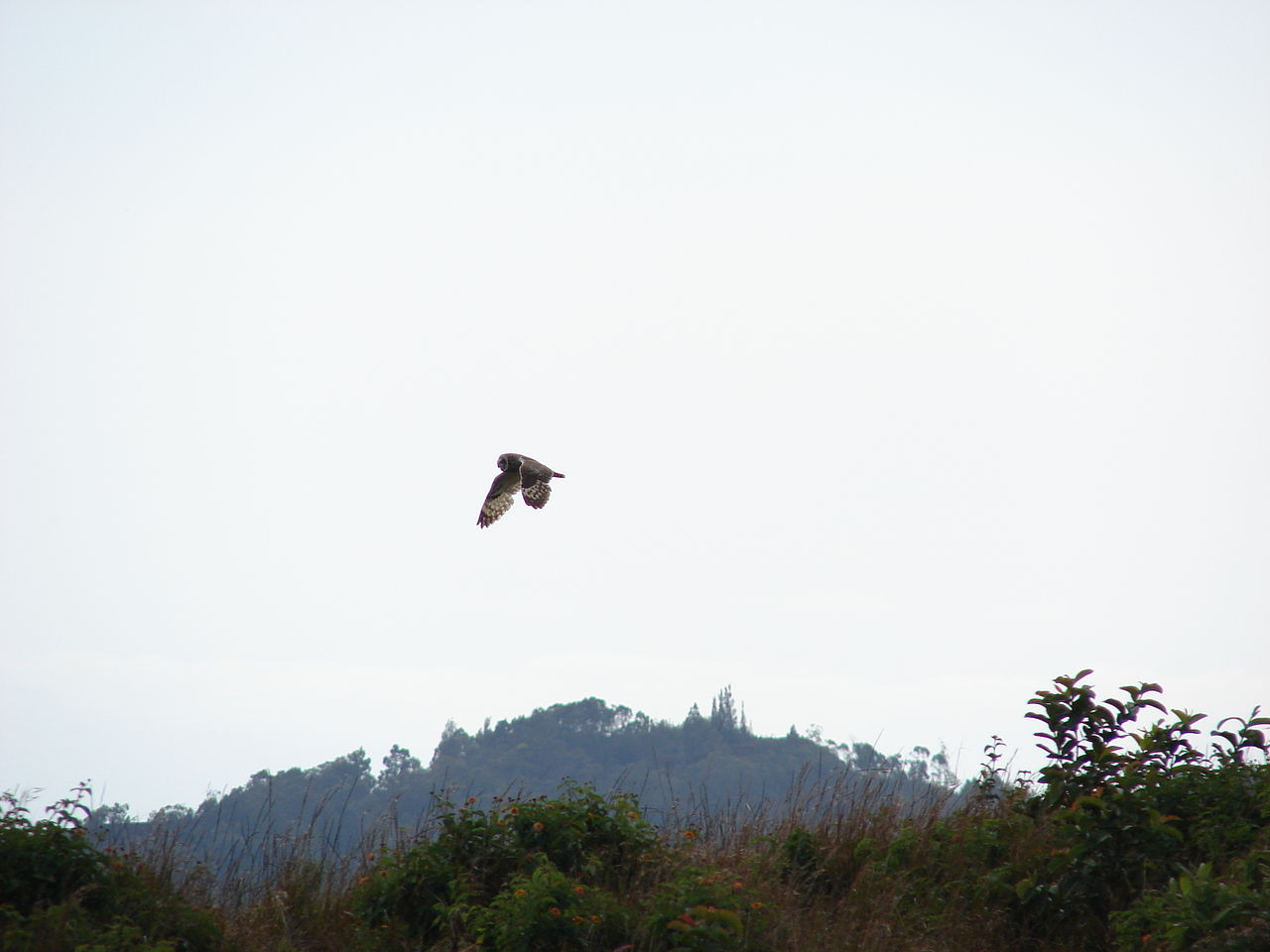
Photo of a pueo in flight by Forest & Kim Starr, CC BY 3.0, https://commons.wikimedia.org/w/index.php?curid=6167276.

Story: Details, Details

October 9, 2022

2 Kings 5:1-3, 7-15c
Luke 17:11-19

The three ‘amakihi chicks had emerged from their eggs over the course of a day, and they promptly set out to do what newly hatched chicks do: they grew. Mother and father brought them food and cleaned the nest and did the things that ‘amakihi parents do. After a couple of weeks, they set out to teach them to fly.

This turned out to be complicated.

The three stepped up out of the nest along a branch and took their positions, ready to fly. “Get your wings ready!” called mother, and that’s where the instruction began. Two of the chicks extended their wings, but the third on the branch just looked confused. “How do I get my wings ready?” he asked.

Mother and father both extended their wings and spread the feathers along them. The first two chicks had been pretty close, though not perfect. The third one hadn’t apparently been paying attention to seeing his parents fly. It took a while, but he got those wings out and open and spread.

“Now open up your tail feathers,” said father. This time was the turn of the second chick to look confused. “Tail feathers?” she asked, as her two brothers both their tails into the shape of a fan. Father and mother demonstrated, and finally her tail took the proper shape.

Everybody managed to get the next section of the flight lesson, hopping up and down and doing some gentle wing flaps. All three managed to get in more and more wings beats before settling back down onto the branch again.

“Very good,” said mother. “The last thing to remember as we take your first flight to that branch over there” (she pointed with her beak) “is to lift up your feet and tuck them up to your belly.”

Now it was the first chick on the branch to look confused. “Shouldn’t I leave them down to grab the branch?” he said.

“No,” said father. “Your balance will be off if you do that.”

“No,” said mother. “You’ll reach out with your feet when you’re approaching the branch.”

That last chick looked uncertain and confused, and sure enough, when he and his brother and his sister took off, his legs weren’t properly tucked up. They flew fairly straight to the branch their mother had showed them, but he veered wildly up and down and from side to side before seizing that branch a good distance from his brother and sister. All of them were panting, but he was panting the hardest.

“That’s a good start,” said mother.

“This is really complicated!” wailed the chick who hadn’t tucked his feet up. “Really complicated,” said the sister whose tail was still working at stretching out.” “There’s so many things to remember,” complained the chick who hadn’t known to stretch out his wings.

“It’s all little things,” said father, “but you’re right. There are a lot of little things.”

“Put the little things together,” said mother, “and you’ll fly with safety and delight.”

It’s the little things, and the little things put together, that make us able to do the big things, like flying, and friendship, and love.

by Eric Anderson

Watch the Recorded Story

Technical problems today have delayed the availability of the video, and unfortunately there were audio problem with the recording. You’ll notice that the volume is very low at the beginning of the story and gets much more audible about half way through, at 12:55. We regret the errors.

And, of course, the story as told is not quite the same as the story as written.

Photo of an ‘amakihi by Bettina Arrigoni – Hawaii Amakihi (male) | Palilia Discovery Trail | Mauna Kea | Big Island | HI|2017-02-09|12-21-50.jpg, CC BY 2.0, https://commons.wikimedia.org/w/index.php?curid=74674211.

Story: Filled by God

October 2, 2022

Habakkuk 1:1-4, 2:1-4
Luke 17:5-10

A myna and a saffron finch got interested in human religion. What can I say? People who pray are fascinating. They perched outside churches on Sundays and they listened to the things people were saying and sometimes they even chirped along with the music.

They found communion a bit difficult to understand.

“I was at one church,” said the myna, “and at one point during worship everybody got up from their seats, stood in line to come up to the front, and ate a cookie.”

“A cookie?” said the saffron finch. “That sounds rather nice. I saw people taking pieces from a loaf of bread and dipping it in a cup. When it came out it was purple. Then they ate it.”

“Soggy bread?” asked the myna. “The cookie sounds better. But come to think of it, I’ve seen people dip little wafer cookies in a cup, too.”

“Sometimes the one up front drinks from a big cup,” observed the saffron finch.

“And sometimes everybody gets little cups,” said the myna.

“At this one church in Hilo,” said the saffron finch, “everybody gets a little baggie with a cup of juice and a square of something soft.”

“Bread?” asked the myna.

“We could hope it’s candy,” said the saffron finch.

“But what does it all mean?” asked the myna, and they thought about it.

“They’re sharing in a meal,” said the saffron finch slowly.

“It’s a pretty small one, for humans,” observed the myna.

“And they do have something to drink, and it’s pretty nearly always purple,” said the saffron finch, “and they do it together, even if they have to line up for it.”

“They always look like they’re prayerful, too,” said the myna, “as if God is right there in the bread and the cup.”

“They say that, too,” said the saffron finch. “This is the body of Christ, they say.”

“Perhaps,” said the myna, “this is a part of worship where they take in the blessings.”

“Perhaps,” said the saffron finch, “this is a part of worship where they stop talking to be nourished by God.”

I have to say that for two birds watching from outside, they did pretty well. Communion is when we remember Jesus’ gift to us in a way he told us to do: remembering his body in the bread, and remembering his blood in the cup. Communion is when we literally take those blessings inside ourselves by eating and drinking bread and wine (I’m afraid the myna was wrong about the cookies). Communion is when we Christians stop talking for a moment and let ourselves be filled by God.

by Eric Anderson

Watch the Recorded Story

I tell these stories in worship from memory of this manuscript – and between my memory and my affection for improvisation, things change.

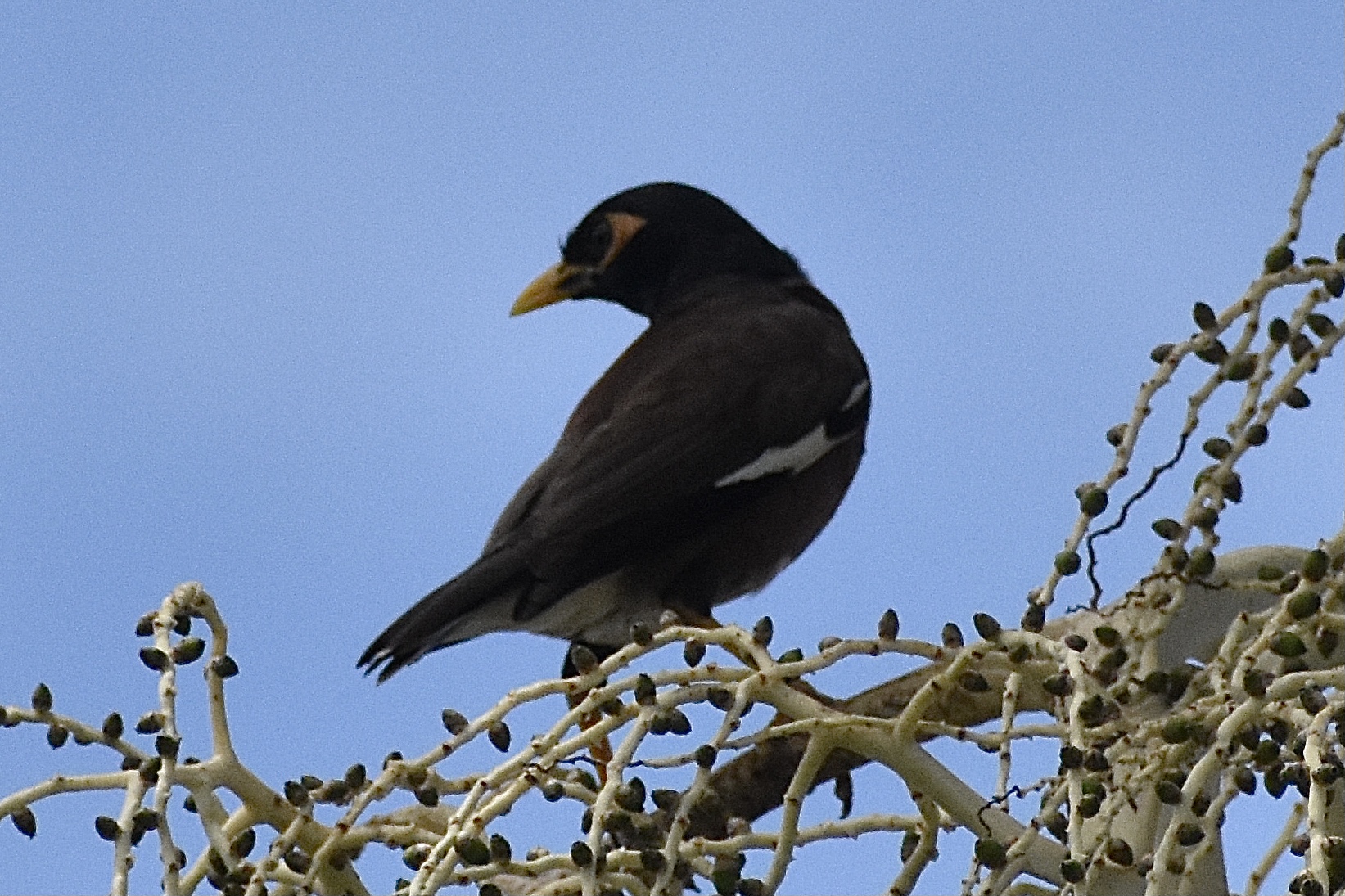
Photo of a myna by Eric Anderson.

Story: The Hardest Thing

September 25, 2022

Jeremiah 32:1-3a, 6-15
Psalm 91:1-6, 14-16

They were an unusual collection of friends. They literally came from different parts of the world: from land, from sea, and from air, a mongoose, a honu, and a kolea. I don’t know how it first happened, but they’d developed the habit of taking a spot on a beach, with the honu pulled up in the sun, and the kolea looking for tidbits, and the mongoose taking a brief rest while the three talked story.

Today they were deciding what was the hardest thing.

“Rocks are the hardest thing,” shuddered the mongoose. “They hurt my paws sometimes, and a couple times when I wasn’t careful I knocked my head on one. Rocks are definitely the hardest thing.”

“Rocks are pretty hard,” agreed the honu, “but they also make nice shelter when the waves are high. You just nestle in behind them.”

“I fell into water once,” said the kolea. “I have to say it was pretty hard.”

“That’s right,” said the honu. “Water is the hardest thing. When the waves are crashing over me or the undercurrent is pulling me away from the beach, I’m grateful for the rocks. They don’t do that.”

“You haven’t tried the air,” said the kolea. “That’s a hard thing for sure. This last flight here to Hawai’i Island, I wasn’t sure I’d make it. We flew into winds that just blew us back and back and back. I can’t imagine anything harder than that.”

The three of them thought about this for a good long time, tossing in more examples of how rocks and water and air were hard things, when the honu said, “I’m hungry.” His two friends agreed.

They were about to split up to find dinner, when the mongoose said, “Wait just a moment. Wait just a moment and let’s think about this moment.

“Do either of you know that you’ll find food? I mean, absolutely know?”

The honu and the kolea admitted that they didn’t, although the kolea took a quick look around for a handy bug before saying so.

“In this moment, we’re all hungry, we all need food, right? And none of us are certain that we’ll find it.”

“Yes,” said the honu, “but we hope we’ll find it.”

“Right,” said the kolea, “we hope we’ll find it.”

“But isn’t this the hardest thing?” asked the mongoose. “We know what we need now and we don’t know if we can find it – not for certain. We hope we will… but doesn’t that make hope the hardest thing?”

That’s how a mongoose, a kolea, and a honu discovered that hope – that time we spend between realizing what we need and finding what we need – is, indeed, the hardest thing. Hope carries us from one to the other, but it may not be an easy journey, and it’s harder than high winds or strong waves or a solid rock.

by Eric Anderson

Watch the Recorded Story

In the video above, the story was told from memory of this manuscript. Between gaps of memory and flashes of inspiration, the two are not the same.

Photo of a honu (before the arrival of a mongoose or a kolea) by Eric Anderson.

Story: World of Weeping

September 18, 2022

Jeremiah 8:18-9:1
Psalm 79:1-9

Up on Kilauea, where people look out over the great crater/caldera at the summit, a little girl was crying as if her heart would break. Why? Well, it probably had something to do with a trip and a fall and some bruised knees, and maybe because a favorite stuffed animal was all dusty. There were tears running through the dirt on her face.

This story is not about her, however, even if it starts with her. It is about a young koa’e kea, a white-tailed tropicbird, that was resting on a small ledge in the cliff just below the little girl and her family. She’d never heard such a sound before. She leapt into the air and circled about, watching the little human and her family as they comforted her, brushed the dirt from the stuffed animal, and headed away.

The young koa’e kea found her father had joined her circling. “What was that all about?” she asked.

“That was crying,” he said. “Creatures cry when they’re unhappy or in distress.”

“What a horrible noise,” she said, “and those drops of water from the eyes!”

Her father watched the human father who was carrying the little girl in his arms by this point and said, “It seems to work. A lot of creatures have their own version of tears.”

“I’ll never do anything of the kind,” announced the koa’e kea daughter firmly.

“Never?” asked the father.

“Never,” said the daughter.

“Hm,” said the father. “Fly with me for a little bit.”

The first thing they saw in their loops about the island was a mother pig and some piglets. One of the little ones had wandered into a thicket and got turned around, and he was squalling for his family. The sow heard him, found him, and herded him off to join the rest of the family.

The next thing they saw was an old ohi’a tree creaking in the wind. You and I wouldn’t say it was crying, exactly, but there was a light dust floating away on the breeze as the tree swayed. “Is it sad?” asked the young koa’e kea.

“Just a little,” said her faither. “It’s struggling to keep growing where it is, but it has special tears. They’re seeds, and even if this tree can’t grow, perhaps some of its seeds can.”

They flew about the cliffsides until they heard another sound. It was a koa’e kea nest, and the chick in it had spotted one of his parents. It cried its hunger until the mother satisfied it.

“Did I do that?” asked the young koa’e kea circling nearby.

“You did,” confirmed her father.

Last of all, they swooped and soared over the Halema’uma’u crater, watching the red lava, which was streaming from a vent in the crater side into the lava lake below.

“Is the mountain crying?” asked the young bird.

“You can say so,” said her father. “When the mountain cries, the island rises.”

“So all things weep,” said the koa’e kea.

“Maybe not all,” said her father, “but when they do, it’s usually for a reason. It helps them get through the time.”

“I guess if the rest of the world can do it,” she said, “maybe I can, too. If I need to.”

“If you need to,” said her father, and they flew off to the ocean for dinner.

by Eric Anderson

Watch the Recorded Story

As always, Pastor Eric told this story from memory of the text above. The two versions are not the same.

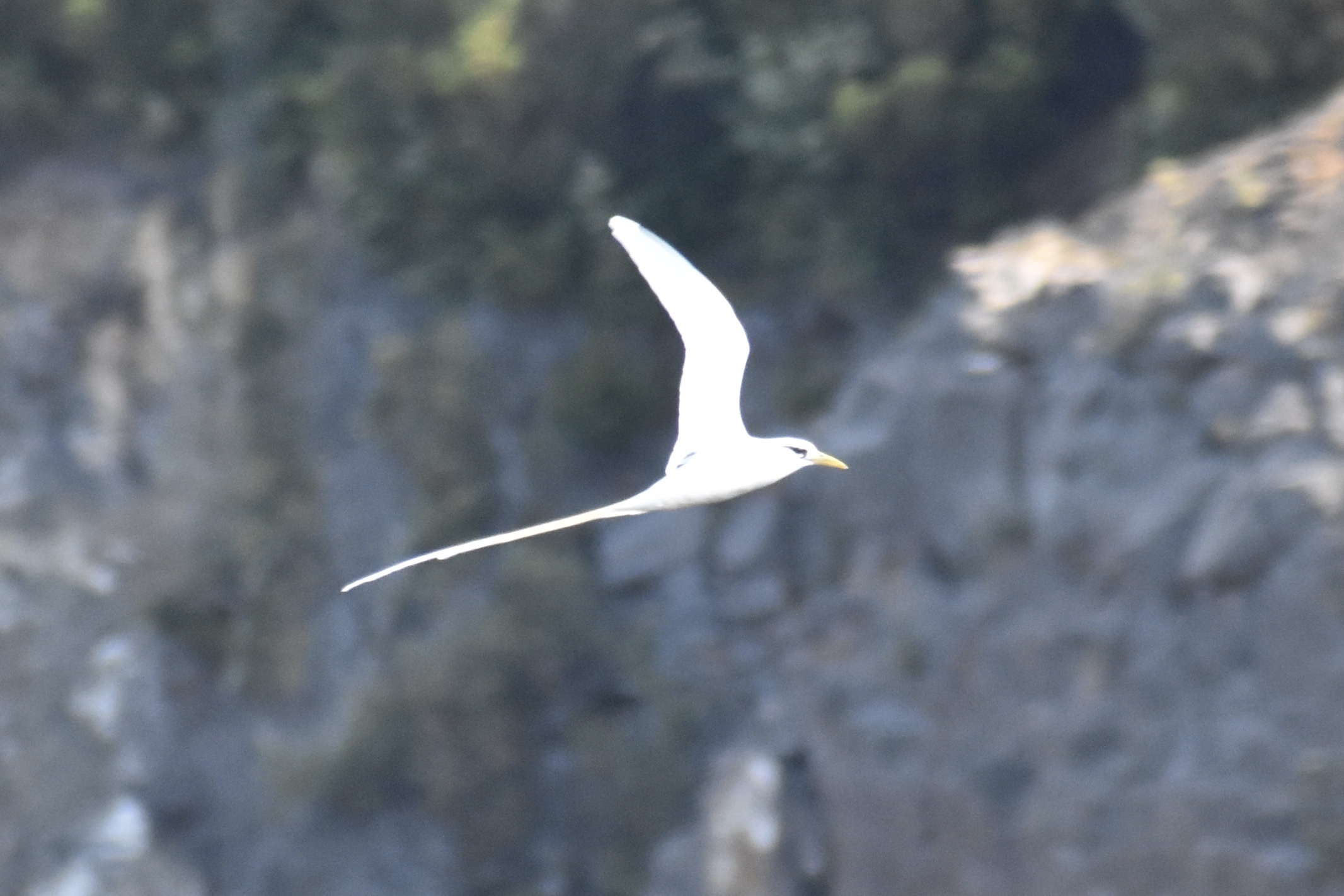
Photo of a koa’e kea taken on Kilauea by Eric Anderson.

Story: Over and Around

September 11, 2022

Exodus 32:7-14
Luke 15:1-10

A few weeks ago, you might recall, I told a story about nene school. Do you remember that at all? In the story, the class got to talking while the teacher was working with one of the students. They didn’t listen when their teacher asked them to be quiet, until she got so frustrated that she flew off in a huff.

Or, well, a minute and a huff.

This story is about that same class and that same teacher, but now we’ll spend time with the young nene who was getting special instruction in flying.

The reason he needed extra help was, well, the fact that he would try anything. I mean anything. One of his early attempts at flying was to see what happened when he flapped his feet. Nene have webbed feet, to be sure, but they have less webbing between their toes than a duck does or than a Canada goose (which they resemble) does. It wouldn’t matter if they had the same amount of webbing on their feet. Ducks and geese don’t fly with their feet.

But he thought he’d give it a try. If you’re wondering how well it worked, it didn’t work well at all.

He tried flying with one wing pointing up at the sky and one wing pointing down at the ground. That was also, I must say, a crashing failure. He tried taking off by doing back flips. I’m afraid his classmates found that pretty funny, and I dare say you and I would have laughed, too. A lot of his experiments resulted in scattered feathers and, let’s be honest, strained muscles and a fascinating set of bruises (hidden beneath the feathers). Most of them ended right there on the ground where they began.

His teacher tried desperately to limit some of his ideas to things that wouldn’t lead to total disaster. Sometimes she succeeded. Sometimes she’d turn around for a moment, hear a honk and a clatter, and look around to find dust rising over another crash landing.

She had to admit, though, that he didn’t repeat his failures. If something didn’t work, he might try a variation or two on it, but he didn’t do the same thing twice. That sideways idea, for example. He tried it with the left wing up, and he tried it with the right wing up, but he didn’t try it with the left wing up a second time.

The teacher also noticed that every once in a while he found something new that she’d never seen before. One day, for example, he was flying at a good height, flipped over on his back, tucked his wings in, and pointed his beak at the ground. She watched in horror as he headed toward earth, but he pushed those wings back out again, caught the air, and leveled out going back the way he’d come. It was amazing.

“Why,” she asked him, “do you try everything when you know so many of the things you try can’t possibly work? Why don’t you follow the flying lessons nene have been using for years?”

He looked uncomfortable, as well he might (he’d just had another crash landing and the aches were settling in). “I could do that, I know,” he said, “and it would work just fine. But…”

“But what?” the teacher asked.

“But then I wouldn’t have tried everything, and I wouldn’t know about the things that nobody has tried, or nobody has passed down the word. I wouldn’t know what I can really do and what I really can’t.”

Trying everything is a hard way to do things, for sure. The good news is that trying things is a way to learn and to grow. Trying things is all about making spaces to find out who you are and what you can be.

by Eric Anderson

Watch the Recorded Story

The story above was told live from memory of this text.

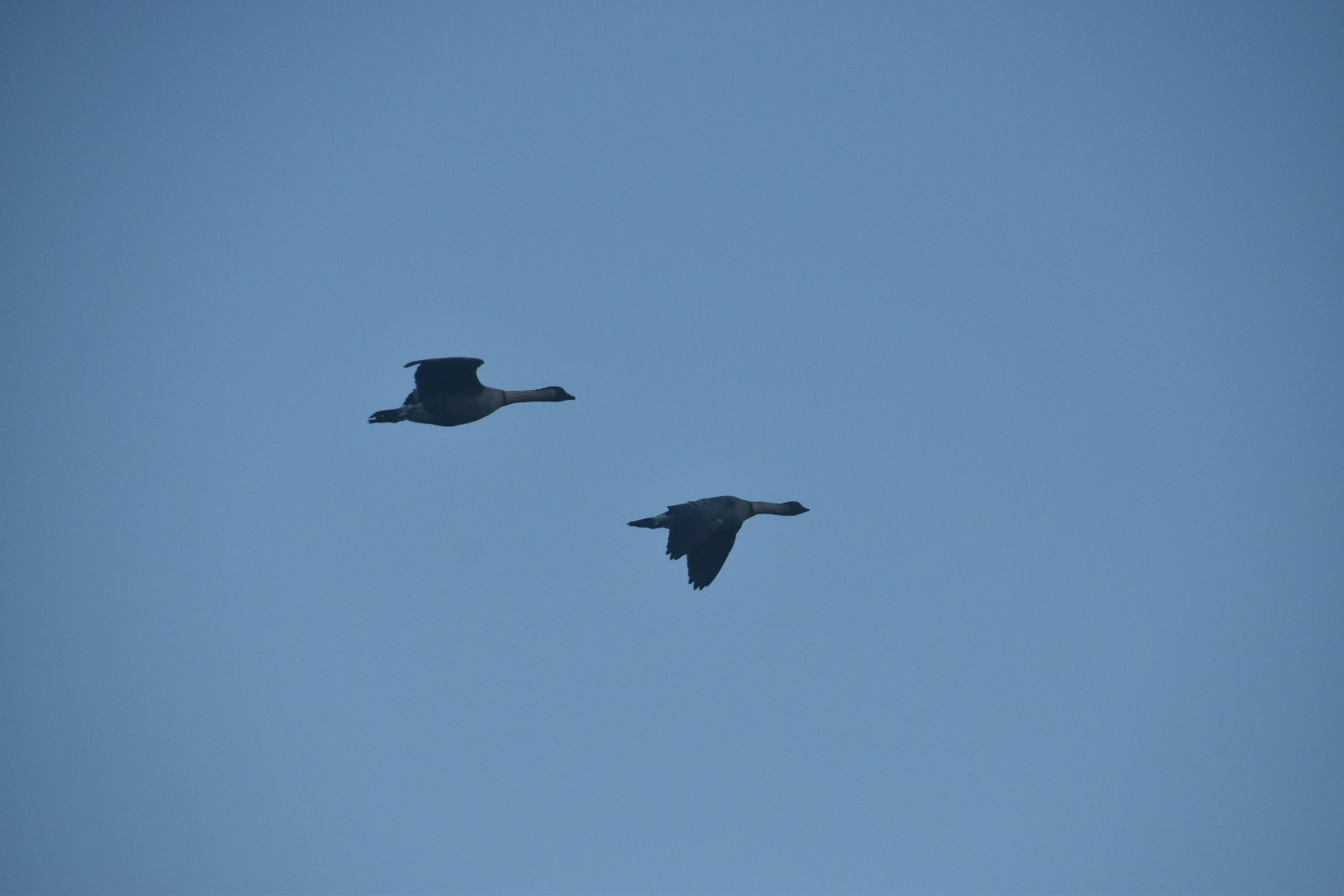
Photo by Eric Anderson.