Story: Weird

March 10, 2024

Numbers 21:4-9
John 3:14-21

“I think they’re weird,” said the ‘amakihi.

“Definitely bizarre,” said the ‘akepa.

“Not like us,” said the ‘apapane.

“Not like us at all,” said the i’iwi, who usually doesn’t take part in this kind of conversation but was close enough to overhear.

“They’re not so bad,” said the elepaio, but nobody was listening to him.

“They don’t eat nectar,” said the i’iwi.

“Not everybody does,” said the elepaio, who didn’t.

“They’re not brightly colored,” said the bright orange ‘akepa.

“I’m not either,” said the elepaio, who wasn’t.

“They sit still all the time,” said the ‘amakihi.

“Not everybody needs to hop around to find food,” said the elepaio.

“They don’t sing out the way they could,” said the ‘apapane.

“Would you sing out when there’s an ‘io overhead?” asked the elepaio.

The other birds finally noticed that the elepaio was there.

“What are you going on about?” they asked.

“I don’t see that there’s anything that strange about the ‘Oma’o,” said the elepaio. “In fact, most of the things you’re criticizing are things you could say about me.”

The other birds were silently embarrassed for a while. Some of them had, in fact, said similar things about the elepaio when they thought they wouldn’t be heard.

“Don’t you think they’re different?” asked the i’iwi, who most of the others thought was kind of different himself.

“Certainly they’re different,” said the elepaio. “Different doesn’t mean strange, or bad, or wrong, though.”

The birds were silent.

“If it helps any,” said an ‘oma’o who was sitting there quietly and completely unnoticed in some koa, “I can’t help think that you’re all rather different, too. But you know,” she said thoughtfully, “it seems to work for you.”

The birds looked at one another: red feathers, green feathers, tan feathers, black feathers, yellow feathers, long beaks, short beaks, different shapes to their wings.

“You’re right,” said the ‘apapane thoughtfully. “It does seem to work for us in our different ways.”

“Not so weird.”

“Not so bizarre.”

“Different from us, but it works.”

by Eric Anderson

Watch the Recorded Story

We had a technical failure and lost the audio from the beginning of the story this week. Our apologies!

I write these stories ahead of time, then tell them from what I remember of what I wrote. Since I don’t remember things perfectly, and since I invent new things in the telling, the story I tell may not match the story I wrote.

Photo of an oma’o by ALAN SCHMIERER from southeast AZ, USA – OMA’O (9-4-2017) pu’u o’o trail, kipuka ainahou section, hawai’i co, hawaii -06, CC0, https://commons.wikimedia.org/w/index.php?curid=74675325.

Story: No Signs

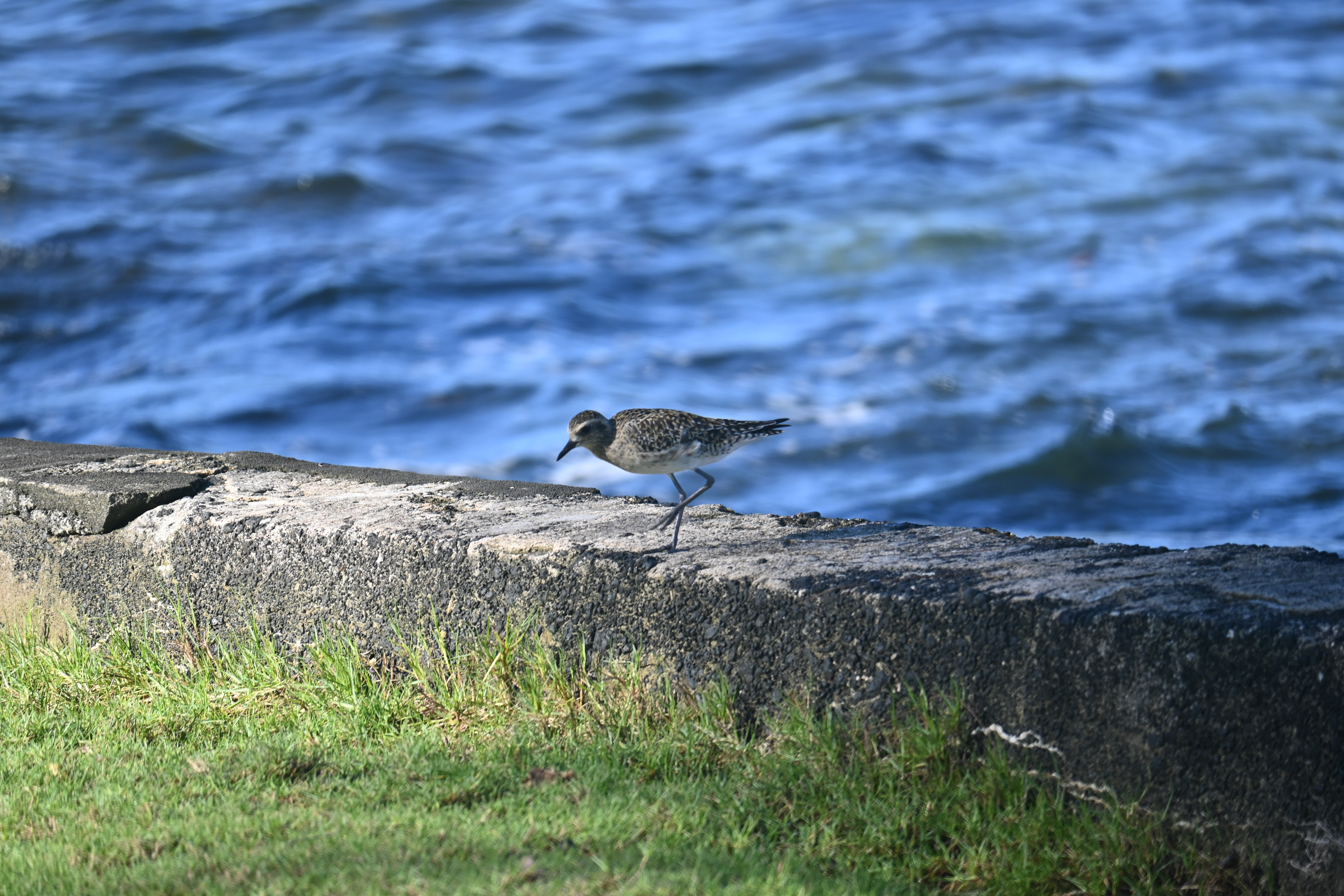
kolea (Pacific Golden Plover)

March 3, 2024

Exodus 20:1-17
1 Corinthians 1:18-25

The kolea had successfully made his first flight to Hawai’i the previous fall. He’d hatched a young bird in Alaska, he’d been fed by his parents, he’d learned to find his own food, and eventually he’d taken off for the long journey to Hawai’i. He’d found a spot here to look for worms and seeds and berries. He’d worn his mottled tan and brown feathers through the winter months. He was starting to put on the black and white feathering of summer.

He’d also been paying attention to people. I advise you to pay good attention to people, because you are people, and paying attention to people who are people like you helps you to learn how to be people, and it also helps you to know what other people are going to do, like when they might step backward and one people steps on another’s people’s toes.

Um. Person’s toes.

While it’s useful for people to listen to people, it’s not always so useful for other creatures. For some reason, this kolea heard a lot of people talking about signs. If you want to find your way to Hilo, follow the signs. If you want to find your way to the beach, follow the signs. If you want to go not too fast and not too slow, follow the signs.

Where, wondered the kolea, would he find signs on the way to Alaska?

Mind you, people do put signs out on the waters. If you look around Hilo Bay, there are marker buoys out there to help boats find their way to the harbor mouth and back home. They’re easier to see at night, when they blink red and green. As you get further from the shore, however, there are fewer of them, and not many at all across the vast expanse of ocean.

The kolea hadn’t noticed any on the way to Hawai’i, and didn’t expect to see any on the way to Alaska.

“Where will I find the signs?” he asked.

“Why do you want signs?” an older kolea wanted to know.

“People use them all the time,” he answered, and the other kolea thought he meant kolea people rather than human people, and flew away because he wasn’t making any sense.

It was another older kolea who sat him down for a heart-to-heart, brain-to-brain, and feather-to-feather talk.

“What signs do you expect to see?” she wanted to know.

“Clouds, stars, lights, glowing plankton in the ocean,” he said.

“Did you see any coming here?” she asked.

“Of course I did,” he told her, because those things happen around the oceans.

“Did they tell you how to get here?” she asked.

Well, no, they hadn’t.

“How did you get here?” she asked.

He gave her an answer that he understood, and she understood, because they’re both kolea and they can fly three days over open ocean without signs, but that I don’t understand because I’m a human person and I don’t know how they do it.

“The signs are inside you,” she told him.

We live with a lot of signs around, it’s true, telling you everything from what the name of this church is to how far it is to Kona. Some things, however, and some of that is in our lives of prayer, take place within us, in our hearts and in our souls. There are signs for that, like the Bible, but down deep we’ll find the guidance of the Holy Spirit to bring us safely home.

by Eric Anderson

Watch the Recorded Story

I write these stories ahead of time and tell them in worship services from memory. As a result, the prepared text and the told story rarely match. I’m quite pleased how much of the paragraph with all the people I remembered this week.

Photo of a kolea in Hilo by Eric Anderson.

Story: The I’iwi in the Flock

February 25, 2024

John 15:16

It was summertime. The nests around the ohi’a and koa forests had had their eggs, had had their cheeping chicks, and had been emptied. Young birds were flying about with their parents and aunties and uncles. The summer flocks were coming together.

Much of the year, the honeycreepers of the Hawaiian forests don’t gather in big flocks. They move about by themselves or in twos or threes. But in summertime, they gather, and they gather ‘amakihi with ‘akepa with ‘alawi and even some ‘apapane. But not, most of the time, i’iwi. When nesting time comes back around the flocks disperse. In summer, they fly together.

A young i’iwi watched a flock of ‘amakihi and ‘akepa and ‘apapane skimming the trees as they searched bugs and blossoms. He turned to his grandfather. “Should we fly with them?”

“Oh, no!” humphed his grandfather. “They don’t have the right kind of beak.”

In fact, none of the birds in the flock had the long curving bill that the i’iwi did.

He asked his grandmother, “Should we fly with them?”

“Oh, no!” said his grandmother. “They don’t have the right color feathers.”

The ‘apapane came closest, but he had to admit that you could see the difference.

“Should we fly with them?” he asked his friends, and they all said, “No! They can’t do what we do!” in different ways.

A day later, all by himself, he approached the flock, and perched next to an ‘amakihi.

“You don’t have a long curved bill,” he remarked.

“No,” said the ‘amakihi, somewhat puzzled. “I don’t.”

“It seems to work well enough,” said the i’iwi.

“It works pretty well, I think,” said the ‘amakihi.

“It might be awkward to get into an ohi’a blossom from below,” said the i’iwi, and the ‘amakihi admitted this was true.

“You don’t have bright red feathers,” said the i’iwi.

“True,” said the ‘amakihi. “Mine are bright yellow.”

“Do they get you places?” asked the i’iwi.

“They got me here,” said the ‘amakihi.

“Can you do all the things I can do?” asked the i’iwi.

“Probably not,” said the ‘amakihi. “Can you do all the things I can do?”

“Probably not,” said the i’iwi.

Then he asked, “Do you mind if I fly along with your flock?”

“With your red feathers and curved beak and things I can’t do?” said the ‘amakihi. “Join us and welcome.”

That’s how an i’iwi became part of a summertime flock.

by Eric Anderson

Watch the Recorded Story

I write these stories, then tell them from memory. Since my memory can be erratic, the stories as told rarely match the stories as written.

The photo of an i’iwi is by HarmonyonPlanetEarth – I’iwi|Pu’u o’o Trail | 2013-12-17 at 12-43-196. Uploaded by snowmanradio, CC BY 2.0, https://commons.wikimedia.org/w/index.php?curid=30241883

Story: ‘Opukaha’ia

February 18, 2024

Genesis 9:8-17
Mark 1:9-15

Usually I tell you stories about birds. Sometimes I tell you stories about other kinds of creatures, like honu. Sometimes I tell you stories about trees and seeds, and once or twice about clouds. And from time to time, I tell you stories about people, young people and older people.

And I make these stories up.

Today I’m going to tell you a story that I didn’t make up, although I’m putting the words together for it. It’s about a real person who lived and died over two hundred years ago, someone whose life made an enormous difference for you and for me. His name was ‘Opukha’ia.

He was born not terribly far from here in Ka’u. His early life was a sad one. There were wars as Kamehameha I sought to rule all the Hawaiian Islands, and in one of those wars ‘Opukaha’ia’s parents and siblings were killed. He was taken in first by one of Kamehameha’s warriors, and later by an uncle, who was a priest of the Hawaiian gods. The uncle raised ‘Opukaha’ia to become a priest as well.

One day ‘Opukaha’ia visited an American ship anchored offshore, and decided that he wanted to leave Hawai’i, feeling like he had lost his connection with his home with the death of his immediate family. His uncle, I should say, didn’t want him to go. There were two young Hawaiians on the ship, as a young man named Thomas Hopu had already signed on as a cabin boy. The ship made a long voyage, first to Alaskan waters to collect cargo, then to China to sell cargo and take on different cargo, and then all the way around the southern tip of Africa before making their way to the east coast of North America. The ship’s captain invited ‘Opukaha’ia to stay with him at his home in New Haven. New Haven, as it happened, was the site of Yale College, which taught math, science, literature, law – and religion.

The story goes that the young man was sitting on the steps of the main college building when a senior named Edwin Dwight came along and asked him if he wanted to learn. ‘Opukaha’ia wanted to learn very badly, and Edwin Dwight became his tutor. I’m not sure when he adopted the English name Henry. When the ship’s captain had to leave for another voyage, Edwin Dwight found Henry ‘Opukaha’ia another host with a relative named Timothy Dwight. He was, at the time, President of Yale College.

It took some years for Henry ‘Opukaha’ia to accept baptism and membership in the Christian Church, but not because he was slow to believe. He devoured study of Christianity just as eagerly as he ate up study of the English language with a series of mentors and tutors. He wasn’t sure of his own soul. He took it very seriously. He didn’t want to sadden God by falling away from his faith.

I don’t think he did make God sad, by the way.

He had a tremendous influence on the brand-new missionary movement in New England. The American Board of Commissioners for Foreign Missions was founded just a year after Henry ‘Opukaha’ia landed in New Haven. Originally, they planned to send missionaries to India and Sri Lankha. ‘Opukaha’ia made them consider Hawai’i, in great part because he was willing, available, and training to go as a missionary who spoke the language. In 1820, just ten years after the founding of the organization, the American Board of Commissioners for Foreign Missions landed its first missionary company here on this island, over in Kona.

Sadly, Henry ‘Opukaha’ia was not with them. He contracted a disease and in those days there was no effective treatment for it. He died at age 26 in Cornwall, Connecticut. Nearly his last words were, “Aloha o’e.”

by Eric Anderson

Watch the Recorded Story

I prepare these stories ahead of time in writing (it’s what you’ve just read). I tell them on Sunday morning from what I remember of what I’ve written and what I create in the moment. They are not the same.

The image of Henry ‘Opukaha’ia was prepared for the publication of his memoirs, Heneri Opukahaia, A Native Hawaiian, 1792-1818, by Edwin Welles Dwight, 1830.

Story: Flying Time

'Apapane in flight

February 11, 2024

2 Kings 2:1-12
Mark 9:2-9

One of the themes that tends to pop up in my stories is something like, “When is it a good time to fly?” Sometimes the birds asking that question are chicks wondering whether they’re ready for their first flight. Sometimes it’s older but still young birds trying to figure out how far they can go. Sometimes it’s older birds trying to balance the needs of nest-building and chick-feeding. Sometimes it’s just a bird thinking, “What does the world look like over there?”

A little group of ‘apapane decided to discuss the question in some detail. They thought that they’d like to become wise birds, wise ‘apapane, wise creatures that would have some good reasons to choose to fly at some times, and not to fly at other times.

“When is a good time not to fly?” asked one of the little flock.

“When there’s an ‘io overhead,” said one.

“Or a pueo,” added another.

“Or the shadow of something big and you’re not sure what it is,” said a third.

“It’s not a good time to fly in a big wind,” put in one.

“I’m not crazy about flying when there’s lightning,” said another.

“What about if you’re lost?” asked one of the ‘apapane. “Is that a good time to fly?”

They thought about it. “If you just stay in place when you’re lost,” said one slowly, “you don’t see anything different than what you’re seeing. I think you have to fly at least a little bit so that you can see new things, which might be the old things you’re trying to find.”

“If it’s a high wind and the tree is breaking, that’s a good time to fly,” added an ‘apapane who had been thinking about this for a while.

“What is a good time to fly?” asked the first bird.

“When the tree is breaking,” said the bird who didn’t want anyone to forget that.

“When the tree you’re in is out of bugs and nectar,” said another.

“When your wings and feathers are ready, and not before,” said one of the younger ones whose first attempts at flapping his wings hadn’t gone well.

“When you want to sing with the birds in another tree,” said a particularly musical ‘apapane.

“When it’s naptime and everybody is singing in your tree,” said an ‘apapane who liked to rest after a meal.

They fell silent for a bit at this point. Suddenly the first bird, the one who’d been asking the questions, the one who really wanted to be a wise ‘apapane, laughed out loud.

“When you feel like it!” she sang, and soared up into the sky.

Flying is all about the practical things, and there are plenty of times when flying is a bad idea, when it’s dangerous. Human beings don’t fly, at least not without an airplane, but we have our own times to stretch our wings, as it were. Be careful and don’t take off when it’s dangerous, friends, but make sure to appreciate the joy when you do.

by Eric Anderson

Watch the Recorded Story

I write these stories ahead of time, but during worship I tell them from memory plus improvisation. So what you hear in the recording does not and will not match what you’ve just read.

Photo by Eric Anderson.

Story: The ‘Apapane Music School

February 4, 2024

Isaiah 40:21-31
Mark 1:29-39

I’ve told you a couple stories over the years about nene and their flight school. I’m also sure you’ve heard that a number of fish have swimming schools. Today’s story is about some ‘apapane and their music school.

Music school? Yes, indeed. ‘Apapane have a pretty wide vocal repertoire – that is, they sing a lot of songs – and plenty of ‘apapane create their own songs, frequently adapting from older melodies. They sing throughout the year, and they sing from a pretty early age. They are, you could say, natural singers.

A natural talent, however, becomes better and better when you work at it.

So the ‘apapane have music schools. Rather like your Sunday School, or your daily school, you’ve got a gathering of students and a more experienced teacher. They’re perched in a tree, though, not sitting on chairs with desks or a table.

This one music school, however, rather puzzled the students. It kept moving. They’d come to a big tree in the morning, following the sounds of the teacher singing. She’d have them singing with her for a couple hours, then take a break for a meal, and they’d scatter about the nearby ohi’a trees collecting nectar and insects.

To start class again, she’d start singing – from a different tree.

In fact, it was always a different tree. It was a different tree every morning, it was a different tree after lunch, it was a different tree after mid-afternoon snack, it was a different set of trees every single day.

The teacher’s singing would bring in new students sometimes, ‘apapane who hadn’t been in the neighborhood of yesterday’s tree might hear her voice from this morning’s tree. As older students were quietly told that they’d completed their program, new students from new sections of the forest kept joining. It meant that the group never sounded completely polished, with long-trained singers perched near brand new singers, and it never actually ended, just cycling on.

This bothered one of the students. He thought it made much more sense to get a group together, train them together, and graduate them together. You’ve probably noticed that it’s what humans do with schools most of the time. He went to the teacher during a lunch break and said, “Why do you move about like this? Why not stay in one place and teach there?”

The teacher looked at the young birds guzzling nectar and hunting insects in the tree and the trees around and said, “Do you think these trees will be able to feed these students this afternoon?”

The young ‘apapane hadn’t thought of that. They’d need trees that hadn’t been hunted over later in the day.

“And how do you think,” she asked, “other young ‘apapane will find me if I stay in one place all the time?”

He didn’t have an answer for that, either.

“This way works,” she told him. “We have the food we need to keep us going, we have the music to practice to keep us learning, and we have the new students coming to keep all the ‘apapane singing. We nourish ourselves. We learn new music. We welcome new singers.”

She spread her wings. “Lunch is nearly over. It’s time for a new tree. Let us go on!”

And they did.

by Eric Anderson

Watch the Recorded Story

I write these stories ahead of time, but I tell them from what I remember – and what I invent in the moment.

Photo by Eric Anderson

Story: The Uncertain ‘Akepa

January 28, 2024

Deuteronomy 18:15-20
Mark 1:21-28

Let’s be clear. Songbirds are not noted for being in-your-face kinds of birds, except every once in a while when there’s a big argument about the melody. I’m sure you’ve seen birds flying angrily at one another from time to time. I’m afraid it’s usually because somebody thinks somebody else isn’t singing it right.

The ‘akepa, with their bright orange feathers or with olive an green head and wings and a yellow chest if they’re female, are generally pretty shy birds. They keep mostly to themselves, perhaps foraging for their favored bugs and insects with a friend or a mate. If you ask their opinion, they’re likely to tell you, but they’re not likely to offer it in the first place.

One ‘akepa, however, was really shy about offering an opinion. It’s not that she didn’t think her thoughts were worthless; it’s just that she thought everybody else’s thoughts were equally worthwhile. That can lead to some good discussions when the question is something like, “What is the meaning of life?” “I’ve got one or two ideas. What are yours?” will get things started, won’t they?

When the question is, “Is there a good assortment of bugs for breakfast in that tree?” and your answer is, “I suppose there might be. But what does a good assortment look like to you?” – well, that kind of answer isn’t as helpful.

“Were you in that tree today?”

“I might have been. What do you mean by today?”

Her friends, even the one she most frequently went bug-seeking with, yearned for a good, solid, straightforward statement from her.

It came. It came on a stormy, windy day. She and her friend were in neighboring trees, both of them dancing in the wind. When I say dancing, I mean, jumping up and down and spinning around with no regard for a musical beat.

Looking at her friend’s tree, she noticed that the limb her friend perched on was starting to crack. “Do you think this would be a good time to go to another tree?” she called.

“I don’t want to fly right now!” called her friend.

“You might want to fly more than you think you do,” she called again, and her friend, riding the bucking branch up and down and side to side, barely heard her and said nothing.

As the branch began to really tear away at the trunk, our uncertain ‘akepa screamed, “Fly away right now now now!” and then came the sounds of wood breaking and the leaves scraping against other branches as it all came down. Some green and yellow feathers whirled away on the stormy wind.

“Good idea, flying,” heard our uncertain ‘akepa from just above, and there was her friend, breathing hard and looking a little the worse for wear, holding tight as her new branch in the new tree rocked about. “I’m really glad you were sure about that.”

Not everything in life is cut and dried, hard and fast. Not everything is wide open to options and opinion. It’s important to know the difference, especially when branches are falling in the storm.

by Eric Anderson

Watch the Recorded Story

I tell these stories from my memory of what I’ve written (which is the text you’ve just read). The story as told is… different.

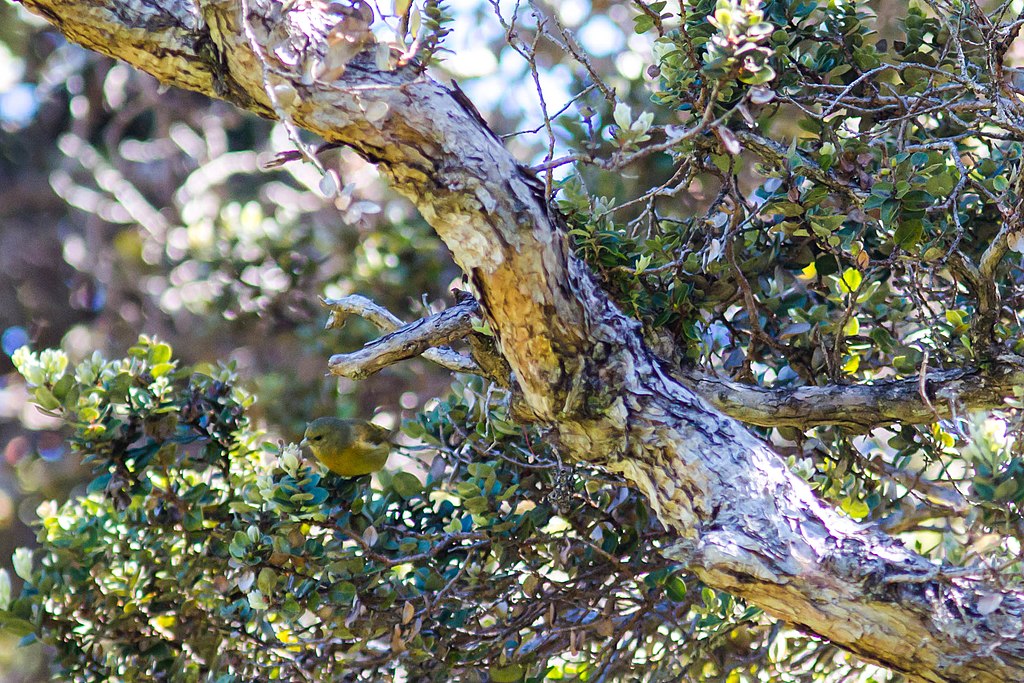
Photo of a female ‘akepa by Melissa McMasters from Memphis, TN, United States – Hawaii akepa, CC BY 2.0, https://commons.wikimedia.org/w/index.php?curid=74469702. The ‘akepa is just below and just left of center.

Story: How Curious

January 14, 2024

1 Samuel 3:1-20
John 1:43-51

The ‘elepaio was hungry. I’m not sure why. Any time I’ve been walking around the forested areas of Hawai’i, there have been lots of bugs. Bugs here, bugs there, bugs everywhere. Lots of bugs.

Mostly the bugs make me uncomfortable. I’m not an ‘elepaio. To an ‘elepaio, those are breakfast, lunch, and dinner.

For some reason, that day, the ‘elepaio wasn’t finding many bugs.

Most ‘elepaio are known to be curious. They flit about checking tree trunks and limbs, and fallen trees, for bugs on the bark and bugs that have burrowed into the bark. They look carefully around the leaves and twigs for the movement that indicates a bug, a snack, a meal. If you’re walking about in their territory, they’re likely to come take a look at you and check you out. In old times, canoe makers would watch them to see what trees had lots of bugs – which made them bad for canoes – and the curious ‘elepaio would watch them in reply.

This ‘elepaio was an exception. He’d had some very unpleasant experiences with ‘io and pueo, and even a mongoose or two. He wouldn’t move far from his chosen trees to see what the movement in other branches was all about. And as I said, he wasn’t finding a lot of bugs in his chosen trees.

“I’m hungry,” he grumped aloud.

“I’m not,” said another ‘elepaio in a neighboring tree.

“There’s no bugs here,” he told her.

“There’s bugs here,” she told him.

“I think the bugs have all gone away,” he sighed.

“If they have, they’ve all come here,” she said.

“I’m hungry,” he moaned.

“I think you’re not listening,” she said.

So she flew over and perched right next to him and gave him a gentle tap with her beak.

“There’s bugs a-plenty in that tree,” she said. “More than you and I could eat in a lifetime.”

“They’ve all gone away, I’m sure,” he said.

She nearly flew away in frustration at that, but after a moment, she said, “Come and see.”

“I don’t dare,” he told her. “What about ‘io and pueo and mongoose?”

“You’ll only find out if you come and see,” she told him.

Curiosity is a complicated thing. Curiosity helps us learn new things, but sometimes those things are things we’d rather not know. Curiosity gives us new experiences, but sometimes those are experiences we’d rather not have. Curiosity had led him to the ‘io and the pueo and the mongoose. Would curiosity bring him to enough bugs that they’d feed him for a lifetime? How curious did he dare to be?

His friend said, “Come and see.” She’d seen. She’d learned. She’d experienced. She invited.

He went, and saw, and ate.

by Eric Anderson

Author’s Note: I wrote this story for worship at Church of the Holy Cross UCC on January 14, 2024. Unfortunately, I fell ill and wasn’t able to tell it live.

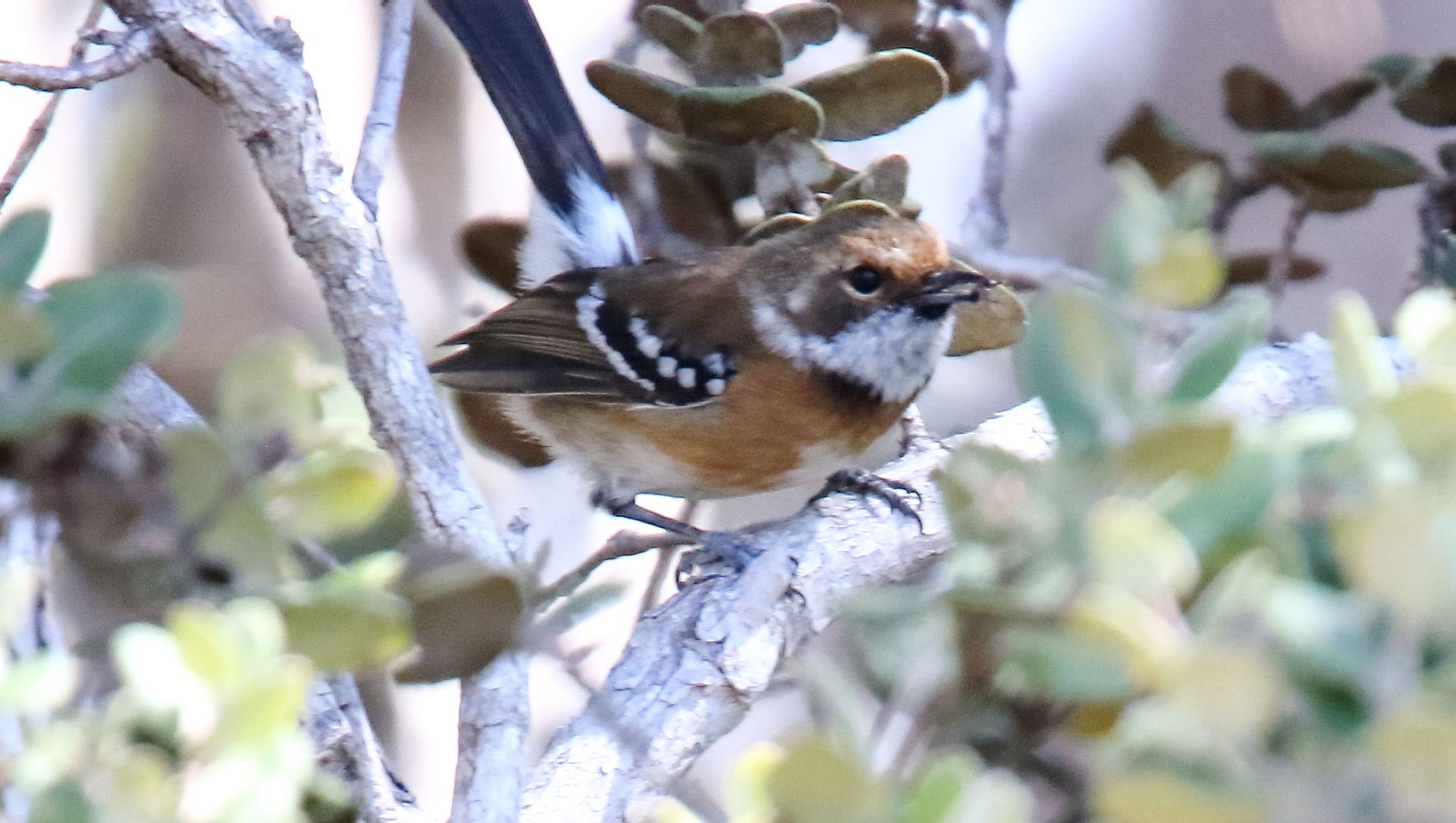
Photo of an ‘elepaio by Dominic Sherony – Hawaii Elepaio (Chasiempis sandwichensis), CC BY-SA 2.0, https://commons.wikimedia.org/w/index.php?curid=52150179.

Story: In Plain Sight

January 7, 2024

Isaiah 60:1-6
Matthew 2:1-12

Most of the ‘apapane, if you ask them, are delighted with their red feathers. They think their black wings make for a really smart and distinguished look.

One young ‘apapane, however, was not enthusiastic. As a juvenile, less than a few months old, he’d worn brown and yellow feathers. He was aware that as he grew those brown and yellow feathers would fall out, replaced by bright red or crimson feathers. As far as he was concerned, this was a Very Bad Idea.

“Why can’t my feathers stay brown, like the ‘elepaio?” he asked his mother.

“Because you’re an ‘apapane,” she told him.

“What about green feathers, like an ‘amakihi?” he wanted to know.

“You’re still an ‘apapane,” said his father.

His questions puzzled them, because he didn’t tell them why he wanted different feathering. It was because of the ‘io. His parents had warned him about the ‘io, and about their diet, which would include ‘apapane if they could get it. To our young friend, bright red feathers seemed like waving a big red cape at a bull.

“It’s like a big sign saying, ‘Breakfast here!’” he muttered to his older sister, who wasn’t remotely interested.

“There’s nothing to be done about it, so chill out,” she told him. “And besides, look how many ‘apapane there are?”

“So nobody will miss me when the ‘io eats me,” he muttered, but she didn’t hear him.

One day not long after all his red feathers had grown in, and he was bright scarlet from the top of his head down to his belly, he went foraging for bugs and nectar in an ohi’a tree bright with blossoms. “I’m standing out like a sore thumb,” he muttered, which is an odd thing for an ‘apapane to say, since they don’t have thumbs, but he knew what he meant.

That’s when he heard the cry of the hunting ‘io overhead.

He didn’t know what to do. He froze. He stayed stock-still on the branch with the cluster of ohi’a lehua he’d been feeding from. He could see the ‘io circling overhead, its bright eyes scanning the trees below, looking for breakfast.

The ‘io circled once, twice, and three times, then flew off to circle over another tree.

When the ‘apapane took a breath, he found his sister perched beside him.

“Why didn’t it eat me?” he asked. “I was in plain sight.”

“Take a quick flight overhead and look down,” said sister.

The ‘io had flown farther off, so he did as she advised. When he looked down, he saw spots of red all over the tree. Spots of red flowers… and among them, his bright red sister didn’t stand out at all.

He joined her again. “We hide in plain sight,” he said in amazement.

“We do,” she said. “Do you still want brown or green feathers?”

Sometimes our safety relies on our being right where we’re expected to be, a place where we might not be noticed because we fit right in. And sometimes we’re the ones who are looking, and the first place to look is still the obvious place, the place where things don’t quite stand out, like a child in Bethlehem, or a teacher on a dusty road.

by Eric Anderson

Watch the Recorded Story

I write these stories ahead of time, then tell them from what I remember. That means that a certain amount of… improvisation takes place.

Photos by Eric Anderson; the second is a cropped version of the first.

Story: The ‘Apapane’s Christmas Pageant

December 24, 2023

2 Samuel 7:1-11, 16
Luke 1:26-38

Last week you gave us a wonderful Christmas pageant. It was touching. It was funny. There was a lot of wonderful cuteness. Thank you. This story is about somebody else’s Christmas pageant. The ‘apapane’s Christmas pageant.

I don’t know how it came into the ‘apapane’s head to organize a Christmas pageant. I don’t even know how he’d heard about Christmas, let alone a Christmas pageant. Nevertheless, he flew around the forest, recruiting creatures who would take parts in the pageant.

He asked the i’iwi, who was feeling grumpy that day and didn’t say yes or no, nothing at all. He asked the i’o, which was pretty brave of him, and the i’o said she might come and looked… hungry. He asked the ‘amakihi and the ‘elepaio and the ‘akepa. They said they might. He even asked the palila in her mamane grove and spoke to a big flock of mynas. That set off an argument among them that wasn’t over when he went to talk with the mejiro.

The honu said no, because she wasn’t going to swim up to the ohi’a forest, which seemed fair. The koa’e kea insisted on playing Mary, because shouldn’t Mary have a long tail? The noio said he’d think about it. The mice looked nervous, and the mongoose looked puzzled. The pig in the forest said, “I’ll come.”

When it was pageant time, it was chaos. Creatures would step into the clearing he’d selected, then fade back into the trees again. Frightened chirps flew back and forth, and so did frightened birds. The mynas insisted they be the angel chorus, then exploded in another argument. The pig alone took its place in the clearing and announced, “I’ll play the pig in the stable,” which was a problem because there weren’t any pigs in the Bethlehem stable, but then he went to sleep.

“What do you need to calm down and play your parts?” asked the ‘apapane in exasperation.

One of the little ‘akepa hopped out. “Is the i’o here?” he asked.

“Yes,” said the i’o from the tree above him.

“Are you going to eat us?” asked the ‘akepa.

For a moment there was silence. Then: “No,” said the i’o. “Not today. Today we’ve got a pageant to do.”

The ‘apapane spent the next hour answering the question of each creature. The koa’e kea wanted to be Mary, so she was. A noio played Joseph after being assured that this wouldn’t take so long that he couldn’t go back to fishing later in the day. The mongoose promised the mice not to eat them, and they were duly cast as sheep and, believe it or not, shepherds. The i’iwi didn’t want to cheer up, so he became the grumpy innkeeper. The sleeping pig played a sleeping cow, and did it very well. The i’o, circling high above, took the voice of the angel Gabriel.

The mynas were relieved they wouldn’t be the only voices in the angel chorus, which stopped the argument, and they were joined by ‘apapane, ‘amakihi, and mejiro in their song, which echoed through the forest and down the mountainside. ‘Akepa brought the gifts of the magi. A young palila, such a rare bird, played baby Jesus.

When it was over, the creatures vanished back into the trees, leaving the ‘apapane alone in the silence. He’d answered every question, met every need, somehow.

The trees rustled in the darkness, applauding the ‘apapane’s Christmas pageant.

by Eric Anderson

Watch the Recorded Story

I probably should have taken a piece of paper with me when telling this story today, because there were a lot of creatures and I lost track of who wanted to do what, but this is the story as I told it this morning and I hope you enjoy it.

Photo by Eric Anderson.