Story: Sometimes It’s Simple; Sometimes It’s Not

April 28, 2024

Acts 8:26-40
1 John 4:7-21

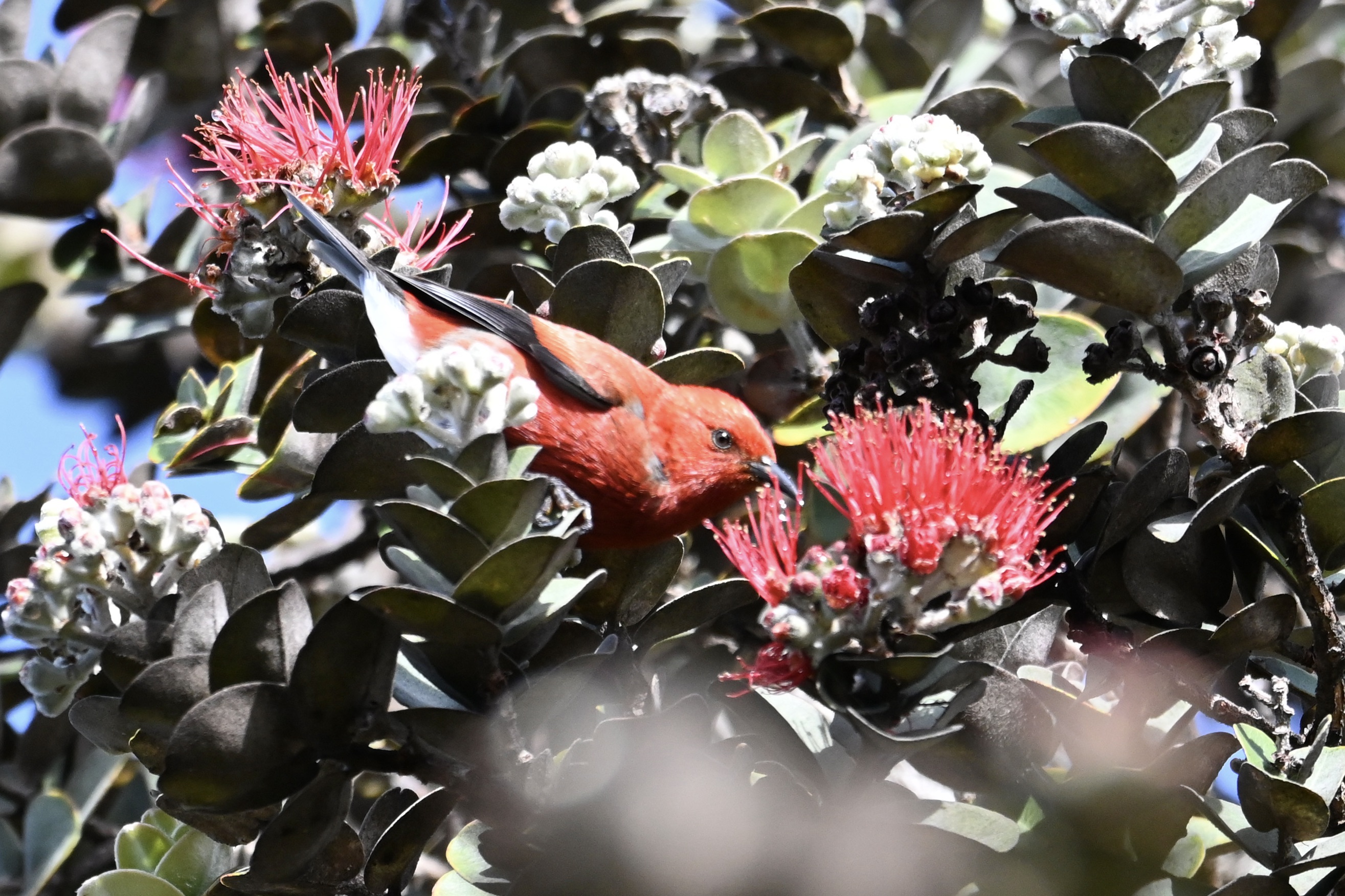
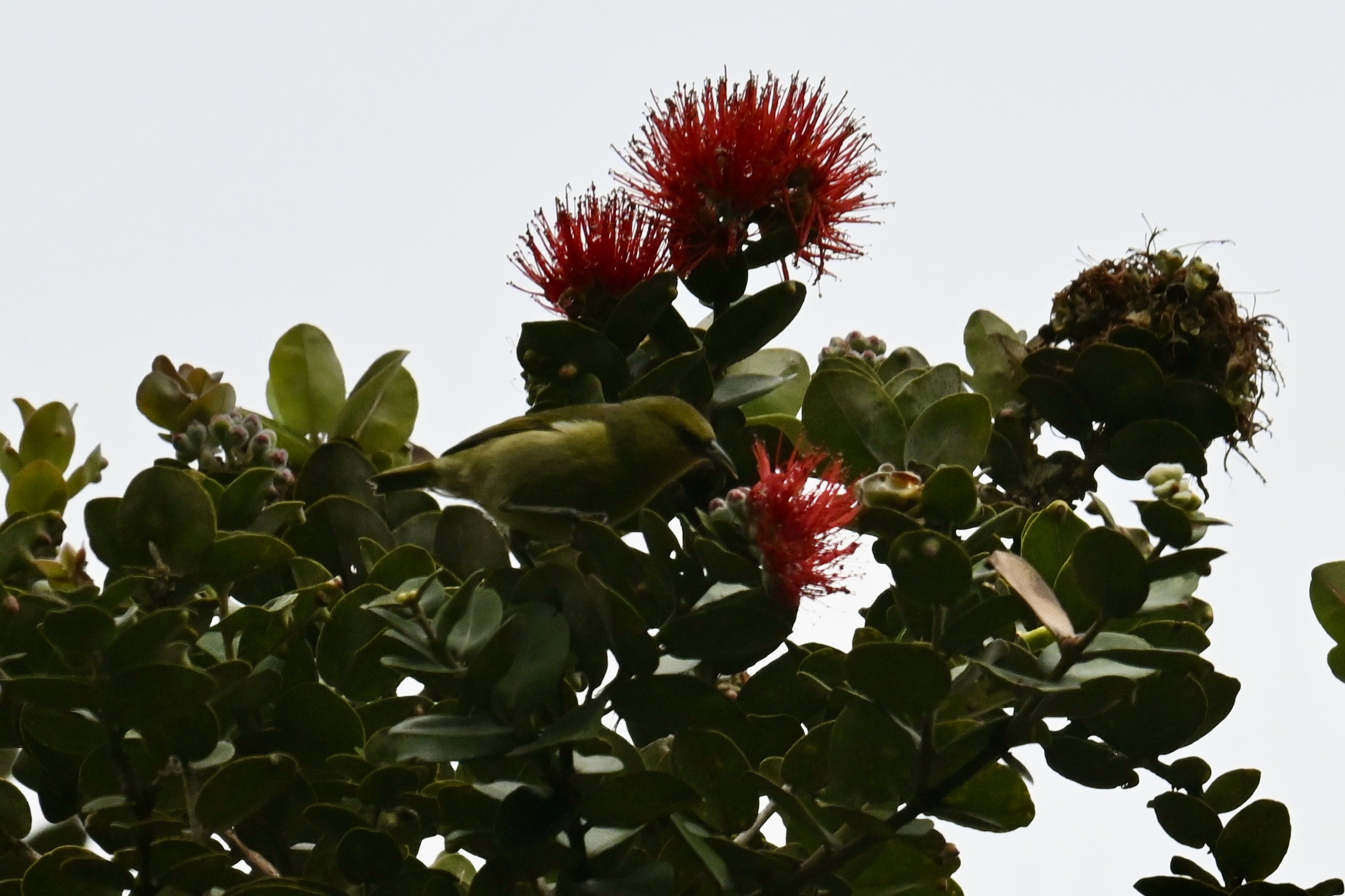
The i’iwi eats nectar. Human beings tend to complain about a diet that is mostly liquid, but we might complain less if it was mostly nectar. I’iwi don’t complain about it. Their long curved bill works really well for getting nectar from flowers that other birds like the ‘apapane can’t reach.

I’iwi have a neat trick for feeding from some flowers which open down. One will hang below the flower and poke its beak up into the nectar reservoir. There are other birds on the island that do this, but the i’iwi do it most often.

One young i’iwi came to believe that, because this was a hard-won skill, she had to use it all the time. On every flower. Whether they opened downward or upward.

Believe it or not, it sort of worked. It worked very well on those downward flowers, of course. That’s why i’iwi developed that technique.

It worked on sideways facing flowers, though it was more of a strain to get her neck into the right position. She kept at it, though. If she was going to do something, she’d do it right. And as with many things, constant practice meant that she did, indeed, get better and better.

It was more of a struggle, though, with flowers that opened upward. A lot of ohi’a blossoms, for example, open upward, and i’iwi sip a lot of ohi’a nectar. Still, ohi’a is a pretty open flower, without a lot of petals to get in the way. She managed.

Then there were the flowers with upward petals and, well, those didn’t go well at all.

Her mother came for a visit one day as she was flitting about from tree to tree. She didn’t say anything when she hung upside down for downward facing flowers. She didn’t say anything when she reached up for sideways flowers. She opened her beak but didn’t say anything about the ohi’a flowers she sipped from beneath.

But when she tried to get at a big hibiscus blossom from underneath, she said, “What are you doing?”

“I’m eating,” said her daughter.

“No you’re not. You can’t get at the nectar in that flower from down there.”

“Sure I can. It’s just a matter of technique.”

Mother watched daughter struggle to get her curved beak around the petals and to the nectar at the flower’s center. Eventually the younger bird, with a glance at her mother, perched just above and to the side and took a good long sip.

“You don’t always need to come at things from underneath,” said mother.

“Isn’t that the i’iwi way?” asked her daughter.

“The i’iwi way is to fly, eat, deal with the neighbors, get a good sleep each night, and be the most stylish birds on the mountain,” said her mother. “Nothing says you have to do something the hard way all the time.

“Sometimes things are simple. Sometimes they’re not. Doing simple things in a complicated way doesn’t get you fed, or flying, or sleeping. Doing complicated things in a simple way doesn’t get any of those things done either.

“When it’s simple, do it simply, daughter. Save the complicated techniques for when it’s hard.”

by Eric Anderson

Watch the Recorded Story

I write these stories ahead of time, and tell them from memory – which means that I improvise at the same time.

Image of an i’iwi feeding upside down by Bettina Arrigoni – Iiwi | Hakalau NWR | HI|2018-12-02|13-43-26-2, CC BY 2.0, https://commons.wikimedia.org/w/index.php?curid=75174870.

Story: Rolling Stone

April 21, 2024

Acts 4:5-12
1 John 3:16-24

It looked like any other stone that had been tumbled around in the ocean. Not very big. Not very solid. In fact, it was noticeably speckled with holes. The edges of the holes had been smoothed by sand and water moving over it. Eventually, the waves had flung it up on a beach.

And the waves had grabbed it again, so many times, the stone simply couldn’t count them. Not that stones count that well anyway. It had been swept away in the receding waves, then tossed back by the flowing waves, then undermined by another wave going, and pitched up the beach by another wave coming. It was kind of dizzying.

It was also kind of musical. The stone had a lot of company rolling around in the waves, and they rattled against one another as the water pulled away and they rolled together. The music they made, of course, was rock and roll.

If they’d named themselves as a band, I suppose they’d have been the Rolling Stones.

Those days had been exciting, not as exciting as the day it was flung as a hunk of liquid rock into the ocean, but it had been rhythmic and musical and, of course, rock and roll.

With time, however, the beach had grown. New stones, new sand, and new rocks came in with the tides, and the beach expanded further out from where the stone would rest from time to time. Eventually the waves never reached it at all. The stone felt somewhat lost and sad. It felt small. It felt unimportant. It was surrounded by plenty of other stones, but what were they to do except bake in the sun and drip in the rain?

That’s when a seed found its way to the beach, and tumbled down into the space between this stone and the next. It took a rest for a while, and the stone, which had hardly noticed it, forgot all about it – until it began to sprout. A root went down. A shoot came up.

“What are you doing there?” asked the stone.

“I’m growing,” said the plant which had been a seed.

“Why grow next to me?” asked the stone.

“Why not?” asked the seed.

“I’m small and unimportant,” said the stone. “I don’t even make music any more.”

“If you were bigger,” said the plant, “I could never get around you. If you were bigger you’d keep me away from the light. If you were bigger, I’d never find the rain. For me, right now, you’re the most important stone in the world, because you’re here and you’re being exactly what I need.”

The stone started to feel better, but then said, “I’ll still miss the music.”

“Hold that thought,” said the plant.

When it grew tall enough, the wind blew through its leaves with a whistling tone. Below it, the stone’s heart sang.

by Eric Anderson

Watch the Recorded Story

I write these stories ahead of time, then tell them from memory during worship – and make changes as I do. In this case I think all the puns made it into the story when told.

Photo of stones on the beach in Pohoiki by Eric Anderson.

Story: Perfectly Picky

April 14, 2024

1 John 3:1-7
Luke 24:36-48

I believe I mentioned a few weeks ago that if there’s something edible up in the ohi’a and koa forests – bugs, berries, fruit, sap, nectar, caterpillars, and so on – there’s an ‘amakihi eating it. They’re not picky eaters. They’re enthusiastic eaters.

Except for one young ‘amakihi. She was perfectly picky.

I don’t know how it got started, but I do know that early on she’d only eat bugs that she’d seen fly. I guess that meant they were fresher, somehow? Which meant that she would no longer eat the crawling bugs or the caterpillars, and there would be no spiders in her diet.

I know. You’re thinking, good choice. Along with you, I am pretty happy not to eat bugs at all. We are people, though, and not ‘amakihi.

Then she wouldn’t eat tree sap that came from cracks in the bark. I know – again, it sounds like a good choice for a human. But if you’re not going to eat tree sap that comes from cracks in the bark, how are you going to get to it at all? An ‘amakihi beak isn’t a good shape for making holes in bark. She’d removed another entry from her diet.

Then she decided not to eat fruit or berries unless it was perfectly ripe. That cut out a whole lot of fruit that was almost ripe, and it cut out a lot of fruit that was just past ripe, all of which feed other ‘amakihi perfectly well.

Her family started to notice that she was maybe getting a little thinner.

When she decided that the only nectar she’d sip would be from perfectly formed ohi’a flowers, that really did it. Go up to the ohi’a forests and you’ll find plenty of flowers on the trees. But are they perfectly formed into red puffballs? Not exactly. Some flowers show just a few scarlet tendrils. Some form ovals or just plain look squashed.

She wouldn’t eat from them. She wouldn’t even eat the flying bugs that landed on them.

She was hunting through an ohi’a tree that was bright red with blossoms – but very few of them perfect blossoms – when the branch jumped with another bird landing. She looked up and saw her grandmother watching her. Grandmother watched her pick over a big bunch of lehua, sip from none of them, and hop over to another, and sip from none of them.

“What are you doing, granddaughter?” asked grandmother.

“Eating,” said the picky ‘amakihi. “I’m hungry.”

“Eating what?” asked grandmother, who hadn’t actually seen her granddaughter eat anything.

“Nectar,” said granddaughter.

“Where?” asked grandmother.

“From the good ones,” said her granddaughter. “I only eat from the perfect flowers, Tutu.”

Grandmother looked at the tree full of blossoms and didn’t see many perfect ones. “You won’t find many perfect ones, granddaughter,” she said. “Not here, and not anywhere.”

She watched the picky ‘amakihi skip perfectly good (if imperfectly formed) ohi’a flowers for a little longer and said, “I think you should eat from some of the imperfect ones, young one.”

Granddaughter, who was annoyed, poked her beak toward a flower that basically had two red tendrils and no visible nectar, and said, “You mean like that one?”

“No, child,” said grandmother. “Not like that one. There’s nothing there. But the question isn’t whether a flower is perfect or not. The question is whether it feeds you.”

The picky ‘amakihi thought about this a while. And she really was hungry. With a glance at her grandmother, she put her beak into a bright red ohi’a flower which, to be honest, wasn’t perfect, and fed.

by Eric Anderson

Watch the Recorded Story

I write these stories ahead of time, then tell them in worship without notes. As a result, they change in the telling.

Photo of an ‘amakihi feeding at imperfect ohi’a flowers by Eric Anderson.

Story: Missed Lesson

April 7, 2024

1 John 1:1-2:2
John 20:19:31

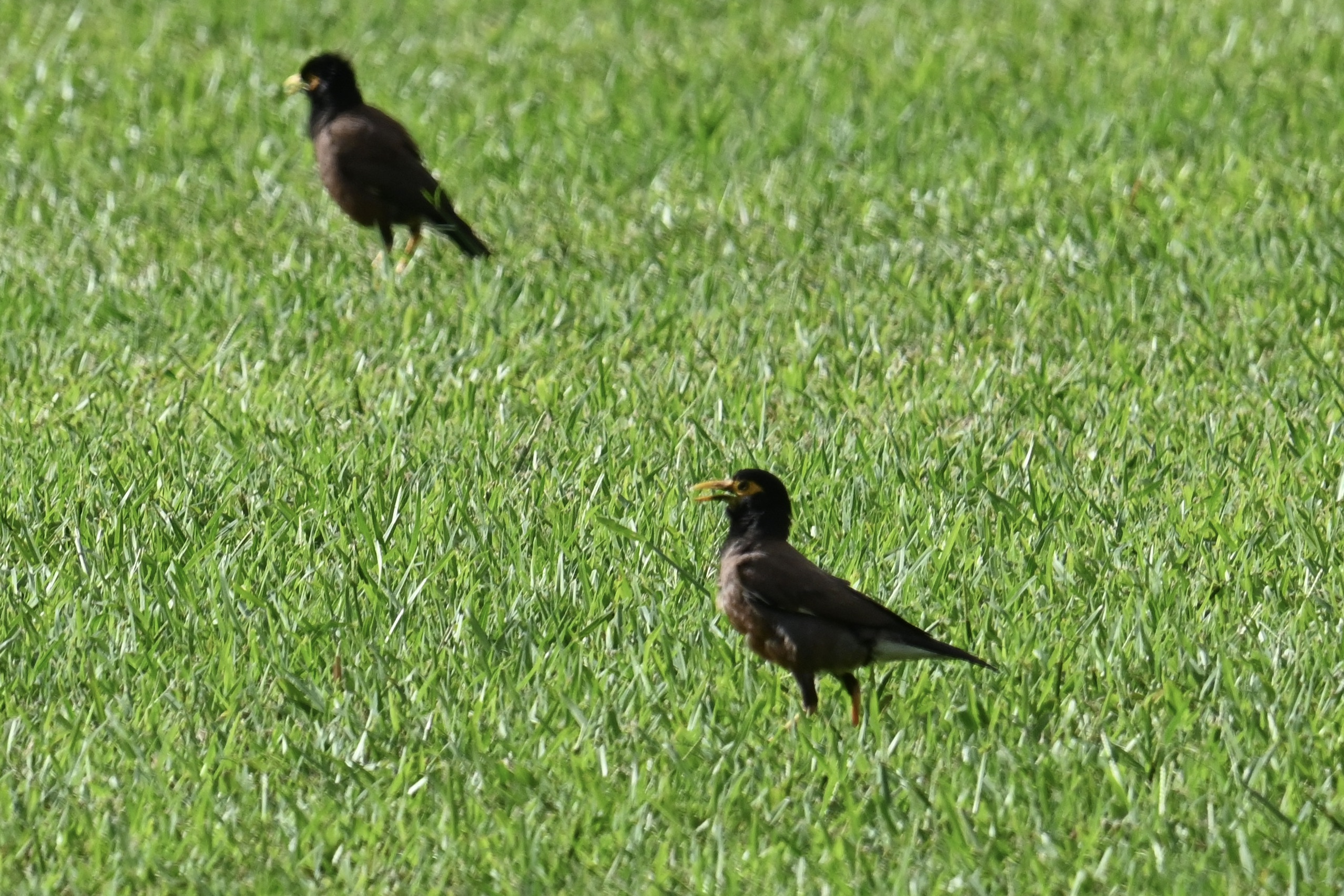
Most of the birds of our island fly by themselves, or in a loose flock. Around Hilo we’re mostly likely to see a pair of finches or a larger group of mynas flying together. Myna flocks tend to be rather chaotic, with birds crossing back and forth and no real attempt to build a formation and stay in it.

There’s an exception to that, and it’s the nene. I’ve mentioned nene school to you. I haven’t told you about the origin of nene school, which goes back so far that nobody really knows when it started. The nene don’t, and if the nene don’t, I certainly don’t.

The problem was that the nene liked to fly together and chat while they flew. They make that “Ne. Ne,” sound as they go. In the days before the foundation of the nene school, however, the cheerful “Ne. Ne,” would be interrupted by screeches and cries to veer off, and sometimes by the distressing sounds of wing feathers scraping over one another, and then the groans of pain and, of course, angry squawks of denunciation.

The problem, of course, was that nobody knew, when flying together, what any other goose would do, so they were making goose guesses. Actually, since there’d be more than one goose guessing, there’d be geese guesses. If one was young, you’d have gosling guesses. And if you had a visiting goose, there’d be guest goose guesses.

When one of these geese guesses was wrong, you’d get geese gripes.

When they founded the first nene school, everybody was eager to take part, and everybody came to the first class. And the second. And the third.

But one goose guessed wrong about when the fourth class was being held, and he missed it. He did show up for the fifth class, and, well, he made more goose guesses that goofed. The nene flying that day lost feathers, altitude, and tempers.

The teacher took him aside when class was over. She didn’t ask him why he’d missed the previous class. She just told him that what he’d missed, he’d have to learn.

“This is why we started this school in the first place,” she said. “We’re learning to fly together, to fly the same speed at the same time holding the same distance. We’re learning to be predictable and trustworthy in our own flying so that we can trust what the other nene will do. No more goose guessing.”

So he stayed and flew, and this time he learned the things he’d missed from the previous lesson, and he learned the things he’d missed from the lesson he’d just taken but hadn’t learned anything because his goose guesses had gone so goofy.

There are plenty of things in our human lives that we do separately, each in our own way. But there are also lots of things that we do together. We need to know what our fellow Christians are going to do, and they need to know what we’re going to do, so that we make things happen together.

It goes better than geese guesses.

by Eric Anderson

Watch the Recorded Story

I write these stories ahead of time (it’s the text you just read) but I tell them from memory without notes. And so they change in the telling.

Photo of nene in flight by Eric Anderson.

Story: Unbelief

March 31, 2024


Isaiah 25:6-9
John 20:1-18

In the gospel stories about Easter, there’s a common theme. It’s unbelief. People heard – from angels, initially – that Jesus had risen from the dead, and… they didn’t believe them. Later people heard from other people that Jesus had risen from the dead, and they didn’t believe the people. I guess that makes sense. If you don’t believe angels, how likely are you to believe people?

Once there was an ‘apapane who didn’t believe in love.

If that seems hard to believe, well, it was hard to believe. He had been raised with two sisters by attentive parents who fed them well, kept them warm in the rain, and taught them all to sing. They flew with him, they brought him to good trees to find bugs and nectar, and they kept him company when the nights got long and lonely.

But he didn’t believe in love.

You might be thinking that his sisters teased him all the time and that’s why he didn’t believe in love. It’s true. They teased him. But not much, really. More to the point, the teasing didn’t bother him. He teased them back and they all would laugh at the silly things they’d say.

Still, he didn’t believe in love.

“You’re just taking care of me because it keeps the family going,” he told his parents, who really didn’t know what to say about that.

“You’re just good to me because you expect I’ll be good to you,” he told his sisters, and he was good to them, but as he said, it was because he expected them to be good to him.

I suppose it might have been because nearly the entire time since he’d cracked the shell that the skies had been gray, the winds had been cold, and the rain had plummeted down.

I sometimes find it hard to believe in love after too many days of cold, grey, windy rain.

He and his sisters had put in a hard day of nectar- and bug-seeking. There might have been ohi’a flowers in blossom, but they were hard to see in the grey light. The bugs were hiding from the rain, not even troubling to go find nectar to eat. The three siblings huddled for the night on a branch, cold, wet, and hungry.

He was grateful for their warmth but he still didn’t believe in love.

When morning came, he blinked his eyes to an unfamiliar light. The clouds had cleared overnight, and the wind gently rustled the leaves. He and his sisters, all three, stared at the golden light of the sun rising over the trees. As it got higher, the ohi’a blossoms opened in scarlet and gold glory. As it got higher, its warmth dried their feathers.

“Wow,” said the sisters. “What a difference that makes.”

“More than you know,” said their brother. “It’s like a completely different world.”

“Is this a world where you can believe in love?” asked one sister.

He thought about it for a while.

“You know, I think it might be,” he said.

They helped one another get their drying feathers into shape – that’s kind of an ‘apapane hug – and flew off into the sunrise over the glorious bloom of ohi’a.

As they flew, they sang together. You know what they sang?

“I think I believe in love.”

by Eric Anderson

Watch the Recorded Story

I write these stories ahead of time, then tell them from memory – memory plus whatever I feel like saying in the moment.

Photo of an ‘apapane by Eric Anderson.

Story: Risky

March 31, 2024

Isaiah 25:6-9
John 20:1-18

You and I are familiar with mynas. They’re all over the place, for one thing. And they have a habit of shrieking at us for no particular reason. Here at Church of the Holy Cross, we’re also used to picking up after them because they try to build nests under the eaves and they’re remarkably bad at doing it.

You and I aren’t so familiar with the Manu-o-Ku, known in other parts of the world as the white tern. They tend to be a little bigger than a myna with longer wings. The myna has brown feathers with black feathers on the head and that distinctive yellow mask around the eyes leading to the bright yellow beak. The Manu-o-Ku is all white except for black eyes and a straight black beak. They don’t live here on Hawai’i Island, but you’ll find them – and mynas – living on O’ahu.

Two mynas were watching a manu-o-ku family prepare for laying an egg, and they were pretty critical about it. I may think mynas build messy nests, but the mynas were surprised that the manu-o-ku didn’t build a nest at all. “Where is the egg going to go?” asked one. “They haven’t done anything about a place to keep it from rolling away,” said the other.

The manu-o-ku ignored all this – they heard it, of course, because mynas aren’t usually quiet. They just flew from branch to branch, checking things out, and didn’t fetch a single piece of grass to build a nest.

Finally they settled onto a spot where a branch forked. It made a little spot with a hollow, like the bowl of a spoon – a very shallow spoon. I don’t think I’d have noticed it, but the manu-o-ku did. Somewhat later, the mynas returned to find that a single egg rested in that little depression, and that the father and mother manu-o-ku were taking turns keeping it warm.

“I’m shocked,” said one of the mynas. “I am, too,” said the other. “That egg is going to fall off.” “And if the egg doesn’t,” said the first, “the chick will.”

The manu-o-ku heard this and said nothing.

About a month later, the egg hatched, and the newborn chick’s feet were able to easily hold onto the forked branch of its nest. The parents brought fish and squid from the ocean to feed it. “That will never work,” said the mynas to one another. “That chick is doomed for sure.”

But it wasn’t. It took its first flight. It stayed nearby and the parents continued to bring it meals. It learned to catch its own food. It took to the skies.

“That shouldn’t have worked,” said the first myna. “It was an awful risk,” said the second.

“It’s a good thing that it worked, then, isn’t it?” called one of the manu-o-ku, and flew away in a flurry of white feathers.

You know, Jesus took a risk when he taught people to love one another, because some people don’t want to do that and they got angry about it. He took a risk when he loved people enough that he didn’t act violently when they came to be violent to him. He took a risk by going to the cross, and that risk took him to the grave. If you want to make things better, those actions shouldn’t work.

Jesus rose from the dead, and suddenly all those actions did work, all those risks of love and of peace and of death itself. It was more precarious than a manu-o-ku egg on a branch, but on that Easter Day love won, and it will always win.

By the way, we have taken a risk this morning. We’ve placed Easter eggs around the church and in a moment we’re going to ask you to find them. The risk is that if you don’t find all the real eggs, in a couple of days of sunshine they’ll get really warm and smelly. So help us out here. Make something good happen for yourself and for all of us. Find those eggs. It will be an Easter risk that worked.

by Eric Anderson

There is no video of this story, which I told before the young people headed out for their Easter Egg hunt. For the record, all the colored boiled eggs were retrieved.

Photo by Duncan Wright – USFWS Hawaiian Islands NWR, Public Domain, https://commons.wikimedia.org/w/index.php?curid=1167986

Story: Independent

March 24, 2024

Psalm 118:1-2, 19-29
Mark 11:1-11

The ‘amakihi aren’t the most social birds in the world. They often forage by themselves, with their mate, or with a few family members. When the hatchlings have left the nest they sometimes join loose flocks of other ‘amakihi, ‘apapane, ‘akepa, and so on. But not always.

One young ‘amakihi took this a little further than most. He announced to his family and friends that he didn’t need anybody.

If you looked at things a certain way, that seemed true. An ‘amakihi doesn’t need a lot of help to find food in the forest. They eat pretty much anything. They’ll eat nectar. They’ll eat fruit. They’ll eat bugs. In fact, mostly bugs. If it’s edible on the mountain, the chances are that an ‘amakihi is eating it.

Although they will fly above the trees, the ‘amakihi are very nimble fliers. They can stop dead in the air, which is quite a trick. They don’t worry too much about the ‘io or the pueo. If they’re above the trees when they spot one, they can dip back into the trees pretty quickly and the ‘io doesn’t have the turning ability to keep up through the branches and trunks. It’s a careless ‘amakihi that becomes somebody else’s meal.

So the other ‘amakihi weren’t entirely surprised when the young one announced, “I don’t need anybody!”

“No help to find bugs?” asked one.

“No need!” he said.

“No help to find water?” asked another.

“No need!” he replied.

“No company?” asked his mother.

“No need!” he announced, but maybe a little too quickly and a little too loudly.

“All right,” said his grandmother, and the little group of his family and friends flew away and left him there alone.

It was fine for a day. He ate well. He kept an eye out for ‘io. He had good places to rest.

It was fine for a second day. He found an ohi’a grove nodding with blossoms.

It was starting to feel not so good on the third day. He hadn’t made his way through all the ohi’a yet, but he felt heavy and kind of sad. The sweetest bugs didn’t cheer him up.

On the fourth day he realized he was lonely.

He sat and sang a sad little song, one you don’t often hear from an ‘amakihi.

The branch he was sitting on bounced down and up, and he turned to see his mother perched there. She listened to him finish his sad little song. Then she waited.

“I think I need somebody sometimes,” he said.

“I’m not surprised,” she replied.

“Really?” he said.

“Everybody does. We don’t live by bugs and nectar alone.”

The two of them flew back to find the rest of the family and a less lonely future.

by Eric Anderson

Watch the Recorded Story

I write these stories in advance (it’s what you just read) but when I tell them it’s a time of re-creation, not recall.

The photo of an ‘amakihi is by Eric Anderson.

Story: Weird

March 10, 2024

Numbers 21:4-9
John 3:14-21

“I think they’re weird,” said the ‘amakihi.

“Definitely bizarre,” said the ‘akepa.

“Not like us,” said the ‘apapane.

“Not like us at all,” said the i’iwi, who usually doesn’t take part in this kind of conversation but was close enough to overhear.

“They’re not so bad,” said the elepaio, but nobody was listening to him.

“They don’t eat nectar,” said the i’iwi.

“Not everybody does,” said the elepaio, who didn’t.

“They’re not brightly colored,” said the bright orange ‘akepa.

“I’m not either,” said the elepaio, who wasn’t.

“They sit still all the time,” said the ‘amakihi.

“Not everybody needs to hop around to find food,” said the elepaio.

“They don’t sing out the way they could,” said the ‘apapane.

“Would you sing out when there’s an ‘io overhead?” asked the elepaio.

The other birds finally noticed that the elepaio was there.

“What are you going on about?” they asked.

“I don’t see that there’s anything that strange about the ‘Oma’o,” said the elepaio. “In fact, most of the things you’re criticizing are things you could say about me.”

The other birds were silently embarrassed for a while. Some of them had, in fact, said similar things about the elepaio when they thought they wouldn’t be heard.

“Don’t you think they’re different?” asked the i’iwi, who most of the others thought was kind of different himself.

“Certainly they’re different,” said the elepaio. “Different doesn’t mean strange, or bad, or wrong, though.”

The birds were silent.

“If it helps any,” said an ‘oma’o who was sitting there quietly and completely unnoticed in some koa, “I can’t help think that you’re all rather different, too. But you know,” she said thoughtfully, “it seems to work for you.”

The birds looked at one another: red feathers, green feathers, tan feathers, black feathers, yellow feathers, long beaks, short beaks, different shapes to their wings.

“You’re right,” said the ‘apapane thoughtfully. “It does seem to work for us in our different ways.”

“Not so weird.”

“Not so bizarre.”

“Different from us, but it works.”

by Eric Anderson

Watch the Recorded Story

We had a technical failure and lost the audio from the beginning of the story this week. Our apologies!

I write these stories ahead of time, then tell them from what I remember of what I wrote. Since I don’t remember things perfectly, and since I invent new things in the telling, the story I tell may not match the story I wrote.

Photo of an oma’o by ALAN SCHMIERER from southeast AZ, USA – OMA’O (9-4-2017) pu’u o’o trail, kipuka ainahou section, hawai’i co, hawaii -06, CC0, https://commons.wikimedia.org/w/index.php?curid=74675325.

Story: No Signs

kolea (Pacific Golden Plover)

March 3, 2024

Exodus 20:1-17
1 Corinthians 1:18-25

The kolea had successfully made his first flight to Hawai’i the previous fall. He’d hatched a young bird in Alaska, he’d been fed by his parents, he’d learned to find his own food, and eventually he’d taken off for the long journey to Hawai’i. He’d found a spot here to look for worms and seeds and berries. He’d worn his mottled tan and brown feathers through the winter months. He was starting to put on the black and white feathering of summer.

He’d also been paying attention to people. I advise you to pay good attention to people, because you are people, and paying attention to people who are people like you helps you to learn how to be people, and it also helps you to know what other people are going to do, like when they might step backward and one people steps on another’s people’s toes.

Um. Person’s toes.

While it’s useful for people to listen to people, it’s not always so useful for other creatures. For some reason, this kolea heard a lot of people talking about signs. If you want to find your way to Hilo, follow the signs. If you want to find your way to the beach, follow the signs. If you want to go not too fast and not too slow, follow the signs.

Where, wondered the kolea, would he find signs on the way to Alaska?

Mind you, people do put signs out on the waters. If you look around Hilo Bay, there are marker buoys out there to help boats find their way to the harbor mouth and back home. They’re easier to see at night, when they blink red and green. As you get further from the shore, however, there are fewer of them, and not many at all across the vast expanse of ocean.

The kolea hadn’t noticed any on the way to Hawai’i, and didn’t expect to see any on the way to Alaska.

“Where will I find the signs?” he asked.

“Why do you want signs?” an older kolea wanted to know.

“People use them all the time,” he answered, and the other kolea thought he meant kolea people rather than human people, and flew away because he wasn’t making any sense.

It was another older kolea who sat him down for a heart-to-heart, brain-to-brain, and feather-to-feather talk.

“What signs do you expect to see?” she wanted to know.

“Clouds, stars, lights, glowing plankton in the ocean,” he said.

“Did you see any coming here?” she asked.

“Of course I did,” he told her, because those things happen around the oceans.

“Did they tell you how to get here?” she asked.

Well, no, they hadn’t.

“How did you get here?” she asked.

He gave her an answer that he understood, and she understood, because they’re both kolea and they can fly three days over open ocean without signs, but that I don’t understand because I’m a human person and I don’t know how they do it.

“The signs are inside you,” she told him.

We live with a lot of signs around, it’s true, telling you everything from what the name of this church is to how far it is to Kona. Some things, however, and some of that is in our lives of prayer, take place within us, in our hearts and in our souls. There are signs for that, like the Bible, but down deep we’ll find the guidance of the Holy Spirit to bring us safely home.

by Eric Anderson

Watch the Recorded Story

I write these stories ahead of time and tell them in worship services from memory. As a result, the prepared text and the told story rarely match. I’m quite pleased how much of the paragraph with all the people I remembered this week.

Photo of a kolea in Hilo by Eric Anderson.

Story: The I’iwi in the Flock

February 25, 2024

John 15:16

It was summertime. The nests around the ohi’a and koa forests had had their eggs, had had their cheeping chicks, and had been emptied. Young birds were flying about with their parents and aunties and uncles. The summer flocks were coming together.

Much of the year, the honeycreepers of the Hawaiian forests don’t gather in big flocks. They move about by themselves or in twos or threes. But in summertime, they gather, and they gather ‘amakihi with ‘akepa with ‘alawi and even some ‘apapane. But not, most of the time, i’iwi. When nesting time comes back around the flocks disperse. In summer, they fly together.

A young i’iwi watched a flock of ‘amakihi and ‘akepa and ‘apapane skimming the trees as they searched bugs and blossoms. He turned to his grandfather. “Should we fly with them?”

“Oh, no!” humphed his grandfather. “They don’t have the right kind of beak.”

In fact, none of the birds in the flock had the long curving bill that the i’iwi did.

He asked his grandmother, “Should we fly with them?”

“Oh, no!” said his grandmother. “They don’t have the right color feathers.”

The ‘apapane came closest, but he had to admit that you could see the difference.

“Should we fly with them?” he asked his friends, and they all said, “No! They can’t do what we do!” in different ways.

A day later, all by himself, he approached the flock, and perched next to an ‘amakihi.

“You don’t have a long curved bill,” he remarked.

“No,” said the ‘amakihi, somewhat puzzled. “I don’t.”

“It seems to work well enough,” said the i’iwi.

“It works pretty well, I think,” said the ‘amakihi.

“It might be awkward to get into an ohi’a blossom from below,” said the i’iwi, and the ‘amakihi admitted this was true.

“You don’t have bright red feathers,” said the i’iwi.

“True,” said the ‘amakihi. “Mine are bright yellow.”

“Do they get you places?” asked the i’iwi.

“They got me here,” said the ‘amakihi.

“Can you do all the things I can do?” asked the i’iwi.

“Probably not,” said the ‘amakihi. “Can you do all the things I can do?”

“Probably not,” said the i’iwi.

Then he asked, “Do you mind if I fly along with your flock?”

“With your red feathers and curved beak and things I can’t do?” said the ‘amakihi. “Join us and welcome.”

That’s how an i’iwi became part of a summertime flock.

by Eric Anderson

Watch the Recorded Story

I write these stories, then tell them from memory. Since my memory can be erratic, the stories as told rarely match the stories as written.

The photo of an i’iwi is by HarmonyonPlanetEarth – I’iwi|Pu’u o’o Trail | 2013-12-17 at 12-43-196. Uploaded by snowmanradio, CC BY 2.0, https://commons.wikimedia.org/w/index.php?curid=30241883