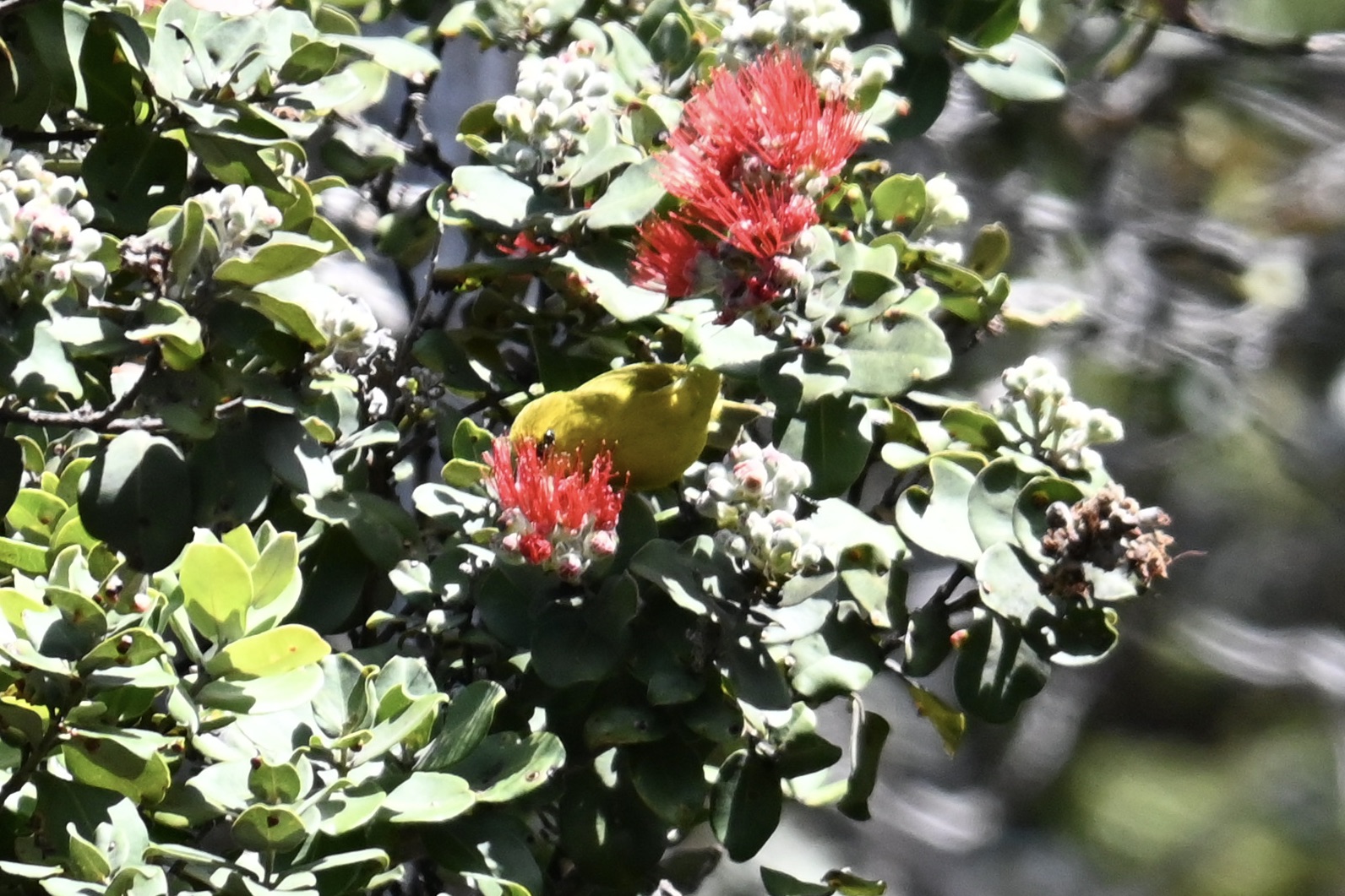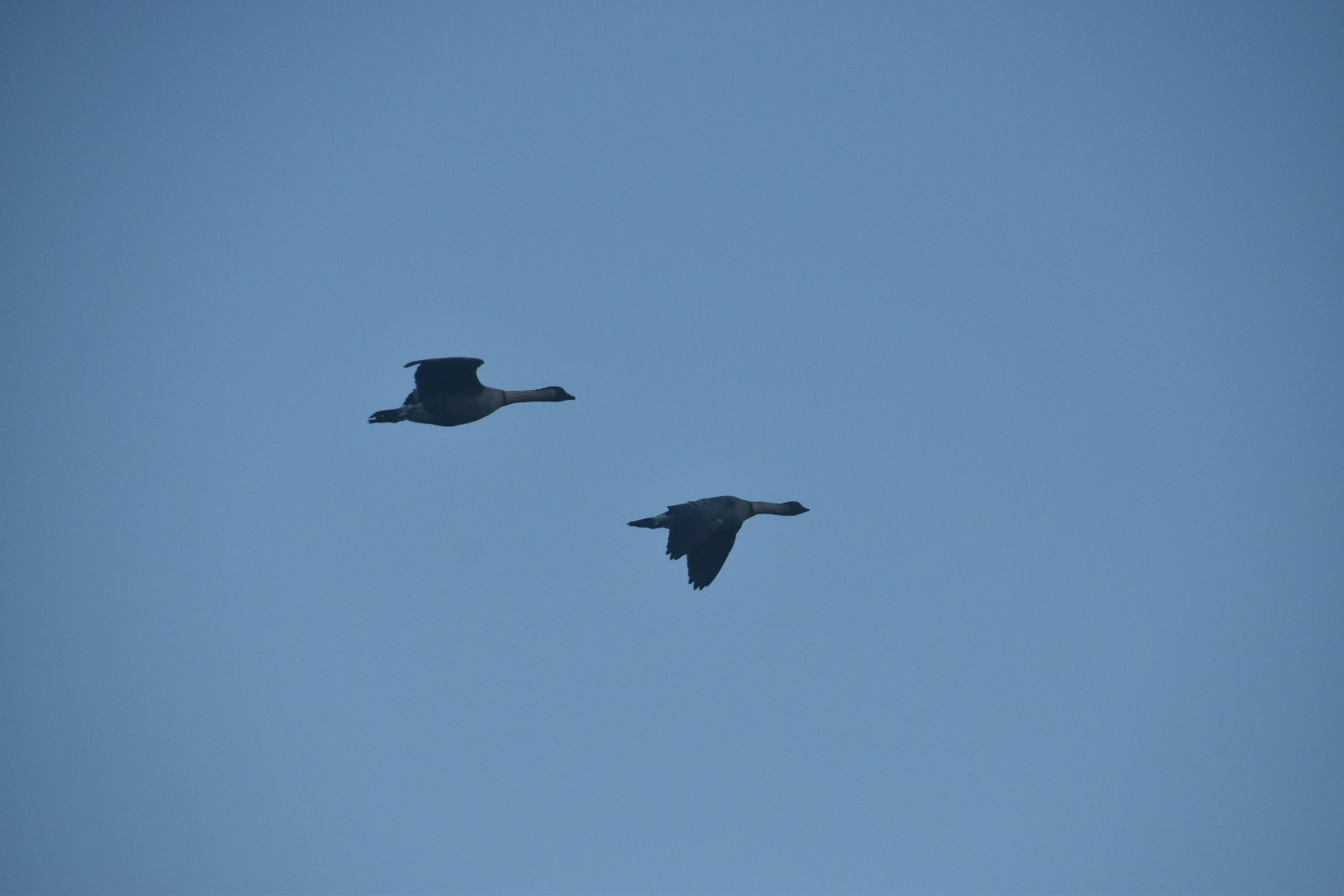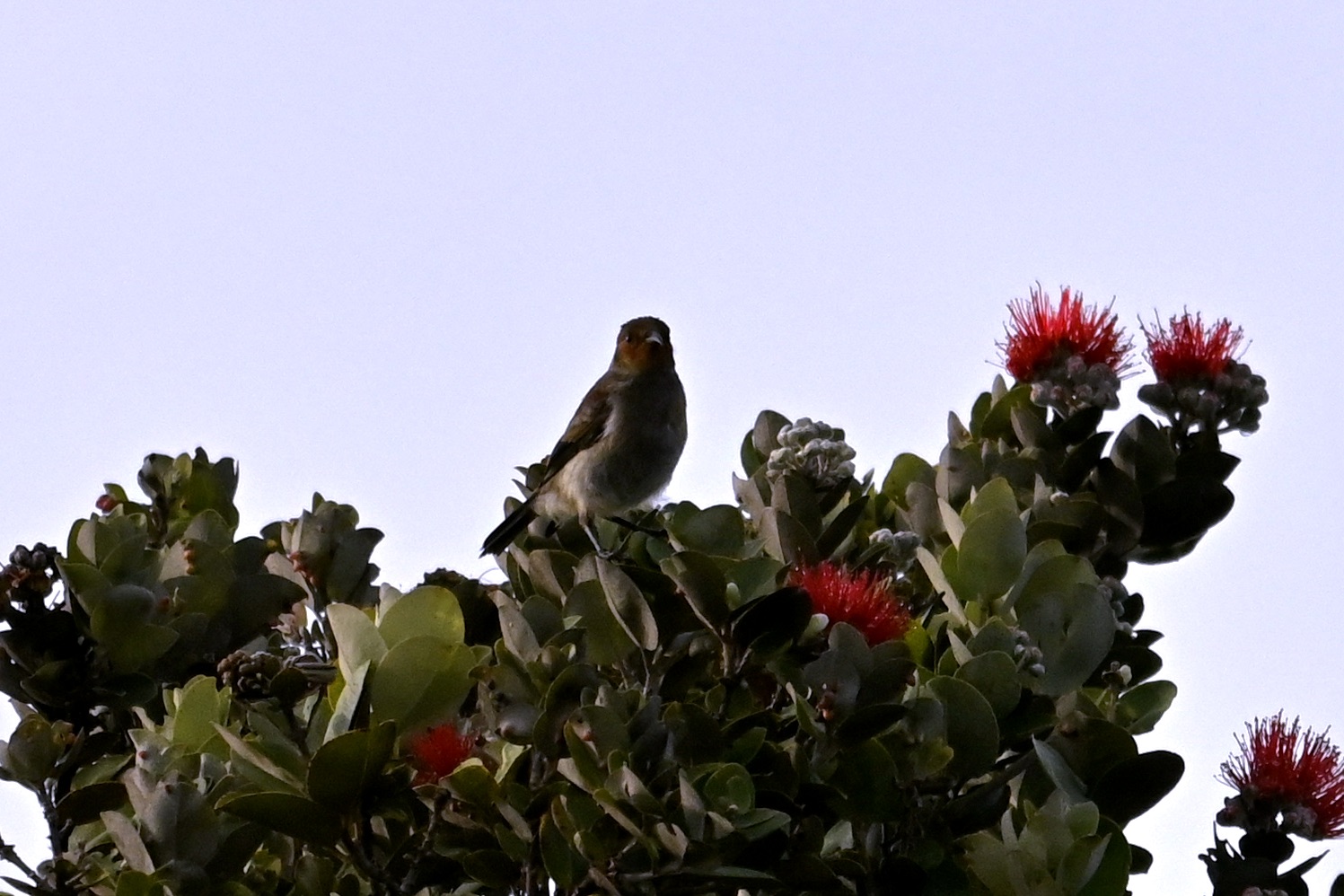
Story: The Uncertain ‘Akepa

January 28, 2024

Deuteronomy 18:15-20
Mark 1:21-28

Let’s be clear. Songbirds are not noted for being in-your-face kinds of birds, except every once in a while when there’s a big argument about the melody. I’m sure you’ve seen birds flying angrily at one another from time to time. I’m afraid it’s usually because somebody thinks somebody else isn’t singing it right.

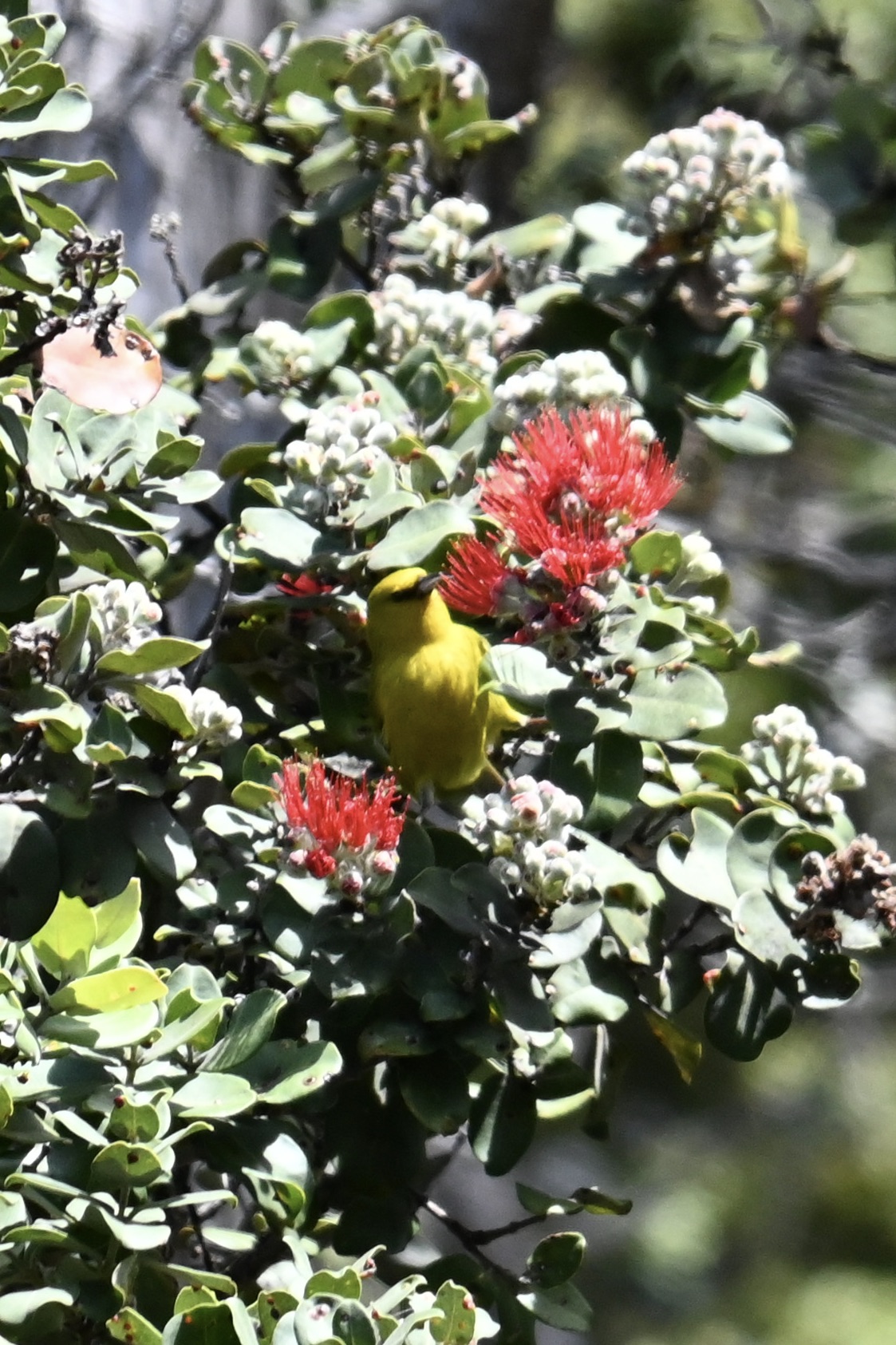
The ‘akepa, with their bright orange feathers or with olive an green head and wings and a yellow chest if they’re female, are generally pretty shy birds. They keep mostly to themselves, perhaps foraging for their favored bugs and insects with a friend or a mate. If you ask their opinion, they’re likely to tell you, but they’re not likely to offer it in the first place.

One ‘akepa, however, was really shy about offering an opinion. It’s not that she didn’t think her thoughts were worthless; it’s just that she thought everybody else’s thoughts were equally worthwhile. That can lead to some good discussions when the question is something like, “What is the meaning of life?” “I’ve got one or two ideas. What are yours?” will get things started, won’t they?

When the question is, “Is there a good assortment of bugs for breakfast in that tree?” and your answer is, “I suppose there might be. But what does a good assortment look like to you?” – well, that kind of answer isn’t as helpful.

“Were you in that tree today?”

“I might have been. What do you mean by today?”

Her friends, even the one she most frequently went bug-seeking with, yearned for a good, solid, straightforward statement from her.

It came. It came on a stormy, windy day. She and her friend were in neighboring trees, both of them dancing in the wind. When I say dancing, I mean, jumping up and down and spinning around with no regard for a musical beat.

Looking at her friend’s tree, she noticed that the limb her friend perched on was starting to crack. “Do you think this would be a good time to go to another tree?” she called.

“I don’t want to fly right now!” called her friend.

“You might want to fly more than you think you do,” she called again, and her friend, riding the bucking branch up and down and side to side, barely heard her and said nothing.

As the branch began to really tear away at the trunk, our uncertain ‘akepa screamed, “Fly away right now now now!” and then came the sounds of wood breaking and the leaves scraping against other branches as it all came down. Some green and yellow feathers whirled away on the stormy wind.

“Good idea, flying,” heard our uncertain ‘akepa from just above, and there was her friend, breathing hard and looking a little the worse for wear, holding tight as her new branch in the new tree rocked about. “I’m really glad you were sure about that.”

Not everything in life is cut and dried, hard and fast. Not everything is wide open to options and opinion. It’s important to know the difference, especially when branches are falling in the storm.

by Eric Anderson

Watch the Recorded Story

I tell these stories from my memory of what I’ve written (which is the text you’ve just read). The story as told is… different.

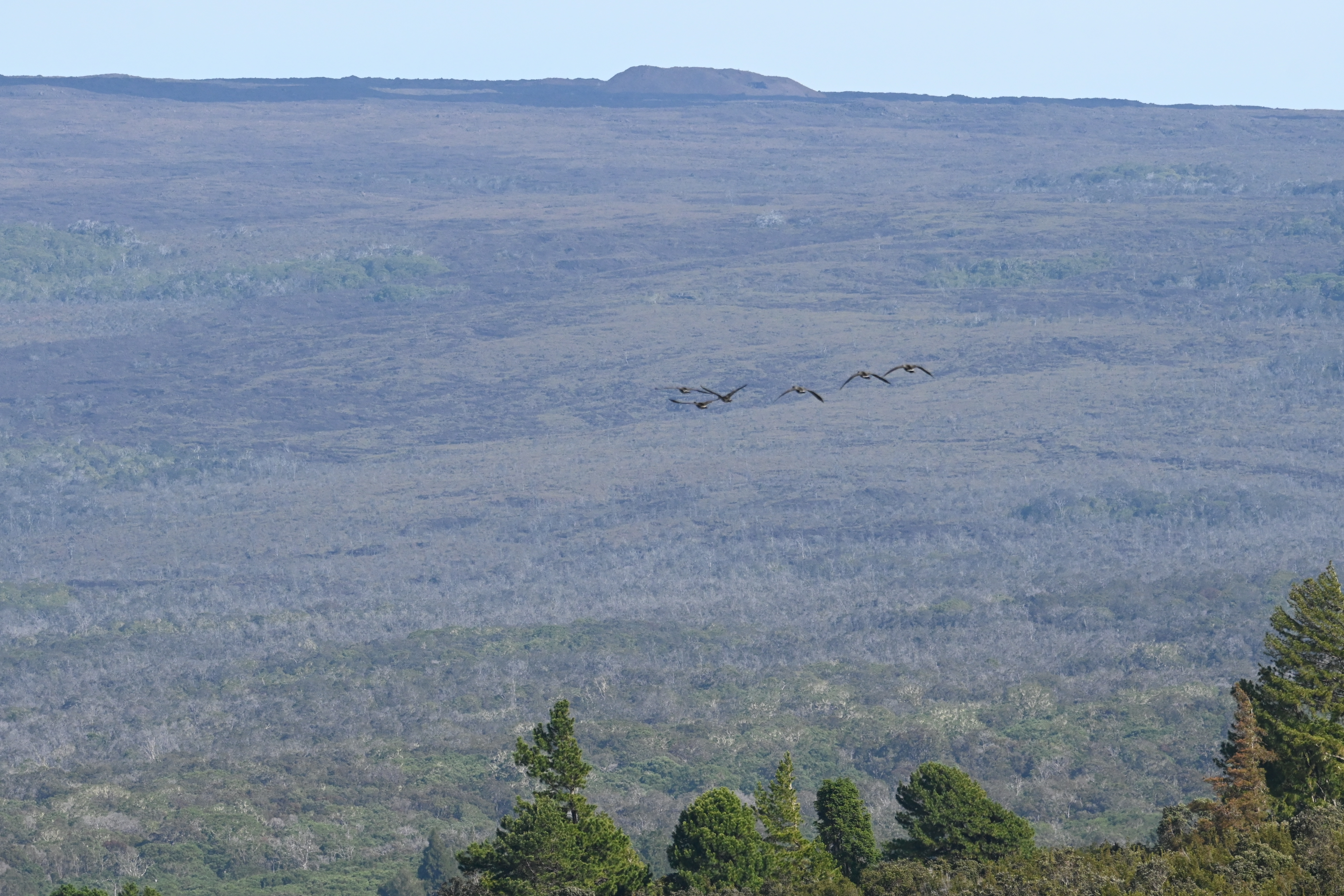
Photo of a female ‘akepa by Melissa McMasters from Memphis, TN, United States – Hawaii akepa, CC BY 2.0, https://commons.wikimedia.org/w/index.php?curid=74469702. The ‘akepa is just below and just left of center.

Story: How Curious

January 14, 2024

1 Samuel 3:1-20
John 1:43-51

The ‘elepaio was hungry. I’m not sure why. Any time I’ve been walking around the forested areas of Hawai’i, there have been lots of bugs. Bugs here, bugs there, bugs everywhere. Lots of bugs.

Mostly the bugs make me uncomfortable. I’m not an ‘elepaio. To an ‘elepaio, those are breakfast, lunch, and dinner.

For some reason, that day, the ‘elepaio wasn’t finding many bugs.

Most ‘elepaio are known to be curious. They flit about checking tree trunks and limbs, and fallen trees, for bugs on the bark and bugs that have burrowed into the bark. They look carefully around the leaves and twigs for the movement that indicates a bug, a snack, a meal. If you’re walking about in their territory, they’re likely to come take a look at you and check you out. In old times, canoe makers would watch them to see what trees had lots of bugs – which made them bad for canoes – and the curious ‘elepaio would watch them in reply.

This ‘elepaio was an exception. He’d had some very unpleasant experiences with ‘io and pueo, and even a mongoose or two. He wouldn’t move far from his chosen trees to see what the movement in other branches was all about. And as I said, he wasn’t finding a lot of bugs in his chosen trees.

“I’m hungry,” he grumped aloud.

“I’m not,” said another ‘elepaio in a neighboring tree.

“There’s no bugs here,” he told her.

“There’s bugs here,” she told him.

“I think the bugs have all gone away,” he sighed.

“If they have, they’ve all come here,” she said.

“I’m hungry,” he moaned.

“I think you’re not listening,” she said.

So she flew over and perched right next to him and gave him a gentle tap with her beak.

“There’s bugs a-plenty in that tree,” she said. “More than you and I could eat in a lifetime.”

“They’ve all gone away, I’m sure,” he said.

She nearly flew away in frustration at that, but after a moment, she said, “Come and see.”

“I don’t dare,” he told her. “What about ‘io and pueo and mongoose?”

“You’ll only find out if you come and see,” she told him.

Curiosity is a complicated thing. Curiosity helps us learn new things, but sometimes those things are things we’d rather not know. Curiosity gives us new experiences, but sometimes those are experiences we’d rather not have. Curiosity had led him to the ‘io and the pueo and the mongoose. Would curiosity bring him to enough bugs that they’d feed him for a lifetime? How curious did he dare to be?

His friend said, “Come and see.” She’d seen. She’d learned. She’d experienced. She invited.

He went, and saw, and ate.

by Eric Anderson

Author’s Note: I wrote this story for worship at Church of the Holy Cross UCC on January 14, 2024. Unfortunately, I fell ill and wasn’t able to tell it live.

Photo of an ‘elepaio by Dominic Sherony – Hawaii Elepaio (Chasiempis sandwichensis), CC BY-SA 2.0, https://commons.wikimedia.org/w/index.php?curid=52150179.

Story: In Plain Sight

January 7, 2024

Isaiah 60:1-6
Matthew 2:1-12

Most of the ‘apapane, if you ask them, are delighted with their red feathers. They think their black wings make for a really smart and distinguished look.

One young ‘apapane, however, was not enthusiastic. As a juvenile, less than a few months old, he’d worn brown and yellow feathers. He was aware that as he grew those brown and yellow feathers would fall out, replaced by bright red or crimson feathers. As far as he was concerned, this was a Very Bad Idea.

“Why can’t my feathers stay brown, like the ‘elepaio?” he asked his mother.

“Because you’re an ‘apapane,” she told him.

“What about green feathers, like an ‘amakihi?” he wanted to know.

“You’re still an ‘apapane,” said his father.

His questions puzzled them, because he didn’t tell them why he wanted different feathering. It was because of the ‘io. His parents had warned him about the ‘io, and about their diet, which would include ‘apapane if they could get it. To our young friend, bright red feathers seemed like waving a big red cape at a bull.

“It’s like a big sign saying, ‘Breakfast here!’” he muttered to his older sister, who wasn’t remotely interested.

“There’s nothing to be done about it, so chill out,” she told him. “And besides, look how many ‘apapane there are?”

“So nobody will miss me when the ‘io eats me,” he muttered, but she didn’t hear him.

One day not long after all his red feathers had grown in, and he was bright scarlet from the top of his head down to his belly, he went foraging for bugs and nectar in an ohi’a tree bright with blossoms. “I’m standing out like a sore thumb,” he muttered, which is an odd thing for an ‘apapane to say, since they don’t have thumbs, but he knew what he meant.

That’s when he heard the cry of the hunting ‘io overhead.

He didn’t know what to do. He froze. He stayed stock-still on the branch with the cluster of ohi’a lehua he’d been feeding from. He could see the ‘io circling overhead, its bright eyes scanning the trees below, looking for breakfast.

The ‘io circled once, twice, and three times, then flew off to circle over another tree.

When the ‘apapane took a breath, he found his sister perched beside him.

“Why didn’t it eat me?” he asked. “I was in plain sight.”

“Take a quick flight overhead and look down,” said sister.

The ‘io had flown farther off, so he did as she advised. When he looked down, he saw spots of red all over the tree. Spots of red flowers… and among them, his bright red sister didn’t stand out at all.

He joined her again. “We hide in plain sight,” he said in amazement.

“We do,” she said. “Do you still want brown or green feathers?”

Sometimes our safety relies on our being right where we’re expected to be, a place where we might not be noticed because we fit right in. And sometimes we’re the ones who are looking, and the first place to look is still the obvious place, the place where things don’t quite stand out, like a child in Bethlehem, or a teacher on a dusty road.

by Eric Anderson

Watch the Recorded Story

I write these stories ahead of time, then tell them from what I remember. That means that a certain amount of… improvisation takes place.

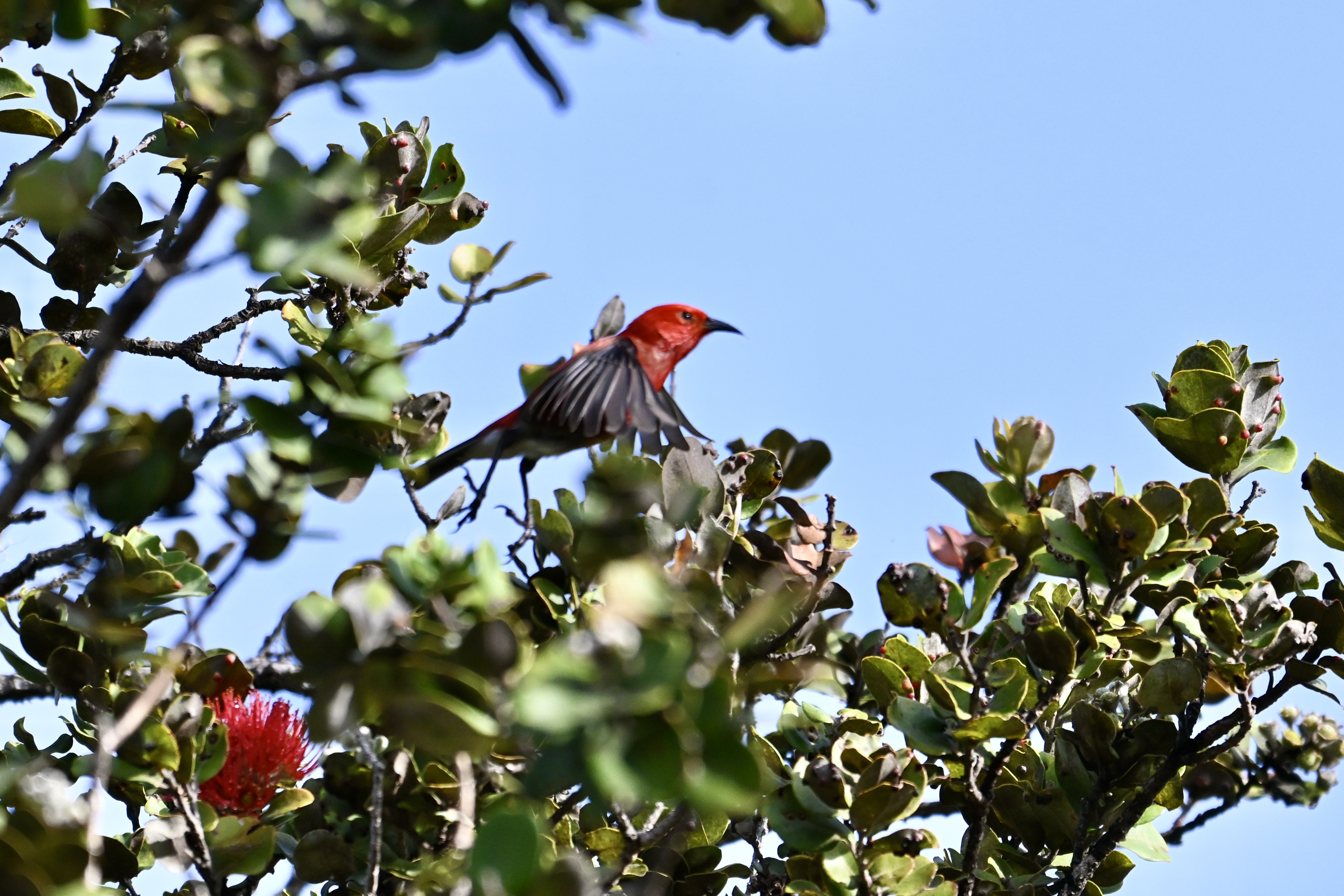
Photos by Eric Anderson; the second is a cropped version of the first.

Story: The ‘Apapane’s Christmas Pageant

December 24, 2023

2 Samuel 7:1-11, 16
Luke 1:26-38

Last week you gave us a wonderful Christmas pageant. It was touching. It was funny. There was a lot of wonderful cuteness. Thank you. This story is about somebody else’s Christmas pageant. The ‘apapane’s Christmas pageant.

I don’t know how it came into the ‘apapane’s head to organize a Christmas pageant. I don’t even know how he’d heard about Christmas, let alone a Christmas pageant. Nevertheless, he flew around the forest, recruiting creatures who would take parts in the pageant.

He asked the i’iwi, who was feeling grumpy that day and didn’t say yes or no, nothing at all. He asked the i’o, which was pretty brave of him, and the i’o said she might come and looked… hungry. He asked the ‘amakihi and the ‘elepaio and the ‘akepa. They said they might. He even asked the palila in her mamane grove and spoke to a big flock of mynas. That set off an argument among them that wasn’t over when he went to talk with the mejiro.

The honu said no, because she wasn’t going to swim up to the ohi’a forest, which seemed fair. The koa’e kea insisted on playing Mary, because shouldn’t Mary have a long tail? The noio said he’d think about it. The mice looked nervous, and the mongoose looked puzzled. The pig in the forest said, “I’ll come.”

When it was pageant time, it was chaos. Creatures would step into the clearing he’d selected, then fade back into the trees again. Frightened chirps flew back and forth, and so did frightened birds. The mynas insisted they be the angel chorus, then exploded in another argument. The pig alone took its place in the clearing and announced, “I’ll play the pig in the stable,” which was a problem because there weren’t any pigs in the Bethlehem stable, but then he went to sleep.

“What do you need to calm down and play your parts?” asked the ‘apapane in exasperation.

One of the little ‘akepa hopped out. “Is the i’o here?” he asked.

“Yes,” said the i’o from the tree above him.

“Are you going to eat us?” asked the ‘akepa.

For a moment there was silence. Then: “No,” said the i’o. “Not today. Today we’ve got a pageant to do.”

The ‘apapane spent the next hour answering the question of each creature. The koa’e kea wanted to be Mary, so she was. A noio played Joseph after being assured that this wouldn’t take so long that he couldn’t go back to fishing later in the day. The mongoose promised the mice not to eat them, and they were duly cast as sheep and, believe it or not, shepherds. The i’iwi didn’t want to cheer up, so he became the grumpy innkeeper. The sleeping pig played a sleeping cow, and did it very well. The i’o, circling high above, took the voice of the angel Gabriel.

The mynas were relieved they wouldn’t be the only voices in the angel chorus, which stopped the argument, and they were joined by ‘apapane, ‘amakihi, and mejiro in their song, which echoed through the forest and down the mountainside. ‘Akepa brought the gifts of the magi. A young palila, such a rare bird, played baby Jesus.

When it was over, the creatures vanished back into the trees, leaving the ‘apapane alone in the silence. He’d answered every question, met every need, somehow.

The trees rustled in the darkness, applauding the ‘apapane’s Christmas pageant.

by Eric Anderson

Watch the Recorded Story

I probably should have taken a piece of paper with me when telling this story today, because there were a lot of creatures and I lost track of who wanted to do what, but this is the story as I told it this morning and I hope you enjoy it.

Photo by Eric Anderson.

Story: Imperfect

December 17, 2023

1 Thessalonians 5:16-24
Luke 1:46-55

She was making gingerbread cookies for the first time in her life – she wasn’t very old – and she was all excited about it. Her older brother had learned to make gingerbread cookies a few years before, and he’d got rather good at it.

This was her very first time.

She thought it was going pretty well, even if there sometimes seemed to be more flour on the counter than in the bowl. She might have miscounted the amount of ginger, too. She decided she’d better add some more to make sure there was enough. Yes. Just a little more. And a little more.

When she was cutting out the shapes – there were cookie cutters for people shapes, and for star shapes, and for reindeer shapes, and even for Christmas Tree shapes – she got things a little scrunchy. In transferring the cut-out cookies to the trays for baking, things got more disarranged. One poor gingerbread person lost their leg, and she tried to mash it back together.

Her older brother came by about this point and decided to make fun of her more oddly-shaped cookies. The two discussed it calmly and reasonably – well, no. The two of them were yelling by the time the cookies came out of the oven. Which might be why there were a little overdone.

She burst into tears.

Mother gathered her into her arms as she said, “They’re not perfect! They were supposed to be perfect!”

Indeed, they weren’t perfect. Some of the trees looked like they’d been through a windstorm. The mashed-together leg had come off in the baking. At least two of the stars had very bent points.

And, it had to be said, they were a little too brown. Not burnt, quite, but any longer in the oven and burnt they’d have been.

“They’re not perfect for Christmas!”

Mother, who thought about things like this, said, “Do you think Christmas is about being perfect?”

The girl said, “Isn’t it supposed to be?”

Mother told her that Jesus didn’t come into the world because it was perfect. It was full of people doing unkind, even cruel things to one another. Jesus came to show a better way, and help people find and live a better life here on earth and beyond. Jesus came to love the ones who didn’t think they were loveable.

“But my brother’s Christmas cookies are perfect.”

Brother, who was feeling sorry he’d picked on his sister, told her that they certainly hadn’t been perfect the first time. “I really burnt the first batch,” he said. “And the second batch wasn’t much better.”

“Let’s see how yours are,” said mother, and all three of them took a bite. She had, in fact, put in far too much ginger.

“I don’t think these are very good, Mommy,” she said, but she wasn’t crying.

“Not so good,” Mother agreed. “Shall we try again?”

In the meantime, her older brother reached for a second cookie. Mother and sister looked at him.

“I like lots of ginger,” he said. “Can I have the recipe?”

Imperfect we may be, but there’s love for us, too.

by Eric Anderson

Watch the Recorded Story

When I tell these stories, I tell them from what I remember of the story I’ve written. And… I make new things up as we go through. There will always be a difference between what I’ve prepared and what people hear.

The image of gingerbread people cookies is by ParentingPatch – Own work, CC BY-SA 3.0, https://commons.wikimedia.org/w/index.php?curid=24263325.

Story: Seeing Greatness

December 10, 2023

2 Peter 3:8-15a
Mark 1:1-8

A pueo went soaring one sunny afternoon. He’d been hunting most of the morning and he was no longer hungry. So he just flew, holding his wings and tail out, gliding with the wind, rising and falling on the steady breeze flowing between Mauna Loa and Mauna Kea.

As he went, he wondered about greatness.

It started as he looked at the mountains to either side of him. Mauna Kea, he knew, was a little bit higher, and it wears a snowy crown sometimes in winter that’s easy to see from most of the island. Mauna Loa, though – well, it gets snow, too, but it can be hard to see, and it isn’t as high. From the air, though, the pueo could see that over a third of the island is on Mauna Loa’s slopes.

The pueo dipped down over Kilauea and circled around its trees. Some of those ohi’a trees rise a hundred feet into the air, with broad trunks and strong stems. Truly those would have to be considered great.

Other ohi’a grew just a few feet high, but they grew from places which had been solid rock just a few years before. Was it greater, the pueo wondered, to grow broad and tall in good soil, or to grow just a little bit when you had to make the soil yourself?

The pueo saw lava flowing, building up the island. And the pueo saw ferns growing in old lava flows, breaking it up into sand and soil. Which was greater, he wondered?

He saw i’iwi dipping into ohi’a blossoms with their long curved beaks, and saw ‘apapane work harder for nectar with their shorter beaks. But he also saw ‘apapane eat the bugs that also sought out the nectar, while the i’iwi passed them by. Which was greater, the pueo wondered, to have a beak so admirably shaped for nectar, or to have a beak that allowed you a wider diet? Even if it was bugs?

Which was greater, the ocean or the land? The lava flows pushed the island further out, but the ocean wore down the shorelines. Which was greater?

Which was greater, the rain or the sun? Absent one or the other, green things would not flourish, and the creatures would go elsewhere.

Which was greater? He wondered and he flew.

Greatness, he decided, can be found wherever you look. The greatness he preferred, in the end, was the greatness that built things up and made new things.

by Eric Anderson

Author’s note: A Pueo is a Hawaiian owl, a relative of the short-eared owls found in many places.

Watch the Recorded Video

I tell these stories from what I remember about what I’ve written – which means, of course, that I don’t always remember it quite the same.

Photo of an ohi’a in blossom – a small one – by Eric Anderson.

Story: In the Rain

December 3, 2023

1 Corinthians 1:3-9
Mark 13:24-37

The heavy rain this past week put me in mind of some hard rain that fell on some young ‘elepaio. I would guess you weren’t happy about all that hard rain? Well, neither were the ‘elepaio.

I’m getting ahead of myself. Let’s go back a bit.

When the eggs hatched, there were two chicks in the ‘elepaio nest, a brother and sister and within just a couple of days they were constantly hungry, keeping their parents jumping to bring them food. Mother would stay with them while father fetched food, then father would stay with them while mother fetched food. As they got older (and hungrier) both parents would be away finding them things to eat.

One day when both had been away for what seemed like a long time but was probably five minutes (they were both hungry), brother said to sister, “What good are parents?”

“Yeah!” said sister. “Parents are so slow.”

Mother returned to feed them a moment later, and then father, so with their mouths full they said nothing more. But I have to admit that from time to time over the next few days they continued with these complaints when they were hungry.

“What good are parents?”

“Parents are so slow.”

“I’m so hungry!”

And so on.

A little over two weeks after hatching, they spread their wings to fly. They didn’t go far – just a couple branches away – but they didn’t go back to the nest, either. They started gathering their own food from the leaves around them, and their parents continued to feed them on their branch. They continued to complain if it took more than a minute.

“What good are parents?”

“So slow!”

And so on.

That’s when the clouds opened up and the rain streamed down on the ohi’a forest. Even sheltered by the ohi’a leaves, the two young ‘elepaio were soon soaked and cold and miserable.

“What good are parents?” said sister to brother.

“I’m so cold!” said brother to sister.

That’s when mother hopped over to brother and led him toward the tree trunk, where there were more leaves overhead. She got him to crouch down on the branch and spread her wings over him. Father and sister were soon alongside, with father’s wings over sister, keeping her warm as the rain cascaded down.

“Parents are the best,” said sister to brother.

“They’re right there when you need them,” said brother to sister.

I’m afraid not all ‘elepaio parents are right there with their chicks, or all human parents with their children – it’s not just rain that makes the world an uncomfortable place. What I can tell you is that God is always there when you need, and we shelter beneath God’s wings when it’s wet, and cold, and dark in the night.

by Eric Anderson

Watch the Recorded Story

I write these stories ahead of time, and tell them in worship from memory. Memory plus… re-creation. What you read and what you hear will not be the same.

Photo of an ‘elepaio by Dominic Sherony – Hawaii Elepaio (Chasiempis sandwichensis), CC BY-SA 2.0, https://commons.wikimedia.org/w/index.php?curid=52150179.

Story: The Ambitious ‘Apapane

November 26, 2023

Ezekiel 34:11-16, 20-24
Matthew 25:31:46

Do you know what it means to be ambitious? An ambitious person wants to do better things, and then better things, and then better things. An ambitious person might want to be rewarded for this by other people, with money, perhaps, or recognition, or more responsibility, or just simply with applause.

This story is not about an ambitious person. It’s about an ambitious ‘apapane.

Gazing over the summit of Kilauea, he couldn’t help but notice the koa’e kea soaring about on the rising warm air of the volcano. He determined to outdo the koa’e kea at soaring. He spent hours and days and weeks with his wings extended, carefully catching every breath of air.

But an ‘apapane’s wings are not the same shape or size as a koa’e kea, and he found himself either falling into an ‘apapane’s normal quick wing beats and a brief descent with wings closed, or… well, he found himself falling.

He briefly considered becoming an great ‘io, but he knew what his feathers tasted like from cleaning and preening them with his beak, and they didn’t taste good, so fortunately he didn’t become the first predatory ‘apapane.

He watched the ‘elepaio tapping tree limbs to find bugs and spiders, and he thought, yes, this would work. There must be some difference between an ‘elepaio’s beak and an ‘apapane’s, though, because the first time he tapped a tree it gave him such a pain. The second time it felt like he might turn his beak all the way around to the back of his head.

He was sitting there with a sore beak when his grandmother turned up.

“Grandson, what are you doing?” she asked.

“I’m trying to outdo the ‘elepaio,” he said.

“Really?” she said. “How is that going?”

“I’ve got a sore beak.”

“I’m not surprised,” she said. “Why are you trying to outdo the ‘elepaio?”

“I’m trying to be better and better and better than I am now,” he said. “I’ve got ambition.”

“So what else have you tried?” she asked.

He told her about trying to soar like a koa’e kea and admitted that he’d considered hunting like an ‘io. “I’m thinking about fishing like a noio next,” he said.

“You don’t eat fish,” she said.

“Perhaps I could be a better upside-down feeder than an i’iwi?” he asked.

“At least you’ve got close to the right feathers for that,” said his grandmother. “Have you ever considered getting better and better and better at the things you already do well?”

In fact, he hadn’t. His imagination had been entirely on being better than other birds, not getting better than himself.

“Try getting better and better and better at the things you do,” said his grandmother. “Let the ‘io and the koa’e kea be good at their things. None of them will ever be as good an ‘apapane as you.”

Be better and better and better at being you, my friends. Be better and better and better at being you.

by Eric Anderson

Watch the Recorded Story

I write these stories ahead of time, then tell them from memory – well, from memory and from re-creation. It won’t and doesn’t sound the same as the prepared text.

Photo of an ‘apapane and an ‘ohia blossom by Eric Anderson.

Story: Storing Up

November 12, 2023

Amos 5:18-24
Matthew 25:1-13

She was young, young enough that she took a nap every day. She was old enough to think that she didn’t need a nap every day, and she played hard enough that in mid-complaint about taking a nap every day, she’d fall asleep.

It didn’t stop her from complaining about it the next day, but I’m sure I did the same thing when I was that age.

Strangely, it was going to be her first Thanksgiving with a big group of her family. She had been born while her parents were living at quite a distance from grandparents and aunties and uncles and a big crowd of cousins. She’d only met a few of them, and only a household at a time: a couple of grandparents. An auntie and a cousin.

Thanksgiving promised to be a big crowd. She was all excited.

In the couple weeks before Thanksgiving, her parents started buying extra food for the things they’d bring to share: flour and sugar and eggs and pumpkin for pies. “Why are you getting those things?” she asked. “So we’ll have enough to share,” said her parents. “We don’t want to run out, do we?”

Oh, no, we don’t want to run out.

That took a new meaning about a week before Thanksgiving, because as the family was returning from some errands, the car ran out of gas. I guess everything had been so busy that the didn’t pay attention to the gas gauge. It all worked out fine. Some friends brought some gas so they could get to a gas station, and they got home a little later than expected, but it was barely an adventure.

“What happened?” she asked.

“The car ran out of gas,” said mother.

“Is that what happens when you don’t have enough?” she asked.

“It is with a car,” said father.

A couple days later she was all upset and started to cry.

“What’s wrong?” asked father and mother both.

“I don’t want to run out!” she sobbed.

“Run out of what?” they asked.

“I don’t want to run out of love on Thanksgiving!” she wailed.

“How are you going to run out?” asked mother, and she said, “Like the car! Or like falling asleep when I don’t want to nap!”

(I should probably mention that this was happening around nap time, which probably isn’t a surprise.)

“Tell you what,” said father. “We’ll see that you get filled up.”

“What?” she said.

“That’s right,” said mother. “We’ll take time each day to fill you up with love. You’ll have plenty of love for Thanksgiving.”

“How?” she asked, but you probably know the answer. Her parents gave her hugs, and they told her how much they loved her. They praised the cool and clever things she did, and when she misbehaved, they told her they loved her and how to do things better. They played games. They sang songs.

When Thanksgiving came she didn’t run out of love for her grandparents, or her aunties and uncles, or her big crowd of cousins. Nope. She didn’t run out of love at all.

She did skip her nap. She fell asleep in the car on the way home, but I’m sure it was because she was full of pie.

She never ran out of love at all.

by Eric Anderson

Watch the Recorded Story

I write these stories, then tell them from my memory of what I’ve written. Oh, and I improvise along the way, so what I wrote and how I tell it can be very different.

Photo by Eric Anderson

Story: Big Cloud

November 5, 2023

Joshua 3:7-17
Matthew 23:1-12

It was a Big Cloud, with a capital B and a capital C. There have been bigger clouds in the history of the world, but this one rivaled the clouds of hurricanes and typhoons. It swept across the Pacific Ocean with a kind of ponderous majesty, with the trade winds gently carrying it along. Other smaller clouds would try to go north or south to get out of its way. If they succeeded, they breathed a sigh of relief. If they failed, well, they became part of the Big Cloud.

It rained on the ocean as it sailed along, but warm sunlight ahead of it raised plenty of water vapor to replace what substance it lost and, in fact, to make the Big Cloud even Bigger. With a capital B.

In the distance it saw Hawai’i Island.

Some clouds accompanying it – after all, what cloud wouldn’t want to ride the Pacific Ocean trade winds? – warned the Big Cloud. “You see those mountains?” they said. “You want to turn aside for those mountains. Bad things happen to clouds that try to go through those mountains.”

The Big Cloud said nothing. It was the Big Cloud, after all, with a capital B and a capital C. What had a Big Cloud to fear from mountains?

“No, really,” they told it. “You’ll rain out on the slopes. You won’t make it through the saddle.”

The Big Cloud coughed, and it sounded like thunder.

“Make a turn to the south or the north,” they urged. “You can do it. Plenty of storms have done so before.”

The Big Cloud was not pleased, and its displeasure flashed in lightning bolts along its forward edges, like a giant electric frown.

“I will go my way,” it said. “I am the Big Cloud, and I go where I choose. I fear no mountains.” And the Big Cloud set its course right between Mauna Kea and Mauna Loa – and actually over both of them, because the Big Cloud was so big it didn’t fit between them.

Rain fell here in Hilo, of course, and way up the Hamakua Coast to Honoka’a and Waipio Valley. Rain fell in Puna, drenching Pahoa and Nanavale and all the way down in Opihikao.

As the Big Cloud rained on the island, it stretched toward the saddle between Mauna Loa and Mauna Kea, with rain thundering down the rising slopes. “I will go my way,” it thundered.

But the other smaller clouds had been right. The rising slopes coaxed more and more rain from the Big Cloud, and didn’t lift moisture from the ocean to replace it. The Big Cloud became a big Cloud with only a capital C, and then a big cloud with no capitals at all. Then it was a medium cloud, and a small cloud, and by the time it got to Kona, it wasn’t a cloud at all.

The other clouds watched with sadness that the Big Cloud’s pride had prevented it from taking their advice.

“The Big Cloud was too proud,” said one.

“It certainly was,” said another. “Now it’s been rained away. Pride goes as the rain falls.”

If you ever hear a human being say something like, “Pride goes before a fall,” well, that’s true enough for people, but among the clouds they say, “Pride goes as the rain falls.”

by Eric Anderson

Watch the Recorded Story

I write these stories and then tell them from memory – well, memory and improvisation. As a result, the story as written differs from the story as told.

Photo by Eric Anderson