Story: Part of the Flock

June 9, 2024

Genesis 3:8-15
Mark 3:20-35

The three nene goslings had grown from the day they’d hatched. They’d joined their parents on walks around the nest area, which had grown longer as they’d grown stronger, to find the grasses and berries that made them a good breakfast. And lunch. And supper. And any-time-of-the-day snack.

Nene don’t really have a lot of use for set times for their meals.

The three goslings had learned to fly once their feathers had grown in and their wing muscles had become strong enough. They’d flown with their mother, and they’d flown with their father, and they’d flown with them both, and a few times just the three of them alone. They’d had something of a scolding from their parents the first time, but not after that.

They thought they’d got themselves set up for living. They had family. They had food. They had flight. What more could you ask?

It turns out that there was something else. To family, food, and flight, they needed to add: flock.

“What’s that?” asked one of the goslings, who hadn’t heard the word before.

“It’s more nene, dummy,” said his slightly older sister, who had heard the word.

“Don’t call your brother dummy,” said their mother.

“Yeah, don’t call him dummy, even when he is,” said the youngest of the three, a little brother who had been practicing teasing his siblings and become good at it.

“Stop teasing,” ordered their mother, “and listen.”

“We’re part of a larger flock,” said father patiently. “We’re a small family, and the other nene are the bigger family. They help us find food when it’s scarce, and they help us keep i’o away, and, well, it’s good to have them there.”

“I don’t need anybody else,” said older brother. “Food, family, and flight. And even some of my family could be better behaved.”

“Look, son,” said mother, “when I was young I didn’t think I needed a flock, either. But the world is bigger than what you’ve seen so far, even though you can fly. There’s an ocean and there are people and there are other creatures. In the flock we get some help when we’re confused. We learn things we wouldn’t otherwise know.”

“Fly with me,” said father, and the little family took off and soon landed amid a larger, but still rather small, group of nene. He introduced the three youngsters to the others.

“You need to become part of the flock,” said one of the new nene, who was actually a kupuna nene. “Fly with us.”

So they did. They took off together and did a series of circles around the place where they’d met. It wasn’t elegant – none of the young nene had been to Nene School yet, so their formation flying was pretty awful. Still, they did their best, and as they flew they realized that the air flowed over them differently when it was shaped by other birds’ wings. As they landed, they realized that the group had chosen a different place, one where the ‘ohelo was abundant.

“You are now part of the flock,” said the kupuna nene. “We are glad to have you fly with us.”

The next day, of course, they began Nene School, so they could eat better and fly better. And they were glad to fly with their new flock.

by Eric Anderson

Watch the Recorded Story

I write these stories in full (it’s what you just read), but I tell them from memory during Sunday worship. Memory and improvisation creates some differences!

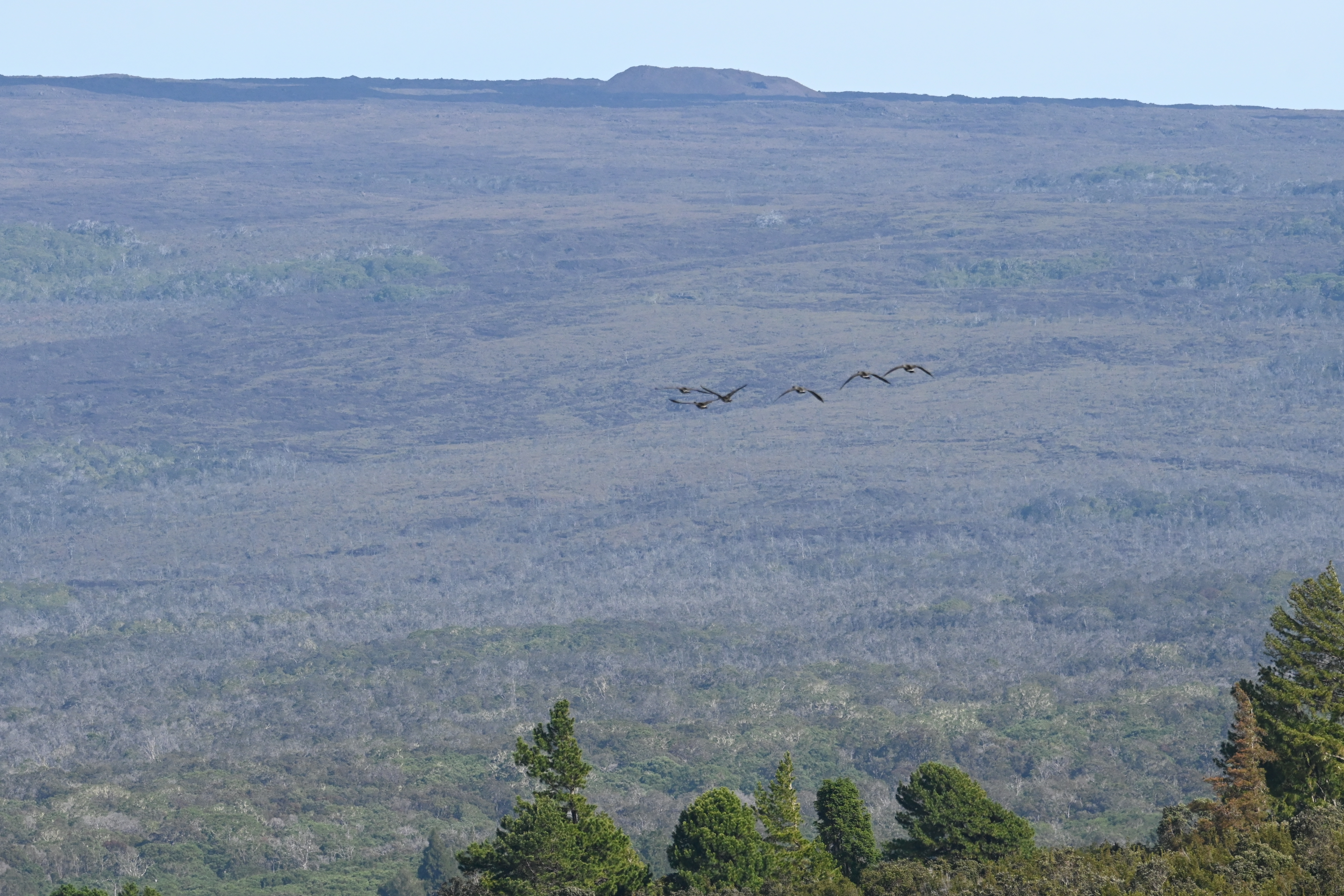
Photo of nene in flight by Eric Anderson.

Home Divided

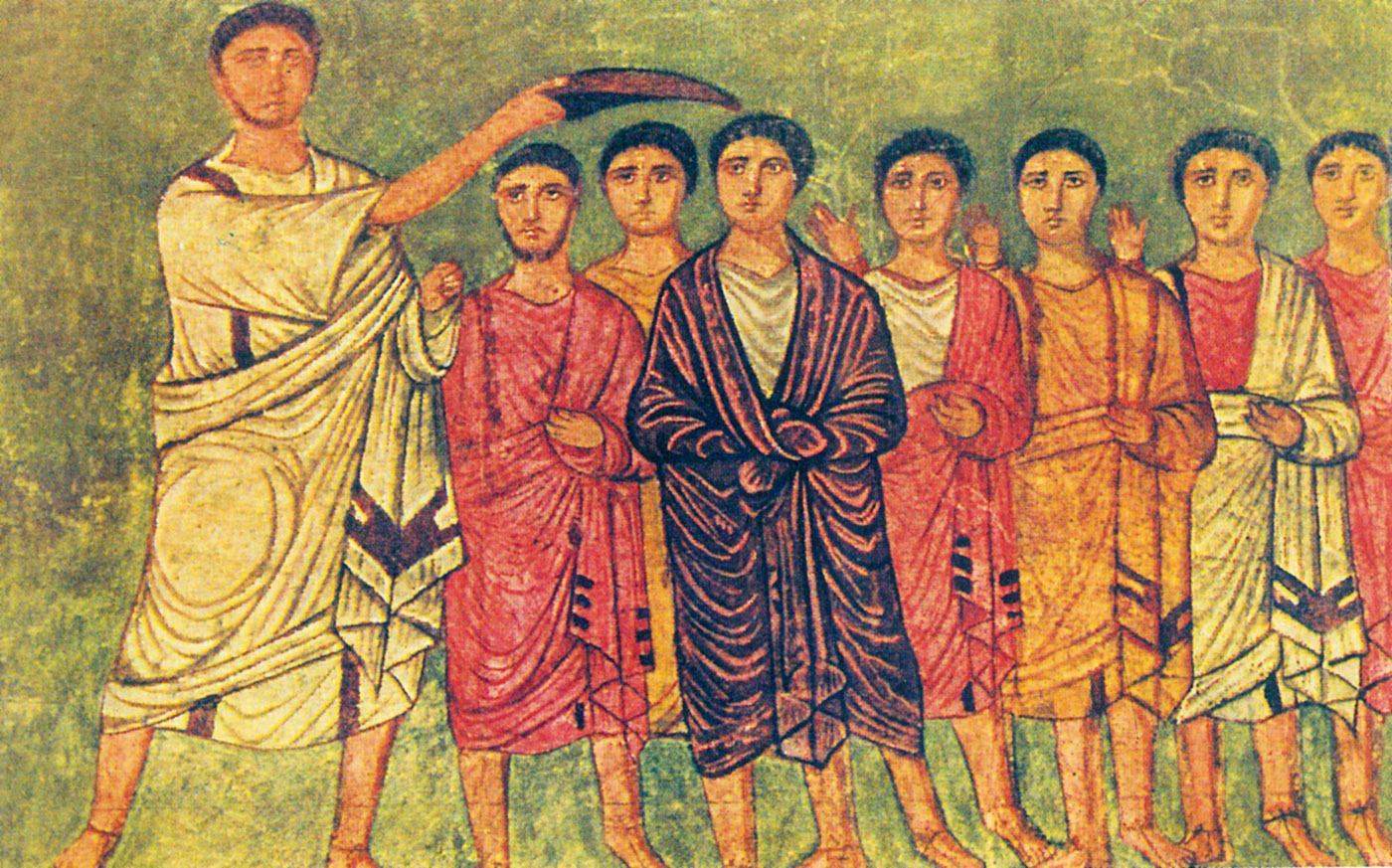
“And he called them to him, and spoke to them in parables, ‘How can Satan cast out Satan? If a kingdom is divided against itself, that kingdom cannot stand. And if a house is divided against itself, that house will not be able to stand.'” – Mark 3-23-25

We’ve seen so many times and in so many places just
how right you were back then.
Divided nations run to evils unimagined, but
so bitterly recalled.

You set aside the critics’ pointed accusation that
in healing, you performed
Satanic will by arts Satanic, too, which made no sense
as you so rightly said.

And then they brought you word: your mother and your brothers ask,
“How are you, brother, son?”
Kept back from you by the besieging crowd they could not see
how changed you had become.

“A house divided cannot stand,” yet you would break your home,
insult your family.
Had they not done the will of God who sent you? Were they not
still one with you in love?

A poem/prayer based on Mark 3:20-35, the Revised Common Lectionary Gospel Reading for Year B, Proper 5 (10).

The image is Toute la ville étant à sa porte (All the City Was Gathered at His Door) by James Tissot (between 1886 and 1894) – Online Collection of Brooklyn Museum; Photo: Brooklyn Museum, 2006, 00.159.78_PS1.jpg, Public Domain, https://commons.wikimedia.org/w/index.php?curid=10195908.

Story: Nest Rest

June 2, 2024

Deuteronomy 5:12-15
Mark 2:23-3:6

Among the ‘apapane, both members of a couple, both the father-to-be and the mother-to-be, work together to build their nest. They collect some twigs and some grass, but mostly they roam the forest to find mosses that will be both strong and soft to hold the eggs while they wait for them to hatch.

As you might think, first time ‘apapane parents can get rather anxious about things. It’s like anything else: if you haven’t done something before, you probably have a lot to learn. You’ll do some of that learning while you do things, of course. It’s how an ‘apapane learns what moss will be strong and soft and how another moss dries up and crumbles. Those crumbly moments, however, can make them feel pretty upset. They get really keyed up about what isn’t working, rather than realizing that they’re learning as they go.

‘Apapane and people, too, can learn a lot from things that don’t work.

One first-time father-to-be got very excited about building his first nest. He and his wife worked hard to get all the pieces together, and to poke and weave them into place. They got up early in the morning and they worked until sundown. And they made a lot of progress.

But he couldn’t see it.

At first it was just a bit of moss or two, but somewhere on the first day he found a set of mosses that just didn’t hold up in the nest, and on the third day that part was coming apart. A big portion of the nest had to be redone. He started to panic.

That night he worked an hour, and then a second hour, after sundown, when there just wasn’t enough light in the forest to show him what mosses were what. Inevitably, the next morning they had to replace some of what he’d added. He panicked some more.

“We won’t have it ready on time!” he moaned.

“Of course we will. Don’t worry so much,” said his wife, but I’m afraid he didn’t listen.

That night, and the next, he didn’t work an hour or two after sunset. He worked all night long, with only a brief nap on the second night. The results were… uneven. Some parts of the nest showed great progress. Other parts of the nest suffered from poor materials. And other parts of the nest just didn’t look right, because he’d been trying to place pieces of moss without a good idea of where they should go.

Truthfully, it was kind of a mess.

That’s when his mother showed up.

“Don’t look! Don’t look, Mom!” he called. “I know it’s not much to look at, but we’re fixing it.” (In fact, his wife was quiet fixing the things he’d got wrong in the middle of the night.)

“I’m not worried about that,” his mother said. “I’m worried that you haven’t slept. Now have you?”

“I slept a little,” he protested.

“Enough?” said his mother.

With his spouse looking on he couldn’t lie, and lying to your parents is a bad idea anyway. “Not enough,” he said.

“Night is for resting,” Mother said, “not for guess-and-place nest building. You can’t find the right materials when you’re tired, and you can’t put them where they belong, either. Go get some sleep before you go back to it again.”

“I can’t leave her to do this all alone!” he protested, and mother-in-law and daughter-in-law looked at one another, then back at him.

“You won’t be helpful until you’ve slept. Go do that. I’ll fill in for you today. Tomorrow you can do it again, and do it right.”

So he did, and the next day he came back, and sure enough: well-rested and together, he and his spouse did it right.

by Eric Anderson

Watch the Recorded Story

I write these stories in advance, then tell them from memory in worship – which means that the version you just read and the version you might see in the recording will not be the same.

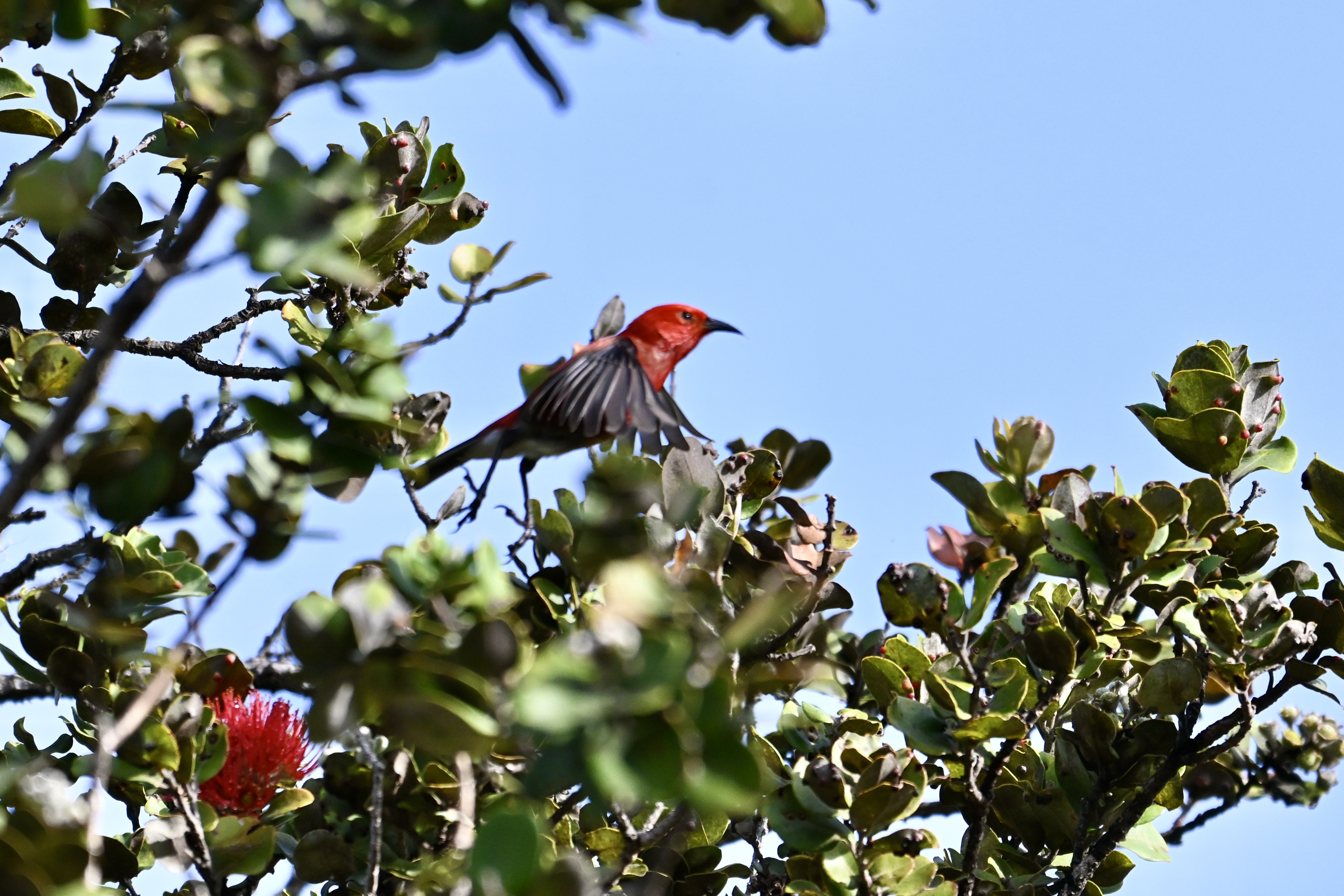
Photo of an ‘apapane in flight by Eric Anderson.

Forgiveness and the Internet

May 30, 2024

I wrote this essay on May 30, 2010, as a Facebook “Note.” Those Notes are getting harder to recover, and so when I’ve found one that I still appreciate, I’ve been adding them to my blog here. The original title was “Forgiving the Internet,” but I’ve revised that. I’ve also made revisions that reflect the intervening fourteen years since its composition.

My career in ministry has been marked with a consistent theme: I repeatedly find myself doing things that I either utterly failed to anticipate, or that I specifically said that I’d never do. I actually said aloud in seminary that I never wanted to serve as an interim pastor; I spent nearly ten years doing just that. For seventeen years I spent the vast majority of my time on electronic publishing and communication media that simply didn’t exist when I graduated from school over twenty years before. Today I serve a church on Hawai’i Island, a place I never imagined I’d visit, let alone live.

With the rise in social networking, I led a number of workshops on the Church’s relationship to social networking phenomena, and how to adapt ‘safe church’ practices to the virtual world. While these utilities were still very young themselves (Facebook was only six years old when I composed this essay), I was obviously just one step ahead of anyone in the workshop groups, and sometimes two or three steps behind…

But there’s a characteristic of the Internet that, I think, cries out for a word from the Church, from Christians, and from people of a wide variety of faiths. The characteristic is the longevity, the durability of information in the Internet. My workshop leadership partner successfully found the text of a paper she’d submitted for a class in the 80’s — somehow, it had been posted to a database, ‘spidered’ by Google, and there it was for anyone to find.

At the same time, we keep hearing of firms and institutions evaluating the applications of potential employees with searches of the Internet and, particularly, of their ‘personal’ social networking profiles. According to a 2009 Proofpoint study, 8% of US companies with over 1,000 employees had fired staff for misbehavior related to social networking. How many weren’t hired in the first place?

In the past, we’ve been able to leave our errors behind us. The indiscretions of youth, the sins of ignorance, and the painfully-overcome failures associated with addictions or with strongly-held, sadly mistaken beliefs. Graduation, change of residence, change of job, new affiliations all brought a New Start.

With the Internet, we’ve probably lost that, and it’s probably gone for good.

So we’re going to have to learn to forgive.

I can’t think of anything more counter-cultural, neither at the time I first composed this reflection or at this moment. This is a judgmental time. The ideological politics we bewail has deep roots in the inability to tolerate or forgive dissent. A political victory in one issue makes collaboration on another issue prohibitively difficult.

In 2008, the United States led the world in the percentage of its population which was behind bars. I strongly suspect that in prior years, and in other countries, at least some of those imprisoned offenders would have been confronted differently than they are today.

With the political mechanisms paralyzed, with huge numbers of citizens released from prisons and anticipating a short stay ‘outside’ before they’re returned, with all of our long-since-forgotten but electronically preserved peccadilloes waiting for us to find them again, we’d better learn to forgive.

Forgiveness is not the same as forgetting, and it never was. Forgiveness does not release anyone from responsibility. I’d argue that until there is repentance, there can be no forgiveness.

Forgiveness is the restoration of relationship; it is the acknowledgement of prior failure and the commitment to a new way of success. Forgiveness reinforces responsibility even as it relieves the offender from the consequences of offending.

Forgiveness has always been a foundational Christian value. It has always strengthened families and communities. It has always been praised when publicly displayed — remember Pope John Paul II and his attempted assassin, Mehmet Ali Agca — while simultaneously dismissed as a virtue with utility in the ‘real world.’

The real world and the virtual world now, I think, demand that we deliberately, systematically, and steadfastly employ this virtue of forgiveness. When forgetfulness will no longer permit new life, then forgiveness must take its place.

I think this is one of the central challenges for the Church of Jesus Christ in this age: to summon society to this new virtue, for its survival and salvation.

Photo by Eric Anderson.

Proposal

Jesus bar-Yosef
House with a hole in the roof
Capernaum, Galilee

Dear sir:

In light of recent events which have damaged your public image, we offer our services as public relations consultants. We believe that we can increase your name recognition and your positive reputation.

To give you some idea of the value of our services, we would like to comment on two recent encounters that resulted in unnecessary conflict with significant public figures. You can evaluate our suggestions here and realize the benefits you would realize from a permanent business relationship with us.

We realize that your followers – or students; one of the things we’d like to clarify is their role in representing you and your ideas – were hungry while you were out walking with them that day. It is regrettable that they had not prepared for a trip. While we are not event planners, we recommend that you get some additional support to see that you are properly supplied.

The public relations concerns arose when they began to pluck grain on the sabbath. Everyone knows that the followers of a religious leader will be properly scrupulous about following the sabbath regulations. Indeed, a higher degree of respect for those practices is simply expected by the populace. In the moment, it would have gone much better if you had said, “Not now, friends. We don’t have far to go. There will be something to eat soon.”

You were walking just a short distance, weren’t you? We’re confident you were.

Alternatively, as noted above, you could have redirected them to use their pre-prepared foods. Best of all, you might have carried some yourself, and distributed those to your hungry followers. Imagine the positive responses to your generosity!

Then there was the man with the hand. We acknowledge that you actually broke no sabbath regulation at all. You didn’t anoint his hand with oil, which is permitted by most authorities. You didn’t even touch it.

Our concern is with your interaction with the other religious leaders in the room. Granted, they didn’t say anything to you. You might have interpreted that as consent, rather than challenging them for hardness of heart. You might also have said, “Let us see what miracles God will do on the sabbath,” which would have been very pious and quite successful.

Best of all, you could have said to the man, “Come see me tomorrow and we will see what God will do. Today we will rest, and God will rest.”

Frankly, Jesus, he’d been living with that hand for some time. One more day would not have been a burden.

These two events, and a couple of others, have generated some opposition to you and to your message. We firmly believe that you can move past them to a better, more productive relationship with the public at large and with your peers among the religious leadership. We think that some circumspection in some areas, and more emphasis of some elements of your teaching, will really resonate with the population. In short, we believe you have potential and hope to represent you.

The proposal in full is attached.

A poem/prayer based on Mark 2:23-3:6, the Revised Common Lectionary Gospel Reading for Year B, Proper 4 (9).

The image is Christ Heals the Man with a Paralyzed Hand, a mosaic in the Cathedral of Monreale, Sicily, Italy (late 12th – mid-13th cent.). Photo by Sibeaster – Own work, Public Domain, https://commons.wikimedia.org/w/index.php?curid=4515630.

Story: Soar Loser

May 19, 2024

Acts 2:1-21
John 15:26-27, 16:4b-15

The koa’e kea is a distinctive bird, with its bright white wings and body set off with deep black feathers, and that amazing long trailing tail. It’s distinctive, but it’s not unique to Hawai’i Island or to the Hawaiian Islands. You’ll find white-tailed tropicbirds (to use their English name) flying above and feeding in the warm waters of both the Pacific Ocean, the Indian Ocean, and even the Atlantic Ocean. Although they fish for food in the sea, some of them like to nest on the cliffs of Kilauea. Quite a few of them like to relax by soaring on thermals. That’s the warm air that rises from the black rock of the volcano summit.

One day a visitor to the islands who was knowledgeable about birds was standing at the crater rim and saw the koa’e kea soaring on the thermals. “Look at that,” he said to someone standing nearby. “Those are white-tailed tropicbirds, and they’re quite a ways inland. How odd for a seabird.”

“And it’s even stranger,” said his equally knowledgeable companion. “They’re soaring. White-tailed tropicbirds don’t soar.”

“It’s very odd indeed,” agreed that man and that woman, and they went on to talk about something else.

I’m sure such conversations happen often at those overlooks, but I suspect that more often nobody comments on these things at all. And it is true that koa’e kea don’t soar very much in other places in the world. They’re strong, agile fliers, to be sure, but most white-tailed tropicbirds don’t live where there are steady, reliable rising thermals.

So this wouldn’t have mattered if a koa’e kea hadn’t overheard, and become very concerned, that by soaring on thermals she was doing The Wrong Thing.

So she stopped.

Oh, she’d still fly around the summit craters, and she wasn’t so silly as to leave her nice spot on the cliffside. But when she flew she beat her wings quickly and steadily, the way she flew in all the other places she went.

Since she’d stopped soaring, I guess you’d have to call her a soar loser.

And nobody noticed.

I suppose it wasn’t that big of a difference to spot, but her family didn’t, her husband didn’t, her friends didn’t. Maybe they thought she had somewhere urgent to go. I don’t know.

It was a really young koa’e kea, one who’d been flying for less than a month, who said something.

“Why don’t you soar?” she asked one warm afternoon after they’d returned from successful fishing in the ocean.

“White-tailed tropicbirds don’t,” she said in reply, beating her wings in steady time.

They flew side-by-side over the summit for a while, and the younger one looked at other koa’e kea soaring nearby.

“It looks to me like they soar,” she said.

“They don’t soar in other places in the world,” said the older one, maintaining her wingbeats. “I heard some people discussing it, and people would know.”

“OK,” said the youngster. “But those birds are there. We’re here. I think we can do things differently here.”

The older one said nothing. She just flew along. Until, in a minute or two, her wingbeats stopped, and she held them out straight and firm.

Side by side, the young bird and the older bird soared.

by Eric Anderson

Watch the Recorded Story

I write these stories in advance, in full. In worship I tell them from memory, with a little improvisation added. So what you read here and what you see in the video will not be the same thing.

Photo of a koa’e kea (white-tailed tropicbird) soaring over one of the Kilauea craters by Eric Anderson.

Redemption of the Rock

“But Peter, standing with the eleven, raised his voice and addressed them…” – Acts 2:14 

Has there been enough time to redeem me?

“You’re the Rock,” smiled Jesus. Oh, yes. I’m the rock.
Always first to reply, always first to be chided. They smirked,
those eleven, every time I was caught
being first to say things they were thinking in silence.

Can a month or two’s passage possibly remake me?

“You’re the Rock,” they have said since the day that he rose.
“You’re the first to have seen him” – I open my mouth
to remind them of Magdalene, then shut it again.
“You’re the Rock.” Well, at least we’re a dozen again.

I wonder what time could refashion a rock?

I told them my shame which the Teacher predicted.
How could I hide it? They’d heard, and they’d seen
the look on my face on that terrible morning
when the heart of the Rock was as brittle as flint.

Passover to Pentecost can’t be enough time.

They never have heard what the Teacher said to me
that glorious day when his death turned to life.
My flint heart had shattered, and molten, ran over.
What words could declare the forgiveness he gave?

But can I be reborn in these brief fifty days?

The wind rushes madly. Lights leap on our brows.
Only the Marys sit silent, serenely. We’re out in the street.
My God, we look drunk. I’m speaking a language I don’t think I’ve heard.
How can I explain what has happened to me?

Fifty days weren’t enough, but a moment transformed me.

Now they look to the thick one, the Rock, to say something.
I have no skill with words. I was trained to the net.
But Jesus stayed with me, and I recall some things.
I’ll start with this verse that he taught me from Joel.

I guess fifty days is enough to redeem.

A poem/prayer based on Acts 2:1-21, the Revised Common Lectionary First Reading for Year B, Pentecost Sunday.

The image is The Penitent Saint Peter by El Greco (between 1590 and 1595) – https://collection.sdmart.org/objects-1/info/1090, Public Domain, https://commons.wikimedia.org/w/index.php?curid=119297661. The eyes contain some of the apostle’s self-doubt which I’ve tried to express in this poem.

Prayer for Mother’s Day 2024

O Holy God,

We pray for the mothers of the world: for the ones who have borne children, for the ones who have adopted children, for the ones who have, by the sharing of love and care, mothered someone or some ones around them. We thank you for the gift of love which mothers may share. We praise you for the care so many children receive from diligent and compassionate mothers. We ask your Holy Spirit to be present when motherhood stumbles and love fades, when children suffer neglect or abuse, or when a much-loved and much-loving mother is taken from them by the sad realities of the world.

We pray for the mothers who do not know where they will find the resources needed by their children. We pray for the mothers who do not know where they will find the resources needed for themselves. We pray for the mothers who, for whatever reasons, have yearned for and never had children. We pray for the mothers who struggle to live in war zones, or abusive homes, or with illness, or with children who do not return their love. We pray for mothers with gratitude and with urgency, when so many things can go wrong.

May we, as so many mother strive to do, live up to the high standards of your call. May we search diligently for truth and courageously bear witness to it. May we be held in your Holy Spirit when we need strength and renewal. May we be guided by your Holy Spirit when the time to work is at hand.

Jesus said he would gather the people as a mother hen gathers her chicks. Gather us, O God, and all those nations of the world, beneath the comfort of your wings.

Amen.

The image is a Pekin bantam hen with seven chicks. Photo by Calistemon – Own work, CC BY-SA 4.0, https://commons.wikimedia.org/w/index.php?curid=101140887.

Story: Attempt to Deceive

May 12, 2024

Acts 1:15-17, 21-26
John 17:6-19

As I’ve said before, the ‘amakihi likes to eat lots of different things. I think it’s fair to say that the ‘amakihi likes to eat, and fortunately for the ‘amakihi, it has a wide range to its taste. Nectar is always good, and so are bugs and spiders, caterpillars, tree sap, fruits and berries. It will even eat pollen sometimes, which people with pollen allergies will find truly mysterious and a little uncomfortable.

But there was one ‘amakihi who didn’t eat nectar from ohi’a trees.

If that seems weird to you, it seems weird to me, too. There are a lot of ohi’a trees on the mountain slopes, and they have a lot of flowers. It’s a great food source for ‘amakihi and ‘apapane and ‘akepa and lots of birds up there. They’d happily perch near those flower clusters and merrily feed on the nectar while this one ‘amakihi watched.

He watched, and he felt sorry for them.

“Poor birds,” he told himself, “to be so desperately hungry that they’ll feed on ohi’a. I feel really sorry for them.”

Why, you ask, did he feel sorry for them, eating ohi’a nectar? Well, I’m afraid it’s because one day when he was young, and before he’d actually sampled any ohi’a nectar, he perched near an i’iwi. I’iwi can be kind of mean sometimes, and they will chase ‘amakihi away from a tree they want to feed at. This i’iwi, however, was feeling rather full and didn’t want to get up off his perch and chase this young ‘amakihi away. He decided to try words instead.

“Planning to feed at this tree?” he asked the young ‘amakihi.

“Oh, yes, uncle,” said the ‘amakihi. I’m afraid the i’iwi wasn’t happy to be called “uncle” by an ‘amakihi.

“You should search somewhere else if you want something good,” said the i’iwi. “This is a bad tree.”

“Ohi’a is bad?” said the young ‘amakihi.

“I’m afraid so,” said the i’iwi. “The nectar is sour, except when it’s bitter. When it gets old, it’s really bad. It will keep a bird going, of course, but nobody eats ohi’a nectar until they’re desperate.”

“Really?” said the ‘amakihi.

“Really,” said the i’iwi. “You can trust me. Go find something else you’ll like better. I’m sure it will be better for you, too.”

Misled by the i’iwi, the ‘amakihi avoided ohi’a from that day on. Eventually his mother noticed, and he told her the story.

“So one i’iwi told you this story, and you never checked it with anyone else, or tried ohi’a yourself?” she asked him in surprise, “even when so many other birds eat its nectar every day without signs of complaint?” Put that way, it did sound a little odd.

“Come along, son,” said Mother firmly. “You need to try what you’ve been avoiding, and see what you think yourself.”

Of course he found it delicious, which was a good thing to learn. But he also learned that some birds, and some people out there, will lie to you when it serves them, and sometimes you need to test their stories with the ones who love you and with your own experience, to learn the truth.

by Eric Anderson

Watch the Recorded Story

I write these stories ahead of time, then tell them from memory – well, lack of memory plus improvisation. The video does not match the text you’ve just read.

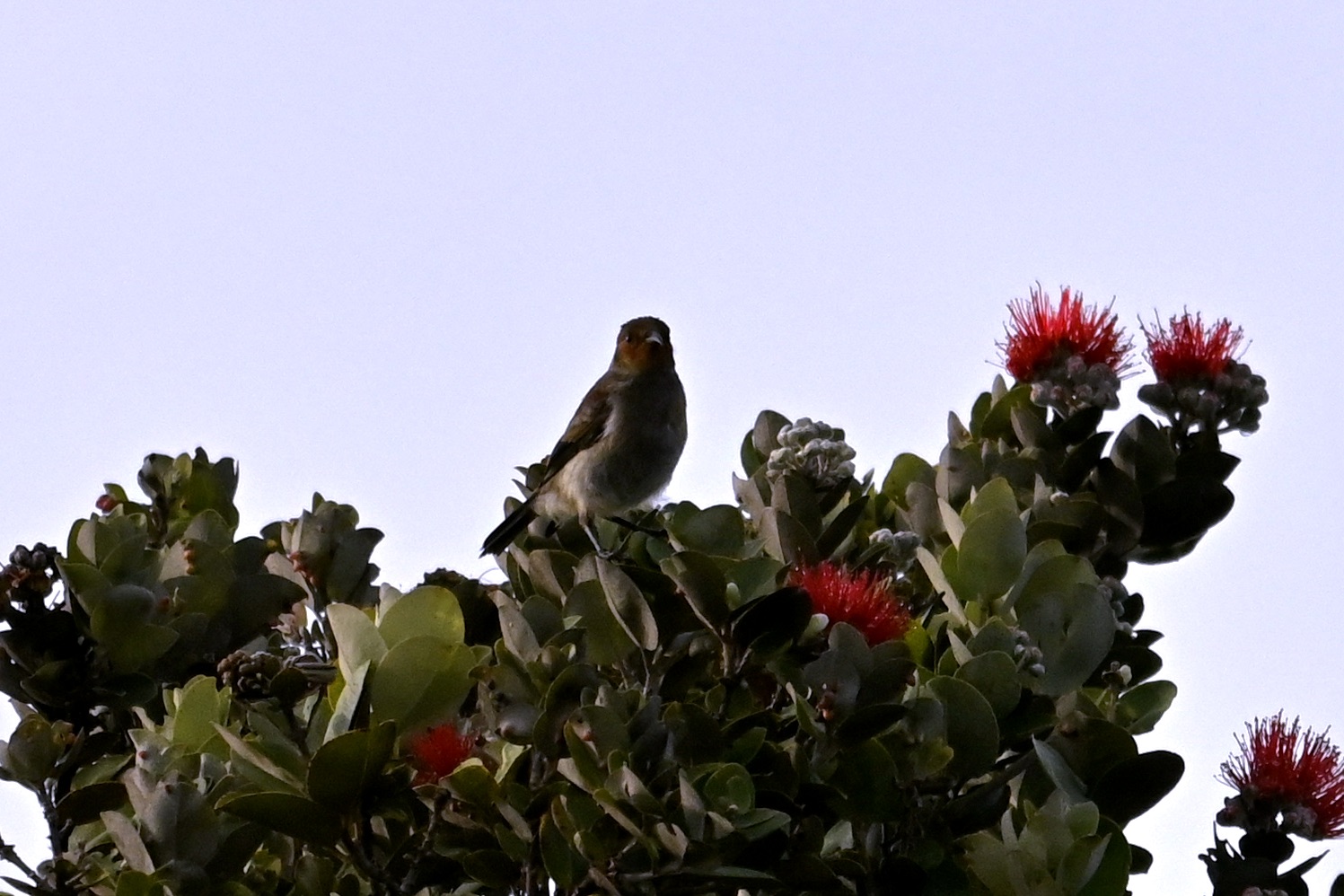
Photo of an ‘amakihi in the midst of ohi’a blossoms by Eric Anderson.