Story: The Unexpected Peacemaker

May 14, 2023

Acts 17:22-31
John 14:15-21

A peaceful morning on a Hawaiian beach was… less than peaceful. There were birds screeching – at least two birds and birds of different kinds screeching. There was also a sound that was harder to identify because it’s so rarely heard. A nearby cat decided she had to find out what was causing all the ruckus.

Besides, it was interrupting her first nap of the day. She’d really prefer that it stopped.

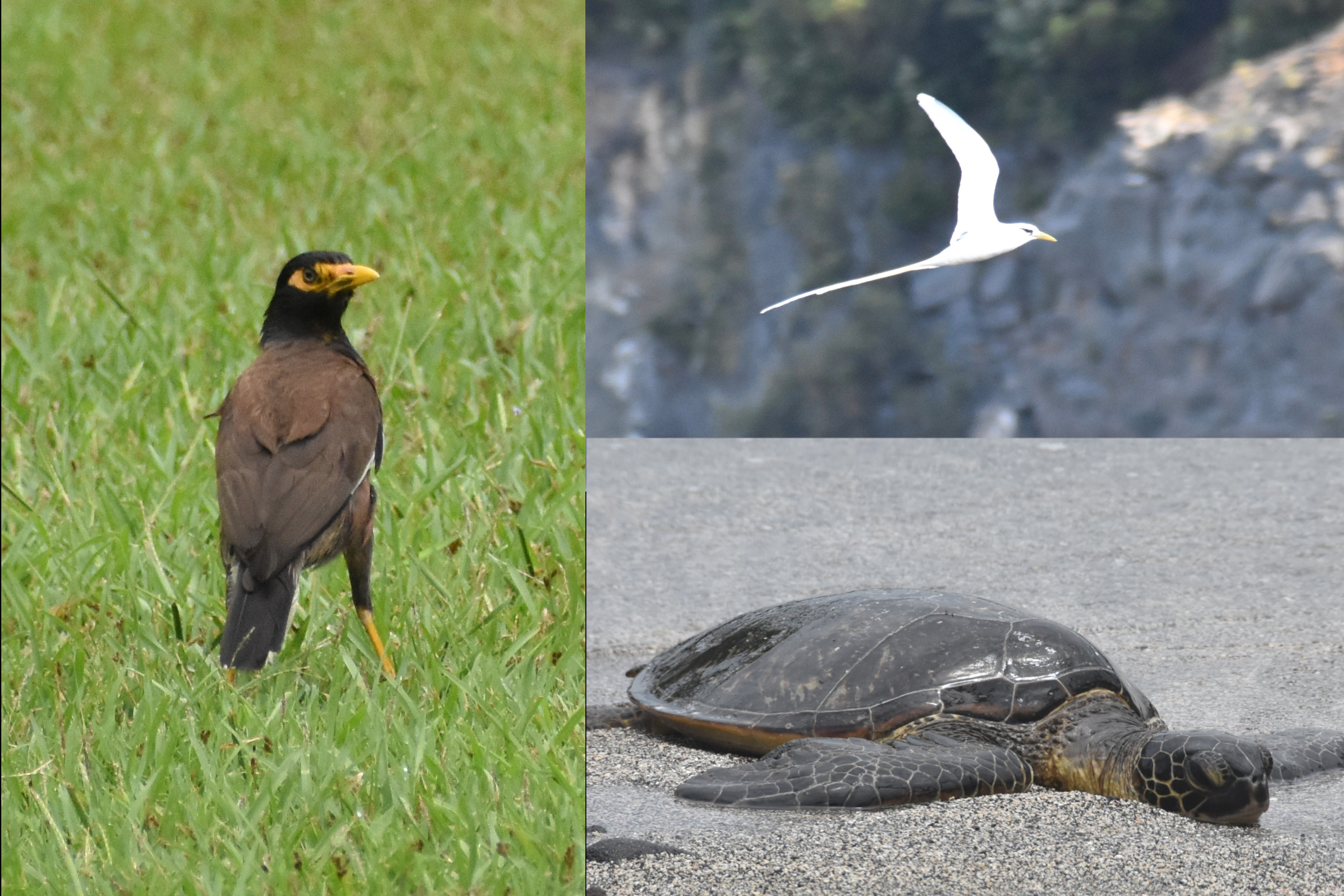
The loudest voice was, predictably, a myna. The other bird voice turned out to be a koa’e kea, and it was nearly as loud as the myna. The third voice wasn’t a bird at all. It was a honu, and although she wasn’t as loud as the two birds, she put plenty of passion into her part of the argument. Because it was a three way full scale all out argument.

The cat really wanted them to stop. She briefly considered a hunting charge, which would certainly drive off the myna and might startle the koa’e kea into flying away. She decided not to, though. It would just add more chaos to a chaotic morning.

“What,” she asked, “are you three arguing about?”

“They do it all wrong!” said the myna, and was promptly echoed by the other two.

“They do it all wrong!” they shouted in chorus.

“They do what all wrong?” asked the cat, who really wanted to bury her head in the sand and take her early morning nap rather than ask about an argument she didn’t care about.

“Eggs!” “Chicks!” “Hatchlings!”

“Children!” all three said at once.

“This one doesn’t even build a nest!” shrieked the myna, indicating the koa’e kea. “She just lays her egg on any old shelf in the rock.”

“That one buries her eggs in the sand!” shouted the koa’e kea, “and goes away and doesn’t take care of them!”

“The mynas build their nests in a tree!” rumbled the honu. “Anybody could find those eggs and break them!”

The three continued to explain – well, argue – that their method for laying eggs and raising children was the only right way to do it, and how the others’ failure to do it that was indicated a complete lack of good sense and proper parental responsibility. The cat, who didn’t lay eggs at all, was getting a headache.

“Can we find some common ground?” she said.

“Like what?” they demanded.

“Like the common ground of this island. You all lay your eggs on this island, even if they are in different places in different ways.”

They had to agree that was true.

“And do you get children who thrive?” asked the cat.

“I do.” “Of course I do!” “I’ve got over a hundred children swimming in the ocean,” said the honu. The myna and the koa’e kea looked startled.

“And do you do the very best you can to make your eggs and your children safe, even if those ways are different?” asked the cat, and watched each head nod, and a thoughtful look come into each pair of mothers’ eyes.

“Then I think you’ve got some common ground,” said the cat.

“I guess we do,” said the myna. “More than I thought,” said the koa’e kea.

“Good,” said the cat. “Talk to one another. Maybe you’ll find more common ground. Maybe you’ll learn something from each other. Keep talking.”

“Quietly,” she added as she turned away to resume her early morning nap.

by Eric Anderson

Watch the Recorded Story

I tell these stories from memory of the text I’d prepared (which you’ve just read). My memory isn’t that good and my delight in improvising is so great that the story as told may be rather different from the story as prepared.

Photos of a myna (left), koa’e kea or white-tailed tropicbird (upper right), and a honu or green sea turtle (lower right) by Eric Anderson.

Blessings for Mother’s Day

Blessings on the mothers rejoicing in their children.
Blessings on the mothers in deep fear for their children.
Blessings on the mothers whose children remember to call.
Blessings on the mothers whose children refuse to call.
Blessings on the mothers whose children are not related by blood.
Blessings on the mothers heartbroken because they could never become a mother.

Blessings on the children rejoicing in their mothers.
Blessings on the children in deep fear for their mothers.
Blessings on the children whose calls end with “I love you so much.”
Blessings on the children whose mothers keep breaking their hearts.
Blessings on the children with more mothers than they can count.
Blessings on the children still seeking a mother’s love.

Blessings on those who have lost.
Blessings on those that have.
Blessings on those that have never had.
Blessings on those who seek.

Blessings for Mother’s Day.

First written as a Facebook post on May 10, 2020.

The image is Jesus retrouvé dans le temple (Jesus Found in the Temple) by James Tissot – Online Collection of Brooklyn Museum; Photo: Brooklyn Museum, 2007, 00.159.41_PS2.jpg, Public Domain, https://commons.wikimedia.org/w/index.php?curid=10195808

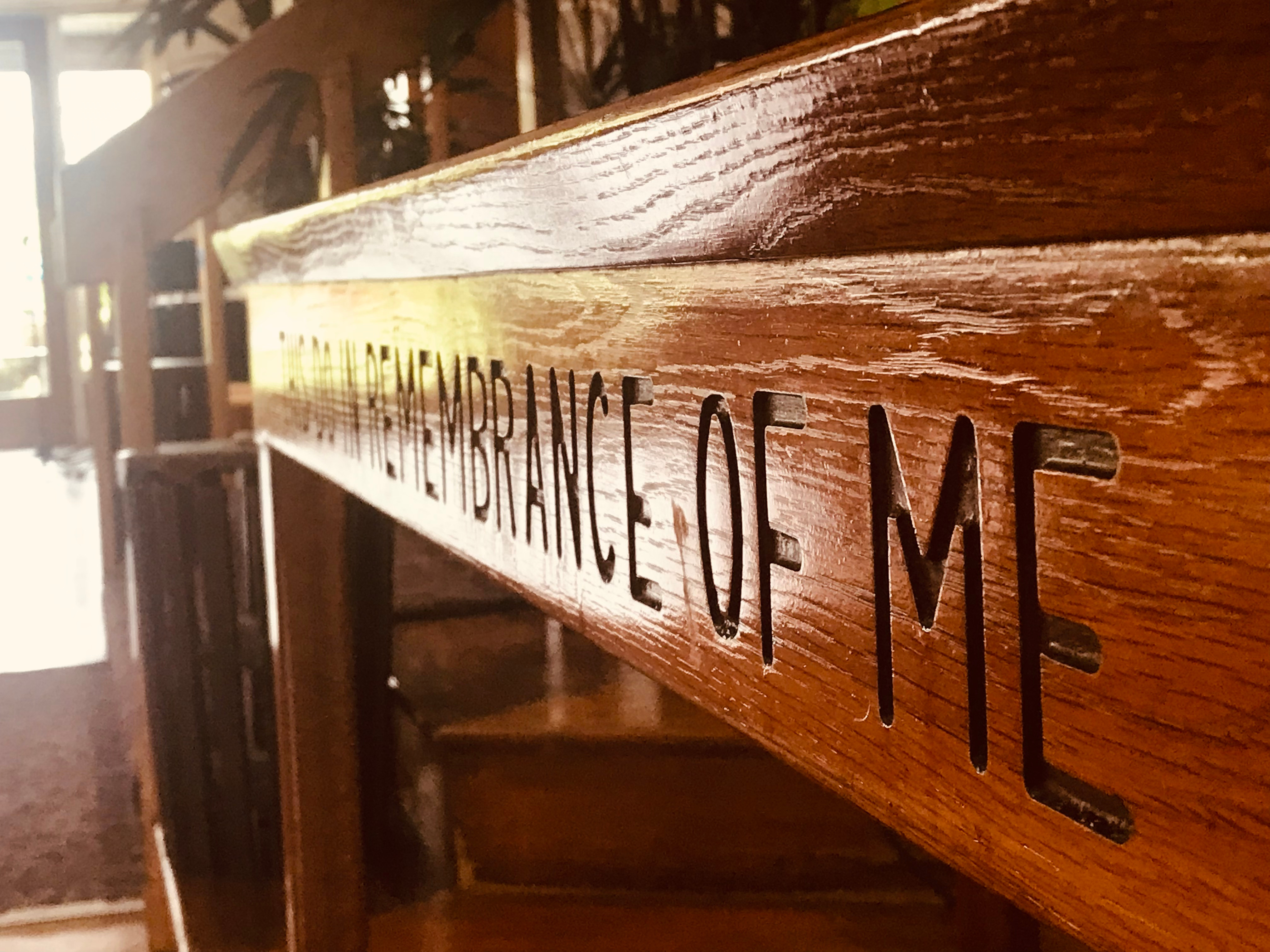
To an Unknown God

[Paul said,] “For as I went through the city and looked carefully at the objects of your worship, I found among them an altar with the inscription, ‘To an unknown god.'” – Acts 17:23

We didn’t have an altar in
the church where I was raised.
A table bore communion’s bread
and cup before us all.

I’ve seen so many tables since,
and many bear the words
inscribed “In Remembrance of Me”
(oft covered by a cloth).

Since youth I’ve been in churches where
an altar takes its place,
but rarely do they bear a word,
but speak with just their shape.

I wonder: might the wisdom of
those ancient Greeks guide us,
and note upon our altars that
we could know more of God?

Or just, perhaps, revise the way
we spell the “altar” word,
and be prepared at every point
to “alter” what we know.

A poem/prayer based on Act 17:22-31, the Revised Common Lectionary First Reading for Year A, Sixth Sunday of Easter.

Photo by Eric Anderson.

Story: Show Me the Spiders

May 7, 2023

Acts 7:55-60
John 14:1-14

The ‘elepaio was hungry. He had been up and down, back and forth, and side to side on his favorite koa tree. He’d found a caterpillar, a few smallish bugs, and no spiders at all. This was unusual. His favorite tree was normally a favorite place for caterpillars, bugs, and spiders as well. On this day, however, they’d mostly decided to go someplace else.

He was hungry.

He searched the tree once more from top to bottom and all the way to the ends of its long branches. He found a couple more bugs, but no spiders at all. He was particularly fond of spiders, at least he was on this day when he couldn’t find any. He perched on a branch and sang a short, sad, “I’m hungry,” kind of song.

“What’s wrong?” came a voice from a neighboring tree. It was a friend of his, another ‘elepaio, and she seemed concerned.

“I’m hungry,” he complained, “and all I’ve found are a few bugs, one caterpillar, and no spiders at all.”

His friend was puzzled. She was not hungry. She’d been foraging in a couple of ohi’a trees all morning and had quite a nice breakfast from them.

“How strange,” she said. “I’ve been having a nice breakfast, myself.”

“I’m not sure I believe you,” he said. “It’s been such a miserable morning.”

Fortunately his friend decided not to be insulted. “Where have you been looking?” she asked. “Perhaps you’ve just been unlucky.”

“Right here,” he said, “here in my favorite tree.”

“Where else?” she asked.

“Where else would I look?” he said.

She was silent for a moment before she suggested, “Well, anywhere else, I would think.”

“How would I find spiders in anything but a nice koa tree?” he asked. “Why would they want to be anywhere else but this, their favorite tree?”

“There are plenty of them over here in this ohi’a tree,” she said.

“Show me the spiders,” he said, “and I’ll believe.”

For a moment his friend was offended this time – it feels bad when your friends tell you they don’t believe you. She decided to make allowances because he was hungry. Sometimes when creatures are hungry they get hangry, you know. She took a quick look around, made a hop or two to the side, and plucked something off a cluster of ohi’a leaves. Then she spread her wings and flew over to settle beside her hungry friend.

She said nothing because she had a spider in her beak. She set it down next to him. He looked at it.

“Sometimes you’ve got to look in more places than you expect,” she said.

“I guess so,” he said.

“Let’s have some breakfast together,” she said.

So they did.

by Eric Anderson

Watch the Recorded Story

There was a problem with the lavaliere microphone at the beginning of the story. Thanks to our technical crew I switched to a working microphone after a short time.

Photo of an ‘elepaio by Bettina Arrigoni, HarmonyonPlanetEarth – Hawaii Elepaio (male) | Pu’u O’o Trail | Big Island | HI | 2015-11-06at15-07-453, CC BY 2.0, https://commons.wikimedia.org/w/index.php?curid=45577718.

I Just Want to See What I Expect to See

“Philip said to him, ‘Lord, show us the Father, and we will be satisfied.’ Jesus said to him, ‘Have I been with you all this time, Philip, and you still do not know me? Whoever has seen me has seen the Father. How can you say, “Show us the Father”‘?” – John 14:8-9

Like Philip, I’ll be satisfied to see
what I expect to see.
His vision might have been of swirling cloud,
or pillar of fire dancing in the night.

And Peter, what would he expect?
An army terrible beneath its banners?
A monarch mighty on a throne
whose feet were tended by his underlings?

The Magdalene anticipated… what?
A corpse? and did not see her friend
until he said her name. Her eyes
were drawn to death.

So I, like Philip, will be satisfied
to see what I expect, for you and I
know well who sets the courses of my soul…
Or, well, at least who claims to set them.

And I, like Philip, must be satisfied
with who you are, O God, and not
what I demand you be, and I, like Thomas, will
be your bewildered follower on the way.

A poem/prayer based on John 14:1-14, the Revised Common Lectionary Gospel Reading for Year A, Fifth Sunday of Easter.

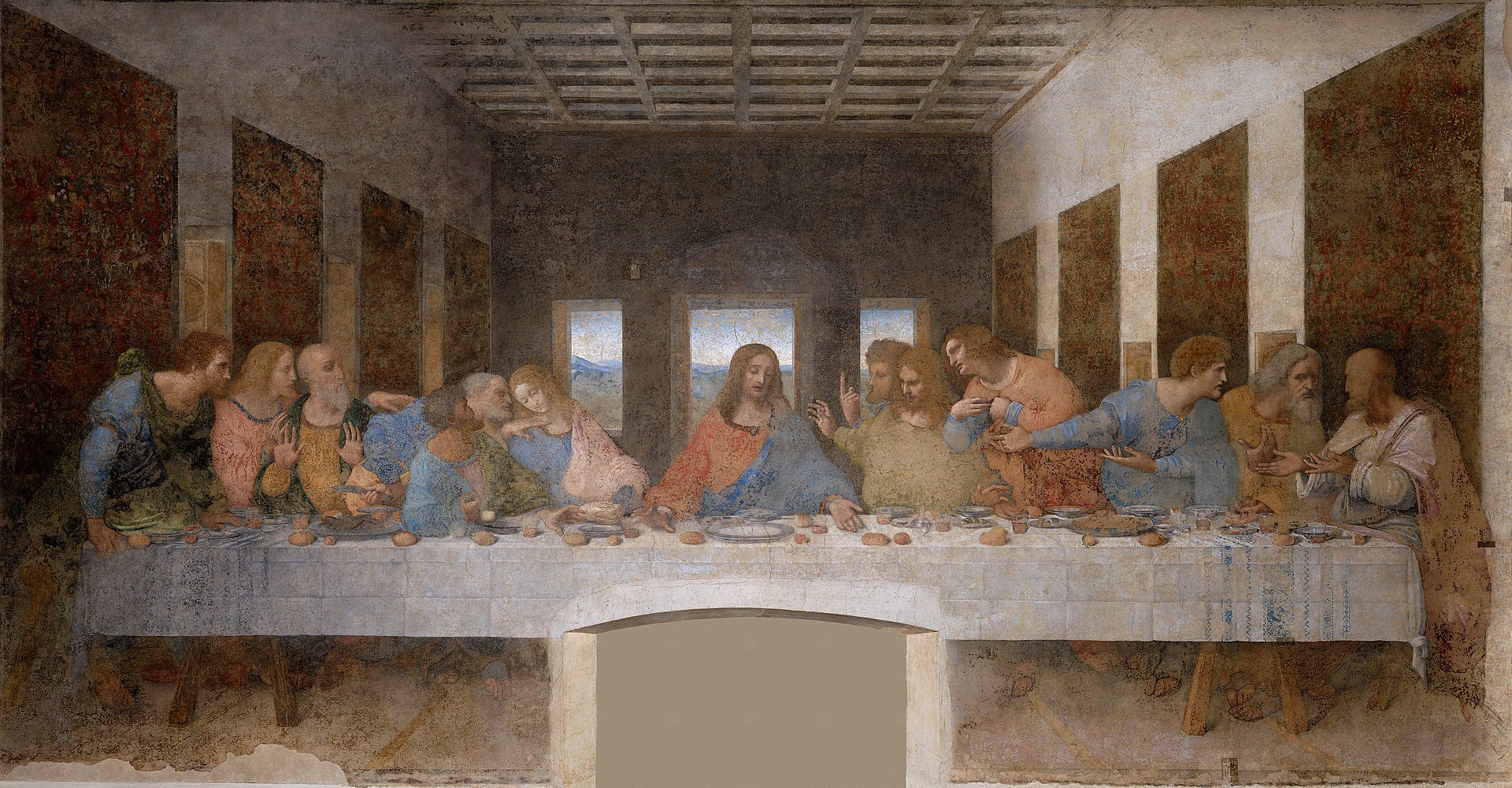
The image is The Last Supper by Leonardo da Vinci (painted between 1494-1498) – Unknown source, Public Domain, https://commons.wikimedia.org/w/index.php?curid=24759.

The image is, of course, what I expect to see – and is therefore a warning against expecting to see it.

Story: Will the Myna Ever Learn to Share?

April 30, 2023

Acts 2:42-47
John 10:1-10

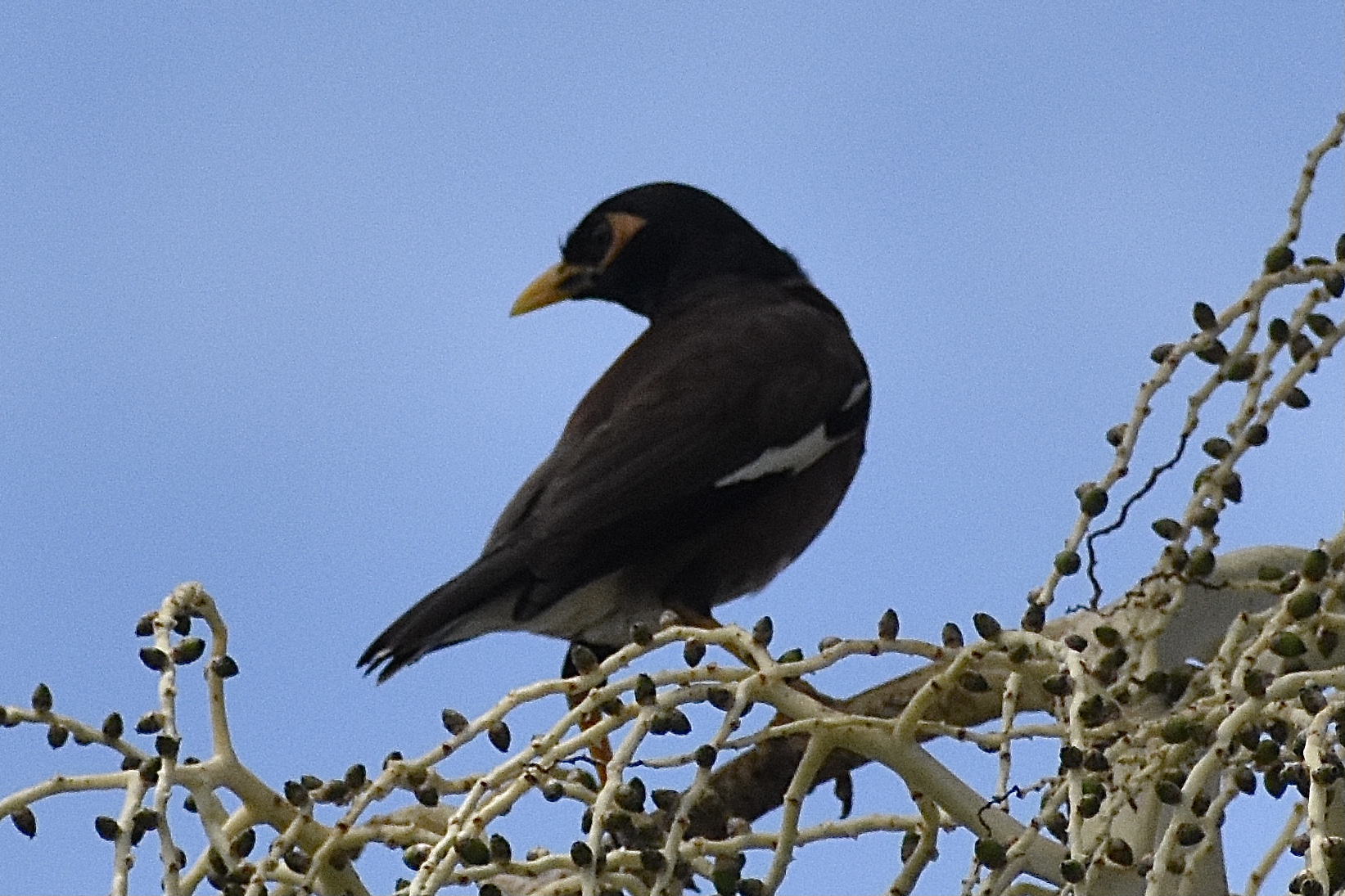
Two humans were watching a small flock of mynas. The mynas were doing myna things, which was basically hopping around the grass looking for things to eat, finding the things to eat, and then eating them. By and large this went fine, but every once in a while one myna would hop closer to another myna, and sometimes the second myna would object, and then the first myna would object, and the result would be a lot of myna noise that was… objectionable.

The two humans shook their heads at this. One wondered, “Will the myna ever learn to share?”

They kept watching and somehow didn’t notice that when one myna objected to another myna, it wasn’t trying to steal food. It wasn’t trying to chase it away from food. It just wanted space. A little space. A little more space than you’re giving me, please. Thank you very much and would you kindly remember that for next time you…!

They squabbled about spacing. Not about feeding. Somehow the two people failed to notice that the mynas were sharing by making sure everybody had a spot to hunt for things to eat.

Eventually the humans got hungry. One had prepared a really nice lunch, with lettuce and pickles on the sandwich along with spreads and meats and cheeses. When one of the mynas managed to get a crumb later, she thought the bread was pretty special, too. With the sandwich the person had a big bottle of flavored ice tea. The mynas never learned how that tasted. The human finished every drop. Oh, and there were chips and a salad and there was chocolate for dessert. The mynas didn’t taste any of those, either.

The other human had a sandwich, but the space between the slices of bread was a lot thinner. No greenery poked out the sides. The myna consensus from trying the bread crumbs later was that it was pretty ordinary bread, rather lacking in flavor. This person drank water and had no other food than the sandwich. They finished sooner than the person with the bigger lunch, and didn’t taste any more of that than the mynas did.

Later on, the two people stopped watching the mynas for the day and got set to return home. The one with the nicer lunch got into a big, shiny car. The one with the small lunch got into a smaller car with dull paint and a few rust marks. When they drove off the small car left behind a cloud of oil-smelling smoke.

Two of the mynas looked at one another. One of them asked, “Do you think humans will ever learn to share?”

In fairness to the humans, one of them was sharing knowledge with the other – teacher to student. But still, doesn’t that question linger:

Will humans ever learn to share?

by Eric Anderson

Watch the Recorded Story

I tell the stories from my memory of the text I’ve written. Sometimes memory changes things. Sometimes creativity does. To be honest, it’s hard to tell one from the other.

Photo of a common myna by Eric Anderson.

Bring Me a Rose, Apostles

After I wrote “Romance,” Maren Tirabassi asked me, “Is this set to music?” It wasn’t, but I, too, found its rhythm begged for a melody. Here it is:

Bring Me a Rose, Apostles

By Eric Anderson
April 25, 2023

Bring me your time and a rose, apostles,
gathered in prayer; gathered to share.
Bring me your time and a rose-colored glass,
to which we’ll aspire and fail.

Bring me the needs that were met, apostles,
the poor lifted up, assembled to sup.
Bring me the gifts of the rich, apostles,
the rich become poor in the blood of the cup.

Bring me the change – for it came, apostles.
The rich held their wealth despite failure of stealth.
Bring me the gifts for the saints, apostles,
they gave for Jerusalem’s health.

The rose-colored glass will not hide, apostles,
Saphira’s collapse, Ananias’ grim lapse.
Nor the laud that is given to greed, apostles,
however much time will elapse.

Bring me your time and a rose, apostles,
gathered in prayer; gathered to share.
Bring me your time and a rose-colored glass,
to which we’ll aspire
Aspire and fail.

© 2023 by Eric Anderson

Romance

“All who believed were together and had all things in common; they would sell their possessions and goods and distribute the proceeds to all, as any had need.” – Acts 2:44-45

Bring me your time and a rose, apostles,
gathered in prayer; gathered to share.
Bring me your time and a rose-colored glass,
to which we’ll aspire and fail.

Bring me the needs that were met, apostles,
the poor lifted up, assembled to sup.
Bring me the gifts of the rich, apostles,
become poor in the blood of the cup.

Bring me the change – for it came, apostles.
The rich held their wealth despite failure of stealth.
Bring me the gifts for the saints, apostles,
they gave for Jerusalem’s health.

The rose-colored glass will not hide, apostles,
Saphira’s collapse, Ananias’ grim lapse.
Nor the laud that is given to greed, apostles,
however much time will elapse.

Bring me your time and a rose, apostles,
gathered in prayer; gathered to share.
Bring me your time and a rose-colored glass,
to which we’ll aspire and fail.

A poem/prayer based on Acts 2:42-47 (with some reference to Acts 5:1-11), the Revised Common Lectionary First Reading for Year A, Fourth Sunday of Easter.

The image is The Distribution of Alms and the Death of Ananias by Masaccio (ca. 1426-1427), a fresco in the Brancacci Chapel, Florence, Italy – Web Gallery of Art:   Image  Info about artwork, Public Domain, https://commons.wikimedia.org/w/index.php?curid=15463099.

Story: Flight School

April 23, 2023

Acts 2:14a, 36-41
Luke 24:13-35

The myna chick was in flight school.

She’d already been to flight school, but now she was in a different flight school. The first flight school was what you think it is, and her instructors were mostly her parents, with occasional helpful contributions from random mynas near the nest – because a myna has something to say about just about anything – and not-so-helpful contributions from her sisters and brother, who also had plenty to say about her first attempts at flight but they didn’t really know any more about it than she did, and sometimes less.

They were mynas, of course, so they had something to say about it whether they knew anything or not.

She had graduated flight school, however, with flying colors. By which I mean, she could fly.

And now she was in flight school. This one, however, was not about flying. It was about fleeing. The first flight school taught her how to make her way through the air. The second flight school taught her about the things to fly away from.

There were a good number of them. The problem was that she found it all very boring. The instructors would suddenly shriek, “Cat!” and all the students would fly away. Then they’d do it again. And again. It was tiring. And boring.

When everybody was wing-weary and tired, the teachers announced a short break. The students scattered to the trees to rest.

Our myna hadn’t been settled long when some other birds also perched on nearby branches of her tree. She didn’t know much about them. There was a kolea, and a couple of finches and doves, and a yellow-billed cardinal. She was really startled, though, when a very large bird with long white wings and long legs settled near the top of the tree. Nobody else seemed to move, however, so she folded the wings she’d planned to fly away with. Her flight school lessons hadn’t moved on to birds yet.

“Startled, little one?” said a voice from above and behind her.

“Yes,” she said. “I don’t think I’ve seen a bird that large before.”

“Don’t worry,” said the voice. “That’s a cattle egret. They don’t hunt mynas.”

“Are there birds that hunt mynas?” she asked.

“Certainly,” said the voice. “Not a lot, but they do enjoy a tasty bit of myna when they can get it.”

“What birds are those?” she asked, not sure she wanted to know.

“There’s the pueo,” said the voice. “They have very flat faces and big eyes, and they fly really quietly. You want to fly away from those.”

“Anything else?” asked the myna.

“Definitely,” said the voice. “Watch out for the ‘io. It’s got a sharp curved beak, large pointed talons, and big broad wings. It can spot you from high up in the sky.”

“At least it doesn’t roost in trees,” sighed the myna.

“Who says it doesn’t?” said the voice. The myna turned her head, and saw a larger bird with cream and brown feathers, bright eyes, a curved beak and sharp talons on its great feet. The finches leapt from the tree with a screech of “’Io!” followed by all the other birds – except the ‘io, who didn’t happen to be hungry.

She didn’t find flight school boring after that. She wanted to know everything about identifying the creatures around her – the ones to fly away from and the ones who wouldn’t harm her. She lived her life grateful for an ‘io who would tell her the truth.

by Eric Anderson

Watch the Recorded Story

I tell these stories during worship from my memory of the story as written (that’s the text you’ve just read). My memory is… not photographic.

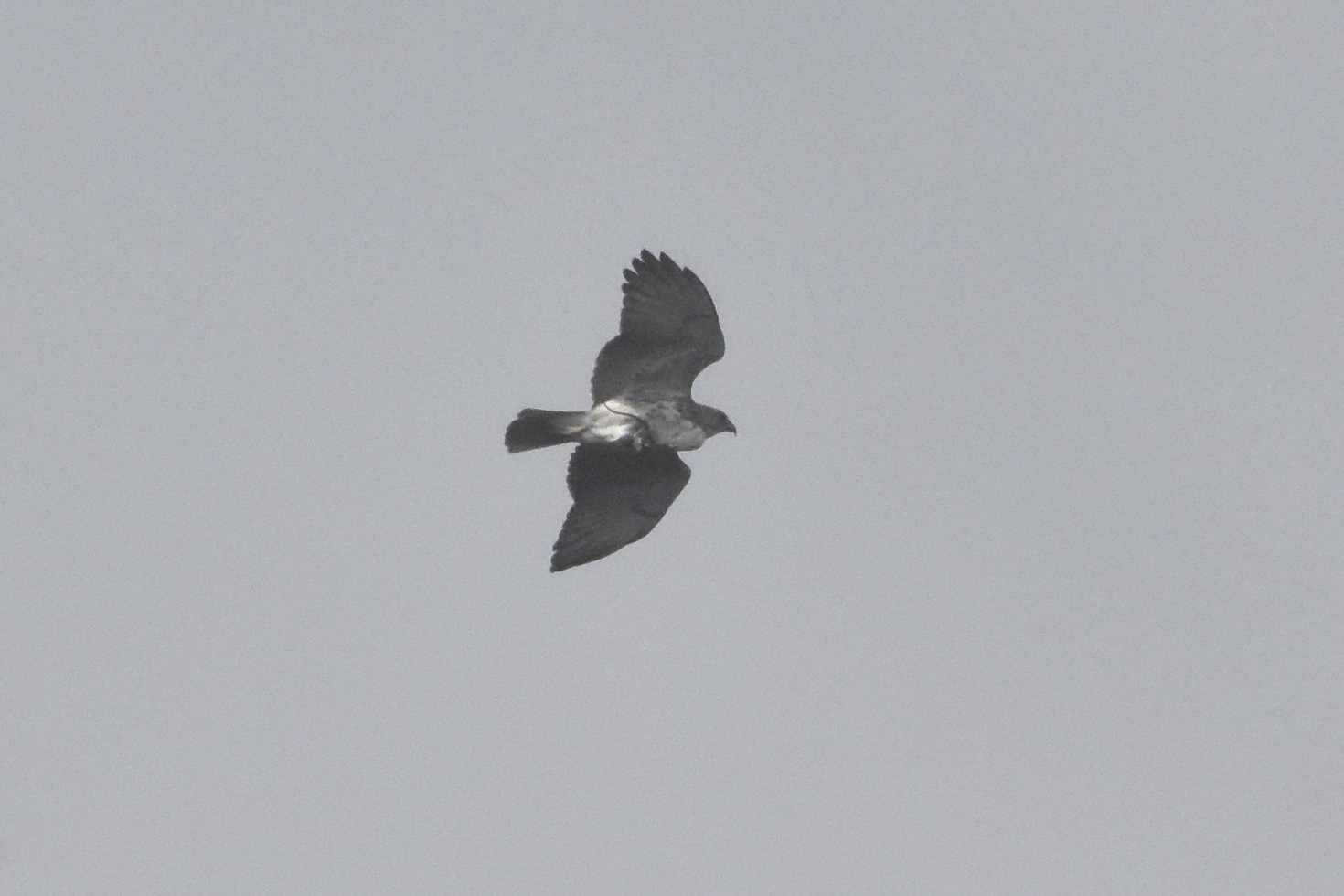
I did take the photo of the ‘io at the top of the page.

Disappointed

[Cleopus and his companion replied,] “But we had hoped that he was the one to redeem Israel.” – Luke 24:21

Cleopus:
We needed a savior,
we followed a healer,
learned some from a teacher.
We were crushed to see
our longed-for Messiah crucified
and slain, and know it was not he.

Judas Iscariot:
We needed a savior,
but he wouldn’t blink,
he wouldn’t lift up the sword.
The Zealot alike is tamed.
He must be forced his power,
even if by his friend he’s betrayed.

Simon Peter:
What shall I make of the winds
of these days? I ran, then I stopped.
I followed and denied.
I’ve looked in the empty tomb.
Between death and failure my heart
subsides, has settled into gloom.

Mary Magdalene:
He set me free from torment within.
I watched him set others free.
You wanted a Savior? You had one, you know!
Now the angels claim he lives once more
and I’ve come to spread the news
to find my word ignored.

Me:
You’ve disappointed us all, O Christ.
We’ve asked for the things you won’t give
(So we’ve taken them instead).
If we’re disappointed, what about you?
Abandoned, betrayed, denied, ignored,
as you labor to lead us to truth.

A poem/prayer based on Luke 24:13-35, the Revised Common Lectionary Gospel Reading for Year A, Third Sunday of Easter.

The image is Cena in Emmaus (Supper in Emmaus) by Caravaggio (1601)- Own work, Public Domain, https://commons.wikimedia.org/w/index.php?curid=10251374.