I’m Listening, Jesus

“[Martha] had a sister named Mary, who sat at the Lord’s feet and listened to what he was saying.” – Luke 10:38-42

I’m listening, Jesus. Can’t you hear me listening?

I’m listening while I’m working.
See how hard I’m working.
All alone I’m working.
Don’t you care? I’m working.

And I’m listening while I’m working.
Have no fear about that, now. I’m listening.

I’m working because there’s work.
So much need, so much work.
Who else is working?
Don’t you care I’m working?

Still listening; still working.
Don’t worry about listening. I am listening.

The needs, they keep shifting.
Some things I’ve done aren’t working.
I’ll try something new.
Don’t you care to share something new?

Let me get this done while I’m listening.
Speak your peace, Jesus. I’m listening.

Yes, I’m listening, Jesus.

Can’t you hear me listening?

A poem/prayer based on Luke 10:38-42, the Revised Common Lectionary Gospel Reading for Year C, Proper 11 (16).

The story of Mary and Martha has often been used to praise contemplative spirituality and criticize engagement with others. I think that’s a misleading reading. Jesus commented on Martha’s worry and distraction, not her activity. What distinguished the two women was that Mary listened. Someone with a spirituality of involvement can be an active listener to Jesus, and a contemplative can certainly listen to self rather than to Christ.

The photo is of a fresco depicting Mary, Martha, and Jesus in Martha’s house. The fresco is in the St. Lazarus Roman Catholic Church in al-Eizariah (Biblical Bethany). Photo by Fallaner – Own work, CC BY-SA 4.0, https://commons.wikimedia.org/w/index.php?curid=72990656.
Story: Samaritans

July 10, 2022

Psalm 25:1-10
Luke 10:25-37

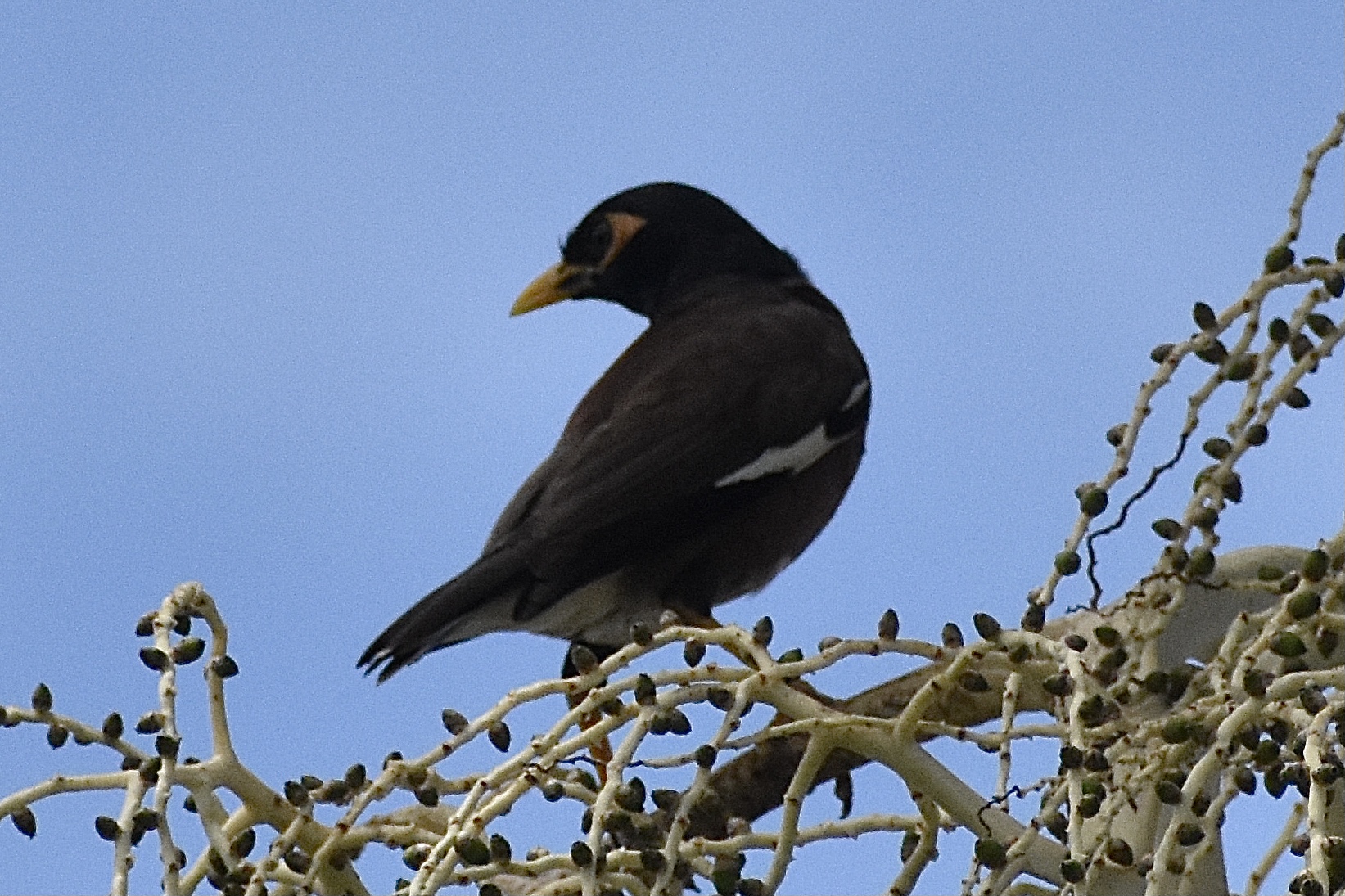
Mynas have a reputation. It’s a reputation that most of us wouldn’t want to have. They’re known for their loudness, and their squabbling, and their arguments, and their really loud arguments. Basically, they’re known for being petty, noisy, and aggressive. Not the reputation you’d like to have.

You will notice that attending church and listening to stories and songs and sermons isn’t on that list of things mynas are known for. But there was a myna who liked to perch near a church here on Hawai’i Island, and he actually stayed quiet to listen. He liked the stories that Jesus told.

One of his favorites was the story of the Good Samaritan. I’m sure you know it: after a man was beaten up by robbers, the person who came to help was not somebody the poor man knew, or one of the people that you’d expect to help. It was a Samaritan, somebody that you’d have thought would be among the attackers, not the helpers. It was the Samaritan that cleaned the man up, put bandages on him, brought him to a safe place where he could rest and recover, and paid an innkeeper to take care of him.

But who, wondered the myna, was a Samaritan in the bird world of Hawai’i Island? Who would you expect to make bad things worse? Who would surprise you if they turned around and helped? Who, by making things better, just might change the world around them?

Just then a cat came by. The myna perched on a branch above it, and instead of launching into a warning call, greeted the cat with a friendly chirp. Then he told the cat all about the Good Samaritan, about somebody who needed help getting help from the most unlikely somebody else.

“What do you think?” said the myna to the cat. “Could you be like the Samaritan? Could you help a bird instead of trying to catch it?”

The cat, I must say, was rather confused, but also intrigued. “I don’t know,” she said honestly. “I can see how that would make a big difference in the world, if I and my fellow cats started being helpful instead of being hunters.”

“I know somebody else who could be a Good Samaritan,” piped up another voice. It was a saffron finch who was perched in dense foliage of the same bush as the myna. Neither the cat nor the myna had noticed her.

“Who else could be a Good Samaritan?” asked the myna.

“You can,” said the saffron finch. “You know how you screech at us sometimes? You could stop doing that.”

“Now that I think of it,” said the cat, “there’s a few dogs that could definitely learn something from the Good Samaritan.”

“I guess,” said the myna slowly, “that nearly any of us could be the one who needs help. And I guess that nearly any of us could be the one who, against all expectation, is the one to bring help.

“We can all be a Good Samaritan.”

by Eric Anderson

Unfortunately, there was a technical error and the worship service of July 10, 2022, was not recorded.

Photo by Eric Anderson

Reasons

“Now by chance a priest was going down that road; and when he saw him, he passed by on the other side. So likewise a Levite, when he came to the place and saw him, passed by on the other side.” – Luke 10:31-32

They had reasons, I’m sure, to take the other side.
I can’t imagine all the obligations they’d have had,
of family and church and ordinary daily life.
They had their reasons, yes, I’m sure.

Did their reasons reassure a dying man?

Do I have reasons? Yes, I have, commitments overwhelming.
I try to think “strategically,” to “choose my battles,” “save
the energy for when it’s needed,” “take my rest.”
I have my reasons in their legions.

Do my reasons reassure a threatened woman?

Do we have our reasons? Yes, we have. Resources are
not infinite by any means. What this one gets, another one
does not. Dare we deprive another for the needs of one?
We have more reasons than responses.

Do our reasons reassure a grieving child?

Do we have our reasons? Yes, of all the things
we call our own, we cling to reasons – even more
than gold or power or privilege or guns.
We have our reasons and we will not let them go.

Do our reasons satisfy the One whose love embraces dying souls?

A poem/prayer based on Luke 10:25-37, the Revised Common Lectionary Gospel Reading for Year C, Proper 10 (15).

The image is El bon samarità (The Good Samaritan) (1838) by Pelegrí Clavé i Roqué – Reial Acadèmia Catalana de Belles Arts de Sant Jordi, Public Domain, https://commons.wikimedia.org/w/index.php?curid=21454886.

Story: How the ‘Akepa Began to Sip Nectar

July 3, 2022

Galatians 6:1-16
Luke 10:1-11, 16-20

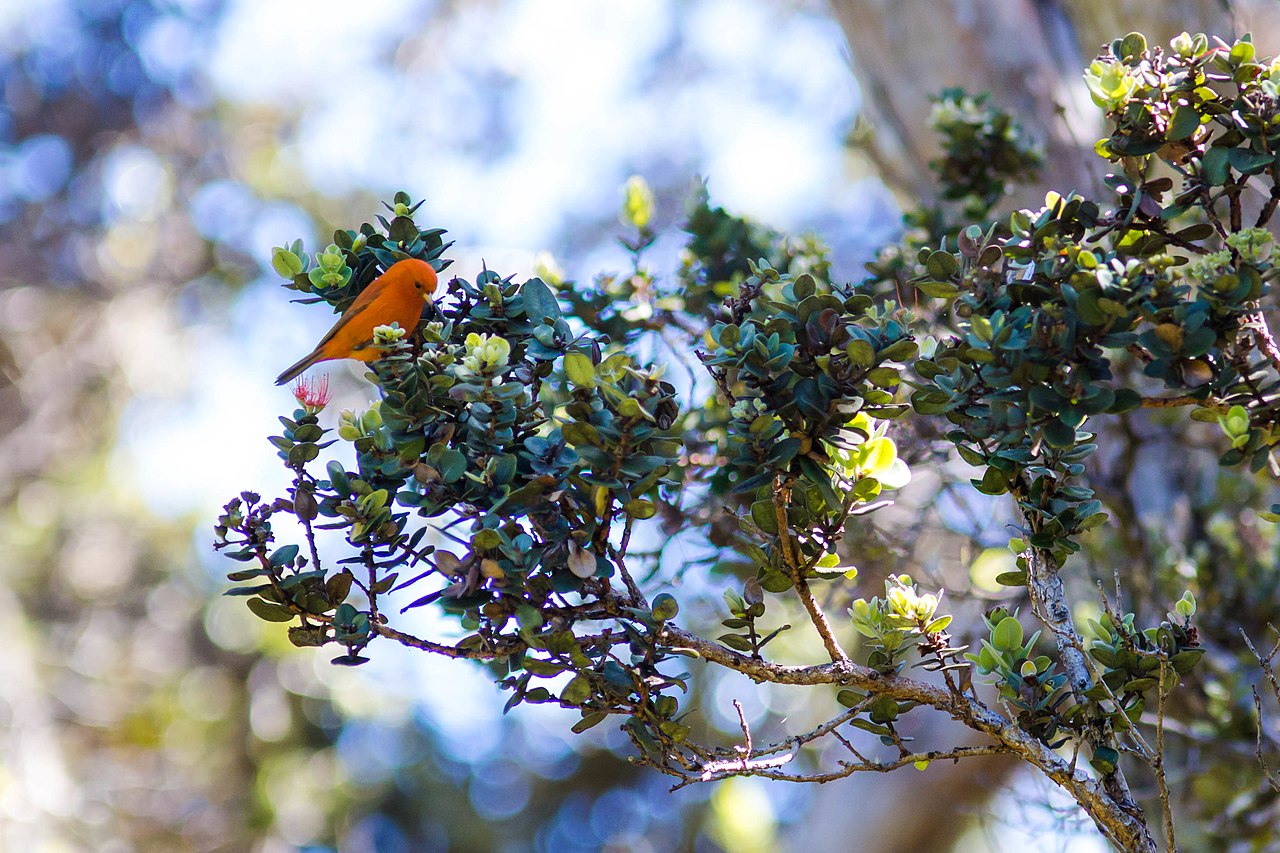
If you’re not familiar with the ‘akepa, they are another of the small birds who live in the ohi’a forest. The males are a vivid orange or orange-red with black feathers on the edge of their wings. The females’ feathers are gray-green, rather close in color to ohi’a leaves. Mostly they eat bugs. And spiders. And caterpillars, which are the early stage of, well, bugs.

They eat a lot of bugs.

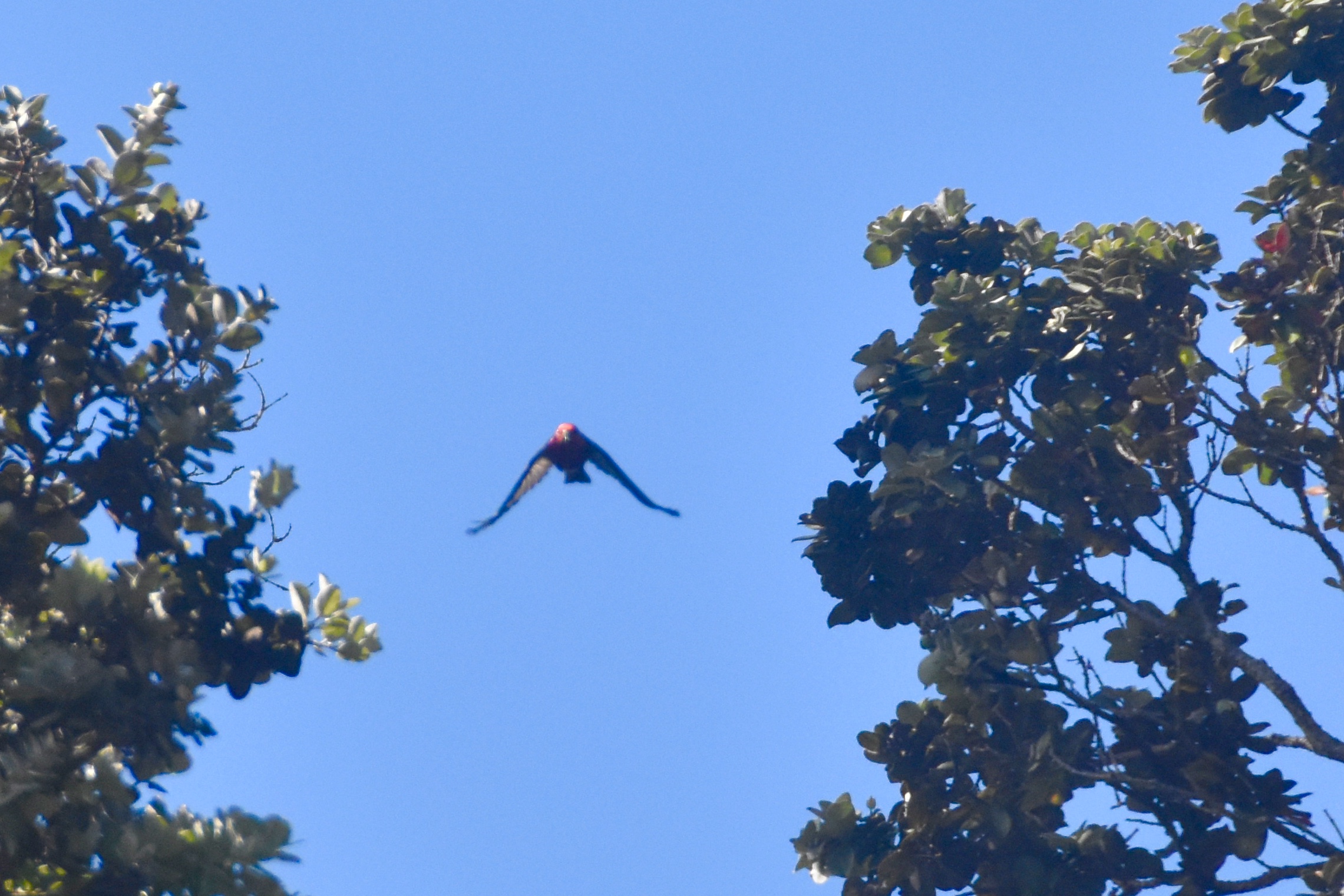
From time to time, though, they eat a little bit of ohi’a nectar. The i’iwi sip nectar nearly all of the time. The ‘apapane mostly sip nectar but will also eat some bugs. The ‘amakihi like to mix up their meals, some nectar here, some bugs there, some fruit in some other places. And the ‘akepa… eat bugs.

They eat a lot of bugs.

But they do sip a bit of nectar from time to time, and this is how that came about. The first known sip was an accident. A bright orange ‘akepa was hopping about the tree, poking his beak into clusters of leaves, searching for those tasty little bugs and spiders. A somewhat careless poke with his beak came back with nectar, not a bug.

It was a revelation. It wasn’t a bug – wouldn’t make a meal – but it would be a tasty snack every once in a while.

He decided he needed to share the news with the other ‘akepa. He found the little flock he flew with picking over another tree and shouted, “Hey, idiots! Try sipping the nectar!”

To a bird, they gave him a look that said, “Who are you calling an idiot?” and went back to chasing bugs.

“Are you stupid? Try the nectar!” They ignored him.

He kept this up for quite some time, getting more and more insulting until sunset put an end to his harangue. All the ‘akepa in the little flock went to sleep pretty irritated, in his case with them, and their case with him.

In the morning, before he could get started, one of his friends, a young female, flew over to him. “Are you going to call us idiots all day?” she asked.

“But you are!” he said.

“No, we’re not,” she said. “What we are is insulted. Now if you’ve found something interesting, we might consider it, but not as long as you treat us badly.”

He opened his beak to yell, but something in her look told him that he shouldn’t. He closed his beak. He opened it. He closed it. He sighed.

Then he dipped his beak into a nearby ohi’a blossom and gave it a good, deep sip.

“You might want to try this,” he said. “It’s different. And pretty good.”

She looked at him. He dipped his beak again.

“You’re not playing games with us?”

“No. I’m not.”

After she tried it, other ‘akepa tried it, too. Mostly, Ihave to say, they preferred bugs, and they do to this day. But also to this day, no ‘akepa has liked being called an idiot, and I guess that’s true of a lot of creatures in this world.

by Eric Anderson

Watch the Recorded Story

The story was told live from memory of this manuscript – with all the improvisations and omissions that suggests.

Photo of an ‘akepa by Melissa McMasters from Memphis, TN, United States – Hawaii akepa, CC BY 2.0, https://commons.wikimedia.org/w/index.php?curid=74469703.

Peace at the Door

“Whatever house you enter, first say, ‘Peace to this house!'” – Luke 10:5

“Someone’s at the door.”

“You get it.”

Pause

“Who is it?”

“Two people bringing peace!”

“Piece? Piece of what?”

“Not piece of something, peace!”

“Oh, honestly. These people. Always selling peace.”

“I don’t think they’re selling it.”

“I’ll bet they’ll tell you the price if you ask.”

“Mostly they look confused.”

“What do they look like?”

“Well… tired. Like they’ve been walking all day.”

“If you make your living selling door to door, you’ll walk all day.”

“It looks like they could use new sandals.”

“Tell them to check the sandal shop across the village.”

“I think they’re hoping we’ll offer hospitality.”

“Oh. Really. Is that it? Tell me more. Do they have bags?”

“No bags.”

“A sleeping roll?”

“I can’t see one.”

“How about a second tunic?”

“No.”

“A purse? Money?”

“They don’t seem to have any money, no.”

“Not sellers, then. They’re beggars.”

“Um. I don’t think they’re beggars, either.”

“They are if they’re asking hospitality and have nothing to share.”

“Well, they’re offering peace.”

“Can you hear my eyes rolling from there?”

“Oh, yes.”

“Send them on their way.”

“Couldn’t you use some peace?”

“Where would I find time for peace?”

A conversational poem/prayer based on Luke 10:1-11, 16-20, the Revised Common Lectionary Gospel Reading for Year C, Proper 9 (14).

Photo of traditional icon by Ikonopisatelj – http://chattablogs.com/aionioszoe/archives/70Apostles.jpg, Public Domain, https://commons.wikimedia.org/w/index.php?curid=3536332.

Love You!

June 26, 2022

Galatians 5:1, 13-25
Luke 9:51-62

You may have heard people say that kids can get out of hand. You know. Kids jump about. Kids make lots of noise. Kids butt each other with their heads.

Yes. They butt each other with their heads. You don’t do that? Well of course you don’t. You’re not a… Oh. Right. I’m sorry.

When I say “kids” today, I’m not talking about young human beings. I’m talking about young goats. And those kids can definitely get out of hand, jumping about, making lots of noise, and butting each other with their heads.

One kid, however, was a handful even by kid standards – that is, goat kid standards. He was constantly head-butting and foot-kicking and even mouth-biting. Goat kids can get rather rough with one another, but he was rougher than any of them wanted to deal with. Pretty soon he didn’t have any friends in the pasture. If they let him close he’d butt or kick or bite.

He was sad when he got back to his mother. “Why don’t I have any friends?” he asked, and when he’d explained how he behaved with the other kids, his mother thought for a moment.

“If you want friends, you’ve got to love them,” she said.

“Love them?” he asked.

“Love them,” she said.

He thought about this until he fell asleep and thought more about it when he woke up in the morning. He bounced off to the pasture and happily shouted, “I love you!” to the other kids. Then he rushed up to them, butted one with his head, kicked another with his hooves, and bit a third with his teeth, all the while shouting, “I love you!” The herd of kids scattered and he certainly didn’t make any friends.

“Why don’t I have any friends?” he asked his mother that night.

“Didn’t you love them?” she said.

“I tried. But it didn’t work,” he said.

“Tell me what you did,” she said. He did, and when he finished, she sighed.

“Tell me this,” she said. “Do you enjoy it when another kid hits you or kicks you or bites you?”

“Well, not much,” he admitted.

“If I did that, would you believe that I loved you?” she asked.

He wasn’t sure how to answer that.

“Do you think the other kids believe you love them when you butt them and kick them and bite them?” she asked.

“No,” he admitted. “I guess they don’t.”

“Love isn’t just saying it,” said his mother. “Love is doing things because they help someone or help them be well. Love is not doing things because they hurt someone or make them feel bad. So go back tomorrow and try to love them – and this time, show it.”

I won’t claim that he did it perfectly the next day – he didn’t – but he really did show more love for the other kids than he ever had before. As the days passed, he made friends, and they loved him, too.

by Eric Anderson

Watch the Recorded Story

The video includes the complete service of July 26, 2022. Clicking “Play” will jump to the beginning of the story. The recording is of the story told live without notes. It is not the same as the prepared text.

Photo of goats on Maui by Forest & Kim Starr, CC BY 3.0 us, https://commons.wikimedia.org/w/index.php?curid=70450192.

This Way

“When the days drew near for him to be taken up, he set his face to go to Jerusalem.” – Luke 9:51

“Jesus, that was rude.”

“No kidding. Not an open door in sight.”

“And just because we’re headed for Jerusalem.”

“These Samaritans are jerks.”

“Yeah. They’re jerks.”

“Hey, Jesus! Remember when Elijah called for fire from heaven?”

“Or when God rained destruction down on Sodom and Gomorrah?”

“They failed to welcome angels there, you know, just like this village failed to welcome us.”

“Yeah! Jesus! Let’s call fire down from heaven! That’ll teach them!”

“What’s that he said?”

“He said, ‘No.'”

“I heard that part. What did he mutter after that?”

“A prayer, I think?”

“I heard, ‘How long, O Lord?’ before his mutter got too soft to hear.”

“Oh, look! Here comes someone to join our merry band.”

“Jesus will make him feel at home, I’m sure.”

“Oh. No. He didn’t, did he?”

“What did he say this time?”

“Something about foxes having better beds than he does.”

“Well. That’s true, I’ve got to say. My pillows have been awfully hard of late.”

“Truth in advertising doesn’t sell, now, does it?”

“Well, here is someone else. Jesus told him, ‘Follow me.” That’s better, isn’t it?”

“Oh, wait. He wants to bury his father first.”

“Now what did Jesus say?”

“‘Let the dead bury their own dead.'”

“Ooo. Harsh, Jesus, harsh.”

“I don’t think he’s coming back do you?”

“And here’s one more. He wants to tell his family goodbye.”

“Oh, no. What did Jesus say this time?”

“‘No one who puts a hand to the plow and looks back will do.'”

“Well, that’s true. You get really crazy furrows if you plow while looking back.”

“But this is crazy! We’re supposed to be inspiring a movement! We’re supposed to be gathering a coalition! We’re supposed to be organizing a community!”

“Are we? Or does Jesus have another thing in mind?”

“I’ll ask him. Jesus! Where are we supposed to be going?”

“Did you hear him?”

“Not that well. What did he say?”

“‘This way.'”

A conversational poem/prayer based on Luke 9:51-62, the Revised Common Lectionary Gospel Reading for Year C, Proper 8 (13).

The image is Il allait par les villages en route pour Jérusalem (He Went Through the Villages on the Way to Jerusalem) by James Tissot (btwn 1886 and 1894) – Online Collection of Brooklyn Museum; Photo: Brooklyn Museum, 2006, 00.159.157_PS1.jpg, Public Domain, found on Wikipedia Commons.

Help to Get Home

June 19, 2022

1 Kings 19:1-15
Luke 8:26-39

The ‘apapane was lonely, lost, and scared. He’d been flying just above the treetops when the big wind blew up. In a moment its strength had snatched him away from the tree branches he wanted to cling to and shelter in. It carried him along above the slopes of Mauna Loa and off toward Kona-side. It was too much to fly into the wind. It was too much to fly across it; he’d simply have been tumbled. All he could do was stay in the air and ride it until it calmed enough that he could land somewhere and take shelter.

That took far longer than he’d hoped. Off to his left he could see the ocean from time to time. The land beneath him fell away, and he let himself descend with it, which eventually put him behind one of the ridges of Mauna Loa. The wind’s strength faded, and he was able to find a perch in an ohi’a tree. There he clung and gasped for breath and was just grateful to be safe again.

He knew he was a long way from home, however. His own flock was far behind. None of the land shapes looked familiar – or if they looked familiar but he knew they weren’t home. When the storm calmed, he knew he’d have a long flight home.

After a while, he heard the roar of the wind overhead subside. He took off once more to test it, and it was safe to start the journey back. But he was still scared, he was pretty much lost, and he was all alone. What else could he do but start his flight?

He stayed close to the trees – he didn’t want to be blown back again if the wind returned – and tried to avoid the i’iwi and the ‘amakihi and the ‘akepa he saw. He flew around the little flocks of ‘apapane as well. He wasn’t sure he’d be welcome. But that meant that he was also flying around the places where ohi’a was in blossom. That, after all, was where the local birds were. Avoiding them meant he was also avoiding the places to find food and to rest safely.

Tired and hungry, he thought he spotted an ohi’a tree with no birds in it. It had a few blossoms on it, not many, and not enough to make a meal of nectar, but he hoped he’d find bugs to eat to fill himself up. He landed near a cluster of blooms and had dipped his beak for nectar when he heard and ‘apapane voice say, “Who are you? What are you doing here?”

He turned his head to see an older female ‘apapane, a tutu for certain, he thought, so he answered respectfully, “I’m sorry, auntie. The wind blew me away from my home and my flock, and I’m on my way back. I’ll just go now.”

He opened his wings to take off again, but the tutu ‘apapane stopped him. “Wait, now. You’re in no shape to fly. Eat something.”

He gratefully dipped his beak in the ohi’a blooms again, and hopped about chasing bugs and spiders. “Rest,” said his new friend, and he let his eyes close. When they opened again she said, “Come with me,” and they flew to another ohi’a tree, this one dripping with blossoms and nectar. She told the other ‘apapane in the tree that he was a visiting friend, and he had an excellent meal and took another rest.

When he woke, the other birds had flown to other trees, but the tutu ‘apapane was still there. “How do you feel?” she asked.

“Like I can fly home,” he said.

“Have a safe flight and happy landings,” she said, which is the most ancient of ‘apapane prayers.

Off he went, and he did find his way safely home, because he’d been given food, and rest, and kindness by someone who was loving and wise.

by Eric Anderson

Watch the Recorded Story

The recording is of this story told live without notes. It’s not the same as the prepared text.

Photo by Eric Anderson.

Climbing

Then [Elijah] lay down under the broom tree and fell asleep. Suddenly an angel touched him and said to him, “Get up and eat.” He looked, and there at his head was a cake baked on hot stones, and a jar of water. He ate and drank, and lay down again. – 1 Kings 19:-6

I know just what you will say, LORD.
“What are you doing here?” you’ll ask.
Oh, I will have an answer, which
will not be any good as an excuse.

Still I climb the mountain, seeking you,
though you have never been so far before
amidst the labors and travails and trials.
Still now, yes now, I journey and I climb.

I’ll tell you I was running to you, and
we neither of us will be much deceived.
I’ll tell you I’m the only one, and yes,
I know as well as you the truth of that.

Amidst the carnage of the wind I’ll stand,
amidst the terror of the quaking earth the same,
against the roaring of the flames I’ll bare my face,
then hide it from you when your stillness comes.

How pointless is my journey and my climb!
I know full well the words I’ll hear: “What are
you doing here?” And I will have no answer
but to whine, and sigh, and wait for what come next:

Your next assignment, roles familiar:
enlist new friends and colleagues to the work
of justice-making, faith-inspiring,
community-building, righteousness-living.

You’ll send me back and chide me
that I thought I was alone, as there were not
countless people who, in their imperfect way
live humble, faithful, righteous lives.

But God, when I am humbled by
your so appropriate rebuke, I’ll cling to this
remembrance as I turn the journey from
the mountain and am homeward bound:

When I was running needlessly and weary
beyond thought or strength, you came to me.
Just like the angel fed Elijah when he fled,
you gave me comfort, solace, rest,

Before you pushed me down the mount again.

A poem/prayer based on 1 Kings 19:1-15a, the Revised Common Lectionary Alternate First Reading for Year C, Proper 7 (12).

The image is The Prophet Elijah in the Desert, a sketch by Alexander Ivanov (19th cent.) – Public Domain, https://commons.wikimedia.org/w/index.php?curid=9087568.

Chasing Hope

June 12, 2022

Proverbs 8:1-4, 22-31
Romans 5:1-5

The young pueo had learned many things. He’d learned how to fly, and how to find his way home, and how to spot small creatures in the grasses. He was, in many ways, prepared to begin a life of his own.

But he didn’t know what hope was.

His mother talked about hope a lot. Or muttered about it a lot. “Do you think we’ll find mice out there today?” he’d ask, and she’d say, “Hope.” “Do you think it will be sunny and warm today?” he’d ask, and she’d say, “Hope.” “Do you think I’ll learn something new today?” he’d ask, and she’d say, “Hope.”

Sadly, one of the things that he hadn’t learned by the end of any day up to that point was what “Hope” meant.

So he went to ask grandmother, Tutu Pueo, his mother’s mother. He flew to the rock on which she’d perched and asked, “Tutu, what is hope?”

“Hasn’t your mother told you?” she asked, rather surprised.

“No,” he said. “She mutters ‘Hope,’ a lot, like when we set out to find dinner, or when I ask about what’s coming. But she never says what it is.”

Tutu laughed. “I’ll just have to teach you the way I taught her,” she said. “Come fly with me. Let’s chase Hope.”

Puzzled but willing, he followed grandmother into the sky. “You’ve got to chase Hope,” said Tutu over the rush of the air. “Yes, but what does Hope look like?” asked the grandson, but suddenly she shouted, “Look there! In the grasses!”

Down they pounced to where an unwary mouse had ventured out. They enjoyed their snack, but then he said, “That wasn’t Hope, was it? That was a mouse.”

“You’ve got to chase Hope,” said Tutu. “Come on.”

Once more they took to the air, but clouds were pouring through the gap between Mauna Loa and Mauna Kea. “Look! There’s Hope!” shouted Tutu and she poured on the speed, heading for the retreating sunshine. Before the rain began to fall they were circling again in the sun.

“That’s not Hope, is it?” said grandson. “Isn’t it just… sunshine?”

Tutu turned lazy circles. “You’ve got to chase Hope,” she called. “Have you learned anything?”

He thought about it. He thought about being hungry, and about chasing something to eat. He thought about wanting to be warm and dry, and chasing the gaps in the clouds. He thought about wanting to learn something, and…

“I’ve learned that you have to chase Hope,” he said. “It’s always somewhere out there ahead, isn’t it?”

Tutu nodded. “And when you catch it, it’s the thing you hoped for – and then Hope becomes the next thing you need or you want.”

When he went home, he found his mother waiting. “Did Tutu teach you anything?” she asked.

“She taught me to chase Hope,” he said. “Do you think I’ll learn something new tomorrow?”

She smiled a pueo smile and simply said, “Hope.”

by Eric Anderson

Watch the Recorded Story

The story as written does not match the story as told – I work from my memory of the text above, but not from the manuscript itself.

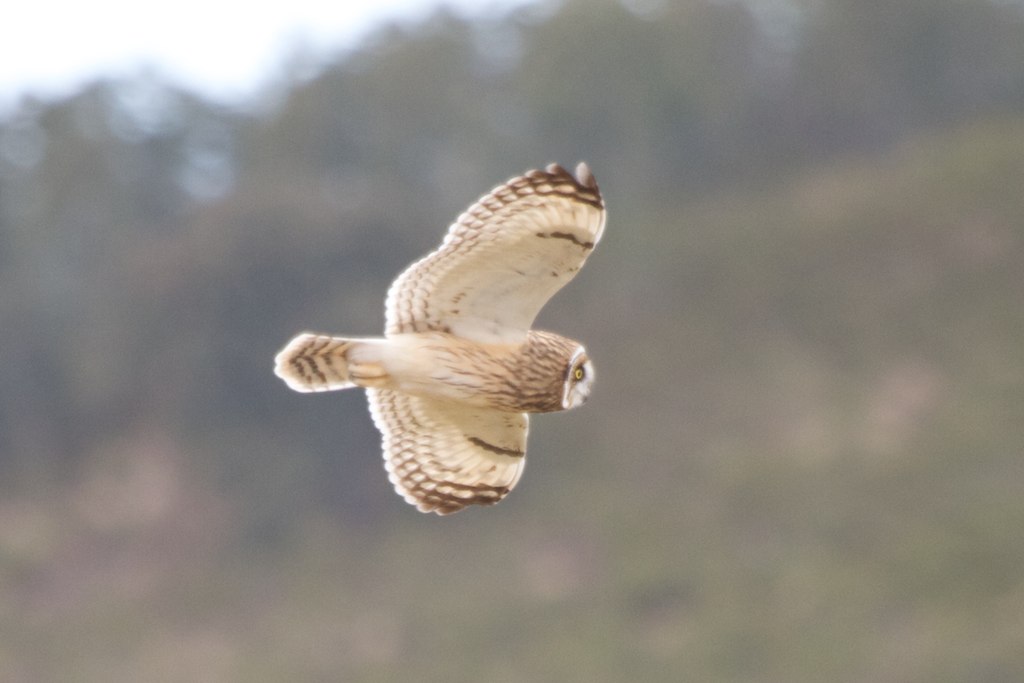
Photo of a pueo on Hawai’i Island by HarmonyonPlanetEarth – Pueo (Hawaiian Owl)|Saddle Rd | 2013-12-17 at 17-45-012 Uploaded by snowmanradio, CC BY 2.0, https://commons.wikimedia.org/w/index.php?curid=30241884.