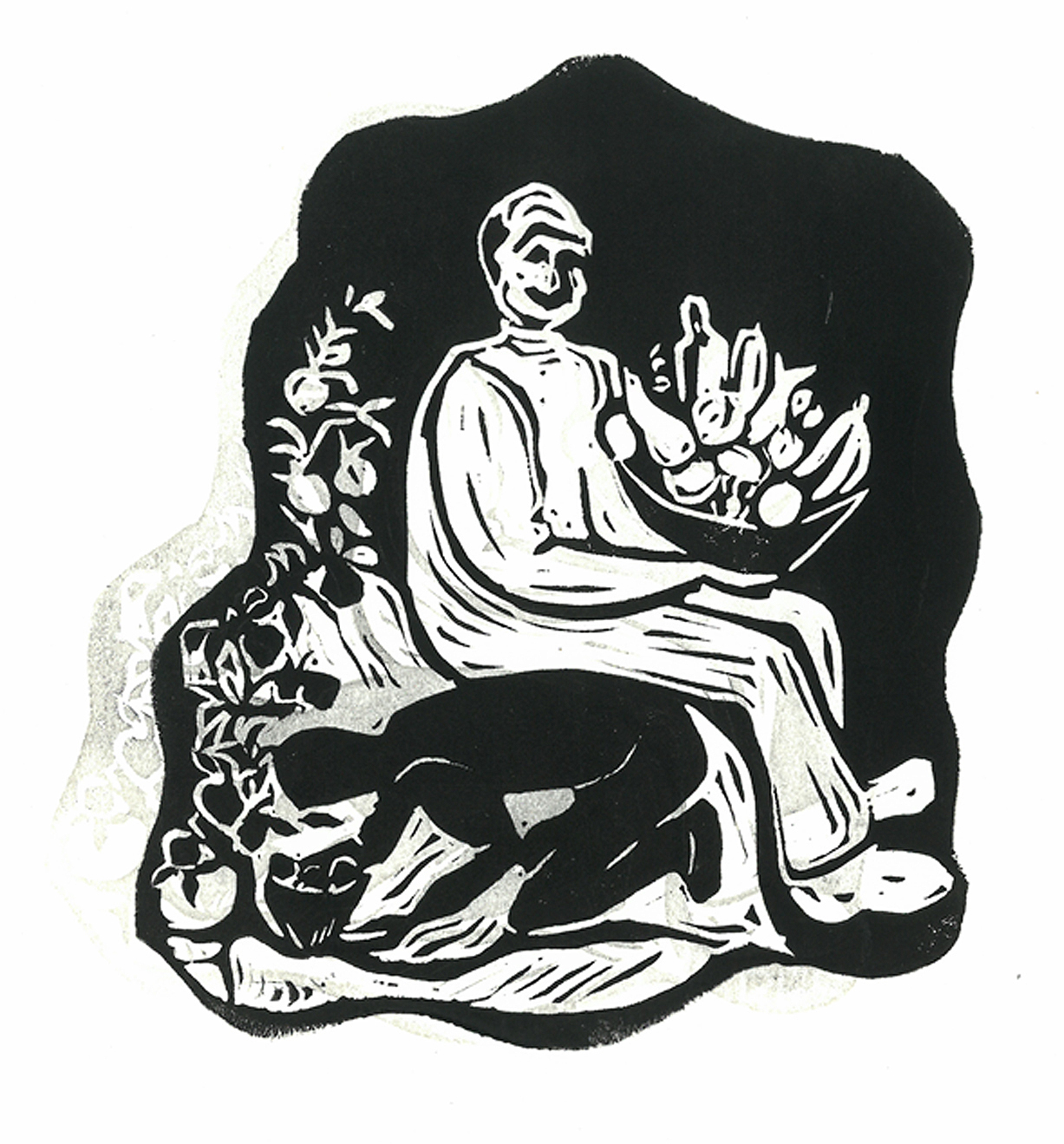
[Jesus said,] “I am the living bread that came down from heaven. Whoever eats of this bread will live forever; and the bread that I will give for the life of the world is my flesh.” – John 6:51
I, well…. Jesus, I do not approve.
The metaphor is… gross. For me, the living bread is molding in the back of my refrigerator. Whoever eats that bread may never die because the penicillin analogues within it will suffice to sweep the viruses and bacilli away.
The metaphor is gross. Not stopping there, you up the stakes, from moldy bread (OK, my imagery) to feast of cannibals (and that, my Savior, is entirely on you). Though not quite two millennia have passed with broken bread/Christ’s body, it’s still a foul thing to say.
The metaphor is gross, not just for what it pictures, but for what it then demands. Your flesh, our bread? Then you are what sustains, on you we must rely, in you we find our nourishment, in you we live our life. No wonder they protested, knowing that you claimed the place and power of God.
The metaphor is gross, the message so demanding, that despite my many years of faith, despite my years of leadership within the Church, the gathering we grossly call your body, I still hesitate, still wonder: Can a human body really mediate for God? Oh, I believe, but help, I pray, my unbelief.
A poem/prayer based on John 6:51-58, the Revised Common Lectionary Gospel Reading for Year B, Proper 15 (20).
Be angry but do not sin; do not let the sun go down on your anger, and do not make room for the devil. – Ephesians 4:26-27
Jesus, I’m banging my head against a wall here… (Figuratively. I’m not banging it literally… yet…) Truth and gracious words and tender hearts are not winning the day.
In a global pandemic, governors forbid that schools require that their students learn in masks. For God’s sake, why? Are we to be instructed by a flood of death?
Death of children, death of parents, death of uncles, aunts, kupuna. An unmasked Masque of the Red Death, a viral dance through classrooms, buses, homes, cafes, churches, and… through mortuaries.
Oh, look, as patients struggle for a breath and hospitals require more beds and look, the dying count is rising, too, and truth and gracious words don’t cut it.
How could we possibly grieve the Holy Spirit more than with this wholesale exercise of folly, denying the urgent summons of her wisdom, favoring the clarion call of limitless greed?
For greed has won the day, mammon taken the prize, to summon workers back to risky work, their children back in virus-sharing schools, so owners profit more than they will pay.
The cause of education? That’s a laugh. We find that educators are not valued for the things they teach our children – but to keep them while their parents work.
Six hundred fourteen thousand dead in this country alone; four and a quarter million dead around the globe and some still claim the danger and the cost are fiction.
A falsehood that belies that we are truly members of one body, interwoven over oceans, nations’ borders, and our prejudicial, harmful acts,
Connected not just in pandemic but in ordinary time, connected because the suffering of one will lead to suffering for all.
We do not imitate our God in truth. Though Christ, in love, gave himself up, we still insist on offering up more lives for lives, for greed, for power, for evil.
A poem/prayer based on Ephesians 4:25-5:2, the Revised Common Lectionary Second Reading for Year B, Proper 14 (19).
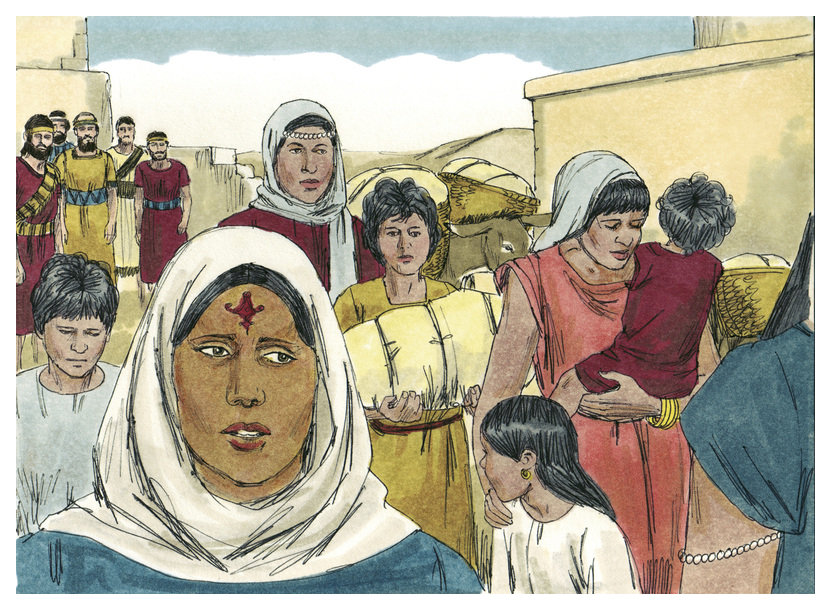
Then Moses said to Aaron, “Say to the whole congregation of the Israelites, ‘Draw near to the LORD, for he has heard your complaining.'” – Exodus 16:9
May I have the form, please? Thank you.
[Divine Complaint Form: Form 2, Revision 4,917,824,718]
[For Internal Use Only: Complaint Reference: Exodus 16]
Complainant: Hebrew Refugees
Complaint Date: Now
Complaint Received and Delivered by: Moses and Aaron
Complaint Type: [Checkbox] Hunger
Desired Timeframe for Response: [Checkbox] Immediate
Related Previous Complaints: Enslavement, legal murder, tasked with making bricks without straw, military pursuit, bitter water.
Disposition of Previous Complaints: Emancipation, murder now illegal, emancipation, military pursuers overthrown, water made drinkable.
Further Factors in Current Complaint:
While warned to provide ourselves with unleavened bread – there was not time for it to rise before fleeing Egypt – we did not have time to bake enough to provide for a journey which has now extended to forty-five days. The people are camped in a wilderness without bread ovens, with questionable amounts of firewood, with uncertain water sources, without adequate cooking oil, without flour, without mill stones, and without grain.
Further, we are unhappy with our leadership. They don’t seem to have plans for reliably obtaining food or water, and we are not confident in their ability to navigate through this wilderness to our destination in Canaan. It could take us forty years at this rate.
While the disposition of previous complaints tends toward confidence, the simple truth is that we will not survive without a reliable source of food. We do not accept that we are free only to starve.
[For Internal Use Only: Resolution of Complaint: Manna.]
[For Internal Use Only: Notes on Resolution of Complaint:]
[They didn’t know what it was.]
[For Internal Use Only: Notes for Future Planning:]
[Lay in a forty year supply.]
A (semi-)poem/prayer based on Exodus 16:2-4, 9-15, the Revised Common Lectionary First Alternate Reading for Year B, Proper 13 (18).
Community Concert of July 23, 2021 – Clicking “Play” jumps to the beginning of the song, “Journey Round a Star.”
As noted in the video, I am one of those people who will wish others a good trip around the sun to honor their birthday. This song takes up that theme.
They’ll put billionaires in space, because they think they can afford it. But this is Spaceship Earth; we’re already aboard it! Sing out… as we mark the day We came into the world and were on our way.
[Chorus]
All aboard for a journey round a star. Stand still all you like; even so you’re traveling far. All aboard for a trip around the sun. Celebrate the days since your journey begun.
Each you is unique, you are one among billions And each circuit of Sol… you’re a soul worth gazillions. Sing out… You’re a creature of worth. You’re a child of blessing. You’re a child of Earth
[Chorus]
Revel in joy; Loved is what you are. A star among the planets, orbiting a star. Sing out… Loud and clear. Sing out… Launch a new year.
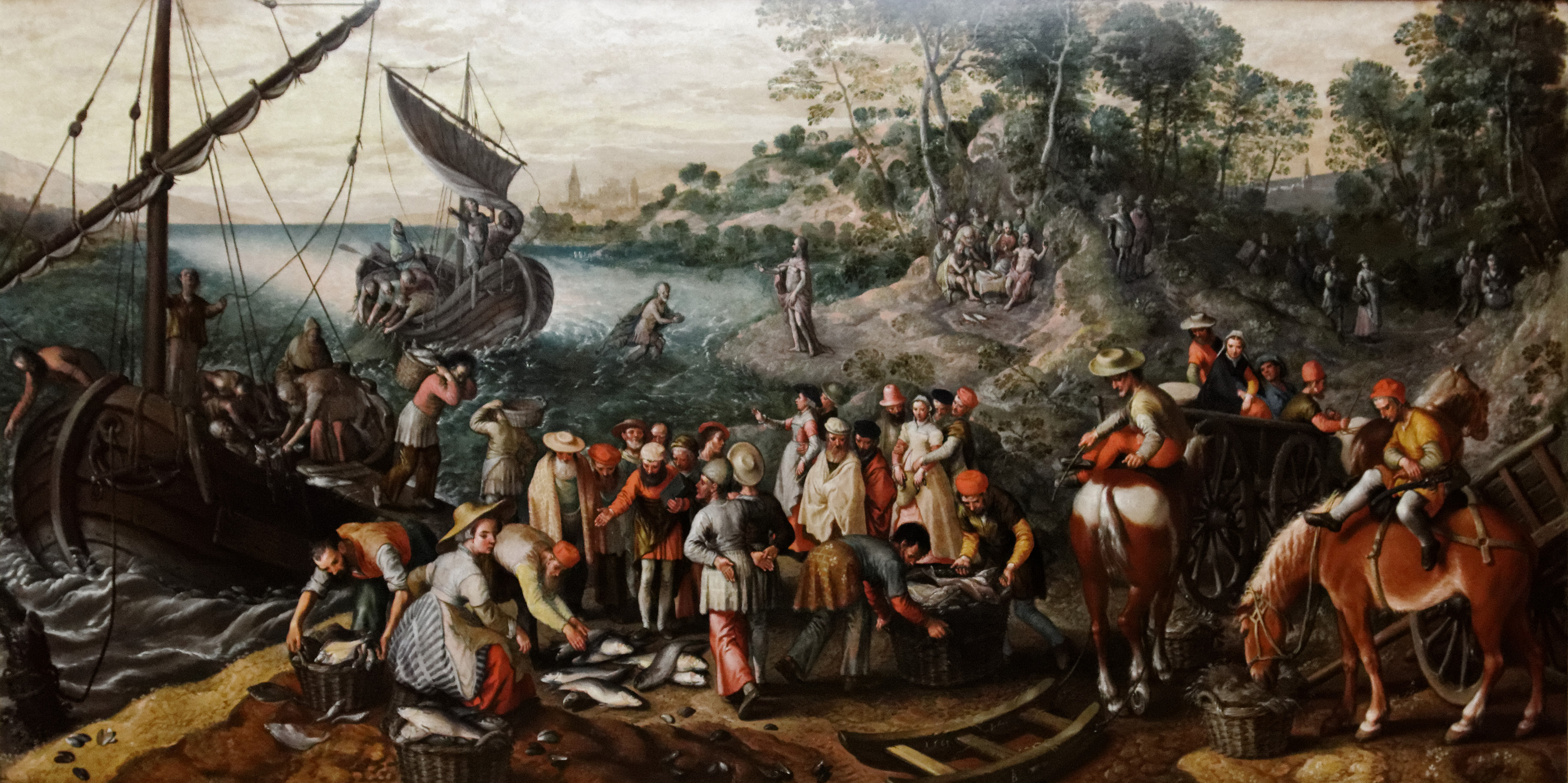
Then Jesus took the loaves, and when he had given thanks, he distributed them to those who were seated; so also the fish, as much as they wanted. – John 6:11
A miraculous feeding? Really, Jesus. Try something original instead.
Moses ate manna, and before him Joseph’s dreams kept fed a nation. Ruth ate and found a home. David ate the sacred bread he shouldn’t.
Elijah and the widow ate from ever-flowing jars. Later Elijah ate the bread baked by an angel. Elisha fed his neighbors with the meat of oxen That he left behind to follow Elijah’s call.
Oh, Elisha liked a party! Feeding people right and left. Ever-flowing oil to sustain another widow. Flour to nullify the poison in the stew. A hundred men fed with the twenty barley loaves.
Miraculous feeding? Really, Jesus. It’s like you copied out the words yourself. Five thousand, I admit, is better numbers, But I cannot say this miracle is new.
What’s that? I’ve missed the point? Oh. Yes. I guess I did. For, new or not, the people Have been fed.
A poem/prayer based on 2 Kings 4:42-44 and John 6:1-21, the Revised Common Lectionary First Alternate Reading and Gospel Reading for Year B, Proper 12 (17).
I’m busy with the UCC’s General Synod this week, so I’m reading a poem that has just been published in Pitching Our Tents: Poetry of Hospitality. It’s a fundraiser for the Peace Cathedral in Tbilisi, Georgia.
Here’s a transcript:
The first thing I’m thinking is how grateful I am to the Rev. Jonathan Roach, who will be filling the pulpit at Church of the Holy Cross this coming Sunday. I’m grateful to Jonathan for his time, but even more for the wisdom and insight that he brings to the message that he’ll share this coming Sunday. I know I look forward to watching the recording.
The reason that I won’t be in the pulpit is that this week I am a delegate to the General Synod of the United Church of Christ. The last plenary, in fact, occurs during our worship service and I seriously can’t be in two places at the same time. General Synod this year is being held online, via the Internet, so I won’t actually be going anywhere further than, oh, this desk right behind me. Still, it does mean that I will be spending a number of hours in committee meetings and in plenary sessions, and so therefore, rather than try to share a Scriptural reflection this week, I’ve instead turned to a small book that recently arrived in the mail. It’s a chapbook, that means a short book (a new word for me). It’s called Pitching Our Tents. It’s edited by Maren Tirabassi and Maria Mankin.
The book is an effort to raise funds for the Peace Cathedral in Tbilisi, Georgia. That site dedicated to peace is attempting to expand, to provide a space for a Jewish synagogue and for a Muslim mosque, called respectively the Peace Synagogue and the Peace Mosque. It’s a book full of poetry, and among the poems is one of my own. I was so flattered when Maren Tirabassi extended me the invitation.
Maren has been reading some of the poems from this chapbook on her Facebook page. She also read one of mine and if I can manage to find the link I’ll include it.
But I did want to read my own poem for you. The title is “August 28, 2017,” and it is based upon a real incident that occurred when an ecumenical – interfaith – group of people chose to witness for peace and love and justice for people of all races.
August 28, 2017
Grass glowing green, sky beaming blue. Sun streaming down upon the figures stretched along the sidewalk, bearing signs inscribed upon their neon glow that “Racism is sin.” “Justice for all.” “Aloha not hate.”
The same sun heats the sober sable garb of Buddhist priests and Christian clergy, glints from clerics’ collars, shines from smiles of Latter Day Saints and Unitarians, of Anglicans and followers of Amida.
The sun has blessed this gathering of witness to the spectrum of embraced humanity because another gathering beneath Virginia’s sun had stormed, consumed a human life, to magnify their power to oppress “the other.”
Does the sun see shaka signs displayed as cars drive by, or hear the horns that sound in affirmation? Does the sun hear voices raised in rage against the signs of hope? Does it hear the words of poison spat again?
UCC and MCC, Hongwanji and Quaker hear the calls of violence and know: until the fury fades, while race and faith are used as reason to oppress, the signs must wave beneath the sun in witness
To another day, when tents are pitched beneath the oaks of Mamre and the traveler and sojourner find peace.
From Pitching Our Tents: Poetry of Hospitality, edited by Maren Tirabassi & Maria Mankin
You can purchase this book – and I have no problems in advertising it because I’m not actually benefitting financially from this in any way. It is fully a fundraiser for the Peace Cathedral and the Peace Synagogue and the Peace Mosque. Go the Alliance of Baptists website and look to donate there for the Pitching Our Tents: Poetry of Hospitality (Note: the suggested gift is $10). You can find it on Amazon to have it printed and mailed to you. But also you’ll find that you can get it electronically. If you’re looking at this at either the ordainedgeek.com or the holycrosshilo.com websites, there will be links in the text to help you find this book.
That’s what I’m thinking. I’m curious to hear what you’re thinking. Leave me your thoughts in the comment section below; I’d love to hear from you.
By the way, did you know I have a YouTube channel? I do. It’s where live stream worship from Church of the Holy Cross lives, as well as musical performances and occasional appreciations of the beauty around me. Oh, right: and a weekly Scriptural reflection called What I’m Thinking. Feel free to check it out!
She went out and said to her mother, “What should I ask for?” – Mark 6:24a
What a triumph! What a dance! The rumbles of applause! The smiles of delight! The air is barely filling up my heaving lungs as I give honors to the cheers.
Reward! A gift! My father wishes me to have a gift! But what? My breathing has not slowed, my mind is all a-whirl as surely as my limbs where whirling just a moment past.
To mother then: “What shall I ask? What gift?” She looks nonplussed. Then suddenly a smile, hardly pleasant, but a smile resolute, has shaken out the stillness of her face.
“Ask, daughter, for the head of John the Baptist.” What? Can I believe my ears? My head is twirling with a disbelief that my young life has danced so joyfully for death.
I see no hesitation in her glance that darts upon the king. His look of shock has shaken quickly to a look of… power… and a hint of admiration for the queen.
Well, then. I choose: “Bring me the head of John the Baptist on a silver tray,” I say in voice that only trembles with exertion. The king my father nods and sends the man.
We watch our faces, back and forth, we three, to see if one will blink, recall this fatal course. None has. None does. None will. And so the baptizer will take his bath of blood.
The head that lies before me is expressionless, the platter spattered in carnelian. Now king and queen regard no more their dancing daughter. They nod once more. The deed is done.
A poem/prayer based on Mark 6:14-29, the Revised Common Lectionary Epistle Reading for Year B, Proper 10 (15).
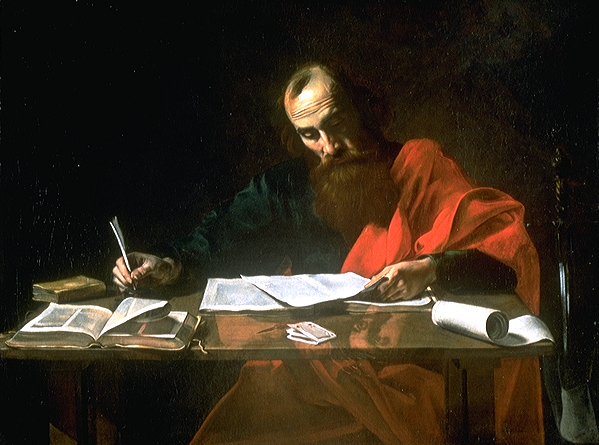
But if I wish to boast, I will not be a fool, for I will be speaking the truth. – 2 Corinthians 12:6
Which is it, Paul? Which is it, God? Foolish boasting from a boasting fool? Or truth that, shared, inspires? Truth that, shared, encourages?
I wish I knew.
I am, perhaps, more conscious of my weakness than Paul was of his strength. I doubt the exceptional character of my revelations (let alone my self).
There is a hollowness inside that hollers, “I am great!” and echoes, “I am empty!” and which is it, or both?
I wish I knew.
What can I do but echo the apostle who expressed himself content with weakness (I’m not sure I believe he was), and begged the Holy Spirit then to fill
The empty spaces, tired places, of the weary body, of the weary mind, of the weary soul.
A poem/prayer based on 2 Corinthians 12:2-10, the Revised Common Lectionary Epistle Reading for Year B, Proper 9 (14).
“[Jairus] begged him repeatedly, ‘My little daughter is at the point of death. Come and lay your hands on her, so that she may be made well, and live.'” – Mark 5:23
“Immediately aware that power had gone forth from him, Jesus turned about in the crowd and said, ‘Who touched my clothes?'” – Mark 5:30
It’s not complicated, Jesus, it’s urgent. My daughter/son/companion/father/mother needs You. Just You. Only You. They need You now.
Here I am. I’m on my knees. My friend/lover/spouse/inamorata will not survive without You. Just You. Only You. They need You now.
Don’t pause. Don’t dawdle. Don’t turn aside. My grandson/granddaughter/neighbor/acquaintance needs You to touch them. Just You. Only You. They need You now.
Don’t stop. Don’t heal anyone else. Don’t ask questions. My aunt/uncle/grandmother/grandfather/cousin needs Your time. Just You. Only You. They need You now.
Seriously, Jesus. How am I to wait for You when someone I love needs You. Just You. Only You. They need You now.
Oh. Well, that’s all right then. How was I to know that You make Your own time?
A poem/prayer based on Mark 5:21-43, the Revised Common Lectionary Gospel Reading for Year B, Proper 8 (13).
Pitching Our Tents: Poetry of Hospitality Edited by Maren C. Tirabassi & Maria Mankin
Pitching Our Tents: Poetry of Hospitality is a special project of Maria Mankin and Maren C. Tirabassi supporting interfaith reconciliation and shared ministry in the Middle East. Specifically, the book will help fund the Peace Cathedral (Baptist) in Tbilisi, Georgia, in its quest to build spaces to include a small synagogue and a small mosque beneath its roof.
The chapbook (I had to look that up; it’s a short paperback booklet) features the work of thirty-two contributors from seven countries beyond Georgia. Their poems rise from roots in experiences of inclusion and connection. I am honored to be among the writers.
Maren Tirabassi writes, “Peace Cathedral in the Republic of Georgia was established as First Baptist Church of Tbilisi in 1867. Its history is full of dangerous activist stands, and it has been involved in interfaith work for more than twenty years, trusted by Muslim, Jewish, Yezidi and other religious traditions, in a context where the more dominant Christian culture often responds violently against minorities. They are constructing a mosque and a synagogue under the roof of their church building to turn it into a spiritual home for Abrahamic faiths. In addition, there is a Centre for Interfaith Dialogue, an interfaith adult library and a children’s library with programming and summer camps. Their pilgrimage program brings people to visit the Republic of Georgia to learn about the hopes and struggles of people of all of these faiths.”
In these days of complicated publishing, obtaining a copy of the chapbook is fairly straightforward – making sure that the purchase funds the Peace Project may be a little more difficult. Follow these steps:
1. Go here to donate to the Peace Cathedral via the Alliance of Baptists. The suggested gift is $10.00.
2. To pay by credit card, select 1. On the second line of the form, where it states, “Other Designation,” please write in Peace Project – Tbilisi. To pay by check, choose 3, and write in Peace Project – Tbilisi on the Memo line.
3. Use this Book Funnellink to receive your free electronic copy of Pitching Our Tents: Poetry of Hospitality with a choice of e-book formats or a PDF, in thanks for your support of the Peace Cathedral.
4. If you would like a print copy, it is available on Amazon. The cost is as low as Amazon will allow (this only covers the printing cost). The authors do not receive royalties from this, nor will the proceeds go to the Peace Cathedral, so if you’d like to support them, please follow the donation steps above.
Published
In some ways I consider this my first foray into being a published author. I mean, look: I’m in a book! In truth, though, I’ve been a published author for a long time. I spent seventeen years writing for the Connecticut Conference of the United Church of Christ (now part of the Southern New England Conference UCC), eventually becoming senior publications editor. My by-line appeared on newsprint and on glowing screens, and it has also appeared in United Church News.
My work as a poet has appeared almost entirely on my personal blog. So is that… published? Well, I think it is. It’s potentially visible to far more people than ever saw my columns in the print editions of ConnTact. I grant you (with a ruleful smile) that the readership has, well, not risen to its potential.
What sets this moment apart for me is not the format or the publisher, but the invitation. I have admired the work of Maren Tirabassi for longer than either of us care to admit. Her compliments on my work published in this blog have filled me with deep gratitude. To have her ask me to contribute… Well. I practically fell over myself to say yes. And write something.
Behind the Poem
Photo by Eric Anderson, August 28, 2017
For the moment, I’m not sharing the poem here. I will eventually, unless I forget, which is possible. I encourage you to gain access to the poem by supporting the Tbilisi Peace Project with a donation; that’s the purpose for which I wrote the poem in the first place. I will, however, tell something of the story behind the poem.
On August 12, 2017, the “Unite the Right” rally sparked racist violence to Charlottesville, Virginia. Marchers chanted Nazi slogans against non-whites. They chanted slogans targeting Jews. They raised the flags of slave-holding and rebellion. One sped deliberately into a crowd, and Heather Heyer died.
The nation’s leadership failed to condemn the racist and anti-Semitic platforms of the marchers, famously claiming there were “good people on both sides.” Demonstrations sprung up around the country condemning the white supremacist foundations of the Charlottesville rally, calling for repudiation of racist ideology, policy, and activity. Among the places was Hilo, Hawai’i. Interfaith Communities in Action gathered a small group for an hour’s roadside sign-waving on Monday, August 28, 2017.
What the planners, including me, had not expected was a counter-protest.
A smaller group gathered across the street, purportedly protesting against abortion but with signs, speech, and a bullhorn clearly opposing the anti-racist stand of ICIA and its participating communities. They chose one name to shout, taking it from the press release announcing the rally. That name was mine. I heard it clearly shouted in tones of threat.
A few of the counter-protesters even ventured across the street to confront us directly. There was no violence, but for weeks afterward a photo of myself appeared in the group’s materials, identified as a false minister. I reflected on the events in a Pastor’s Corner in Church of the Holy Cross’ The Messenger.