All Saints 2018

EPSON MFP image

My mother and father in 1962.

I’ve seen a number of “Name your saints” queries this year. If they’ve been common in previous years, I missed them. Call it selective attention, or selective ignorance, or… something.

This year I noticed.

At Church of the Holy Cross, we observe All Saints Sunday on the weekend prior to November 1st (other churches seems to favor the Sunday after). We have a well established ritual. We name those who have died in the year since the last observance, toll the church bell, and friends or family members come forward to light a candle.

I’ve always been struck by the deliberate pace of this service. For most of my career in New England, we in the liturgy-crafting profession have labored for efficiency in worship, brevity where at all possible. “Keep the service moving,” we tell ourselves.

Not here.

Our Chair of Deacons read each name slowly, clearly, deliberately.

Then, the crashing tone of the bell flowed in from its perch just outside the sanctuary.

Then, a pause.

Then, some person, some people, stood from their seats and bent their steps forward. They stood before the unlit candles, took one, or two, and bent their tips into a waiting flame. They placed the glowing taper in its row, and maybe paused… before returning to their pew.

They sat.

And only then did the next name sound.

When all the names had been read, the congregation queued, returning to the sanctuary’s front, to light additional candles in memory and love and honor of those who had died in prior years. When they had finished, and I took my place to speak a final prayer of love and sorrow, the sanctuary glowed in daylight and in candlelight.

I’ve always lit a candle or two during that last portion of the service. Friends, family members, church members have departed from my life and gone to God. I’ve honored them with a flame or three.

This year, however, I stood for a name.

Our Chair of Deacons read his name: “The Reverend Lynn Anderson.”

EPSON MFP image

A family vacation in the summer of 1982.

The bell tolled.

I stood. I hadn’t far to walk — I’d come down from the chancel and taken a seat in the front pew — but I took those few steps to the taper-laden table and chose my candle. My hand trembled as I held the wick to the flame. I placed the candle in its holder. I paused. Then I took the few steps back, and sat.

My heart had broken open.

My father, Lynn Anderson, died on July 1st. He was eighty years old. He’d grown up in the hills of western Massachusetts, where his body now rests. The grandson of a Swedish immigrant, he was the first of the family to attend college. He married my mother, Maren Simonds, in 1962. He went on to earn a Ph.D. in mathematics education from the University of Michigan. Mom, with a master’s degree in biology, ran tests in a medical laboratory.

He and my mother loved each other — and they frustrated each other, too. In the 70’s they chose to do something about it, and deepened not just their relationship with one another but their parenting to their sons. They went on to become national team resource couple for Marriage Encounter, offering others what they so prized.

Shortly after I learned to drive, my mother had a melanoma growth removed. I remember thinking it was convenient that I had my license just when she needed a chauffeur. The cancer, however, had already hidden elsewhere. In the spring of 1983, I came home from college once to visit her in the hospital after a tumor paralyzed her. I came home a second time for her funeral.

I’ve been lighting a candle for her in my heart — whether I used that metaphor or not — for over 35 years.

Dad had to finish raising two sons, one in college and one in high school, without the love of his life, the love he’d worked so hard to nurture and preserve. He succeeded. We each got our college and graduate degrees (Christopher emulated Dad and earned a Ph.D.). We both married. My wife and I blessed him with his grandchildren.

In the meantime, he also heard the call of God, and turned from classroom teaching and school administration to the ministry. He got his M.Div. eight years after I got mine. He served small churches in Connecticut as an interim pastor — long tenures (for an interim), reflecting the challenges of finding pastors for small congregations. After retirement, churches sought him as a favorite supply preacher when their minister was away.

Dad and Shirley 2009

The Rev. Shirley Anderson and the Rev. Lynn Anderson

He also met and married the love of his life — again. During his seminary years, he gave his heart to Shirley Sherman and she gave hers to him. They filled one another’s spirits. They shared house and home.

So there are my treasured saints this year. Others called them Lynn and Maren, Dr. Anderson and Mrs. Anderson, Reverend Anderson. I called them Mom and Dad.

My heart breaks that they are gone. My heart sings because they lived.

And I know that my Redeemer lives, and in my flesh I will see God. (Job 19:25-26)
 

In the Silence

DSC_0198

“After that no one dared to ask him any question.”
— Mark 12:34

What had you to say that was so special, Jesus?
Not much. Just: “Love your God,” and “Love your neighbor.”
Hardly original. Hardly profound. Hardly unheard,
or unthought, or unsaid, or unique.
Not much. Just: “Love your God,” and, “Love your neighbor.”
That. That is all.

And after that no one dared to ask you any question.

Ha! I’ve got questions, Jesus, yes, I’ve got questions.
Like: “What does it mean to love God?” After all,
this Blessed Creator needs nothing of me.
What have I to offer the Author of
Everything? “Love.” Love? Seriously, love?
That. That is all.

And after that no one dared to ask you any question.

Ha! I’ve got questions, Jesus, yes, I’ve got questions.
Like: “Who is my neighbor?” (Oh, wait, you answered
that one, so…) “What does it mean to love
my neighbor?” Got you there, now didn’t I?
Except, of course, I know when I’ve been loved…
That. That is all.

And after that no one dared to ask you any question.

Neither, then, my Savior, will I dare.
Why? I know the answers. All you did
was call me to the roots, the ground, the soil
of my faith, the seed which bears within it
the flower and the fruits of… love.
That. That is all.

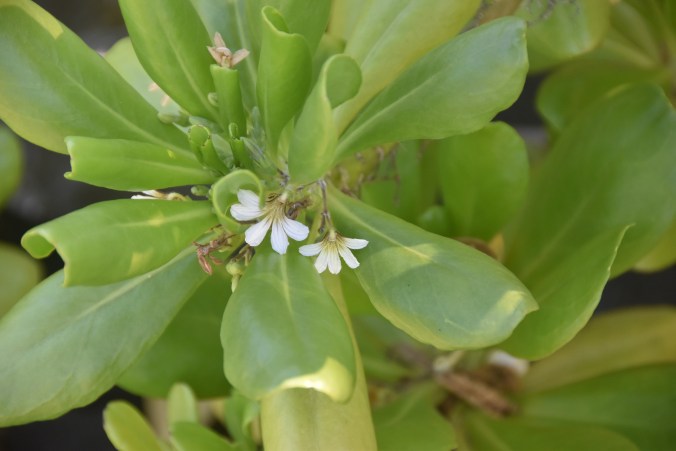
A poem/prayer based on Mark 12:28-34, the Revised Common Lectionary reading for Year B, Proper 26. The commandment to love God is found in Deuteronomy 6, and the commandment to love the neighbor is found in Leviticus 19.

Photo of a seaside naupaka in blossom by Eric Anderson.

The Man Who Defined His Healing

DSC_0469

O, let me play God, God.
Or at least let me play Jesus
in homage to his own classic performance
as Jesus of Nazareth in:…
The Man Who Defined His Healing!

“Jesus, Son of David, have mercy on me!”
OK, that wouldn’t be my line, but what a line it is!
What better way to grab for Christ’s attention
(my attention, if I get the role)
than to use that risky title of Messiah?

And then, O God, I’ll hear the shushing crowd,
that doesn’t want to risk the Roman wrath
and refreshing lack of discrimination
in the application of most deadly force —
they’ll kill everybody —

with cool consideration wrinkling my brow.
I’ll let it build — “Have mercy!” “Oh, be silent!” —
and at the height of tension, stop, and say,
“Now call him here.” Take note, dear God:
“Now call him here.” He takes those steps himself.

As word arrives, he rises — leaps, perhaps
(You’re the director) — in my direction,
guided by the helpful (and confusing) shouts
of those around, in chaotic compensation
for the eyes that cannot lead him here.

And here he is, brought here himself.
He made it happen, instigated what’s to come,
cried out for me, cried my name,
cried my title, cried for mercy. And now,
what can I do but ask: “What do you want?”

It might be healing for his eyes,
it might be dinner for his family,
might be that someone remember his own name,
not just the patronymic
“Bar Timaeus.” “What do you want?”

As he names it, God, to see again,
You can let Your camera linger
on my softening eyes, compassion and
respect commingled, love in echo
of Your own. For power, though:

we’ll have to count on Your Most
Special Effects Department for its work.
And then, ’tis done. He has achieved
the goal for which he struggled, shouted, strode.
With his healed eyes, he’ll see the tears in mine.

I hope, director God, that You won’t choose
to pull the camera back to show the crowd,
but rather, as they cheer, let the picture linger
on this man, and me, and pan down to our feet
as, side by side, we take the Way together.

A poem/prayer based on Mark 10:46-52, the Revised Common Lectionary reading for Year B, Proper 25.

The underexposed photo of a sunset in Kona was taken by Eric Anderson on October 13, 2018.

Collapsed

DSC_0847

Summit summer-shaken
Rocks now resting
Like tumbled tumuli
Buried in basalt.

Lava languishes
Column cobble-choked
Yet vapor venting
Exhaust ethereal.

Caldera collapsed:
Like a soul subsiding,
Deeply dismayed,
Grieving and groaning.

“Give up your gifts,”
Unwelcomely uttered,
“Present to the poor,”
Displeasing decree.

You discourage discipleship,
Demanding Deliverer,
Boost bar to barrier,
from fracture to fence.

You ask all my all,
My self and my substance –
So my character crumbles,
And my features fall.

Just one hope for the helpless,
To comfort your companions:
The preposterous for people
Is the greatness of God.

A poem/prayer based on Mark 10:17-31, the Revised Common Lectionary reading for Year B, Proper 23.

Photo of the Kilauea caldera – showing rockfalls from the earthquakes and collapses of the summer of 2018 – was taken by Eric Anderson on October 8, 2018.

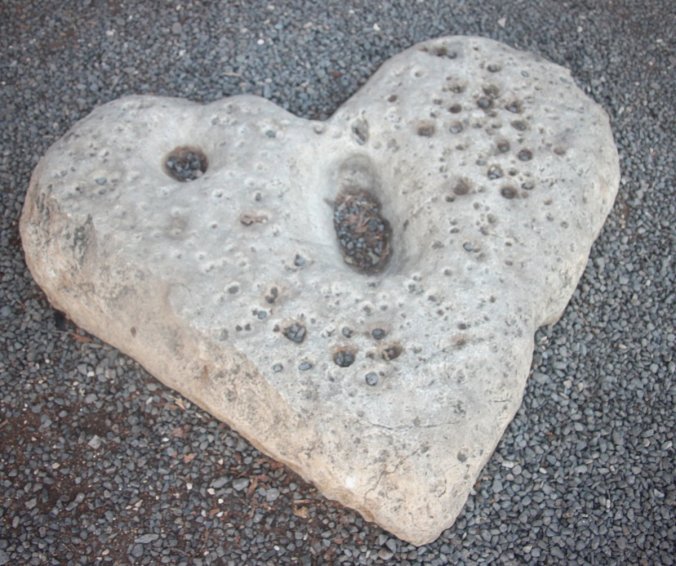
Hardness of Heart

Heart_of_stone_Israel“Because of your hardness of heart
he wrote this commandment for you.”

Where is my heart hard, O God?
I know, to my shame, of my hardness
of heart to one who I loved. Love ends
in pain: pain I inflicted on myself.

“Because of your hardness of heart
he wrote this commandment for you.”

Where is my heart hard, O God?
Am I so conditioned to suffering
and sighs that I turn away? A hard heart
would break at the wails of caged children.

“Because of your hardness of heart
he wrote this commandment for you.”

Where is my heart hard, O God?
Must I shout “Not me!” when they cry,
“Me, too!” No fingers point my way…
Unless they point toward a frozen heart.

“Because of your hardness of heart
he wrote this commandment for you.”

Let the little children come to me, you said.
Let the women come to me, you said.
Let the suffering and the sick come to me, you said.
Let the broken, the poor, the unprivileged.

Now I come, my Savior, to offer my hard heart.

A poem/prayer based on Mark 10:2-16, the Revised Common Lectionary reading for Year B, Proper 22.

The photo is of a beach sculpture in Israel. Photo by Peter van der Sluijs. Used by permission under Creative Commons license.

The ‘Apapane’s Own Song

Apapane2018

This morning’s story is about a bird, and I imagine that you can guess which one. What bird do you think it is?

[Chorus of “‘Apapane!”]

That’s right. This story is about an ‘apapane. I don’t know why I like these birds so much – it wasn’t the first bird I saw after I moved to Hawai’i – but I know I like them a lot.

When she was first hatched, this ‘apapane didn’t sing. Neither did her brother or sister. In fact, they made a squawking noise to show that they were hungry, kind of like this: [Pastor makes squawking noise. One of the children makes a squawking noise in response.]

Mother? I think somebody’s hungry.

As they grew older, though, even when her brother and sister started to sing, she didn’t. She remained silent as their song echoed through the forest. Her brother and sister encouraged her to sing, and her mother and father encouraged her to sing, and all her aunties and her uncles encouraged her to sing, and she just wouldn’t do it.

She just wouldn’t sing.

Everybody was concerned, so they went to the grandmother – Tutu ‘Apapane – because that’s who you go to when there’s trouble, isn’t it? “Tutu,” they cried, “you must help. Our little one won’t sing!”

Tutu cocked her head to one side, and gazed thoughtfully at the sky through the branches. Then she said:

“Her song is her song to sing, or not to sing. It is her song, and she may sing it when or how she wishes.”

With that answer they had to be content.

To everyone’s surprise, one morning a new voice rang out through the ohi’a trees. She was singing with all her heart and soul.

What she sang, though, was as surprising as the fact she was singing at all. It was a new song. It didn’t sound like the ‘apapane song they all sang. It didn’t sound like the i’iwi song, or the ‘amakihi song, or the ‘omao song, or any other bird they could remember hearing.

They tried to get her to sing the ‘apapane song, but the only sound that rose from her beak was the new song, the one she sang alone.

They were all concerned – her brother and sister, her mother and father, her aunties and uncles – so they went to Tutu ‘Apapane and said, “Tutu, you must help. Our little one is singing, but she is singing the wrong song!”

Tutu cocked her head to one side, and gazed thoughtfully at the sky through the branches. Then she said:

“Her song is her song to sing, or not to sing. It is her song, and she may sing it when or how she wishes.”

With that answer they had to be content.

As time went on, her song became, well, rather popular. Other ‘apapane started to sing it when they thought nobody else could hear. A few of them caught themselves singing in harmony. Sometimes they tried a little counterpoint with her song. Before anybody was quite aware of it, the forest rang with variations on the new song. Despite themselves, the flock grew very pleased.

Until the day she stopped singing.

“Oh, no!” they cried. “We love your song. Sing it with us! Lead us!” But she remained silent.

They were all concerned – her brother and sister, her mother and father, her aunties and uncles – so they went to Tutu ‘Apapane and said, “Tutu, you must help. Our little one has stopped singing!”

Tutu cocked her head to one side, and gazed thoughtfully at the sky through the branches. Then she said:

“Her song is her song to sing, or not to sing. It is her song, and she may sing it when or how she wishes.”

With that answer they had to be content.

It seemed like a long time, but it probably wasn’t so long before a new song echoed through the ohi’a grove. She was singing again, and she had a brand new tune.

Fortunately, the flock had learned Tutu ‘Apapane’s wisdom. They rejoiced in her new song, and they didn’t worry. They sang along – with their classic ‘apapane song, and with her previous melody, and with variations on her new creation. They didn’t even worry when she broke into silence once more. They just waited to see when and how the next notes would fly.

We each have our own song. For some, it might be a song. For some, it might be something you make, or think, or do. There is something unique and special that is your song to sing, your story to tell, your wonder to create.

And that is yours. You choose when to share it, and how. Nobody else can tell you, except if it is causing trouble for others.

I am not telling you that it’s all right to make lots of crayon marks on the wall, OK?

I am telling you that your special creation is yours to share when you feel it’s ready, and as you feel you want to share it. It is your song, and you may sing it when and how you wish.

Photo by Eric Anderson. It has been digitally enhanced to bring out the ‘apapane colors.

In My Imagination

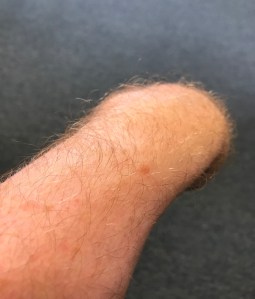
IMG_4582In my imagination…

Without a foot, I take each step
with care, deliberation,
sensitive to balance,
cautious of my pain.

Without a hand, I feel my pulse
within my elbow, feel the zephyr
lift the hairs upon my arm,
feel the power of each embrace.

Without an eye, I turn my head
to see the full horizon, move about
to see each side in fullness,
to see attentively.

In my imagination…

In reality, O Lord, I know
I’d be as careless of your wonders
deprived of eye, or hand, or foot,
as I am careless with them.

Help me become, O Lord,
as my imagination.

A poem/prayer based on Mark 9:38-50, the Revised Common Lectionary reading for Year B, Proper 21.

Forced perspective photo by Eric Anderson, who does have a left hand.

Holy Mountain

IMG_0857

“I lift my eyes unto the hills
from whence comes my help…”
Did Isaiah read those words
when he looked upon Mount Zion
envisioning a peace so great
it changed the natural world?

Did the ragged stones still linger
from the decades-old destruction
of Solomon’s Temple, David’s city?
Or had the walls begun to rise?
Did they crown the mountain’s peak,
bathed with Ezra’s tears?

Did the lions prowl
the fallen stones of yesteryear,
was Zion’s limestone face
turned to the azure sky?
Did grasses wave, or cedar planks
rise from the sacred mount?

For both these worlds exist
in company within the prophet’s words:
the temple shaped by nature,
and the temple raised by people.
Which was, I wonder now, the vision,
and which the visioner’s reality?

A poem/prayer based on Isaiah 65:17-25, the Season of Creation Hebrew Bible reading for Year B, Mountain Sunday. The opening quote is from Psalm 121.

Photo (of Mauna Kea, not Mount Zion) by Eric Anderson.

Decide

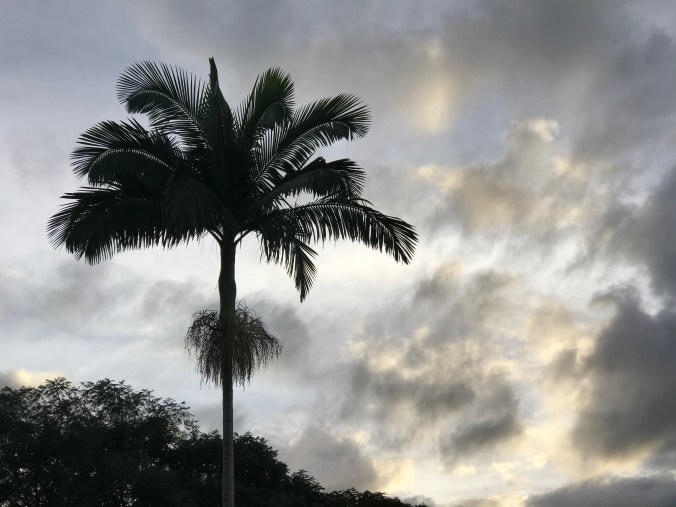
IMG_4477

Oh, it’s an easy choice, O God.

“Because of this the earth shall mourn,
and the heavens above grow black…”

Now that’s what I call an
unattractive option, and since
the alternative before me is:
“The heavens are telling
the glory of God…”
I’ll take Your glory
any day.

Unless, of course, I need
to get from here to there,
in which case I’ll just depart, a bit,
from careful handling of Creation,
gentle dwelling on the Earth.
No, I will swaddle myself in bucket seats
and give my not-so-weary feet a rest
to make that not-so-difficult,
not-so-necessary,
oh-so-arbitrary journey.

And so I will add carbon’s sable
to the sky.

Yes, it’s an easy choice, O God.
Give my Your glory!
Unless it’s inconvenient…

For me.

A poem/prayer based on Jeremiah 4:23-28 and Psalm 19:1-6, the Season of Creation Hebrew Bible and Psalm readings for Year B, Sky Sunday. 

Photo by Eric Anderson.

Do You Wear Glasses, Too?

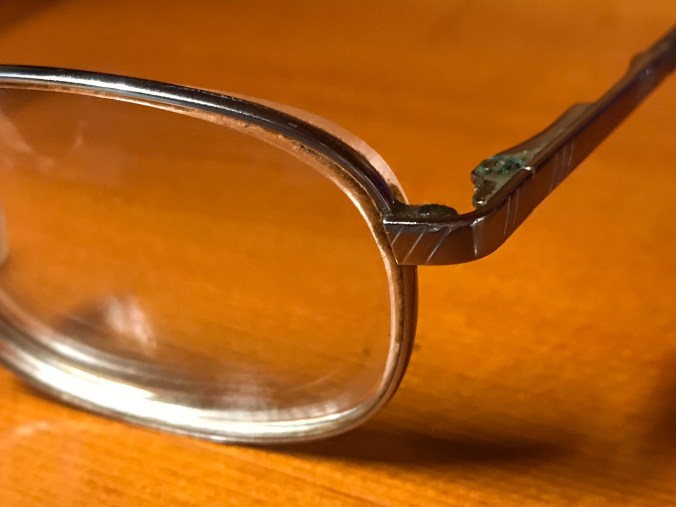
IMG_4537

I am just ecstatic to
be shaped in form divine of You.
Just answer me one question, do:
Do You wear glasses, too?

I’m great with male and female, yes,
community that founds God-ness,
yet my eyes fail a driver’s test:
Do You wear glasses, too?

Imago Dei, that’s for me,
to bulwark pride at royal tea,
and laugh when threatened by the sea:
(but) Do You wear glasses, too?

I’ve seen Your figure’s flowing locks,
seen You nursing, playing with blocks,
seen You carved from ancient rocks:
Do You wear glasses, too?

I’m just an image, oh that’s true,
not a duplicate of You,
so my mistakes will all break through,
(but) Do You wear glasses, too?

The question, really, (and You knew),
is not about Your sight or view
but whether I am part of You

with sight bedimmed
or limbs belabored,
mind bewildered
or heart beset,
with irregularities
too many to name:

Do You wear glasses, too?

A poem/prayer based on Genesis 1:26-28, the Season of Creation Hebrew Bible reading for Year B, Humanity Sunday. For more consideration of what it means to consider disability in divinity, read “Lessons from a Deviation” by Rebekah Anderson.

Photo by Eric Anderson.