Hidden Healing

I Feel Down by Lisa Brank

“I Fell Down” by Lisa Brank

This story begins with some children playing. All was as it should be, that is: just a bit exuberant, just a bit frenetic, just a bit noisy.

OK, maybe it really exuberant, really frenetic, and really noisy. But that’s as it should be.

The ball they were tossing about and chasing sailed right over the head of one boy, who went pelting along after it. He ran so fast that his feet started to run away with him, or perhaps he ran faster than his feet. You know how it is: you suddenly realize that you can’t step out far enough ahead of yourself to stay on your feet.

And sure enough, down he went, splat on the ground.

And of course, the place his knee came down was the place where the rock was. Of course. It always is, isn’t it?

So he got up with some sounds that might have been sobs, and looked down at the dirt and the leaves and the red liquid oozing there. He walked off home with a limp and a groan, and there might have been a tear or three on his face.

When he got home, he found Mom and Dad there, and they did the things that parents do for a child with a skinned knee. They washed it off (and that stung), and they put ointment on it (and that stung), and they put a bandage on it, which didn’t sting, but didn’t actually make him feel a lot better.

What really concerned him was the thought that it might not get better. Even though he’d seen it washed off, and even though he’d seen it the ointment go on, he was sure that underneath the bandage it was dirty and ugly and bleeding. So he’d try to look under the bandage, lifting up just a little, but all he could see underneath was in shadow. It was just dark.

Until the day when the bandage came off. Imagine his surprise when he saw that it wasn’t all dirty and bleeding. New skin was growing where the scrapes had been, there was no sign of bleeding, and the redness was fading away. Over the next days he watched in wonder as the new skin grew, until there was no sign his knee had ever hit that rock.

Sometimes, healing happens where we just can’t see it. Sometimes, it happens where we can. God made us so that things do get better, most of the time. And even then, I think God heals us in ways we just won’t see until God’s finger points it out.

Sun Astonished

St_Peter's_church_-_stained_glass_window_-_geograph.org.uk_-_488217

Photo from St. Peter’s Church, Strumpshaw, UK. By Evelyn Simak, CC BY-SA 2.0, https://commons.wikimedia.org/w/index.php?curid=13011751

Note: I’m now posting my sermons each week on the Church of the Holy Cross’s website. That’s the place to subscribe to see them.

However, I also prepare a story each week “for the children” — knowing perfectly well that it’s for everyone present. I’ll be posting those here.

Today’s story is an adaptation of the use of water in three forms as an image of the Trinity. I’m well aware of its limitations as a theological illustration, but I began picturing the relationship of water with the Sun and… Well, here’s the story.

 When Water and the Sun first met, the Sun spent most of its time being astonished.

There was plenty of reason. As the Sun gazed down from the sky, Water spilled across nearly everything it could see. There were oceans and oceans of Water, sparkling blue, reflecting the Sun’s rays. What a sight!

So the Sun beamed down on the Water (well, that’s what the Sun does to everyone and everything), and the Sun was astonished again. Because clouds began to form between the Sun and the Water, and the Sun didn’t know where they’d come from. They glowed silver in its radiance (except at the edges of the world, where they broke light up into these amazing oranges and reds), and the Sun asked, “Who are you, and where do you come from?”

The clouds replied, “I’m your friend Water, sailing on the air!”

The Sun was astonished.

Soon the Sun had more cause for wonder, because the clouds began to shrink away as water fell from them in streams (they’d come to Hilo, of course). When the clouds cleared, the Sun looked down upon a carpet of white so bright the Sun itself blinked to see it: snow atop the summit of Mauna Kea.

“Who are you,” the Sun asked, “and where do you come from?”

The snow replied, “I’m your friend Water, in solid crystals resting on the mountain!”

The Sun was astonished.

The Sun watched Water melt from the snows, and run glittering down the mountainside. The Sun watched Water leaping and dancing down the falls, turning its sunbeams into rainbows. The Sun watched Water return to the oceans, and leap invisibly once again into the air until it whirled up in clouds.

The Sun was astonished.

But God — God the Creator, God the Begotten One who would be born of Mary, God the Holy Spirit moving over the waters —

God smiled.

A Sliver of Shale

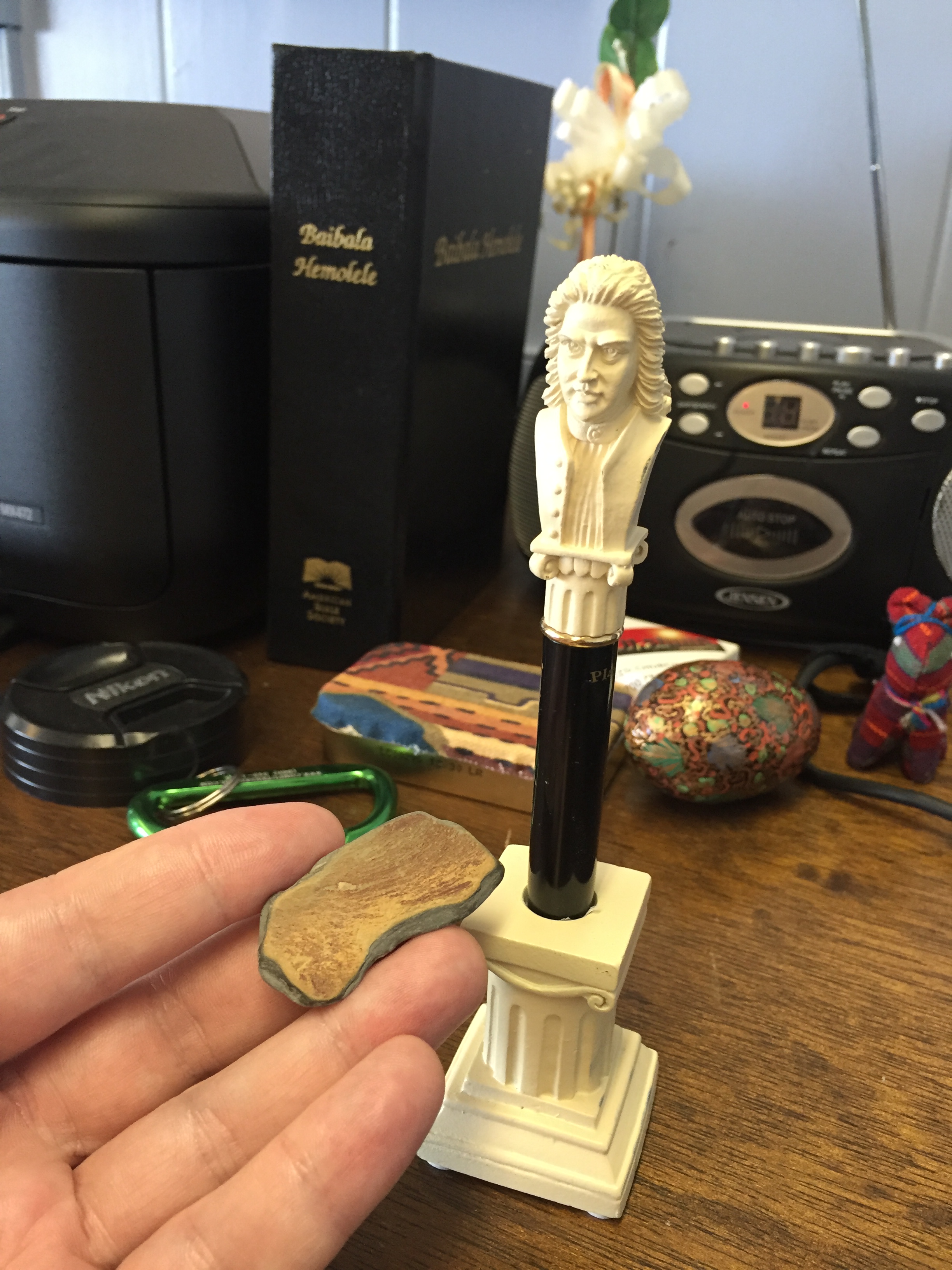
A sliver of shale and Johann Sebastian Bach

A sliver of shale and Johann Sebastian Bach

A sliver of shale
(at least, I think it’s shale),
A ceramic flower,
A vial of sand,
A thank-you plaque,
A pen which bears the likeness
Of Johann Sebastian Bach,
And coffee mugs which range
From “Failte (welcome)”
On to “Pastor”
With scarce a pause
At “Music Dude”;

Photos on the wall,
One hanging in a keychain:

These are
The tributaries
Of memory, O God.

May I ever feel the love
With which they passed
From others’ hands
To mine.

May I ever know the love
They represent
Is echoed, doubled,
Amplified a thousandfold
In You.

Amen.

“Rising Up in Hard to Do” – Sermon for April 17, 2016

IMG_0814

Church of the Holy Cross UCC

Preached at
Church of the Holy Cross UCC
Hilo, Hawai’i
April 17, 2016

Text: Acts 9:36-43

In 2001, Buffy the Vampire Slayer died. On television, that is. The show had been cancelled, and she got a bravely dramatic death to end the series.

But in the fall of 2001, she was raised from the dead in a couple of ways:

First, the show was picked up by another network, something that rarely happens, and there were two more seasons of Buffy the Vampire Slayer.

Second, the character was literally revived in her grave. Resurrected. Called back to life.

In the plot, Buffy’s friends feared that when she died, she’d been imprisoned in some dreadful dimension. It turned out that she hadn’t. She’d been someplace restful and healing; we might even call it heaven. Back in the world, she had to take up her calling again, to go fight monsters. It was actually quite a bit of a shock to her.

So when I read the story of Tabitha, I wonder. Was this woman, whose life was devoted to good works, to giving of herself to her neighbors: How did she feel about being recalled to life? Was she eager to resume her service? Or was she ready to lay down her life and rest in the hands of the loving God she’d served?

The Apostle Paul wrote: “To me, living is Christ and dying is gain.” Of course, he followed the sharing with, “If I am to live in the flesh, that means fruitful labor for me, and I do not know which I prefer.”

In his vision, the author of the Revelation is told that those who die in Christ are blessed, for they may rest from their labors, and their deeds follow them.

Living takes work. Living makes work. Living is work.

Rising up is hard to do.

Yet there is so much rising to do.

I wonder how we will rise up again from this political season. This campaign has been littered with racism and sexism, with personal attacks, with distortions and evasions, with outright unrepentant repeated lies. How will the country revive from this? I don’t know how – and yet we must, if we are to have the country we want to have.

I wonder how those released from prison will rise up. Incarceration doesn’t prepare anyone to live. A criminal record sets people up; they face a huge obstacle to getting a job, let alone a good job, and crime starts to look like the only viable option. Just two months ago, I heard Connecticut’s Commissioner of Corrections (I’m sorry, a lot of my stories will refer to Connecticut for a while) urge a crowd to support “Ban the Box,” which would prevent employers from asking about a criminal record on an application form. What else needs doing so that newly released citizens can truly be citizens, so that they can rise up into a new life?

This church is bustling and lively. I hear the children arriving at E Maka’ala and singing as I’m drinking my coffee at the parsonage in the mornings. We have warmly welcomed other congregations to share our space and celebrate their expression of faith here. We support those in need through our gifts, our leadership, and our participation with helping agencies like Habitat for Humanity. We care for those who are homebound and hospitalized. We honor the lives of those who have, like Kay Yamauchi this week, gone from our care to God’s. Our people are sought for leadership in the wider church. Other UCC congregations look to us for leadership and for energy.

So we are not dead, or even close to it. But there are signs that we could use a little rising up, now aren’t there?

I’ve sent a letter back to Connecticut, asking to transfer my church membership here. When I join, the average age of members at Church of the Holy Cross will actually go down. Slightly. And I’m 52.

By the way, this is a trait we share with the United Church of Christ as a whole. This chart shows American denominations on a graph that links average member age with years of education. On average, we’ve been to school a lot. But we’re also among the oldest churches in the US.

I’d like to make it clear that it’s not a problem that so many of you have been blessed with long lives. I thank God for that. It’s not a problem that you’ve been loyal to the church. I bless you for that! Further, I think it’s wonderful that your spirits have been fed in, with, and by this community of Christians.

My concern is that we haven’t served other generations as well. Hunger of the spirit, I think, is nearly universal, so there are hungry people out there, who need to have their spirits raised. But they haven’t found that nourishment for the soul in what we’ve been doing, at least, not enough, or they’d be here. They may still be hungry.

Let me take you back a few years to my college days. I didn’t go to church my freshman year, not at all. But at the beginning of my second year, I sought one out, and I was lucky to find one that was walking distance away. Why did I look, and why did I go?

I was tired of spending all my time with 18 to 22 year olds. I wanted to see a wider range of the human family. I wanted to see babies, and I wanted to see grandparents. And, I liked to stand there in the pew and sing the hymns.

I got all of that. What I hadn’t expected was to be completely gathered in by the pastoral prayer. That became the center of the service for me. I still can’t really tell you why. The Rev. Doug Green, the senior pastor, was a wonderful preacher, but I was there waiting for the prayer.

That’s probably unique to me – people who have known me for a long time will cheerfully tell you how different I am. It does show how different people can be fed in different ways.

We need to make sure that your spirits continue to find refreshment and healing here. I do not believe we need to trade the needs of one generation for another. But to serve those who are younger, or come from different cultures or spiritual backgrounds, we will need to try some things. To start, here’s my plan:

Step One: I plan to ask many people many questions.

Step Two: I plan to be quiet and listen to the answers.

By the way, Step Two is a personal challenge. If you ask a New Englander a question, they’ll start talking immediately, and think while they’re talking. I gather that here, people are more likely to think first, and let the silence stretch. So I plan to be quiet and wait.

Out of all that asking and listening, we’ll work together to choose some things to try, things that seem like they’d have a good chance of benefiting people. Sometimes we’ll be right, and things will go well. Sometimes we’ll be wrong, and it just won’t work. That’s OK. We need to know what doesn’t help nearly as much as what does. It just means we’ll have to try something else.

We do not occupy the place of Tabitha, or Dorcas, in this story. We have not died. We do stand in the place of Tabitha’s friends and companions, the ones who summoned Peter. Rising up is hard to do, but it’s also hard to persuade someone else to rise up. It’s a curious question, when you think about it. Why did these faithful women have to call for Peter? As I was reading this week, that question jumped off a page and stuck in my mind, and I haven’t been able to find the reference to give the person who asked it credit.

It didn’t have to be Peter, did it, who asked Tabitha to rise. The women she’d known all her life, the ones who wore the tunics she gave them, the ones who wept for her and washed her and honored her: they could have said those words, “Tabitha, get up.” They didn’t need an outsider. They didn’t need a man.

It didn’t have to be Peter. It could have been them. It could be us.

For those whose hearts are low, for those in whom the wellsprings of the spirit run dry, for those who hunger for justice, or rice, or opportunity, or wisdom: it doesn’t have to be the women of Joppa who summon them to rise. It doesn’t have to be Peter. It can be us.

Friends: Let it be us.

Reflection for ‘Aha Mokupuni, April 16, 2016

Reflection for ‘Aha Mokupuni
April 16, 2016
Church of the Holy Cross UCC

I am probably the least qualified person in the room to welcome you – I’ve been pastor here at Church of the Holy Cross UCC for less than two weeks! – but I am truly delighted to welcome you here, to meet you, and to begin serving with you.

Christians tend to be nice people. We value caring and compassion. We uphold kindness. We offer hospitality and we extend ourselves in charity. We tend not just to live but to honor quiet, humble lives, causing no trouble to others and seeking no trouble for ourselves.

And so we tend to forget some things about our founders, who were, on the whole, not so quiet.

The twelve apostles who took the message of Jesus’ resurrection to the world were repeatedly arrested and imprisoned. Those who joined them joined in their poor relationship with the enforcers of the law. The apostle Paul boasts (and he is boasting) that he’s been imprisoned more than anybody, and he may have even lost count. I guess when you’ve been whipped five times, beaten with rods three times, and endured the pain and terror of having stones hurled at you, prison stays may not stick in your mind.

The point is that Christian behaviors and practices we highly value today were actively discouraged by custom, by prejudice, and by law in the first century. Romans used both laws targeting Christians, banning their gatherings, and laws that seemed more general, such as requiring homage to the Emperor (who could object to that?), to discourage and eradicate our faith. Christians steadily gained ground, and the more explicit laws were removed, until Constantine took the step of making Christianity the official religion of the empire.

That came with its own problems, and we suffer from those still today. But that’s for another time.

The ancient Christians had little power to change the laws under which they lived. That power resided in a very few, very powerful people, and it was only by steadily persuading them of the love of God in Christ that the situation changed. It took years.

We live in a system where the laws, at least in theory, belong to us. The representatives who make them serve at our election, and they may be replaced if they do not attend to the will of the people. There is much to be concerned about in the American political system (I think the current presidential contest demonstrates it beyond doubt), particularly the influence of money and power and the pernicious manifestations of racism, but the structure says the authority belongs to us.

Which means the responsibility belongs to us. Roman rules eventually changed the laws which took the lives and freedom of so many early Christians, including Jesus himself. We have the opportunity to prevent the incarceration of so many of our young people, laying the burden of a criminal record upon them and depriving them of the support of their families and communities. A legal structure that increases the prison population sevenfold in thirty years requires change. Processes of law that disproportionately imprison some ethnic and racial groups demand change. The responsibility to reform it is ours.

“Breakfast” – Sermon for Apr. 10, 2016

Preached at
Church of the Holy Cross UCC
Hilo, Hawai’i
April 10, 2016

Text: John 21:1-19

Some of you have, I suspect, had a question on your mind for half hour or so:

Is he really going to wear a tie every Sunday?

Some of you may have followed this question with another, more personal one:

Is he going to expect me to wear a tie every Sunday?

I can answer the second question immediately: No. I have no intention of introducing a new dress code for worship at Church of the Holy Cross. That’s a mistake the early missionaries to Hawai’i made, and I don’t care to repeat it. The important thing is to worship God, and clothes should not be a barrier to that. Wear what makes you worshipful. That might be what makes you comfortable, but it might not. Wear what helps you focus on the love of God.

As for myself: that’s one of the things I’ll be learning as time goes on. I’ve worshiped wearing a jacket and tie, or a pastor’s robe and tie, for over forty years. I’m pretty sure that’s going to change now, but I’ll be frank: I don’t know what I’m going to look like in worship next week, let alone next year.

Which brings us to the disciples. Jesus had been crucified, which left them terrified and paralyzed. Then Jesus had been raised, which left them exalted and amazed. They hardly knew what to believe.

This week finds them not knowing what to do. When Jesus appeared to all his disciples, including Thomas, who must really have regretted missing that earlier gathering, he’s startlingly vague about what they’re to do next. They’re joyful, they’re exultant, they’ve renewed their courage – but they’re not committed to any particular direction. So they return to Galilee, which had been home for many of them, and the fishermen among them take up fishing again, with no great success until Jesus appears. This time he’s got a commission, and they won’t use nets to fish ever again.

Gathered for Thanksgiving in 2014

Gathered for Thanksgiving in 2014

They’re on the road to change.

So are we. You and I, the faith community of the Church of the Holy Cross in Hilo, and Eric Anderson born in Middletown, Connecticut. We have met, and we have committed to follow the leadership of Christ together. Christ will change us, and we will change each other. Just what we will look like, and how it will all happen, is still ahead. God knows, but I do not.

I do know that there are more of you than there are of me, and that means I’ll change more than you.

But this is where I come from:

Shirley Anderson

Rev. Shirley Anderson

Lynn Anderson

Rev. Lynn Anderson

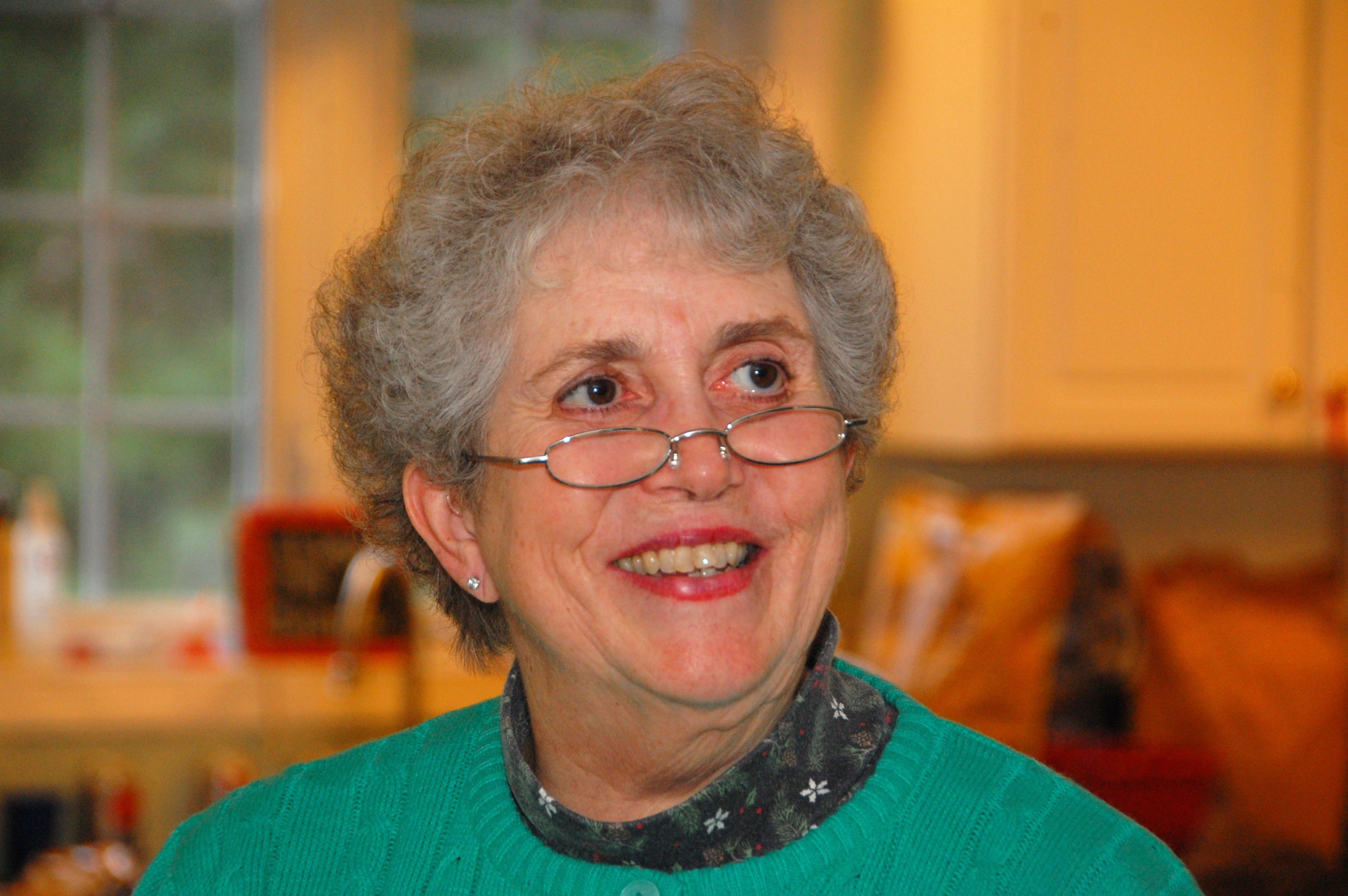
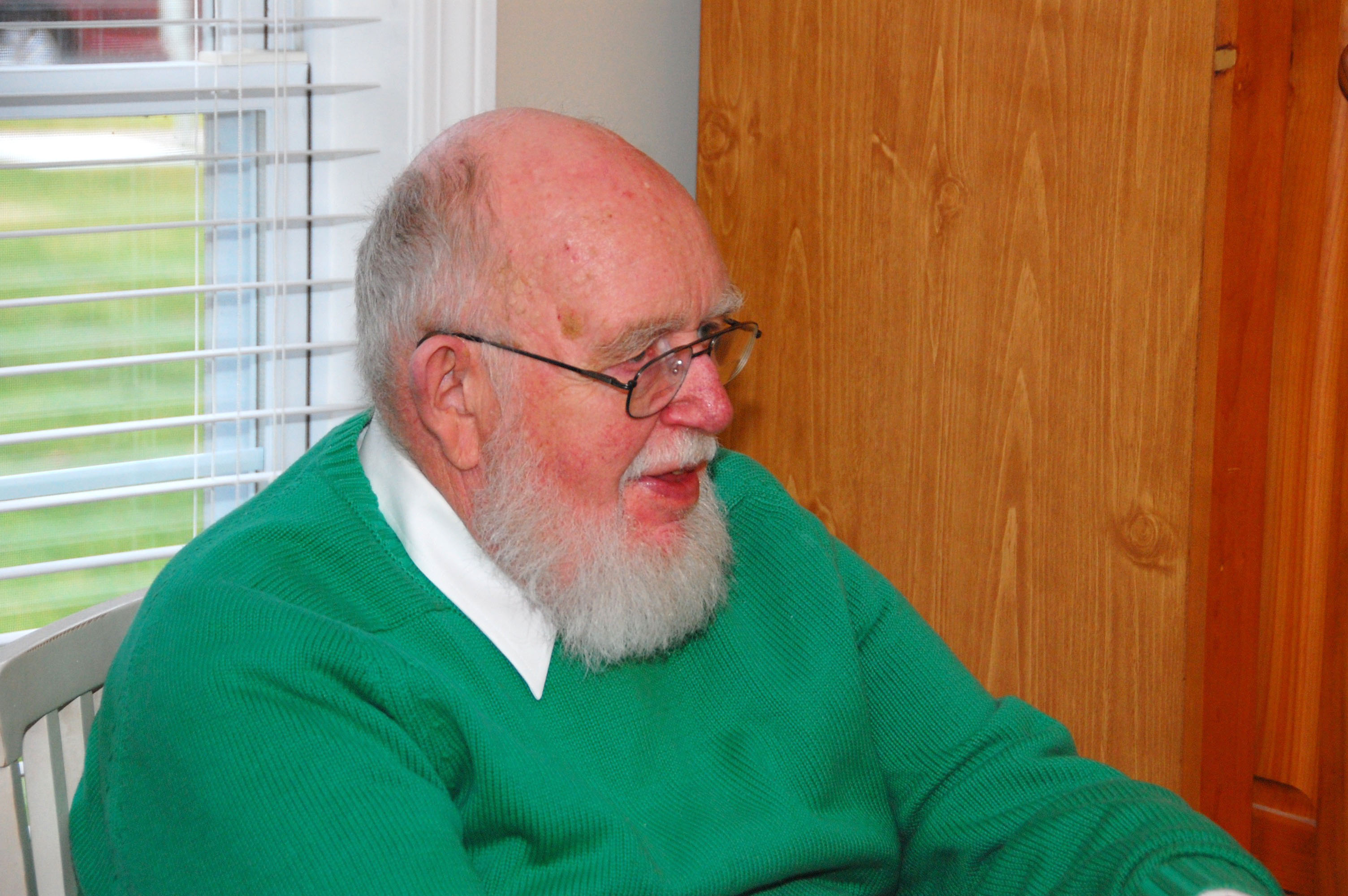
This is my family gathered for Thanksgiving a couple years ago at my brother’s house in New Haven. My father, Lynn Anderson, worked as a public school educator for over 30 years, retired early, and entered the ministry. My mother died quite some time ago, and around twenty years ago, while in seminary, my father met and married Shirley Anderson. Both of them have served churches in New England, and they’ve both reached their second retirement. So there are three ordained ministers in my immediate family. I’m the youngest, and I’ve also been ordained the longest.

Rebekah and Brendan Anderson

Rebekah and Brendan Anderson

It was my cousins who bought this tie for me, in celebration of my call to Hawai’i. They made the selection for the bright colors, of course, which can be found in the aloha style, but I don’t think that a large paisley pattern is really Hawaiian – and, of course, it’s a tie. We don’t really know a great deal about Hawai’i back east. I come to this ministry aware that I have a lot to learn!

Incidentally, one of those things is how often to water the plants in the parsonage. They’re all new varieties to me, and I’d value some pointers!

These are my adult children. Brendan on the right is twenty-three, a graduate of the University of Vermont, and has been volunteering in a 3rd grade classroom in Boston this school year. Rebekah is in her third year at Hampshire College, and she wants to be a writer. They are simply two of the most wonderful people I know.

Glastonbury Choir

The choir at First Church in Glastonbury

Rev. Kate VanDerzee-Glidden and Rev. David Taylor

Rev. Kate VanDerzee-Glidden and Rev. David Taylor

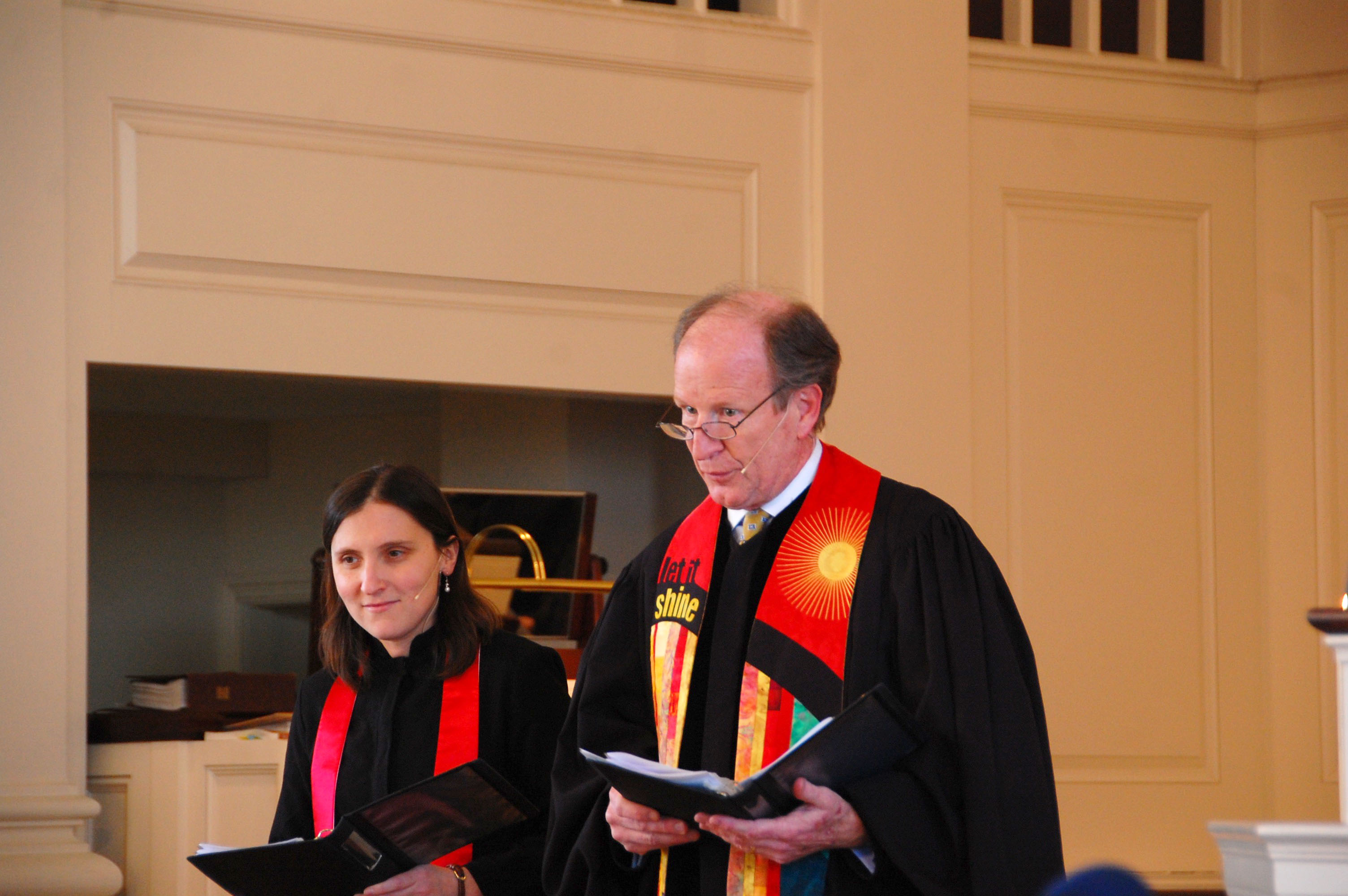
David Taylor and Kate VanDerzee-Glidden are the pastors of First Church of Christ Congregational UCC in Glastonbury, Connecticut, where I’ve worshiped for the last ten years or so. They gathered people together to present me with this stole, which celebrates both New England and Hawai’i. On the back, church members and friends wrote their blessings and best wishes for me, and I’ve been reading them with tears in my eyes.

This is the choir at First Church in Glastonbury singing at the service the Connecticut Conference held to celebrate my ministry. You’ll notice that they all donned leis for the occasion – and had one for me. What you can’t see in the photo is the gift certificate they gave me for a music shop here in Hilo, to purchase an ukulele and start to learn to play it.

And I’ve even gone out to buy it!

Eric and Paul Bryant-Smith

Eric and Paul Bryant-Smith

And this is my friend Paul Bryant-Smith. He’s pastor of a church in Danbury, Connecticut, and also a hospital chaplain. The two of us have made music together for twenty years. In this picture, also from that farewell service, I’m playing him wearing heavy winter clothing, and he’s being me, playing ukulele. We are, of course, singing “Somewhere Over the Rainbow.”

And then there’s this photo. I took it at the Hilo airport. Because my flight was early, which I gather isn’t common, some of you who came to greet me hadn’t arrived yet when I took this picture. I think I was also wearing at least two more leis when I left the airport.

This picture has been liked 235 times on Facebook. I’m pretty sure that’s the most affection any photo has ever received on my Facebook account.

I’m showing you all this to make sure you know something very important about me: I know what it is to be loved. I have been blessed to live among loving people. In these smiles and waves and leis, I know that I am blessed to live among loving people again.

Church of the Holy Cross members welcome Eric Anderson to Hilo.

Church of the Holy Cross members welcome Eric Anderson to Hilo.

Jesus asked the impulsive, jump-into-the-water Peter this question: “Do you love me?”

It’s a tough question for him, and in fact Peter does some linguistic gymnastics with words for “love” that don’t translate from Greek to English.

That’s for another time. It doesn’t matter what kind of love Jesus asks about, and it doesn’t matter what kind of love Peter declares, because every time Jesus insists: “Feed my sheep.”

“Do you love me? You do? Feed my sheep.”

Or he might have put it this way: “Do you love me? You do? Love those around you.”

Feed my sheep.

There are a lot of ways to be hungry in the world: the hunger of the stomach, the hunger of the mind, the hunger of the soul.

The hunger of the stomach seems simple, doesn’t it? I get hungry. I eat. Problem solved. But the hunger of the stomach is not so simple, not by half. For one thing, food alone won’t do. I need to drink water as well, and my officemates back at the Connecticut Conference are still telling stories about my need for coffee.

Yet there’s another important question to ask: When people are hungry, why are they hungry? Why don’t they have access to food, or water, or work, or support? How can we prevent today’s hunger from becoming a pattern, or an apparently permanent condition?

Feed my sheep.

The hunger of the mind, likewise, may not be satisfied by the delivery of books or the establishment of schools. People learn differently, and techniques that work well for vast numbers of people may be utter failures with some others. You can see the frustration build when someone’s trying to learn in a way that doesn’t work well for them. If you’re trying to learn something from me, and it’s not working, let’s try it again, but this time, let’s try something different. And if I’m trying to learn something from you, and it’s not working, let’s try it again, and this time, we’ll try something different.
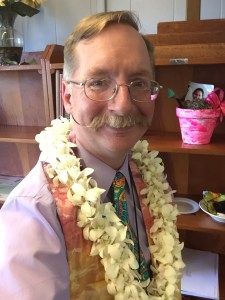
Pastor Eric in his tie and stole - and first Sunday lei.

Pastor Eric in his tie and stole – and first Sunday lei.

And there’s the hunger of the soul. When it comes right down to it, confronting this human need is my calling. My place among you is to help you satisfy the hungers of your soul.

Most of the time, I will not be able to meet that need myself. It would be lovely if I could do it in a sermon, but no. Not in one sermon, and most likely not in twenty years of sermons either. If I’m doing well, from time to time I’ll say something that feeds you just a little, and on the days when I don’t, hopefully I’ve said something to feed someone else.

The sermon isn’t the only source of spiritual food, however, and it’s my role to help you try things that might feed you. There are many different approaches to prayer, and some might bring you closer to God than others. Music has astonishing power to fill the soul. I’ll do my best, and work with the leadership, to lead worship that is authentic and engaged. We can study the Bible and other spiritual works. We can take retreats. We can engage in public service and public witness. We can sit together and talk about baseball, or your grandchildren, or your job. If your soul hungers, let’s work together, and find ways to fill your spirit.

The risk of having a satisfied soul is that Jesus summons them. He says, “Feed my sheep.” We’re not the only ones who hunger in body, mind, or spirit. There are others, near and far.

Our work together as the Church of the Holy Cross United Church of Christ in Hilo, Hawai’i, is to answer the call of Jesus, and labor to see that those who hunger – in body, mind, or spirit – are fed.

October Morning

October morning

The rays of light, streaming from the azure dome
Of heaven set aglow the diamond frost
Upon the green or topaz stems of grass,
The pearls of mist that rise above
The sleeping surface of the river,
The scarlets and the saffrons that adorn
The soaring limbs upon the trees:
Invitation to adore the Author of such wonder.

And later, worship’s hymns a-fading,
Lowering clouds release a few brief crystals,
Barely visible descending from the sky,
Argent briefly resting on a surface, then
A luminescent globe for just a moment,
Before the liquid water vanishes
Into the insubstantial air.
The glory of New England in October!

The Dialogue Turns to Coffee


Me. Without coffee.


Rachel Hackenberg and I take writing, prayer, and poetry seriously. 

And coffee. We take coffee very seriously.

But sometimes there’s an opportunity to play… Thanks again to Rev. Hackenberg for permission to share these here. My work is indented to the right, and hers to the left.


If the green bean
Charred, mashed, ground, drowned
Can lift my drooping eyelids
Maybe even I can rise. 
 
Help me, God.


If the leaves can burn 
without crumbling, and
the coffee steep without
climbing, I too can wake.

A Tuesday Morning’s Dialogue of Twitter Prayers

 
This series of brief prayers was born on Twitter in an impromptu conversation between the amazing Rachel Hackenberg and myself. When I saw the first one, it sparked the second, and to my delight she replied with the third. For a few minutes, as we each prepared ourselves for the day, we exchanged these poems 140 characters at a time.

She has very kindly given me permission to collect and publish them here. But make sure to visit RachelHackenberg.com regularly and benefit from her words and wisdom!

Rev. Hackenberg’s poems are indented to the left; mine to the right.
 
If a star can shine
beyond its extinction,
surely I can manage
to rise and shine
through my weariness.
 
Help, God.


If the tiny monarch’s
Cloak of salmon and sable
Can float it across the miles
Perhaps even I can fly. 
 
Help me, God.


If a song can sway the air
and pierce the heart until
the trees dream of love,
maybe I too can dance. 
 
Help me, God.


If an insubstantial thought
Can leap the miles
Flutter the heart 
Open the eyes
Maybe even I can hope. 
 
Help me, God.


And if there is hope,
then at last the moon
can sigh and melt, and
the sun can bleed with life.
 
God, help.


And if there is life,
Then sun and moon and tears of clouds
Can rain upon the earth
To call forth wild growth. 
 
God, help.

Among the Saints

Each day and night, O God
You greet and welcome tens of thousands,
Souls released from earthly care
And streaming to your arms.

Tens of thousands
Every day and night.

Among them is a little boy
Whose earthly legs should still
Be carrying him gaily
Over a Syrian hill
And not, bedewed with sand,
Searing the convicted conscience
Of the world.

Among them is a trio,
Mother, father, daughter,
Children of music,
Parents each of melody and harmony.
They should still be raising songs
For us.

Among them are more fathers,
Step-fathers,
Mothers,
Step-mothers,
Brothers,
Sisters,
Siblings,
Lovers,
Friends,
Leaders,
Followers,
Acquaintances,
Loved Ones.

Loved by someone here.
Loved before the dawn of time
by You.

Embrace these saints, O God
(If the youngest of them will endure it
Before they race to dance upon the crest
Of heaven’s highest hill).
Embrace we saints, O God,
Who wish we’d had a way to share
For just a little longer
And only dimly see the consolation
You intend for us.

Amen.