Story: Those Birds

May 31, 2026

Genesis 1:1-2:4a
2 Corinthians 13:11-13

A lot of the honeycreepers in the mountain forests have brightly colored feathers. I think I’ve mentioned that before. The ‘apapane and the i’iwi are bright red and black. The ‘amakihi and the ‘akiapola’au are bright yellow. The ‘elepaio has these fascinating speckles in its feathers, even if they aren’t all that vibrant.

And then there’s the oma’o. The oma’o is basically gray. Gray head. Gray wings. Gray belly. Some brown in the back, but basically gray.

This oma’o felt perfectly fine about that. He didn’t see the need to show off his feathers. He was content to sing out with a good song when he felt like it, and to eat the berries and bugs he found. All in all, he felt pretty good about the world.

Except for the i’iwi.

He couldn’t help but notice that some of the i’iwi in the forest had some bad habits. They didn’t like other birds nearby when they were feeding. They didn’t like other birds nearby when they were singing. They didn’t like other birds nearby most of the time. If an ‘apapane settled nearby, they’d chase her away. If an ‘amakihi perched in a neighboring tree, they’d chase him away. Sometimes it felt like the most common sound in the forest was the wingbeats of an i’iwi chasing another forest bird.

Some i’iwi live alongside other birds without feeling the need to chase them away from flowers in blossom, but the oma’o didn’t actually notice that. It’s the noisy ones that get attention in the forest just as it is among people. The oma’o’s eye passed right over inoffensive i’iwi as their aggressive cousins chased ‘apapane and ‘amakihi away.

“I’iwi are evil,” the oma’o announced one day after one had bullied three ‘apapane, an ‘amakihi, and a confused ‘alawi (who doesn’t even eat the same food as and i’iwi) out of the neighboring stand of ohi’a trees. “Something should be done.”

“Like what?” asked his sister, who was perched nearby.

“I don’t know,” said the oma’o, “but look at what’s happening. What kind of world is that for ‘apapane and ‘amakihi to live in?”

The sister said nothing then, but she did some thinking. Could an entire kind of bird be evil? Could a combination of feathers and beak and diet and song make you automatically harm others?

She perched near her brother a couple days later and asked, “How are you different from the i’iwi?”

“That’s simple,” he said. “I’m not evil.”

“Okay,” she said, “but you’re alike in a lot of other ways. You’ve got feathers, and you fly. You’ve got a beak and feet that can wrap around a branch.”

“They’re nothing alike,” he protested. “My beak is straight and short; the i’iwi has one that is long and curved. I’ve got gray feathers; they’ve got red and black. I eat berries, they eat nectar. Most of all, I don’t chase other birds.”

“Do you think their red feathers make them chase other birds?” she asked. “The ‘apapane doesn’t. Or their curved beak? The ‘akiapola’au doesn’t. Or their diet of nectar? The ‘amakihi doesn’t.”

She looked him in the eye. “Isn’t it true that you don’t chase birds because you choose to? Isn’t it true that some i’iwi choose to, and some don’t? Isn’t it true that you and I have more in common with an i’iwi than we do with a nene, who doesn’t bother much of anyone at all?”

He had nothing to say.

“We’re all birds of the forest up here,” his sister told him. “We choose good and bad. I’iwi aren’t just evil. They’re our cousins, too, sometimes for better, and sometimes for worse. We can only encourage everyone to be better to one another.”

by Eric Anderson

Watch the Recorded Story

I write these stories in advance, but I tell them from a combination of memory and improvisation. The story as I first wrote it does not match the story as I told it.

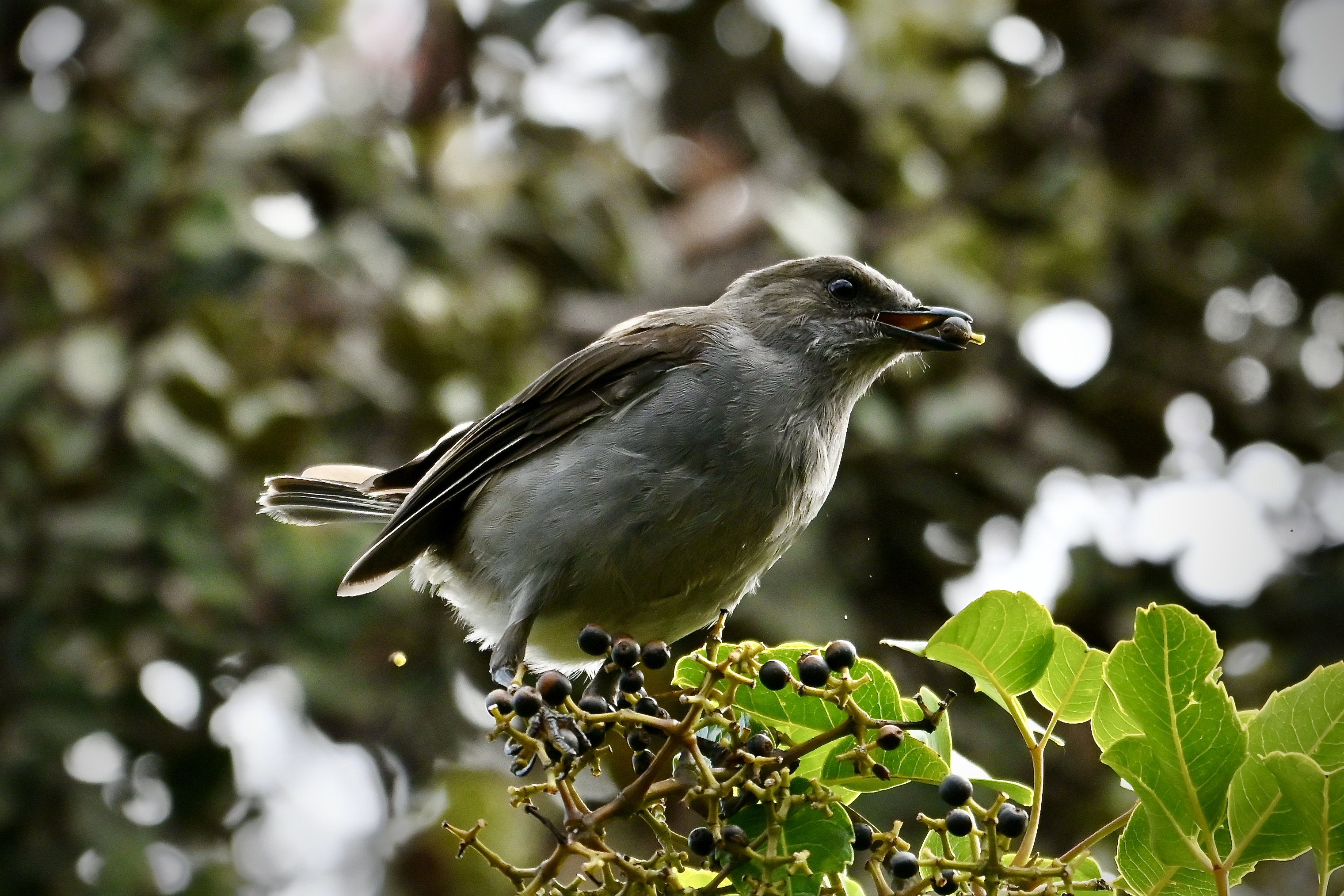
Photo of an oma’o by Eric Anderson.
Shaken and Shaking

“He opposes and exalts himself above every so-called god or object of worship, so that he takes his seat in the temple of God, declaring himself to be God. Do you not remember that I told you these things when I was still with you?” – 2 Thessalonians 2:4-5

I remember lots of things.
I remember grandiosity and pride.
I recall my own, of course,
and sometimes mourn its passing, though
more often I regret its resurrection.

I remember lots of things,
including those who, yes,
exalt themselves. They openly
accept the praise that’s due to God,
declaring that they stand for God.

What law except their own
will they obey? What limits place
upon their power and their pride?
What wisdom will they own except
the rules of ownership and privilege?

In times like these, I fear I may
be like your troubled friends
in Thessalonica, dear Paul.
With evil rampant, justice tossed aside,
I say: “Come Jesus, now, and bring us your relief.”

Though twenty centuries have passed
since Thessalonians cried out for the
same thing, dear Paul advises us the same:
Stand firm. Hold fast. Be filled with Spirit’s love.
And may God strengthen you in doing good.

A poem/prayer based on 2 Thessalonians 2:1-5, 13-17, the Revised Common Lectionary Second Reading for Year C, Proper 27 (32).

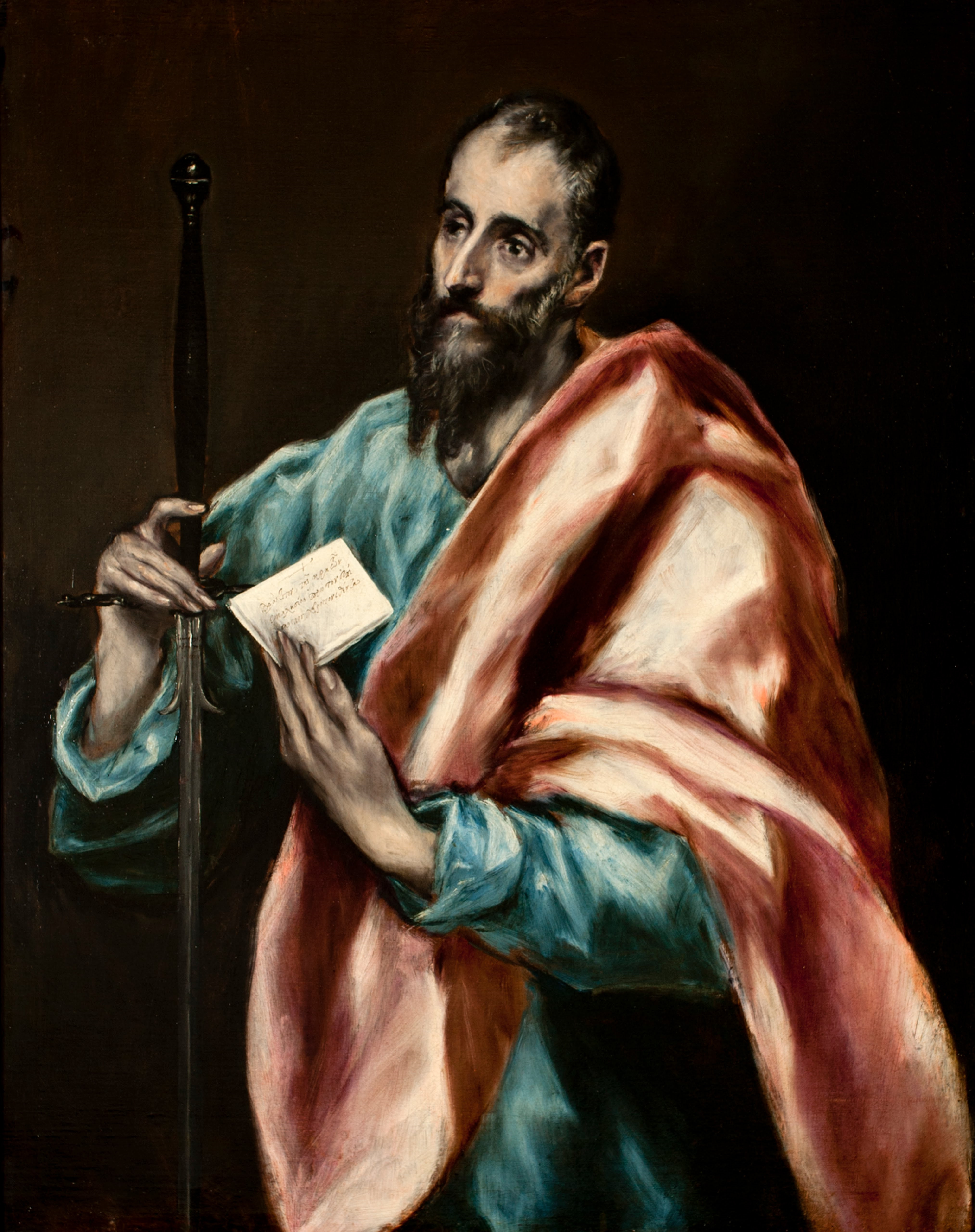
The image is The Apostle Saint Paul by El Greco (between 1610 and 1614; painting displayed at the El Greco Museum, Toledo, Spain – 1QEs4novinaf3A at Google Cultural Institute, zoom level maximum, Public Domain, https://commons.wikimedia.org/w/index.php?curid=29844105.

Ignorant Clay

The vessel he was making of clay was spoiled in the potter’s hand, and he reworked it into another vessel, as seemed good to him. – Jeremiah 18:4

Formerly he was useless to you, but now he is indeed useful both to you and to me. – Philemon 1:11

I can make no excuse for Paul, O God.
He knew the story of the Exodus,
he knew that you are LORD of people free,
and still he sent a man to be a slave.

Rework me, LORD, into a useful cup.

He knew, but still he did not know, O God,
he did not draw the straight and simple line
from Egypt and Mount Sinai to the life
of Christ, in whom are no more slave or free.

Rework me, LORD, into a useful cup.

He knew, but still he did not know, O God.
And I? What do I know yet do not know?
What insights will seem obvious to those
in times to come so shrouded still from me?

Rework me, LORD, into a useful cup.

So obvious to me, these lacks in Paul.
So obvious to them, the people who
will judge my ignorance. So obvious
that we should give ourselves to be reshaped.

Rework me, LORD, into a useful cup.

A poem/prayer based on Jeremiah 18:1-11, the Revised Common Lectionary alternate first reading, and on Philemon 1:1-21, the RCL second reading for Year C, Proper 18.

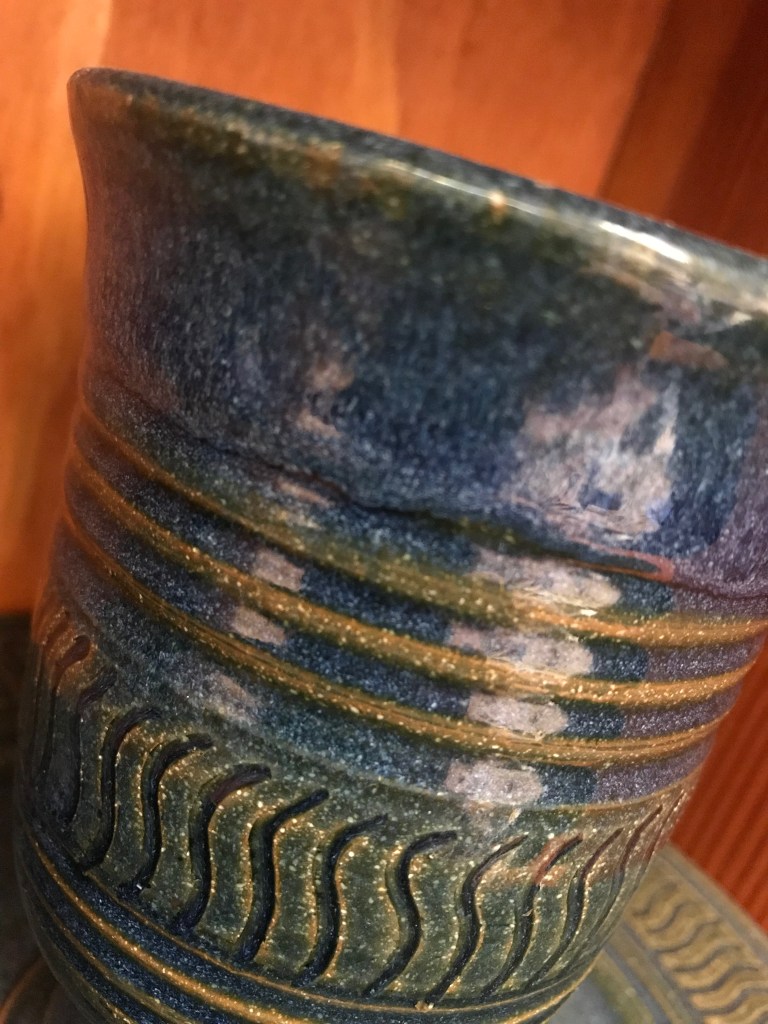
Photo by Eric Anderson.

God’s Weeping

Hosea

My heart recoils within me; my compassion grows warm and tender.
– Hosea 11:8

What do I hear on the wind?

Is it the sighing of a dove?
Or the sighing of a deity
watching warmly, tenderly
as the Creator’s children stray?

What do I hear in the trees?

Is it resilience in motion?
Or the groans of a deity
swaying in unison
with the Earth’s moaning?

What do I hear on the waves?

Is it the rhythm of ocean?
Or the sobs of a deity
embracing the suffering
of all They have made?

What do I hear in the cosmos?

Is it the cry of expansion?
Or the wrath of a deity
frustrated with evil
beyond all endurance?

What do I hear in the Earth?

Is it the silence of affection?
Or a deity’s anger
cooling, reforming,
bearing us upon forgiveness?

What do I hear?

A poem/prayer based on Hosea 11:1-11, the Revised Common Lectionary alternate first reading for Year C, Proper 13.

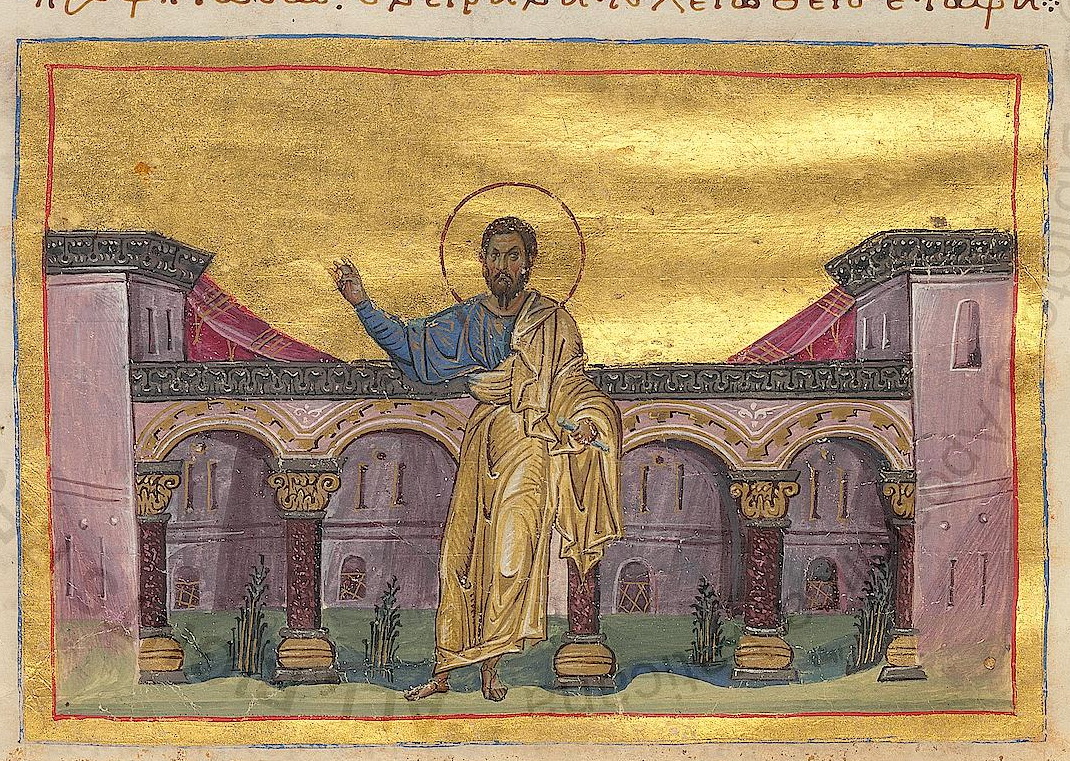
The image of Hosea comes from the Menologion of Basileiou, an 11th century illuminated Byzantine manuscript. Artist unknown – http://digi.vatlib.it/view/MSS_Vat.gr.1613/0141?sid=a7590df9b8aca22111c8359533716419&zoomlevel=4, Public Domain, https://commons.wikimedia.org/w/index.php?curid=20645325.