Don’t You Think I’d Rather Tell You What I Want to Hear?

“And the prophet Jeremiah said, ‘Amen! May the LORD do so; may the LORD fulfill the words that you have prophesied and bring back to this place from Babylon the vessels of the house of the LORD and all the exiles.'” – Jeremiah 28:6

I hoped I’d have a simple life. I had
ambition, certainly. I would succeed
but in a nation resting in its justice, peace,
its people living all in righteousness.

It was a pleasant dream. Though some
may learn while young how hard the heart
of human beings may be, I hardly knew.
With age I learned that things were not as I assumed.

And so I find myself today a croaking voice
of warning, heard sometimes with pity (which
is better than contempt). I’d tear my hair,
except I know I’d add derision to contempt.

Do you not think I’d rather say that everything
will be all right? Do you not think I’d rather claim
that the illusions of my childhood will
become our daily bread and feed us all?

The prophets long before me named the sins
impoverishing the poor, empowering the rich,
and warned that these would undermine
the underpinnings of the covenant,

The covenant with God, and with the people who
are paid so little, and who ask that if
they lack the wealth, at least they might receive
the justice to maintain themselves in life.

Increasingly this justice is denied. Increasingly
this covenant is broken, as the rich
grow wealthier, and the poor grow desperate,
and imperiled populations walk in fear.

Do you not think I’d rather tell you what
I want to hear? I yearn to live my working life
and my retired life in peace. The times say otherwise.
And though I’d rather tell you lies, I’ll speak the truth.

I’ll speak the truth I do not wish to hear.

A poem/prayer based on Jeremiah 28:5-9, the Revised Common Lectionary Alternate First Reading for Year A, Proper 8 (13).

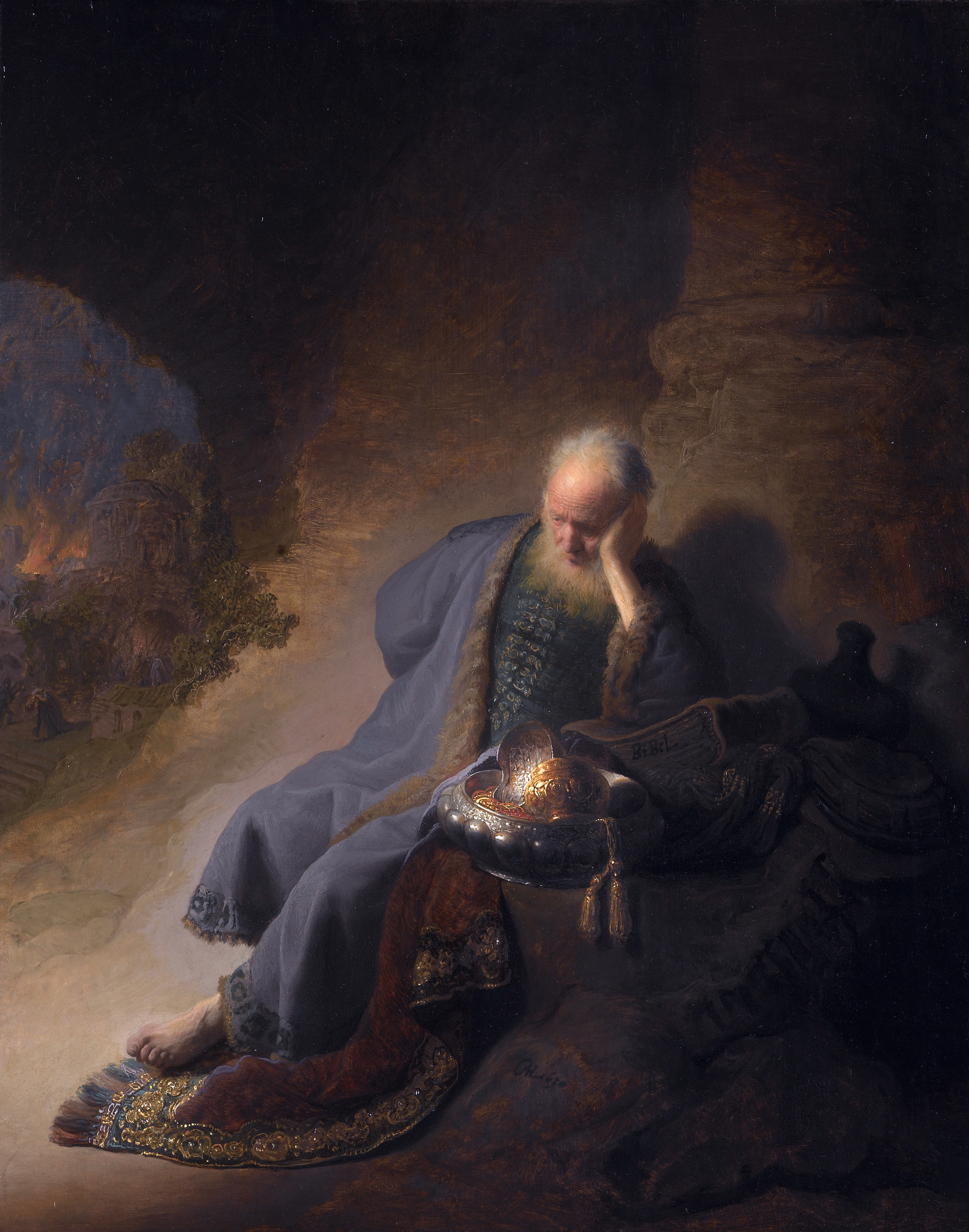
The image is Jeremiah Lamenting the Destruction of Jerusalem by Rembrandt van Rijn (1630). Web Gallery of Art:   Image  Info about artwork, Public Domain, https://commons.wikimedia.org/w/index.php?curid=15417236.
Story: World of Weeping

September 18, 2022

Jeremiah 8:18-9:1
Psalm 79:1-9

Up on Kilauea, where people look out over the great crater/caldera at the summit, a little girl was crying as if her heart would break. Why? Well, it probably had something to do with a trip and a fall and some bruised knees, and maybe because a favorite stuffed animal was all dusty. There were tears running through the dirt on her face.

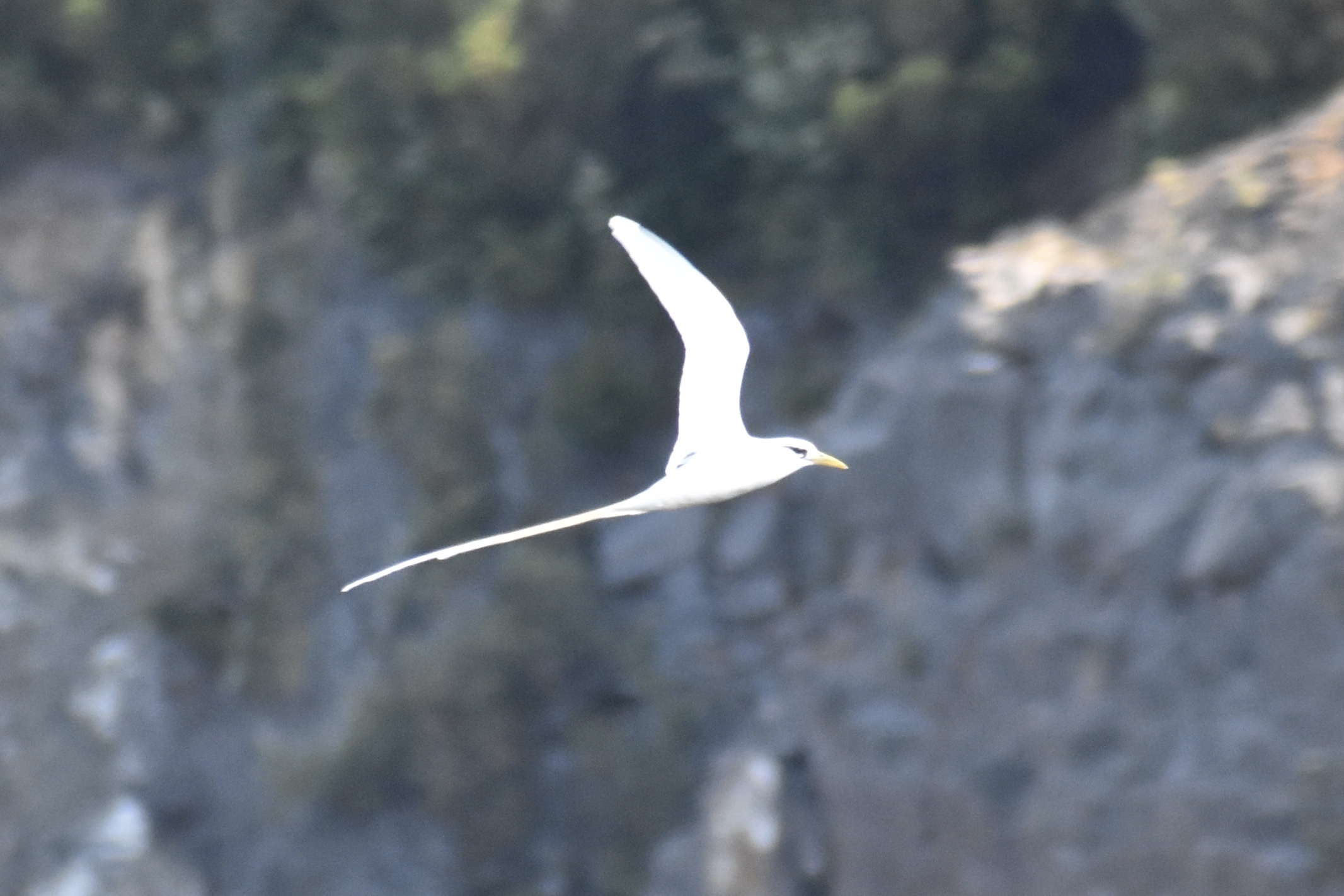
This story is not about her, however, even if it starts with her. It is about a young koa’e kea, a white-tailed tropicbird, that was resting on a small ledge in the cliff just below the little girl and her family. She’d never heard such a sound before. She leapt into the air and circled about, watching the little human and her family as they comforted her, brushed the dirt from the stuffed animal, and headed away.

The young koa’e kea found her father had joined her circling. “What was that all about?” she asked.

“That was crying,” he said. “Creatures cry when they’re unhappy or in distress.”

“What a horrible noise,” she said, “and those drops of water from the eyes!”

Her father watched the human father who was carrying the little girl in his arms by this point and said, “It seems to work. A lot of creatures have their own version of tears.”

“I’ll never do anything of the kind,” announced the koa’e kea daughter firmly.

“Never?” asked the father.

“Never,” said the daughter.

“Hm,” said the father. “Fly with me for a little bit.”

The first thing they saw in their loops about the island was a mother pig and some piglets. One of the little ones had wandered into a thicket and got turned around, and he was squalling for his family. The sow heard him, found him, and herded him off to join the rest of the family.

The next thing they saw was an old ohi’a tree creaking in the wind. You and I wouldn’t say it was crying, exactly, but there was a light dust floating away on the breeze as the tree swayed. “Is it sad?” asked the young koa’e kea.

“Just a little,” said her faither. “It’s struggling to keep growing where it is, but it has special tears. They’re seeds, and even if this tree can’t grow, perhaps some of its seeds can.”

They flew about the cliffsides until they heard another sound. It was a koa’e kea nest, and the chick in it had spotted one of his parents. It cried its hunger until the mother satisfied it.

“Did I do that?” asked the young koa’e kea circling nearby.

“You did,” confirmed her father.

Last of all, they swooped and soared over the Halema’uma’u crater, watching the red lava, which was streaming from a vent in the crater side into the lava lake below.

“Is the mountain crying?” asked the young bird.

“You can say so,” said her father. “When the mountain cries, the island rises.”

“So all things weep,” said the koa’e kea.

“Maybe not all,” said her father, “but when they do, it’s usually for a reason. It helps them get through the time.”

“I guess if the rest of the world can do it,” she said, “maybe I can, too. If I need to.”

“If you need to,” said her father, and they flew off to the ocean for dinner.

by Eric Anderson

Watch the Recorded Story

As always, Pastor Eric told this story from memory of the text above. The two versions are not the same.

Photo of a koa’e kea taken on Kilauea by Eric Anderson.