Story: Missed Lesson

April 7, 2024

1 John 1:1-2:2
John 20:19:31

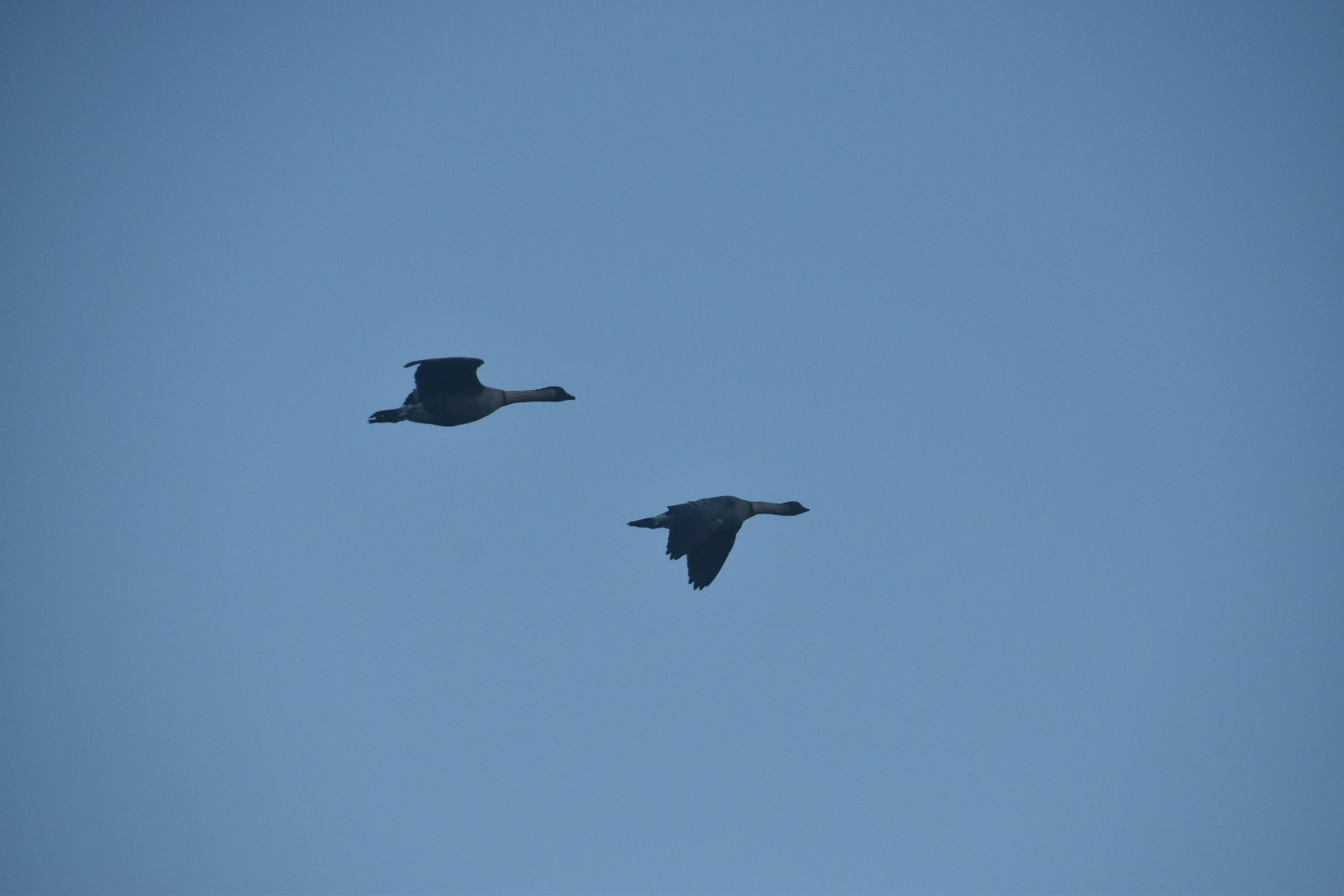
Most of the birds of our island fly by themselves, or in a loose flock. Around Hilo we’re mostly likely to see a pair of finches or a larger group of mynas flying together. Myna flocks tend to be rather chaotic, with birds crossing back and forth and no real attempt to build a formation and stay in it.

There’s an exception to that, and it’s the nene. I’ve mentioned nene school to you. I haven’t told you about the origin of nene school, which goes back so far that nobody really knows when it started. The nene don’t, and if the nene don’t, I certainly don’t.

The problem was that the nene liked to fly together and chat while they flew. They make that “Ne. Ne,” sound as they go. In the days before the foundation of the nene school, however, the cheerful “Ne. Ne,” would be interrupted by screeches and cries to veer off, and sometimes by the distressing sounds of wing feathers scraping over one another, and then the groans of pain and, of course, angry squawks of denunciation.

The problem, of course, was that nobody knew, when flying together, what any other goose would do, so they were making goose guesses. Actually, since there’d be more than one goose guessing, there’d be geese guesses. If one was young, you’d have gosling guesses. And if you had a visiting goose, there’d be guest goose guesses.

When one of these geese guesses was wrong, you’d get geese gripes.

When they founded the first nene school, everybody was eager to take part, and everybody came to the first class. And the second. And the third.

But one goose guessed wrong about when the fourth class was being held, and he missed it. He did show up for the fifth class, and, well, he made more goose guesses that goofed. The nene flying that day lost feathers, altitude, and tempers.

The teacher took him aside when class was over. She didn’t ask him why he’d missed the previous class. She just told him that what he’d missed, he’d have to learn.

“This is why we started this school in the first place,” she said. “We’re learning to fly together, to fly the same speed at the same time holding the same distance. We’re learning to be predictable and trustworthy in our own flying so that we can trust what the other nene will do. No more goose guessing.”

So he stayed and flew, and this time he learned the things he’d missed from the previous lesson, and he learned the things he’d missed from the lesson he’d just taken but hadn’t learned anything because his goose guesses had gone so goofy.

There are plenty of things in our human lives that we do separately, each in our own way. But there are also lots of things that we do together. We need to know what our fellow Christians are going to do, and they need to know what we’re going to do, so that we make things happen together.

It goes better than geese guesses.

by Eric Anderson

Watch the Recorded Story

I write these stories ahead of time (it’s the text you just read) but I tell them from memory without notes. And so they change in the telling.

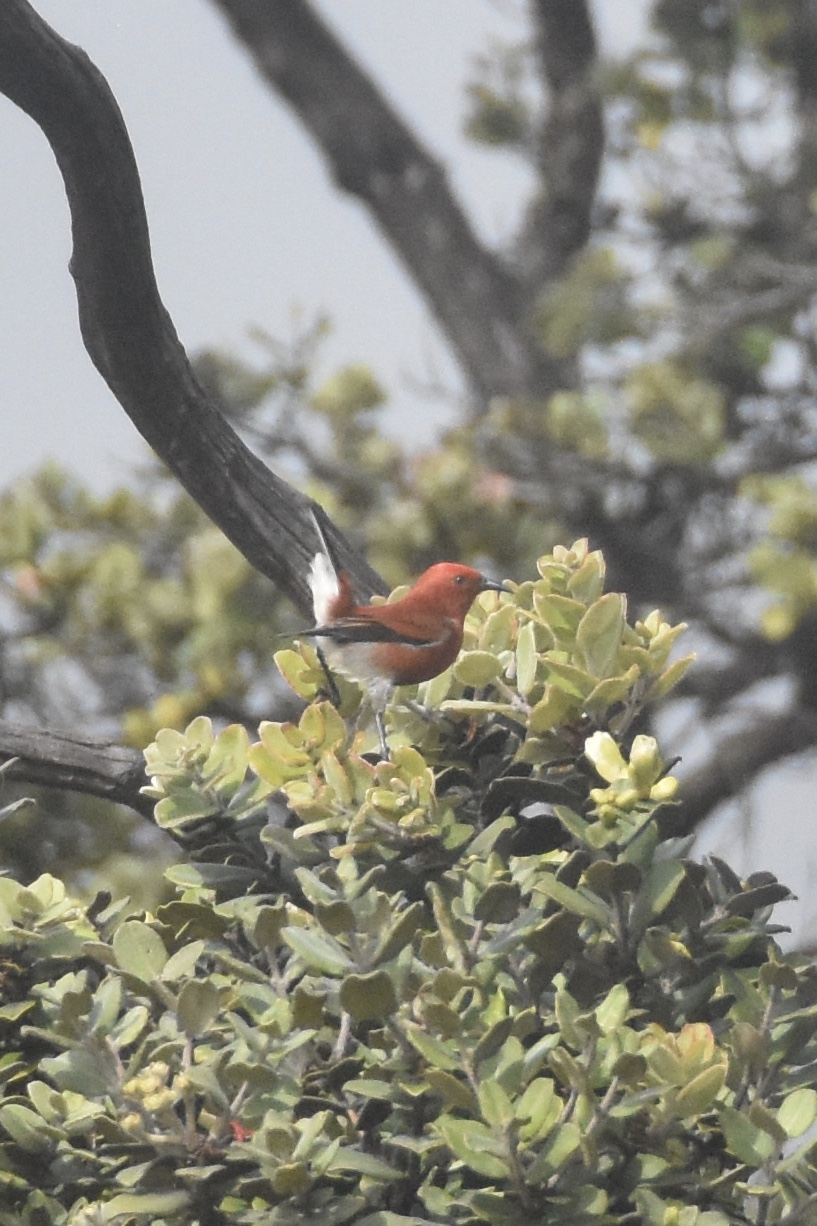
Photo of nene in flight by Eric Anderson.

Story: Imperfect

December 17, 2023

1 Thessalonians 5:16-24
Luke 1:46-55

She was making gingerbread cookies for the first time in her life – she wasn’t very old – and she was all excited about it. Her older brother had learned to make gingerbread cookies a few years before, and he’d got rather good at it.

This was her very first time.

She thought it was going pretty well, even if there sometimes seemed to be more flour on the counter than in the bowl. She might have miscounted the amount of ginger, too. She decided she’d better add some more to make sure there was enough. Yes. Just a little more. And a little more.

When she was cutting out the shapes – there were cookie cutters for people shapes, and for star shapes, and for reindeer shapes, and even for Christmas Tree shapes – she got things a little scrunchy. In transferring the cut-out cookies to the trays for baking, things got more disarranged. One poor gingerbread person lost their leg, and she tried to mash it back together.

Her older brother came by about this point and decided to make fun of her more oddly-shaped cookies. The two discussed it calmly and reasonably – well, no. The two of them were yelling by the time the cookies came out of the oven. Which might be why there were a little overdone.

She burst into tears.

Mother gathered her into her arms as she said, “They’re not perfect! They were supposed to be perfect!”

Indeed, they weren’t perfect. Some of the trees looked like they’d been through a windstorm. The mashed-together leg had come off in the baking. At least two of the stars had very bent points.

And, it had to be said, they were a little too brown. Not burnt, quite, but any longer in the oven and burnt they’d have been.

“They’re not perfect for Christmas!”

Mother, who thought about things like this, said, “Do you think Christmas is about being perfect?”

The girl said, “Isn’t it supposed to be?”

Mother told her that Jesus didn’t come into the world because it was perfect. It was full of people doing unkind, even cruel things to one another. Jesus came to show a better way, and help people find and live a better life here on earth and beyond. Jesus came to love the ones who didn’t think they were loveable.

“But my brother’s Christmas cookies are perfect.”

Brother, who was feeling sorry he’d picked on his sister, told her that they certainly hadn’t been perfect the first time. “I really burnt the first batch,” he said. “And the second batch wasn’t much better.”

“Let’s see how yours are,” said mother, and all three of them took a bite. She had, in fact, put in far too much ginger.

“I don’t think these are very good, Mommy,” she said, but she wasn’t crying.

“Not so good,” Mother agreed. “Shall we try again?”

In the meantime, her older brother reached for a second cookie. Mother and sister looked at him.

“I like lots of ginger,” he said. “Can I have the recipe?”

Imperfect we may be, but there’s love for us, too.

by Eric Anderson

Watch the Recorded Story

When I tell these stories, I tell them from what I remember of the story I’ve written. And… I make new things up as we go through. There will always be a difference between what I’ve prepared and what people hear.

The image of gingerbread people cookies is by ParentingPatch – Own work, CC BY-SA 3.0, https://commons.wikimedia.org/w/index.php?curid=24263325.

Story: Flight School

April 23, 2023

Acts 2:14a, 36-41
Luke 24:13-35

The myna chick was in flight school.

She’d already been to flight school, but now she was in a different flight school. The first flight school was what you think it is, and her instructors were mostly her parents, with occasional helpful contributions from random mynas near the nest – because a myna has something to say about just about anything – and not-so-helpful contributions from her sisters and brother, who also had plenty to say about her first attempts at flight but they didn’t really know any more about it than she did, and sometimes less.

They were mynas, of course, so they had something to say about it whether they knew anything or not.

She had graduated flight school, however, with flying colors. By which I mean, she could fly.

And now she was in flight school. This one, however, was not about flying. It was about fleeing. The first flight school taught her how to make her way through the air. The second flight school taught her about the things to fly away from.

There were a good number of them. The problem was that she found it all very boring. The instructors would suddenly shriek, “Cat!” and all the students would fly away. Then they’d do it again. And again. It was tiring. And boring.

When everybody was wing-weary and tired, the teachers announced a short break. The students scattered to the trees to rest.

Our myna hadn’t been settled long when some other birds also perched on nearby branches of her tree. She didn’t know much about them. There was a kolea, and a couple of finches and doves, and a yellow-billed cardinal. She was really startled, though, when a very large bird with long white wings and long legs settled near the top of the tree. Nobody else seemed to move, however, so she folded the wings she’d planned to fly away with. Her flight school lessons hadn’t moved on to birds yet.

“Startled, little one?” said a voice from above and behind her.

“Yes,” she said. “I don’t think I’ve seen a bird that large before.”

“Don’t worry,” said the voice. “That’s a cattle egret. They don’t hunt mynas.”

“Are there birds that hunt mynas?” she asked.

“Certainly,” said the voice. “Not a lot, but they do enjoy a tasty bit of myna when they can get it.”

“What birds are those?” she asked, not sure she wanted to know.

“There’s the pueo,” said the voice. “They have very flat faces and big eyes, and they fly really quietly. You want to fly away from those.”

“Anything else?” asked the myna.

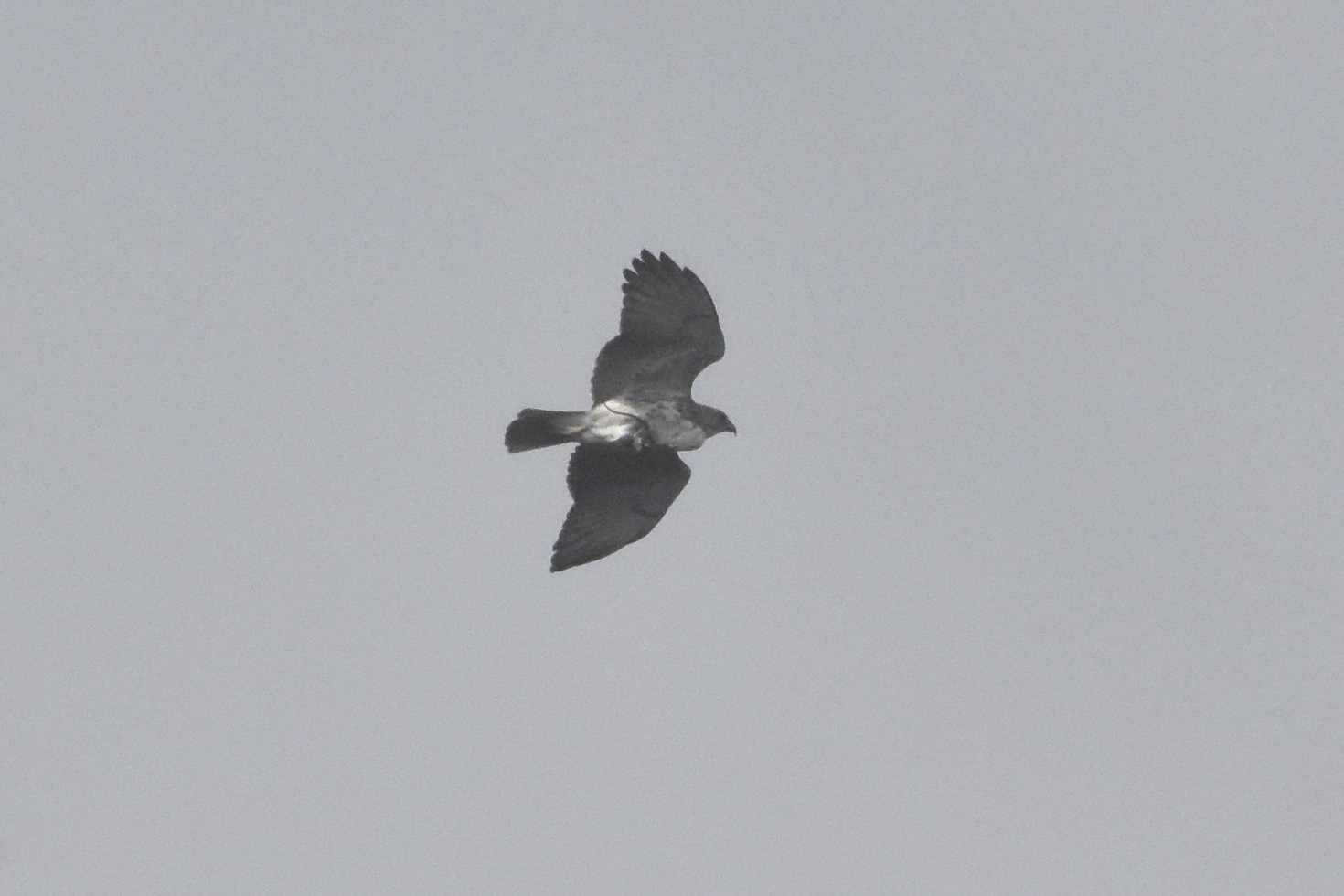
“Definitely,” said the voice. “Watch out for the ‘io. It’s got a sharp curved beak, large pointed talons, and big broad wings. It can spot you from high up in the sky.”

“At least it doesn’t roost in trees,” sighed the myna.

“Who says it doesn’t?” said the voice. The myna turned her head, and saw a larger bird with cream and brown feathers, bright eyes, a curved beak and sharp talons on its great feet. The finches leapt from the tree with a screech of “’Io!” followed by all the other birds – except the ‘io, who didn’t happen to be hungry.

She didn’t find flight school boring after that. She wanted to know everything about identifying the creatures around her – the ones to fly away from and the ones who wouldn’t harm her. She lived her life grateful for an ‘io who would tell her the truth.

by Eric Anderson

Watch the Recorded Story

I tell these stories during worship from my memory of the story as written (that’s the text you’ve just read). My memory is… not photographic.

I did take the photo of the ‘io at the top of the page.

Story: Deep Dives

February 5, 2023

Isaiah 58:1-12
Matthew 5:13-20

I believe that I have mentioned schools before. A couple of my stories have visited nene school, and we’ve heard a little bit about ‘apapane learning to fly and ‘amakihi learning to sing. There are several species of fish, of course, that have made the ultimate commitment to lifelong learning, because…

They are always in schools.

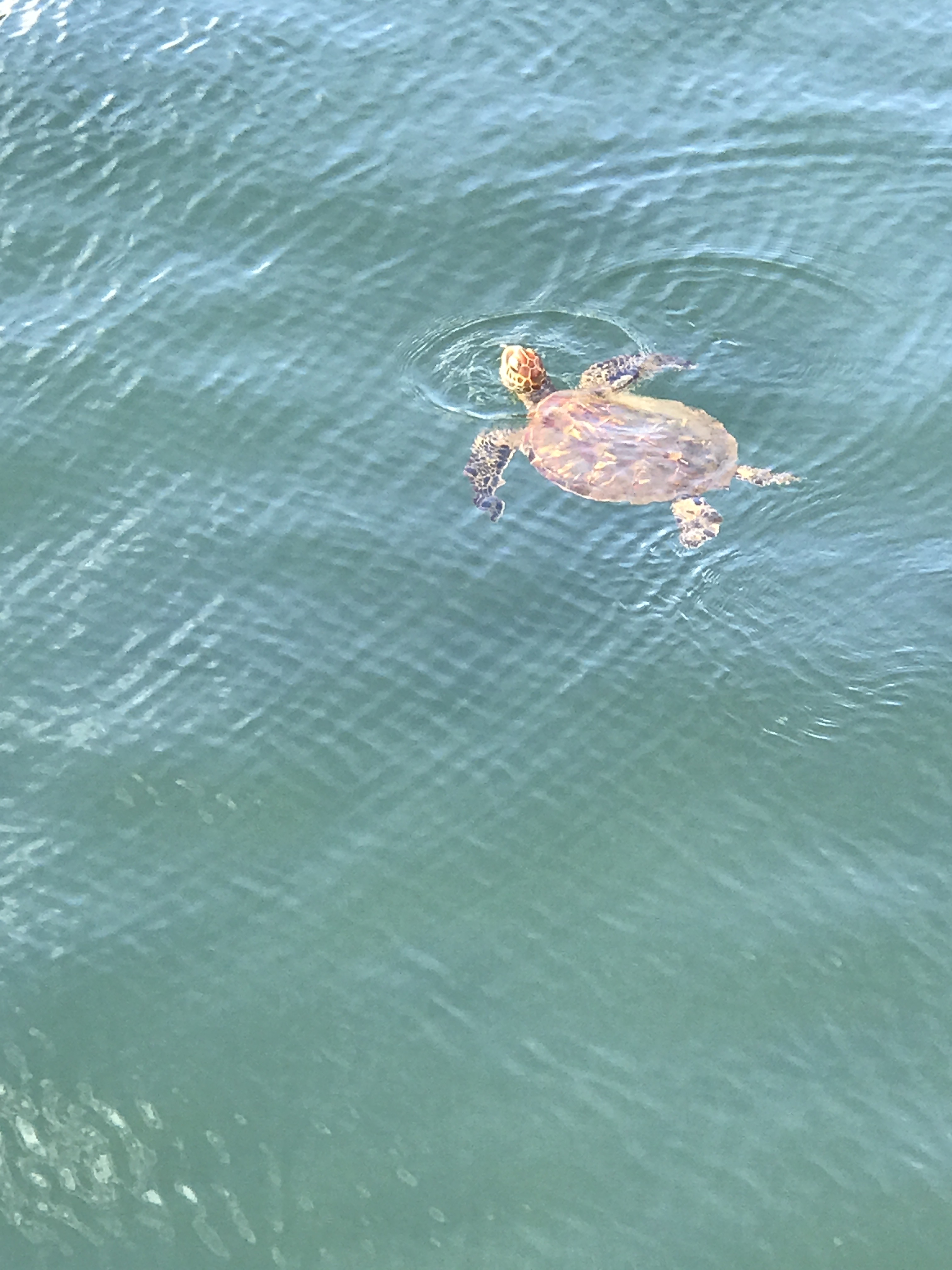
This story is not about birds or fish, though it does take place in the water. This is about a honu school. Green turtles hatch on beaches, of course, and then the little turtles head down into the water. When they’re small they stay in shallow water, but as they grow they venture further out. That’s when it’s time to learn about deeper diving to graze on the seaweeds below or to hide from a hunting shark. That’s when I imagine a honu might go to school.

The teacher of this particular honu class was mostly feeling pretty satisfied. The students were cheerful and respectful. They were kind to one another and to her. They encouraged one another and they kept an eye out for one another. There hadn’t been a single episode where a student had got lost on the reef; someone always called before one wandered out of sight.

That’s a pretty good class.

There were two students, however, who were giving the honu teacher something of a headache, and for completely different reasons. One student insisted on trying things before he was ready for them. She’d set the class to dive to a particular depth, and he’d say, “I can dive deeper than that!” and promptly set out to do that. The problem was that sometimes he could dive deeper, and sometimes he couldn’t. He was still learning how much breath to take in; he was still learning how to feel the water movement in the deeper sections. He’d come back to the surface scared and panting, and ten minutes later he’d shout, “I can dive deeper than that!”

That was one headache.

The other student was entirely the opposite. “Let’s dive to this depth,” she’d say, and he’d shake his head. “I can’t do that,” he’d moan, even when he’d done that same dive the day before. “Let’s go just a little bit deeper,” she’d say, and he’d come right back to the surface.

That was two headaches.

Imagine now that she’s encouraging the one who’s not confident about his dives while the one who’s overconfident about his dives is diving and she had to go rescue him.

That’s three headaches.

When class was over one day she took them over to the beach for a rest and some one-on-two instruction. “I need for the two of you to work at a steady pace,” she said.

“But I know I can dive deeper!” said the first. “But I don’t think I can dive deeper!” said the second.

“Both of you can dive deeper,” she told them, “but this is something you learn to do by degrees. You make a little progress, and a little progress, and a little progress. If you don’t go a little farther, you don’t make progress. And if you go too far, you also don’t make progress. It’s like eating a big piece of seaweed. You take little bites until you’re not hungry any more.”

“You mean I really can dive deeper?” asked the second one. “Yes,” she said.

“You mean a little bit farther means I can dive farther tomorrow?” asked the first one. “Yes,” she said.

I wish I could say that both of them followed her advice in each class from then on. They didn’t. But they did better, and they did better with each passing day. Both of them learned to take those deep dives of the honu, and both of them were grateful they’d take it just a little bit at a time.

by Eric Anderson

Watch the Recorded Story

Photo of a honu (in shallow water) by Eric Anderson.

Story: When Nene Get Cranky

August 14, 2022

Jeremiah 23:23-29
Luke 12:49-56

It might surprise you to hear that young nene go to school. Many of us wish that their classes included one in staying away from roads that have cars moving on them, but apparently they don’t.

As you’d expect, though, they teach a lot about two of the big components of nene life. Eating and flying. They do learn about eating and flying from their parents, of course, but there’s definitely more to learn about both topics for a growing nene.

A little flock of young nene had gathered with their teacher and had just finished the eating section of the day. Eating lessons for a nene are both complicated and simple. They’re complicated because nene like to eat a lot of different things. If it’s green and its leaves are grass-shaped, they probably eat it. So there’s a lot to explore in an eating class.

What’s simple about it, of course, is that if it’s green and the leaves are grass-shaped, they’ll try to eat it.

Flying, however, is definitely an advanced topic. Nene have smaller wings for the size of their body than you’ll find on other birds. It requires effort to get that much bird off the ground. When there’s a few of them in the air, they fly carefully spaced in formation. That takes some learning. And, of course, they will pull a few special tricks from time to time, like making a barrel roll in midair.

The class this day had got pretty excited during the eating session and the young students were eagerly debating the merits of the various grasses they’d tried. Their teacher was talking with one of the young goslings who wanted some help with take-offs. As she spoke with him, the other nene got louder, and louder, and louder.

“Class, settle down,” said the teacher (I’m afraid teachers everywhere of every creature say that phrase a lot). “I’ll be right with you, and if you listen you can learn something about take-offs, too.”

They were quiet for a few moments, but rather like human students, the chatter started up again, and grew rapidly until the teacher couldn’t hear herself.

“Class, settle down!” she called.

They were quiet. For… a little bit. And despite the very helpful things she was saying about wing position on takeoff, the quickly raised the volume from a murmur to a racket.

The teacher honked in complete exasperation and shouted, “Class dismissed!” Then she flew away.

The students were shocked. This had never happened before. They looked at one another – and for once, they were silent. The one who’d been getting take-off instructions looked at them unhappily.

“Come on,” he said after a few minutes. “We need to go find her.”

They found her in a clump of ‘ohelo, taking a berry, then honking in frustration, then taking a berry. They waited until she’d slowed down on berries and on honking.

“We’re sorry,” they said.

“What are you sorry for?” she asked.

That was a question they hadn’t expected. What, after all, had they done? They weren’t sure they knew, except for the one who’d been getting take-off help.

“We’re sorry we didn’t pay attention when you were teaching us the things we want and need to learn,” he said.

“Are all of you sorry for that?” she asked.

Now that somebody had said it, they were.

You see, that’s when nene teachers get cranky: when they’re sharing the things young nene need and want to know, and the students ignore them. Fortunately, there are things that help. There’s ‘ohelo berries, of course, and a soothing turn around in the sky. Best of all, there’s the students who think to say, “I’m sorry,” and come back ready to learn.

by Eric Anderson

Watch the Recorded Story

The story is told from an imperfect memory of this manuscript. To responsive children. The story as told is not identical to the story as written, oh, no, not for a moment it isn’t.

Photo of nene on the wing by Eric Anderson.

Story: The ‘Apapane that Didn’t Learn to Sing

July 17, 2022

Amos 8:1-12
Luke 10:38-42

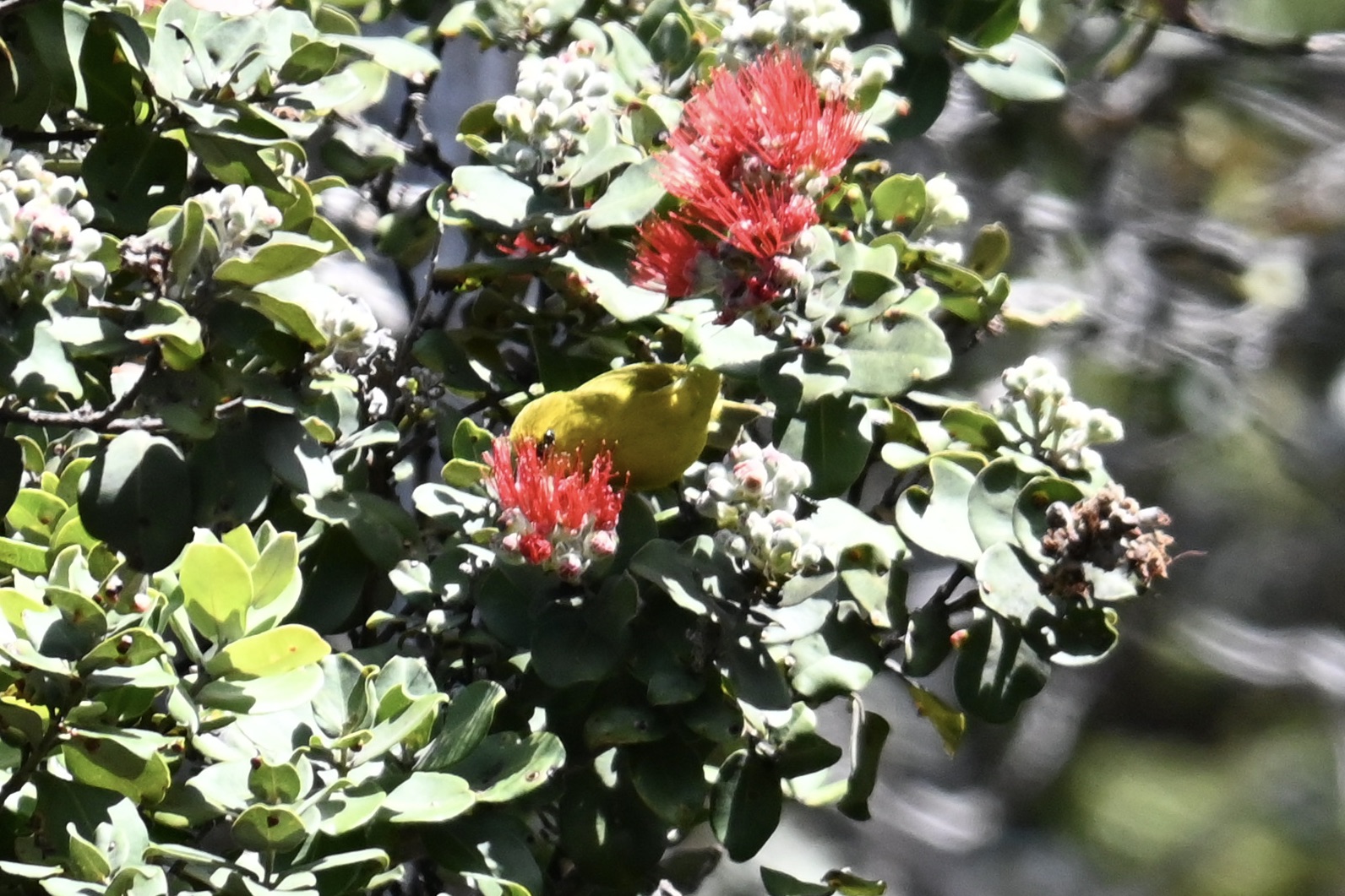
The ‘apapane are known for their cheerful songs. Walk around in the ohi’a forests of Hawai’i Island and you will hear them. They produce all kinds of sounds, combining them together into a range of calls and melodies that make the forest ring.

But there was one ‘apapane that never learned to sing, and it happened in this way.

As young human beings, you learn a lot of things in schools, right? It’s somewhat the same for many kinds of fish, of course. A lot of them spend nearly their entire lifetime in schools, so they’re probably the best educated of the world’s creatures, don’t you think?

The ‘apapane don’t have schools. They have flocks, of course, and they have families. They learn to sing in choruses.

The year’s fledgling singers came together with one of the senior singers to form a new ‘apapane chorus and learn the basic melodies and sounds of ‘apapane song. They were excited and they were enthusiastic. Many of them had learned things from their parents and older family members, and they wanted to sing more and better and louder songs.

One ‘apapane turned up with so much eagerness that it just went running over. “Aren’t you excited?” he asked his fellow youngsters. “I’m really excited. What do you think they’ll teach us?”

The ‘apapane he asked opened her beak to answer the question, but he went right on to say something else to another bird that had just joined them. “I think singing is just the best part of being an ‘apapane. It’s like flying, but with your voice. Don’t you think so?”

The new ‘apapane started to reply, but before he got out a peep the excited ‘apapane had turned back to the first bird and continued, “I’m really looking forward to those really high sweeping calls. You know the ones? I’m sure you do. Do you think the instructor will know them? How could she not? Do you know who she is? Has she arrived yet?”

And it went on.

The instructor turned up and, for a moment, there was silence as she spoke to the new choristers. “Welcome, friends,” she said. “We’re here to learn the art of ‘apapane music. I hope you’ll all enjoy this. Let’s start with…”

“Oh, I will definitely enjoy this!” piped up our eager fledgling. “And so will he. And her. And that one over there. Are you going to teach us with the Kilauea method or do you use the Maui variant? Are there any specialty classes? How about song composition? And what about…?”

And it went on.

The instructor and the other students waited for a while to see if he would stop on his own. And… he didn’t. He just went on. Eventually the chorus teacher shrugged her feathers and went on to demonstrate some basic calls, and then some trills, and then some melodies. As the chorus grew in strength and confidence, there was this constant undercurrent of… well.

“I’ve been really interested in flycatching technique, you know? Sometimes that can improve the voice, right? And the different nectars produce different songs, I’m sure. I’d volunteer for that experiment. But really it’s the classic songs that impress me. Do they impress you? Of course they do, you’re here to teach them. Which one will you start with? I think it would be the Pali song, but perhaps you like the rising notes of the Pu’u Trill.”

And it went on. He never stopped. As a result, he never actually learned to sing.

Now, I know that not everyone is always interested in learning new things. I know that not everyone gets excited about learning to sing, or fly, or skip, or cook, or do any one of the many things that make up our lives. But there is something to learn from the ‘apapane that never learned to sing. The first step in learning is to stop talking for a moment and listen.

by Eric Anderson

Watch the Recorded Story

The story as told is different from the story as written. You’ll probably notice that if you listen.

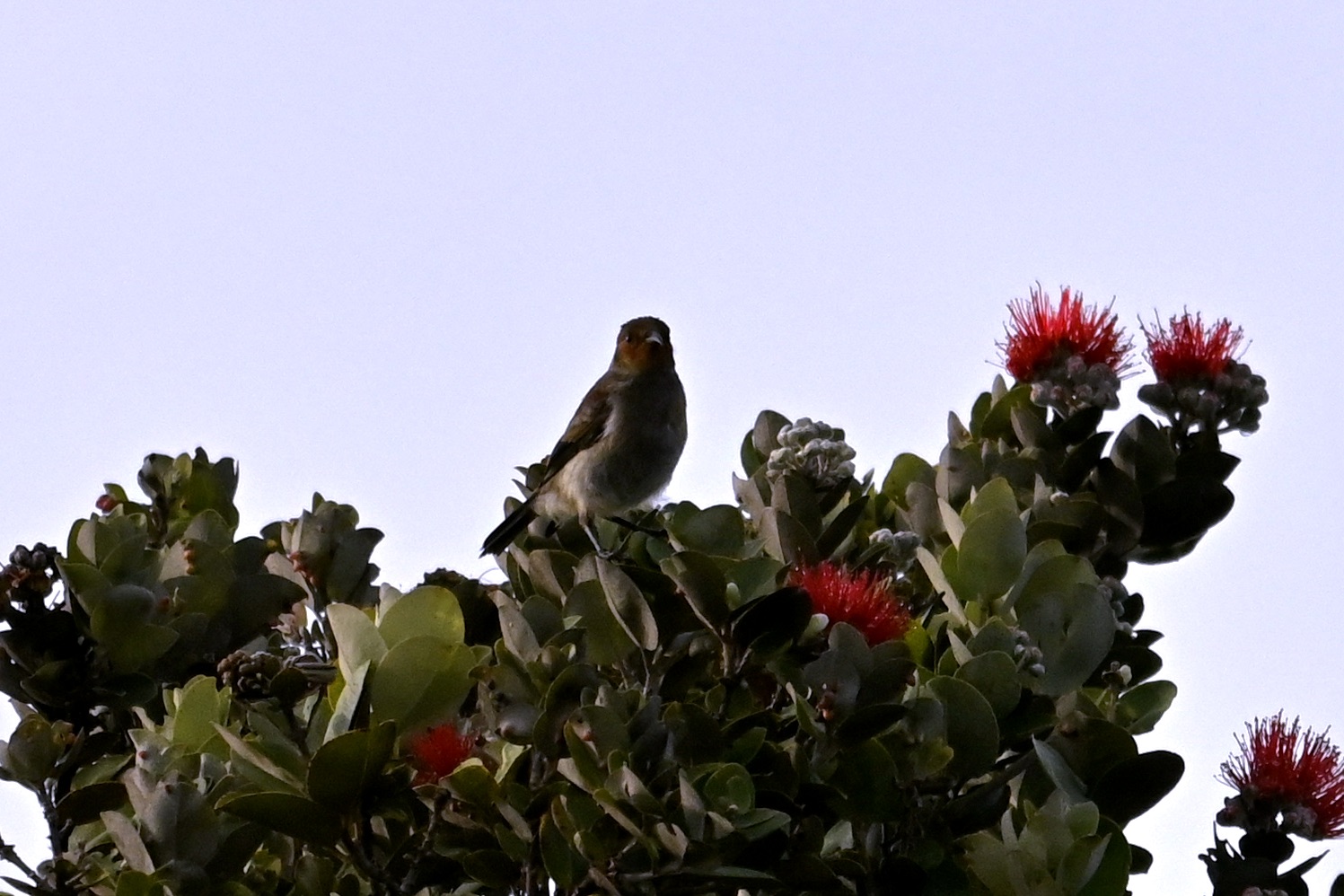
Photo of an ‘apapane – one who learned to sing, as much as we can tell – by Eric Anderson.

Story: How the ‘Akepa Began to Sip Nectar

July 3, 2022

Galatians 6:1-16
Luke 10:1-11, 16-20

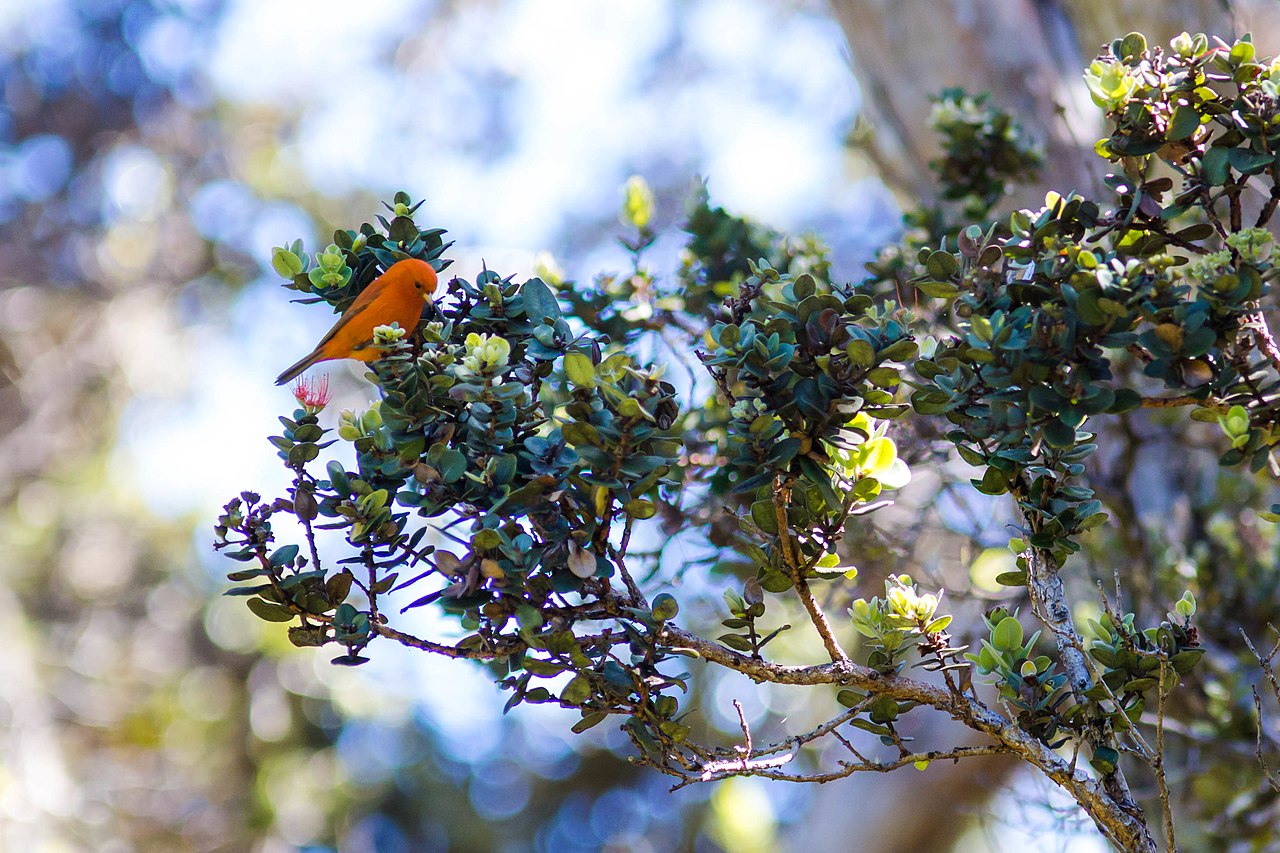
If you’re not familiar with the ‘akepa, they are another of the small birds who live in the ohi’a forest. The males are a vivid orange or orange-red with black feathers on the edge of their wings. The females’ feathers are gray-green, rather close in color to ohi’a leaves. Mostly they eat bugs. And spiders. And caterpillars, which are the early stage of, well, bugs.

They eat a lot of bugs.

From time to time, though, they eat a little bit of ohi’a nectar. The i’iwi sip nectar nearly all of the time. The ‘apapane mostly sip nectar but will also eat some bugs. The ‘amakihi like to mix up their meals, some nectar here, some bugs there, some fruit in some other places. And the ‘akepa… eat bugs.

They eat a lot of bugs.

But they do sip a bit of nectar from time to time, and this is how that came about. The first known sip was an accident. A bright orange ‘akepa was hopping about the tree, poking his beak into clusters of leaves, searching for those tasty little bugs and spiders. A somewhat careless poke with his beak came back with nectar, not a bug.

It was a revelation. It wasn’t a bug – wouldn’t make a meal – but it would be a tasty snack every once in a while.

He decided he needed to share the news with the other ‘akepa. He found the little flock he flew with picking over another tree and shouted, “Hey, idiots! Try sipping the nectar!”

To a bird, they gave him a look that said, “Who are you calling an idiot?” and went back to chasing bugs.

“Are you stupid? Try the nectar!” They ignored him.

He kept this up for quite some time, getting more and more insulting until sunset put an end to his harangue. All the ‘akepa in the little flock went to sleep pretty irritated, in his case with them, and their case with him.

In the morning, before he could get started, one of his friends, a young female, flew over to him. “Are you going to call us idiots all day?” she asked.

“But you are!” he said.

“No, we’re not,” she said. “What we are is insulted. Now if you’ve found something interesting, we might consider it, but not as long as you treat us badly.”

He opened his beak to yell, but something in her look told him that he shouldn’t. He closed his beak. He opened it. He closed it. He sighed.

Then he dipped his beak into a nearby ohi’a blossom and gave it a good, deep sip.

“You might want to try this,” he said. “It’s different. And pretty good.”

She looked at him. He dipped his beak again.

“You’re not playing games with us?”

“No. I’m not.”

After she tried it, other ‘akepa tried it, too. Mostly, Ihave to say, they preferred bugs, and they do to this day. But also to this day, no ‘akepa has liked being called an idiot, and I guess that’s true of a lot of creatures in this world.

by Eric Anderson

Watch the Recorded Story

The story was told live from memory of this manuscript – with all the improvisations and omissions that suggests.

Photo of an ‘akepa by Melissa McMasters from Memphis, TN, United States – Hawaii akepa, CC BY 2.0, https://commons.wikimedia.org/w/index.php?curid=74469703.

Explain Yourself

May 15, 2022

Psalm 148
Acts 11:1-18

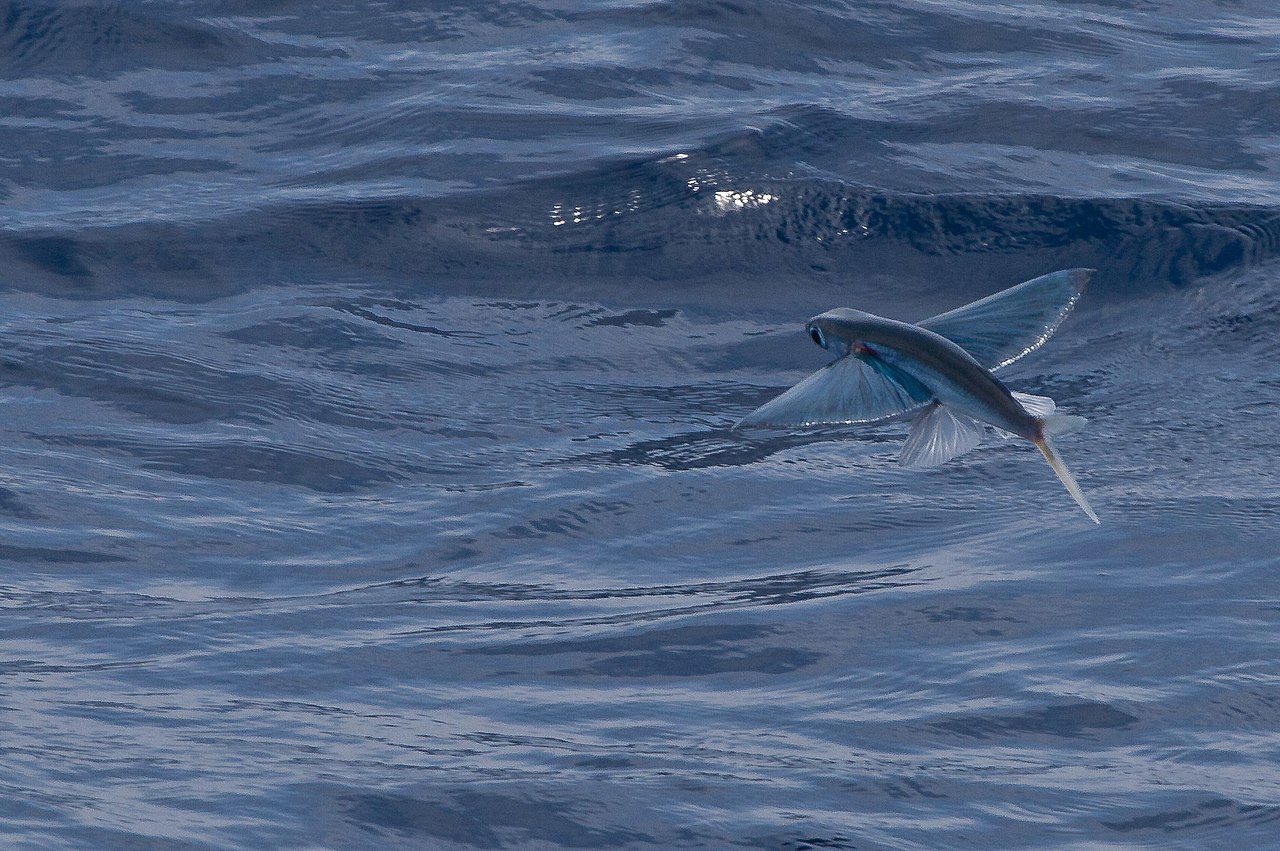
The mālolo is known in English as the flying fish. They don’t really fly, although I must admit that they fly better than, say, I do. They can get themselves moving through the water at near forty miles an hour, which is faster than you should be driving through the streets of Hilo. Then they spread their forward fins and glide above the water. They can stay in the air for about a quarter of a mile, which is about the distance across Liliuokalani Gardens.

I know I can’t stay in the air that far.

The mālolo didn’t always fly that far, or fly at all, however. They swam like fish do, and they swam in big groups, or schools, and they could swim really fast. That allowed them to get from one source of food to the next, and it also allowed them to swim away from fish that wanted to make them into food.

But there was a day when swimming fast just didn’t seem like it would be enough. Some great big ‘ahi had found a school of mālolo, and they were very hungry great big ‘ahi. Soon the school was scattered as the big fish charged through it.

One mālolo found himself pursued by an ‘ahi who was not only big and hungry but also very fast. The mālolo churned his tail and paddled his fore fins and he could feel the ‘ahi’s teeth getting closer and closer. A panicked curve of his fins brought him closer to the surface. The next thing he knew, he’d actually come right out of the water into the air and splashed down again. It confused the ‘ahi for a moment, so the mālolo put on as much speed as he could and spread his forward fins to curve him toward the surface.

This time when he emerged above the water he started to glide along with air streaming beneath those great fins. He held them stiff and kept on above the ocean surface, hoping the ‘ahi wasn’t following right beneath him. He stayed there as long as he could before he slowed and slid into the water once more.

The ‘ahi had turned aside. Perhaps it hadn’t seen him above the surface. Perhaps it had just thought he made a sharp turn in its confusion. It didn’t matter. It went elsewhere.

The mālolo went looking for his friends and family. The school was re-gathering. Some of them weren’t happy.

“What did you do?” they demanded. “Did you go above the water?”

“Well, yes,” he said. “I didn’t mean to.”

“We don’t go above the water,” some of them said. “We’ll die.”

“With the ‘ahi right behind me, I’d have died if I stayed in the water,” said the mālolo.

“How do you explain yourself?” the asked in the cold tones of judgement.

“I really can’t explain it,” said the mālolo, “except to say that it worked.”

I can’t say that the other mālolo took up gliding right away. They didn’t. Some of that generation never did. Others tried it but didn’t do it very well, and they ended up back in the water right in front of hungry predators. But each season more and more mālolo took up that glide through the air, for no other reason than… it worked.

Watch the Recorded Story

Photo of a mālolo by Mike Prince from Bangalore, India – Flying Fish, CC BY 2.0, https://commons.wikimedia.org/w/index.php?curid=63637092.