Story: Sighing on the Wind

February 12, 2023

1 Corinthians 3:1-9
Matthew 5:21-37

“What is love?” the little girl asked her mother at bedtime, but she fell asleep before she heard the answer.

“What is love?” chirped the coqui frog outside her window.  She slept on.

“What is love?” crowed the rooster, who had no idea what time it was and didn’t care whether he crowed at sunrise or the middle of the night.

“What is love?” sighed the dove, and “What is love?” hummed the saffron finch, and “What is love?” purred the cat lying below them.

“What is love?” The question flew about the island, from creature to creature, from voice to voice. ‘Apapane sang about it on the mountain slopes and noio screeched about it above the waves. Pigs grunted it in their shelters and mongoose chittered it in their burrows.

“What is love?” asked the sheep and the pueo and the nene and the dogs. “What is love?” rumbled the mountain and “What is love?” sighed the clouds.

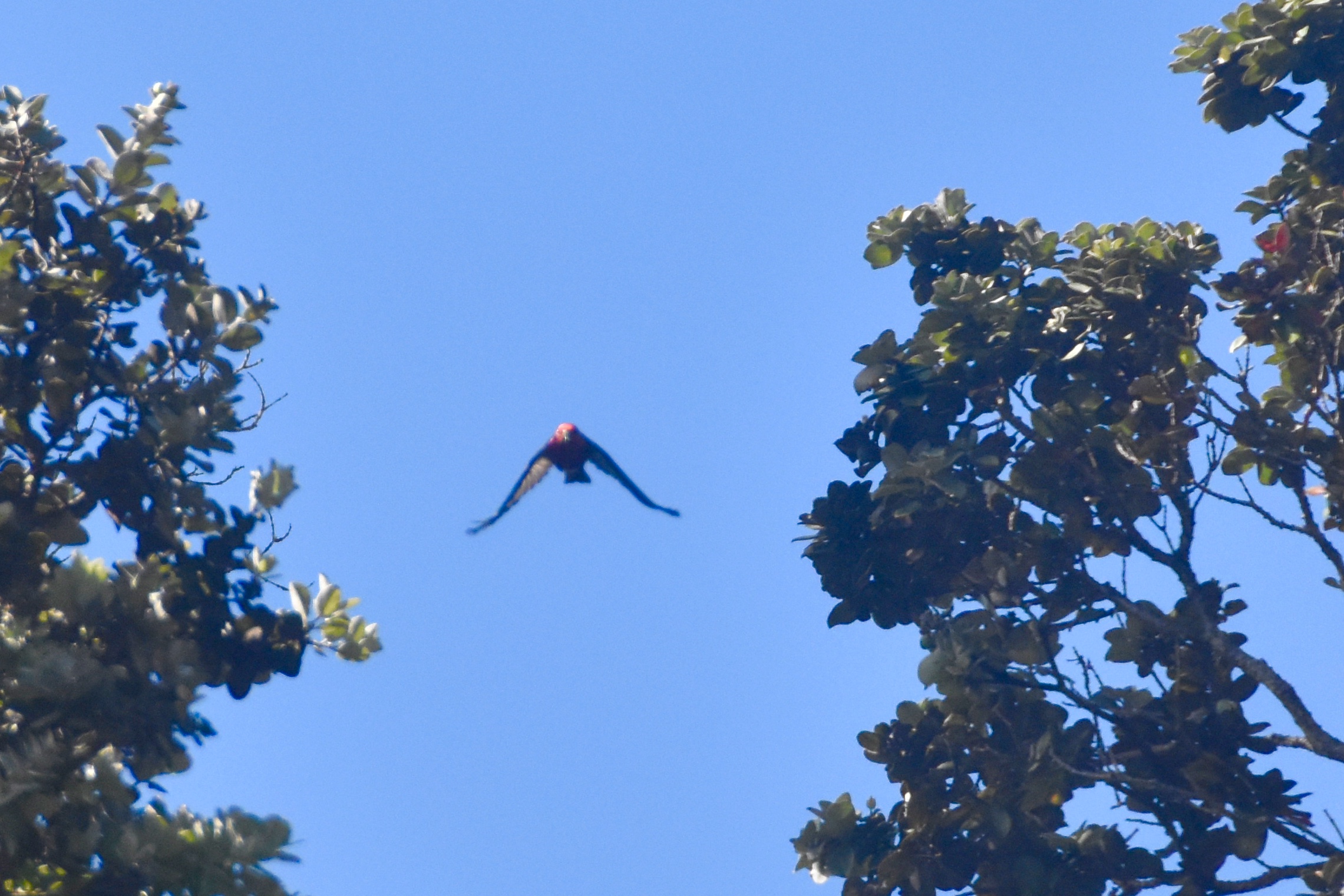
It was the wind who whispered it into the ear of the ‘io. Whispered it, and whispered it again, until the ‘io took wing and cried with a great voice, “Love is what lifts you up! Love is what carries you! Love is what makes you a home!”

The ‘io cried it, and the wind sighed it. The ‘apapane sang it and the pigs grunted it. The nene honked it and the chickens clucked it.

Outside a little girl’s window, a coqui frog chirped, “Love is what lifts you up. Love is what carries you. Love is what makes you a home.”

She woke suddenly, though whether it was the coqui’s voice that waked her I can’t tell you. “Mama!” she called, and both parents hurried to her room.

“I know what love is!” she said, and her mother said, “But of course. I told you when you asked me:”

And the two said together: “Love is what lifts you up. Love is what carries you. Love is what makes you a home.”

by Eric Anderson

Watch the Recorded Story

In the recording above, the story is told from memory of this text. I had no illusions that I would remember all of the creatures I’d put in the story (or the order), but I remembered more of them than I’d expected!
Story: Deep Dives

February 5, 2023

Isaiah 58:1-12
Matthew 5:13-20

I believe that I have mentioned schools before. A couple of my stories have visited nene school, and we’ve heard a little bit about ‘apapane learning to fly and ‘amakihi learning to sing. There are several species of fish, of course, that have made the ultimate commitment to lifelong learning, because…

They are always in schools.

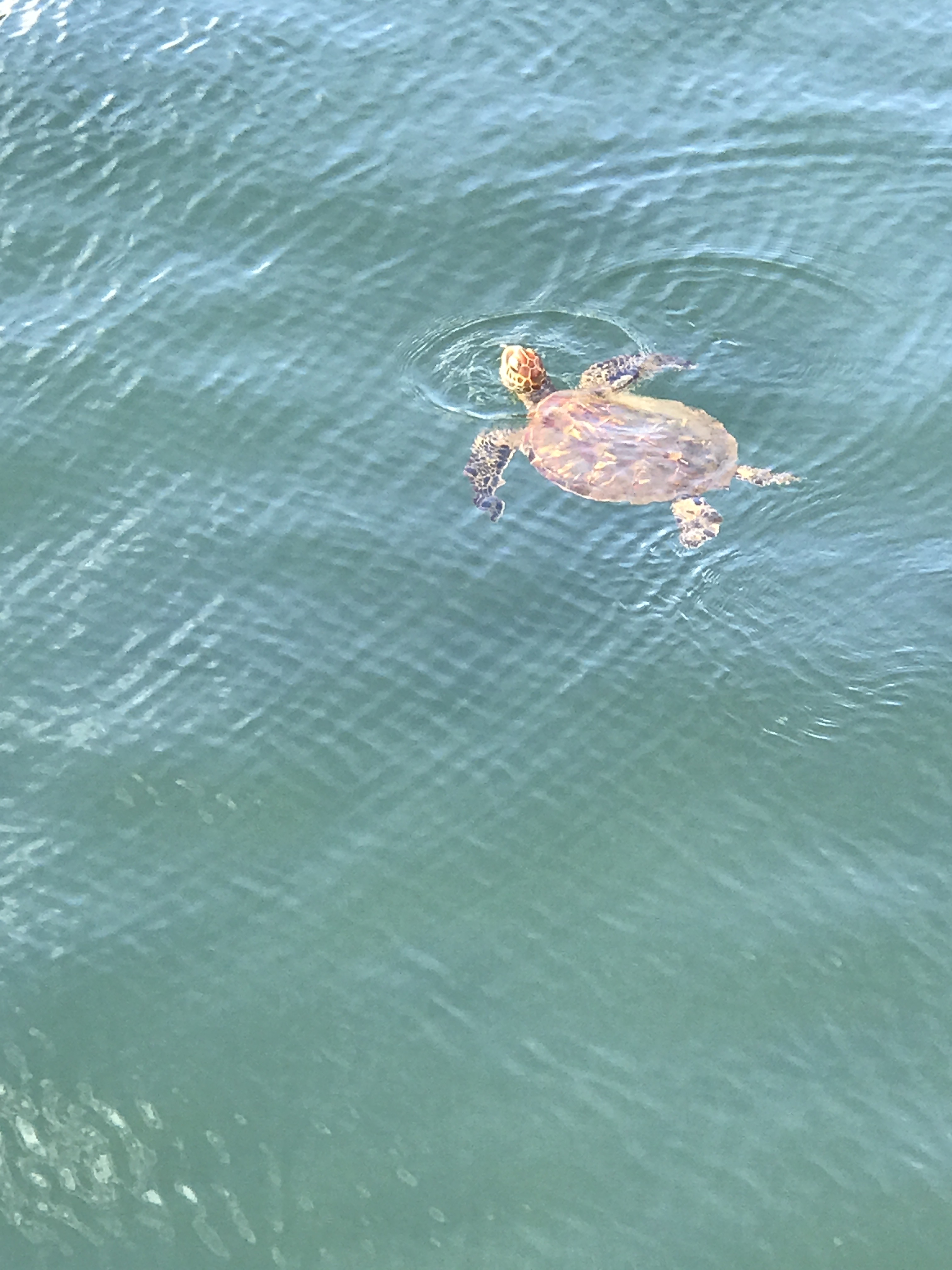
This story is not about birds or fish, though it does take place in the water. This is about a honu school. Green turtles hatch on beaches, of course, and then the little turtles head down into the water. When they’re small they stay in shallow water, but as they grow they venture further out. That’s when it’s time to learn about deeper diving to graze on the seaweeds below or to hide from a hunting shark. That’s when I imagine a honu might go to school.

The teacher of this particular honu class was mostly feeling pretty satisfied. The students were cheerful and respectful. They were kind to one another and to her. They encouraged one another and they kept an eye out for one another. There hadn’t been a single episode where a student had got lost on the reef; someone always called before one wandered out of sight.

That’s a pretty good class.

There were two students, however, who were giving the honu teacher something of a headache, and for completely different reasons. One student insisted on trying things before he was ready for them. She’d set the class to dive to a particular depth, and he’d say, “I can dive deeper than that!” and promptly set out to do that. The problem was that sometimes he could dive deeper, and sometimes he couldn’t. He was still learning how much breath to take in; he was still learning how to feel the water movement in the deeper sections. He’d come back to the surface scared and panting, and ten minutes later he’d shout, “I can dive deeper than that!”

That was one headache.

The other student was entirely the opposite. “Let’s dive to this depth,” she’d say, and he’d shake his head. “I can’t do that,” he’d moan, even when he’d done that same dive the day before. “Let’s go just a little bit deeper,” she’d say, and he’d come right back to the surface.

That was two headaches.

Imagine now that she’s encouraging the one who’s not confident about his dives while the one who’s overconfident about his dives is diving and she had to go rescue him.

That’s three headaches.

When class was over one day she took them over to the beach for a rest and some one-on-two instruction. “I need for the two of you to work at a steady pace,” she said.

“But I know I can dive deeper!” said the first. “But I don’t think I can dive deeper!” said the second.

“Both of you can dive deeper,” she told them, “but this is something you learn to do by degrees. You make a little progress, and a little progress, and a little progress. If you don’t go a little farther, you don’t make progress. And if you go too far, you also don’t make progress. It’s like eating a big piece of seaweed. You take little bites until you’re not hungry any more.”

“You mean I really can dive deeper?” asked the second one. “Yes,” she said.

“You mean a little bit farther means I can dive farther tomorrow?” asked the first one. “Yes,” she said.

I wish I could say that both of them followed her advice in each class from then on. They didn’t. But they did better, and they did better with each passing day. Both of them learned to take those deep dives of the honu, and both of them were grateful they’d take it just a little bit at a time.

by Eric Anderson

Watch the Recorded Story

Photo of a honu (in shallow water) by Eric Anderson.

Story: Simple Song

January 29, 2023

Micah 6:1-8
Matthew 5:1-12

Male ‘amakihi sing a very simple song. They also have a more complex song, and the female ‘amakihi sing that one, too, but when a male ‘amakihi is looking for a female ‘amakihi hoping that they’ll build a nest and a family together, he sings the simple song.

It’s basically a series of tweets strung together.

Not what you’d call complicated.

Ages ago, though, I can imagine that it might have been… more complicated. In those days the ‘amakihi would have sung songs that rose and fell, that stopped and started, that got louder and softer. Those are things that the ‘apapane do to this day. In those days, I imagine the ohi’a forest ringing with songs, echoing from the trunks and the branches, sometimes in harmony, sometimes in cacophony, and rarely quiet. Can you imagine that?

The thing is, it would also have been confusing. With ‘amakihi singing complicated songs, and ‘apapane singing complicated songs, and who knows what other birds contributing their own complicated songs, I can imagine ‘amakihi finding ‘apapane and ‘apapane finding ‘amakihi. It’s not a big issue, briefly embarrassing for both of them, but I can imagine that there was one young male ‘amakihi who decided he was tired of being mistaken for an ‘apapane.

“What about if I come up with something different from the ‘apapane?” he asked his elders.

“No one would come to you,” said the elders.

“Nobody is finding me now,” he told the elders. “I won’t be losing anything by trying something else.”

Some of the elders got huffy, which happens sometimes when they’ve been caught not thinking clearly.

“I’m going to try it,” he said,” and some of them huffed at him. With a complicated song, of course, and an ‘apapane turned up to see if there was somebody looking for her.

The young ‘amakihi found a good branch and began to sing his simple song: just a note repeated several times. It was loud. It was bold. It was impossible to miss even with all the complicated ‘apapane and ‘amakihi songs about. A couple of female ‘apapane turned up, intrigued. But best of all, along flew a young ‘amakihi hoping to find a husband and build a family.

“Nice song,” she said.

“Thank you,” he said.

“I’m glad you kept it simple,” she said.

“So am I,” he said.

I don’t know whether anything like this ever happened among the ‘amakihi and the ‘apapane of Hawai’i Island. To be honest, probably not. Still, the simple song of the ‘amakihi has worked for them for a long time, and there are simple things that people can do that would work pretty well for us as well: Honesty. Caring. Fairness. Respect. Faith. It’s amazing how often we make it all complicated, and find that things fall apart, when Jesus’ words to “Love one another” are simple, clear, and would do so much to make a better world.

by Eric Anderson

Watch the Recorded Story

The story was told from memory of this text. Predictably, memory makes… differences.

Photo of an ‘amakihi by Bettina Arrigoni – Hawaii Amakihi (male) | Palilia Discovery Trail | Mauna Kea | Big Island | HI|2017-02-09|12-21-50.jpg, CC BY 2.0, https://commons.wikimedia.org/w/index.php?curid=74674240.

Story: The Greatest

An ‘apapane who is not diving.

January 22, 2023

1 Corinthians 1:10-18
Matthew 4:12-23

Even when he was very young, they said of him, “This ‘apapane will be one of the greatest singers of his generation.” He had a sweet and true voice, with an ability to produce trills that were faster than anyone had ever heard before. He had a range from mauna to makai, high notes to low notes, and each one was pitch-perfect and noteworthy.

“Such a singer,” sighed the aunties and the uncles and the tutus. “Such a singer.”

All would have been absolutely perfect if he had wanted to be the greatest ‘apapane singer of his time. But he didn’t.

It wasn’t that he didn’t want to be a singer, and it wasn’t that he disliked singing. One of the reasons everybody knew how good he was is that he did enjoy singing. He loved singing. He sang a lot, and he sang beautifully when he did. The problem was that he really wanted to be the greatest diver of his generation.

If you have been wondering why you’ve never heard about ‘apapane divers, well, it’s because they don’t.

He’d been watching the koa’e kea, you see, who nest in the cliffs near the ohi’a trees where the ‘apapane build their nests. He’d first admired them as they soared around Halemau’uma’u and the Kilauea crater, riding the rising air column over the summit. They are elegant when they soar.

Just to see them fly some more, he’d followed some down the slopes from the summit to the sea, which is where koa’e kea go fishing. That had been an eye-opener. He circled at some distance and watched while a bird would hover briefly, spot a fish below the surface, and then dive straight down to catch it. What grace! What elegance!

That, he was sure, was the way to be.

It made him nervous, but he decided to try it. He had no appetite for fish, mind you, so he didn’t worry much about where to dive. He just picked a spot, hovered briefly in mid-air, pointed his beak down, and dove.

It was his first attempt, so it wasn’t all that bad, but things did not go well once he hit the water. His feathers clumped up and he couldn’t see which way was up. His bird-feet had no webs between the toes so even though he instinctively paddled his legs, not much happened. His first dive was about to become his last dive when a beak grabbed him and hauled him to the surface. There was something of a flurry, and then he was hanging from the beak of a koa’e kea heading back to shore.

It dropped him on the ground, wet and disheveled, and now that it didn’t have anything in her beak she said, “What was that all about?”

“I want to be the greatest diver on the island,” gasped the ‘apapane.

She looked him up and down – feathers not meant for ocean water, feet without webs, and a beak designed for bugs and nectar, not fish.

“I don’t think that’s going to work,” she said. “I think it’s likely to drown you.”

He had to admit this was true.

“I’ll tell you what, though,” she said thoughtfully. “I’ve never seen an ‘apapane dive before at all, so right now you’re the best ‘apapane diver on the island. But… I think it best you don’t try it again.”

“I won’t,” he said, as he felt his feathers start to dry. “I’ll go back to singing.”

“Good plan,” she said. “I think that will work a lot better.”

by Eric Anderson

Watch the Recorded Story

In the video above, I am telling the story from memory. My memory can be… inventive.

Photo by Eric Anderson.

Story: Unclear on the Concept

January 15, 2023

Palm 40:1-11
John 1:29-42

He was still a young ram, and was spending his first season as the senior ram of a small flock. Frankly, most of the ewes in the flock knew more than he did about being a sheep on the mountain slopes, and several of them were smarter than he was, too.

Fortunately, being senior ram of a small flock doesn’t require a lot. Basically, you have to wake up in the morning and look around. If there’s grass where you are, you stay there and everybody eats. If there isn’t, you look around some more, and if you see a spot with grass, you say, “There’s a spot with grass,” and everybody goes over there and eats. And if you don’t see a spot with grass, you ask, “Anybody see a spot with grass?” and somebody says, “Over there.”

And then everybody goes over there and eats.

It’s not a great baaahther.

He was feeling his way into responsibility, however, and he tended to be a bit rambunctious – I’m afraid this story is rather full of puns, and I feel a little sheepish about it – so he could be a little nervous and irritable. Instead of waking up calmly and looking about, he’d spring to his feet and turn around wildly in all directions, like a confused compass. “On your bleat!” he’d shout (he meant, “On your feet!”) and then “Come along, ewe!”

I did apologize for the puns, didn’t I? It’s shearly a pity I didn’t stop making them, isn’t it?

His greatest confusion, however, came the morning that the first lamb arrived. Suddenly the flock was bigger – not much bigger, as it was a small lamb, but he was used to the numbers before, and now there was one more.

“Oh, no,” he said. “That’s too many. Take it back.”

“You can’t take lambs back,” they told him.

“Then I’ll take it back,” he said, even if he had no idea where to go. He walked over to where the lamb was standing by its mother, and said, “Come along. I’m taking you home.”

That was when he noticed that the other ewes of the flocks were crowding in between him and lamb.

“What are you doing?” he said, making the same pun a second time.

“We are ending a rampage,” said the ewes, making a new pun for the first time.

“What are you talking about?” he said as the wall of ewes pressed him away from the lamb.

“Lambs,” said the oldest one, “aren’t for giving back or sending away. Lambs are for treasuring and protecting. Lambs are for raising and celebrating. Lambs are for the joyful present and the promising future of this flock. If you want to be a rampion” – oh, good, another pun! – you will start taking care of this lamb and the other lambs coming right now.”

“Well,” he said, “if ewe put it that way.” He was too rattled to come up with a new pun.

“Think it over,” they said. “Take a ramble.”

He did do a little lam(b)enting, but he came around. The smallest and newest ones in the flock are for treasuring and protecting, for raising and celebrating, for the joyful present and the promising future. For sheep – and for us.

by Eric Anderson

Watch the Recorded Story

In the recording above, I told the story from memory of this prepared text. My memory is… not perfect. But I did remember most of the puns.

Photo of a mother and lamb by Wanderschäfer Sven de Vries – Own work, CC BY-SA 4.0, https://commons.wikimedia.org/w/index.php?curid=116038086.

Story: I Want More Light

January 8, 2023

Isaiah 60:1-6
Matthew 2:1-12

“More light,” grumbled the camel. “I want more light.”

Camels are not naturally night animals. If I lived in the desert I would be a night animal, but camels can tolerate the desert sun in ways that I can’t. They like the day, and their favorite way to spend the day is with eating.

After all the Christmas celebrating we’ve done, that might feel a little familiar.

This camel was grumpy because, first of all, he was a burdened beast. On his arched back he carried a saddle sometimes, and a load of goods on others. There was one set of bags he really dreaded. It was heavy and sometimes it clinked in a really annoying way. He preferred carrying one of these stargazers to that one.

“It’s as heavy as lead,” he’d say.

“I think it’s gold,” said another camel.

“It’s as heavy as lead,” he’d repeat, which is basically true, after all.

He didn’t complain quite as much about the other two loads, which were both lighter and smelled nice.

Second of all, the camel was grumpy because it had become a very long trip. Long trips aren’t unusual in the life of a camel, but that doesn’t mean they like them. This one didn’t like them.

“Will it never end?” he said.

“I think we’re almost there,” soothed another camel.

“Will it never end?” he’d repeat.

Third of all, the camel was grumpy because they were travelling at night. Camels aren’t night animals. This camel wasn’t a night animal. This camel was increasingly cross.

“More light,” he grumbled. “I want more light.”

“I think they’re following that star,” said another camel.

“Stupid stargazers,” said the camel. “I want more light.”

I think you can probably guess who those star-followers were, and where they went, and who they saw, and what gifts they gave that family. Here’s a hint: it wasn’t lead. It was gold.

When they left, the camel was in a much better mood. For one thing, it looked like they were taking a different, hopefully shorter route back. For another, the three loads were gone, so there wasn’t as much to carry. For another, they were finally back to sensible travel by day.

And finally, something had happened when that camel had, drawn by some unlikely curiosity, stuck his nose through a window and seen a baby receiving those things he’d carried across the miles. The gold and frankincense and myrrh didn’t seem like great playthings for an infant, but they seemed really important for a family that was obviously poor and seemed to be worried about trouble. And the child himself, well: the camel felt, just for an instant, like he had made a world of difference, and that he could do so again.

“More light,” he said as he took each step on the way home. “I think I’ve seen more light.”

by Eric Anderson

Watch the Recorded Story

In the recording, I’m telling the story from memory of the prepared text above. Between memory and improvisation, there’s a lot differences between them.

The image is Journey of the Magi by James Tissot – Minneapolis Institute of Arts, Public Domain, https://commons.wikimedia.org/w/index.php?curid=45592253. Regrettably, the artist set the painting in daylight.

Story: Don’t Stop Me if You’ve Heard This One Before

December 25, 2022

Isaiah 62:6-12
Luke 2:1-20

So… Don’t stop me if you’ve heard this one before.

Once upon a time there was a woman named Mary, and she was expecting a baby. It was a special baby, which you’d think would mean that she’d be as comfortable as she could be when the baby was born – a nice room, plenty of helpers, that sort of thing – but instead she found herself far from home, amidst strangers except for Joseph, and putting her newborn baby in an animal’s feeding trough to sleep because there wasn’t any room in the inn.

You’ve heard this one before, haven’t you? I can tell.

Don’t stop me, though.

There were animals around when she wrapped the baby up and set him down to sleep. I mean, he was lying in their eating spot. I’m sure they were curious. A couple might have been a bit annoyed because where were they going to eat? If it had been you, would you be OK if somebody put a newborn lamb on your plate at your place at the dinner table?

A couple of those animals might have felt that way, too.

There’s some old stories – not as old as the story of the baby, but old – that say that the animals in that stable gained the ability to speak that night. It faded away in a short time, but that story says that they regain that power of speech each Christmas Eve – last night – but people never hear them because we’re all asleep.

And so the honu surfaces on the star-lit ocean and whispers to the ‘ulili on the shore, “Spread the word! God’s savior is in the world. Peace on earth, good will to all!”

The ‘ulili trots on its stilt legs until it finds a dozing saffron finch. “Spread the word! God’s savior is in the world. Peace on earth, good will to all!”

The saffron finch spreads its small wings and finds the sleeping nene. “Wake up! Spread the word! God’s savior is in the world. Peace on earth, good will to all!”

The nene takes to the sky and honks out to all who can hear, “Spread the word! God’s savior is in the world! Peace on earth, good will to all!”

On the mountain slopes, the ‘apapane awakes, and though I’m afraid that he’s cross, he flutters about and sings, “Spread the word! God’s savior is in the world! Peace on earth, good will to all!”

High above, the ‘io leaves off hunting for a moment, and soars over the bay, calling once more, “Spread the word! God’s savior is in the world! Peace on earth, good will to all!”

Now, you and I, we slept through all that. And with midnight gone, the creatures of Hawai’i have gone back to their regular voices, their everyday songs. So we have to take up the message, don’t we?

Spread the word. God’s savior is in the world. Let us bring peace on earth, and share our good will with all.

by Eric Anderson

Watch the Recorded Story

I told this story from memory of the text above – which means that between memory and improvisation, there are differences.

Photo by Eric Anderson.

Story: Fulfilling

December 11, 2022

Luke 1:46b-55
Matthew 11:2-11

His feathers were fully grown and laid upon his wings and back in shades of greyish brown, with bright white and black on his chest and wings. His wings stretched nearly three feet across, elegantly shaped and tapering to each pointed wingtip. He was kind of awkward on the ground and it took some work to get airborne, but once he caught the air beneath his wings he could stay airborne for hours. He was an ‘ua’u, or Hawaiian petrel, and he would spend three quarters of the year over the sea.

He was, in short, all grown up.

That left him, I must say, just a little cross. Flying over the ocean at night, wings beating and eyes tracking the water below for the little glow of fish or squid near the surface, he wondered what more there was to things. It was all very well to be a strong flier and a good looking bird and an effective fisher – flying fish, beware! – but now that everything was done, what was there to do that was new?

One day he found himself flying nearly wingtip to wingtip with his grandmother. It was pure chance – ‘ua’u fly solo or in pairs during their nine or so months at sea – and the two fished in silence for a while. After catching a particularly tasty flying fish, however, the grandson turned to the grandmother and asked, “What do I do now that I’ve done everything?”

“What makes you think you’ve done everything?” said Tutu, rather surprised.

“Well, look at me,” he said, and turned a circle that showed off his feathers and flying skills. “I’m an expert at catching fish,” he said, “and I know all the calls and sounds of an ‘ua’u. What more is there?”

Tutu knew that there was something more, but the ‘ua’u don’t start having chicks until they’re some years older, so she didn’t mention that. She was puzzled, though, that her grandson thought he’d done everything there was for an ‘ua’u to do even before having a family.

“Look down,” she said. “What do you see there?”

He looked down and there was a ruffling beneath the sea surface. It was a school of squid – but strangely, he’d only seen such a thing once or twice and had never fished them.

“Follow me,” said Tutu, and she gave a strange twist of her wings and swooped down over the ocean surface. He had to follow more gently, because he’d never seen that flight move before. The two swept over the school of squid and in a moment they were both feeding.

“Was that different?” asked Tutu, and he had to admit it was. “And why didn’t you follow me down the way I flew?” she asked, and he had to tell her he’d never seen what she’d done before.

“I guess you haven’t done it all yet, have you?” asked Tutu.

“But once I’ve eaten everything in the ocean,” he said, “and learned everything there is to know about flying, what is there then?”

“It’s not likely that you’ll taste everything that swims,” she said, “and there is always something more to learn about flying – but even when you get close to that, there will be other ‘ua’u around who will want to learn what you know. Sharing those things makes them new again.”

“Your life is never fulfilled,” she told them. “It may seem much the same from day to day, but even then there are new things, new challenges, because tomorrow is not just like today. Each day you are fulfilling your life, and each tomorrow you are fulfilling it a little more.”

by Eric Anderson

Watch the Recorded Story

In the video, I’m telling the story from memory of this text. And making things up as I go along as well.

Photo of an ‘u’au in flight by ALAN SCHMIERER from southeast AZ, USA – HAWAIIAN PETREL (5-3-2018) kalahaku overlook, haleakala nat park, maui co, hawaii -01, CC0, https://commons.wikimedia.org/w/index.php?curid=74776449.

Story: Easier?

December 4, 2022

Isaiah 11:1-10
Matthew 3:1-12

That year the goslings had a choice between two flight instructors here on Hawai’i Island.

I know I’ve talked about nene school before. It basically covers two topics: how to fly and how to find good things to eat. As I said, there were two flying teachers that year, and the goslings were able to choose which class to attend. One teacher was an older male nene, and he had charisma. He strutted around and hooted and honked, and you just knew that if you didn’t do just what he told you, he’d be honking right there in your beak.

The other teacher was smaller and quieter. She was well known as one of the best fliers of all the flocks on the island, but she never made much of it. You could hear her fellow teacher’s voice for miles. You hardly ever heard her say anything.

One young nene was, to be honest, pretty intimidated by both these teachers. He was pretty intimidated by flying in general. He didn’t really want to be judged by a nene considered one of the best fliers of the island, but he also didn’t want to be yelled at a lot by a big, noisy teacher. Most of his classmates, though, were impressed by all the honking and the strutting and the bravado – and maybe they were afraid that if they didn’t go to his class, they’d look like they were afraid.

When the day came to choose teachers, most of the goslings went with the big noisy male teacher, and a smaller group chose the smaller female teacher, including the young nene who was scared of them both.

It didn’t take long before he wondered if he’d made the right choice. His teacher never raised her voice, but she never missed anything, either. She could spot a single feather out of position and she always made her student fix it. Her classes started early and they ran late. Across the slopes her students could hear the agitated honks of the male teacher for a while, but then his voice would fade. They’d hear the voices of those other students, now released from their class, playing and foraging for snacks, while they were making tightly controlled – and closely inspected – circles in the sky.

“I need this to be easier,” said the young nene one morning, and instead of going to his class he made his way to the other class. Nobody minded. He joined the small crowd and watched the teacher honk at the students until they all stretched out their wings and took off. With his agitated honking behind them, they tried to form a flying V, but none of them had really mastered keeping a straight, level, and steady course. They veered from side to side, everybody except the young nene who’d just joined their class that day. He knew how to fly straight and level. He wouldn’t fly faster than the goose ahead. But he found himself dodging gosling after gosling as they zoomed back and forth across the formation.

The teacher’s honks were plenty loud, but he was saying things like, “Don’t do that! No! The other way! The other way!” Since none of the flyers knew what “that” was, or who was doing “that,” and which way might be this way and what way might be the other way, well. It didn’t help.

The teacher honked himself to hoarseness and dismissed the class early, flying off to find some ‘ohelo. The young nene watched him go, and flew over to where the smaller class was still meeting, with the sharp-eyed female teacher.

“You’re back?” was all she said.

“I’m back,” he said. “I’ve found it’s easier to learn to fly by working hard.”

by Eric Anderson

Watch the Recorded Story

The story was told from memory of this manuscript – by someone with an imperfect memory.

Photo by Eric Anderson.

Story: As Dawn Approaches

November 27, 2022

Isaiah 2:1-5
Romans 13:11-14

As you know, one of the really important questions in the life of any animal – bird, fish, reptile, or mammal – is:

“When is breakfast?”

For most animals the next question is likely to be “where is breakfast?” Whether you’re a hunting animal that has to find something with meat on it, or whether you’re a plant-eating animal, the fact is that you probably haven’t gone to sleep where breakfast can be found. Even the nectar-eating birds of the ohi’a forest have to find a tree in blossom in the morning.

Still, the first question is: “When is breakfast?”

The kolea has to learn two answers to this question. As you know, kolea emerge from eggs laid in Alaska. So the first thing a kolea chick has to learn when it’s heading out on its own is when the worms come out.

In fact, kolea don’t ask the question, “When is breakfast?” because the answer is always, “When the worms come out.” So they skip to the next question, which is, as you’d guess, “When do the worms come out?”

“When do the worms come out?” a young kolea asked his mother.

She didn’t have a great answer, because she wasn’t a great thinker among the kolea. She knew a lot of things, but she didn’t put them into words. You could count on her to be right there when the worms poked their heads out of the ground, but she couldn’t tell you what she’d noticed to make her go there. If she’d been a human being she’d have been one of those amazing cooks who, if you ask, “how much butter did you put in that cake?” would reply, “About the right amount,” and not really know. And the cake would be delicious.

That’s why she said, “The worms come out when they do,” which wasn’t helpful, but she did the best she could.

He managed to find worms by following his mother around, and since she didn’t mind that worked pretty well. But then came the time to go to Hawai’i for the first time. He wouldn’t have her nearby there – or rather, here.

“When do the worms come out?” he asked.

“When they do,” she answered, and that was the best he got.

Here in Hawai’i, he settled into the new job of living on his own. Worms were hard to come by, but there were plenty of grubs and spiders and so on. He did fine. He missed worms, though.

“When do the worms come out?” he asked himself out loud.

“As dawn approaches,” said a voice from nearby.

It was a myna, which took him by surprise. Mynas usually talk to each other – or rather, they argue with each other a lot. “What was that?” he asked.

“The worms come out as dawn approaches,” said the myna, which then turned away from him to enter a furious argument with another myna about… well, something. Anything. Who knows?

The kolea thought about the things his mother had done. She’d begun moving about as the sky grew brighter in the east, and flown to grassy places that worms liked. She chose cool places with some heavy dew on them or a fine rainy morning. In the cool wetness, worms were plentiful. When the ground dried and the sun warmed everything, the worms disappeared underground again.

“As the dawn approaches,” murmured the kolea.

There are plenty of things that require more examination and thought to understand than when to find a worm. Most things have something that gives you a notion that things are changing, that something is coming. For many things in life, there’s some sort of sign: like the approaching dawn.

by Eric Anderson

Watch the Recorded Story

The story was told from memory of this prepared text. And… it’s not the same.

Photo by Eric Anderson.