Story: Unexpected Blossoms

July 12, 2026

Isaiah 55:10-13
Matthew 13:1-9, 18-23

In all her lifetime, there was a grove of ohi’a that had never, ever blossomed.

Admittedly, she was young. There hadn’t been a great deal of her lifetime for the ohi’a to blossom. But they never had, she knew. Because that stand of trees was really handy, she had visited it regularly when she was younger – which wasn’t a long time ago, you understand – and although there’d been bugs to snack on, there just wasn’t any nectar and there just wasn’t a lot of reason to visit those trees.

So she stopped.

For one thing, there were plenty of other trees to visit, including ohi’a and koa and even a little grove of mamane trees. She didn’t need those ohi’a trees to bloom, though she did wonder if they were coming down with the disease that has left a lot of dead trees on the mountain slopes. They weren’t sick, though. On the increasingly rare occasions she flew over that grove, they were rich with dark green leaves – just no flowers.

So she stopped flying over them.

She joined a little flock of ‘apapane and ‘amakihi and one or two i’iwi, some of whom were really good at finding those blossoming stands. She followed their lead with confidence, because they tended to guide her to good places.

Then came the day that one of them announced that the flock would be flying over the stand of trees that she’d stopped visiting. “There’s blossoms there, I’m sure,” he said.

She was young but she was also confident, so she objected. “There aren’t any blossoms there. There are never any blossoms there. We might find some bugs, but the smart bugs will be where the nectar is, and that won’t be in those trees.”

“Oh,” said the leader. “Have you been there today?”

“No,” she said. “I’ve been there plenty of times, though, and they never blossom. Never. Not in my entire life.”

The other birds looked a little doubtful about this. One or two of them, who were older, had seen tree stands bloom unexpectedly after long periods without flowers, but many of them thought that “never blossomed” sounded pretty final.

“Let’s try,” said the leader.

“I’m not going,” said our young ‘apapane, “because it’s a waste of time and effort. I’ll be here when you come back so I can tell you I told you so.”

The leader shrugged as only an ‘amakihi can shrug, and took off along with nearly all the birds in the flock. Three or four thought they’d just as soon trust the youngster. They hunted around the tree they were in, and waited for the rest of the flock to return empty-beaked.

But they didn’t.

One by one, the other birds flew off to join the rest of the flock. One by one, they didn’t return empty-beaked, either. Finally she took off as well, with her stomach (and her song) grumbling away.

She found that grove full of flowers, of course, as the leader had expected. She settled in to sip nectar, rather embarrassed but also rather hungry. She didn’t know what to say.

“Nothing is forever,” said the leader kindly. “Trees bloom and then stop. Trees die and new shoots rise. Sometimes what you think you know isn’t so; and sometimes it is. You just have to look again.”

by Eric Anderson

Watch the Recorded Story

I write these stories in full in advance, but I tell them from memory and improvisation. The story as I wrote it and as I told it do not precisely match.

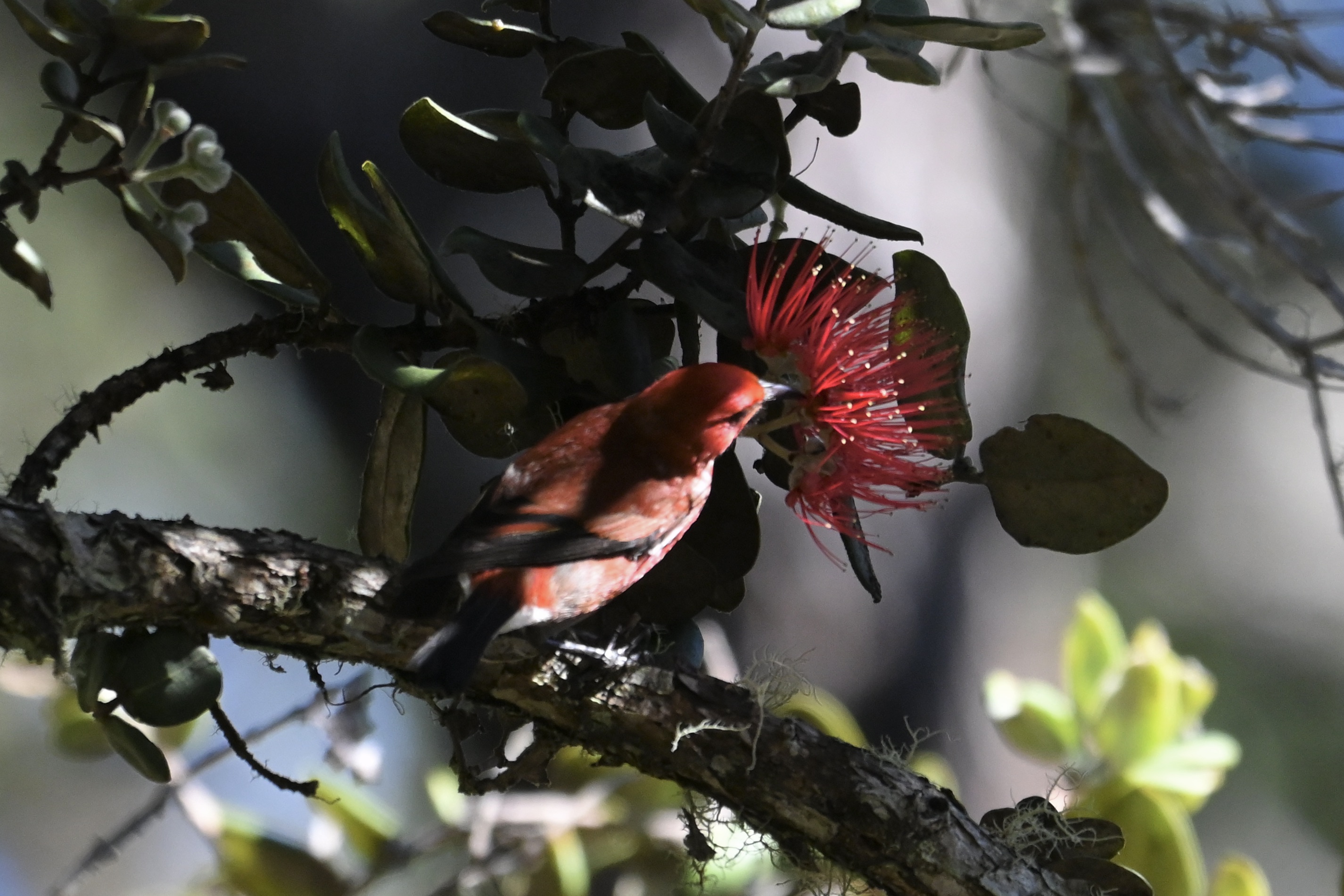
Photo of an immature ‘apapane by Eric Anderson.

Story: The Sweet Bug Mystery

An 'apapane (a red bird with black wings) feeding at a red ohi'a flower.

January 5, 2025

Jeremiah 31:7-14
John 1:1-18

The ‘elepaio has the reputation for being the most curious bird of the forest, but once there was an ‘apapane who was as curious as nearly any ‘elepaio. He had questions about everything. Why were his feathers brown when he was younger, and why did they turn red? Why did some trees have blossoms and others didn’t? Why did the days grow shorter and longer again?

He found answers to some of his questions, and he didn’t find answers to others of his questions. He never gave up asking them, though, and he never gave up trying to find out.

One morning, while enjoying a late morning snack of bugs, it suddenly occurred to him: Why do bugs taste sweet?

I’m not sure that bugs would taste sweet to you or to me, but the bugs he was eating that day definitely tasted sweet to him. He hadn’t thought about it before, but why should a bug taste sweet? Shouldn’t they be salty, or tangy, or something like that? Why sweet?

He asked around to see if anyone else knew, but nobody did. They hadn’t thought about it, and they weren’t all that interested. “If they taste good, that’s all that matters,” said one of his friends, and didn’t help any further. So the ‘apapane decided to watch and see what sweet bugs ate.

What they ate, he discovered, was a lot of things that he also ate. Those bugs ate fruit. They ate ohi’a nectar. They even ate other bugs who were eating sweet fruit and nectar. The sweetness of what they ate was being carried along to make them at least somewhat sweet.

“That’s amazing!” he said to himself. “But now the question is: Why is fruit sweet? Why is nectar sweet?”

Again, he went to friends and family to ask, and again they didn’t know. “It tastes good; that’s all that matters,” said the same friend. So he began to watch the trees, to see what they did to produce sweet fruit and flowers.

I’m afraid that being an ‘apapane rather than a human being meant that he never did learn the answer to that. He could see that the trees spread their leaves to the sun, but he couldn’t see the way that the green of the leaves combined water from the roots with energy of the sun to make the sweetness that made the tree grow. He couldn’t see that sweet sap being concentrated in the flowers to make nectar, and later in the fruits to feed the seeds of later trees. People have microscopes and chemistry equipment and lots of years asking and answering these questions. He didn’t.

He had to admit that he wouldn’t answer the question of sweet nectar, at least until he learned something new. For him, sweet nectar would remain a sweet mystery.

It never stopped him from enjoying it, though.

by Eric Anderson

Watch the Recorded Story

I write these stories in advance, but I tell them from memory and improvisation. There will be differences between the story I’ve written and the story I told.

Photo of an ‘apapane feeding from an ohi’a blossom by Eric Anderson.

Story: How Curious

January 14, 2024

1 Samuel 3:1-20
John 1:43-51

The ‘elepaio was hungry. I’m not sure why. Any time I’ve been walking around the forested areas of Hawai’i, there have been lots of bugs. Bugs here, bugs there, bugs everywhere. Lots of bugs.

Mostly the bugs make me uncomfortable. I’m not an ‘elepaio. To an ‘elepaio, those are breakfast, lunch, and dinner.

For some reason, that day, the ‘elepaio wasn’t finding many bugs.

Most ‘elepaio are known to be curious. They flit about checking tree trunks and limbs, and fallen trees, for bugs on the bark and bugs that have burrowed into the bark. They look carefully around the leaves and twigs for the movement that indicates a bug, a snack, a meal. If you’re walking about in their territory, they’re likely to come take a look at you and check you out. In old times, canoe makers would watch them to see what trees had lots of bugs – which made them bad for canoes – and the curious ‘elepaio would watch them in reply.

This ‘elepaio was an exception. He’d had some very unpleasant experiences with ‘io and pueo, and even a mongoose or two. He wouldn’t move far from his chosen trees to see what the movement in other branches was all about. And as I said, he wasn’t finding a lot of bugs in his chosen trees.

“I’m hungry,” he grumped aloud.

“I’m not,” said another ‘elepaio in a neighboring tree.

“There’s no bugs here,” he told her.

“There’s bugs here,” she told him.

“I think the bugs have all gone away,” he sighed.

“If they have, they’ve all come here,” she said.

“I’m hungry,” he moaned.

“I think you’re not listening,” she said.

So she flew over and perched right next to him and gave him a gentle tap with her beak.

“There’s bugs a-plenty in that tree,” she said. “More than you and I could eat in a lifetime.”

“They’ve all gone away, I’m sure,” he said.

She nearly flew away in frustration at that, but after a moment, she said, “Come and see.”

“I don’t dare,” he told her. “What about ‘io and pueo and mongoose?”

“You’ll only find out if you come and see,” she told him.

Curiosity is a complicated thing. Curiosity helps us learn new things, but sometimes those things are things we’d rather not know. Curiosity gives us new experiences, but sometimes those are experiences we’d rather not have. Curiosity had led him to the ‘io and the pueo and the mongoose. Would curiosity bring him to enough bugs that they’d feed him for a lifetime? How curious did he dare to be?

His friend said, “Come and see.” She’d seen. She’d learned. She’d experienced. She invited.

He went, and saw, and ate.

by Eric Anderson

Author’s Note: I wrote this story for worship at Church of the Holy Cross UCC on January 14, 2024. Unfortunately, I fell ill and wasn’t able to tell it live.

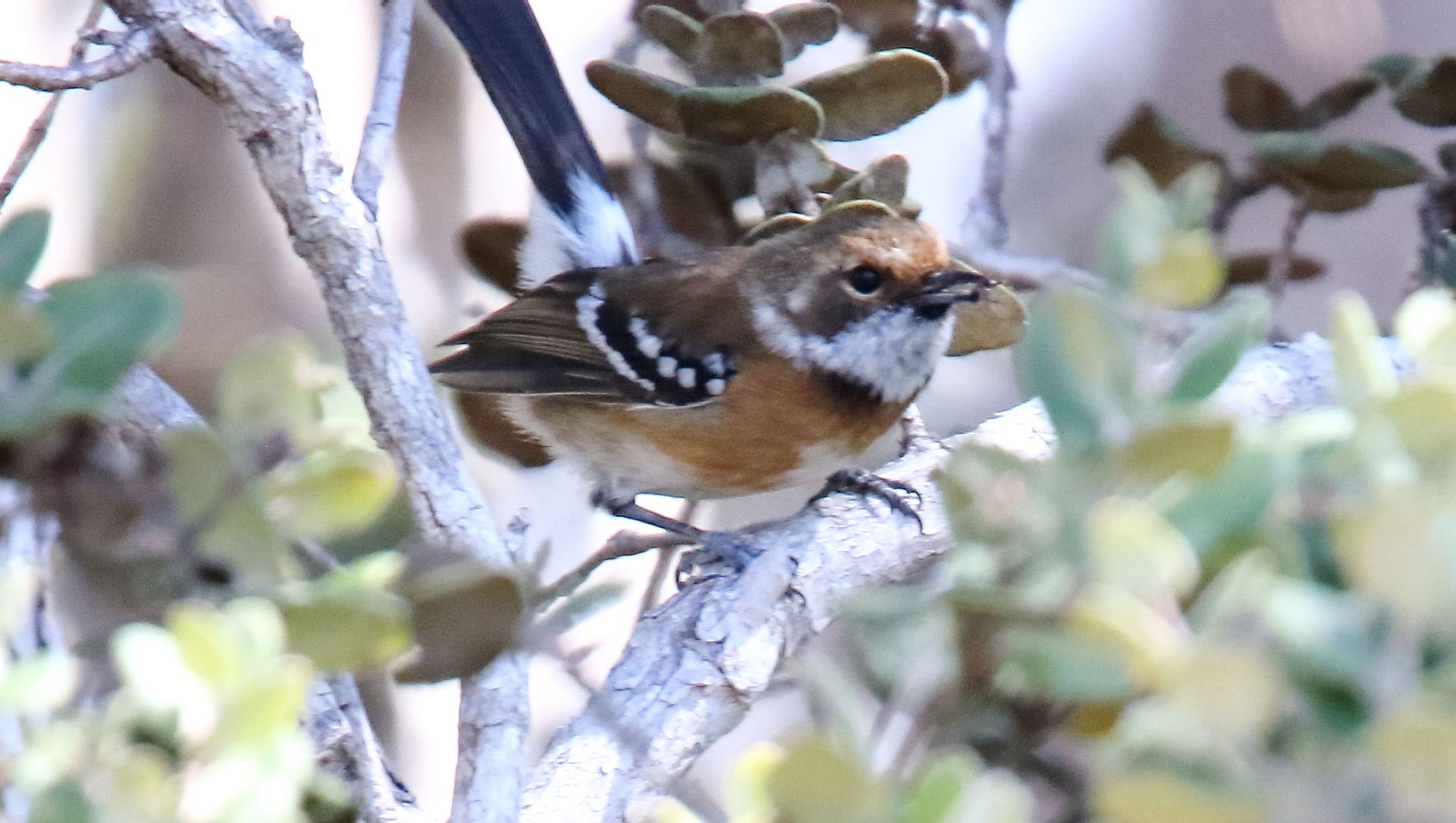
Photo of an ‘elepaio by Dominic Sherony – Hawaii Elepaio (Chasiempis sandwichensis), CC BY-SA 2.0, https://commons.wikimedia.org/w/index.php?curid=52150179.