November 8, 2026
Wisdom of Solomon 6:12-16
Matthew 25:1-13
The ‘auku’u is the most widespread heron in the world, and the only kind of heron that’s native to Hawai’i. This is a story about some of the first ones to get here, a long time ago, so long ago that the people hadn’t arrived yet.
I don’t really know how or why the first ‘auku’u got here. For that matter, I don’t know how the ancestors of the mountain honeycreepers got here. It’s a big ocean for birds with small wings. For whatever reason, whether they were storm-tossed or adventurous or just lucky, the first ‘auku’u turned up in the Hawaiian Islands, looked around, and said, “We can live here. There’s quiet pools along the shore for fishing, and there’s grasses for nesting, and none of the creatures that like to eat our eggs. We can definitely live here.”
So they did.
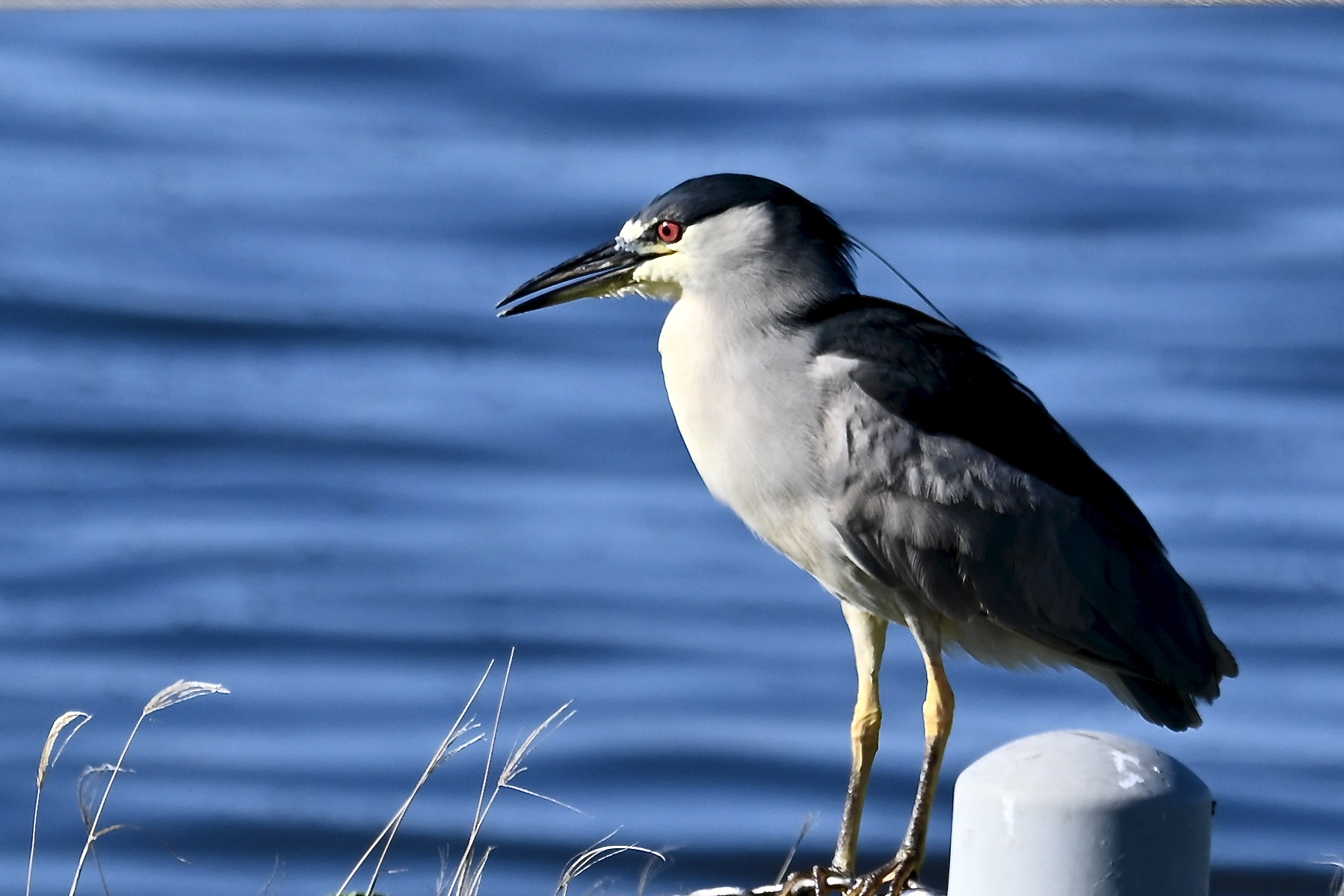
There’s a funny thing, though. In English the ‘auku’u is called the black-crowned night heron. I’ve always found the “black-crowned” a bit of a puzzle, because although the ‘auku’u has a long tuft of feathers trailing from the top of its head it’s often white. But I guess it looks darker in this photo, so there it is. It’s called the night heron because in most of the places where it lives, and that’s a lot of places, they fish at night, when other fishing birds are asleep.
In Hawai’i, though, you’ll see the night heron in the daytime, and that’s what this story is about.
The first ‘auku’u fished the way they always had. They fished at night. Down they went to pools of saltwater or freshwater and searched for a fish dinner. It worked fine. There weren’t any other birds to bother them, so the difficulties of finding fish in the dark were offset because they had more time to do it.
Then one of them got an idea.
“This would be easier if I could see better,” he said. “What if I make a light?”
Other ‘auku’u thought this sounded very clever, and it was. People in many places, in fact, have fished very successfully at night be hanging a light on their boats. The fish get curious and come to take a look.
“I can see one problem,” said another ‘auku’u. “What are you going to make a light with?”
“I’ve found this nut,” said the first ‘auku’u, “and I noticed the other day when there was a lightning storm that it burns pretty brightly. It’s got an oil inside and I’m sure it will make a great light.”
The ‘auku’u was right again. Generations of Hawaiians and other Polynesian peoples have used the kukui nut’s oil to make lamps. It was pretty clever. The ‘auku’u started to get excited. They started coming up with ideas about harvesting the nuts – they could pull them off the trees – and pressing the oil out of the nuts – they thought they could use their beaks for that – and putting the oil in holes in the rock – volcanic rock has a lot of holes – and…
It all broke down when they had to figure out a way to light it. They’d seen lightning do it, but we don’t get a lot of lightning storms in Hawai’i, and how do you arrange for one when you want to light a lamp? They couldn’t figure that part out.
“Wait, I’ve got an idea,” said another ‘auku’u. “What if we fished when it’s light out?”
“What do you mean?” said another.
“What if we fish in the daytime?” she replied.
“But we can’t,” said another ‘auku’u. “We never have. Other birds come and steal our fish. Animals come and grab them. It’s better at night.”
“What other birds?” she said. “What animals? What’s better about the night?”
They thought about it, the ‘auku’u did. “We could give it a try,” said one. “There’d be plenty of light,” said the one who wanted to invent the kukui oil lamp.
So they tried fishing in the light.
They’ve been doing it that way in Hawai’i ever since.
by Eric Anderson
Watch the Recorded Story
I write these stories in full ahead of time, but I tell them from memory and improvisation. The story as written and the story as delivered do not precisely match. I regret that the audio on this recording is extremely low – we were having technical problems.
Photo of an ‘auku’u by Eric Anderson.