Story: How to Build a Nest – Or Not

September 27, 2026

Ezekiel 18:1-4, 25-32
Matthew 21:23-32

A lot of birds build nests of some kind. Some are very simple, just a scrape in the earth. Others don’t build a nest at all, including the oh-so-brave manu-o-ku, which simply lays an egg on a branch. Some build pretty complicated nests. The ‘amakihi makes a very complex nest, and only the expectant mother does the building. Among the ‘apapane, both mother and father work at it. Or at least, that’s how it’s supposed to work.

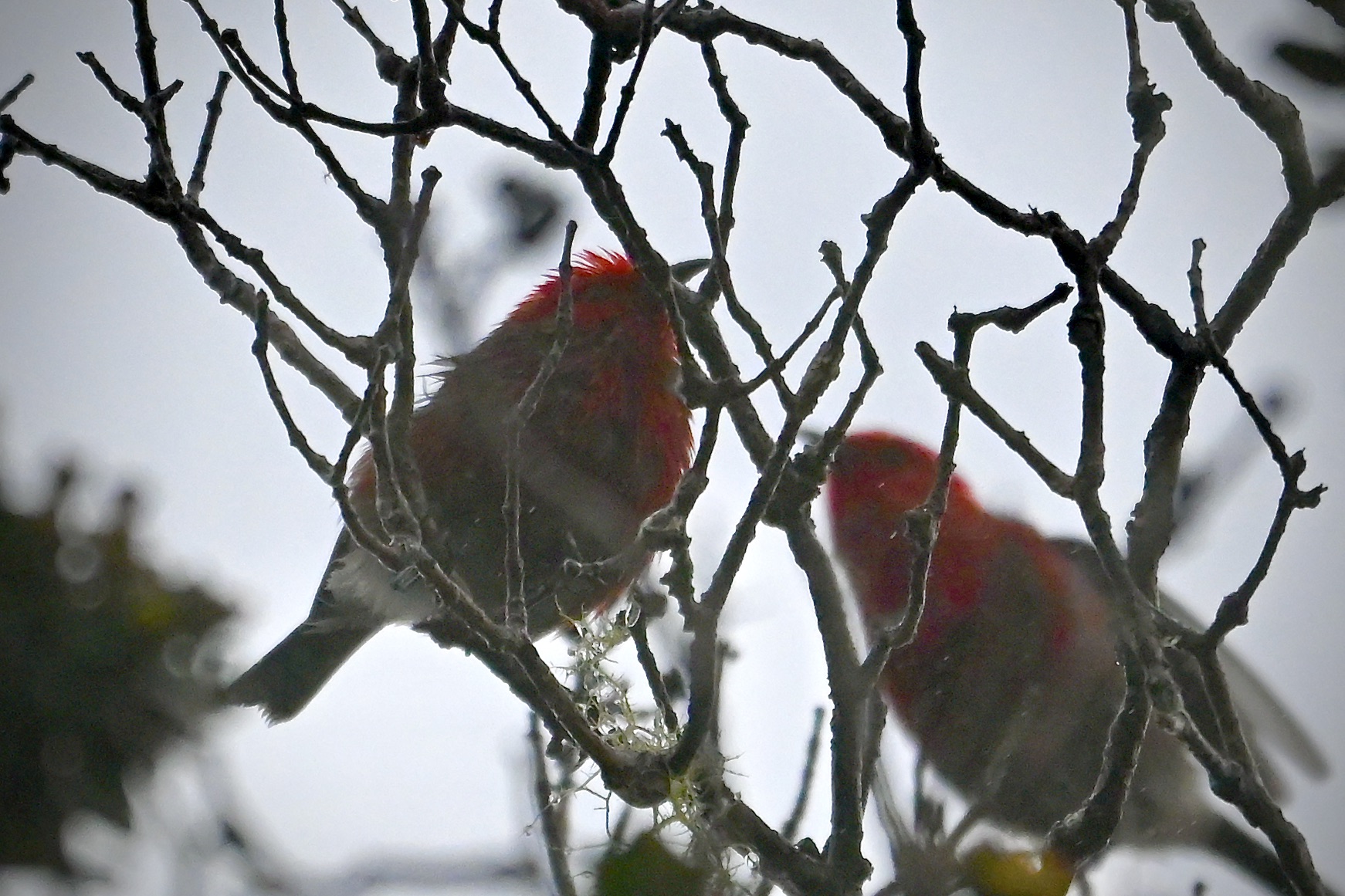
An ‘apapane couple was very excited because two of their children, both males, had found wives and decided it was time to hatch some eggs and fledge some chicks. These were their first, um, grandbirds, and that makes both people and ‘apapane very happy.

What they weren’t happy about was how the preparation was getting along.

Their first son flew over with his wife and they asked, “How’s the nest building going?” The younger couple looked around in embarrassment for a bit before they confessed that they hadn’t started. “How are you going to lay any eggs if you haven’t got a nest?” demanded the hopeful Tutu.

“Go build your nest,” said the grandfather (he hoped) to be, and to his surprise the younger couple said, “No.”

“What?”

“No. We’re going to rough it, like the koa’e kea. We’re going to keep it simple. Find a hollow in the rock. That will be enough.”

The parents were appalled as they flew off. A few moments later, the other son and his wife flew by.

“Please tell me you’re getting a nest ready,” said the grandmother-to-be.

“Oh, absolutely,” said her son, and his wife agreed. “It will be ready well before time.”

“What a relief,” said grandfather-to-be as they flew off. “At least we’ll have some grandchildren raised in a proper nest.”

Strange things happen among birds – and among people, too, but these are birds. That first couple, who were going to lay their eggs in a hollow in the rock, like a koa’e kea? They checked out those holes in the cliffs, and they looked uncomfortable and they felt uncomfortable. Shortly afterward, they were flying about the forest collecting mosses, twigs, and leaves. The nest took shape high in an ohi’a tree.

The other brother and his wife started work on a nest, but they got tired and bored. They barely poked at it. When they left it for a day or two, it began to come apart. No nest took shape. And they didn’t lay any eggs that year.

The ‘apapane grandparents were disappointed, but they were also thrilled. One son and daughter-in-law had said they wouldn’t prepare, but then they did, and raised three much-loved chicks to fledglings and adults. The other couple said they would get ready, but they didn’t, and it would be some time before they had their first nest, and eggs, and children.

“If you do the things to get ready,” said the grandmother to her grandchicks, “it comes out right.”

by Eric Anderson

Watch the Recorded Story

I write theses stories in full ahead of time, but I tell them from memory and improvisation on Sunday morning. The story as you read it does not precisely match the way I told it.

Photo of two ‘apapane by Eric Anderson.
Dreaming with Joseph

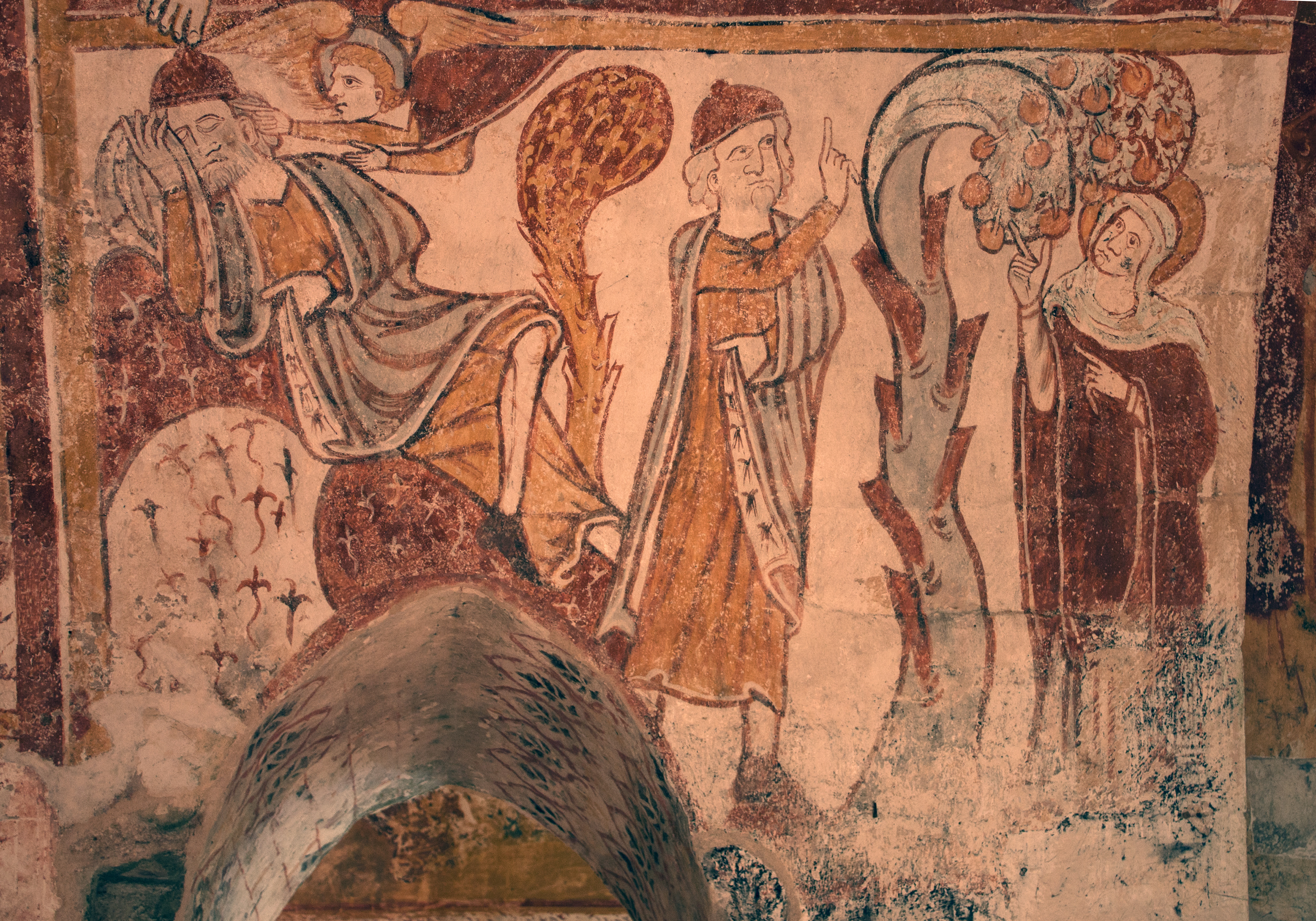
“But just when he had resolved to do this, an angel of the Lord appeared to him in a dream and said, ‘Joseph, son of David, do not be afraid to take Mary as your wife, for the child conceived in her is from the Holy Spirit. She will bear a son, and you are to name him Jesus, for he will save his people from their sins.'” – Matthew 1:20-21

Let me dream with you, Joseph,
just for a moment.

Let us dream together that our trust
is well placed.
Let us dream together of a
promise fulfilled.

Let us dream together of a
God who is with us.
Let us dream together of a
break in the gloom.

Let us dream together, waking
newly resolved.
Let us dream together and see
a new day.

Let me dream with you, Joseph,
just for a moment.

A poem/prayer based on Matthew 1:18-25, the Revised Common Lectionary Gospel Reading for Year A, Fourth Sunday of Advent.

The image is a 12th century fresco of Joseph’s Dream and Joseph and Mary with the Cherry Tree (bizarrely misunderstood as Adam and Eve) in the crypt of the Notre-Dame Gargilesse church, Gargilesse-Dampierre, France. Photo by Daniel VILLAFRUELA, CC BY-SA 3.0, https://commons.wikimedia.org/w/index.php?curid=19347294.

Grim Stories


“By faith Rahab the prostitute did not perish with those who were disobedient, because she had received the spies in peace. And what more should I say? For time would fail me to tell of Gideon, Barak, Samson, Jephthah, of David and Samuel and the prophets…” – Hebrews 11:31-32

Rahab and Samson, heroic opposites.
She was the foreigner betraying her nation,
saved by her pledge to the ruthless invader.
Her neighbors all died, but she and her family did not.

Samson the Strong, a leader and judge,
praised for his strength but not for his folly.
Like Rahab, he trusted an enemy, losing his strength.
But when it returned, he died with his foes.

Grim heroes. Grim stories of warfare,
betrayal, coercion, and death. No wonder
that neither received “the promise” in full.
How could they, when the promise of Jesus is life?

A poem/prayer based on Hebrews 11:29:12:2, the Revised Common Lectionary Second Reading for Year C, Proper 15 (20).

The image is of two mosaics in Santa Maria Maggiore, Rome (ca. 430). Above: Joshua meets the commander of the Lord’s army. Below: Israel’s scouts flee from Jericho, aided by Rahab. Photo by Fabrizio Garrisi – Own work, CC0, https://commons.wikimedia.org/w/index.php?curid=157025271.

Promise Unfulfilled…?

But this is the covenant that I will make with the house of Israel after those days, says the LORD: I will put my law within them, and I will write it on their hearts; and I will be their God, and they shall be my people. – Jeremiah 31:33

Of all the promises you’ve made, O God,
through human speech of ancient poets, this
I wait for most expectantly. Oh when, I ask,
will human hearts be oriented to your will?

From Jeremiah’s day to this, I do not see
a sudden change in human righteousness.
Not even Jesus’ resurrection prompted us
to set aside our greedy lust for power,

Our tolerance for prejudice,
enshrining it in law that breaks the Law
I yearn to feel a-written on my heart.
How bright would be the dawn of such a day!

But God, I fear that knowledge of your law
within the heart would do no better than
to write it on papyrus, paper, wood, or stone.
We learn it, and we know it, and we break it.

So did you, have you, written on our hearts,
and did we find a way to curtain it away,
as centuries of Christians have ignored
the Savior’s last command to love?

I tremble that this promise is fulfilled.

A poem/prayer based on Jeremiah 31:31-34, the Revised Common Lectionary First Reading for Year B, Fifth Sunday in Lent.

The image is Cry of prophet Jeremiah on the Ruins of Jerusalem by Ilya Repin – http://www.art-catalog.ru/picture.php?id_picture=11437, Public Domain, https://commons.wikimedia.org/w/index.php?curid=3257688

Martha’s Prayer

Worried and distracted
by many things?
O, Jesus, if you knew!
Yes, if you only knew!

It’s not the bread and cookies
or the trays of snacks,
nor the fraying linens
or the dusty sills:

It’s the wailing children, Jesus.
It’s the hopeless refugees.
It’s the pain-wracked sufferers.
It’s the justice-denied and hungry.

It’s the comfortable oppressors.
It’s their eager lackeys.
It’s the ones determined
that they will not see injustice.

Worried and distracted
by many things?
O Jesus, if you knew!
But then, you did; you knew.

Breads and cakes forsaken,
I will shed my tears upon your feet.
How will we dry the moisture
lavished there from streaming eyes?

Hold me, Mary, as we weep
together for the long-awaited reign of God.
Unbind your hair, to wipe away
betraying symbols of our grief.

A poem/prayer based on Luke 10:38-42, the Revised Common Lectionary alternate first reading for Year C, Proper 11.

The image is Christ in the House of Martha and Mary, by Johannes Vermeer. Public Domain, https://commons.wikimedia.org/w/index.php?curid=21865869