August 30, 2026
Exodus 3:1-15
Matthew 16:21-28
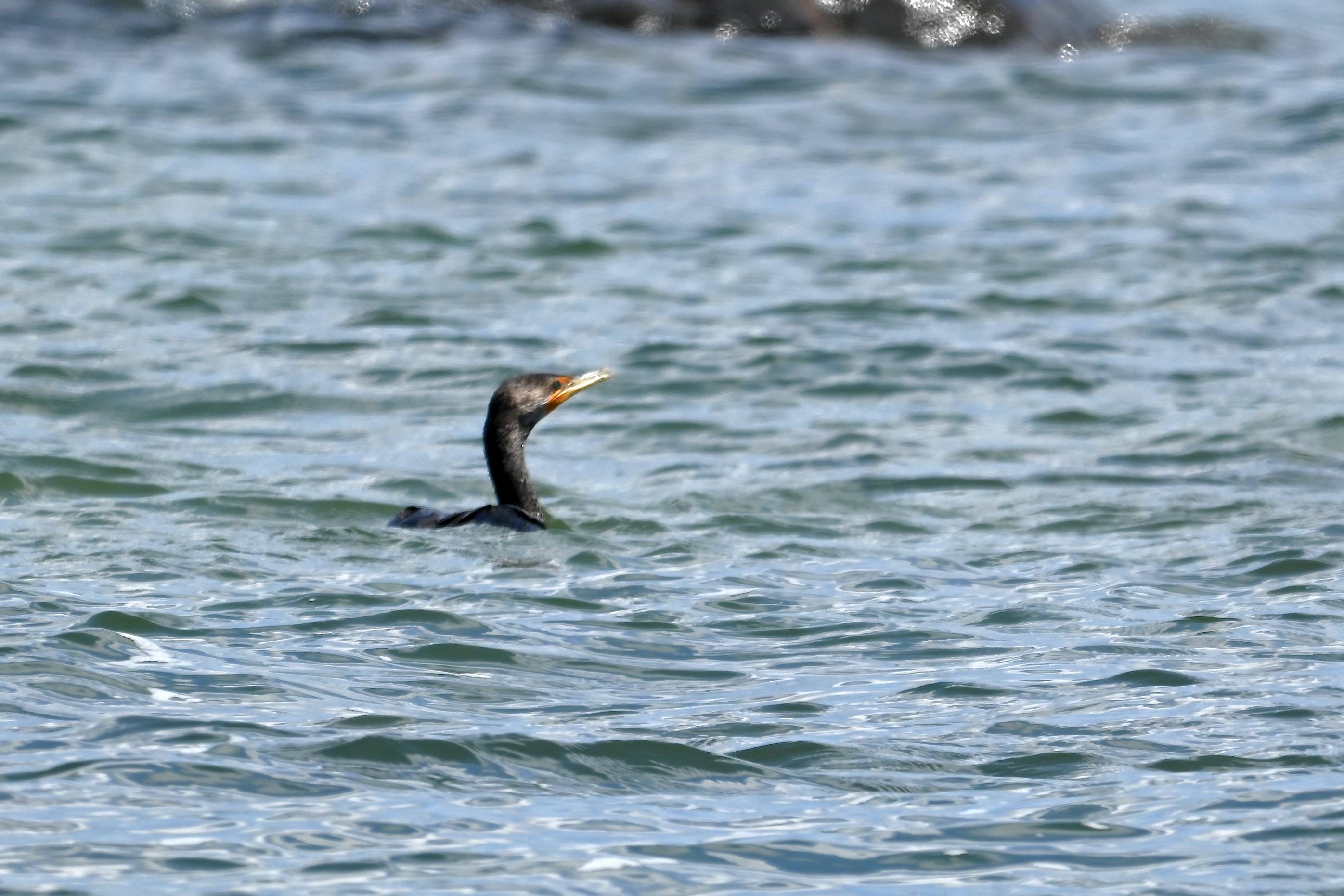
Unusually, today’s story isn’t about a Hawaiian bird. It’s about a bird you’ll find along the coasts, lakes, and rivers of North America. You’ll find them way up north in Canada or Alaska in summer, and as far south as the shores of Mexico in winter. It’s called the double-crested cormorant, and I remember seeing these birds when I was a child in New England.
Like the noio or the koa’e kea of Hawai’i, the cormorant fishes for its food. Both the noio and the koa’e kea, however, fly over the sea and dive down to catch fish when they see them. The cormorant swims along the surface, then swims with its webbed feet down beneath the surface to catch fish. They’ll stay under up to half a minute, which is a long time to hold your breath, and they can swim quite deep.
Well. They can. There was one cormorant, however, who simply refused to dive deeper than a few feet. You know how it is. Some dives had gone badly for him, and he’d come up coughing and gasping for breath. “Try it again,” someone had said, without saying anything about how it could go better, and down he’d gone, got confused and frightened, and come up again gasping and coughing.
“No more of that,” he said. “It’s shallow dives for me.”
Other cormorants would swim 25 or 30 feet down in the ocean water, but not him. No more than five feet. Maybe six. He might dab his beak down a little farther to get a fish, but no more. Definitely no further.
One day he surfaced from a dive next to a friend. He’d already eaten the fish he’d caught four feet below the surface. His friend, however, was wrestling with a much bigger fish. It took some work and a couple tosses in the air to get it lined up right, but finally he ate it and looked really satisfied.
“You’re lucky,” said the shallow-diving cormorant. “I don’t see fish that big very often.”
His friend was surprised and a little puzzled. “I see them all the time,” he said. “They’re right down near the bottom.”
“Oh, the bottom,” said the shallow-diving cormorant. “You’re likely to find anything there.”
“You don’t go to the bottom?” said his friend. “I thought everybody did.”
“I dive as far as I need to,” said the shallow-diving cormorant. “I don’t need anything on the bottom.”
“But there’s these amazing fish down there,” said his friend. “Wait here; I’ll bring one up.”
He dove down, leaving the shallow cormorant alone on the surface… briefly. Because he came up quickly, carrying another of the big fish in his beak, and looking forward to sharing it with his friend. On the surface, though, he was alone. He saw a black speck heading for a perching rock. The shallow cormorant had flown away.
He asked his auntie about it later, who sighed. “Some birds are like that,” she said. “They’re content with what’s obvious, what’s on the surface, what’s easy. If you go deeper, you discover things, but they don’t want to know those things. They’re content with the surface.
“But if you go deeper, you find delights you otherwise would never have known.”
by Eric Anderson
Watch the Recorded Story
I write these stories in full ahead of time, but I tell them from memory and improvisation. The story as I wrote it does not exactly match the story as I told it.
Photo of a double-crested cormorant by Eric Anderson.