September 27, 2026
Ezekiel 18:1-4, 25-32
Matthew 21:23-32
A lot of birds build nests of some kind. Some are very simple, just a scrape in the earth. Others don’t build a nest at all, including the oh-so-brave manu-o-ku, which simply lays an egg on a branch. Some build pretty complicated nests. The ‘amakihi makes a very complex nest, and only the expectant mother does the building. Among the ‘apapane, both mother and father work at it. Or at least, that’s how it’s supposed to work.
An ‘apapane couple was very excited because two of their children, both males, had found wives and decided it was time to hatch some eggs and fledge some chicks. These were their first, um, grandbirds, and that makes both people and ‘apapane very happy.
What they weren’t happy about was how the preparation was getting along.
Their first son flew over with his wife and they asked, “How’s the nest building going?” The younger couple looked around in embarrassment for a bit before they confessed that they hadn’t started. “How are you going to lay any eggs if you haven’t got a nest?” demanded the hopeful Tutu.
“Go build your nest,” said the grandfather (he hoped) to be, and to his surprise the younger couple said, “No.”
“What?”
“No. We’re going to rough it, like the koa’e kea. We’re going to keep it simple. Find a hollow in the rock. That will be enough.”
The parents were appalled as they flew off. A few moments later, the other son and his wife flew by.
“Please tell me you’re getting a nest ready,” said the grandmother-to-be.
“Oh, absolutely,” said her son, and his wife agreed. “It will be ready well before time.”
“What a relief,” said grandfather-to-be as they flew off. “At least we’ll have some grandchildren raised in a proper nest.”
Strange things happen among birds – and among people, too, but these are birds. That first couple, who were going to lay their eggs in a hollow in the rock, like a koa’e kea? They checked out those holes in the cliffs, and they looked uncomfortable and they felt uncomfortable. Shortly afterward, they were flying about the forest collecting mosses, twigs, and leaves. The nest took shape high in an ohi’a tree.
The other brother and his wife started work on a nest, but they got tired and bored. They barely poked at it. When they left it for a day or two, it began to come apart. No nest took shape. And they didn’t lay any eggs that year.
The ‘apapane grandparents were disappointed, but they were also thrilled. One son and daughter-in-law had said they wouldn’t prepare, but then they did, and raised three much-loved chicks to fledglings and adults. The other couple said they would get ready, but they didn’t, and it would be some time before they had their first nest, and eggs, and children.
“If you do the things to get ready,” said the grandmother to her grandchicks, “it comes out right.”
by Eric Anderson
Watch the Recorded Story
I write theses stories in full ahead of time, but I tell them from memory and improvisation on Sunday morning. The story as you read it does not precisely match the way I told it.
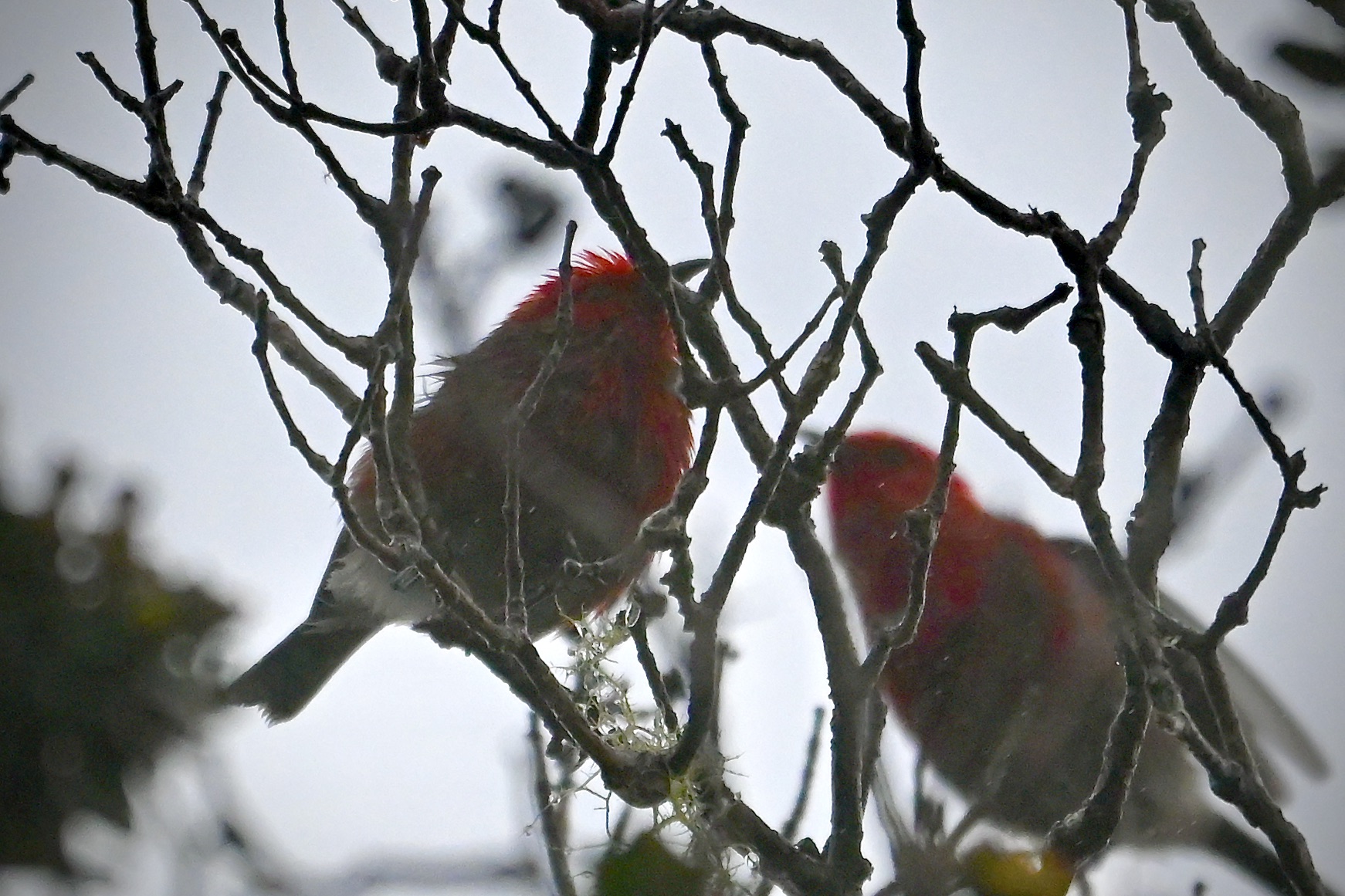
Photo of two ‘apapane by Eric Anderson.