Story: Protecting the Tree

July 23, 2023

Genesis 28:10-19
Matthew 13:24-30, 36-43

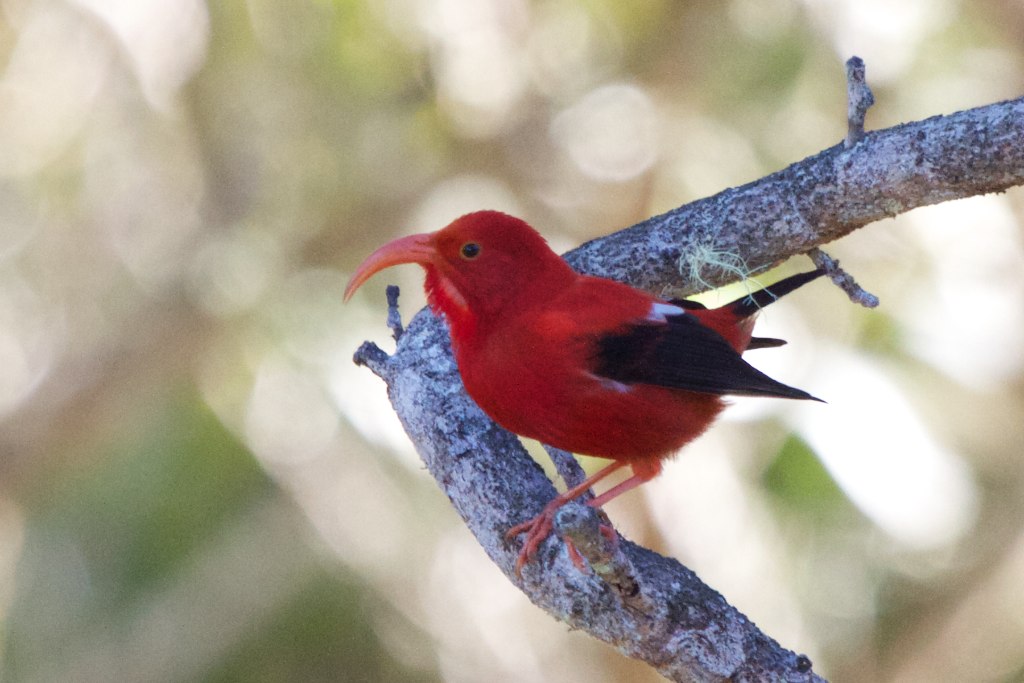
An i’iwi overheard some people talking one day about a disease that was harmful and even fatal to ohi’a trees. He followed them and listened closely as they took care to clean their shoes and avoid bringing the fungus spores to where healthy trees were. The i’iwi decided that he would help protect his favorite ohi’a tree.

It wasn’t a very big tree, which was one of the reasons it was his favorite. It had a nice shape and plenty of leaves and it tended to blossom quite freely, which made it a great place to find safety and enjoy a good meal of ohi’a nectar. And because it wasn’t very big, it was a size that he could guard.

Guard it he did. When ‘apapane came by, he drove them off, and likewise amakihi, mejiro, and even the little ‘elepaio. They squawked and complained, but a determined i’iwi is difficult to convince, so they all went to other trees.

The i’iwi then set out to make sure that the tree was safe from being infected by insects that might carry the dangerous fungus. He flicked bugs off the leaves and branches with his wings, with his toes, and with his long curved beak. The spiders and insects didn’t try to argue. It’s hard to argue when something many times your size has kicked you off a branch when you’re a long way up in the air. Some tried a second or a third time, but found the i’iwi ready for them, and so they headed off as well.

The i’iwi found himself pretty much alone in the tree, and quite satisfied, settled down to sleep as night fell, prepared for another day of defending his favorite tree.

As the wind moved the tree limbs, however, his dreams turned strange. It seemed like the tree was speaking to him. “Why are you doing this?” asked the tree. “Why are you chasing everyone away?”

In a dream, of course, you can talk to trees, so the i’iwi said, “I’m keeping away everything that might make you sick. I want to keep you well.”

The tree creaked thoughtfully for a few minutes – trees think long and deeply – before replying.

“That’s good of you,” said the tree. “I appreciate the thought. But has it occurred to you that if no one visits me, my flowers don’t become seeds?”

That had not, in fact, occurred to the i’iwi, who hadn’t known it. Most plants blossoms attract creatures like honeybees, who in traveling from flower to flower bring the pollen that enables the blossoms to produce seeds. In the ohi’a forest, this gets done by bees, and by beetles, and by birds such as the amakihi and ‘apapane and yes, the i’iwi.

“If nobody visits other trees, and nobody visits me, there won’t be any seeds,” explained the tree.

The i’iwi didn’t know what to do. “If they visit you, you might get sick,” he said, “but if they don’t visit you, there won’t be new ohi’a trees.”

The tree limbs sighed in agreement.

“We’ll have to chance it,” said the tree. “But thanks for the effort.”

“We’ll have to chance it,” said the i’iwi. “May it all go well.”

You and I can still help protect ohi’a trees by cleaning our shoes before entering ohi’a forests and not moving ohi’a wood around and by taking care to not damage the tree bark when we’re in the forest. But the i’iwi and the birds and bees of the forest will also be sipping nectar and flying from tree to tree, and its risky – but it’s also how the next generation of ohi’a will take root and grow.

by Eric Anderson

Watch the Recorded Story

On Sundays I tell these stories from memory of the text I’ve prepared (which you’ve just read above). Between failures of memory and the creative impulse, they are not identical.

Photo of an i’iwi by HarmonyonPlanetEarth – I’iwi|Pu’u o’o Trail | 2013-12-17at12-43-209 Uploaded by snowmanradio, CC BY 2.0, https://commons.wikimedia.org/w/index.php?curid=30241880.

Rapid Ohi’a Death (ROD) is a real danger to Hawai’i’s ohi’a forests. Read more here about how to prevent its spread.
Story: Not Like That

June 25, 2023

Genesis 21:8-21
Romans 6:1-11

There were three fledglings in the ‘apapane nest, a sister and two brothers. All three had hatched on the same day, which is pretty common for ‘apapane. All three had steadily grown from the food their parents brought to them each day. They’d just begun to learn to fly.

For whatever reason, and who knows the reasons for these things, the sister grew more quickly than her two brothers. Her wing muscles got stronger faster, and she stood taller than they in the nest and on the branches near the nest. And… she started to take charge.

When father or mother came by at mealtimes, she got to the front first. Her brothers got the same amount of food that she did, so the parents didn’t remark on it, but she increasingly got fed first. When it came time for their first test flights, she summoned more of her parents’ attention than her brothers did. She’d fly a little farther among the branches of the nesting tree so they had to keep track of her. But she’d also sing out, “Look at me!” when father or mother started giving instructions to one of her brothers.

When they settled down at night, her brothers had to be satisfied with what room she left them in the nest. She began to push them aside when she wasn’t comfortable, and she began to order them to do things for her. She was bigger. She was stronger. They did what she ordered them to do.

They weren’t happy about it.

“Don’t complain,” she told them. “I’m the oldest and the biggest. You have to do what I tell you.”

She wasn’t actually the first to hatch, but they didn’t dare to tell her so.

Father and Mother didn’t actually notice all this. When one of them was nearby, they were the oldest and the biggest, and she didn’t try to dominate them. But the moment the three chicks were alone, she was in charge, and when she was in charge, she got what she wanted.

If one of her brothers had flown to a particularly nice cluster of ohi’a blossoms, she’d come along and order him away. If one of her brothers was relaxing in a sunny spot, she’d push him off the branch. If it was raining and one of them found a spot where the leaves kept the drops away, guess who would be dry at the end of the shower?

You guessed it. She would.

It was grandmother who spotted all this, observing from a neighboring tree. She flew over when big sister had taken over a cluster of ohi’a flowers.

“Not like that,” she told her granddaughter.

“Not like what?” said granddaughter.

“Stop bullying your brothers.”

“I’m not bullying them,” she said.

“You certainly are,” said grandmother. “You just took over this flower cluster.”

“I’m entitled,” said the big sister. “I’m the biggest and the oldest. How should I treat my little brothers?”

“Not like that. You all hatched on the same day,” said grandmother, “and soon enough your brothers will catch up to your size and one or both of them might get bigger than you are. Will you be content to be kicked off your flowers then?”

Her granddaughter had to admit that she wouldn’t.

“Treat your brothers the way you want to be treated. Treat them better, in fact. That’s how we build a strong family. It’s how we make peace among ‘apapane.”

She did change her ways, though it took a little while. Fortunately she did it before one of her brothers did, in fact, grow to be bigger than she was – but he had learned that lesson, too, and treated his sister as he wanted to be treated, and even better.

by Eric Anderson

Watch the Recorded Story

First I write the story (you’ve just read what I wrote). Then I tell it without the written copy in front of me. And… things change.

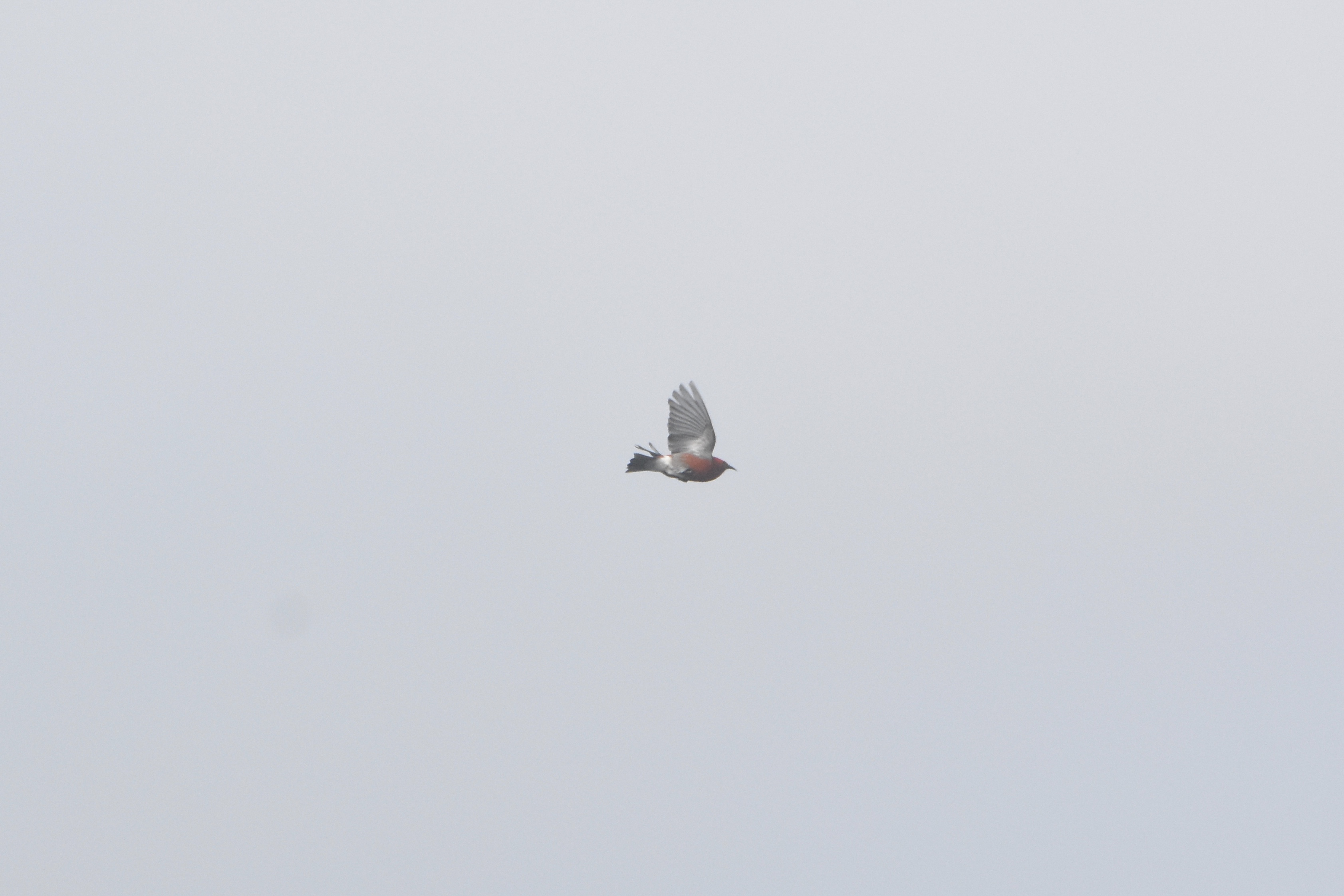
Photo of an ‘apapane in flight by Eric Anderson.

Story: Noio’s Love

June 18, 2023

Romans 8:1-8
Matthew 9:35-10:8

The little noio chick was convinced that her father didn’t love her.

I have to admit that she had some reasons for thinking this. Noio (or black noddy) nests tend to be kind of shallow, and her parents had chosen a rather bumpy section of the cliff shelf to place their nest. She was never able to get really comfortable, because a bit of rock poked her if she was here, and another bit of rock poked her when she was there, and for quite some time listening to humans she thought of something very different to the word “poke.”

She had to admit that they’d found a spot that kept most of the rain off, but when it was sunny she thought she was going to become a baked noio. If the wind turned the wrong direction while it was raining, well, it blew the water right over her. Big waves would toss spray in her direction as well.

There were plenty of other nearby noio nests, none of which had any great advantages over hers and plenty of them were even pokier, but she wasn’t happy.

There was also the issue of what her father fed her, which was, and forgive me for being gross here, what her father had just eaten. Again, this was no different from what other nearby noio chicks were eating in their no-more-comfortable nests, but she thought that a loving father would have found a better way.

Her father had been a great comfort when she was small, keeping her warm and protected from rain and spray at night, and even shading her from the sun by day. Along the way, however, father had done less and less. As the chick grew, of course, there was less and less room on the nest for father or mother.

The worst, however, had come when it was time to fly. Suddenly father had become the nit-pickiest tyrant ever inflicted upon a daughter. “Spread your wings. Hold them up. Twist the left one. Hold it lower. Lower! Now flap. Not like that!”

She thought she heard the words, “Not like that!” more than any other words in the day.

After a particularly hard day when her flying had been quite erratic and her father quite emphatic about “Not like that!” she settled into the nest. Father perched silently and, she thought, judgmentally on the rocky shelf next to the nest. “Why, Father,” said the young fledgling bitterly, “don’t you love me?”

“Who said I didn’t love you?” asked father, who was quite shocked.

“You show it every day. You watch me so closely, you criticize all the time, you hardly ever hold me close any more, and let’s not even talk about the food.”

Father had to admit that there wasn’t much to say about the food, but he did hop over and sheltered his chick beneath his wings.

“I do love you, and I’m sorry I don’t say it clearly enough,” he said. “First thing in the morning, I’m here to make sure you awake safely. The last thing in the day, I’m here to make sure you’re able to sleep safely, too. I am strict with you about flying, because the ground is hard and the sea is harsh. Hit either of them wrong and I’d be crying for you rather than criticizing you.”

His chick snuggled into his feathers and felt somewhat better.

“I’ll tell you what,” said father. “The quicker you master flying, the quicker you can start catching fish for yourself.”

“Which means?” asked the fledgling.

“You’ll enjoy your meals a lot more -and so will I!”

by Eric Anderson

Watch the Recorded Story

I write the story. I memorize the course of the story… and when I tell the story, it’s simply not the same as the written version.

Photo by Eric Anderson

Author’s note: I originally wrote this story to be about a chick and her mother. Then I remembered it was Father’s Day. It does somewhat change the story’s character.

Story: Who Should Hear?

June 11, 2023

Hosea 5:15-6:6
Matthew 9:9-13, 18-26

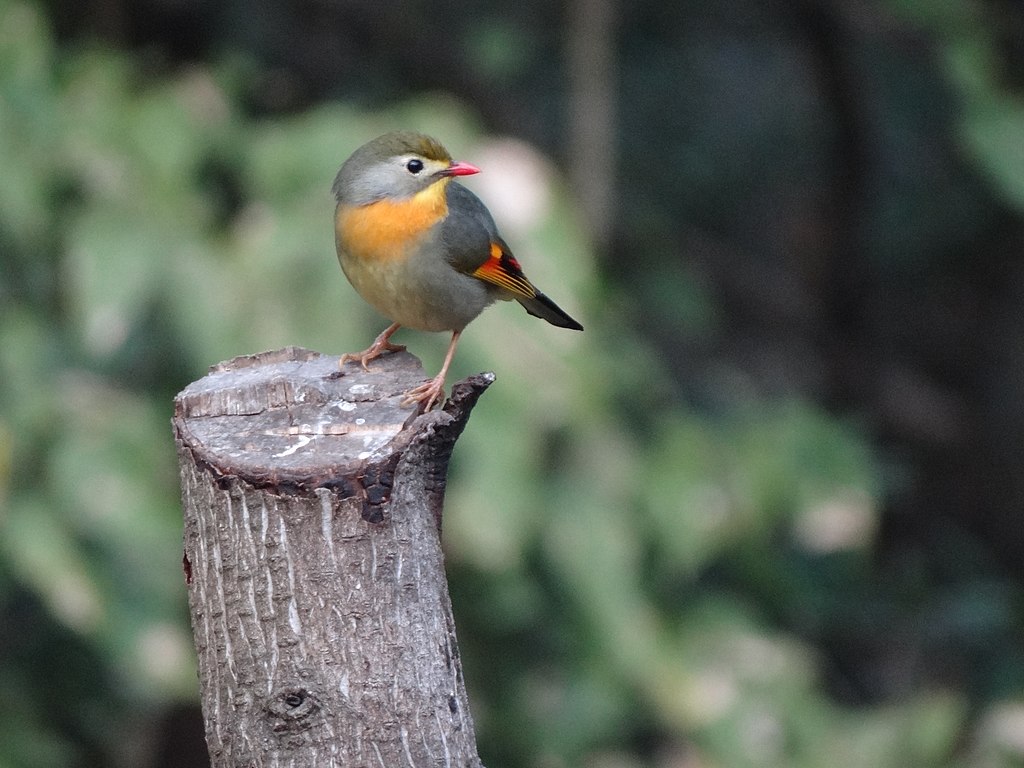
The red-billed leiothrix, like myna and the mejiro, is a bird that’s a relative newcomer to Hawai’i Island. They’ve been here for a little over a hundred years.

They can be pretty cheerful singers, on the whole, with a nice lilting chirp. They’re better known on Hawai’i Island for what they sound like when they’re alarmed, though. It’s a loud and harsh rapidly repeated sound that almost sounds like some sticks being rubbed together. If you’re walking about in the forests or the kipukas up the mountains, you’re likely to hear it, because they tend to make it when humans are about.

A grandfather was instructing his grandchildren in making the call (I can’t imitate it, I’m afraid). After he’d taught them how it was done, he turned to the times to make the sound.

“You make it when there’s an i’o about, or a pueo,” he said. “And don’t forget to make it when there’s a human around. We always want to let people know about those.”

The grandchicks wanted to know what a human was like, so after explaining that it was a big flightless bird with very peculiar wings, grandfather taught them to make the call again.

“Who should hear this sound?” one of the chicks asked her grandfather.

“What do you mean, who should hear this sound?” he asked.

“Well, I thought this would be just a leiothrix sound,” she said. “Mynas probably aren’t interested, are they? Other birds might not understand.

“And if some birds do understand,” she continued, “it might not be so good for us.”

“What do you mean?” asked grandfather quietly.

“If I see an i’o and make the sound,” she said, “then all the birds will hide. If I’m not as good or as quick at hiding as they are, the i’o might try for me, wouldn’t it? If some other birds are exposed, then we leiothrixes will be better off.”

Grandfather stayed quiet for a long time. Then he sighed.

“You’re right, of course,” he said. “If we don’t alert other birds to the i’o or the human, we’ll be safer when we see the danger first. But what if the ‘apapane sees the pueo first? Or the ‘akepa? Or the mejiro? What if they alert only their own kind, and not us? What happens then?”

Now the chicks were silent, until the one who’d asked the question said, “Nothing good.”

“Nothing good,” said grandfather. “We warn everybody so that everybody will warn us.”

“I see,” said the chick who’d asked, and her brothers and sisters nodded, too.

“How loud do we make the warning sound?” asked grandfather.

“As loud as we can!” said the chicks.

“Who should hear?” asked grandfather.

“Everyone!”

So when you’re walking the kipukas and the forests on the mauna, you’ll hear the leiothrixes, warning everyone that you’re near.

by Eric Anderson

Watch the Recorded Story

I tell these stories from my… not quite reliable memory of the text I’ve written. Differences are inevitable – and regular.

Photo of a red-billed leiothrix by Raman Kumar – Own work, CC BY-SA 4.0, https://commons.wikimedia.org/w/index.php?curid=53968581.

Better than Appears

June 4, 2023

Genesis 1:1-2:4a
2 Corinthians 13:11-13

The young ‘amakihi had had a bad morning. First there was the big wind that had woken him, first by howling in his ears, then by twisting the branch he was perched on in a very odd way, third by pitching him off the branch into the air, and finally by whirling him along for a way, struggling to get himself upright and under controlled flight.

He’d managed it, but he was still breathing hard when he clutched the twigs of another ohi’a tree tossing in the breeze. It soon settled down, though – that had been a big puff of wind, but just one – when things got exciting again. His eyes caught movement overhead and he took to his wings once more, this time diving further down into the forest canopy to escape the i’o that had just broken from its spotting circle toward a hunting dive. His heart was beating wildly again when he found a space within the branches the i’o couldn’t reach. The i’o flew off to hunt somewhere else.

His breath was just settling to normal when suddenly there was an i’iwi whistling at him. The tree he’d perched in also contained the i’iwi’s nest, and she wasn’t about to put up with an ‘amakihi near her nest. She’d stayed quiet while the hawk was near, but after that. Well. Lots of whistles.

He flew off to another tree, blessedly free of i’iwi, i’o, or high winds, and reflected on his lousy morning. “This is a rotten world,” he said aloud.

“You think so?” said a voice. He looked up. Just to crown his bad morning, just when he’d said something she was bound to criticize, there was his mother.

“If you’d had the morning I’ve had,” he couldn’t help saying, “you’d agree. The world is rotten.”

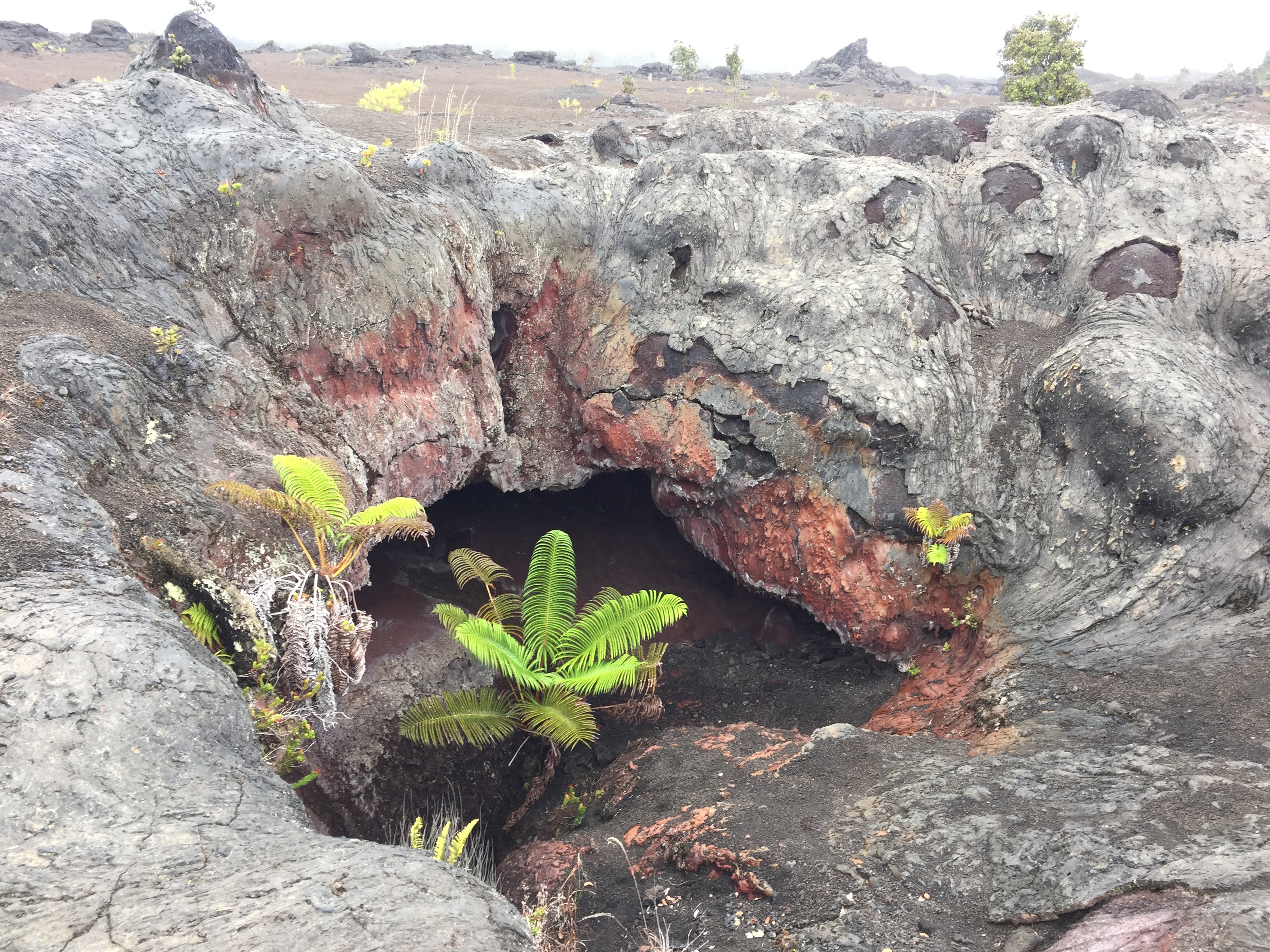
“Is it?” she said, and beckoned him to follow. They flew over to a great field of lava rock, dark grey and hard and heating up in the morning sun.

“Right! Just like this! Hard and colorless and hot,” he told his mother, who said: “Look again.”

This time when he looked he saw the water droplets left by a rain shower, shining like stars in a grey sky, but now on earth rather than above. He looked again and saw, in the cracked rock, water soaking into small bits of sand. Some of those bits of sand had green things growing in them, some of them had fern shoots, some had leaves waving above. There was ohi’a growing here and there from those crevasses: shoots, stems, bushes, even small trees. His mother led the way down to one young tree in full blossom. They landed amidst the perfume of its nectar.

“The world isn’t so bad,” he said when she gave him a look. ‘Amakihi mothers have a Look, you know, much as many human mothers do.

“Taste,” she said, and even though he knew what he’d taste, he did.

He gave his mother an ‘amakihi smile. She gave him one back.

“The world,” he said, “is good.”

by Eric Anderson

Watch the Recorded Story

I tell these stories from my memory of what I’ve written. And, well, my notion of how they might be improved in the telling.

Photo by Eric Anderson.

Story: The Wind

May 28, 2023

Numbers 11:24-30
Acts 2:1-21

I want to talk to you about the wind.

The wind made its way across the ocean. In the distance it could see the green slopes of Hawai’i Island and the great mountains rising. As it swept over the sea, it took water vapor that the sun had raised from the waters and pushed it ahead as growing clouds. As the clouds passed over Hilo, they showered the earth with rain.

The wind moved on, and now the clouds dispersed on the shoulders of the mountains, and the sun poured down in shimmering waves. The wind blew through the town and over the fields, and it cooled the stifling heat. As it did, it blew hard enough to pluck hats from heads and turn umbrellas inside out before they could be closed.

A nene near seaside turned into the wind and spread her wings. The flowing air began to lift her even before she swept them down in a powerful stroke. The wind helped carry her aloft until she turned to fly inland.

Not just birds, but seeds flew on the wind, so that new plants would grow.

In places the wind eased things, but in places I have to admit that the wind broke things. Nails in a roof popped loose. An old tree tumbled to the ground, where its trunk would nourish new trees yet to grow there. A sudden gust scattered a myna’s nest over the ground, and the parents-to-be screeched and started building again.

The flowing wind swept over the summit of Kilauea, where fumes rise from the volcano’s liquid heart beneath. It carried the sulfur and tiny flecks of glassy ash further along the island, dispersing them as it went. Oh, they smelled it and they frowned in Kona!

But when the sun set, those bits of glassy ash caught the light and glowed in red and orange and gold. The people and the creatures and the birds gazed at it with satisfaction. “It’s a Kona sunset,” they said.

The wind laughed to hear them say it, for the Kona sunset depends on the Kilauea wind.

And the wind blew on, far over the Pacific Ocean to lands far distant from our shores, blowing where it will.

It’s an old, old thing to compare the Holy Spirit of God to the winds that blow across our planet. In the ancient languages of the Bible, and also in Hawaiian (but not in English) the words for “wind,” “breath,” and “spirit” are the same: Ruach. Pneuma. Ha. Like the winds of earth, the Holy Spirit brings the things of life, for the spirit as well as the body. Like the wind beneath the wings of the birds, the Holy Spirit can lift us up. Like the wind that brings down trees, the Holy Spirit will shake our ideas and assumptions and make us consider new things. Like the wind that creates a Kona sunset, the Holy Spirit creates, helps us create, and helps us appreciate, beauty.

The Holy Spirit is God’s gift to the world, to the Church of Jesus, and most of all, to you.

by Eric Anderson

Watch the Recorded Story

On Sunday I tell the story from memory of the story I’ve written – and I rarely strive to remember it word for word. The differences are part of the creative process – or so I tell myself.

Photo by Eric Anderson.

Story: Eyes on Where You’re Going

May 21, 2023

Acts 1:6-14
John 17:1-11

I was a little sad when I realized this week that, because of our Sunday School recognition time, I wouldn’t be telling a story. I’m told that the young people and the people who’ve been young people quite a long time – you know, those young people – appreciate those stories. So I’m sorry that there’s no story today.

Once upon a time there was a young ‘apapane who was struggling with flying.

So, OK, I wasn’t sorry about there not being a story for very long.

This young ‘apapane’s problem was not, in fact, flying. He had mastered all the tricky business of holding his wings just so, and moving them down just so, and moving them back up just so, so that he moved forward through the air without diving or climbing or veering off to the left or slanting off to the right. Straight and level – it was so pretty to watch.

It was also, to some extent, the problem. Straight and level works just fine when you’re above the treetops or there’s short trees or bushes or grasses beneath you. When you’re in the trees, though, straight and level is a recipe for straight into a painful encounter with a tree branch.

He could turn just fine, and go up and down. Somewhere along the line, however, someone told him to fix his eyes right ahead, and not to look to either side. “Keep your eyes on where you’re going,” they said, and that’s what he did. It was kind of an accomplishment, actually, because an ‘apapane’s eyes are on the sides of the head, so they’re always looking all around. But he learned to focus, and he kept his focus, and it worked just fine until he whacked a wing on a cluster of leaves to one side, or smacked his feet against blossoms just below, or clocked his head against a tree branch that was just out of the tiny circle where he’d been looking.

He struggled with flying, and it was a painful struggle.

One evening as he was nursing a headache his grandmother asked him what he thought he was doing. “I’m keeping my eyes on what’s ahead of me,” he said.

“Then why do you keep flying into things?” she asked.

“Because they’re off to one side,” he said.

I will spare you the long lecture she gave him about the need to pay attention to more than what’s just ahead of you. Although maybe I shouldn’t – because you and I, we have to pay attention to more than just what’s right in front of us, too, don’t we? There’s the things that are coming from one side or the other. If we keep our eyes on our footsteps we’ll bonk our heads on what’s above. If we think only about what’s just in front of us, how can we ever be ready for what’s coming farther along?

The long lecture from his grandmother stung, I admit. But not as much as his head and his wings and his feet hurt from all those collisions. He learned to look ahead, and to the side, and up and down, and beyond.

by Eric Anderson

Watch the Recorded Story

This story was told from a copy of the text above, so the usual warnings about differences due to memory don’t apply. Instead, there are differences because there are differences.

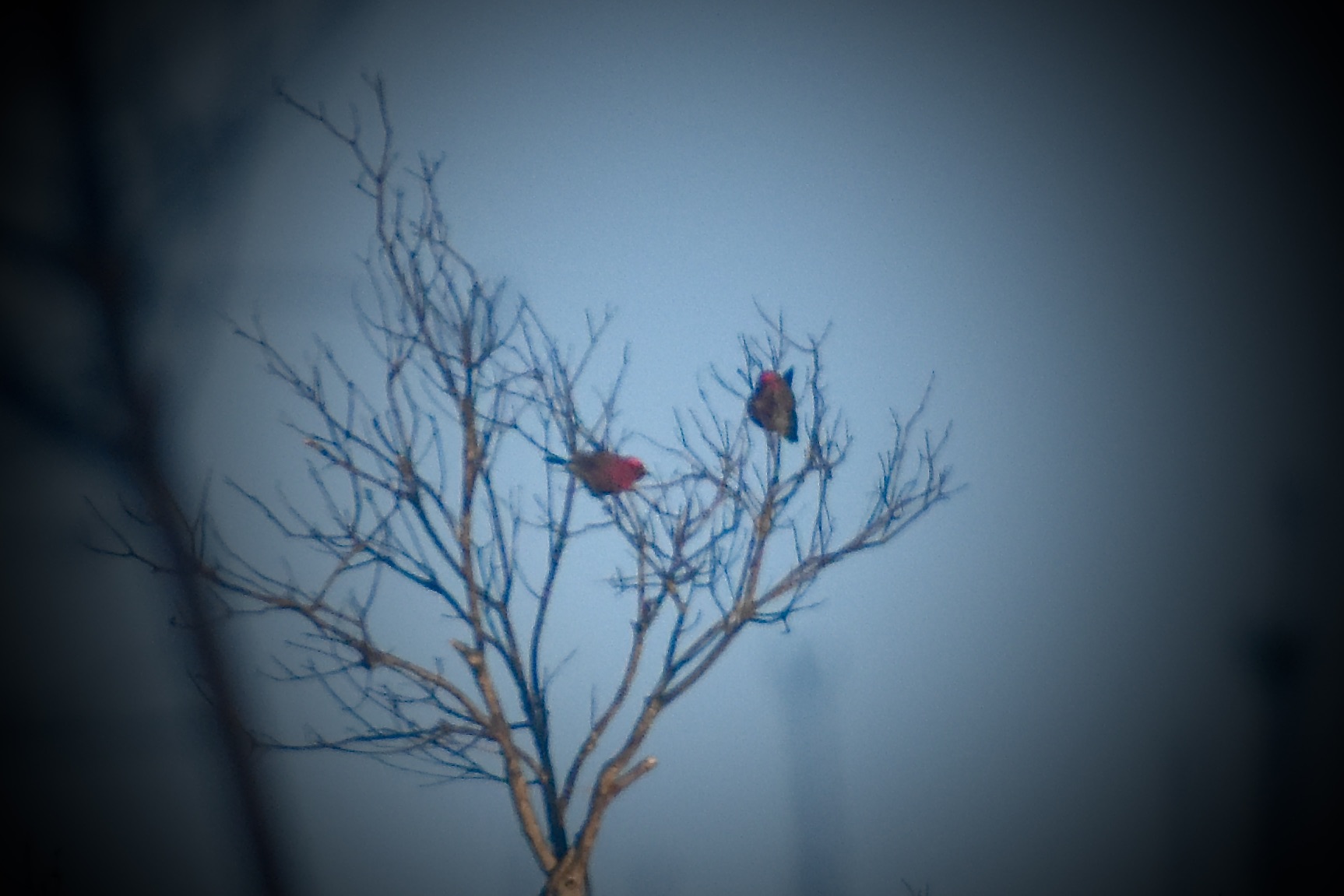
Photo of two ‘apapane by Eric Anderson.

Story: The Unexpected Peacemaker

May 14, 2023

Acts 17:22-31
John 14:15-21

A peaceful morning on a Hawaiian beach was… less than peaceful. There were birds screeching – at least two birds and birds of different kinds screeching. There was also a sound that was harder to identify because it’s so rarely heard. A nearby cat decided she had to find out what was causing all the ruckus.

Besides, it was interrupting her first nap of the day. She’d really prefer that it stopped.

The loudest voice was, predictably, a myna. The other bird voice turned out to be a koa’e kea, and it was nearly as loud as the myna. The third voice wasn’t a bird at all. It was a honu, and although she wasn’t as loud as the two birds, she put plenty of passion into her part of the argument. Because it was a three way full scale all out argument.

The cat really wanted them to stop. She briefly considered a hunting charge, which would certainly drive off the myna and might startle the koa’e kea into flying away. She decided not to, though. It would just add more chaos to a chaotic morning.

“What,” she asked, “are you three arguing about?”

“They do it all wrong!” said the myna, and was promptly echoed by the other two.

“They do it all wrong!” they shouted in chorus.

“They do what all wrong?” asked the cat, who really wanted to bury her head in the sand and take her early morning nap rather than ask about an argument she didn’t care about.

“Eggs!” “Chicks!” “Hatchlings!”

“Children!” all three said at once.

“This one doesn’t even build a nest!” shrieked the myna, indicating the koa’e kea. “She just lays her egg on any old shelf in the rock.”

“That one buries her eggs in the sand!” shouted the koa’e kea, “and goes away and doesn’t take care of them!”

“The mynas build their nests in a tree!” rumbled the honu. “Anybody could find those eggs and break them!”

The three continued to explain – well, argue – that their method for laying eggs and raising children was the only right way to do it, and how the others’ failure to do it that was indicated a complete lack of good sense and proper parental responsibility. The cat, who didn’t lay eggs at all, was getting a headache.

“Can we find some common ground?” she said.

“Like what?” they demanded.

“Like the common ground of this island. You all lay your eggs on this island, even if they are in different places in different ways.”

They had to agree that was true.

“And do you get children who thrive?” asked the cat.

“I do.” “Of course I do!” “I’ve got over a hundred children swimming in the ocean,” said the honu. The myna and the koa’e kea looked startled.

“And do you do the very best you can to make your eggs and your children safe, even if those ways are different?” asked the cat, and watched each head nod, and a thoughtful look come into each pair of mothers’ eyes.

“Then I think you’ve got some common ground,” said the cat.

“I guess we do,” said the myna. “More than I thought,” said the koa’e kea.

“Good,” said the cat. “Talk to one another. Maybe you’ll find more common ground. Maybe you’ll learn something from each other. Keep talking.”

“Quietly,” she added as she turned away to resume her early morning nap.

by Eric Anderson

Watch the Recorded Story

I tell these stories from memory of the text I’d prepared (which you’ve just read). My memory isn’t that good and my delight in improvising is so great that the story as told may be rather different from the story as prepared.

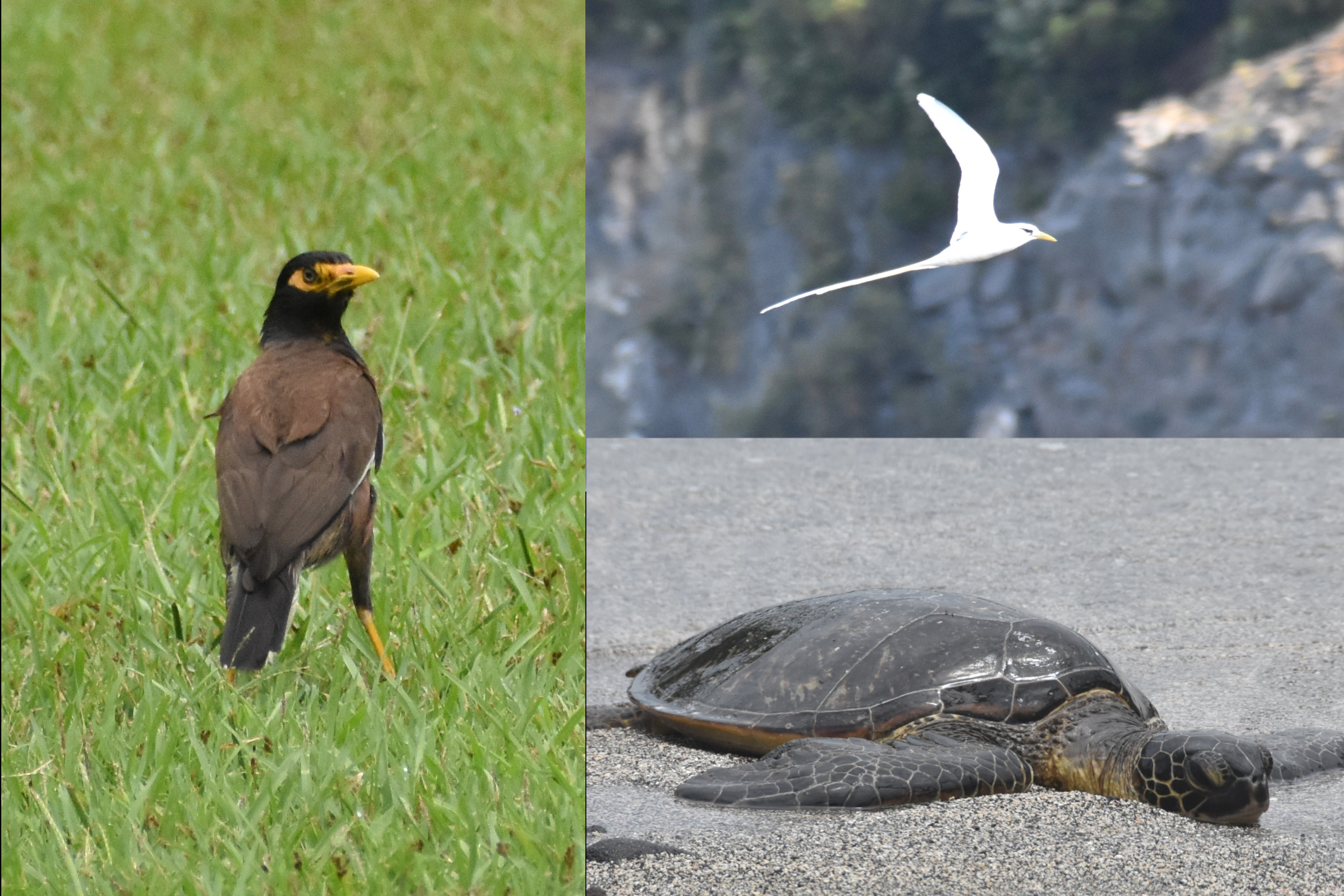
Photos of a myna (left), koa’e kea or white-tailed tropicbird (upper right), and a honu or green sea turtle (lower right) by Eric Anderson.

Story: Show Me the Spiders

May 7, 2023

Acts 7:55-60
John 14:1-14

The ‘elepaio was hungry. He had been up and down, back and forth, and side to side on his favorite koa tree. He’d found a caterpillar, a few smallish bugs, and no spiders at all. This was unusual. His favorite tree was normally a favorite place for caterpillars, bugs, and spiders as well. On this day, however, they’d mostly decided to go someplace else.

He was hungry.

He searched the tree once more from top to bottom and all the way to the ends of its long branches. He found a couple more bugs, but no spiders at all. He was particularly fond of spiders, at least he was on this day when he couldn’t find any. He perched on a branch and sang a short, sad, “I’m hungry,” kind of song.

“What’s wrong?” came a voice from a neighboring tree. It was a friend of his, another ‘elepaio, and she seemed concerned.

“I’m hungry,” he complained, “and all I’ve found are a few bugs, one caterpillar, and no spiders at all.”

His friend was puzzled. She was not hungry. She’d been foraging in a couple of ohi’a trees all morning and had quite a nice breakfast from them.

“How strange,” she said. “I’ve been having a nice breakfast, myself.”

“I’m not sure I believe you,” he said. “It’s been such a miserable morning.”

Fortunately his friend decided not to be insulted. “Where have you been looking?” she asked. “Perhaps you’ve just been unlucky.”

“Right here,” he said, “here in my favorite tree.”

“Where else?” she asked.

“Where else would I look?” he said.

She was silent for a moment before she suggested, “Well, anywhere else, I would think.”

“How would I find spiders in anything but a nice koa tree?” he asked. “Why would they want to be anywhere else but this, their favorite tree?”

“There are plenty of them over here in this ohi’a tree,” she said.

“Show me the spiders,” he said, “and I’ll believe.”

For a moment his friend was offended this time – it feels bad when your friends tell you they don’t believe you. She decided to make allowances because he was hungry. Sometimes when creatures are hungry they get hangry, you know. She took a quick look around, made a hop or two to the side, and plucked something off a cluster of ohi’a leaves. Then she spread her wings and flew over to settle beside her hungry friend.

She said nothing because she had a spider in her beak. She set it down next to him. He looked at it.

“Sometimes you’ve got to look in more places than you expect,” she said.

“I guess so,” he said.

“Let’s have some breakfast together,” she said.

So they did.

by Eric Anderson

Watch the Recorded Story

There was a problem with the lavaliere microphone at the beginning of the story. Thanks to our technical crew I switched to a working microphone after a short time.

Photo of an ‘elepaio by Bettina Arrigoni, HarmonyonPlanetEarth – Hawaii Elepaio (male) | Pu’u O’o Trail | Big Island | HI | 2015-11-06at15-07-453, CC BY 2.0, https://commons.wikimedia.org/w/index.php?curid=45577718.

Story: Will the Myna Ever Learn to Share?

April 30, 2023

Acts 2:42-47
John 10:1-10

Two humans were watching a small flock of mynas. The mynas were doing myna things, which was basically hopping around the grass looking for things to eat, finding the things to eat, and then eating them. By and large this went fine, but every once in a while one myna would hop closer to another myna, and sometimes the second myna would object, and then the first myna would object, and the result would be a lot of myna noise that was… objectionable.

The two humans shook their heads at this. One wondered, “Will the myna ever learn to share?”

They kept watching and somehow didn’t notice that when one myna objected to another myna, it wasn’t trying to steal food. It wasn’t trying to chase it away from food. It just wanted space. A little space. A little more space than you’re giving me, please. Thank you very much and would you kindly remember that for next time you…!

They squabbled about spacing. Not about feeding. Somehow the two people failed to notice that the mynas were sharing by making sure everybody had a spot to hunt for things to eat.

Eventually the humans got hungry. One had prepared a really nice lunch, with lettuce and pickles on the sandwich along with spreads and meats and cheeses. When one of the mynas managed to get a crumb later, she thought the bread was pretty special, too. With the sandwich the person had a big bottle of flavored ice tea. The mynas never learned how that tasted. The human finished every drop. Oh, and there were chips and a salad and there was chocolate for dessert. The mynas didn’t taste any of those, either.

The other human had a sandwich, but the space between the slices of bread was a lot thinner. No greenery poked out the sides. The myna consensus from trying the bread crumbs later was that it was pretty ordinary bread, rather lacking in flavor. This person drank water and had no other food than the sandwich. They finished sooner than the person with the bigger lunch, and didn’t taste any more of that than the mynas did.

Later on, the two people stopped watching the mynas for the day and got set to return home. The one with the nicer lunch got into a big, shiny car. The one with the small lunch got into a smaller car with dull paint and a few rust marks. When they drove off the small car left behind a cloud of oil-smelling smoke.

Two of the mynas looked at one another. One of them asked, “Do you think humans will ever learn to share?”

In fairness to the humans, one of them was sharing knowledge with the other – teacher to student. But still, doesn’t that question linger:

Will humans ever learn to share?

by Eric Anderson

Watch the Recorded Story

I tell the stories from my memory of the text I’ve written. Sometimes memory changes things. Sometimes creativity does. To be honest, it’s hard to tell one from the other.

Photo of a common myna by Eric Anderson.